Skip to content
U.S. Transhumanist Party – Official Website
  • Home
  • Posts
  • Values
  • Platform
  • Leadership
  • Advisors
  • Candidates
  • Highlights
  • FAQ
  • States & Allies
  • Free Membership
  • Facebook
  • Twitter
  • Search Icon

U.S. Transhumanist Party – Official Website

U.S. Transhumanist Party – PUTTING SCIENCE, HEALTH, & TECHNOLOGY AT THE FOREFRONT OF AMERICAN POLITICS

Posts

Announcement of Third and Fourth Virtual Debates Among U.S. Transhumanist Party Presidential Candidates – Gennady Stolyarov II Interviewed by Steele Archer of Debt Nation

Announcement of Third and Fourth Virtual Debates Among U.S. Transhumanist Party Presidential Candidates – Gennady Stolyarov II Interviewed by Steele Archer of Debt Nation

September 11, 2019 Gennady Stolyarov II Comments 0 Comment

Gennady Stolyarov II
Steele Archer


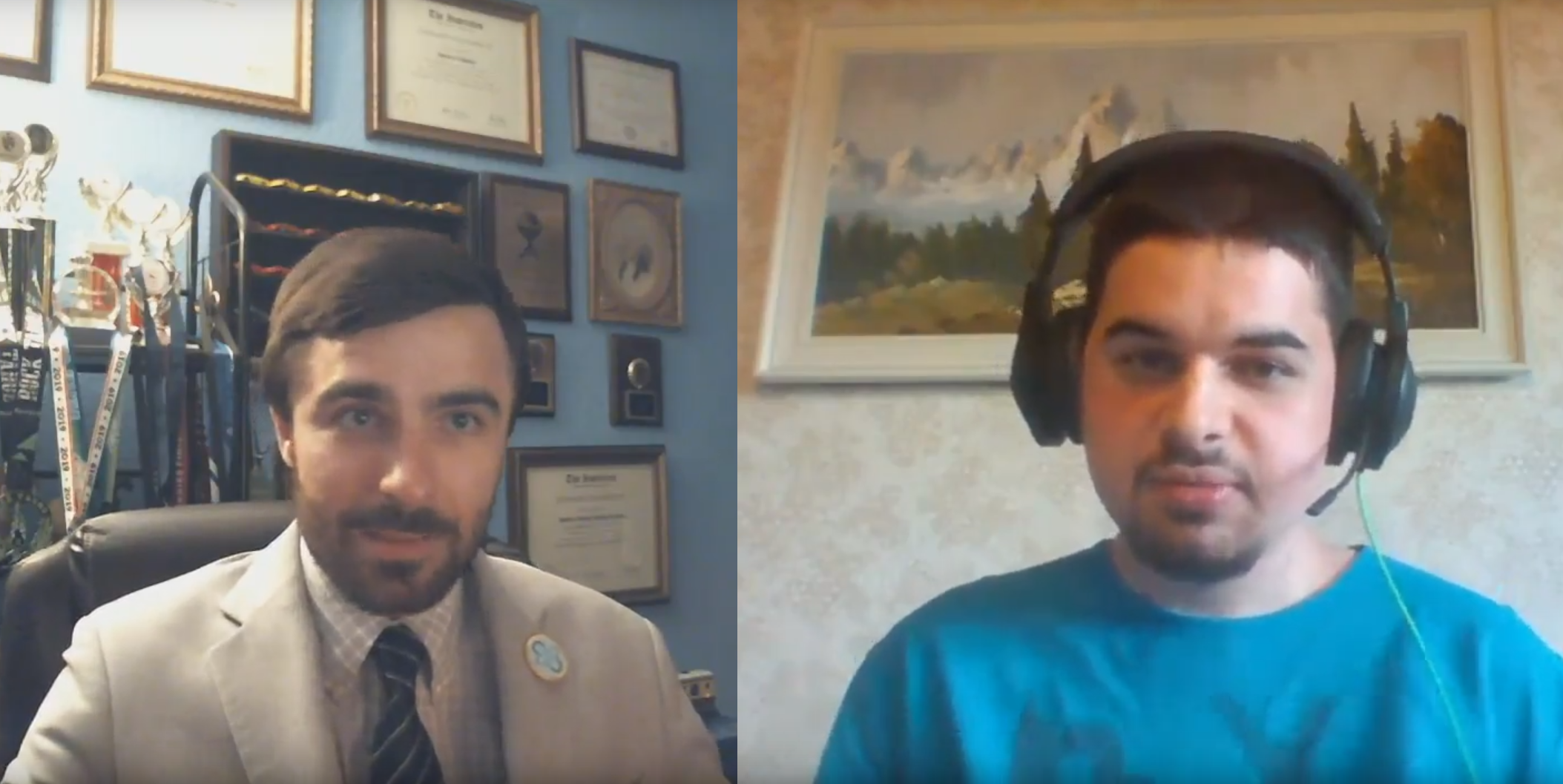
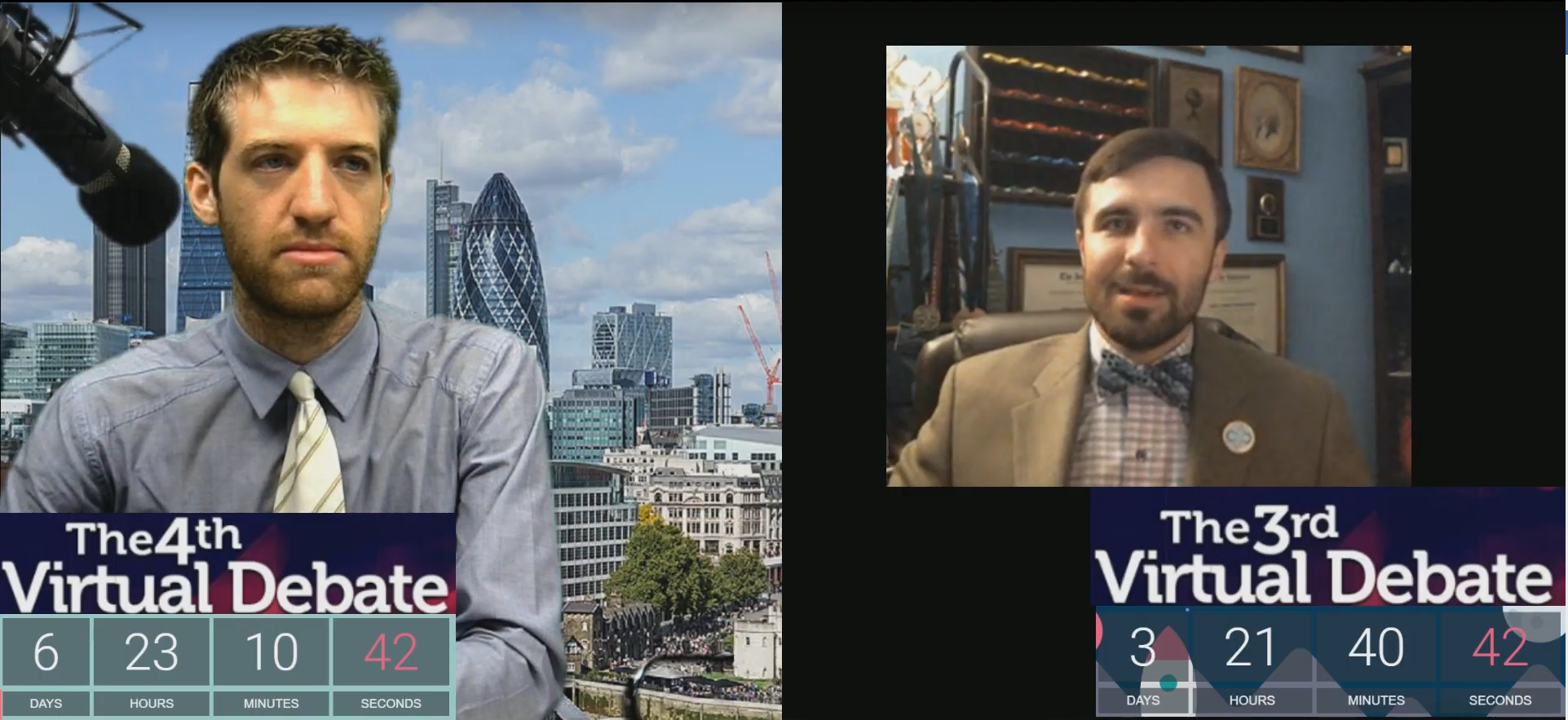
On September 10, 2019, U.S. Transhumanist Party / Transhuman Party Chairman Gennady Stolyarov II was again interviewed by Steele Archer of Debt Nation, this time to discuss the two forthcoming official final virtual debates of the U.S. Transhumanist Party Presidential primary season.

Watch the interview here.

3rd Virtual Debate: Candidates Forsythe, Harris, Haywire, Holsopple, and Kerecz – Saturday, September 14, 2019, at 5:00 p.m. U.S. Pacific Time – See more details here.

4th Virtual Debate: Candidates Ben Zion, Schattke, Taylor, and Vrillon – Tuesday, September 17, 2019 at 6:30 p.m. U.S. Pacific Time – See more details here.

The Debt Nation show will co-host the debates, which will be livestreamed from The Unshackled YouTube channel.

Remember to join the U.S. Transhumanist Party for free before September 21, 2019, in order to be eligible to vote in the Electronic Presidential Primary that follows. Join here, no matter where you reside.

Rejuvenation Research Is Now a Mainstream Topic – Article by Steve Hill

Rejuvenation Research Is Now a Mainstream Topic – Article by Steve Hill

September 9, 2019 Steve Hill Comments 0 Comment

Steve Hill


Editor’s Note: In this article, originally published on August 26, 2019, by the Life Extension Advocacy Foundation (LEAF), Mr. Steve Hill reviews an MIT Technology Review article authored by David Adam. Mr. Adam gives his view of the research field of aging, and Mr. Hill is impressed by the factualism compared to the MIT Technology Review’s previous articles that covered the topic. Mr. Hill goes on to discuss aging and lifespan in other species and address the question: Is aging a disease, and does it really matter?

~Bobby Ridge, Assistant Editor, September 9, 2019


It is a sure sign that the tide has turned when mainstream news outlets and magazines start publishing positive articles about aging research and the prospects of rejuvenation.

A refreshing change

Today, I want to highlight an article in MIT Technology Review in which the author, David Adam, gives a sensible and measured overview of what is happening in the field and manages to sidestep the usual negativity and misconceptions that often plague popular science pieces.

Since ancient times, aging has been viewed as simply inevitable, unstoppable, nature’s way. “Natural causes” have long been blamed for deaths among the old, even if they died of a recognized pathological condition. The medical writer Galen argued back in the second century AD that aging is a natural process.

His view, the acceptance that one can die simply of old age, has dominated ever since. We think of aging as the accumulation of all the other conditions that get more common as we get older—cancer, dementia, physical frailty. All that tells us, though, is that we’re going to sicken and die; it doesn’t give us a way to change it. We don’t have much more control over our destiny than a Cyclops.

But a growing number of scientists are questioning our basic conception of aging. What if you could challenge your death—or even prevent it altogether? What if the panoply of diseases that strike us in old age are symptoms, not causes? What would change if we classified aging itself as the disease?

The article skips the sensationalism and assumptions that many journalists typically make about aging research; instead, we get a solid piece of factual journalism. This is in stark contrast to the reporting done by this outlet a few years ago, as it had published irrationally skeptical and frequently negative coverage of the field and the science behind it.

This may be partially due to changes to the editorial staff at the magazine, which happened in 2017, but it is also indicative of the wider acceptance of the idea that we may be able to do something about aging. The same magazine has even published a special issue entitled Old Age is Over! – If you want it, which takes a deeper dive into the topic, though this is paid content.

There may be a choice about how we age

For millennia, it has been assumed that aging is a one-way street and that we must simply accept that there is nothing we can do about it, aside from facing age-related ill health with stoicism. However, the situation has somewhat changed. As researchers have discovered more about how aging works, the processes driving it, and the results from model animals, it has become increasingly clear to many people that something might be done about aging in order to delay, prevent, or potentially reverse age-related diseases.

We already know that a number of species do not age; this phenomenon is known as negligible senescence. This simply means that the organism does not show a decline of survival characteristics, such as muscle strength, mobility, and senses. Such species also do not experience an increased mortality rate with advancing age or a loss of reproductive capability with age.

These species tend to have much more efficient repair systems that are capable of offsetting and repairing damage rapidly enough to prevent it from accumulating and snowballing out of control as it does in humans. We are relatively long-lived as a species, but, compared to some longevity champions, such as the bowhead whale at 200 years plus, the Greenland shark at 400 or more years, and the ocean quahog clam, which lives at least 507 years, our lifespan is relatively brief.

So, the race is now on to see if we can develop therapies to repair age-related damage, slow down how fast that damage accrues, and see if we can emulate these kings of longevity. The key take-home message here is that there is no biological reason that humans might not live longer, healthier lives if such therapies are developed.

Exactly how long that might be is a matter of speculation; it could be a few years, a decade or two, or perhaps more. The key point is that the researchers who are developing these therapies are aiming to make those extra years healthy ones, and that is surely something that most people can get behind.

Is aging a disease, and does it really matter?

Some researchers propose that aging is a disease, and while this is a somewhat contentious view, it has some merit and is absolutely worthy of further discussion. We discussed if aging is natural or pathological in a previous article, and while the case can certainly be made that aging is a disease, it may more accurately fit the description of a co-morbid syndrome: a group of symptoms that consistently occur together and a condition characterized by a set of associated symptoms.

Whether or not they believe in either the disease hypothesis or maximum life spans, most experts agree that something has to change in the way we deal with aging. “If we don’t do something about the dramatic increase in older people, and find ways to keep them healthy and functional, then we have a major quality-­of-life issue and a major economic issue on our hands.” – Dr. Brian Kennedy

This matter is largely a matter of semantics, and the important thing is that, from a regulatory point of view, including aging as a disease state or syndrome would make it easier to develop therapies that directly target the aging processes themselves. Currently, therapies must focus on single diseases in order to progress through clinical trials, which is not the most optimal approach.

However, it is my personal view that this situation will not change much until the first successful human demonstration of rejuvenation therapy occurs. Until then, researchers will continue to work within the current regulatory system, and while this is, by its nature, slower, it does not prevent progress being made. Fortunately, there are now a lot of companies working in this space, and a number of therapies are quite far along in development.

A therapy that works in humans against one age-related disease by targeting an aging process directly could potentially treat a slew of other related diseases, and so any successful therapy making it through the system would likely rapidly see off-label usage for other, similar conditions.

Conclusion

In closing, it is refreshing to see more balanced and fair reporting on the field and the science of aging rather than the negative and highly biased material that this outlet had published prior to 2017. Reasonable skepticism is perfectly understandable, especially in a field as cutting-edge as rejuvenation biotechnology, which is charting unknown waters and attempting to do what has long been thought impossible.

However, the weight of evidence, the results of a myriad of animal studies demonstrating age reversal, and the rapid increase of scientific understanding should balance that skepticism in anyone interested in science and the actual facts. A magazine devoted to science really should be at the top of its game when reporting the facts, and this and other recent articles on the topic have been much closer to this mark. Oh my, how times have changed.

Steve Hill serves on the LEAF Board of Directors and is the Editor in Chief, coordinating the daily news articles and social media content of the organization. He is an active journalist in the aging research and biotechnology field and has to date written over 500 articles on the topic as well as attending various medical industry conferences. In 2019 he was listed in the top 100 journalists covering biomedicine and longevity research in the industry report – Top-100 Journalists covering advanced biomedicine and longevity, created by the Aging Analytics Agency. His work has been featured in H+ Magazine, Psychology Today, Singularity Weblog, Standpoint Magazine, Keep Me Prime, and New Economy Magazine. Steve has a background in project management and administration which has helped him to build a united team for effective fundraising and content creation, while his additional knowledge of biology and statistical data analysis allows him to carefully assess and coordinate the scientific groups involved in the project. In 2015 he led the Major Mouse Testing Program (MMTP) for the International Longevity Alliance and in 2016 helped the team of the SENS Research Foundation to reach their goal for the OncoSENS campaign for cancer research.

International Conference of Technoscientific Awareness in Solving 21st Century Problems – Announcement by Osinakachi Akuma Kalu

International Conference of Technoscientific Awareness in Solving 21st Century Problems – Announcement by Osinakachi Akuma Kalu

September 9, 2019 Osinakachi Akuma Kalu Comments 0 Comment

Osinakachi Akuma Kalu


Editor’s Note: The U.S. Transhumanist Party features this announcement by Osinakachi Akuma Kalu of the Transdisciplinary Agora for Future Discussions (TAFFDs), originally published on their site.  The announcement brings attention to a new conference from TAFFDs, focusing on technological advancements for prosperity, which the U.S. Transhumanist Party supports as part of our policy goals.

~ Brent Reitze, Director of Publication, United States Transhumanist Party, September 9, 2019


For the first time, futurists, transhumanists, longevity scientists, leadership experts and vertical farming agriculturists will be gathering in Africa. So, all is set for staging the International Conference on Technoscientific Awareness in Solving 21st Century Problems, a groundbreaking event organized by the Transdisciplinary Agora for Future Discussions (TAFFDs) in collaboration with the University of Rwanda. Themed “The 21st Century Information Tech/Digitization and Sustainable Governance in Developing Countries”, the program (slated to run from 7th – 11th of October 2019) shall provide spaces for exploration of the accelerating pace of technology adoption in Africa and other developing countries, the links between digitization and governance, and how technological effects could be channeled into developmental gains for these societies. There shall also be a futurist and transhumanist edge to the gathering, as ideas and innovations with orientations in transhumanism and life extension shall be discussed and related to Africa’s growth potentials. Leadership experts will bring insights especially in political and managerial terms on how these processes could best be guided into fruition.

As an assembly meant to attract fine and revolutionary global thinkers (futurism, transhumanism, life extensionism, vertical farming, IoT, digital leadership), the conference shall be deepened by a credible line-up of global delegates representing the Association of Professional Futurists, the Transhumanist Party, Singularity University, and several other leading groups in the sector of futurist tech, strategy, and societal development. With a platform presented to link inventors/inventions featured at the Conference’s tech (and particularly infotech and biotech) exhibition with key investors, further pragmatic opportunities are envisaged to be opened up in boosting start-up tech innovations to large industrial scales in Africa for diverse socio-economic benefits.  The vision, essentially, is that of the Fourth Industrial Revolution being engineered into manifestation in Africa. Rwanda, with its recent achievements and growing acclaim as Africa’s emerging tech capital, was so strategically chosen as the symbolic venue where this dawn of a new tech-driven age in Africa should occur.

Endorsements for the Conference have been received from the Scientific Innovation Research Group (SIRG), U.S. Transhumanist Party, Futurist New Deal Podcast, International Longevity Alliance, Open Source Mode, and MyTalent Africa, among others. More endorsements would yet be appreciated, as well as a response to our call for sponsorship and partnership. A host of benefits are assured for stakeholders and attendees of the Conference, not least the fact that much more in terms of reputational capital stands to be garnered by individuals and institutions who get to participate in this very significant, historic, and transformative project. 

Visa is on arrival and easily accessible. 

Trailer:

For more info, contact:

Website: taffds.org

Conference site: https://conference2019.taffds.org/


Gennady Stolyarov II and Johannon Ben Zion Discuss a Transhumanist Vision for U.S. Policy

Gennady Stolyarov II and Johannon Ben Zion Discuss a Transhumanist Vision for U.S. Policy

September 2, 2019 Gennady Stolyarov II Comments 1 comment

Gennady Stolyarov II
Johannon Ben Zion


Johannon Ben Zion of the Futurist New Deal Podcast interviews U.S. Transhumanist Party Chairman Gennady Stolyarov II regarding the U.S. Transhumanist Party’s recent efforts, visions for the future of American politics, technological progress and technological Singularities, the importance of life-extension advocacy, open-source approaches to innovation, and overcoming challenges such as information overload and overly slow and cumbersome approval processes for innovative medical treatments. Mr. Stolyarov and Mr. Ben Zion also discussed in general terms the upcoming USTP Presidential Primary Election, for which voting will open on September 22, 2019.

This interview was filmed in Burbank, California, on August 24, 2019, following the Wellness and Longevity Seminar that was hosted there to mark the publication of The Transhumanism Handbook.

References

– “Progress in the Politics of Abundance” – Presentation by Gennady Stolyarov II
– U.S. Transhumanist Party Discussion Panel – Burbank, California – August 24, 2019
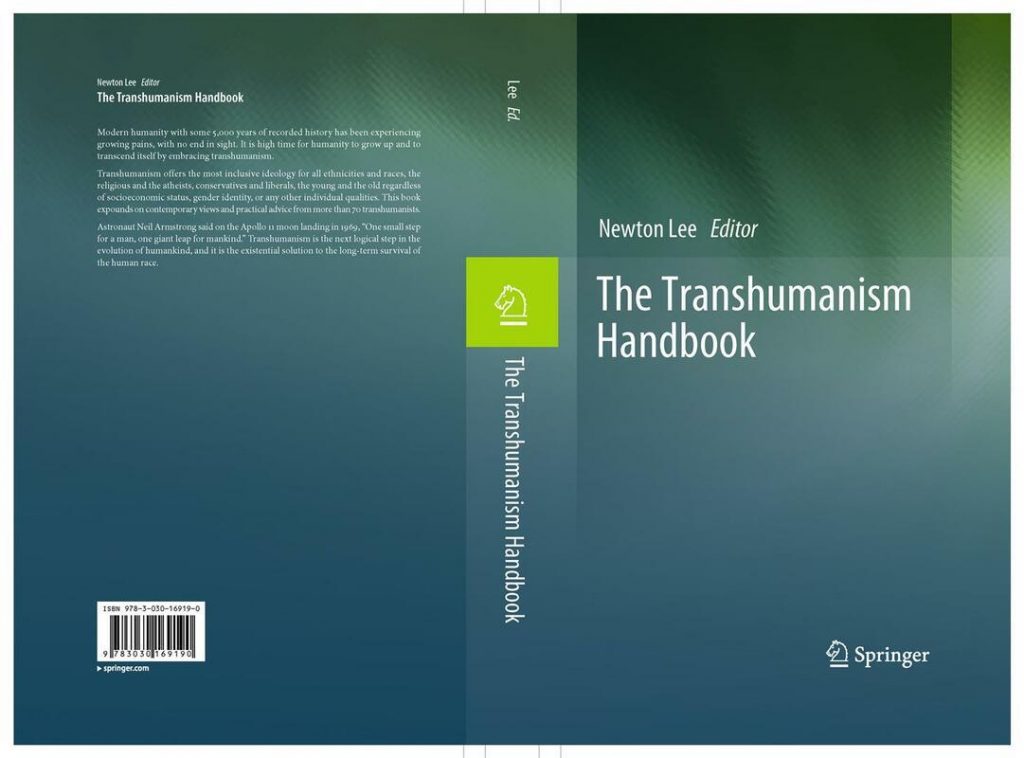
– The Transhumanism Handbook
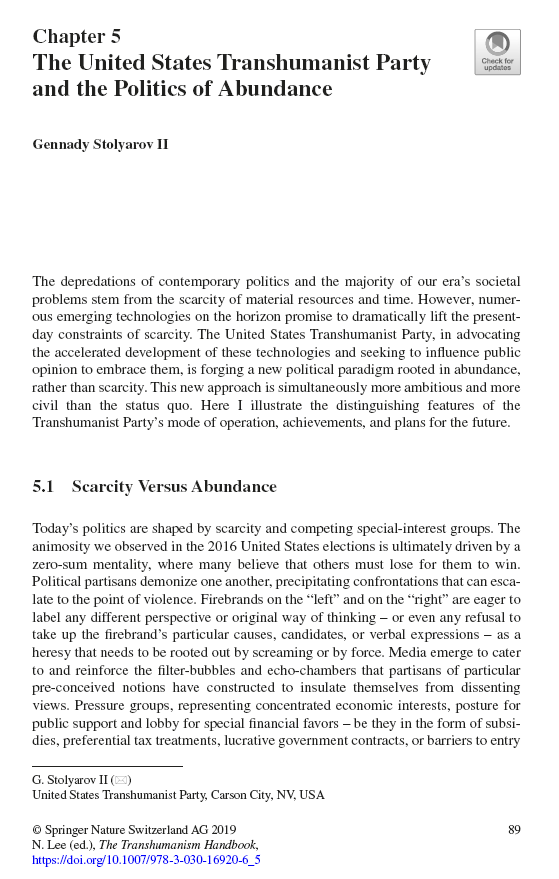
– “The United States Transhumanist Party and the Politics of Abundance” – Mr. Stolyarov’s chapter in “The Transhumanism Handbook” – available for free download
– Free Transhumanist Symbols
– Futurist New Deal Podcast videos
– Johannon Ben Zion – Candidate in the 2019 U.S. Transhumanist Party / Transhuman Party Presidential Primary

Join the U.S. Transhumanist Party for free, no matter where you reside. Those who join by September 22, 2019, will be eligible to vote in the Presidential Primary.
U.S. Transhumanist Party Discussion Panel – Burbank, California – August 24, 2019

U.S. Transhumanist Party Discussion Panel – Burbank, California – August 24, 2019

September 1, 2019 Gennady Stolyarov II Comments 0 Comment

Johannon Ben Zion
Gennady Stolyarov II
Arin Vahanian
Charles Holsopple


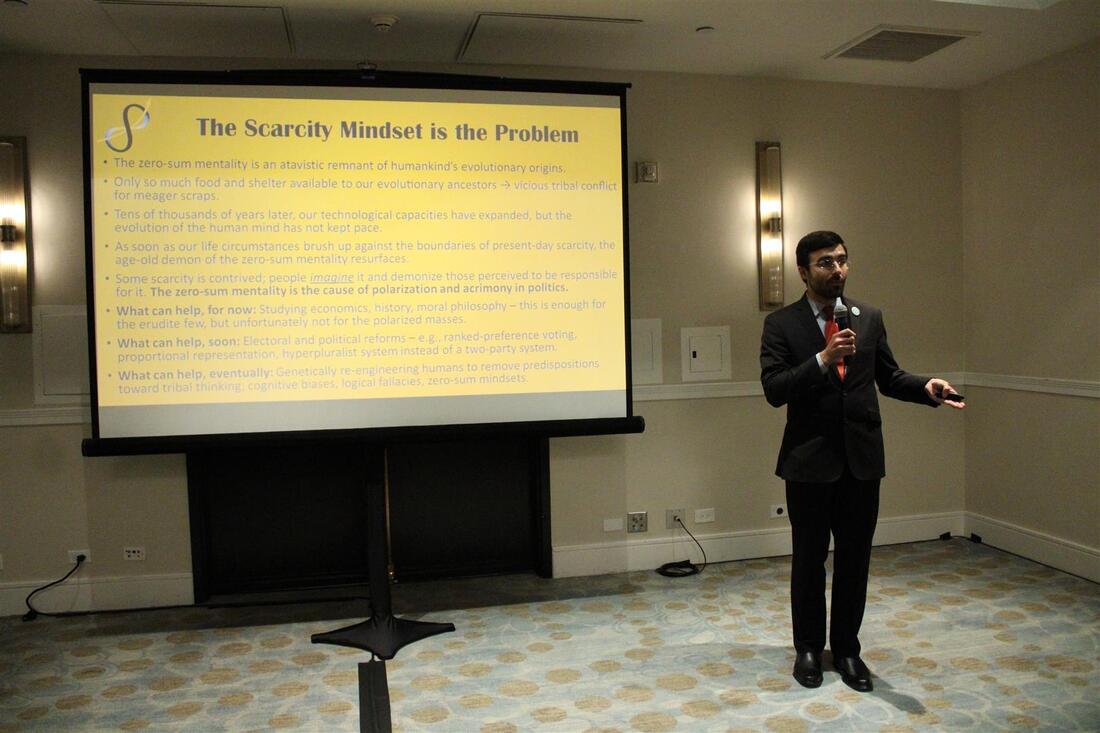
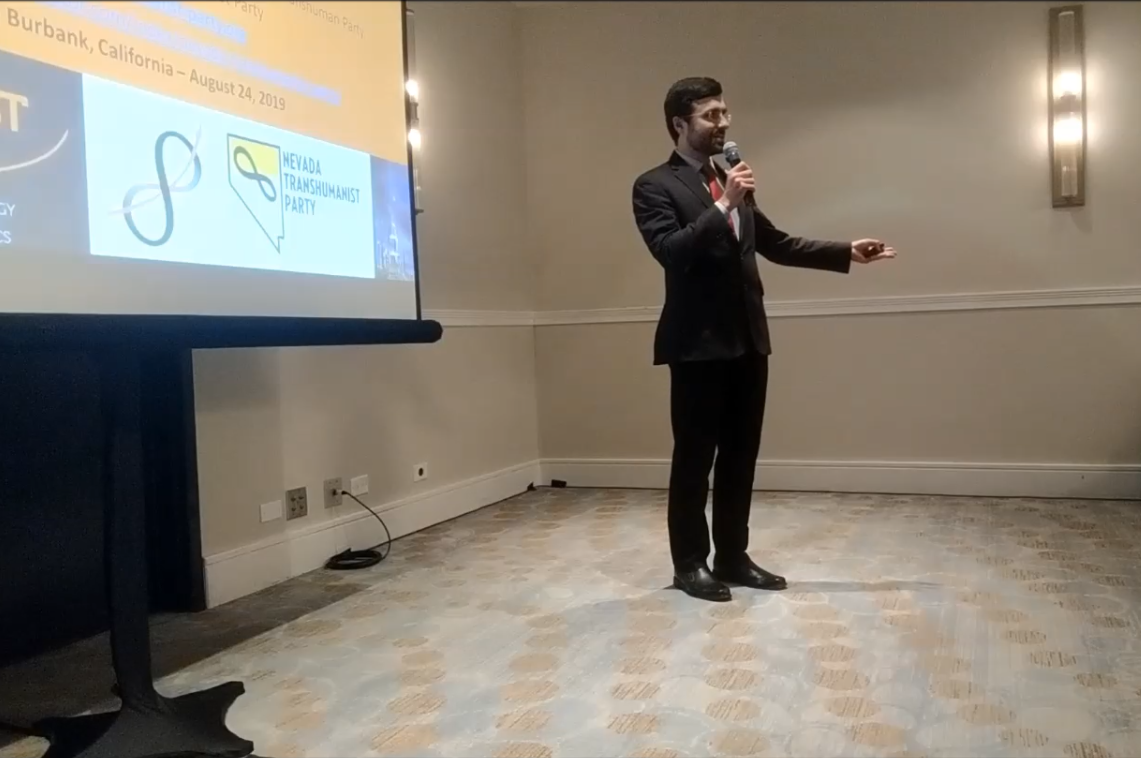
On August 24, 2019, many leading transhumanists gathered in Burbank, California, to commemorate the publication of The Transhumanism Handbook. Subsequent to the seminar and book-signing event marking that occasion, the U.S. Transhumanist Party / Transhuman Party (USTP) held a discussion panel hosted by Chairman Gennady Stolyarov II and featuring Director of Marketing Arin Vahanian and USTP Presidential Primary candidates Johannon Ben Zion and Charles Holsopple. Subjects of conversation included assessments of the public’s receptiveness to transhumanist ideas, approaches toward spreading transhumanism, common misconceptions and challenges to overcome, as well as the upcoming Presidential primary election, for which voting will begin on September 22, 2019.

Find out more about The Transhumanism Handbook.

Join the U.S. Transhumanist Party for free, no matter where you reside. Those who join by September 22, 2019, will be eligible to vote in the upcoming USTP Presidential Primary.
See the USTP Platform here.

Read Mr. Stolyarov’s chapter in The Transhumanism Handbook – entitled “The United States Transhumanist Party and the Politics of Abundance” – for free here.

Progress in the Politics of Abundance – Presentation by Gennady Stolyarov II

Progress in the Politics of Abundance – Presentation by Gennady Stolyarov II

September 1, 2019 Gennady Stolyarov II Comments 0 Comment

Gennady Stolyarov II


Gennady Stolyarov II, Chairman of the United States Transhumanist Party / Transhuman Party (USTP), delivered this presentation, entitled “Progress in the Politics of Abundance“, during the August 24, 2019, Wellness and Longevity Seminar in Burbank, California, to commemorate the publication of The Transhumanism Handbook. Mr. Stolyarov spoke to update the audience on recent USTP activities in 2019 since the writing of his chapter, entitled “The United States Transhumanist Party and the Politics of Abundance” which is available for free download.

Some of the subjects addressed in Mr. Stolyarov’s presentation are the necessity and challenges of overcoming the evolved mindset of scarcity – the zero-sum mentality – in politics, the USTP’s #IAmTranshuman campaign, its successful effort to amend Nevada Assembly Bill 226 to remove the prohibition against voluntary microchip implantation, and its Transhumanist Symbols project, of which the products are freely available here.

The presentation slides are not fully visible in the video but can be accessed and downloaded here.

Find out more about The Transhumanism Handbook.

Join the U.S. Transhumanist Party for free, no matter where you reside. Those who join by September 22, 2019, will be eligible to vote in the upcoming USTP Presidential Primary.

Jonathan Mark Schattke Candidate Position Paper

Jonathan Mark Schattke Candidate Position Paper

August 19, 2019 Jonathan Mark Schattke Comments 0 Comment

Jonathan Mark Schattke


Editor’s Note: The U.S. Transhumanist Party / Transhuman Party (USTP) publishes this position paper by one of our Presidential primary candidates, Jonathan Mark Schattke (Jon Schattke) in an informational capacity, to enable our readers to consider specific policy analyses germane to our member-adopted documents, such as the Transhumanist Bill of Rights, Version 3.0, and the USTP Platform. The USTP has not yet endorsed any Presidential candidate, as such endorsement will occur as a consequence of the forthcoming Electronic Primary in late September 2019. However, in the meantime, the USTP strives to provide accurate information about our candidates’ viewpoints and any content that constitutes a thoughtful analysis of the USTP’s existing documents.  

~ Gennady Stolyarov II, Chairman, United States Transhumanist Party / Transhuman Party, August 18, 2019


“Free your immortality” is not just a slogan, it is a guide to achieving what every transhumanist wants – the transcendence of current limits on mental ability and physical bodies.

I am a futurist and firm believer in technology’s power to advance life, liberty, and the pursuit of happiness. Consistency with this means that each being must have ownership of themself, and of their own efforts, and the fruits thereof. Nothing provided by someone else’s labor or capital can therefore be compelled of them to fulfill someone else’s “right.” All a “right” must guarantee is that government will not interfere with the pursuit of the good or service.

I agree with the Transhumanist Bill of Rights. I would like to clarify a couple points.

Sapience must be able to be measured. To qualify for protection, the candidate must ask for it. Nascent sapients, such as children, should be protected also, from the point that their growth to sapience is clearly started. Inactive sapients should be protected if there is a reasonable expectation of reactivation and they have not expressly desired not to be reactivated – “death” should not be treated as an end unless the person has specifically stated they wish to die. This does not mean that an inactive sapient’s property should be under some sort of third-party stewardship; their assets should be put in revocable trust and their heirs appointed trustees.

“Article VII. All sentient entities should be the beneficiaries of a system of universal health care. ” This must not be construed to include a system of third party payer health care; such systems decrease personal cost to zero, increase demand to infinity, and thus introduce rationing by the third party via either wait times or “need assessment.” This is a path to destruction and needless death. Compound this with the problem of calculation of costs in a full government program, and you have societal expense way out of line with societal benefit. “Universal” must merely mean than anyone has the ability to bargain for the service in a free market.

Article XVIII would literally bankrupt any group trying to implement it through government. I believe the Salvation Army model, perhaps with a bit more privacy, would be an effective means – if people need housing and food, have hostels funded by donation and endowments which provide it. This is both more efficient and more just than taxing and redistribution programs.

Regarding Article XIX I believe the “other resources” clause is one I can support. I fully support providing housing and food for those who choose to receive it. However, your well-being may be cared for; your dignity is your own problem. Do not expect dignity while living off the generosity of others.

Now, on to the Platform of the Transhumanist Party. By and large, I am wholeheartedly behind all sections which support individual self-ownership and the extension of this to all sapients.

A few notes on my governance philosophy are in order. I believe strongly that bureaucratic methods of providing goods or services must fail, because they do not have clear demand signals, they do not have any motivation for efficiency, and they do not have accountability. Furthermore, a government is based on force, and so must limit its actions to those things where the force is defensive; using taxes or even tariffs (forced payments) to fund things will morally corrupt even the most wholesome idea. I believe that many current government agencies could and should be spun off into voluntary funded charitable organizations.

I find Section XL particularly poignant considering the current state of affairs in social media. But, hearkening back to individual liberty, we must not solve big tech censorship by stealing their capital or using force to get them to provide services they do not want to. The solution lies in the market-driven alternatives. However, those companies with a government monopoly over any portion of technology should lose their protection immediately should they discriminate on political topics.

Section XXI can be achieved by privatizing the police force, and removing all strictures for victimless violations. If no one is harmed, then it makes no sense to introduce deadly force into the mix (an example is seat-belt laws – people have been killed because of seat belt stops – such actions are literally insane).

Section XXXIV is a must. I have previously advocated for third-party archiving of all government employees’ actions at all times they are on the clock. Any action they take which does not have this video record must be treated as private, and not protected from legal or criminal prosecution. Shoot a person with your camera off, and face murder charges like any other private citizen.

Section IV might be well-intentioned but short-sighted. It should be noted that no nuclear powers have ever engaged in direct war (the most intense conflict between Nuclear Powers to date being the Kashmir conflict), and the acquisition of nuclear weapons has deterred open war against states, most notably the cessation of Arab hostilities against Israel in the 1970s after they acquired nuclear technology and it became known. It might, therefore, be best for all stable states to become nuclear powers.

Section XII is great – until you commit to third-party paying from force. I believe enough people are behind higher education that a privatized Department of Education would be able to fund grants, loans or college-level donated class time for those who are needy and deserving.

Section XXVII, on abolishing the Electoral College, might be a mistake, but it is obvious that the system as provided is failing in some aspects. I, however, fear the tyranny of the ballot box and unbridled democracy.

Section XXXVI states that “the United States Transhumanist Party advocates a flat percentage-of-sales tax applicable only to purchases from businesses whose combined nationwide revenues from all affiliates exceed a specified threshold.” This can clearly bee seen as a fee for service, the service being having existence as a limited liability corporation.

Section LXXIII would seem to be an infringement of the Second Amendment as written. And the temptation of a government with an active armed rebellion to trace the weapon locations of suspected belligerents would be enormous, and we have seen that constitutional and statutory limits on powers mean nothing to governments, especially when at war.

Jon Schattke is one of the candidates for the office of President of the United States, competing for the USTP’s endorsement in the 2019 Electronic Primary. 

Transhumanists Need New Symbols – Statement by Gennady Stolyarov II

Transhumanists Need New Symbols – Statement by Gennady Stolyarov II

August 18, 2019 Gennady Stolyarov II Comments 3 comments

Gennady Stolyarov II


Transhumanists: we need new symbols in place of “H+ / h+” – which are not the best representations of our movement as a whole. We need inspiring, meaningful, unambiguous symbols that are developed through grassroots efforts within our community and made freely available for anyone to use.

Infinity Ankh by Nic Nassuet

The U.S. Transhumanist Party / Transhuman Party (USTP) calls upon graphic designers, artists, marketing experts, philosophers, and other interested individuals to design a series of new symbols representing transhumanism in general. There is no limit to the number of symbols developed or the kinds of artistic and design directions that are pursued. The only condition of this collaboration is that any resulting symbols be released into the public domain in entirety and become available for free download, reuse, and upload to popular image repositories such as Wikimedia Commons. Ultimately, it will be user preference that will determine which symbols will achieve widespread adoption – but the USTP encourages a thousand (symbolic) flowers to bloom.

TH Symbol by Gennady Stolyarov II


Please join us in this collaboration. View the many symbols generated in response to it thus far here. We expect numerous new symbols to be added to our gallery over time.

You may submit your symbols via e-mail to USTP Chairman Gennady Stolyarov II here, as well as link to them in the comments on this article or post them on any social-media thread where this article is being shared. By contributing symbols in response to this project, you grant your consent to have those symbols released freely into the public domain and to be used by any individuals at no monetary cost to them worldwide and in perpetuity, without the right to use those symbols being limited to any particular individual(s) or organization(s) or subject to the control of any such individual(s) or organization(s). You agree that no person, at any time in perpetuity, would be able to claim any intellectual property rights over the symbols generated in response to this collaboration.

Infinity Arrow by Michael Murray


The USTP also encourages all transhumanists to abandon the use of any variants of the “H+ / h+” symbols for the purpose of referring to transhumanism generally or as a whole, for numerous reasons which shall be explicated below. In November 2016, when leadership of the USTP passed to Chairman Stolyarov, the USTP made the decision to discontinue the use of “H+ / h+” and to replace it with its current “exponential infinity” logo. Now the USTP calls upon all other transhumanists – including candidates competing for the USTP’s endorsement in the forthcoming Electronic Primary – to replace any uses of “H+ / h+” with original and unrelated symbols which are likely to better represent what transhumanism stands for.

Transhumanist Wolf by Michael Passavant

1. The “H+ / h+” symbols are ambiguous and can refer to many other matters besides transhumanism. Many of these uses are, in fact, better known than transhumanism. In chemistry, “H+” refers to a hydron, the most common of which is the simple proton. In physics, “h+” refers to an electron hole. Among mobile-phone networks, “H+” stands for Evolved High-Speed Packet Access, the fastest of the 3G networks. Even the streaming service Hulu uses the “h+” symbol while an entire chain of “H+ Hotels” has been established across Germany. Surely, transhumanists can do better than a derivative symbol which has many other, mostly unrelated uses and will be overshadowed in the public mind by those uses.

2. The “H+ / h+” symbols were attempted substitutes for transhumanism; we need to openly embrace transhumanism instead. The symbols originated in the course of the 2008 rebranding of the World Transhumanist Association into Humanity+, yet the USTP holds that symbols depicting the transhumanist movement should be focused on promoting and reinforcing connections with the word “transhumanism”. Transhumanism is the technically accurate name for our philosophy advocating the dramatic improvement of the human condition through science and technology. We should not shy away from the term “transhumanism” – but rather we should proclaim it proudly and articulate it accurately. Intellectually honest persons with dispositions open to truth and learning will understand and appreciate this unabashed transparency, and they are the allies we should seek to cultivate.

We do not need to fear misunderstandings from the public but should rather challenge those misunderstandings when confronted with them. Transhumanism is our philosophy, and we should advocate it clearly and openly by that name.

3. The use of the “H+ / h+” symbols is largely limited to the United States, whereas transhumanism is a global and cosmopolitan movement. Consistent with the spirit of the Transhumanist Bill of Rights, transhumanism includes the promise of a better life for all sentient entities, not limited to a particular culture or any particular national boundaries. Our symbols also need to be universal, cosmopolitan, and inclusive – encompassing both today’s humans as well as sentient entities and forms of intelligence and sapience that have yet to arise.

4. Transhumanism is much more than a single organization. A movement and a philosophy cannot be confined to a particular corporate entity; to confine it thus is to stifle its growth and transform a living, open philosophy into a staid and centrally controlled dogma. This is not in itself a criticism of the Humanity+ organization, but rather a recognition that the movement as a whole is not the same as any given organization within it. It is confusing to have symbols that could potentially refer to a single organization but also to the movement as a whole. A cleaner approach would be to leave the “H+ / h+” symbols to the Humanity+ organization – since its rebranding occurred long in the past and is a fait accompli – while adopting new, more creative, and more representative symbols which anyone could use in the capacity of referring to transhumanism as a whole – much like anyone may use a cross to refer to Christianity, a crescent to refer to Islam, a Star of David to refer to Judaism, a torch to refer to liberty, a red flag or red star to refer to socialism, or a fleur-de-lis to refer to France. No one owns these symbols, and their meanings transcend any particular individual or group. It is for this reason that the USTP calls for the new symbols of transhumanism to be released into the public domain; they will also not be confined to the USTP itself but will rather be usable by any transhumanist to refer to all of transhumanism – including those parts of the transhumanist movement which are outside the USTP.

5. Transhumanists may become unable to use the “H+ / h+” symbols anyway. It has come to the USTP’s attention that the Humanity+ organization has recently embarked upon a campaign to enforce its trademark in a broadly construed manner. Humanity+ owns a trademark to a stylized lowercase “h+” logo but has, per the understanding of the USTP, taken the position that any use of “H+” or “h+” in the context of transhumanism is sufficiently similar to be an infringement of that trademark. The USTP considers this position to be overly reaching and impracticable to enforce completely, given that Creative Commons versions of “h+” symbols which are distinct from the Humanity+ logo have been available and used in at least tens of thousands of instances for over a decade. However, the USTP as an organization does not have a direct stake in this matter and has already differentiated itself in its logos and other graphics. Out of an abundance of caution, the USTP recommends that transhumanists discontinue using the “H+ / h+” symbols more broadly.

Our more general concern is that there is always a danger with a broader intellectual movement resorting to essentially proprietary symbols. Proprietary symbols can potentially lead to intellectual “gatekeepers” emerging and restricting the growth of the movement – whether or not this is any entity’s current intention. A philosophy which can potentially be adopted by anyone should also utilize symbols that could potentially be adopted by anyone without the need to seek permission or approval. In order to continue the remarkable growth that transhumanism has experienced in recent years, it is therefore prudent for all transhumanists outside of Humanity+ to immunize themselves by discontinuing the use of the “H+ / h+” symbols. By ceding the ground of those symbols to Humanity+, transhumanists in all areas of the movement gain the much more important territory of intellectual freedom in preventing the gatekeeper phenomenon from emerging. No single transhumanist organization, including the USTP itself, should become the gatekeeper of the transhumanist movement as a whole.

6. Transhumanists needs to embrace techno-optimism and pursue a more hopeful, heroic vision of the future. In practice, the “H+ / h+” symbols are insufficiently connected with radical life extension and the potential for technology to solve many of today’s pressing social problems. While there is nothing inherently wrong with toned-down variants of transhumanism as such, they should not be the only ones. When perceiving the “H+ / h+” symbols, one does not immediately associate them with the heroic ambitions that ought to characterize the transhumanist movement – ambitions toward biological immortality (or indefinite life extension), radical abundance, and humankind seizing control of its own evolution – ambitions toward solving, within our (hopefully greatly extended) lifetimes, every problem that afflicts the contemporary world.

Since 2013, through grassroots advocacy by a newer cohort of transhumanists, including the USTP’s founder Zoltan Istvan, a more exuberant, direct, and techno-positive vision of transhumanism has gradually emerged to the forefront of public awareness and inspired many to consciously seek to transform the flawed contemporary world into a new Transhuman Era of our civilization. The new Transhuman Era needs new symbols which properly convey the spirit of techno-optimism and indefinite, open-ended improvement of length and quality of life in all respects.

Become part of the effort to shape the vision for the new Transhuman Era of our civilization by helping to create its symbols. Deploy your skills and imagination to help us represent our aimed-for future of indefinite lifespans, perpetual progress, and unending prosperity for all – and exemplify the spirit of radical abundance by sharing your creations freely with the world.

Gennady Stolyarov II is the Chairman of the United States Transhumanist Party / Transhuman Party. Find out more about him here. 

An Open Letter to the Transhumanist Community – Article by Arin Vahanian

An Open Letter to the Transhumanist Community – Article by Arin Vahanian

August 15, 2019 Arin Vahanian Comments 3 comments

Arin Vahanian


During the events that have transpired over the past few weeks, many of which have affected (and not in positive ways, sometimes) the USTP, Humanity+, and other organizations in the Transhumanism movement, I have mostly refrained from sharing my opinions and thoughts. However, I feel it is time now to share something that has been on my mind for a while.

But before I do so, I would like to express my disappointment at the level of discourse I am seeing in our community as a whole. Just a few days ago, the USTP released a statement condemning the vicious, vindictive manner in which someone in the Transhumanist community treated other members, as well as USTP Officers.

Instead of using this as a rallying cry for greater cooperation, an opportunity for increased self-awareness, as well as coordination on our shared goals, we now, yet again, have a candidate attacking another candidate, insulting their intelligence, not to mention their physical appearance.

Such petty, cruel behavior not only reflects negatively upon the person engaging in such behavior, but also reflects negatively on Transhumanism as a whole.

The sad truth of the matter, and what has been on my mind for a long while, but which I have been reluctant to share, is that many of the things that members of the general public dislike about Transhumanism, we have displayed here with great fervor, whether intentionally, or not.

Indeed, in some ways, we ourselves have become our worst enemies, treating each other with disdain, pretending that we are somehow more intelligent than others, disregarding the legitimate objections people have brought forward about the consequences of technology, ignoring how bizarre or unhinged some of our behaviors and actions may appear to the public, and being generally disconnected from the needs of the population as a whole.

However, it is not only a single candidate or person who is responsible for helping to create an environment in which arrogance, narcissism, unstable behavior, a lack of civility, pettiness, and a lack of empathy have persisted.

Sadly, we in the Transhumanist community are all responsible, because we have all allowed this sort of behavior to continue, over many months and many years. To be sure, this sort of behavior has been around long before this current USTP Presidential campaign started, but it continues, nonetheless.

One thing I have been passionate about and dedicated to from day one is to change the public’s perception of Transhumanism. To grow a movement that is small, into a worldwide force that is capable of great positive change, requires us to have a finger on the pulse of the views of the general public.

Vitriol is still vitriol, and venom is still venom, whether we sling it with bows and arrows, or whether we drop it like a bomb. We have no business complaining about the lack of civility in politics, in any country, when we ourselves are guilty of incivility. We should not lament the proliferation of cyberbullying when we ourselves engage in the same behavior.

We could say, once again, that the way we conduct ourselves in front of the general public influences greatly their opinions about Transhumanism, but this message has been nearly as ineffective as advocating for peace in the Middle East. We could say, once again, that we are a team, and that the shared goals we have are far more important than our disagreements with each other, but that doesn’t seem to have helped very much. We could say, once again, that humanity could benefit greatly from increased longevity, improved health, and the complete eradication of poverty, but even this, surprisingly, doesn’t seem to register with some people.

So let me put it this way, instead – the next time you think about hurling abuse at someone in our community, the next time you feel like getting even with someone for their past transgressions, consider the fact that in just a few decades, unless we achieve our objectives with anti-aging research and life extension, everyone here will likely be dead.

Dead, as in, they will no longer be able to hold a loved one in their arms. Dead, as in, they’ll never again feel the warm rays of the sun caressing their face on a summer morning. Dead, as in, they’ll never have the pleasure of tasting their favorite food again, or any food, for that matter.

In many ways, the movement has never been stronger. Transhumanism has been garnering more press coverage, thanks to the efforts of people like Zoltan Istvan. USTP membership has grown substantially in recent weeks and months, thanks to the leadership of Gennady Stolyarov. The work that pioneers such as Fereidoun Esfandiary (also known as FM-2030), Aubrey de Grey, Nick Bostrom, and Jose Cordeiro have done over decades has helped built the foundation for what we are able to do now.

Every time we attack each other, we dishonor the legacy the hard-working people in our movement have created. Every time we attack each other, it sets us back from important work we could be doing to help humanity with its greatest challenges.

Contrary to what some people may think, the work that Transhumanists are doing does not only benefit the Transhumanist community; it benefits people who don’t even know about us. It benefits people who are suffering from a rare disease and feel there is no light at the end of the tunnel. It benefits people who are struggling with crippling poverty, having to make a choice between starving to death or being homeless.

The indignation we may feel, righteous or not, at the lack of awareness and acceptance of our movement among the general public, isn’t the general public’s fault. It is simply because we have been unable, thus far, to clearly demonstrate, with a compassionate and unified voice, the many worthy and noble projects we are engaged in, as well as our vision, mission, and purpose. But there is no rule that says that this state of affairs has to continue.

Being able to demonstrate to the world the optimistic, humanitarian, and thoughtful goals of Transhumanism requires us to take a good look in the mirror and decide who we are, and who we want to be. But most importantly, it requires us to be optimistic, humanitarian, and thoughtful, ourselves. How we treat others is an indication, on some level, of how we look at the world as a whole.

Requesting that people be treated with respect, dignity, and kindness is not authoritarianism or fascism. It is called being a better human being. And one of the core tenets of Transhumanism is being a better human being. So let us start today, right now, by being better, not just to ourselves, but also to each other.

Arin Vahanian is Director of Marketing for the U.S. Transhumanist Party / Transhuman Party. 

U.S. Transhumanist Party / Transhuman Party Statement Regarding Eray Ozkural

U.S. Transhumanist Party / Transhuman Party Statement Regarding Eray Ozkural

August 12, 2019 U.S. Transhumanist Party / Transhuman Party Comments 3 comments


August 11, 2019 – The U.S. Transhumanist Party / Transhuman Party is dedicated to fostering an environment of mutual understanding, acceptance, openness, and kindness – one conducive to enabling science and technology to help all human beings actualize themselves and live dignified lives.

Therefore, it is saddening to announce that it has come to our attention that a person within our community, someone who calls himself a Transhumanist, has publicly attacked, in a very vicious manner, our Party members, for no reason, and without provocation.

Eray Ozkural, in both public posts on Facebook and in private messages, has harassed and severely insulted members of the U.S. Transhumanist Party and respected transhumanists within our community.

The U.S. Transhumanist Party publicly condemns this behavior as unacceptable, lacking in civility, and not befitting of any human being, let alone one who has been engaged in higher learning for the majority of his life.

Indeed, what is most disappointing about the behavior Eray Ozkural has demonstrated, is that not only does he call himself a Transhumanist, but he holds a PhD degree and is a member of the artificial intelligence community.

Therefore, we are shocked and saddened that Dr. Ozkural would act in this manner. The brutish manner in which our Party members were attacked left the community dazed and confused, and we would like to make clear that such actions will receive a swift response from us. We will not tolerate this sort of behavior, and will respond whenever we feel our members and values are being threatened.

It is a precarious time for our movement. On the one hand, recent unfair and unwarranted negative press coverage has left many of us reeling from unsubstantiated allegations. Additionally, many in the general public do not understand our movement and what we stand for. On the other hand, we have garnered more members and more support than ever, and the hard work that is being conducted by Transhumanist scientists, engineers, and artists is receiving more recognition. As Transhumanism gains in popularity and more press coverage is dedicated to it, the forces that wish to stop or slow down this movement will come out of the woodwork in larger numbers. Forces that wish to prevent human beings from fully actualizing themselves, to prevent people from obtaining morphological freedom, and, yes, to prevent people from living dignified lives, will stop at nothing.

Therefore, we must remember that negative publicity damages our organization, our community, and our cause, and that we should not be doing our detractors’ work for them by disparaging or attacking our own. What is needed now, more than ever, is rational behavior, dedication to our goals, and the desire to help those who may not be able to help themselves, those who do not have a voice.

Let us remember that as Transhumanists, the goals we hold dear are of the most noble kind. Indeed, advocating for extending human life, curing disease, alleviating poverty, and allowing every human being to live a dignified life means we are tasked with the most important of duties. Let us not tarnish our movement with toxic behavior, narcissism, and cruelty. This is an opportunity for everyone within the movement to set aside differences and coalesce so that we can work on our shared goals. Therefore, we should be attacking disease, aging and poverty, not each other. Let us remember that, as we embark on the rest of the 21st century, one that will likely result in more rapid change than the last several centuries combined.

Codex of 13 Expectations (C13X) – U.S. Transhumanist Party Candidates’ Agreement of August 9, 2019

Codex of 13 Expectations (C13X) – U.S. Transhumanist Party Candidates’ Agreement of August 9, 2019

August 10, 2019 Gennady Stolyarov II Comments 0 Comment


August 10, 2019 – As part of the action plan previously announced by the U.S. Transhumanist Party / Transhuman Party (USTP) to elevate the tone of the 2019 campaign season, current USTP Presidential primary candidates Rachel Haywire, Johannon Ben Zion, and Charles Holsopple met via conference call with USTP leadership on August 9, 2019, and arrived at 13 major points of agreement and commitment, which shall hereafter be termed the Codex of 13 Expectations (C13X).

The USTP leadership and the candidates hope that the commitments of the C13X can enable all of the candidates’ supporters and other observers of this election to de-escalate tensions and observe principles that enable the most constructive possible outcomes to be achieved, irrespective of which candidate wins the election. Furthermore, the C13X is anticipated to serve as a model of desirable behavior to the new candidates who enter the race while enabling each of their candidacies to be a positive experience for all.

Codex of 13 Expectations (C13X) – U.S. Transhumanist Party Candidates’ Agreement of August 9, 2019

1. The candidates agree and the USTP expresses its official position that Rachel Haywire is not a Nazi, not a fascist, and not alt-right. All persons are hereby put on notice that the USTP considers this position to be supported by ample evidence of Rachel Haywire’s own public statements, which have included strong criticisms of Nazism, fascism, and the alt-right. While the USTP cannot control or police the speech of individuals, it does urge the critics of Rachel Haywire to refrain from applying such labels to her, as doing so devalues the seriousness of the harm inflicted by actual Nazi, fascist, and alt-right movements.

2. The candidates agree that any manner of false flagging of content is completely unacceptable and a violation of freedom of speech. The candidates urge all of their supporters and all other persons to desist from such false flagging. Candidates who distribute promotional or information content regarding their campaigns or regarding transhumanist ideas more generally deserve the opportunity to have that content seen and considered on its merits.

3. The candidates agree to refrain from asking their supporters to initiate any hostile actions against other candidates or those other candidates’ supporters. Any coordination of mass hostile action against persons holding different political opinions or candidate preferences is considered unacceptable during this campaign season.

4. The candidates agree to adhere to the principle of proportionality. If faced with frustrating, offensive, or even more damaging conduct by others, the candidates will only respond up to the level of the offense or damage caused by such conduct and will endeavor to avoid overreaction or disproportionately strong retaliation.

5. The USTP will crowdsource the questions for the Third Virtual Debate among the candidates, and the candidates agree to focus on civil, substantive, high-minded answers to those questions during the debate.

6. The candidates agree to collaborate in order to set a positive and constructive tone for the remainder of the USTP primary season, especially in any external portrayals of the process and of the USTP to the general public or to some subset of the general public. The candidates shall not disparage the USTP and shall address any grievances internally to the USTP leadership rather than escalating them to the public realm.

7. The candidates agree to keep the communication amongst themselves and with USTP leadership more professional and more formal. While this does not necessarily bar any method of communication, structured and thoughtfully worded e-mails are preferable to a string of text messages. Professional, formal communications allow for more thought to be invested in both composing and responding to correspondence and rationally considering the nature of any given situation that might arise, instead of being instantaneously reactive on the basis of often flawed first impressions.

8. In recognition that any winning candidate would need to secure the support of at least 25 percent of the then-existing USTP membership, each candidate agrees to pay attention to the concerns and sentiments of USTP members in general, including members who are not supporters of that candidate and members who might disagree with that candidate.

9. The candidates agree not to focus their election rhetoric on controversies unrelated to the USTP or to the ideas of transhumanism – including any matters related to Jeffrey Epstein or the history of Humanity+, which are not actionable issues in this election and are not germane to the value that transhumanist ideas and policy proposals could bring to the public. The candidates agree to refrain from any rhetoric that undermines the perception of transhumanism in the public eye.

10. When faced with multiple hypotheses and incomplete facts regarding any given situation, the candidates agree to thoughtfully consider all reasonable hypotheses and not to immediately attach themselves to the most egregious or extreme hypotheses.

11. The candidates agree to give individuals whom they encounter during the campaign season the benefit of any doubt regarding those individuals’ motivations, even if those individuals’ conduct appears to be less than ideal.

12. The candidates agree to keep superlongevity or significant life extension as a significant area of focus of their campaigns.

13. The candidates agree to work to expand the reach of the transhumanist movement and USTP by building alliances with various futurist and future-oriented organizations and other groups which may implicitly align with the values and goals of transhumanists.

Artist Dinorah Delfin, The Transhumanism Handbook, and a Super Wellness and Longevity Seminar and Book-Signing Event in Burbank, California

Artist Dinorah Delfin, The Transhumanism Handbook, and a Super Wellness and Longevity Seminar and Book-Signing Event in Burbank, California

August 9, 2019 Dinorah Delfin Comments 1 comment


August 8, 2019 – Artist, activist, and futurist, Dinorah Delfin shares her essay “An Artist’s Creative Process: A Model For Conscious Evolution” – for free download.

Abstract: “A great future is opened to humanity. Our interconnectedness with nature, the tools we use, and the narratives we create, is reaching a pinnacle. For the first time in human history, we have the means to consciously alter the fate of our evolution. New technologies are not only becoming increasingly embedded in our biology—giving us unprecedented human abilities—but this transition is also driving us to explore new notions of what it means to be human.

In transitioning to this post-human era, how can one adopt a framework for cognitive and physical enhancement that accounts for ways to ensure that this new era is also more consciousness-oriented, safe, and egalitarian? In this essay, I’m presenting five art projects I created from 2007 to 2017 to showcase how an artist’s creative process, coupled with Transhumanist sensibilities, can lead to positive social change and towards a future that is more just and humane.”


Ms. Delfin’s essay is available in the newly published “The Transhumanism Handbook” (Switzerland: Springer Nature, 2019. #1 New Release in Preventive Medicine on Amazon.com) – edited by Newton Lee, Chairman of the California Transhumanist Party and Founder and President of the Institute for Education, Research, and Scholarships (IFERS); an award-winning nonprofit public charity organization.

“This book is a milestone publication in transhumanist thought,” says U.S. Transhumanist Party Chairman Gennady Stolyarov II – whose essay on the topic of transhumanist politics is also featured.

This 858-page book showcases the work of over sixty transhumanists around the world including David Wood (Transcending Politics), Dr. Jose Luis Cordeiro (The Death Of Death), Dr. Michael Rose (UC Irvine), and social entrepreneur Liz Parrish (BioViva).

To commemorate this special achievement, there will be a super Wellness & Longevity Seminar & Book Signing Event on Saturday, August 24, 2019, at the Burbank Marriott Airport Hotel & Convention Center in California.

Contributing authors who will be present include Newton Lee, Gennady Stolyarov II, Dr. Michael Rose, and artist Dinorah Delfin.

Registration to this event is required.

You can purchase The Transhumanism Handbook in full. All proceeds (minus the publisher’s share) are donated to ongoing charity projects in education, research, and scholarships.

Please help spread the word! Thank you.

Second Virtual Debate Among U.S. Transhumanist Party Presidential Candidates – August 3, 2019

Second Virtual Debate Among U.S. Transhumanist Party Presidential Candidates – August 3, 2019

August 7, 2019 Gennady Stolyarov II Comments 0 Comment

Johannon Ben Zion
Charles Holsopple
Rachel Haywire
Moderated by Gennady Stolyarov II


The second virtual debate among U.S. Transhumanist Party / Transhuman Party candidates for President of the United States took place on Saturday, August 3, 2019, at 3 p.m. U.S. Pacific Time. Watch the debate on YouTube here.

Candidates Charles Holsopple, Rachel Haywire, and Johannon Ben Zion provided updates regarding their campaigns thus far, answered challenging candidate-specific questions, addressed questions from the audience, and had the opportunity for rebuttals and interactions. In this debate, the USTP strived for maximal transparency to provide USTP members the amplest possible relevant information for them to make their decision regarding the USTP’s nominee for President of the United States during the forthcoming Electronic Primary, for which voting will open on September 22, 2019.

Steele Archer of the Debt Nation program also continuous livestreamed the debate, along with pre-debate and post-debate commentary. Watch the video of his stream here.

Learn about the USTP candidates here.

View individual candidate profiles:

Johannon Ben Zion
Rachel Haywire
Charles Holsopple

Join the U.S. Transhumanist Party / Transhuman Party for free, no matter where you reside. Apply in less than a minute here.

Those who join the USTP by September 21, 2019, will be eligible to vote in the Electronic Primary beginning on September 22, 2019.


U.S. Transhumanist Party / Transhuman Party Extends the 2019 Presidential Primary Campaign and Voting Season

U.S. Transhumanist Party / Transhuman Party Extends the 2019 Presidential Primary Campaign and Voting Season

August 7, 2019 Gennady Stolyarov II Comments 2 comments


August 6, 2019 – Due to various extraordinary developments and the effort to improve the discourse surrounding the Transhumanist Presidential Primary, the United States Transhumanist Party / Transhuman Party (USTP) hereby announces the following measures regarding the 2019 process for the USTP to arrive at its endorsement for a candidate running for the position of President of the United States of America.

  1. Extension of Campaign Season: The campaign season is hereby extended by six weeks. Voting will begin on Sunday, September 22, 2019. Membership registration to become eligible to vote is hereby extended to the end of Saturday, September 21, 2019.
  2. Minimum Voter Turnout: The USTP primary election shall have a minimum turnout requirement of 50 percent of the membership of the USTP at the time that membership registration closes. This is in accord with the principle that elections should be representative of the constituency among which they are held. In United States Presidential elections, the voter turnout has consistently exceeded 50 percent of the eligible voter base. Therefore, setting the minimum turnout at 50 percent is reasonable as a way of expecting a similar level of participation. This minimum turnout requirement will mean that, once voting opens, it will remain open until the latter of one week hence or the end of the day at which 50 percent of members have voted. At present, there are 1,686 members in the USTP, so the minimum turnout requirement will be 843 members. The actual minimum turnout threshold may become larger by September 21, 2019, as more people join.  Any candidate that receives our endorsement will therefore need to persuade more than 25 percent of the then-eligible USTP membership to support that candidate as any part of a preference order that would enable that candidate to prevail in a ranked-preference vote after any needed instant runoffs. This may mean that the voting period will be longer than initially anticipated. Candidates will be free to continue to campaign for existing members’ support during that voting period, and the USTP will send periodic reminders for members to cast their ballots. No vote results will be announced until the minimum voter-turnout threshold has been met. Periodic announcements about how many votes have been cast will be made, however.
  3. “Rewind” of Campaign Season and Reopening of Candidate Registration Window: Because of the acrimonious tone of the public discourse in early August 2019, there will be a “rewind” of the campaign season to an earlier stage – both symbolically and in practice. This is an opportunity to dial back the adversarial tone and also adopt a more thoughtful approach to the future of transhumanist politics. We welcome input from the transhumanist community about how to move forward. As part of the rewind, because many members have expressed the desire for additional options, the window for candidate registration is hereby reopened until the end of Saturday, September 14, 2019. Any individual interested in becoming a candidate may indicate such interest by completing the Presidential Candidate Declaration of Interest Form. All new candidates will be subsequently required to complete the standard candidate questionnaire via e-mail and participate in the USTP’s subsequent events preceding the primary election.
  4. Conference Call Among the Candidates: The current candidates will be expected to participate in a private conference call amongst themselves and including key USTP Officers, including the Chairman, Campaign Director, and others who wish to mediate for the purpose of achieving an improved tone to the rest of the campaign season.
  5. Third Virtual Debate: A Third Virtual Debate will be held in September at a mutually agreed-upon time, with stricter ground rules. Questions for the debate will be crowdsourced in advance from the transhumanist community, and candidates will have three minutes to respond to each question. Prior to the debate, the necessary parameters of civil engagement will be emphasized and enforced throughout.
  6. Candidate-Specific Resource Pages: The USTP will prepare candidate-specific resource pages, similar to the profile pages, where every candidate will be able to feature their campaign imagery, videos, merchandise, and other noteworthy information. There is currently still a dearth of exposure among the public to the candidates’ substantive views and activities; these pages will act as convenient centralized resources that candidates could share to inform members and motivate them to vote.
  7. Structured Candidate Communication with Members: Prior to the start of the voting, each candidate will have an opportunity to send one message to the USTP Google Group, outlining the strongest (but civil and constructive) case that candidate can make for why the voters should support him or her. The messages will all be submitted to the moderation queue in the Google Group and held for simultaneous release, preceded by a message from the USTP Chairman, informing members that these candidate solicitations will be coming.

These measures are an executive decision agreed to jointly by the USTP Officers. Reasons for the decision include the following:

  1. This is the USTP’s first primary election, and, as such, some aspects are necessarily tentative and experimental at the onset. We need to be open to refining our approach in accord with our limited resources and continual learning about what elements allow for effective and representative political decision-making processes.
  2. It was an extraordinarily poor confluence of events that the USTP has had to focus most of its recent efforts on dispelling unwarranted associations between the convicted criminal abuser Jeffrey Epstein and transhumanism, less than one week prior to the originally scheduled start of the primary vote. Because of this focus on crisis response, our limited resources are strained at this time, and thorough preparations for the election will take a longer time period.
  3. This is a time period when tempers are hot, a situation which is uniquely unsuited to thoughtful political decision-making. It is necessary to allow time for tempers to cool and for thoughtful analysis to occur on all sides regarding the candidates, their positions on the issues, and how the ideas of transhumanism could best be advocated for during the 2020 election cycle.
  4. An essential principle of democracy is that the outcome be representative of the wishes of the constituency which any candidate would claim to speak for. As a result, setting a minimum turnout requirement reinforces the principle that the members of the USTP as a whole – and not some small subset thereof – will need to decide the outcome of the election. Any candidate wishing to win the USTP nomination will need to convince diverse segments of the transhumanist movement of the merits of his or her approach and will need to build bridges and find common ground in order to achieve this.
  5. The requisite civility needs to be restored to this primary election season, and, accordingly, the USTP leadership will work closely with the candidates to do so. The tone of this primary election season will be reset to align with the USTP’s values of thoughtful, rational, ethical, and policy-focused discourse.

Pursuant to the authority of the Chairman in Article II, Section II, of the USTP Constitution, the following measures are hereby in effect. Candidates are expected to adhere to these measures pursuant to the commitments which they made in the Presidential Candidate Declaration of Interest Form, including the following questions, to which affirmative answers were required and provided:

• Do you agree to participate in the USTP Endorsement and Electronic Primary process and to respect the outcome of that process, no matter whether or not you are ultimately endorsed to run for the office of President of the United States?

• Do you agree to work collaboratively with the USTP during the campaign season and not to disparage the USTP as well as not to work contrary to the interests and goals of the USTP during that time?

We thank our candidates and their supporters in advance for their cooperation.

Responsible Media Reporting and the Epstein/Transhumanist Fallacy – Article by Dinorah Delfin 

Responsible Media Reporting and the Epstein/Transhumanist Fallacy – Article by Dinorah Delfin 

August 6, 2019 Dinorah Delfin Comments 0 Comment

Dinorah Delfin


The USTP’s leadership has just issued a statement addressing a New York Times’s recent article associating Transhumanism, a progressive global philosophical movement, with Jeffrey Epstein, the disgraced con-artist and sex offender.

Gennady Stolyarov II, Chairman of the USTP, stated:

Epstein was a prominent financier of many other causes – but if the leadership of the world’s largest transhumanist political organization had no knowledge of him, this is strong evidence that he was not involved in transhumanism to any significant extent. He is merely a criminal abuser and deserves his sentence. His conduct was also deeply antithetical to the transhumanist philosophy and the value that philosophy places on dramatically improving the human condition for all through reason, science, and technology. Epstein’s fate should reinforce the principle that wealth and power do not confer license to mistreat one’s fellow sapient beings, all of whose rights must be protected. The foundational values of the Transhumanist Party, as well as key documents such as the USTP Platform and Transhumanist Bill of Rights, point toward an inspiring future where the Epsteins of this world could have no sway.

Many transhumanists criticize the NYT’s “unwarranted” and “irresponsible” association between Epstein and transhumanism as being “a modern-day version of eugenics”.

This appears to be a case of certain media outlets interpreting some of Epstein’s personal idiosyncratic proclivities as somehow being transhumanist – even though such interpretation is based on a highly deficient understanding of what transhumanism actually means and stands for.

– Chairman Stolyarov

Associating transhumanism with eugenics is a logical fallacy; like associating environmentalism with being anti-human. It is news reporting that seems to be more concerned about being sensational and controversial, than about accuracy, integrity, or solving problems; not adding more.

Even if Epstein perceived himself to be a transhumanist, this kind of sensationalist media reporting doesn’t serve the general public nor the greater good, as it keeps people misinformed and uneducated about emerging sciences and technologies.

What suffers from this approach is the characterization of a fundamentally benign worldview, as well as thousands of people who abhor Epstein’s behavior and stand for noble aspirations and principles of conduct. Criticism and debate regarding transhumanism are well within the realm of legitimate public discourse, but smearing good people by association is not.

  – Chairman Stolyarov

Renowned transhumanist philosopher and USTP member David Pearce remarked that “a commitment to the well-being of all sentience as enshrined in the Transhumanist Declaration (1998, 2009) is hard to reconcile with some of the traditional male primate behaviour of Jeffrey Epstein.”

Humanity+ has also released a statement to clarify Epstein’s donation, which reveals that the time they accepted the donation, Humanity+ “had no knowledge of Mr. Epstein’s horrific alleged criminal activity.”

It should be known that Epstein was never a member of Humanity+, nor affiliated with any known transhumanist organization. Epstein’s egocentric ideas about eugenics ardently conflict with the philosophy of transhumanism and the express directive of Humanity+ that aims is to prevent coerced practices. Instead, Humanity+ encourages exploring the use of genetic engineering to save lives and mitigate diseases that affect all humanity, such as sickle cell anemia and other horrific illnesses.

Humanity+ is an international nonprofit membership organization that advocates the ethical use of technology and evidence-based science to expand human capabilities. You can learn more about transhumanism at https://www.humanityplus.org.

– Humanity+

Members of the USTP and other representatives of the transhumanist community call for more objective and responsible media reporting and fewer “hyperboles” and “nebulous generalizations”.

Dinorah Delfin is an Artist and the Director of Admissions and Public Relations for the U.S. Transhumanist Party / Transhuman Party. 

***

Become a Member of the U.S. Transhumanist Party. 

Become a Foreign Ambassador

Transhumanist Bill of Rights

U.S. Transhumanist Party Constitution 

Transhumanists and the U.S. Transhumanist Party Condemn Jeffrey Epstein and Urge Accurate Reporting About Transhumanism

Transhumanists and the U.S. Transhumanist Party Condemn Jeffrey Epstein and Urge Accurate Reporting About Transhumanism

August 5, 2019 Gennady Stolyarov II Comments 2 comments


August 5, 2019 – Members of the United States Transhumanist Party / Transhuman Party and the transhumanist community roundly condemned the reprehensible, criminal behavior of convicted abuser Jeffrey Epstein, a man who does not represent, and has never represented, the values and principles of transhumanism or any aspect of the transhumanist philosophy, worldview, or movement.

“Jeffrey Epstein was never a participant in the transhumanist community that I know,” said Gennady Stolyarov II, Chairman of the United States Transhumanist Party / Transhuman Party (USTP), whose membership comprises 1,680 individuals. “Epstein was never a member of the USTP and did not have any interactions with it. Indeed, I was not even aware of his existence prior to the recent news coverage of the scandals surrounding him. I understand, from said coverage, that Epstein was a prominent financier of many other causes – but if the leadership of the world’s largest transhumanist political organization had no knowledge of him, this is strong evidence that he was not involved in transhumanism to any significant extent. He is merely a criminal abuser and deserves his sentence. His conduct was also deeply antithetical to the transhumanist philosophy and the value that philosophy places on dramatically improving the human condition for all through reason, science, and technology. Epstein’s fate should reinforce the principle that wealth and power do not confer license to mistreat one’s fellow sapient beings, all of whose rights must be protected. The foundational values of the Transhumanist Party, as well as key documents such as the USTP Platform and Transhumanist Bill of Rights, point toward an inspiring future where the Epsteins of this world could have no sway.”

The USTP also fundamentally opposes criminal violence of all sorts as part of the Immutable Operating Principles of its Constitution. Article I, Section III, Operating Principle 2, reads, in part, that “The Transhumanist Party renounces all violence, except in self-defense against a clear, immediate act of physical aggression. In particular, the Transhumanist Party holds that violent political activism is never permissible or just. The Transhumanist Party commits to always pursuing its goals in a civil, law-abiding manner, respecting the legitimate rights of all persons. The Transhumanist Party shall not condone and shall necessarily and automatically disavow all violent criminal acts. Any person who commits a violent criminal act is automatically disassociated from the Transhumanist Party in all respects until and unless that person has made appropriate restitution or has fully undergone the appropriate penalties pursuant to applicable law.” Chairman Stolyarov remarked, “The U.S. Transhumanist Party considers the opposition to criminal violence to be so important that it has enshrined a strong condemnation of it within the portion of its Constitution which may never be changed. The criminal abuse of minors, in which Jeffrey Epstein engaged, clearly amounts to the kind of violent coercion which we condemn in the strongest terms. Perpetrators of such behavior would always become automatically disassociated from us – although Epstein was never associated with us to begin with.”

Renowned transhumanist philosopher and USTP member David Pearce remarked that “a commitment to the well-being of all sentience as enshrined in the Transhumanist Declaration (1998, 2009) is hard to reconcile with some of the traditional male primate behaviour of Jeffrey Epstein.”

All three of the candidates competing in the 2019 Electronic Primary for the USTP’s endorsement for President of the United States also strongly denounced Epstein’s behavior.

Candidate Charles Holsopple, founder and CEO of the Project 222 Human Rights Campaign, stated, “As a member of the U.S. Transhumanist Party, I adamantly refute Jeffrey Epstein’s connection in any way. His selfish, immoral, harmful, and grossly illegal behavior disqualifies him from belonging to any group of integrity and noble purpose. In no way is he associated with the Transhumanist Party.”

Candidate Rachel Haywire, musician, writer, and producer of the Extreme Futurist Festival held in 2011 and 2012 to showcase transhumanist arts and culture, emphasized that Epstein engaged in “appalling behavior that should never be tolerated in our community. Who cares if someone has big money and a ranch in New Mexico? If they are raping children, that is an obvious no. Transhumanists do not disregard human life. We expand it.”

Candidate Haywire further noted, “Yet transhumanism is not about people like Epstein, and his behaviors do not reflect the behaviors of a transhumanist. What transhumanism is about is transcending our limitations and creating a species in which we flourish in the future through art, culture, and visionary technology.”

Candidate Johannon Ben Zion, Chairman of the Arizona Transhumanist Party and author of The Futurist New Deal for America, observed, “We at the Transhumanist Party know what we stand for: longer life spans, better public health outcomes, and human development – a more techno-progressive and highly automated society.  The association with eugenics-minded people like Jeffrey Epstein is horrid.  This cannot be overstated.   This is, however, a blip in the news cycle and one with which people outside of our community are not as preoccupied as I believe many of us are suggesting.”

Candidate Ben Zion expressed his view that “Still, the best approach to this kind of situation is to discuss it, salacious though it may be, not shy away from it – but rather to approach it with the appropriate explanations about how this is not true transhumanism and then describing our own views, and, more importantly, giving people some new ideas about the near-term prospects for life extension and other positive techno-futurist outcomes.”

Zoltan Istvan, who founded the USTP in 2014 and ran for office as its 2016 Presidential candidate, agreed with Ben Zion and offered the encouragement that “Transhumanists need to speak up about what their vision of transhumanism is so others and media know what it really is about.” Istvan also observed that “the transhumanism movement is vastly different than how Epstein interpreted it in 2011.”

USTP Officers echoed Istvan’s and Candidate Ben Zion’s call for discussion of the media coverage of the Epstein situation and the need to emphasize the genuine values of transhumanism. Pavel Ilin, Secretary of the U.S. Transhumanist Party, emphasized that transhumanism is not eugenics. Rather, Ilin explained that “transhumanism stands for original humanist values like the value of human life and individual freedom – and transhumanism definitely condemns any kind of violence, demeaning of human dignity, and neglecting of human rights. Also transhumanism is strongly against such terrible practices as eugenics and any sort of coercive breeding of people. Transhumanism emphasizes the ethical use of technology to improve the condition of human existence for everyone who chose any sort of improvement by free will.”

In elaborating upon what transhumanists stand for, Dinorah Delfin, the USTP Director of Admissions and Public Relations explained that the “USTP’s Officers are professionals and volunteers of various backgrounds and world-views. What we all have in common, however, is a desire, and I think the discipline, to help make the world a better place, not just for the human species, but for all sentient beings.”

Justin J. Waters, the USTP Legislative Director, noted that an application of transhumanist ideas might have prevented Epstein’s misbehavior: “Epstein was in need of moral bioenhancement. If after his 2008 conviction he was required to undergo court-ordered biohacking, i.e., involuntary chemical or surgical castration, he may have not committed his subsequent crimes.”

Many USTP members took exception to certain media outlets’ blanket associations of Jeffrey Epstein with transhumanism. Transhumanist hip-hop artist Maitreya One noted that “Transhumanism is about ending suffering, not causing it”.

USTP member Adam Perrotta called to task National Review author and long-time critic of transhumanism Wesley Smith for the unwarranted associations between Epstein and transhumanism. Smith’s article in the National Review had referred to Epstein as a “narcissistic transhumanist”.

However, Perrotta replied that “Transhumanists are horrified and sickened by Epstein, who has never been considered to be a serious transhumanist. [Cognitive psychologist and author] Steven Pinker called Epstein an intellectual imposter.” Perrotta asked, “What exactly is the problem with wanting to live a long healthy vibrant life? Transhumanists, with their commitment to rejuvenation and life extension, are advocates for the elderly. Death is not a biological program. It is the culmination of biological error.”

USTP Director of Publication Brent Reitze noted the irresponsibility of the July 31, 2019, article in The New York Times, wherein the authors stated that “Critics have likened transhumanism to a modern-day version of eugenics” – an assertion that, as Reitze noted, was “just thrown out there with no reference.” Perrotta similarly observed that “No transhumanist advocates the elimination or enslavement of individuals with diseases or disabilities (that is what eugenics is). We acknowledge and advocate for the dignity, rights, and freedom of every person.”

Perrotta expressed concern that the unwarranted association of Epstein with transhumanism in sensationalist media headlines could do real damage to the progress of life-improving technology. Contrary to Smith’s assertions, Perrotta explained that “Transhumanists do not worship science or technology. We view these things as tools that can aid humanity. We do not fear technology because it might be misused. We do fear that promising technology could banned because uninformed people get uncomfortable.” Perrotta emphasized that the essence of the transhumanist worldview needs to be accurately characterized: “Transhumanism is a benevolent philosophy that advocates the use of science and technology to better mankind and the world. Period.” USTP member Cybor Dre concurred and stated, “Transhumanism isn’t just about technology. It’s about elevating humanity and bringing the best of humanity along with us, raising our morals. It’s about being our best selves and striving for that.” Derek Leonard, owner of Transhuman Tees, agreed: “Transhumanism seeks to advance the human condition, to improve the quality of the life of people. Epstein demonstrated – by his actions – that he had no interest in such things.” Transhumanist Vyvian Looper remarked that “Transhumanists are motivated by the advancement of humanity” and that “Transhumanists are humanists at core but believe that societal benefit can be achieved through intelligent means” – aspirations that Epstein contravened repeatedly.

Other USTP members articulated that whatever Epstein might have personally thought about transhumanism – to the extent that this can even be known – should not be imputed to the transhumanist movement as a whole; rather, accountability for Epstein’s actions remains with Epstein as an individual. USTP member Daniel Yeluashvili stated, “Transhumanism is a people’s movement. As such, the actions of individuals who support it do not tarnish the morality of the ideology. We are transhumanists not because we are better than anyone else but because we value self-improvement.” USTP member David Miller noted that “The misrepresentation of good ideas to justify bad actions is as old as our species. If we are to advance as a species, it is time we began to differentiate bad actors in every ideology.” USTP member Jessica Clark observed that “All too often, subcultures attract human waste like Epstein. They use whatever power they gain to hide their intolerable behavior. It’s absolutely vital that they’re not only condemned personally, but such behavior is condemned as a whole. As a member of the Transhumanist Party, I am happy our community is taking a hardline stance against Epstein and his ilk.” USTP member Lennox Niece noted that the actions of “past mal-intentioned individuals such as Epstein should not dictate the future and face of the newer transhumanist movements. The USTP is an order of magnitude or more separated from the evils of Epstein. I have hope that the face of USTP, and other transhumanist organizations, won’t be tarnished by association with someone with whom the USTP does not associate: Epstein.”

In the wake of the overwhelming denunciations of Epstein within the transhumanist community, Chairman Stolyarov questioned the quality of the media reporting that associated Epstein with transhumanism. “This appears to be a case of certain media outlets interpreting some of Epstein’s personal idiosyncratic proclivities as somehow being transhumanist – even though such interpretation is based on a highly deficient understanding of what transhumanism actually means and stands for. Even if Epstein perceived himself to be interested in transhumanism, these media outlets have inflated any such interest massively out of proportion. This would be similar to a hypothetical situation where, if Epstein had occasionally shopped at a particular department store, the news headlines would be all about his ‘connection’ to the store – even though, as a shopper, he might not have done anything that typical shoppers would not do, and the store certainly had nothing to do with his crimes. Having bizarre personal views on genetics and the proliferation of one’s own genome is certainly not the same as adhering to the transhumanist philosophy. Unfortunately, media outlets are not always objective, and sensationalistic click-bait articles abound. While department stores are largely uncontroversial, transhumanism does have its critics. It is likely that the authors of these articles intentionally sought to add to the controversy surrounding Epstein by bringing transhumanism into the mix. What suffers from this approach is the characterization of a fundamentally benign worldview, as well as thousands of people who abhor Epstein’s behavior and stand for noble aspirations and principles of conduct. Criticism and debate regarding transhumanism are well within the realm of legitimate public discourse, but smearing good people by association is not.”

Chairman Stolyarov called for more objective and factually grounded reporting of the reprehensible behaviors of Jeffrey Epstein: “It is clear that transhumanists from all walks of life have denounced Epstein’s criminality. Media outlets need to take this into account and also to thoroughly check their statements and avoid nebulous generalizations. Any journalists who seek to learn about what transhumanists actually stand for are welcome to reach out to the U.S. Transhumanist Party as well as to various other representatives of the transhumanist community.”

A Dialogue on the Simulation Interview with Dan Faggella: A Case for Responsible Stewardship – Article by Dinorah Delfin

A Dialogue on the Simulation Interview with Dan Faggella: A Case for Responsible Stewardship – Article by Dinorah Delfin

August 4, 2019 Dinorah Delfin Comments 0 Comment

Dinorah Delfin


https://transhumanist-party.org/wp-content/uploads/2019/08/Terence-McKenna-on-transhumanism-1.mp4

Voice by Terence McKenna

Last week I published an article, “Programmatically Generated Everything – The Intelligence/Love Paradox” in response to an interview with Dan Faggella for Allen Saakyan’s Simulation series.

Dan’s thoughtful response to my article was highly stimulating as he was able to mindfully elaborate on, and critique my thoughts. So grateful for the opportunity to have this exchange of insights – Thank you!

Dan hypothesizes that human civilization might be heading towards a future subordinated by “substrate digital monopolies”, and as a result, becoming more disconnected from real human interactions, nature, and a truer sense of reality.

From this exchange, we expressed agreement on three fundamental areas:

1. A future controlled by substrate digital monopolies is one we don’t want, and therefore should mitigate.

2. We need to agree on a global set of values to enable responsible and sustainable technological development.

3. Emerging technologies such as virtual realities (VR), brain-computer interfaces or brain-machine interfaces (BMI), and artificial general intelligence (AGI) will benefit humanity and all sentient life, if used responsibly.

1. Predicting undesirable futures

“For the record, this world of substrate monopolies is not something I hope for, strive for, or wish for. Rather, I consider it likely (read the full essay on the matter). It’s a hypothesis – and more than anything – a warning against a kind of power conflict that I fear. Such virtual worlds could be amazing and beneficial, but the conflict of controlling the substrate is a reality I foresee to be likely, not a reality I foresee to be preferable.” — Dan Faggella

Given our global market dynamics, sadly, substrate digital monopolies are likely to happen. The greater the disconnect between meaningful human interactions and nature, the longer we’ll perpetuate the destructive narcissism and lack of care driving society to an accelerating ecological and moral crisis. Could it be that a greater disconnect from a Truer sense Self and of Reality could put at odds the stability of all natural systems – including intelligent life itself?

Though I embrace the idea that we, technological creatures, have an inherent right to have full sovereignty over our individual evolution and senescence through the means of science and technologies, I’m also aware that many things can and will probably go wrong if we don’t properly educate ourselves or have the right policies in place.

How could we redirect the destructive forces of a global arms race for digital dominance towards instead a thriving technological era of creative and ecological flourishing? What would it take for market forces to adopt systems that are in service of all stakeholders?

By understanding where we come from – historically, biologically, and energetically – we will be better equipped at thinking and solving problems holistically and sustainably.

2. On the issue of context and values

During my years in Business School at Baruch College N.Y., a class that had the most impact on my education was “Social Entrepreneurship”.

As we become more dependent on automated processes, we ought to also device outlets for people to participate in Creative Processes that involve both the fulfillment of drives and pleasures and the accumulation of virtues and sound moral values. The better we are at mastering Self-Leadership, the better we will be at designing social systems that operate under the Highest Ethical Standards.

How can businesses and corporations profit from making the world a better place? How can we inspire young entrepreneurs to find True meaning in Life so that our drives and intentions are aligned with maintaining a more Harmonious Universal Ecosystem?

“Most of what we believe to be moral tenets and insights are contextual”, says Dan. I agree. It is a postmodern sensibility based on the universal natural principle of Relativism, which means, everything is essentially an opinion and nothing could be iron truth.

Some things are More truthful than others however, for example, when supported by empirical evidence. Context isn’t fixed. A set of values need not be static. (The USTP’s Bill of Rights, for example, is a living document which can be amended via votes by the U.S. Transhumanist Party members.) 

In response to last week’s article, fellow USTP Officer, Ryan Stevenson, shared the following observations:

“I’ve been thinking a lot about the issues you raise about the relationship between human intelligence/reason/technology and goodness recently, and what you’ve written here is really insightful. It seems that’s it’s rather easy to forget that technology isn’t a panacea, and there must be (as you put it) ‘humane’ intentions guiding its use.  

A number of the distinctions you put forward reminded me of an early Christian philosopher, Maximus the Confessor. Maximus was one of the first individuals in Western thought to grapple with the nature of technology and, unlike his fellow Christians, saw its potential for making human beings more human.  Obviously, his thought exists in a theistic context, but maybe Maximus belongs in our list of Transhumanist forebears. If you’re interested, here’s an article that touches on some of his philosophy dealing with techne…

I also support advocating for a proactive policy with regards to BMI and VR at international bodies like the UN.  Building a transorganizational coalition with other groups would be a good step forward – labor and time-intensive, but important and doable.  It would be great to get that conversation going.” 

Maximus the Confessor’s theistic approach to this early reference to critical and ethical Transhumanism is a compelling reminder that one of the most fundamental uses of technology is to help humans become More Humane. In this article, it is argued that technology is meant to assist us in “stewarding creation across the cosmos” and that the tradition of “natural law reasoning” can help “ground a global ethic for sustainable and integral development”.

Could natural law reasoning based on empirical evidence be a viable tool to articulate norms and ideas of universal understanding?

Growing up as a Christian, for example, I often wondered about the meaning of the “holy spirit”. Devoid of mythology, the concept is one of transition towards self-awareness – Ape-to-Human – the idea of “self” becoming apparent to “sinless” primates whose awareness might have increased from introducing bone marrow and mushrooms to their diet, leading to an miraculous evolutionary transition from fearful subjects of nature’s will, to responsible masters and designers of our individual and collective destiny. 

The un-learning of one’s convictions to exercise novelty and expanded new perspectives (the dissolution of limiting beliefs) is one of the most challenging of human endeavors, but the only way to true freedom and collective harmony.

3. Love and god as universal natural phenomena; not as romantic ideas of love, or a culture’s perception of a “moral” “entity”.

“In an age of powerful technology, it becomes poignantly obvious that while a personal and social ethic remain necessary—albeit altered to reflect emerging understandings of personhood and relationality—they are also increasingly not sufficient. If as humanity, as one global culture, we are to order complex ecological changes effected through human (and possibly even non-human) agency and manipulation, natural law reasoning must be more profoundly cosmological. This implies, that natural law must consider as much as possible, the ‘total ecology’ in view of its finality as New Creation, but also our human obligation to steward the flourishing of creation in all its rich, inter-dependent diversity. This ultimately is what Laudato Sì calls for when it promotes an ‘ecological conversion’ for an authentic integral flourishing.” – Nadia Delicata, “Homo Technologicus and the Recovery of a Universal Ethic: Maximus the Confessor and Romano Guardini”, 2018.

Concepts of Order and Chaos are as deeply ingrained in Quantum Mechanics as in Theological, or Natural Law, reasoning. Quantum theory suggests there are many dimensions to reality, and the Noosphere has been referred to as a natural phenomenon of “transhuman consciousness emerging from the interactions of human minds.”

Love exists in many forms as the inherent “sacred”/“intelligent” programming driving natural systems towards reproduction and survival. Positive feelings like joy, love, care, trust, or instinctual arousal and mating, for example, all produce chemical reactions and high vibrational frequencies in the brain, linked to growth and a strong immune system. Stress, depression, anxiety, which make the body sick and susceptible to degenerative diseases, are linked to lower vibrational brain frequencies.

While we envision a future where sentient life blooms into higher forms of understanding and expression, I believe it is safe to say that the Transhuman Era we desire is one that encourages humanity to be more caring and to think more holistically.

Dinorah Delfin is an Artist and the Director of Admissions and Public Relations for the U.S. Transhumanist Party / Transhuman Party. 

***

Become a Member of the U.S. Transhumanist Party. 

Become a Foreign Ambassador

Transhumanist Bill of Rights

U.S. Transhumanist Party Constitution 


Success at the XPRIZE Foundation – Article by Keith Comito

Success at the XPRIZE Foundation – Article by Keith Comito

August 4, 2019 Keith Comito Comments 0 Comment

Keith Comito


Editor’s Note: The U.S. Transhumanist Party features this article by Keith Comito of the Life Extension Advocacy Foundation (LEAF), originally published on the LEAF site on May 20th, 2019.  The article brings attention to a new project from XPRIZE, focusing on Human Longevity, which the U.S. Transhumanist Party supports as part of our policy goals.

~ Brent Reitze, Director of Publication, United States Transhumanist Party, August 4, 2019


On April 29th and 30th, the XPRIZE Foundation hosted an event at its headquarters in Culver City, California that could have a profound effect on the evolving landscape of biorejuvenation research: the Future of Longevity Impact Roadmap Lab.

For those unfamiliar, the XPRIZE Foundation is famous for designing multi-million-dollar, global competitions to incentivize the development of technological breakthroughs, perhaps the most well-known being its first: the Ansari XPRIZE, which offered a $10,000,000 award for the first non-governmental organization to launch a reusable manned spacecraft into space twice within two weeks.

With this event, the purpose of which was to gather subject matter experts to brainstorm a potential longevity-research prize, XPRIZE has turned its focus towards solving the critical problem of age-related diseases on society and extending healthy human lifespan for all. As I was fortunate enough to directly participate in this exciting meeting, I’d like to share some of my experiences with you all.

The Room Where It Happens

The first thing I noticed upon entering the XPRIZE headquarters was how impressive it is, both in terms of size and in its almost museum-like quality of showcasing innovations in which the foundation has had a hand over the past few decades — statues, trophies, a large rocketship model hanging from the ceiling. Simply put, it is a facility designed to make you think “big things happen here”, and the significance of the fact that attendees such as myself were gathered here to “discover innovative and accessible ways to radically extend everyone’s healthy lifespan” was not lost on me. The times are changing, and changing fast — the tide is turning.

The second thing I noticed was just how diverse the group of attendees was, a veritable who’s who of the broader pro-longevity movement: researchers such as Drs. Steve Horvath and Greg Fahy, investors such as Sergey Young (board member of XPRIZE and creator of the $100m Longevity Vision Fund), long-time advocates such as myself, Aubrey de Grey, and Jim Strole, global policy makers, journalists, cryonicists such as Max More, transhumanists such as Zoltan Istvan and Natasha Vita-More, and of course XPRIZE founder Peter Diamandis.

I confess that I was not initially sure how this eclectic group would gel together in the brainstorming sessions to follow, but what was clear to me was that this could be the beginning of a watershed moment for overcoming the diseases of aging. This is the kind of room where it happens.

The Task at Hand

After the stage-setting opening talk by noted futurist Ray Kurzweil, the proceedings quickly shifted to the stated purpose of the gathering: brainstorming the most impactful and audacious ideas to overcome the negative aspects of aging and age-related disease on society.

To facilitate this, the attendees, numbering approximately 70, were divided into tables of four or five — each person tasked with generating a preliminary idea for a longevity-focused XPRIZE and further charged with convincing the rest of their table that their proposed idea should be the one put forth by their table to the rest of the group for consideration. My table happened to include Aubrey de Grey, and thus I knew that a lively discussion was all but assured.

Before beginning to debate the design of an ideal contest, however, it is necessary to understand what qualities and parameters typically make for an effective XPRIZE, and, as such, we were presented with some examples of these — having clearly verifiable goals, the ability to catalyze new markets by targeting specific industry failures, projecting a telegenic vision of hope that the public can rally behind, etc.

The entire group of attendees was also engaged to discuss how the realities of healthy life extension might relate to these various parameters, and, in this exercise, I am glad to note how instrumental the analytical work done by our outreach and writing departments at LEAF was in providing actionable information to the group. One example: when the XPRIZE team asked how the concept of gender inclusivity might relate to an ideal longevity-focused prize, the work of our team allowed me to quickly relay relevant statistics such as how a high percentage of family healthcare decisions are made by women, polling data on the desirability of life extension for both men and women, and how disparities in perception of increased longevity alter depending on how the topic is framed.

When it came time to begin brainstorming, many interesting ideas were discussed at our particular table, including the development of composite biomarkers to validate therapies targeting the aging process, and ways in which blockchain technologies could be used to accelerate drug discovery.

The idea I personally put forth was a conceptually simple one: meaningful physiological remediation of dementia (not just proxy diagnostics or biomarkers) by 2030. I thought this was well suited to the the XPRIZE qualities of “bold, but feasible” and “define the problem, not the solution”, and it has several other  factors in its favor, namely that dementia is by far the most damaging aspect of aging in terms of protracted emotional suffering and large-scale socioeconomic effects, it is the one aspect of aging that everyone already unequivocally believes is horrific and needs solving, the existing system has failed to solve it for decades, many promising therapy angles have no traditional profit motive and thus will not come to market without additional incentive, success would be clear to validate, and curing it would create an amazing and hopeful narrative with which to enlist the entire world in overcoming all of the diseases of aging.

Aubrey apparently agreed, and with his vote of confidence, this idea became one of the prize concepts pitched to the entire group for consideration. Ideas arising from the other tables’ groups covered a wide range of topics as well, included growing fully functional organs from stem cells, demonstrating the arrest of epigenetic markers of aging, successful brain transplantation, creation of an ageless mouse, and restoration of homeostatic and damage repair mechanisms in the elderly. After the completion of these presentations, it was time for lunch, with the expectation that upon their return, each attendee would join the table of whichever idea they believed in the most and help to refine it.

It was at this time that I became most uncertain of the future of my own pitched concept, as just prior to the break, one of the organizers mentioned that XPRIZE was already planning an Alzheimer’s-focused contest, and several attendees mentioned during lunch that they had planned to join our table but now supposed that it was better to support a different project instead. Sure enough, when lunch was completed, my table had become empty, but as the contest idea that I was advocating was actually quite different and larger in scope than the mentioned existing initiative, I chose to continue refining it during the ensuing session.

The final activity for the first day was for the team leaders of the newly reorganized tables to present their refined concepts on a poster shown to the entire group of attendees, who would then place stickers to vote for the concepts that they felt most worthy of actually becoming an XPRIZE. There were 18 concepts in total, all interesting, but one that I felt was noteworthy for its difference from the rest was a $5 million “Longevity Peace Prize” for whoever could convince a national government to declare aging to be a disease. This bears similarity to one of the concepts I sent to XPRIZE ahead of the event — to award $10 million to whoever could convince a national government to allocate $10 billion to aging research (a 1000x impact return and in line with other initiatives, such as the Human Genome Project and the Brain Initiative) — and one that I believe is important to have in the running in order to remind the attendees that some of the most impactful initiatives that we could choose may actually not be directly related to research.

When it came time for the actual voting, I confess that my expectations were not high for my own pitched concept, given what had transpired earlier. Thus, I was honestly shocked when it emerged as one of the top three choices along with the arresting of epigenetic markers concept mentioned above and one from Aubrey focusing on limited, but specifically measured, human rejuvenation by 2032.

As some of you reading this may know, the terrors of dementia have had a profound impact on my own family – a story that is now becoming all too common – and it would be a lie to state that seeing the support for eradicating this affliction at an event such as this did not challenge my emotional composure.

Audacity and the Time for Impact

On the second and final day of the event, I happened to meet Aubrey on the road to the venue, as it turned out that both of us preferred to walk from our hotels a few miles away. It was a nice day, and this was a welcome pleasure before returning to meet the rest of the attendees.

Once gathered again at the XPRIZE headquarters, the focus of the group became much narrower than it was on the previous day, as we were tasked to assess the top five highly voted projects from earlier on very specific criteria: How audacious is the concept? How impactful will its success and/or attempts at success be towards achieving the ultimate goal? In what timeframe can we reasonably expect a proof-of-concept? In what timeframe can we reasonably expect wide-scale adoption?

In terms of an ideal XPRIZE contest, the sought-after configuration was maximal impact and audacity, a proof-of-concept expected date achievable within 10 or 15 years, and with the shortest possible time period between proof-of-concept and widespread adoption.

The assigning of these metrics for each proposal involved a discussion among the entire group on each point, and it is interesting to note that, despite the wide diversity of backgrounds represented in the room, there was generally strong consensus on how each concept was ranked in all cases.

When all was said and done, two concepts stood firmly in the upper-right quadrant of the charts that we had collectively made, which denoted “XPRIZE Territory”. These were the aforementioned proposals put forth by Aubrey and myself: limited but specifically measured human rejuvenation by 2032 and meaningful physiological remediation of dementia by 2030.

It was at this time that my emotional composure circuits may have suffered a minor systems failure, but I won’t tell anyone if you won’t.

Now the Turning of the Tide

Of course, with the current exercise completed and the attendees now back to their respective homes and workplaces, it remains to be seen just how the outcome will inform the immediate plans of the XPRIZE Foundation.

Regardless of how quickly a longevity-focused XPRIZE contest is launched, my personal assessment is that this event was an extremely positive one — another clear marker that for whatever battles lie ahead of us to overcome the diseases of aging, some critical battles have already been won. Public perception in terms of the feasibility and desirability of positively affecting the aging processes is profoundly changing, and fast. Influential stakeholders and organizations such as XPRIZE are seeing that the time is now to drive forward a future in which diseases such as Alzheimer’s are just a memory. That is partly because of you, and especially those of you who have been fighting for many years for this cause — take a moment to feel that. Ten years ago, this would not have happened.

Finally, I would like to say that it was a truly humbling and exciting experience to participate in this event, working with a dynamic group of experts to come up with the most impactful and audacious ideas for overcoming the negative aspects of aging on society. Thank you to all who attended and organized; I look forward to meeting again.

Keith Comito is President of LEAF / Lifespan.io and a long-time advocate of longevity research. He is also a computer programmer, mathematician, musician, lover of life, and perhaps a man with too many hobbies. He earned a B.S. in Mathematics, B.S. in Computer science, and M.S. in Applied Mathematics at Hofstra University, where his work included analysis of the LMNA protein.

Programmatically Generated Everything: The Intelligence/Love Paradox – Article by Dinorah Delfin

Programmatically Generated Everything: The Intelligence/Love Paradox – Article by Dinorah Delfin

July 26, 2019 Dinorah Delfin Comments 2 comments

Dinorah Delfin


“To Love or Not To Love?” Illustration by Dinorah Delfin

Yesterday, while still in excitement about Elon Musk’s recent announcement of Neuralink’s first human trials starting next year, I came across an interview by media host and science communicator Allen Saakyan with Dan Faggella, founder of Emerj (a market research platform focused on AI), and I’d love to share some thoughts!

Mr. Faggella is deeply passionate about Virtual Reality, Brain-Machine Interfaces, and Artificial Intelligence. Like myself, he is also driven by a desire to address ethical questions regarding the application of emerging advanced technologies in everyday lives – He has established communications with the UN to discuss sustainable plans for the future and avoid a potentially destructive arms-race global dynamic towards a digital monopoly.

Mr. Faggella talks about two crucial questions for humanity to address: what is the trajectory of human intelligence (what is the point of it), and how do we get there without killing each other?

I believe the role of Human Intelligence is to become ever more complex (whatever form this may take) so that LIFE has a better chance to spread across the Universe. I also believe in a mathematical, fractal, and cyclical reality. Our connection and relationship to the macro and microcosms is no accident, it is physics. We have had a basic understanding of the world of atoms, and beyond, for thousands of years, not from digital computers, but from observation and exploring Nature. 

Recently, I’ve been studying Dante’s Divine Commedia, and I have learned that the central issue in the poem is the role of Intelligence and Reason. This complex and multi-dimensional literary masterpiece centers around the idea of “conversion” – the main character realizing he wasn’t part of the solution, but the problem. The poem illustrates a stark contrast between the faculty of knowing and the faculty of choosing – If we don’t know things it is hard to make the right choices, but even if we know the right things, we don’t always make the right choices (humans usually strive to lower this probability).

In the interview, Dan and Allen talk about how to ensure that the Transhumanist transition happens in a way that maximizes humanity’s potential towards indefinite permanence. Mr. Faggella offers several responses: “The best possible scenario would be through uploading or some degree of Brain-Machine Interface.” … “The very idea that cognitively enhanced people would get together and agree on things on earth is completely inviable.” … ”Our expansion of vastly greater degrees of creativity and capabilities have to happen in the virtual world because if it happens in the physical world, we are killing each other.” … “People don’t want what they say they want, they just want the fulfillment of their drives.”

Is the future Mr. Faggella illustrates – a society driven by the “fulfillment of drives” controlled by “substrate digital monopolies” – one we want? This future, as Mr. Faggella remarks, has nothing to do with the accumulation of virtues or the preservation of what makes us not just Humans, but Humane – e.g. Reciprocal Love. 

Without LOVE there is no reason for LIFE to continue. Literally. Love relates more to Intelligent Creation than to Intelligence. Feelings of love, or high vibrational frequencies, enable GROWTH, complexity, creativity, and a strong immune system. Low vibrational frequencies are linked to stress and high anxiety levels which make the body sick and susceptible to all kinds of degenerative diseases. Love exists in many forms throughout all living systems – As above so below.

Digital technology, just like any tool, is meant to help humans maximize our innate capabilities, and Planet Earth is to be regarded as one of the Most precious legacies and source of wisdom. All sentient beings matter, and Humans, in particular, want to be in full control of our lives and destinies. 

Our physical, carbon-based reality isn’t a perception, but a re-interpretation of ideas. Technologies like VR’s and BMI’s are best when used to enhance our physical reality and relationships with other beings. Humans desire to safeguard our Individual Psyches and Sovereignty over our Individual Consciousnesses and Physical Expression. Let’s aim towards a future where we use advanced technologies not only to teach our body to leverage, on-demand, the power of universal wisdom to heal and regenerate itself, but also to leverage this universal wisdom to design systems that will protect all sentient beings from any suffering.

In the interview, Mr. Faggella talks about establishing Sustainable Development Goals with the United Nations for humanity “to get on the same page on what is after people (posthumans), and to figure out a way to have a non-arm-race global dynamic to get there”. As an active member of the Transhumanist Movement and an Officer of the United States Transhumanist Party, I’d like to kindly extend an invitation to discuss these very important and pressing topics and, along with Mr. Fagella, get involved with the UN and similar organizations.

There are many reasons to be optimistic about the future – there is no limit to where our imagination can take us. Dante’s Divine Commedia is, after all, a reminder that Epic Transpersonal Meta-Narratives also come with happy endings. 

Here is a link to Dan Faggella’s Interview: https://www.youtube.com/watch?v=lyBGgE6wYR0

Dinorah Delfin is an Artist and the Director of Admissions and Public Relations for the U.S. Transhumanist Party / Transhuman Party. 

***

Become a Member of the U.S. Transhumanist Party. 

Become a Foreign Ambassador

Transhumanist Bill of Rights

U.S. Transhumanist Party Constitution 

Gennady Stolyarov II Interviews James Strole Regarding RAAD Fest 2019 and Life-Extension Advocacy

Gennady Stolyarov II Interviews James Strole Regarding RAAD Fest 2019 and Life-Extension Advocacy

July 17, 2019 Gennady Stolyarov II Comments 0 Comment

James Strole
Gennady Stolyarov II
Johannon Ben Zion


On Tuesday, July 16, 2019, U.S. Transhumanist Party Chairman Gennady Stolyarov II invited James Strole of the Coalition for Radical Life Extension and People Unlimited to discuss the upcoming RAAD Fest 2019 in Las Vegas on October 3-6, 2019 – the fourth RAAD Fest in history – https://www.raadfest.com/ – and the first in a new venue. Mr. Stolyarov and Mr. Strole discussed the importance of unity in the transhumanist and life-extensionist movements, as well as what opportunities for education and inspiration RAAD Fest will offer to those who wish to live longer and healthier. They also addressed audience questions and were briefly joined by Johannon Ben Zion, Chairman of the Arizona Transhumanist Party. Watch the interview on YouTube here.

Become a member of the U.S. Transhumanist Party / Transhuman Party for free, no matter where you reside. Apply here in less than a minute.

Watch some of the U.S. Transhumanist Party’s prior appearances at RAAD Fests in 2017 and 2018 below.

RAAD Fest 2017

The U.S. Transhumanist Party – Pursuing a Peaceful Political Revolution for Longevity – August 11, 2017

RAAD Fest 2018

The U.S. Transhumanist Party: Four Years of Advocating for the Future – Gennady Stolyarov II at RAAD Fest 2018 – September 21, 2018

Gennady Stolyarov II Interviews Ray Kurzweil at RAAD Fest 2018 – September 21, 2018

U.S. Transhumanist Party Meeting at RAAD Fest 2018 – September 22, 2018

Andrés Grases Interviews Gennady Stolyarov II on Transhumanism and the Transition to the Next Technological Era – September 23, 2018

Register for RAAD Fest 2019 here. 

Empowering Human Musical Creation through Machines, Algorithms, and Artificial Intelligence – Essay by Gennady Stolyarov II in Issue 2 of the INSAM Journal

Empowering Human Musical Creation through Machines, Algorithms, and Artificial Intelligence – Essay by Gennady Stolyarov II in Issue 2 of the INSAM Journal

July 16, 2019 Gennady Stolyarov II Comments 1 comment

Gennady Stolyarov II


Note from Gennady Stolyarov II, Chairman, United States Transhumanist Party / Transhuman Party: For those interested in my thoughts on the connections among music, technology, algorithms, artificial intelligence, transhumanism, and the philosophical motivations behind my own compositions, I have had a peer-reviewed paper, “Empowering Human Musical Creation through Machines, Algorithms, and Artificial Intelligence” published in Issue 2 of the INSAM Journal of Contemporary Music, Art, and Technology. This is a rigorous academic publication but also freely available and sharable via a Creative Commons Attribution Share-Alike license – just as academic works ought to be – so I was honored by the opportunity to contribute my writing. My essay features discussions of Plato and Aristotle, Kirnberger’s and Mozart’s musical dice games, the AI-generated compositions of Ray Kurzweil and David Cope, and the recently completed “Unfinished” Symphony of Franz Schubert, whose second half was made possible by the Huawei / Lucas Cantor, AI / human collaboration. Even Conlon Nancarrow, John Cage, Iannis Xenakis, and Karlheinz Stockhausen make appearances in this paper. Look in the bibliography for YouTube and downloadable MP3 links to all of my compositions that I discuss, as this paper is intended to be a multimedia experience.

Music, technology, and transhumanism – all in close proximity in the same paper and pointing the way toward the vast proliferation of creative possibilities in the future as the distance between the creator’s conception of a musical idea and its implementation becomes ever shorter.

You can find my paper on pages 81-99 of Issue 2.

Read “Empowering Human Musical Creation through Machines, Algorithms, and Artificial Intelligence” here.

Read the full Issue 2 of the INSAM Journal here.

Abstract: “In this paper, I describe the development of my personal research on music that transcends the limitations of human ability. I begin with an exploration of my early thoughts regarding the meaning behind the creation of a musical composition according to the creator’s intentions and how to philosophically conceptualize the creation of such music if one rejects the existence of abstract Platonic Forms. I then explore the transformation of my own creative process through the introduction of software capable of playing back music in exact accord with the inputs provided to it, while enabling the creation of music that remains intriguing to the human ear even though the performance of it may sometimes be beyond the ability of humans. Subsequently, I describe my forays into music generated by earlier algorithmic systems such as the Musikalisches Würfelspiel and narrow artificial-intelligence programs such as WolframTones and my development of variations upon artificially generated themes in essential collaboration with the systems that created them. I also discuss some of the high-profile, advanced examples of AI-human collaboration in musical creation during the contemporary era and raise possibilities for the continued role of humans in drawing out and integrating the best artificially generated musical ideas. I express the hope that the continued advancement of musical software, algorithms, and AI will amplify human creativity by narrowing and ultimately eliminating the gap between the creator’s conception of a musical idea and its practical implementation.”

The United States Transhumanist Party and the Politics of Abundance – Essay by Gennady Stolyarov II in “The Transhumanism Handbook”

The United States Transhumanist Party and the Politics of Abundance – Essay by Gennady Stolyarov II in “The Transhumanism Handbook”

July 15, 2019 Gennady Stolyarov II Comments 2 comments

Gennady Stolyarov II


U.S. Transhumanist Party / Transhuman Party Chairman Gennady Stolyarov II’s essay “The United States Transhumanist Party and the Politics of Abundance” is available in the newly published master compilation, The Transhumanism Handbook, edited by Newton Lee, the California Transhumanist Party Chairman and U.S. Transhumanist Party Education and Media Advisor, and published by Springer Nature. This book is a milestone publication in transhumanist thought, and the U.S. Transhumanist Party / Transhuman Party encourages everyone to purchase it and read it in full. Fortunately, Mr. Stolyarov is able to share his own chapter – 60 pages within the book – for free download here: https://transhumanist-party.org/wp-content/uploads/2019/07/Stolyarov_USTP_Politics_of_Abundance.pdf.

Read “The United States Transhumanist Party and the Politics of Abundance” for a detailed explanation of the premises behind transhumanist politics and what the U.S. Transhumanist Party stands for. This essay is current through year-end 2018, and various other significant developments have occurred since then. However, this essay should give readers a strong impression of the USTP’s values, operating procedures, areas of focus, and aspirations for the future.

Abstract: “The depredations of contemporary politics and the majority of our era’s societal problems stem from the scarcity of material resources and time. However, numerous emerging technologies on the horizon promise to dramatically lift the present-day constraints of scarcity. The United States Transhumanist Party, in advocating the accelerated development of these technologies and seeking to influence public opinion to embrace them, is forging a new political paradigm rooted in abundance, rather than scarcity. This new approach is simultaneously more ambitious and more civil than the status quo. Here I illustrate the distinguishing features of the Transhumanist Party’s mode of operation, achievements, and plans for the future.”

Purchase the Transhumanism Handbook on Amazon here.

Become a member of the U.S. Transhumanist Party / Transhuman Party for free, no matter where you reside. Click here.

Click on the image of the first page above to read the essay in full. 

Highlights #1 – First Virtual Debate Among U.S. Transhumanist Party Presidential Candidates – July 6, 2019

Highlights #1 – First Virtual Debate Among U.S. Transhumanist Party Presidential Candidates – July 6, 2019

July 14, 2019 Gennady Stolyarov II Comments 0 Comment

Rachel Haywire
Johannon Ben Zion
Charles Holsopple
Moderated by Gennady Stolyarov II


Watch highlights from the first virtual debate among U.S. Transhumanist Party / Transhuman Party (USTP) candidates for President of the United States, which took place on Saturday, July 6, 2019, at 3 p.m. U.S. Pacific Time.

Candidates Rachel Haywire, Johannon Ben Zion, and Charles Holsopple provided their introductory statements and discussed how their platforms reflect the Core Ideals of the USTP.

This highlights reel was created by Tom Ross, the USTP Director of Media Production. Watch the full 3-hour debate here.

Learn about the USTP candidates here.

View individual candidate profiles:

Johannon Ben Zion
Rachel Haywire
Charles Holsopple

Join the U.S. Transhumanist Party / Transhuman Party for free, no matter where you reside. Apply in less than a minute here.

Those who join the USTP by August 10, 2019, will be eligible to vote in the Electronic Primary on August 11-17, 2019.


U.S. Transhumanist Party Chairman Gennady Stolyarov II and Tobias Teufel Discuss Science, Technology, Politics, and Transhumanism

U.S. Transhumanist Party Chairman Gennady Stolyarov II and Tobias Teufel Discuss Science, Technology, Politics, and Transhumanism

July 11, 2019 Gennady Stolyarov II Comments 0 Comment

Tobias Teufel
Gennady Stolyarov II


On July 9, 2019, U.S. Transhumanist Party Chairman Gennady Stolyarov II conversed with Tobias Teufel, a transhumanist from Germany and Allied Member of the U.S. Transhumanist Party, regarding a variety of subjects – including a comparison / contrast of the voting systems in Germany and the United States, robotics, 3D printing, space colonization, life extension, possibilities for persuading those who are reluctant to accept emerging technologies, as well as some thoughts that Mr. Teufel had in connection with the recent First Virtual Debate of the U.S. Transhumanist Party’s Presidential primary candidates. Overall, Mr. Teufel shared some excellent insights regarding technological possibilities – including many that are open to ordinary people today – and some promising ways in which the Transhumanist Party can continue to reach out and educate the public about ongoing technological advances and their uses. Watch the conversation on YouTube here.

Become a member of the U.S. Transhumanist Party / Transhuman Party for free, no matter where you reside. Apply here in less than a minute.

An Interview with Sergey Young by Nicola Bagalà

An Interview with Sergey Young by Nicola Bagalà

July 8, 2019 Nicola Bagalà and Sergey Young Comments 0 Comment

Sergey Young
Nicola Bagalà


Editor’s Note: The U.S. Transhumanist Party features this article by our guest Nicola Bagalà, originally published by the Life Extension Advocacy Foundation (LEAF) on July 4, 2019. In this article, Mr. Bagalà interviews Sergey Young, a board member of XPRIZE and the creator of the $100 million Longevity Vision Fund. They cover a number of topics, such as the longevity companies that Sergey has invested in, the Longevity Xprize, Sergey’s new book, callled Growing Young: A Simple Guide to Age Reversal, along with many more topics. I highly recommend this read.

~ Bobby Ridge, Assistant Editor, July 8, 2019


We recently had the opportunity to interview Sergey Young, a board member of XPRIZE and the creator of the $100 million Longevity Vision Fund.

When did you first become interested in healthy life extension, and why?

My interest began with a routine visit to a doctor. Five years ago, at the age of 42, my blood tests – which I neglected for 7 years, thinking I was in perfect health – showed that my cholesterol was extremely high, putting me at risk of one of the most common killers: heart disease.

The only treatment offered by my doctor at the time was to take statins (cholesterol-reducing medication) for the rest of my life. However, this seemed unnatural and potentially dangerous for the body, and I definitely did not want to “live” on a pill forever. I refused to accept this as the only option (the doctor even made me sign a waiver for refusing treatment) and kept pushing for alternatives. Eventually, the doctor suggested I try a Mediterranean-style diet (based around healthy fats, cutting out sugar, etc.), which worked in bringing my cholesterol down to a normal range without any medication at all.

It’s a pity that doctors, even well-meaning ones, do not start with dietary changes first. Since then, I developed an interest in diet and a lifestyle-based approach to health and longevity, and hope I can share this knowledge with as many people as possible.

However, it was the meeting with Peter Diamandis last year in Vatican City at a conference on regenerative medicine, which was also attended by the Pope, that really kickstarted my mission in longevity. Peter is such an inspiring individual, and his XPRIZE Foundation served as a great example of how you can make a difference on a large scale. It was the perfect platform to make my interest in longevity serve to the benefit of society as a whole.

In your opinion, what are the most important reasons why the pursuit of healthy longevity should be a priority for human society?

Our lives are like “Groundhog Day”: we spend most of our lives working until we decline into old age and illness – possibly without having had the time or health to enjoy life to the fullest.

However, pursuing healthy longevity can potentially extend our lives by 25% or more. Having an extra 25 years of lifespan gives us the opportunity to pursue our dreams, spend more time with our children and grandchildren, and do the things that really matter – but that we have not had time for.

This cause is so close to your heart that you’re actually writing a book about it—no easy task. Is it your first book?

Yes, this is my first book. Hopefully not my last.

I am putting a lot of time and effort into making longevity as practical and easy to read about as possible. I see it as a way of helping as many people as possible learn about life extension and making their lives more longevity-friendly. If this leads to follow-on books, covering longevity diets, or longevity exercises, for example, I would be happy to fulfill the readers’ requests.

What made you decide that it was time for you to write one?

When I first got into longevity, there were only two types the longevity books available: either 300-page books with a single hypothesis drawn out, or “encyclopedias” that were nearly impossible for the general population to read without a specialized degree.

That’s why I decided to write “Growing Young: Simple Guide to Age Reversal” – something well-researched and comprehensive, yet simple and engaging for the general reader.

I understand that we’re some way from finding your book on the shelves; can you give us a sneak peek by telling us a little about what topics you’re going to cover?

The book is heavy-packed with a lot of varied content. Here is a taster of some of the topics included:

  • Technological longevity breakthroughs – what is already available that can extend our lifespans by up to 10 years, and technologies that could emerge in the near future to extend our lifespans even further
  • Ethical trade offs of living to 200
  • Economics of longevity

Has a release date, or time frame, for the book been decided yet?

Our planned release date is spring 2020.

You’re the founder of the Longevity Vision Fund, whose goal is to accelerate longevity breakthroughs and make them affordable for as many as possible as soon as possible. Many people fear that life extension would be only for the rich, so what’s your plan to make your vision come true, especially regarding affordability?

The focus of Longevity Vision Fund is on affordable and accessible technology. As with every area of technology, it undergoes a democratization process, becoming progressively more affordable to a wider range of people. The mission of Longevity Vision Fund is to enable and speed up the democratization of longevity-related technology by investing in companies and services that have the potential to become scalable, accessible, and affordable for the general population.

LVF is a rather new initiative; what has it achieved thus far?

Longevity Vision Fund was launched in February 2019, but we have already come a long way. For example, we raised most of the capital in just 3 months. We have assembled an impressive Advisory Board of five leading longevity scientists: Aubrey De Grey, Vadim Gladyshev, Joao de Magalhaes, Richard Faragher, and Morten Scheibye-Knudsen.

We also entered into a collaboration partnership with BOLD Capital (Peter Diamandis’s fund), and LVF has already invested in four companies to date.

What areas of life extension research, or life extension in general, will be LVF’s primary focus?

We like to invest in fields such as AI, diagnostics, wearables & devices, stem-cell treatments, and organ regeneration.

Does LVF have a roadmap, or a tentative time frame, describing when specific goals should ideally be achieved?

As mentioned above, we have already achieved very significant milestones for a fund that has just been launched last year. Our main goal for the future is achieving our mission in stimulating progress in longevity breakthroughs to make them affordable to as many people as possible.

This is a progressive goal, and it would be impossible and irresponsible to make specific claims exactly as to when and by how much lifespans will be expanded.

Let’s talk about XPRIZE a little bit. You’ve been on the XPRIZE Innovation Board for over a year now. What is your job as a member of this board?

In addition to being on the XPRIZE Innovation Board, I am also the Development Sponsor of Longevity XPRIZE. My job is to define the strategy of Longevity XPRIZE, help choose the areas of most impact, and attract and unite the brightest minds that could lead solutions to the world’s biggest problems – aging being one of them, since it affects us all.

What led you to join XPRIZE?

As you probably already know, I am extremely passionate about longevity, and I want to use it to make a difference in the world. I want to help people live longer, healthier, and happier lives. Since meeting Peter Diamandis, XPRIZE has become the perfect high-impact platform for working on the world’s biggest issues

Speaking of XPRIZE, you took part in its recent Future of Longevity brainstorming session, in which our president, Keith Comito, had the pleasure to meet you. Can you share your impressions of the event?

As the Development Sponsor, I could be biased, so I would be more interested in hearing Keith Comito’s thoughts!

On a serious note, I thought it turned out to be a great, collaborative event with a constellation of over 50 of the world’s Longevity Leaders. I am grateful to everyone who came and made it such a success.

The goal of the brainstorming session was to design a Longevity XPRIZE that may further catalyze the development of a thriving longevity industry; our readers already know something about it from Keith’s article, but, as an insider, is there anything more you could share with us, such as when the prize might launch or if more proposals are being evaluated?

We expect to launch next year, and the exact date will probably be announced during XPRIZE Visioneering in October. I am really looking forward to it, since it is a great big event where ideas for future XPRIZE initiatives are discussed. There are also lots of amazing people in attendance – last year, Pharrell Williams and Eric Schmidt were there, for example.

Besides the upcoming Longevity XPRIZE, are you involved in other XPRIZE initiatives?

Yes, I was also involved in the Global Learning XPRIZE, where I coached five finalists in the competition. The result of their work was to give children in African countries a tool to learn English (or their native language, Swahili) by themselves, without an adult, in just 12 months, using an app.

Speaking again of affordability, even if life-extension medicine eventually becomes affordable, we can’t expect that to happen overnight. How long, in your opinion, will it take before it’ll be cheap enough to be widespread?

Life extension is a very complex issue – if there were a simple solution, evolution would probably already have taken care of it.

I expect that various technological breakthroughs, scientific research, and the work of many people around the world (including our small team at Longevity Vision Fund) will collectively contribute to the continuous evolution of longevity and the prolongation of human lifespans. However, as I mentioned before, it would be impossible to predict when exactly this will happen and exactly how widespread we can make life-extension medicine.

Let me ask a few personal questions again. Many people, even life-extension enthusiasts, are not convinced that major breakthroughs will happen during their lifetimes. How about you; do you expect to “make the cut”?

I visualize myself living to 200, and whether I get to live to 200 or not, is arbitrary. The mindset of living to 200 myself stimulates me to live, work, and contribute to longevity to the best of my ability, since I am more passionate about improving the lives of others than focusing just on my own. As Peter Diamandis says, “the best way to become a billionaire is to help a billion people.”

Besides that, I definitely expect to see significant breakthroughs during my own lifetime and even bigger breakthroughs in the coming generations.

In your XPRIZE biography, I read that you’re a “happy co-founder of a diversified portfolio of 4 kids.” I take it as a funny way to say you’ve got four children; do you talk to them about life extension? What do they think of it?

I do talk about longevity and life extension to my two oldest kids: the 20-year-old and the 8-year-old. However, they see longevity as their father’s passion rather than something they are interested in as a topic. That’s understandable – hardly anyone under 30 thinks about aging.

As for my two youngest kids aged 5 and 1, I tell them “longevity bedtime stories”: tales involving “good” healthy foods, and avoiding “evil” sugar, sweet drinks, fast food, etc.

You make no mystery of your wish to live to two hundred. Is it just two hundred or at least two hundred?

To most people, both sound equally unbelievable, so with my binary thinking, I just focus on the number “200”.

Many people out there wonder what we’d do if we lived much longer than the current status quo. What would you do with that kind of extra time?

Adding an extra 25 years to our lifespans gives us fundamentally new options: spending more time with children and grandchildren, redefining our lives, getting new careers, and working on solving the world’s problems.

I would, of course, spend more time with my family and continue my work in solving the problems and diseases of aging. But this is a question that everyone can ask themselves. What would you do if your life were extended by a quarter?

As a final question, are there other causes than life extension that you find very important or are personally involved in?

Apart from focusing on doing good on a global scale, as with my work on longevity, I like to make a difference on a smaller scale as well. While it’s important to work on solving global problems, it’s just as important to connect and support communities locally. For example, every New Year’s, my wife, my kids, and I give away festive food sets to families in need. We started with 100 families, and last year, that number reached 300.

I would also like to end this question by thanking LEAF and, in particular, its president, Keith Comito. Thank you for your dedication in promoting life extension and for building such a fantastic and comprehensive longevity platform like LEAF!

Nicola Bagalà is a bit of a jack of all trades—a holder of an M.Sc. degree in mathematics; an amateur programmer; a hobbyist at novel writing, piano and art; and, of course, a passionate life extensionist. After his interest in the science of undoing aging arose in 2011, he gradually shifted from quiet supporter to active advocate in 2015, first launching his advocacy blog Rejuvenaction before eventually joining LEAF. These years in the field sparked an interest in molecular biology, which he actively studies. Other subjects he loves to discuss to no end are cosmology, artificial intelligence, and many others—far too many for a currently normal lifespan, which is one of the reasons he’s into life extension.

Why I Am Future-Positive on My Birthday – Article by Steve Hill

Why I Am Future-Positive on My Birthday – Article by Steve Hill

July 7, 2019 Steve Hill Comments 0 Comment

Steve Hill


Editor’s Note: The U.S. Transhumanist Party features this article by our guest Steve Hill, originally published by the Life Extension Advocacy Foundation (LEAF) on June 7th, 2019. In this article, Mr. Hill discusses how he feels great about being over 40 years old, instead of the depressing feeling that many tend to have on their birthdays, because he is very aware of how close medical science is to curing age-related diseases. He goes on in discuss, in his opinion, two of the most promising research methods being sought by various companies to defeat age-related diseases.

~ Bobby Ridge, Assistant Editor, July 7, 2019


Not so long ago, it was my 44th birthday, and I’ve finally decided to write something that I’ve been reflecting on for a while. To some people, a birthday is a cause for celebration; for others, it is viewed as a bad thing.

Yes, if you take the negative view, you could see it as simply a reminder of being another year older and another year closer to the grave. However, this is not how I see it; in fact, I think quite the opposite. I see it as another year closer to our goal: the defeat of age-related diseases due to the progress of rejuvenation biotechnology that offers longer and healthier lives.

From my point of view, viewing birthdays, or, indeed, the passing of time, as a positive or negative thing is largely a question of knowledge and understanding of the aging research field, which ties in with what I want to address today.

Knowledge is power

During my work as a journalist, people often ask me how things are progressing in the field. This is, of course, a perfectly reasonable and understandable question to ask. While I am always more than happy to talk about the field and answer this question, I also urge people to delve deeper into the field so that they can learn and evaluate for themselves rather than simply taking my word for it.

Our website, including the Rejuvenation Roadmap, is a good resource to start learning and to hear the latest news, as are places such as FightAging and the SENS Research Foundation website. Conferences such as Ending Age-Related Diseases and Undoing Aging are also valuable places to learn more about what is happening in the field.

Sometimes, I encounter people outside, but also fairly frequently within, the community who can be somewhat pessimistic about the field and its progress. It is perfectly natural to be cautious about the unknown, but there comes a point at which caution becomes unwarranted pessimism. The “Science Will Not Defeat Aging in My Lifetime, so Why Bother?” argument is a classic example of this, and much of this is caused by a lack of knowledge and understanding of the field.

The Latin phrase scientia potentia est, meaning “knowledge is power”, is particularly apt here. Knowledge and understanding allow us to better evaluate a situation or a proposal and reach a conclusion. It is hard to reach an accurate conclusion about anything without all the facts in place, yet I often see people doing it. Of course, there are always people who will not put in the time and effort required to learn about a topic properly, so they make predictions without all the facts, but there really isn’t much we can do about these people.

However, as advocates and supporters, we can do our best to learn about such things ourselves, and this will also come in useful when speaking to others about the field, as there is nothing like having a good understanding of the topic to help you convey it to others. That does not mean you need to become a biologist and understand things to such deep levels but even a solid understanding of the basics can be a huge help when it comes to engaging with others on the subject and also for understanding where we are currently progress wise.

Future-positive

This relates to a second question people often tend to ask me, which is if I think that they or we have a chance of living long enough to see these technologies arrive.

Obviously, no one can predict the future, so this question, by its very nature, is a tricky one to answer. I generally avoid being too specific on the timeframe in which we will reach the goal of longer lives through science, but I am optimistic that people in my age group, even perhaps older, have a reasonable chance of making the cut.

The reason that I am generally optimistic about the future is mostly that, as a journalist who speaks to hundreds of researchers, each focused on a part of the puzzle, I get an almost unique picture of the field. I can see the broader landscape and how and where things in the field or related fields connect or may connect in the future. A breakthrough in a related medical field may not have immediately apparent utility in aging research at first glance, but a deeper look could reveal hidden potential.

This fairly unique insight, combined with the knowledge that I have collected over the years working in the field, makes me fairly optimistic about the future and my place in it. As I have said a number of times in the past, the defeat of age-related diseases will not suddenly happen overnight; there is unlikely to be a single moment at which humanity goes from having no choice about aging to having control. It is far more likely that there will be steady progress, with incremental breakthroughs along the road, that will ultimately reach the goal.

Reasons to be cheerful

I would like to touch upon two of the most promising therapies that I am most interested in and believe may have a big impact in the near future (10-20 years) and that may help pave the way for major changes to how society thinks about and treats aging. Both of these therapies directly address one of the nine proposed causes of aging and thus if they work they have the potential to be transformative in healthcare. Of course, there are more therapies in development and at various stages of progress which also address the other causes of aging but these two are what I am most enthusiastic about presently. I urge you to explore the provided links to resources and learn more about each one.

Senolytics

No list of promising technologies would be complete without talking about the senescent cell-clearing drugs and therapies known as senolytics. Senescent cells are aged or damaged cells that should destroy themselves via a process known as apoptosis but, for various reasons, do not do so; instead, they hang around, sending out inflammatory signals that harm nearby healthy cells, block effective tissue repair, and contribute to numerous age-related diseases.

One proposed solution to these problem cells is to remove them by causing them to enter apoptosis, as originally intended, by using senolytic drugs and therapies. Removing these cells in mouse studies has produced some remarkable results, with mice often living healthier and longer lives as well as reversing some aspects of aging.

The race is now on to bring these drugs to people, and a number of companies are developing them right now. So far, UNITY Biotechnology has seen the most progress, and the company is already conducting human trials of its lead candidate drug (UBX0101) for the treatment of osteoarthritis. It has another candidate drug (UBX1967) closely behind; this drug is poised to enter human trials for the treatment of age-related macular degeneration, diabetic macular edema, diabetic retinopathy, and glaucoma. Based on recent comments from UNITY, we are anticipating the initial results of human trials in the next few months; hopefully, the news will be positive.

With the number of companies working on these therapies, it is fair to be optimistic about their potential to address multiple age-related diseases given that senescent cells are a proposed root cause of aging. You can also check out the Rejuvenation Roadmap to see which companies are working on senolytics and how they are progressing.

Partial cellular reprogramming

Cells can be reverted back to an earlier developmental state, known as induced pluripotency, using reprogramming factors, and this process effectively makes aged cells functionally young again in many ways. Ever since its first discovery, there has been a great deal of interest in this area of aging research.

The problem with inducing pluripotency is that the cell loses its identity and forgets what cell type it currently is, as it becomes a new kind of cell capable of being guided into changing into any other cell type, much like our cells during development. This is great for early human development, but as adults, having our cells forget what they are is bad news. Therefore, researchers have wondered if it is possible to reset a cell’s age without resetting its cell memory, and the answer appears to be yes!

Thankfully, during the reprogramming of a cell back to pluripotency, the cell’s age is one of the first things to be reset before the cell memory is wiped, and it appears possible to partially reprogram the cell so that only aging is reset. We have talked about the potential of partial cellular reprogramming and how it is similar to hitting the reset button on aging in a previous article, but, needless to say, if we can find a way to safely partially reprogram our cells, it could have a dramatic impact on how we age and may allow us to remain more youthful and healthy.

In terms of progress, partial reprogramming has already been demonstrated in mice, and now a number of groups, including Turn.Bio, the Salk Institute, Life Biosciences, Youthereum Genetics, and AgeX, are developing therapies based on partial reprogramming, which is essentially the resetting of cells’ epigenetic states (what genes are expressed) from an aged profile to a more youthful one, again directly targeting one of the proposed root causes of aging.

This approach is likely to be quite a few years away, but I think it is plausible that it could be in human trials in the next decade, and it is probably the approach that interests me the most in the field.

In closing

The truth is we cannot predict the future because it is not set in stone, so we cannot be totally certain if or when rejuvenation technologies will arrive. The best we can do is learn as much as we can about the field and try to reach a reasonable conclusion based on the situation as it is now.

The field is advancing steadily, and we should be optimistic but not complacent about progress. We should be mindful of being too negative and, equally, of being too positive without ample justification. Blind optimism is as bad as blind pessimism, and we should always strive for informed optimism.

That said, given the progress being made, I am optimistic about my chances based on the evidence to date. This is why I do not mind birthdays and why I find them positive experiences rather than negative ones. Arm yourself with knowledge, and perhaps you too will agree with me and understand why I am future positive.

Steve Hill serves on the LEAF Board of Directors and is the Editor in Chief, coordinating the daily news articles and social media content of the organization. He is an active journalist in the aging research and biotechnology field and has to date written over 500 articles on the topic as well as attending various medical industry conferences. In 2019 he was listed in the top 100 journalists covering biomedicine and longevity research in the industry report – Top-100 Journalists covering advanced biomedicine and longevity, created by the Aging Analytics Agency. His work has been featured in H+ Magazine, Psychology Today, Singularity Weblog, Standpoint Magazine, Keep Me Prime, and New Economy Magazine. Steve has a background in project management and administration which has helped him to build a united team for effective fundraising and content creation, while his additional knowledge of biology and statistical data analysis allows him to carefully assess and coordinate the scientific groups involved in the project. In 2015 he led the Major Mouse Testing Program (MMTP) for the International Longevity Alliance and in 2016 helped the team of the SENS Research Foundation to reach their goal for the OncoSENS campaign for cancer research.

First Virtual Debate Among U.S. Transhumanist Party Presidential Candidates – July 6, 2019

First Virtual Debate Among U.S. Transhumanist Party Presidential Candidates – July 6, 2019

July 7, 2019 Gennady Stolyarov II Comments 1 comment

Rachel Haywire
Johannon Ben Zion
Charles Holsopple
Moderated by Gennady Stolyarov II


The first virtual debate among U.S. Transhumanist Party / Transhuman Party candidates for President of the United States took place on Saturday, July 6, 2019, at 3 p.m. U.S. Pacific Time.

Candidates Rachel Haywire, Johannon Ben Zion, and Charles Holsopple discussed how their platforms reflect the Core Ideals of the USTP and also answered selected questions from the public.

Learn about the USTP candidates here.

View individual candidate profiles:

Johannon Ben Zion
Rachel Haywire
Charles Holsopple

Join the U.S. Transhumanist Party / Transhuman Party for free, no matter where you reside. Apply in less than a minute here.

Those who join the USTP by August 10, 2019, will be eligible to vote in the Electronic Primary on August 11-17, 2019.

A Chance Encounter in a Graveyard – Short Story by Nicola Bagalà

A Chance Encounter in a Graveyard – Short Story by Nicola Bagalà

July 6, 2019 Nicola Bagalà Comments 0 Comment

Nicola Bagalà


Editor’s note: The U.S. Transhumanist Party features this short story by our guest Nicola Bagalà, originally published by the Life Extension Advocacy Foundation (LEAF) on August 10, 2018, August 17, 2018, and August 14, 2018. In this story, Mr. Bagalà describes the experiences of a man discovering how salient it is to NOT biologically age and die. This was originally written in three separate parts, but combined in this single article. I hope you find commonalities in your life while reading this story so that you can be motivated in helping our species cure all diseases through innovations in science and technology.  

~ Bobby Ridge, Assistant Editor, July 6, 2019

This is a fictional story about a man realizing for the first time, under rather unusual circumstances, that he has a deep desire not to age and die.

Part I

It’s been a few months already, yet that day still feels like yesterday. I am still not convinced that I didn’t lose my mind that day, and even if I didn’t, it’s changed my thinking quite a bit.

I was in a green grove in the local cemetery, sitting on a bench. As it is the piece of nature closest to home, I used to go there quite often. A small group of men, all at least in their 40s and wearing black suits and ties, had passed by just as the bells in the nearby church began ringing.

A new member joins the club, I thought, meaning the graves all around me.

Spending eternity in a place like that mustn’t be that bad, I observed, as another, larger group of people was heading presumably to the same funeral as the previous group. There were no preoccupations, no problems, only greenery and quiet as far as the eye can see; nothing but birds singing, squirrels slipping away from tree to tree, and people strolling as they came to see their dead. There certainly are worse things than this, I said to myself, especially if you’re alive.

“Very nice indeed, or so it would seem,” a voice from behind suddenly said. The person then came to sit right next to me as I looked at who was talking. I looked her up and down for a moment, trying to establish whether it was safe to remain seated or if I should spring up to my feet.

It was a really beautiful girl, about twenty years old. She had red hair reaching to her shoulders and icy blue eyes. She was leaning forward, her elbows on her knees, staring at the graves before us; she didn’t seem to care about my startled look. Judging by her attire, I’d say she too was going to the funeral, although she seemed to be in no rush to go anywhere.

“Indeed, I’m not,” she said, as if she’d read my thoughts, still looking at the headstones. “It’s pleasant here.”

“I beg your pardon?” I finally stuttered.

“It’s pleasant,” she reiterated, slightly turning her gaze towards me for a moment, and then back to the graves. “Isn’t it? It looks like a nice place.”

“Undoubtedly,” I nodded, hesitantly. She said nothing. She had a slight, intelligent-looking smile, which made her look somewhat pleased with herself, though not arrogant. It was as if she were waiting for me to say anything, as if she knew that I had something to ask.

The bells rang again.

“I’m sorry, miss,” I commented, uncertain, “but did you mean that the graveyard is nice or just that it seems to be?”

“It depends on your point of view.” I would have asked more, but she continued. “Are you in a hurry to go?”

Her question caught me off-guard. “Me? No,” I stammered, thinking for a moment she must be one of those young girls trying to hit on men one or two decades older. “It’s Saturday afternoon, and—”

“That’s not what I meant,” she interrupted me, looking away from me towards the church.

“Then what?” I asked, even though I should perhaps have left, annoyed by the way she was talking to me.

“You’re right,” she replied, apparently ignoring what I had asked her. “It’s a quiet, pretty place, perfect if you need to relax or reflect. However, I wouldn’t like spending here more than an hour or two. How about you?”

“Well,” I said, asking myself once again why I was even still having that absurd conversation, “that would depend on what else I had to do at—”

“How about if you were dead?” she interrupted again, still gazing at the many headstones, as if I wasn’t even there. “You wouldn’t have much to do if you were dead. How much time would you like to spend here, if dead?”

“What a silly question,” I replied firmly, trying to conceal how her mentioning my own death had upset me somewhat. I told myself that it was an absolutely normal reaction, and her question was really silly anyway. “Excuse me, miss, but if I’m dead, then it’s obvious I’ll be spending eternity in the graveyard, be it this one or another.”

“I didn’t  ask you how long you’d be here,” she clarified. “I asked how much time you’d like to spend here.”

Her remark seemed to suggest she wasn’t too sound of mind. I quickly glanced around, desperately looking for people who might be short of a crazy relative on their way to paying the last respects to the dearly departed. Not a soul was in sight—except those that the graves were standing in for.

“I doubt my preferences would make any difference,” I said shaking my head, smiling as I would to anyone too mentally unstable to be safe to contradict.

“That’s true,” she nodded. “Then again, it doesn’t matter, does it? It’s such a pretty place that one would gladly spend eternity in it. I mean, there are worse things than this, especially if you’re alive.”

As I noticed the similarity between her words and my own earlier thoughts, I felt a lump forming in my throat. I was tempted to ask her what the devil she wanted from me, but then I told myself there was no reason to lose it for a simple coincidence, however disturbing.

“Indeed,” I nodded nervously.

She took a few steps toward a tall headstone nearby and knelt before it, seemingly to read the epitaph. That would’ve been the perfect chance for me to take my leave, but she managed to anticipate my move once again.

“Of course, there’s a small problem with this theory,” she said distractedly.

“What would that be?”

“If you’re dead, whether the place is quiet or pretty doesn’t matter to you.”

“Of course not,” I said, starting to feel fed up with all those truisms.

She turned toward me, feigning perplexity. “Then why did you agree with me, when I said one would gladly spend eternity here?”

“That’s just a set phrase,” I replied. “Things people say.”

“Correct. Good.”

It felt as if she thought she was the teacher and I the schoolboy.

“But anyway, what does it matter?” I went on, feeling I should retort something. “You just implied that if you were buried in the worst place in the world, you wouldn’t care in the slightest.”

She turned again, with an almost naughty smile, and she moved closer to me. “Normally, people don’t talk to me like that.”

What cheek! As if she hadn’t been agitating me this entire time!

“They don’t like talking about it, but it’s almost as if they feared me, you know?” she continued. “Almost reverentially, one would say.”

Who wouldn’t be afraid of such a nutter, I thought.

She turned abruptly and slowly started walking away with her arms behind her back. After taking a few steps on the grass, she asked out of the blue, “Say, are you afraid of death?”

“Excuse me?” I said, even though I had got that perfectly.

“You heard me,” she replied promptly, as she kept walking slowly away from me. I kept following her, telling myself the only reason I was doing so was that, clearly, she was disturbed, and it would be irresponsible of me to just leave. I was convinced that she should be attending the funeral at the nearby church. She was probably a relative of the deceased, and her relatives were understandably too shaken up by their loss to notice that she wasn’t there. I wasn’t certain I was right, but even if I was, I certainly couldn’t just pop up and interrupt the funeral to ask whether someone was short of a daughter or a sister. I decided I’d wait until the end of the ceremony, as it probably wouldn’t last much longer. Meanwhile, I’d try to understand whether my intuition was correct.

“So?” she insisted. “Are you afraid of death or not?”

“If you really want to know, I’m not,” I replied. “I see no reason to worry about something I cannot be aware of in any way.”

“You keep answering questions I never asked. I asked if you’re afraid of death, not of being dead.”

“So you mean the act of dying? I’m not afraid of that, either. Granted, I’d rather it be painless and not too drawn-out, but—”

“I really cannot take into account individual preferences. Be as it may, you say you’re not afraid?”

“I’m not,” I reiterated, ashamed of my own apprehension.

She hummed pensively. “I see. Then what reason do you have to sugar the pill?”

“What?”

“Your set phrase. One of those things people say, that which we were talking about a moment ago. There are worse things than spending eternity in such a nice place. Why do people say things like that?”

Now I was starting to see things more clearly. She just had to be a close relative or friend of the person whose funeral was taking place right now. She must be so much in shock that she couldn’t even join the mass, her pain and anger fuelling all the bizarre things she kept saying. Notwithstanding that, she mustn’t have been too sane even prior to her loss.

“They say them to console who suffered the loss of a loved one,” I replied in an almost fatherly tone.

“How about to dispel the fear of one’s own death?”

“Well, that too, I guess…. In some cases…”

“You just told me you’re not afraid of death.”

“Indeed I’m not, but—”

“Then why were you thinking that it wouldn’t be too bad to spend eternity here? Why do you need to tell yourself that if you’ve got no fear to dispel or people to console?”

I stood speechless.

The graveyard was almost entirely silent, except for the incessant chirping coming from the treetops. I couldn’t help but wonder whether that girl, very weird at best, was just unbelievably perceptive or if she really could read my mind. Did she know that I had indeed thought that before, or was that just a lucky deduction?

I really didn’t know what to tell her, nor did I like the idea of having to justify my unexpressed thoughts to a complete stranger; thus, I tried to change the subject. Once more I had an uncomfortable feeling that she knew I was in a tough spot and wasn’t expecting me to answer her question.

“Are you here for the funeral?” I asked, bobbing my head to point at the church.

“No,” she replied.

“Was it a relative of yours, or…”

“I have no relatives, nor anything more to do with this funeral.”

“Anything more?” I asked puzzled, although ever more convinced she was lying, denying the truth to deny her pain. As she was used to, she ignored my question and changed the subject.

“Come,” she said. “I want to show you something.” She then headed off to a trail among the graves, as sure about where she was going as the cemetery’s caretaker would be, without even turning to see if I was following her—which I was, though in frustration.

She led me to an eye-catching headstone with a low-relief angel holding his forehead in despair. There was an inscription, too, which I guessed was a quote from the Bible or the Gospel.

I waited for her to say anything, but as she kept mum, I resolved to ask: “So?”

“The inscription. Read it.”

I couldn’t hold back a short grumble, annoyed as I was at her manners, but then I began: “I am the resurrection and the life. He who believes in Me will live, even though he dies.” Once more, she kept silent, so I pressed her: “Well?”

“Do you believe that?”

“No,” I answered, happy that there appeared to be at least one thought in my mind she hadn’t already read. “I’m not a believer.”

“A great deal many others are, though.”

“Yes. So what?”

“Millions, billions of people believe, or believed, that death isn’t the end, and that some kind of afterlife is waiting for them beyond the grave. They believe there’s a place where they’ll somehow be able to live forever without pain or afflictions. If overcoming death is such a cornerstone of long-lasting religions with so many followers, then maybe the set phrases you’ve been saying are meant to console those who say them, rather than those who listen to them, in more than just ‘some cases’.”

“I never said people aren’t afraid of death,” I objected, fearing that I was clutching at straws. “I just said I don’t think that’s very rational, that’s all. People have a lot of irrational fears.”

“And as you said, you’re not afraid of death. That wouldn’t be rational,” she said, nodding slowly, as if she were finally understanding what I had been trying to tell her. “So,” she went on before I could say anything, “if I offered you, here and now, a quick and painless way to die, just as you wish, you wouldn’t be against that, would you?”

My heart skipped a beat as I felt adrenaline rushing down my body like a waterfall. She was crazy, all right, but just how crazy was she? Anyway, as weird as she was, I didn’t believe she was dangerous, nor did it look like she had anything with her that could be used as a murder weapon.

“I said that I don’t fear death,” I hurried to clarify, trying to keep my composure as much as I could, “not that I’m looking forward to death. I don’t wish to die now, but I don’t fear the moment of my death.”

“So you’re saying you would refuse my offer,” she concluded, nodding. “However, given that you don’t fear death, would you refuse my offer as you would if I was offering a meal you’re not in the mood for? Perhaps with a smile, a kind gesture of the hand, and a ‘no, thank you’?”

“Do you realize it’s homicide you’re talking about?” I said drily and quietly, trying to appeal to any shred of rationality she might still possess.

“How interesting that you should appeal to the outrageousness of homicide in a conversation about the irrationality of fearing death.”

Once more, I didn’t know what to counter, but whatever she might be getting at, I had no intention of letting her win the argument. Something unknown inside me was pushing me to prove her wrong at all costs, to show she was mistaken. I passed a hand on the back of my neck, casting another look at the church as I wondered how bloody long it would still take for the funeral to come to a close. The girl, always as cool as a cucumber, resumed her stroll among the graves.

“Listen,” I told her, trying to show compassion, “I understand the pain you must have felt when—”

“I already told you that I have no relatives,” she interjected. “He did, though.” She stopped before another gravestone. “Read his birth and death years.”

The inscription said 1946 and 1951, respectively.

“I see,” I said. “He died still a child.”

“A real tragedy, was it not?”

“It certainly was,” I conceded. Despite her stubborn denial, I thought that contorted discourse might be her way of telling me her story. Perhaps, the person she’d lost had died an equally early death.

“Is it irrational to fear tragedy? When this child realized he was about to die, was it irrational of him to be afraid? What about his parents?”

Since I had met her, each and every of her words had been uttered in the calmest and most peaceful of ways. Not once had she lost her aplomb nor betrayed any anger or sorrow. There was no enmity in her words but no indifference either. From where she was standing, I thought, she was simply discussing a topic that interested her very much, displaying exemplary cool-headedness and firmness.

“This is a special case,” I observed. “His death was very much premature.”

Without ever taking her eyes off me, she moved to a couple of graves a few steps away. “He was 67 when he died,” she said pointing at the epitaph on one of the headstones. “Was he ‘ripe’ enough for death that his passing cannot be considered a tragedy?”

“I… I know nothing about this man,” I attempted to justify myself.

“He took his own life. His health was deteriorating, and he could not cope. So, was this a ripe enough death?”

“How do you—”

“I just know.” The girl pointed to the grave next to the man’s. It bore the same family name as his. “After he died, she lived fifteen more years, though it was no longer the same without him. She had a heart attack, at age 85. Was this a tragedy, or was she old enough?”

“Look, what do you want me to say?” I burst out, spreading out my arms. “I’m sorry for these people, but death is a part of life. You must learn to accept it.”

“Not my problem,” she replied, puzzlingly.

“Oh, isn’t it now?” I asked, simply unable to conceal sarcastic defiance. I sat on the border of a flower bed, shaking my head in frustration and disbelief.

“No, it is not,” she replied, barely shaking her head. “Besides, not all that is part of life is accepted without question. For example, infant mortality. It was a part of life until you found a way to eliminate it almost entirely. Most parents of all times had to accept that, probably, some of their children would never live to be grown-ups. Yet, it is no longer so.”

“Whatever do you mean ‘until you found’? Are you an alien?”

“No,” she said, not bothered in the least by my sarcasm.

“Listen,” I said as I sprung up, determined to make things clear once and for all. “I don’t even know your name, and—”

“You do.”

“No, I don’t,” I went on undaunted, “and I’m getting tired of you acting mysterious. I tried to be patient, because despite your obstinate denying it, it’s glaringly obvious that you suffered a tremendous loss recently—quite likely the person in that coffin right now,” I said pointing to the church once more. “I am sorry for your loss. I mean it. I must admit that façade of absolute tranquillity you put up could fool anyone, but I can tell you’re shaken up. Do you want me to say that death is not a nice thing to think about? Fine, it isn’t. But it is inevitable. And at the end of the day, that’s good, because just like many other unpleasant things in life, death is also necessary.”

“It happens every time,” she nodded musingly.

“What?”

“Every time you begin to realize that death is nothing like the indulgent metaphors you use to describe it, thinking of its inevitability pushes you to look for other ways to justify it. Bearing with a horror that is both inevitable and useless would be too much; and as it can’t be but a horror, you need to find it a purpose.”

“You’re blowing it out of proportion,” I objected firmly. “Granted, diseases, wars, and calamities cause useless deaths. They are horrors, I agree; that’s not the natural end of a human being, and indeed we do our best to avoid those deaths. But the circle of life must close itself for the common good. That’s not a horror but only the natural order of things. An endless life would also be meaningless and would wind up being a sentence to eternal tedium. Besides, it would be so problematic on so many levels I can’t even begin to count them.”

“What’s a human being’s ‘natural end’?” she asked, completely unimpressed by my speech.

I snorted in annoyance. “You’re just pulling my leg now.”

“No.”

“All right, if you really want to play dumb. The natural end of human beings is death by aging. We are born, we grow up, we live our lives, and finally we walk into the sunset. You can see this kind of cycle everywhere. Without it, life itself wouldn’t be possible.”

“Are you sure,” she inquired, “that what you’re talking about isn’t just the umpteenth item on the long list of obvious and incontrovertible truths that were such only until someone had the effrontery to prove them false?”

“What the devil are you—”

“Can you claim without fear of contradiction that it is absolutely necessary for everyone to die, sooner or later, in order for life to continue? Are you ready to prove to anyone old enough that their death is as necessary as is due? If it was possible to avoid age-related decline and death, would you oppose that on the grounds of your convictions, thereby sentencing to death every human being present and future? Are you so sure of your stance that you would deem reasonable, right, or acceptable, to ask everyone to sacrifice themselves in its name?”

Under any other circumstances, I would have thought that this rapid-fire sequence of questions was pompous, arrogant, and rhetorical. I would have laughed right in her face, called her haughty, and left. However, she had spoken candidly, without an ounce of arrogance or conceit. She had uttered those words with the same tone as any other word since I had met her—the tone of someone patiently waiting for you to realize that maybe you share the same views as her.

“I don’t feel like I can make this kind of moral judgement,” I stammered after a moment. “Maybe… Maybe I wouldn’t be so sure about it, but anyway…”

“Yes?” she encouraged me.

“…I don’t think it matters. I don’t think anyone would want to live forever. Yes, yes, I know what you’re about to say: myths, stories, films, and what have you have been talking about eternal life for centuries. I know you were about to say that; I figured out who I’m dealing with by now.”

“Not yet,” she smiled, “but you’re getting there. Please, do go on.”

I didn’t even attempt to understand what she meant, and I continued: “In fiction, the gift of eternal life appeals to many. It’s an attractive prospect, but it always turns out to be a double-edged sword. Nobody who has seriously reflected on it could ever really want to live forever. Sooner or later, we would lose motivation; there would be nothing new to do, see, or learn. Knowing that life is endless would make us unable to appreciate it, just like we would be unable to appreciate a nice sunny day, if all days were.”

“How do you know?”

“It’s obvious!” I stammered again, angrily, after a few moments spent looking for a more convincing argument to no avail. “After a century or two, what do you think there would—”

“If two people having this same conversation three centuries ago had been alive today, they would have had innumerable things to do, see, and learn that weren’t even imaginable at the time. Are you sure that human progress on all fronts has already come to an end? Do you believe that life can be appreciated only if it’s short? Maybe these are just assumptions that you make to help you banish your fear of death from your mind. If there was a moment when one is tired of life, wouldn’t you rather decide for yourself when this moment has arrived? Death may come when your desire to live is still strong or long after you had already lost it, without asking for your opinion first—just like I didn’t before I began this conversation.”

Something in the way she pronounced that last sentence sent shivers down my spine. Speechless and short of breath, I peered at her for a few moments, trying to understand what was the answer to what I had thus far avoided to ask her. She held my stare without flinching. Finally, I resolved to ask.

“Listen, what the hell do you want from me?” I burst out, surprised by the hatred I felt for her. “Why don’t you go and dump your pearls of wisdom on somebody else?”

I had to defend myself. That’s what I felt. That was the reason for my hatred. I didn’t know why, but I felt threatened. The threat could be averted only by putting an end to the conversation and forgetting about all that bloody nonsense.

“There is only you and me here,” she noted, as if she was pointing out the obvious.

Indeed, the cemetery was absolutely deserted, and thinking about it, it didn’t seem as if anyone at all had passed by during our conversation, which I had estimated to have lasted about an hour. I must have got carried away more than I thought, since I hadn’t even noticed that the nice blue sky of that day had turned a leaden shade; roaring thunders announced an upcoming storm.

“Then go back to your relatives at the funeral,” I went on irritated. I was no longer showing her any respect, as I thought she had proved herself unworthy of it. “What’s taking them so long?!”

“There is no funeral,” she said. “There never was.”

“I’ve got enough of your rubbish!” I growled, quickly moving closer to the church door. “Of course there’s a funeral, look at the…”

The funeral announcement was gone, as were all the funeral wreaths. There was no sign that anything at all had happened in that church on that day.

“What the devil—they couldn’t just finish and clear out that quickly without us noticing!” I said nervously, looking all around the church for any sign that anyone at all was there. “They must have taken out the coffin, how could I have missed that? We’ve been here the whole time!”

She followed me, and looking at me compassionately, she said: “I told you. There was never any funeral.”

“Rubbish!” I shouted as a lightning bolt loudly tore the sky open. I probably looked much crazier that she was, and I was surprised that she didn’t seem to be afraid of that.

“What the hell do you want?! What the hell do you want?!” I shouted again.

“I only want you to understand something that, deep inside, you already know.”

“What? That death is horrible? A tragedy? A disgrace? That there is some kind of holocaust going on without anybody noticing? What do you know if that’s what I think?”

Once more, she stared at me silently. Her silence was worth a thousand words.

“Moonshine!” I shouted in her face. “Everything is completely normal, and it’s perfectly fine as it is! Am I going to be dead someday? Everyone is? Fine by me! There is no holocaust, no disgrace, and no tragedy!”

“I wonder if you would still think that,” she mused, asking herself more than me, “if rather than by headstones we were surrounded by the poor bodies buried underneath.”

I didn’t know why, but suddenly I felt terrified that that horrible scene might be happening right behind me, as if driven by some kind of supernatural force. Petrified and short of breath, I stood silently, listening to her once more, jolting at the slightest sound coming from behind.

“It gives life its meaning and makes you appreciate it, spares you the tedium of too long an existence, even begins the afterlife… it’s the end of a cycle, a relief from the chores of life, a sunset, a quiet and peaceful rest, an eternal sleep…” The girl chuckled. She was wearing the same benevolent expression she always had, which made her even more unsettling. I said to myself that, if the dead were really rising from their graves behind me, I’d rather know than let them take me by surprise.

I turned abruptly.

The headstones were exactly where I had left them. I sighed deeply, in relief, slightly shivering at every blow of the cold wind from the upcoming storm.

“Is this how you imagine me?” I heard her ask from behind.

In that moment I was sure that, had I turned, I would see the girl transformed into a horrible cadaver. I swallowed hard, and once I found the courage, I turned quickly towards her. Luckily, I was wrong again.

“You really don’t come across as someone who doesn’t fear death,” she commented.

The dim glimmer of rationality left in me insisted that the girl was simply disturbed, and I was just letting the circumstances deceive me. Yet, I could not resist the temptation to finally ask her something that, in truth, I had already been tempted to ask her long before.

“Are you… are you death?”

“Is this how you imagine me?” she asked again, in a particularly eloquent tone.

It could not be. None of it made sense. How could such a beautiful girl ever be—

“I am not as beautiful as you think,” she chuckled almost timidly, looking away for an instant. “I am not a release, a sunset, quiescence, or an eternal sleep. I am nonexistence, oblivion, nothingness, annihilation, the loss of yourselves, destructor of possibilities and dreams. I don’t give life meaning, nor do I give anything; I take without giving. I am what is when you are no more. I am what is when even hope is lost. I am the end of all.”

“It can’t… It cannot be…” I stubbornly denied, shaking my head in panic. “That’s just nonsense… You… You’re crazy!” Quickly, I moved away from her to the exit, walking backwards to keep my eyes on her. She showed no intention of following me. “Stay away!” I ordered, regardless, pointing my finger at her threateningly. “I want nothing to do with you! Stay away!”

“I am glad you finally understand it,” she said, almost relieved.

I quickly turned around and ran away. I crossed the exit gate and kept running, and without ever looking back, I headed to the closest tram stop. I didn’t need transportation to get home, but I had an urge to get far away from that girl, whoever she might be. The passengers on the tram looked somewhat alarmed by my hasty and disorderly entrance, and were casting fleeting and diffident glances at me; regardless, the sight of normal human beings felt like being able to breathe again. I hurriedly collapsed on the first available seat, and only then did I notice with great stupor that it was late at night. I had no idea how that was possible; it was barely past midday when the girl approached me, and there was no chance it could be that late now. Yet, according to my wristwatch, it was past 10 P.M. To hell with it, I didn’t care; all that mattered was getting far away from that unsettling nutter and getting home as soon as possible. I took a deep breath and tried to relax, mentally calculating the stop at which I should get off. I couldn’t help looking around, every now and again, just to make sure she wasn’t there, among the passengers, observing me with that disturbingly benevolent air of hers.

He might have run away from the girl, but he cannot run away from himself.

Part II

I feel ashamed admitting to this, but I proceeded with wariness all the way to my door. That late at night, I didn’t meet anyone in the hallways or in the elevator. At first, I didn’t even want to take the elevator, as I was afraid that the girl might suddenly appear before me when the doors opened as I got in or out; however, for some reason, the idea of taking the stairs felt even worse, nearly terrifying. After hesitating some, I chose to take the elevator. Once I reached my door, I inserted the key in the lock, and after a moment of hesitation, I began turning it. At each turn, which echoed sinisterly in the hallway, I stopped as if to check that the sound didn’t attract the attention of God knows what supernatural creatures lurking in the dark. Absolutely nothing looked different than usual, yet I felt like a character in a horror movie.

I opened a crack between the door and the frame, stuck a hand in, and frantically searched for the light switch on the wall. “Finally home,” I said in an annoyed and embarrassingly loud and shaky voice to no one in particular, while still searching for the switch with no success. Once I found it, I flicked it, and as soon as the light went on, I pulled the door wide open, ran in, and finally slammed the door shut behind me.

I stopped on the doorstep for a moment and looked around, making sure no one was there. I pushed open the sliding door of the coat rack all of a sudden, to catch by surprise whoever might have been hiding in it; relieved that nobody was there, I hung my coat. I took off my shoes and went to the restroom, while still exploring my surroundings guardedly, trying to convince myself I was now calm and no longer afraid.

I washed my face, trying not to look at the mirror for fear that it might show one reflection too many.

Oddly, I wasn’t hungry at all, but I did feel like having a hot drink. I fixed myself a hot chocolate. I left the boiling hot mug on the table and sat down.

That girl was not death. She couldn’t be. Death is not a creature or an entity; it has no legs or arms, and it does not speak. It’s just an abstraction, a metaphysical concept, the name we give to the status of a living being that is no longer such. She was just a poor devil who had lost many of her marbles, or maybe she was shocked by the death of a loved one, or both. Granted, many sinister and unsettling coincidences had happened, and at the end of the day, I am quite impressionable, but it had all been just a trick of fate, nothing more. I wouldn’t be the first person to lose track of time, not notice a storm coming, or just plain not pay attention to what was going on around me. The girl wore black, but maybe she wasn’t there for a funeral. Maybe the funeral was over without me noticing it, or maybe it was true that it never happened—after all, a few suits and ties headed towards a church don’t necessarily mean that anybody died. I wasn’t even sure that I had actually seen any funeral announcements or flower wreaths.

It was an interesting story to tell at my next Halloween party, nothing more.

It was really disturbing how she seemed to be able to read my mind. She had replied to my questions or objections before I could even finish saying them in more than one occasion—sometimes, before I could even finish thinking them up. I’d rather believe she was absurdly intelligent, or even a telepath, than accept that she might actually be death.

Even assuming she actually was death, why would she come to me and speak ill of herself? To persuade me that death is an evil and we should stop sugar coating it? To what end? What would she expect me to do? To “kill” her where she was standing and set the world free from death?

Ridiculous, I thought to myself, shaking my head.

At any rate, that’s not what death—I mean, the girl wanted from me. In her words, she wanted me to understand something that, deep inside, I already knew. But I didn’t share her views at all; I mean, death is part of the natural order of things, I told myself, and even though hardly anyone is happy to die, that’s just the way it is. Death is necessary. Sure, I must admit that the whole of human progress hinges on the search for ways to improve quality of life and avoid death for as long as possible, and there is no reason we shouldn’t prevent deaths that actually are preventable or that happen too soon; that’s why doctors, hospitals, and safety measures exist in the first place, but…

Too soon, I repeated mentally. She had stressed that point a lot. I stood up, leaving my chocolate to cool down on the table, and I took a few steps towards the window, where I stopped to look at the downpour I had barely managed to avoid.

When is it “too early” to die? In your thirties? Forties? Sixties? I had never thought about it before, but now I couldn’t help but wonder about something that the girl had asked me. Suppose for the sake of argument that we didn’t grow old; imagine that we just grew up and that our health didn’t inevitably begin deteriorating sooner or later. Would we still think it isn’t “too early” to die at age 80? As a matter of fact, one might think that the reason why we normally think it is acceptable to die after your seventies is that it just happens and we can’t do anything to prevent it. Maybe it is not because of wisdom that we accept death at later ages without feeling outraged and without putting up a fight, like we do in the case of “premature” deaths; maybe we are just putting a good face on a really bad game.

No; no. Normally, the average lifespan is more than enough to live your life as a normal human being; it’s more than enough for you to grow up, go to school, get a job, and start a family, for example. Though it is also true, I was forced to admit, that human life is structured as a function of its duration and our health at every age. If we were always perfectly healthy, we would have no need to plan for old age, because in a way, it would never come. Maybe retirement would turn into just a holiday of a few years, and after your batteries are charged again you would be able to start over, perhaps in a different environment or even a new job, maybe.

What about the traditional milestones dictating the rhythm of our lives? Are they all one can aspire to? Is your life complete once you have had a career and grandkids? Is that time to die? What about people who never managed, for one reason or another, to do all they wanted to do before death? If death really must come, why must we first endure years of constant decline and deterioration—not only our own, but also that of our loved ones?

These issues had always seemed to be too far into the future to concern myself with them, but then I realized that, one day, they would be my problem too. It’s not like I didn’t know it; I did. Yet, somehow, the notion hadn’t really sunk in. I had always felt as if there was infinite time between me and old age. Being old and diseased, slowly heading to the grave, had always seemed to be somewhat of an unlikely and fanciful occurrence; laughable, even, and I laughed at it more than once. I had always thought that I laughed at death because I wasn’t afraid of it in the slightest, but now I was growing more and more suspicious that, in truth, I might have been whistling past the graveyard all along.

I suddenly moved away from the window and grabbed the mug on the table, hoping that a few sips of chocolate might help me calm down and ease the pain coming from the lump that had formed in my throat. Swallowing was hard and hurt, as if a tangle of old, withered knobby roots ran through my throat. My breath was heavy and labored, my hands were shaking, and my wish not to be left alone was so strong that even the company of the very girl who had unleashed this nightmare would have been preferable to the solitude of my flat.

I shook my head repeatedly. I wanted nothing to do with any of this. I didn’t give a damn whether the girl was right or not, nor did I care whether I agreed with her or not. All that I wanted to do was to put the lid back on Pandora’s box and bury it deep under the ocean so that it could never be found again. I wanted my old life back, the one I had and was perfectly content with up until that last, cursed morning: my job, my friends, the usual rhythms and milestones that everyone goes through. The ones that everyone goes through because everyone does and no one has much of a choice.

She’d planted the seeds of those thoughts in my mind, and they kept blossoming, nullifying my efforts to extirpate them and convince myself that I was as happy with the finitude of human life as I always had been; anxiety had me in a tight grip as I realized that I was no longer able to believe that old lie. Pragmatically, I told myself that, whether I liked it or not, old age comes for everyone and is inevitable; torturing myself like this would have no point. Debating whether or not it was right or desirable for every life to be abruptly terminated after years of deterioration would accomplish nothing but ruin the time I had left before deterioration would begin for me. I simply had to get over this.

Maybe, the girl would have said that this too was sugaring the pill.

I was exhausted, anxiety eating me alive and thoughts tangled up. Like a huge spiderweb, the more I tried to break free, the more I was enmeshed. I took a sleeping pill and resolved to put an end to that terrible day. The next day, I figured, I would wake up serene, as if nothing had ever happened.

Part III

Right after you wake up, there is a brief moment when you don’t yet know how you feel. That Sunday morning, that moment was even shorter than usual. The same anxiety as the previous night assailed me even before I could get out of bed.

The clock on the shelf said it was 11:30. I had slept almost 12 hours straight, but I wasn’t rested at all. Tired and depressed, I got up with difficulty, with a constant feeling of imminent catastrophe. I cast a glance out the window, and I noticed that the sky was clear and bright again. Upon closer inspection, I noticed the streets too were perfectly dry, as if it hadn’t rained for days. Indeed, the sun seemed to be very hot.

Near the sink was dishware that I hadn’t noticed the night before; I must have left it there at least since Friday night. I hoped some coffee would help cheer me up at least a bit, and I took a mug from the cabinet without even looking.

I left the coffee maker grumbling on the stove and went to wash my face. I looked terrible, which was no surprise, since I had had a terrible night. My sleep had been studded with horrible nightmares, although I hadn’t woken up screaming; rather, I’d been tossing and turning all night, moaning in my sleep nearly incessantly. I recalled a labyrinthine indoor cemetery; people dying of old age all around me, claiming to be very happy about it while I desperately tried to make them understand it was wrong; me and the graveyard girl, together somewhere in my old high school, as if we were classmates; me assisting my mother on her deathbed, listening her accusing me to make excuses for something; and many others which I thankfully almost didn’t remember at all.

I went back to the kitchen to pour my coffee, noticing in passing that I was using the same mug as the previous night. Apparently, I had been so much in shock that I wasn’t even aware of washing it and putting it back in the cabinet.

I drank my coffee and managed to push down a few biscuits. Not only was I still anxious, I hadn’t changed my mind either. That unexpected and visceral desire to avoid old age and death, and the realization that no stale moralism would be enough to extinguish it anymore, were still there where I had left them the night before. At the same time, I had a second, equally strong desire that the former could somehow disappear and take my anxiety down with it, setting me free from that apparently insolvable dilemma.

For some reason, I had an urge to check something on the Internet. According to statistics I found after a few moments spent searching, about a hundred and fifty thousand people die every day, of which about a hundred thousand die of old age. I realized that out there was an army of people who, just like me until the day before, didn’t think that the loss of those hundred thousand lives was a problem at all; rather, they probably thought that it was good that most people died of old age; otherwise, they would have died of something else and thus “prematurely”. This army of people was basically shrugging at two thirds of all deaths that happen every single day. Maybe there really was a constant holocaust to which no one was paying attention.

I backed away from my computer. I was blaming people for their indifference, but what else could they do? They were right: if you do not die of old age, it’s because you died of something else first. What was the better option? There didn’t seem to be a third one, and nearly everyone would choose to die later rather than sooner. The girl, I said to myself, would probably have said that this was a sign that the idea of dying is much more disturbing than people like to admit, and it upsets far more people than we think. Apparently, showing distress was acceptable only during a funeral; in any other circumstances, death is either ignored or justified, at least when it comes to death by aging.

The girl indeed.

I really didn’t think I would be able to talk about this with other people without coming across as a lunatic; I myself had thought that the girl had lost her mind. I was full of doubts and questions, and I wanted nothing more than to put an end to that oppressing anxiety. The previous night, I had screamed in her face that I didn’t want anything to do with her any more, but now I felt that, as crazy as she might be, the girl was the only person I could talk to about this. She might be able to answer at least some of the very questions that she made me ask myself.

The problem was that I had no way to find her. I had no idea who she actually was, what her name was, or where she lived. There was no way to trace her. The only thing I could think of was going back to the graveyard, hoping she was still there for some reason. I knew that this was a forlorn hope, and even if I did find her again strolling among the graves, I had no idea how she could actually be of help. I doubted she had any idea on how not to die of old age without dying of something else first. Regardless, I wanted to see her. It was worth a shot.

I left home, heading again to the graveyard. The day was even hotter than I had imagined, and as I had observed before, the flower beds were so dry that it really didn’t seem like it had rained at all during the night. On my way to the graveyard, I noticed that I looked at people differently, whether they were chatting with acquaintances, jogging, or just annoyed because they were late for the bus. It was a day like any other in the life of those people, and probably none of them spent much time thinking that sooner or later those days would be over or that health is in short supply. Equally probably, I thought, nearly all those people would agree that, from their perspective, none of those things was a problem. This thought made me feel as if I were the only sane person in a loony bin—which, paradoxically, led me to question my own sanity.

Then again, if those people had realized what I realized, wouldn’t they just end up like me and become prisoners of their own anxiety and of the thought of being stuck in a horrible situation with no way out? Wasn’t it better to lie to yourself for the sake of serenely living out the time you have left? As the girl had tried to make me understand, maybe this is why most people refuse to take this step: once you do, there is no turning back, and you must accept the consequences.

Lost in my own thoughts as I was, I didn’t realize that I had already made it to the entrance of the cemetery. Distraction wasn’t the only reason, though. The cemetery was hardly recognizable, as it was surrounded by scaffolding, crush barriers, and signs warning away trespassers. By the looks of it, the construction site must have been there for quite some time already; it certainly hadn’t been hastily pieced together that morning. I looked around for a while, confused and stupefied. There was no doubt that I was in the right place; I recognized the very same gate through which I had literally fled the night before, but it was closed and locked, and it bore a sign stating that it had been under renovation since two weeks ago. Dumbfounded, I explored the entire perimeter of the cemetery, but the sign was clearly correct. There was even a notice on the church saying that functions wouldn’t take place for a few weeks, and they had been suspended for a while already.

I was sure then that there had been no funeral the day before. Nor had I actually met that girl, apparently. I couldn’t have even set foot in that cemetery in the previous two weeks.

I stood there where I was, looking at the cemetery speechless, almost dazed, wondering if I had gone mad. After a few moments, I began walking away, heading home again, trying to no avail to find an explanation for the events of the previous day—assuming they had even happened.

Once I was home again, the dishes near the sink caught my attention once more. I thought again about the mug that I didn’t remember washing. Maybe I hadn’t washed it; maybe I didn’t drink that chocolate Saturday night, and maybe I dined at home, neglecting to do dishes. Maybe there had been no cloudburst. If that were the case, then the whole encounter and the rest of the events of that night had all been dreams.

All the neighbors I spoke with confirmed that not a single drop of water had rained the day before; however, I wasn’t brave enough to ask my acquaintances whether they remembered spending the day with me. For days, I kept wondering what had actually happened until I gave up and accepted that the entire experience must have existed only in my mind. Probably, I reasoned, unconscious thoughts had been bubbling up for a while and had finally burst out, making that surreal experience come to life as some kind of a dream. I cannot tell for certain whether I had this dream Saturday night or I had had some sort of hallucination; I can’t explain the extreme realism of the experience, and the only way to explain the amnesia would involve me sleeping through all of Saturday. I spoke to a psychotherapist some weeks later, and although I didn’t tell him everything about my experience, he said that I was sound of mind. I hope that’s true.

Despite my conviction that the girl was a dream or a hallucination, for months, I kept hoping to bump into her again, though in vain. More than once, I was sure that I had spotted her among the crowd, or recognized her as a passerby, barely avoiding making a fool of myself nearly every time.

It’s been months now. I have given up and accepted that the girl doesn’t really exist and that I will never see her again. Maybe I will dream about her, but I haven’t been so lucky thus far. In any case, that girl has profoundly changed me. Now that death herself has come and spoken to me to her own detriment, I won’t be able to look at her as I used to anymore—or rather, as I thought I did. Luckily, my anxiety has been mitigated somewhat, mostly turning into a desire to find a way out of this vicious circle that has cost and still costs millions of people their lives. Unfortunately, at the moment, I don’t even know if this is at all plausible.

The girl will hardly be able to give me any of the answers I need, so I will have to look for them elsewhere. I am afraid that many people would think my point of view on death is presumptuous at best and that they would hardly take me seriously.

However, somewhere in the world, there might be someone else to whom she has spoken like she did to me.

Now a life extension advocate at the beginning of his journey, he finds himself in a tough spot. We don’t know if, in his fictional world, science has begun realizing as it did in ours that aging is amenable to medical intervention, nor do we know if versions of LEAF and similar advocacy organizations exist there as well. Luckily for us, in our world, the situation is much clearer and it’s looking good; our understanding of aging is deep enough to envision interventions against it, and a very supportive community already exists. If you wish to join it, find out how here.

Nicola Bagalà is a bit of a jack of all trades—a holder of an M.Sc. degree in mathematics; an amateur programmer; a hobbyist at novel writing, piano and art; and, of course, a passionate life extensionist. After his interest in the science of undoing aging arose in 2011, he gradually shifted from quiet supporter to active advocate in 2015, first launching his advocacy blog Rejuvenaction before eventually joining LEAF. These years in the field sparked an interest in molecular biology, which he actively studies. Other subjects he loves to discuss to no end are cosmology, artificial intelligence, and many others—far too many for a currently normal lifespan, which is one of the reasons he’s into life extension.

Moving Closer to a Vaccine for Atherosclerosis – Article by Steve Hill

Moving Closer to a Vaccine for Atherosclerosis – Article by Steve Hill

July 5, 2019 Steve Hill Comments 0 Comment

Steve Hill


Editor’s Note: The U.S. Transhumanist Party features this article by our guest Steve Hill, originally published by the Life Extension Advocacy Foundation (LEAF) on April 13, 2018. In this article, Mr. Hill reviews a study published by the La Jolla Institute for Allergy and Immunology, in which the study authors successfully vaccinated atherosclerotic mice. In fact, this method supported Dr. Aubrey de Grey’s early insight – his claim that we must attack plaque altogether.

~ Bobby Ridge, Assistant Editor, July 5, 2019

Scientists could be one step closer to a solution to atherosclerosis by preventing the buildup of plaques that clog the arteries and lead to strokes and heart attacks.

What is atherosclerosis?

Atherosclerosis is the accumulation of cholesterol-containing plaques in the walls of arteries; this causes them to narrow, leading to reduced blood flow, higher blood pressure, and an increased risk of a heart attack or stroke. Atherosclerosis is the number one cause of death globally, and, by far, the highest risk factor for this disease is aging, although there are lifestyle factors, such as poor diet, smoking, obesity, and being sedentary.

Drugs such as statins attempt to manage the symptoms but are not truly effective in combating this disease, as they do not address the underlying cause: the formation of the sticky plaques that clog the arteries. Scientists such as Dr. Aubrey de Grey from the SENS Research Foundation have long been advocating for therapies that remove or prevent the formation of plaques altogether, as this would address the problem directly.

One step closer to a solution

In the journal Circulation, researchers at the La Jolla Institute for Allergy and Immunology have published a new study that supports the possibility that there are ways to prevent the formation of plaques in the first place [1]. The team has reported the successful vaccination of atherosclerotic model mice by using a small piece of protein cut from “bad cholesterol”, which facilitates the formation of plaques.

The vaccine was shown to reduce plaque in the mice, and the team also identified the T cells most likely responsible for positive outcomes in human blood samples as part of the same study. The researchers suggest that this technique could form the basis of a vaccine for people.

The vaccine works by boosting the activity and numbers of a type of T cell responsible for reducing inflammation, which leads to a reduction of plaque formation. We have talked about therapies that modulate the immune system and change the ratio of immune cells multiple times, and it is looking like an increasingly promising avenue of research.

“Bad cholesterol” is an amalgam of cholesterol, which is a lipid, and its carrier, low-density lipoprotein (LDL). In order to create the vaccine, the team engineered a peptide that represents a short section of LDL.

The team mounted this peptide on a scaffold called a tetramer and exposed it to immune cells to see which ones became activated in its presence. They tested human blood from two groups of women, one with plaques and one without, to see which immune cells responded to the presence of the peptide.

They observed that a type of regulatory T cell (Tregs) was activated in both groups, although the numbers of Tregs was much lower in subjects with plaques than subjects without, as were the presence of other types of T cells. This suggests that the function of Tregs is somehow hampered by the inflammation that atherosclerosis causes.

The next generation of vaccines that offer greater utility

As well as having the potential to address atherosclerosis, this research spotlights the utility of next-generation vaccines. The immunogenic component of traditional vaccines is a cocktail of molecules harvested from dead or weakened pathogens, but this approach does not work against non-infectious diseases like cancer and atherosclerosis; these next-generation vaccines are much more specific, as they can regulate the immune response using just a single peptide. This means vaccines that target non-infectious diseases are now possible, and, as they are highly targeted, they should have fewer unwanted side effects.

The results presented in this paper show that an effective vaccine against atherosclerosis is now potentially possible. However, the researchers do caution that there is more research to be done before this vaccine can be translated to human use.

Conclusion

While statins simply try to treat the symptoms, a therapy that prevents the buildup of plaques in the first place would be a very welcome step in the battle against age-related diseases and the suffering they bring. If the therapy can be translated to people, it would make strokes and heart attacks practically a thing of the past, and that day cannot come soon enough.

Literature

[1] Kimura, T., Kobiyama, K., Winkels, H., Tse, K., Miller, J., Vassallo, M., … & Jenkins, M. K. (2018). Regulatory CD4+ T Cells Recognize MHC-II-Restricted Peptide Epitopes of Apolipoprotein B. Circulation, CIRCULATIONAHA-117.

Steve Hill serves on the LEAF Board of Directors and is the Editor-in-Chief, coordinating the daily news articles and social media content of the organization. He is an active journalist in the aging research and biotechnology field and has to date written over 500 articles on the topic as well as attending various medical industry conferences. In 2019 he was listed in the top 100 journalists covering biomedicine and longevity research in the industry report – Top-100 Journalists covering advanced biomedicine and longevity created by the Aging Analytics Agency. His work has been featured in H+ Magazine, Psychology Today, Singularity Weblog, Standpoint Magazine, Keep Me Prime, and New Economy Magazine. Steve has a background in project management and administration which has helped him to build a united team for effective fundraising and content creation, while his additional knowledge of biology and statistical data analysis allows him to carefully assess and coordinate the scientific groups involved in the project. In 2015 he led the Major Mouse Testing Program (MMTP) for the International Longevity Alliance and in 2016 helped the team of the SENS Research Foundation to reach their goal for the OncoSENS campaign for cancer research.

Human Pilot Study Results for Senolytics Published – Article by Steve Hill

Human Pilot Study Results for Senolytics Published – Article by Steve Hill

July 4, 2019 Steve Hill Comments 0 Comment

Steve Hill


Editor’s Note: The U.S. Transhumanist Party features this article by Steve Hill, originally published by our allies at the Life Extension Advocacy Foundation (LEAF) on January 7, 2019. This article presents the results of a human pilot study that involved the consumption of two promising senolytic drugs, dasatinib and quercetin, to target idiopathic pulmonary fibrosis. The results are promising and constitute a great step forward for senolytics being tested in human clinical trials. Another promising approach is the TAME trial, which is a double-blind randomized controlled clinical trial, to test if Metformin can treat various age-related diseases. 

~Bobby Ridge, Assistant Editor, July 4, 2019

The results from a human pilot study that focused on treating idiopathic pulmonary fibrosis with senescent cell-clearing drugs has been published. The drugs target aged and damaged cells, which are thought to be a reason we age and get sick, and remove them from the body.

Senescent cells and aging

As we age, increasing numbers of our cells become dysfunctional, entering into a state known as senescence. Senescent cells no longer divide or support the tissues and organs of which they are part; instead, they secrete a range of harmful inflammatory chemical signals, which are collectively known as the senescence-associated secretory phenotype (SASP).

Dr. Judith Campisi from the Buck Institute for Research on Aging, along with her research team, identified that senescent cells secreted the various harmful chemicals that characterize the SASP in 2008, which was when interest in senescent cells really began [1]. In 2010, building on this initial research, Dr. Campisi went on to show the link between the SASP and cancer [2].The SASP increases inflammation, harms tissue repair and function, causes the immune system to malfunction, and raises the risk of developing age-related diseases such as cancer. It can also encourage other nearby healthy cells to become senescent via the so-called bystander effect. Therefore, a small number of these cells can cause a great deal of harm.

Normally, senescent cells destroy themselves by a self-destruct process known as apoptosis before being cleared away by the immune system. Unfortunately, as we age, the immune system becomes weaker, and senescent cells start to build up in the body. The accumulation of senescent cells is considered to be one of the reasons why we age and develop age-related diseases.

It has been suggested that the clearance of senescent cells might help address a number of age-related diseases at once, as senescent cells are thought to be one of the fundamental reasons that we age. Drugs that can remove these unwanted, damaged cells are known as senolytics.

Human trial results for senolytics

This new publication by researchers at the Mayo Clinic, including James Kirkland, one of the pioneers of senolytic drugs, shows the results of a pilot study that uses dasatinib and quercetin to treat idiopathic pulmonary fibrosis [3].

Pulmonary fibrosis causes scarring of the lung tissue, which leads to the progressive loss of lung function over time. When the disease’s origin is unknown, it is called idiopathic pulmonary fibrosis, or IPF. The treatment options for this disease are extremely limited with no currently known cure.

The researchers in this new study tested a combination of dasatinib and quercetin, one of the earliest senolytic drug combinations that was tested in mice and shown to have beneficial results, particularly for the cardiovascular system [4-5]. It was also shown in a previous study that clearing senescent cells using dasatinib plus quercetin was able to alleviate idiopathic pulmonary fibrosis (IPF)-related dysfunction in a mouse model of the disease.

Fourteen patients with IPF were recruited for this pilot study, and the initial results, while leaving room for improvement, are promising.

Physical function evaluated as 6-min walk distance, 4-m gait speed, and chair-stands time was significantly and clinically-meaningfully improved (p < .05). Pulmonary function, clinical chemistries, frailty index (FI-LAB), and reported health were unchanged. DQ effects on circulating SASP factors were inconclusive, but correlations were observed between change in function and change in SASP-related matrix-remodeling proteins, microRNAs, and pro-inflammatory cytokines (23/48 markers r ≥ 0.50).

It should be noted that this was only a small pilot study and that the optimal human dosage and frequency is yet to be established. Typically, the next step is to launch a larger-scale study to establish this dosage.

The researchers also note that these results warrant evaluation of dasatinib plus quercetin in larger, randomized, and controlled trials for senescence-related diseases. In other words, they would like to test senolytics in larger studies for various age-related diseases, and the results certainly support doing exactly that.

Conclusion

These initial results are positive, despite there being plenty of room for improvement. The combination of these two drugs also appears to favor particular cell and tissue types over others, much like other senolytic drugs, which were discovered after dasatinib and quercetin were originally shown to clear senescent cells. It may be that a combination of different senolytics will be needed as a “cocktail” of sorts to fully clear out all the unwanted senescent cells, as different senescent cells appear to use various survival pathways to evade apoptosis, and no single drug can target them all.

We greet these early results positively and look forward to the beginning of larger-scale studies for multiple age-related diseases. Given how senescent cells appear to be implicated in most if not all age-related diseases, there are some exciting possibilities ahead.

Literature

[1] Coppé, J. P., Patil, C. K., Rodier, F., Sun, Y., Muñoz, D. P., Goldstein, J., … & Campisi, J. (2008). Senescence-associated secretory phenotypes reveal cell-nonautonomous functions of oncogenic RAS and the p53 tumor suppressor. PLoS biology, 6(12), e301.

[2] Coppé, J. P., Desprez, P. Y., Krtolica, A., & Campisi, J. (2010). The senescence-associated secretory phenotype: the dark side of tumor suppression. Annual Review of Pathological Mechanical Disease, 5, 99-118.

[3] Nambiar, A., Justice, J., Pascual, R., Tchkonia, T., Lebrasseur, N., Kirkland, J., … & Kritchevsky, S. (2018). Targeting pro-inflammatory cells in idiopathic pulmonary fibrosis: an open-label pilot study of dasatinib and quercitin. Chest, 154(4), 395A-396A.

[4] Zhu, Y., Tchkonia, T., Pirtskhalava, T., Gower, A. C., Ding, H., Giorgadze, N., … & O’hara, S. P. (2015). The Achilles’ heel of senescent cells: from transcriptome to senolytic drugs. Aging cell, 14(4), 644-658.

[5] Roos, C. M., Zhang, B., Palmer, A. K., Ogrodnik, M. B., Pirtskhalava, T., Thalji, N. M., … & Zhu, Y. (2016). Chronic senolytic treatment alleviates established vasomotor dysfunction in aged or atherosclerotic mice. Aging cell.[/column]

Steve Hill serves on the LEAF Board of Directors and is the Editor-in-Chief, coordinating the daily news articles and social media content of the organization. He is an active journalist in the aging research and biotechnology field and has to date written over 500 articles on the topic as well as attending various medical industry conferences. In 2019 he was listed in the top 100 journalists covering biomedicine and longevity research in the industry report – Top-100 Journalists covering advanced biomedicine and longevity created by the Aging Analytics Agency. His work has been featured in H+ Magazine, Psychology Today, Singularity Weblog, Standpoint Magazine, Keep Me Prime, and New Economy Magazine. Steve has a background in project management and administration which has helped him to build a united team for effective fundraising and content creation, while his additional knowledge of biology and statistical data analysis allows him to carefully assess and coordinate the scientific groups involved in the project. In 2015 he led the Major Mouse Testing Program (MMTP) for the International Longevity Alliance and in 2016 helped the team of the SENS Research Foundation to reach their goal for the OncoSENS campaign for cancer research.


U.S. Transhumanist Party / Transhuman Party General Discussion Thread for the Third Quarter of 2019

U.S. Transhumanist Party / Transhuman Party General Discussion Thread for the Third Quarter of 2019

July 3, 2019 Gennady Stolyarov II Comments 6 comments

logo_bg


The purpose of this post is to facilitate member comments pertaining to transhumanism and the U.S. Transhumanist Party / Transhuman Party (USTP), which might not specifically fit the subjects of any other post or article on the USTP website. This is the place for members to offer suggestions or converse about any areas of emerging technologies and their political, moral, societal, cultural, and esthetic implications. The general discussion thread is also an ideal location to suggest or propose platform planks that may be considered for future platform voting, and/or bring our attention to emerging legislative and societal developments that may affect the course and impact of emerging technologies.

The USTP will endeavor to open one of these general comment threads per quarter. This comment thread pertains to the months of July, August, and September 2019.

Type in your comments below. Please note that, to protect against spambots, the first comment by any individual will be moderated. After passing moderation, a civil commenter should be able to post comments without future moderation – although we cannot guarantee that the technical aspect of this functionality will work as intended 100% of the time.

Will Increased Lifespans Cause Overpopulation? – Article by Elena Milova and Steve Hill

Will Increased Lifespans Cause Overpopulation? – Article by Elena Milova and Steve Hill

July 3, 2019 Elena Milova and Steve Hill Comments 0 Comment

Elena Milova
Steve Hill

Editor’s Note: The U.S. Transhumanist Party features this article by our guests Elena Milova and Steve Hill, originally published by the Life Extension Advocacy Foundation (LEAF) on October 30, 2016. In this article, both authors provide evidence that if aging was cured, then overpopulation would not be an issue. Not only is there a common trend among industrialized nations, in which, when the citizens become healthier, wealthier, and educated, they have fewer children, but there are also projections showing that global population growth is gradually falling and will come to a halt around the time the world’s population reaches 11 billion people.
***
~ Bobby Ridge, Assistant Editor, July 3, 2019

Any discussion of rejuvenation biotechnology almost certainly includes the subject of overpopulation and the objection that medical advances that directly address the various processes of aging will lead to an overpopulated world. Such dire predictions are a common theme in many discussions involving advances in medicine that could increase human lifespans.

Overpopulation is a word that gives the simple fact of population growth a negative connotation. It implies that an increase in the number of people will harm our lives in different ways, such as famine, scarcity of resources, excessive population density, increased risks of infectious diseases, and harm to the environment.

This concern, first raised by the work of 18th century reverend and scholar Thomas Malthus, has been a constant theme in both popular fiction and early foresights related to population growth. However, is it actually well-founded? We will be taking a deeper look at the historical and present population data and showing why overpopulation is unlikely to happen.

To get you started, this video with Bill Gates summarizes some of the key points about population and why a longer-lived and healthy society is good for keeping population growth in check.

What is the population, and how will it grow in the future?

Since the 1960s, both birth rate and population growth have been gradually falling. This will probably lead to a complete halt at 11 billion people near the year 2100. Here is a chart from the United Nations Population Prospects 2015 edition showing the corresponding projections [1].

Fig 1. Population of the world: estimates, 1950-2015, medium-variant projection and 80 and 95 percent prediction intervals, 2015-2100.

Here we can see the continuous, red trend line gradually leveling out into a straight horizontal line. However, before talking about why population growth is predicted to stop, let’s investigate why the population is even growing.

In order to ensure population growth, the number of children born per year must surpass the number of deaths in a given country. Typically, a fertility rate index equal to 2.1 is enough for the population to renew without growing in numbers, but a higher birth rate will lead to stable population growth.

In the illustrations below, you can see the global map of fertility and the projection of population growth by major regions [2]

Fig 2. World Population 2010-2100 United Nations, Department of Economic and Social Affairs, Population Division (2015). World Population Prospects: The 2015 Revision, Data Booklet. ST/ESA/SER.A/377.

Fig 3. Total fertility 2010-2015 United Nations, Department of Economic and Social Affairs, Population Division (2015). World Population Prospects: The 2015 Revision, Data Booklet. ST/ESA/SER.A/377.

The biggest contributors to the present level of population growth globally are India and several African regions, while many countries (especially in Europe) face depopulation because of their low birth rate. In the future, most of the population growth will be due to Africa.

Our intuition may tell us that it is unlikely that the least developed countries would be producing most of the population; after all, the standards of living in developed countries make for better conditions to have more children.

However, in reality, there are many factors that can lead to a decline in birth rate during the transition to a developed country: education (access to education for women typically postpones marriage and childbirth), unemployment (families try to control their family size to use fewer resources), and access to contraceptive techniques and cultural norms of using them, to name just a few [3].

Economic development is known to affect the time of birth; for example, recession encourages childbirth later in life [4]. National policies to combine work and family life also represent an important factor that may affect fertility rate in both directions. Globalization will “deepen” (in a world-systems theory sense) the less technologically advanced countries, making it very likely that the “higher birth rate” issue in these countries will also decline.

There is supporting evidence showing that moving to an advanced, industrialized economy changes the birth rate of immigrants. The fertility rates of immigrants to the US have been found to decrease sharply in the second generation [5]. Other studies demonstrate that the presence of immigrants does not compensate for declining birth rates [6].

Fig 4. Declining birth rate leads to gradual slow down of the population growth. The chart shows a UN projection in population size change in percent until 2100 for major regions[7].

The relationship between the level of the development of a country and fertility can be seen in the next chart. It is worth noting that when the Human Development Index (HDI) becomes higher than 0.85, country development starts promoting the birth rate again [8]. However, this kind of situation is very rare, historically, and therefore not significant enough to shape global population projections.

Fig 5.  Fertility vs HDI Index. Data source: United Nations Human Development Index (HDI), UN – Population Division (Fertility), 2015 Revision, Gapminder. Source: OurWorldInData.org/fertility/.

Thus, the least developed countries are more likely to have higher birth rates because people there have no reason to postpone childbirth, nor are measures for contraception widely accessible. The only factor holding back population growth in these regions may be the high level of child mortality and overall mortality due to infectious diseases and undernourishment.

With sustainable development goals focused on the solution of both problems, Africa has the potential to become the biggest human factory in our history. However, taking into account how fast fertility rates can fall because of the adoption of new technologies, this is far from certain.

Fig 6.  How long did it take for fertility to fall from more than 6 children per woman to fewer than 3 children per woman?  Data source: The data on the total fertility rate is taken from the Gapminder fertility dataset (version 6)  and the World Bank World Development Indicators. Source: OurWorldInData.org.

But won’t we run out of space?

In all projected future scenarios for Africa, its population will continue to grow. Today, there are 7.4 billion people on Earth. We are used to thinking that this is already too much, but is that true? First of all, let’s see how much space on Earth we humans actually take up. In 2012, the team of the project “Per Square Mile” led by Tim de Chant produced an infographic showing how big a city would have to be to house the world’s 7 billion people.

The city limits change drastically depending on which real city is used as the model and what its population density is, but this still gives us an idea of how much of our beautiful planet is really inhabited and how much spare space we still have.

If the projection of population growth by the United Nations is correct, in the next 84 years, there will be about 11 billion people. This means that if all of humanity were concentrated in a land area with a population density similar to New York, it would at most occupy the size of 3 US states by 2100.

2012                                                         2100

Fig 7.  7 bln city with population density of New York/11 bln city with the same population density. From the “Per Square Mile” project by Tim de Chant. Note: the picture at right is modified by the article authors to illustrate the potential growth. The state of Texas is about 700,000 square kilometers, which corresponds to about 7 billion people. The states of Texas, New Mexico (about 315,000 km^2), and Louisiana (about 135,000 km^2) combined represent 1,150,000 square kilometers, which corresponds to about 11.5 billion people by 2100.

Does this mean that population growth is not an issue? From the point of view of the space we humans need, likely so. However, our species’ survival is dependent on many other factors, such as the environment necessary to produce our food and other goods.

Are we going to run out of food?

We should admit that it is about fifty years too late to be concerned about extensive population growth and its consequences, such as famine, because the highest birth rate and population growth was observed from the 1960s to the 1980s. Our population grew by one billion people in just 14 years (going from 3 to 4 billion); however, no big societal or economic challenges were encountered.

Moreover, the next two billion increases in population appeared in 13 and 12 years, respectively [9], but once again, no famine caused by the deficiency of global food production followed [10]. The famines of the second half of the 20th century were provoked by how the food was distributed. Factors such as administrative incompetence of local governments, wars and natural disasters happening several years in a row played the greatest role in creating famine during this period.

Today, global society is taking measures to eradicate hunger worldwide by 2030. This is very likely to be the case, as the number of people suffering from hunger is decreasing fast. In 2012, it was one in eight, while in 2015, it was already one in nine, which corresponds to 795 million people. Below, you can see the Hunger Map by the World Food Program illustrating the progress.

Fig 8. FAO, IFAD and WFP. 2015. The State of Food Insecurity in the World 2015. Meeting the 2015 international hunger targets: taking stock of uneven progress. Rome, FAO. Sources: www.fao.org/publications/sofi/en/ Undernourishment data: FAO Statistics Division (ESS) – www.fao.org/economic/ess

If we compare the food supply in 1965 and in 2007, we can clearly see that overeating is more of a global issue than undernourishment, as in most countries, the calorie intake has grown significantly. This could not have happened if our society was suffering from food underproduction, as the food would not be available to overeat, and problems such as obesity would not be so prevalent.

Fig 9.  Food supply 1965 vs 2007 Source: Gapminder statistics (www.gapminder.org/)

Astoundingly, this means that a population explosion has passed relatively unnoticed – all thanks to the “Green Revolution” (rapid development of new agriculture techniques, such as fertilizers, irrigation and selection). The concern that there will be a food shortage in the future neglects further technological advances such as aquaponics, hydroponics, aeroponics, vertical farming, 3D-printed housing, algae farms, and many other technologies that could provide enough food for all.

The need for more food production represents an excellent opportunity for entrepreneurs, so it is unlikely that the development process of new technologies would suddenly stop, especially taking into account the objective need for rapid changes due to environmental issues.

According to a report by the Food and Agriculture Organization of the United Nations, “Livestock’s long shadow”, in 2006, livestock represented the biggest of all anthropogenic (i.e., due to human activity and with potentially harmful side effects) land uses, taking up to 70% of all agricultural land and 30% of the ice-free terrestrial surface of the planet [11].

Scientists admit that while it is still possible to expand agricultural land in some countries in accordance with the increasing need for food, this expansion cannot go beyond the limits of the carrying capacity of our planet. The report states that livestock is responsible for about 18% of the global warming effect, 9% of total carbon dioxide emissions, 37% of methane and 65% of nitrous oxide. Water use for livestock represents about 8% of all human water use (7% of this being used for feed irrigation).

New technologies can provide solutions for the numerous environmental issues related to traditional farming. For instance, hydroponics offers around 11 times higher yields while requiring 10 times less water than conventional agriculture [12]. The energy needs of a hydroponic facility are much higher (up to 80 times more), but thanks to emerging clean renewable energy technologies, this increased demand may not be an issue [13].

Today, there are many companies engaged in the creation of lab-grown meat, such as Supermeat and Memphis Meats. Making a laboratory into a farm is beneficial in many ways, starting from less pollution and fewer greenhouse gas emissions (mostly caused by animal digestion processes).

Sterile conditions in the lab lead to decreased risk of infections and allow the exclusion of antibiotics from the process of meat production. Lab-grown meat can be designed to contain less fat or even fats and proteins with new characteristics (for instance, essential Omega fatty acids).

With less space necessary for laboratory meat production and no waste, it will be possible to ensure disseminated local production in order to cut transportation time and reduce the usage of preservatives. The same system can be used to grow fish meat as well, thus reducing the impact of fishing and fish-farming on the environment. It is interesting to note that not only meat but also other animal-derived products, such as leather, can be produced in a lab, like is done by Modern Meadow.

There are attempts to create new edible products that taste like meat but are completely without animal ingredients, such as Impossible Foods. The recently created vegan ‘Bloody Burger’ by Impossible Foods “uses 95% less land, 74% less water and emits 87% fewer greenhouse gas emissions than its cattle-derived counterpart”. By concentrating on the heme molecule, the mixture apparently “looks like meat, tastes like meat and sizzles like meat“.

These solutions are also great from an ethical point of view, as this technology can reduce animal suffering. The rate of transition to these new ways of animal product creation is widely dependent on political will and social support. It is important to note that there is also significant progress regarding access to drinking water. During the Millennium Development Goals period (1990-2015), it is estimated that, globally, use of improved drinking water sources rose from 76 per cent to 91 per cent. 2.6 billion people have gained access to an improved drinking water source since 1990.

The MDG target of 88 per cent was surpassed in 2010, and in 2015, 6.6 billion people used an improved drinking water source. There are now only three countries (all located in sub-Saharan Africa and Oceania) with less than 50 per cent coverage, compared with 23 in 1990 [14]. New technologies for cheap water desalination and water collection from the air are also helping to improve the situation.

If population growth is not exactly an issue, then what is?

What we really should be concerned about is the age structure of the population. Regardless of the level of technological development, its core are the people of working age who are producing goods, paying taxes, and supporting the non-working groups, such as children and the elderly – the latter needing the most resources because of the state of their health.

Due to population aging, the share of working-age people is shrinking while the share of people who are at least 60 years old is growing. Population structure change is the most evident in Europe and Northern America, while the “Global South” has not experienced it yet – but will experience it in the next few decades.

Fig 10. Percentage of population in broad age groups by major area in 2015. Source: United Nations, Department of Economic and Social Affairs, Population Division (2015). World Population Prospects: The 2015 Revision, Data Booklet. ST/ESA/SER.A/377

Soon, one third of the population worldwide is going to be aged sixty or over, which means more social protection and healthcare expenditures and more working age people involved in nursing the elderly. However, it would be wrong and unjust to see the elderly as a burden, while these people have contributed so much to the incredible progress that our society has made.

They have all the same human rights as everyone, including the right to life and right to health. As age-related health deterioration is the main reason why society has to provide so much support to the elderly, it would be only logical to see the development of rejuvenation biotechnologies as the way to improve the situation.

What would life be like if we introduced rejuvenation technologies globally?

Before the era of universal medicine, people who managed to reach their sixties were still in relatively good health. However, once the onset of age-related diseases began, they died very quickly.

Modern medicine has changed that by slowing down the development of age-related diseases, hence extending the period of productivity. The downside is that this has also extended the period of illness, because treatments to prevent age-related diseases are not yet introduced into universal clinical practice.

In the near future, new interventions to slow down the aging process will become accessible, and then a shift will occur: the period of youth and adulthood will be extended due to better health, and the period of illness will be significantly postponed. In their sixties, people will remain as strong and vital as 40-year-old people are today. Some leading scientists predict that this may also lead to maximum lifespan increases of up to 150 years or more.

This is, of course, hard to prove, because as with many other things in human history, it is a unique situation that has never happened before, but some studies have proposed how aging would look given these three scenarios [15].

Fig 11. A:Pre Universal Medicine, B: Current medicine, C: Slowing aging. Source: Blagosklonny, M. V. (2012). How to save Medicare: the anti-aging remedy. Aging (Albany NY), 4(8), 547-52.

Whilst it is too early to be overly optimistic, we still should mention that apart from these three scenarios, there is a fourth possibility called negligible senescence. Negligible senescence in nature happens when a species does not display signs of aging, regardless of the passage of time. A number of species exhibit negligible senescence, including the rougheye rockfish (Sebastes aleutianus).

The ocean quahog (Arctica islandica) and some kinds of turtles are also negligibly senescent, but they still die because the expansion of their shell ultimately limits their movement. More examples can be found here at the excellent HAGR (Human Ageing Genomic Resources) database.

At some point in time, medical technologies may become so sophisticated that they will be able to bring all of the processes of aging under medical control. If that is the case, then aging will always remain at a subclinical stage, because the repairs to our bodies will keep up the pace with damage accumulation, allowing people to look and feel young for an indefinite period of time.

Most likely, it will take decades for medical science to progress this far, but we should also admit that some of the technologies necessary for this transition already exist, e.g., stem cell therapies, early nanorobots, CRISPR and gene therapies, immunotherapies, senolytics, and geroprotectors (drugs that slow down the aging process).

How will increased lifespan affect population growth?

The possibility of significant life extension using medical interventions was not even considered by the academic community until recent years, so there were not many projections of how increased lifespans and negligible senescence would affect population growth. However, a few years ago, such a projection was done for Sweden.

One of the more realistic scenarios is one where only a small share of the population accepts negligible senescence technologies at the beginning (this could be due to a slow dissemination process, ethical or religious objections that people have to overcome, or a high cost of the new technology) with a gradual increase (1% added to the negligibly senescent group each year). It is assumed that some small share of the population will never accept these technologies and will age in the traditional way.

In this case, population change in Sweden will not lead to population growth but can, to some extent, mitigate the process of depopulation over 100 years of medical innovations [16].

Fig 12. Population projection for a scenario of growing acceptance of antiaging interventions. Projection of the Swedish population until year 2105, assuming the negligible senescence scenario for initially small proportion of population (10%), with growing acceptance rate over time. Life extension interventions start at age 60 years, with 30-year time delay from now.

This might be the likely scenario in most developed countries. Taking into account that new technologies tend to be expensive even for developed countries’ middle classes, the developing countries most possibly will reach the same level of implementation later in time, when their fertility rate will be already affected by the index of development. In this case, the fall of their population growth will be smaller due to decreased population mortality.

In a more optimistic scenario, where all the population has access to negligible senescence technologies and they are applied to everyone who is at least 60 years old, population growth in 70 years will be around 22%. The earlier the application, the bigger the population growth. If negligible senescence technologies are applied at the age of 40, then the estimated population growth will be nearly 47% in 70 years.

Fig 13. Projection of the Swedish population until the year 2105, assuming the negligible senescence scenario. Life extension interventions start at age 60 years, with a 30-year time delay from now.

There are three main conclusions we can make based on this data.

  1. The growing share of people using negligible senescence technologies could help optimize the balance between workforce and retirees, hence maintaining economic development. People who are at least 65 years old will be about one-third of the global population in 2100, so we are talking about 3-4 billion old people who could be healthy and productive or ill and frail, depending on which strategy that global society implements.
  2. Negligible senescence is a synonym of good health, which means that the burden of age-related diseases and their social consequences will be mostly eliminated.
  3. Population growth, surprisingly, will not be as dramatic as is often imagined, leaving a significant period of time for adaptation, adequate measures of population growth control, and new territories’ development.

Is mitigating aging not only a need but also a legal obligation?

Even if negligible senescence remains a long-term goal, the emerging technologies to address the various aging processes [17] represent a unique opportunity to maintain older people in good health, allowing them to enjoy healthier lives, remain active, learn new skills, and contribute to the development of society. We owe them our present well-being. Not only have these people contributed a lot to create the things we have now, including better nutrition, healthcare, and a comfortable and safe habitat, they have also worked hard to change traditions and wisdom and helped to carry the concept of equal human rights forwards. This is why it is especially poignant to understand that geroprotective technologies and their potential are being underestimated and that they are not receiving the level of social approval and support that they rightly deserve.

According to the World Health Organization (WHO) Constitution, the objective of the WHO is “the attainment by all peoples of the highest possible level of health”. It is worth noting that WHO defines health as “a state of complete physical, mental and social well-being and not merely the absence of disease or infirmity” [18]. While this definition may seem quite spacious, it was made this way purposefully to ensure that member states’ activities in improving the health of their people would never stop.

Conclusion

The need for constant improvement of health is now a universal consensus.

Aging represents the root cause of severe diseases, such as cancer, Alzheimer’s, stroke, Parkinson’s, heart disease, COPD, type 2 diabetes, osteoarthritis and atherosclerosis, leading to disability of the elderly and to a wide range of negative social consequences, which makes it the perfect target for the global healthcare system [19].

These diseases can only be cured if the actual aging processes are directly addressed and halted while the damage is repaired or reversed by medical interventions. Therefore, according to WHO and United Nations policy, this means that global society has an obligation to eventually cancel aging in order to achieve the highest possible level of health for all people.

Literature

  1. United Nations, Department of Economic and Social Affairs, Population Division (2015). World Population Prospects: The 2015 Revision, Volume II: Demographic Profiles (ST/ESA/SER.A/380).
  2. United Nations, Department of Economic and Social Affairs, Population Division (2015). World Population Prospects: The 2015 Revision, Data Booklet. ST/ESA/SER.A/377.
  3. Mather, M. (2012). Fact sheet: The decline in US fertility. Population Reference Bureau, World Population Data Sheet.
  4. Lanzieri, G. (2013). Towards a ‘baby recession’ in Europe?. Europe (in million), 16(16.655), 16-539.
  5. Nargund, G. (2009). Declining birth rate in Developed Countries: A radical policy re-think is required. FV & V in ObGyn, 1, 191-3.
  6. Camarota, S., & Ziegler, K. (2015). The Declining Fertility of Immigrants and Natives. Center for Immigration Studies.
  7. United Nations, Department of Economic and Social Affairs, Population Division (2015). World Population Prospects: The 2015 Revision, Key Findings and Advance Tables. ESA/P/WP.241.
  8. Myrskylä, M., Kohler, H. P., & Billari, F. C. (2009). Advances in development reverse fertility declines. Nature, 460(7256), 741-743.
  9. United Nations, Department of Economic and Social Affairs, Population Division (1999). The World At Six Billion. ESA/P/WP.154.
  10. Gráda, C. Ó. (2007). Making famine history. Journal of Economic Literature, 45(1), 5-38.
  11. FAO, U., & Steinfeld, H. (2006). Livestock’s long shadow: Environmental issues and options. Rome:[sn].
  12. Barbosa, G. L., Gadelha, F. D. A., Kublik, N., Proctor, A., Reichhelm, L., Weissinger, E., … & Halden, R. U. (2015). Comparison of land, water, and energy requirements of lettuce grown using hydroponic vs. conventional agricultural methods. International journal of environmental research and public health, 12(6), 6879-6891.
  13. REN21. 2016. Renewables 2016 Global Status Report (Paris: REN21 Secretariat).
  14. Unicef. (2015). Progress on Sanitation and Drinking-Water: 2015 Update and MDG Assessment. World Health Organization: Geneva, Switzerland.
  15. Blagosklonny, M. V. (2012). How to save Medicare: the anti-aging remedy. Aging (Albany NY), 4(8), 547-52.
  16. Gavrilov, L. A., & Gavrilova, N. S. (2010). Demographic consequences of defeating aging. Rejuvenation research, 13(2-3), 329-334.
  17. López-Otín, Carlos et al.(2013). Hallmarks of Aging. Cell , Volume 153 , Issue 6 , 1194 – 1217
  18. World Health Organization. (2014). Basic documents. World Health Organization.
  19. Kennedy, B. K., Berger, S. L., Brunet, A., Campisi, J., Cuervo, A. M., Epel, E. S., … & Rando, T. A. (2014). Aging: a common driver of chronic diseases and a target for novel interventions. Cell, 159(4), 709.
Elena Milova: As a devoted advocate of rejuvenation technologies since 2013, Elena is providing the community with a systemic vision how aging is affecting our society. Her research interests include global and local policies on aging, demographic changes, public perception of the application of rejuvenation technologies to prevent age-related diseases and extend life, and related public concerns. Elena is a co-author of the book Aging prevention for all (in Russian, 2015) and the organizer of multiple educational events helping the general public adopt the idea of eventually bringing aging under medical control.
***
Steve Hill: Steve serves on the LEAF Board of Directors and is the Editor-in-Chief, coordinating the daily news articles and social media content of the organization. He is an active journalist in the aging research and biotechnology field and has to date written over 500 articles on the topic as well as attending various medical industry conferences. In 2019 he was listed in the top 100 journalists covering biomedicine and longevity research in the industry report – Top-100 Journalists covering advanced biomedicine and longevity created by the Aging Analytics Agency. His work has been featured in H+ Magazine, Psychology Today, Singularity Weblog, Standpoint Magazine, Keep Me Prime, and New Economy Magazine. Steve has a background in project management and administration which has helped him to build a united team for effective fundraising and content creation, while his additional knowledge of biology and statistical data analysis allows him to carefully assess and coordinate the scientific groups involved in the project. In 2015 he led the Major Mouse Testing Program (MMTP) for the International Longevity Alliance and in 2016 helped the team of the SENS Research Foundation to reach their goal for the OncoSENS campaign for cancer research.

Alzheimer’s Disease Reversed by Editing a Single Gene – Article by Steve Hill

Alzheimer’s Disease Reversed by Editing a Single Gene – Article by Steve Hill

July 2, 2019 Steve Hill Comments 0 Comment

Steve Hill


Editor’s Note: The U.S. Transhumanist Party features this article by our guest Steve Hill, originally published by our allies at the Life Extension Advocacy Foundation (LEAF) on April 13, 2018. In this article, Mr. Hill reviews a new study published in Nature that supports the idea that Alzheimer’s disease research efforts should target the ApoE4 gene, and not consider the ApoE3 gene as much, even though  previous research that focused on the ApoE3 gene cured Alzheimer’s disease in mice models. This is a promising step forward for Alzheimer’s research.

~Bobby Ridge, Assistant Editor, July 2, 2019

Researchers at Gladstone Institutes in San Francisco report that a gene variant associated with Alzheimer’s works differently in mice and humans, and they also demonstrate how modifying this gene could potentially prevent the plaques associated with Alzheimer’s from forming and damaging the brain. The new study was published in the journal Nature in January 2018 [1].

An ApoE3 gene variant is associated with Alzheimer’s disease

The gene apolipoprotein E3 (ApoE3) has a variant known as ApoE4, which is associated with the development and progress of Alzheimer’s disease. People with just one copy of the ApoE4 gene are at twice the risk as people without this gene variant. Some people even have two copies of the ApoE4 gene, which makes their risk of Alzheimer’s a staggering twelve times greater.

Both the ApoE genes produce their own forms of ApoE protein, which differ in structure. The ApoE4 protein is fragile and fragments because it cannot function in the same way as the regular ApoE3 protein in human nerve cells. These fragmented protein pieces are associated with the increased production of amyloid-β peptides and tau phosphorylation that are typical of Alzheimer’s disease.

The researchers wanted to find out how ApoE4 is linked to Alzheimer’s disease. They considered the possibility that the increased amyloid-β and tau phosphorylation from the fragmentation of ApoE4 drives disease progression. Another possibility involved the negative consequences of a lack of ApoE3 proteins, as they were replaced by the ApoE4 variant. The team also considered a combination of both of these possibilities.

The team investigated these potential answers by examining the effects of ApoE3 and ApoE4 on human nerve cells. Neurons were created by using pluripotent stem cells taken from volunteers who had either two copies of ApoE3 or two copies of the ApoE4 gene, and the researchers programmed these cells to become the desired type of neuronal cell.

The team compared the ApoE3 and ApoE4 neurons against neurons that were unable to produce either type of the ApoE protein. They discovered that neurons that produced no ApoE protein worked the same as those that produced ApoE3. This confirmed that it was not a lack of ApoE3 causing the problem but that ApoE4 protein alone was linked to Alzheimer’s disease.

This finding also sheds light on why treatments for Alzheimer’s that work in mice fail to translate to humans. The production of amyloid-β in mice is not influenced by ApoE4; this means that treatments that prove effective in mice may not work in humans, as the mouse models of the disease do not emulate the ApoE4-related form of Alzheimer’s that humans get. However, therapies that focus on reducing amyloid-β have worked in mice [2], so while ApoE4 functions differently in mice and humans, this is not the full story of Alzheimer’s. This research does, however, clearly show a way in which mouse models differ from humans, helping to guide future research.

Converting ApoE4 to ApoE3

The results of the study suggest that therapies that seek to modify the ApoE4 gene protein before it fragments might be a way to combat Alzheimer’s. This is how traditional medicine would generally approach the problem, treating the symptoms and not the cause.

However, the researchers took this one step further to a far more robust solution. Rather than simply attempting to treat the consequences of having an ApoE4 gene producing sub-par proteins, they completely removed the problem by using gene therapy to edit the genes and convert them from ApoE4 to ApoE3.

The converted genes ceased to produce the unstable ApoE4 protein and produced the stable ApoE3 version of it instead. This served to correct the problem at the root rather than trying to slap a band-aid on the consequences.

Conclusion

With so many failures to combat Alzheimer’s disease, it is easy to become disillusioned. We have seen mice cured of the disease numerous times, but these cures have failed to translate to humans. These new findings help to progress knowledge in the field and offer potential new ways to defeat Alzheimer’s.

What is refreshing about this study is how the researchers have opted to attack the problem at the root cause: the production of misfolded proteins that lead to the progression of the disease. It is becoming ever more clear that if we are going to make progress on ending age-related diseases, we must target the aging processes themselves, which cause these diseases.

Literature

[1] Yuang, Y. et al. (2018) Gain of toxic apolipoprotein E4 effects in human iPSC-derived neurons is ameliorated by a small-molecule structure corrector. Nature Medicine doi:10.1038/s41591-018-0004-z

[2] Hu, X., Das, B., Hou, H., He, W., & Yan, R. (2018). BACE1 deletion in the adult mouse reverses preformed amyloid deposition and improves cognitive functions. Journal of Experimental Medicine, jem-20171831.

Steve Hill serves on the LEAF Board of Directors and is the Editor in Chief, coordinating the daily news articles and social media content of the organization. He is an active journalist in the aging research and biotechnology field and has to date written over 500 articles on the topic as well as attending various medical industry conferences. In 2019 he was listed in the top 100 journalists covering biomedicine and longevity research in the industry report – Top-100 Journalists covering advanced biomedicine and longevity created by the Aging Analytics Agency. His work has been featured in H+ Magazine, Psychology Today, Singularity Weblog, Standpoint Magazine, Keep Me Prime, and New Economy Magazine. Steve has a background in project management and administration which has helped him to build a united team for effective fundraising and content creation, while his additional knowledge of biology and statistical data analysis allows him to carefully assess and coordinate the scientific groups involved in the project. In 2015 he led the Major Mouse Testing Program (MMTP) for the International Longevity Alliance and in 2016 helped the team of the SENS Research Foundation to reach their goal for the OncoSENS campaign for cancer research.

U.S. Transhumanist Party Chairman Gennady Stolyarov II Speaks with Steele Archer of Debt Nation

U.S. Transhumanist Party Chairman Gennady Stolyarov II Speaks with Steele Archer of Debt Nation

July 2, 2019 Gennady Stolyarov II Comments 0 Comment

Gennady Stolyarov II
Steele Archer


Watch this wide-ranging discussion between U.S. Transhumanist Party Chairman Gennady Stolyarov II and Steele Archer of the Debt Nation show, addressing a broad array of emerging technologies, the aspirations of transhumanism, and aspects of both broader and more personal economic matters – from the impact of technology on the labor market to how Mr. Stolyarov paid off his mortgage in 6.5 years. This conversation delved into Austrian economics, techno-optimism, cultural obstacles to progress, the work and ideals of the U.S. Transhumanist Party / Transhuman Party, life extension and the “Death is Wrong” children’s book, science fiction, and space colonization – among many other topics.
Meanwhile, in the 1600s… – Hypothetical Dialogue by Nicola Bagalà

Meanwhile, in the 1600s… – Hypothetical Dialogue by Nicola Bagalà

July 1, 2019 Nicola Bagalà Comments 0 Comment

Nicola Bagalà


Editor’s Note: The U.S. Transhumanist Party features this article by our guest Nicola Bagalà, originally published by our allies at the Life Extension Advocacy Foundation (LEAF) on January 24, 2019. This article provides an example of a family in the 1600’s having to deal with their children contracting and dying from a fever to shed light on anyone’s contemporary contention for curing age-related diseases. It’s easy for most of us in today’s age to completely support innovation that heals another from their fever before they die, when many would have considered that vile and blasphemous hundreds of years ago. Hopefully we can learn from history and accept that curing all diseases through medical science and innovation is morally superior. 

~Bobby Ridge, Assistant Editor, July 1, 2019

Many people are at the very least iffy about the idea of extending human healthy lifespan through medical biotechnologies that prevent age-related diseases essentially by rejuvenating the body. Even people who accept the possibility that such therapies can be developed are not convinced that developing them is a good idea, and there are only a few arguments that most people use. These arguments can actually be easily adapted to make a case against the medicine that already exists, which the vast majority of people on the planet currently benefit from—and the consensus is virtually universal that people who do not yet benefit from it should be given this opportunity as soon as possible.

The question is: would people who accept these arguments as valid objections to rejuvenation accept them also as valid objections against “normal” medicine? For example, how many present-day people would agree with what these two people from the 1600’s are talking about?


A – Did you hear about John’s son?

B – Yes, he came down with a fever and never recovered. What a tragedy.

A – Indeed. He and his wife had lost three other children to a fever before.

B – Oh, that’s terrible. Did they try to ask for a doctor’s help?

A – They couldn’t afford it for the other children, but when a fourth one became ill, they were so desperate about it that they did all they could to find the money. Anyway, not even the doctor could save the child’s life, even with all the leeches and poultices at his disposal.

B – Of course, I know nothing about medicine, but sometimes I think doctors don’t either. Their practices are a bit… scary, and as far as I have heard, most people they treat die anyway.

A – That may be, but doctors still have the best wisdom and techniques, at least for those who can afford them.

B – Who knows, maybe one day, doctors will actually know how to cure us for real. It could be as simple as drinking a potion or eating some sort of biscuit containing specific medicinal herbs, and in a few days, you’re back on your feet, no matter the disease.

A – That seems like fantasy to me. Doctors have existed for centuries, and they never managed to perform such miracles. If this were at all possible with knowledge and technique alone, wouldn’t one of them have managed to do so by now? Besides, perhaps it is for the best to leave things the way they are; doctors have gone far enough into God’s domain, and I don’t even want to imagine what would happen if they went even farther.

B – That is true. Surely, there must be a reason for all the diseases that plague us. Common folks are more affected, true, but they also take nobles on occasion. It’s difficult to say if this is because commoners sin more than nobles and that this is God’s way of punishing them or because they are more pious and God wants to call them to Himself sooner, but it is obvious that the will of Providence is at play.

A – Exactly. But I think there is more than this to it. Maybe the reason why diseases exist is to make our lives less miserable. Maybe they are blessings in disguise.

B – I don’t understand. They do cause a lot of suffering, not only to the diseased but also their families.

A – That is true, but how much more suffering would they endure if they went on living, especially among us commoners? It might explain why diseases affect common people more than the nobility. They live better lives, so it makes sense for them to live longer and enjoy it; but what about us? Our lives are harder and deprived of all the comforts and luxuries that rich people can afford. Is it worth living longer for us?

B – You speak truth, and I also think that if, one day, doctors will really be able to cure everyone of certain ailments, this will only make poor people’s lives worse. Very few people can afford the services of doctors even though they aren’t of much use; imagine how expensive it would be if they actually could cure you! Rich people would be healthy, and the rest of us would simply have to die knowing that they could be saved if only they had the money.

A – You are right, it is definitely better if there is no cure for anyone rather than a cure that is only for some. But, still, I dream of a day when medicine eventually becomes cheaper, or maybe the commoners won’t be so poor.

B – A day when even the likes of you and me could live in a fairly comfortable house, with our basic necessities covered, without having to work so hard every day to bring just a little food to the table, and while being able to afford the services of a doctor whenever we need one? You dream of Heaven on Earth, friend; it won’t happen until Judgment Day.

A – We won’t be able to achieve this ourselves, even centuries from now?

B – Again, it hasn’t happened until now, I don’t see why it should happen later. Even if it did, the consequences would be even more dire. It’s hard enough as it is to produce enough food for everyone, and if doctors could cure all diseases and everyone was able to afford these cures, there would be far too many mouths to feed. Therefore, in His infinite wisdom, the good God has decided that some of us must fall prey to disease.

A – I see your point, but in such a world where doctors can treat all ailments with their own knowledge, maybe we would be able to produce more food with less work, so that hundreds of millions, maybe even billions, could eat every day, while farming would not be as laborious.

B – You sure have a wild imagination! And how could that be accomplished, pray tell?

A – Perhaps there might be more machines that do work in place of animals, faster and better. Possibly even in place of people.

B – Machines that work the fields without a person maneuvering them? Walking water mills? Clockwork horses? Oh! How about a sewing machine to go with our spinning wheel? My wife would love such a thing, if it could ever exist.

A – We have some machines for some tasks. Why could we not have more?

B – Because they could never work, that’s why. I sure hope you’re never going to talk such nonsense with others, because not everyone has my sense of humor.

A – Maybe you are right. It was a bit of a stretch; windmills and water mills must sit where they are, after all. Diseases may be a necessary evil, as well. I’ve seen people who survived ailments like the one that killed John’s son, and as they grew older, their lives became more and more miserable. Old age was killing them more slowly and with far more cruelty than fever or plague. A poor old man dies on the street if he has no family to care for him or if his family cannot afford it. I would rather die the way John’s son did, surrounded by my loved ones, than as a crippled old man begging under a bridge.

B – Now you’re talking sense, and this is probably one of the most compelling reasons why we should leave diseases alone. Again, maybe it makes sense for the royalty to live that long, because they will not end up dying like old beggars, but for the rest of us, that would be a curse.

A – True. Besides, I suppose that at some point, one would get tired of living and would rather go. I guess this must be why even people who don’t die early in life eventually die of old age; even if you are part of the upper class, what can you possibly look forward to after you’ve seen your children and grandchildren grow up? Even if you know how to read and have a taste for music and the theatre, there are only so many books and so many composers and playwrights.

B – Precisely.

A – Yes, while being able to cure diseases might appear to be a good thing at first, when you think about it, you realize that it would not be.

B – Indeed, and this is what we must always remind ourselves of when disease does strike and sorrow makes us lose our objectivity.


The arguments presented by our two friends from the 1600’s are fundamentally the same ones that a lot of people bring up when they try to rationalize and justify the diseases of old age, saying that the defeat of aging might, at first, appear to be a good thing, but would actually not be that good after all. However, given the knowledge we have today, it is very easy to counter their arguments; in any event, not too many people would agree that the conversation above would have made a good case against vaccines and modern medicine, which have brought infectious diseases under strict control and save countless lives that would otherwise be lost on a daily basis.

Just like the arguments in the conversation above would not be a valid reason to give up on the medicine we are used to, they are not a reason to give up on the medicine of the future—the rejuvenation biotechnologies that might soon prevent and reverse the course of age-related diseases. Claiming otherwise is nothing but a double standard.

Nicola Bagalà is a bit of a jack of all trades—a holder of an M.Sc. degree in mathematics; an amateur programmer; a hobbyist at novel writing, piano and art; and, of course, a passionate life extensionist. After his interest in the science of undoing aging arose in 2011, he gradually shifted from quiet supporter to active advocate in 2015, first launching his advocacy blog Rejuvenaction before eventually joining LEAF. These years in the field sparked an interest in molecular biology, which he actively studies. Other subjects he loves to discuss to no end are cosmology, artificial intelligence, and many others—far too many for a currently normal lifespan, which is one of the reasons he’s into life extension.

Dr. Nichola Conlon and James Strole Discuss the Biggest Reported Increase of NAD in Humans

Dr. Nichola Conlon and James Strole Discuss the Biggest Reported Increase of NAD in Humans

July 1, 2019 Nichola Conlon and James Strole Comments 0 Comment

Nichola Conlon
James Strole


Dr. Nichola Conlon, Nuchido CEO & Co-founder, spoke with James Strole, Director of the Coalition for Radical Life Extension, about what she’s bringing to RAADfest 2019:
***
Increasing NAD+ levels to a level comparable with people 17 years younger. 
***
NAD is a natural molecule found within every living cell of your body. Without it, your body couldn’t generate the energy it needs to survive or kick-start its natural cell maintenance and repair systems. In its youthful state, your body naturally makes and retains high levels of NAD. But as you age, these levels are not maintained and the amount of NAD in your body drops by 50% every 20 years. This decline has been scientifically linked to the increasing effects of aging.
***
Recent scientific breakthroughs have shown that one of the best ways to combat aging is to maintain high levels of NAD.
***
Nuchido has pioneered the use of systems pharmacology and clinical research to boost and maintain NAD. In a scientific world-first, the team achieved the biggest increase of NAD in humans reported by any scientific group.
***
Hear what she has to share, and meet her at RAADfest 2019, October 3-6:

To find out more and register, visit the RAAD Fest website at https://www.raadfest.com/.


Watch the U.S. Transhumanist Party’s prior appearances at RAAD Fests in 2017 and 2018 below.

RAAD Fest 2017

The U.S. Transhumanist Party – Pursuing a Peaceful Political Revolution for Longevity – August 11, 2017

Advocating for the Future – Panel at RAAD Fest 2017 – Gennady Stolyarov II, Zoltan Istvan, Max More, Ben Goertzel,

RAAD Fest 2018

The U.S. Transhumanist Party: Four Years of Advocating for the Future – Gennady Stolyarov II at RAAD Fest 2018 – September 21, 2018

Gennady Stolyarov II Interviews Ray Kurzweil at RAAD Fest 2018 – September 21, 2018

U.S. Transhumanist Party Meeting at RAAD Fest 2018 – September 22, 2018

Andrés Grases Interviews Gennady Stolyarov II on Transhumanism and the Transition to the Next Technological Era – September 23, 2018

Register for RAAD Fest 2019 here. 

U.S. Transhumanist Party Presidential Primary Candidates Johannon Ben Zion and Rachel Haywire Discuss Policy, the Democratic Debates, and Transhumanist Advocacy

U.S. Transhumanist Party Presidential Primary Candidates Johannon Ben Zion and Rachel Haywire Discuss Policy, the Democratic Debates, and Transhumanist Advocacy

June 30, 2019 Gennady Stolyarov II Comments 0 Comment

Johannon Ben Zion
Rachel Haywire


Two 2020 Third-Party Candidates dissect the “First Democratic Debate” from Johannon Ben Zion on Vimeo.

On June 28, 2019, two of the U.S. Transhumanist Party / Transhuman Party Presidential primary candidates, Rachel Haywire and Johannon Ben Zion, conversed about the juxtaposition of techno-progressive and public-health goals, policy-making, and organizing.

This thoughtful and constructive policy-oriented discussion is a worthy precursor to the forthcoming July 6 Virtual Debate (which the public can watch here), where candidates including Johannon Ben Zion and Rachel Haywire (as well as Charles Holsopple and Dan Good) will be articulating their visions of transhumanist policy to the public. The caliber and civility of discourse in the Ben Zion / Haywire conversation stand out as being immensely higher than what was observed during the Democratic primary debates, where it seems that many of the candidates were at one another’s throats. Once again, transhumanists have shown that they can do better. This discussion is a valuable building block for the outcome that we hope will happen once the U.S. Transhumanist Party / Transhuman Party Electronic Primary is concluded in mid-August – that all of the candidates will collaborate with the nominee, no matter who wins, and work toward maximizing the influence and impact of transhumanist ideas and policy proposals.

Steve Hill Interviews Sarah Constantin of The Longevity Research Institute

Steve Hill Interviews Sarah Constantin of The Longevity Research Institute

June 30, 2019 Sarah Constantin and Steve Hill Comments 0 Comment

Sarah Constantin
Steve Hill


Editor’s Note: The U.S. Transhumanist Party features this article by our guest Steve Hill, originally published by our allies at the Life Extension Advocacy Foundation (LEAF) on May 9th, 2018. In this article Mr. Hill interviews Dr. Sarah Constantin, a researcher with a focus on machine learning at The Longevity Research Institute. This is an excellent article, especially if you want to learn more of the hard science behind longevity research. The topics of the interview range from deep learning being applied to pharmacology, to optimal mouse strains, and ideal areas of research to target age-related diseases.

~Bobby Ridge, Assistant Editor, June 30, 2019

Today, we have an interview with the Longevity Research Institute, a new group that launched in April 2018. The goal of the Institute is to identify therapies that can demonstrably extend healthy human lifespan by 2030 at the latest.

Searching for longevity

There are dozens of compounds and therapies that have been demonstrated to increase the lifespan of mammals. Recently, there have been some impressive examples of rejuvenation in animals using a variety of approaches, including partial cellular reprogramming, stem cell therapy, and senescent cell removal. More importantly, in many of these studies, age-related diseases have been delayed or even reversed.

Unfortunately, very few of these studies have had independent follow-ups or replication, and that is slowing down progress. The Longevity Research Institute is aiming to bridge the gap between basic science and commercial drug development.

It has chosen the field of aging research as its area of focus for one simple reason: age-related diseases are the leading cause of death globally. Heart disease, stroke, cancer, diabetes, Parkinson’s, Alzheimer’s and many more diseases are all caused by the various processes of aging.

The data from hundreds of animal studies tell us that aging is not a one-way process and that the rate of aging is something we can slow down or even reverse. Experimental results show that we can increase the healthy lifespan of animals significantly and delay the onset of age-related diseases in doing so. If we could translate those findings to humans, we could potentially increase the healthy period of life, known as health span, or even increase our lifespan beyond current norms while remaining healthy.

The majority of aging research consists of basic science that focuses on the mechanisms of aging, studies involving invertebrates like worms or fruit flies, and experiments that examine the effect of therapies on biomarkers of aging. However, the Longevity Research Institute believes that the way to find effective treatments that could translate to humans is by testing interventions on mammals to see if they increase lifespan or if they delay or reverse symptoms of aging, such as frailty, cognitive decline, and the prevalence of age-related diseases. Robust mammalian lifespan studies are quite rare in aging research due to their long duration and thus cost; the Institute believes they are worth doing despite this challenge.

Its philosophy is to be skeptical of results that depend on too many uncertain assumptions, such as particular mechanisms of aging or analogies between invertebrate and human biology. It believes that the closest way to measure the health and lifespan of a human is to measure the same things in mammals.

Replicating and Extending Lifespan Results

The majority of studies that have been shown to increase lifespan are rarely independently replicated to confirm the findings. There are therapies that, decades later, still have had no follow-up, and the Longevity Research Institute would like to change this situation.

To that end, it will be engaged in grant writing to obtain funds so that researchers studying aging will be able to conduct lifespan studies in mice and rats. The Longevity Research Institute also plans to commission its own studies and contract research organizations to carry them out.

It has a long list of promising interventions and is considering becoming involved with carboxyfullerenes, epithalamin, and stem cell transplants, for example. It is also interested in testing combinations of therapies to see if they have synergistic effects.

As translational research on aging is really a new, uncharted territory, the Institute is working with the Interventions Testing Program and METRICS to design reproducible animal studies. As part of that process, it will be testing genetically heterogeneous animals and using blind, randomized studies to reduce bias. A blind experiment is an experiment in which information about the test is hidden from participants, to reduce or eliminate bias, until after a trial outcome is known.

Best practices and transparency

Establishing best practices and protocol for translational aging research is a top priority here, and its work could help set the stage for future translational efforts. If superbly designed research protocols can be designed and made accessible to everyone, then they could be a real help in standardizing aging research and ensuring that the quality of results is the best it can be.

As part of its commitment to transparency and knowledge sharing, a condition of funding projects is that all experimental data will be made freely available to the public, as will pre-registration of experimental designs. The Institute will further protect this open science initiative by using blockchain technology to make immutable, publicly accessible records of everything it does.

We had the opportunity to talk with Sarah Constantin, Ph.D. and one of the key figures at the Longevity Research Institute, about their work. Sarah is a data scientist specializing in machine learning.

Your group believes that we need to conduct lifespan studies in mice in order to confirm that something might translate. However, some researchers believe that using multiple biomarkers of aging allows them to project, within a reasonable margin of error, changes to potential lifespan. This is becoming more relevant as the accuracy of biomarkers, and the use of comprehensive biomarker panels, becomes more commonplace. How do you respond to this?

There’s some very interesting stuff going on with biomarkers of aging.  We’re able to predict mortality with AUCs of 0.8-0.9, which is quite good, with aging biomarkers, including things like blood panels of inflammatory and metabolic markers, DNA methylation, and phenotypic markers such as BMI and frailty. Some of these biomarkers are things we’re planning to measure in our animal studies, and they should give us interim results on whether the interventions we’re testing affect the predictors of aging. I still believe that we can be most confident in whether a treatment promotes longevity when we’ve tracked its effects throughout an organism’s lifespan. We do know of examples (such as calorie restriction in primates) in which it’s equivocal whether the treatment extends lifespan but it clearly improves age-related biomarkers, and you have to do a lifespan study to distinguish those cases.

Advances in deep learning and systems pharmacology are allowing us to project interactions and potential therapies far more efficiently than ever before. What are your thoughts on these approaches, and will you be looking to use them in your work?

The deep learning and systems pharmacology approaches are actually where I started in biotech; I did machine learning at Recursion Pharmaceuticals, which is taking those approaches for doing phenotypic screens for genetic disease treatments. I think they’re really useful for drug discovery, at the beginning of the pipeline, where they can enable you to search a wider space of drug candidates. At LRI, we’re starting all the way at the other end of the pipeline, with drugs that have already been tested and shown promise in vivo. However, once we make some progress on those, then yes, it could make sense to start doing some of these machine learning-enabled approaches.

What is the ideal mouse strain for aging research, particularly lifespan studies, in your view?

Well, the Interventions Testing Program at the National Institute of Aging is using three-way heterozygous mouse crosses, which I think is the ideal. A single inbred strain of mouse doesn’t have much genetic diversity, so often what you’re testing is the effect of a treatment on that particular strain of mouse, and the results won’t transfer to another strain.

The use of progeria mice is common in aging research due to the shorter study time, but these models are often criticized as not being representative of true aging; what are your thoughts on the prevalence of progeria mice in aging research, and are they a relevant model for what we are trying to achieve?

I think progeria mice are an imperfect proxy. There are a lot of different kinds of progeria, and they exhibit some but not all of the typical symptoms of natural aging.  I’d have more confidence in studies done on aged mice than progeric mice.

We see that you have a strong commitment to ensuring public access to scientific knowledge. What inspired you to make such a wonderful and strong commitment to open science?

Well, coming from a data science background, I’m hyper-aware of how easy it is to fool yourself with data.  You can massage anything into a spurious result if you test enough hypotheses and pick your subgroups artfully. Really, the best way to guard against that is to share the raw data so that people can run their own analyses. Making science more open is how you make it more trustworthy.

Is there a publically viewable list of the targets that you are interested in testing?

The list is still evolving, but some of the first things we’re looking into testing are carboxyfullerenes, which seem to have neuroprotective and life-extending effects, and epithalamin, which is a pineal gland-derived peptide that’s been reported to extend lifespan and even reduce human mortality. Both of these are sort of in the sweet spot of not being the subject of that much research to date, but what there is is very promising, so the value of information is high.

What is likely to be your first target for studies, and what is the rationale behind your choice?

I think people should know that there’s a lot of low-hanging fruit in aging research — treatments that we have reason to believe might work but that we’d still have to test. The misperceptions are either that life extension is so speculative that we’ll never get there or that we already know how to do it and you just have to take the right supplements to live forever. I think the reality is that we’ll have to do a lot of experimental work, but it’s highly possible that, in time, we might find something that extends healthy lifespan in humans.

We would like to thank Sarah for taking the time to do this interview with us, and we look forward to seeing her team’s progress in the near future.

Steve Hill serves on the LEAF Board of Directors and is the Editor in Chief, coordinating the daily news articles and social media content of the organization. He is an active journalist in the aging research and biotechnology field and has to date written over 500 articles on the topic as well as attending various medical industry conferences. In 2019 he was listed in the top 100 journalists covering biomedicine and longevity research in the industry report – Top-100 Journalists covering advanced biomedicine and longevity created by the Aging Analytics Agency. His work has been featured in H+ Magazine, Psychology Today, Singularity Weblog, Standpoint Magazine, and, Keep Me Prime, and New Economy Magazine. Steve has a background in project management and administration which has helped him to build a united team for effective fundraising and content creation, while his additional knowledge of biology and statistical data analysis allows him to carefully assess and coordinate the scientific groups involved in the project. In 2015 he led the Major Mouse Testing Program (MMTP) for the International Longevity Alliance and in 2016 helped the team of the SENS Research Foundation to reach their goal for the OncoSENS campaign for cancer research.

Not Classing Aging as a Disease is Not a Major Problem – Article by Steve Hill

Not Classing Aging as a Disease is Not a Major Problem – Article by Steve Hill

June 29, 2019 Steve Hill Comments 0 Comment

Steve Hill


Editor’s Note: The U.S. Transhumanist Party features this article by our guest Steve Hill, originally published by at the Life Extension Advocacy Foundation (LEAF) on July 19, 2018. In this article, Mr. Hill does an excellent job explaining why the lack of the definition of aging as a disease under the FDA is not so bad as is sometimes feared. Personally, I do not agree with this. Relying on off-label use is not a good idea because that is much slower of a process than doctors quickly seeing that a drug has FDA approval. Once the FDA considers aging as a disease, pharmaceutical companies will quickly enter this arena and make increasingly better drugs. Mr. Hill makes some excellent points, though, and I highly recommend this article. 

~ Bobby Ridge, Assistant Editor, June 29, 2019

A common concern in the community is that the FDA, the EMA, and other bodies, such as WHO, do not classify aging as a disease and that this poses a problem for developing therapies that target aging. However, this is not really as serious an issue as some people would suggest; today, we will have a look at why that is.

Why this will not stop progress

Aging is a variety of distinct processes, damages, and errors; therefore, simply treating aging in clinical terms is not a viable endpoint. For a clinical trial to be conducted, it requires a verifiable indication, and aging is too general for the FDA and EMA to classify it as a disease.

It also is not a major challenge for damage repair-based approaches, such as those proposed by SENS and the Hallmarks of Aging, as these approaches are not focused on an all-in-one therapy with the indication of “aging”. They are based on a strategy of dividing damages into manageable groups and developing a suite of rejuvenation therapies that addresses each of them.

No single therapy will reverse or halt all of the aging processes when used alone, nor will it prevent all age-related diseases that accompany them. So, to have aging as an indication in any clinical trial would be pointless for any damage repair therapy.

Researchers are free to target aging processes

That said, researchers are very well aware that the processes of aging, which lead to the familiar diseases of aging, are a problem, and this is where the focus lies. There has been considerable effort to classify these processes and precursors of pathology as diseases themselves.

A prime example is the inclusion of sarcopenia (frailty and muscle loss) in the World Health Organization International Classification of Diseases (ICD) a few years ago thanks to lobbying by members of our community. Adding more general codes to the ICD that include these aging processes and precursors is an ideal solution, as it could potentially make it easier to organize trials and develop drugs that target the aging processes.

Back in June 2018, the World Health Organization released the new International Classification of Diseases (ICD-11). The previous version, ICD-10, was published in 1983, and the new ICD-11 will likely be the standard for years to come. The new ICD-11 now includes the extension code “Ageing-Related” (XT9T) for age-related diseases, and this should go a long way towards making focusing on aging easier for future drugs and therapies. Again, this is thanks to work by members of our community, who have spent countless hours researching and pushing for change.

Most aging hallmarks are very clearly linked to specific age-related diseases, such as beta-amyloid protein and malformed tau in Alzheimer’s, lysosomal aggregates in foam cells in atherosclerosis, and alpha-synuclein in Parkinson’s disease. Companies are perfectly welcome to target these aging processes directly, and indeed more and more researchers and big institutions are doing just that in order to treat age-related diseases.

Therefore, not classifying aging itself as a disease poses few barriers to developing therapies that address aging; it’s simply a case of working within the existing framework. UNITY Biotechnology is a prime example; this company is targeting senescent cells and applying its method to multiple age-related diseases; as everyone gets senescent cells, these therapies will be broadly applicable once they become available, and off-label use is likely to expand rapidly.

Also, rejuvenation therapies could, at first, be licensed as treatments for genetic disorders, even though the root cause of the pathology underlying those diseases is not aging. An example of this is the inherited mitochondrial disorders, known as mitochondriopathies, many of which are caused by mutations in the mitochondrial DNA (mtDNA). While these mutations are inherited and are not the result of age-related, deleterious damage to the mtDNA, the same repair-based approach can be applied: the allotopic expression of the protein in the nucleus, as proposed by MitoSENS, could potentially be used to repair the mtDNA allowing normal cellular function to resume.

The majority of damage repair therapies, if not all, could be developed as therapies for diseases with accepted indications and verifiable endpoints, which should satisfy bodies such as the FDA and EMA. Therefore, whether regulatory agencies perceive aging as a disease or not is of no consequence to the development of rejuvenation biotechnologies that address the aging processes.

This does not mean regulatory changes are not needed

Even though classifying aging as a disease is unnecessary, significant reform in the regulatory system is still needed in order to encourage investors and companies to put the time and money into researching and developing rejuvenation therapies.

One area in need of reform is the establishment of aging biomarkers, which indicate the repair or removal of age-related damage, as acceptable endpoints for rejuvenation therapies. Studies that use these biomarkers would also need to include long-term follow-up studies to ascertain the effects of a therapy over a longer period of time.

This would deviate from regulators’ normal requirements that therapies have to prove an effect on hard outcomes to be approved. In an ideal situation, patients should get rejuvenation therapies long before they are in immediate danger and once diseases have manifested, but this makes trials more time consuming and more costly to run.

However, back in February 2018, the FDA published a new guidance document detailing how early-stage Alzheimer’s patients might be identified, which, if accepted, would represent a significant change in policy and a step in the right direction. The document suggests that the results of imaging tests or suitable biomarkers could be enough to consider Stage 1 Alzheimer’s patients as suitable subjects for clinical trials.

This is a positive move as it means that therapies can be tested on people in the very early stages of Alzheimer’s rather than on those who have already suffered considerable if not irreparable damage to the brain, damage that no therapy could hope to address alone. This could mean that these early-stage patients could enroll in a clinical trial and take a therapy that could potentially prevent the disease from ever progressing further or reaching the point where cognitive decline begins.

In the case of repair-based therapies, it would then be a case of demonstrating that the early stages of Alzheimer’s disease were improved via the removal or repair of the underlying age-related damage, and suitable biomarkers would show this.

Moving with the times

Another area where regulatory bodies have struggled is keeping up with the rapid march of technology and medicine. Technologies such as gene therapies have struggled to gain traction due to an antiquated regulatory framework struggling to cope with them. Thankfully, this is also being acknowledged, and the regenerative medicine advanced therapies (RMAT) framework published earlier this year seeks to address this issue and make large-scale changes to how its regenerative medicine policy framework operates as a whole.

According to new FDA regulations, a drug is eligible for designation as an RMAT if:

  • The drug is a regenerative medicine therapy, which is defined as a cell therapy, therapeutic tissue engineering product, human cell and tissue product, or any combination product using such therapies or products, except for those regulated solely under Section 361 of the Public Health Service Act and part 1271 of Title 21, Code of Federal Regulations;
  • The drug is intended to treat, modify, reverse, or cure a serious or life-threatening disease or condition; and
  • Preliminary clinical evidence indicates that the drug has the potential to address unmet medical needs for such disease or condition.

While the FDA created these new guidelines, we joined forces with the Niskanen Center to submit comments to the agency so that it would hear the voice of our community.

Conclusion

Aging not being classified as a disease by the FDA, EMA, etc. is not a major issue; the real need is for policy changes that make developing drugs and therapies that target the aging processes easier and more financially viable. It is good that changes are being made to current frameworks and that progress will almost certainly continue in these areas.

Meanwhile, we can continue to support the development of repair-based approaches to aging knowing that such therapies, if they work, will be approved even in the current regulatory landscape.

Steve Hill serves on the LEAF Board of Directors and is the Editor-in-Chief, coordinating the daily news articles and social media content of the organization. He is an active journalist in the aging research and biotechnology field and has to date written over 500 articles on the topic as well as attending various medical industry conferences. In 2019 he was listed in the top 100 journalists covering biomedicine and longevity research in the industry report – Top-100 Journalists covering advanced biomedicine and longevity created by the Aging Analytics Agency. His work has been featured in H+ Magazine, Psychology Today, Singularity Weblog, Standpoint Magazine, and, Keep me Prime, and New Economy Magazine. Steve has a background in project management and administration which has helped him to build a united team for effective fundraising and content creation, while his additional knowledge of biology and statistical data analysis allows him to carefully assess and coordinate the scientific groups involved in the project. In 2015 he led the Major Mouse Testing Program (MMTP) for the International Longevity Alliance and in 2016 helped the team of the SENS Research Foundation to reach their goal for the OncoSENS campaign for cancer research.

Popular Reactions to Life Extension – Article by Nicola Bagalà

Popular Reactions to Life Extension – Article by Nicola Bagalà

June 28, 2019 Nicola Bagalà Comments 0 Comment

Nicola Bagalà


Editor’s Note: The U.S. Transhumanist Party features this article by our guest Nicola Bagalà, originally published by our allies at the Life Extension Advocacy Foundation (LEAF ) on May 31st, 2018. In this article, Mr. Bagalà examines two studies from 2009, in which researchers interviewed members of the public regarding their opinions of life-extension research. This is an excellent read if you want to peer into how people in the past felt about life extension. 

~ Bobby Ridge, Assistant Editor, June 28, 2019

Two papers by Partridge et al [1, 2], both published in 2009, provide the somewhat rare opportunity to examine some concerns about life extension as formulated by actual people, rather than their general, more abstract forms.

As highlighted in the studies, research on the public’s perception of life extension science has been very much neglected; this, in turn, has made it harder to identify the misconceptions and incorrect information fueling some common concerns about life extension and made it even harder to address those very concerns. Needless to say, the more that the public views life extension negatively, the less supportive that it will probably be, which is bad news for researchers.

The papers present the results of several interviews, conducted either in person or on the phone, aimed at understanding what ethical concerns the interviewees had about life extension and what implications they thought extended human lifespans would have for themselves and for society. The research was conducted on a sample of the Australian population only, but the issues they raised were entirely representative of a typical discussion about life extension. In both studies, the interviewees were presented with the general premise of possibly slowing down aging and the onset of age-related diseases in order to greatly extend human healthy lifespan.

We’ll be taking a look at specific claims made or sentiments expressed by different interviewees in both studies.

Nature (doesn’t) know best

A common assumption is that nature knows best and interventions to slow down or reverse aging equal tampering with it, which is bad in its own right and therefore shouldn’t be done. This position is apparent in the following quotes from the studies:

“It seems totally unnatural. It seems to be upsetting the natural sequence of things. […] But I think doubling life would be… I don’t like it at all.”

“[…] it’s just not natural to live to 150.”

Quite frankly, this is the kind of teaching you would expect to find in an episode of “The Smurfs”, in which Mother Nature is a sweet old lady with a magic wand and has designed the world to work in a certain way for everyone’s good. However, nature is really just a label used to indicate many things—the interactions between fundamental particles, animal behavior, the intricacies of biochemistry, green foliage, and black holes. No one sat down and decided how long each species should live, and most definitely not for anyone’s good.

Counterexamples of natural things that are bad for you and “unnatural” things that are good for you are plentiful, but we’re not going into counterarguments and confutations; what is interesting to note is that the naturalness argument is presented without further justification: it’s unnatural, hence it’s bad. The interviewees themselves don’t seem to know why it’s bad. It’s rather dangerous to assume that nature knows best when, in fact, it knows nothing at all. Nature does all it does rather well—who wouldn’t, after billions of years of practice—but that’s not necessarily what is best for you.

Another interesting claim is that extending our lifespans would make us less human—as if living around 80 or 90 were a defining quality of humanity:

“To change lifespan that much just seems like, I don’t know, we’re not human anymore… Think of all the intervention we’d need… we’d be counteracting everything about us to make us live longer.”

“[…] it’s kind of inhuman to live a long time, as we are not made that way […]”

It’s honestly difficult to imagine why a lifespan change from around 80 to around 150 would make us any less human than the one from about 40 to about 80 did. However, the covert assumption here might be that extending lifespan would necessarily require radical alterations that would turn us into something we don’t like—a rather stale teaching that has been reiterated, unproven and unchallenged time and again in all manner of fiction, so it wouldn’t be surprising if it had made its way into people’s most deeply held beliefs.

Some interviewees expressed the conviction that curing disease and extending lifespan are fundamentally different:

“There’s a difference between just treating an injury or an illness compared to ‘I’m going to break natural bounds and extend my life’.”

“I don’t think life extension, in the sense of strong life extension, is a necessary thing. Whereas a lot of other aspects of medicine involve fixing things to enable people to live a normal life in a regular lifespan.”

The misconception that might be behind this is that there’s a “right” kind of death—death by old age—whereas other kinds of “early” death, however they may happen, are “bad” kinds of death in that they’re not the way things are supposed to go. It’s almost as if there were a belief that death is scheduled to happen to us irrespective of our health at some point around age 80 or so; death “ahead of schedule” is considered a tragedy, and postponing your “scheduled death” is considered “breaking natural bounds”.

However, this is at odds with everything we know about the functioning of the human body. Medicine is not meant to fix things so that you live a normal life in a regular lifespan; medicine is meant to fix things so that you retain your health and thus continue living. That’s all there is to it. Nowhere is it said that medicine works or should work only within the boundaries of a “regular lifespan”; the only reason why the current “regular” lifespan is of about 80 years is that, thus far, we haven’t been able to cure the ailments that manifest at that age, in pretty much the same way that 300 years ago, we didn’t know how to cure infectious diseases. This interviewee summed it up rather well:

“I don’t know how to separate the rate of aging though from a disease. I don’t know what the difference would be if you took away all of the diseases, if you took away all of the things that could cause heart failure, cancer and all of those sorts of things. I see them the same as aging.”

The authors of the papers reiterated many times how interviewees were favorable to what they perceived as therapies to cure diseases and against all that they perceived as an enhancement; for some reason, extending lifespan was perceived as the latter, rather than merely the obvious consequence of curing the diseases of old age. In this sense, rejuvenation therapies are no more an “enhancement” than any therapy that prevents or cures life-threatening diseases earlier on in life. This point can never be stressed enough.

Discriminations and impositions  

Another extremely common concern is the ill-famed spectre of unequal access to rejuvenation biotechnology, summed up by these two quotes from the studies:

“I don’t think any good will come out of it. It would be beneficial to only one class, supporting only one social class. In a way, we will unbalance the powers.”

“We end up with this society where the poor live their brief little lives and then you know… The rich live forever and have time to accumulate vast resources and there is never any way to cross the divide.”

If you are interested in more detailed counterarguments, you will find them here and here; what is most interesting to note in this venue is the fatalistic attitude of this stance. Not only did interviewees—along with many more people—assume that the dystopian scenario they presented will certainly occur; they didn’t seem to think that measures could be taken to prevent it or even just mitigate its effects or shorten its duration. They didn’t seem to think that the benefits of an aging-free world—which several interviewees acknowledged and which you can read about here, here, and here—might be worth the effort of looking into ways to prevent or mitigate any potential problems, such as inequality of access.

The same can be said of two more common concerns: overpopulation and lack of resources. The answers of the interviewees betrayed the assumption that the problem is inevitable and impossible to even alleviate, as if our technological development had already reached a peak and further innovation in terms of resource production and management were utterly out of the question, neglecting the obvious precedents in this regard—the Malthusian catastrophe has been predicted time and again and always failed to materialize; supporting a world population of even just a billion would have seemed impossible with the technology of 300 years ago, yet present-day technology allows us to cope with seven billion people—not perfectly, but we’re on our way there.

Worse still, interviewees didn’t seem to realize the even more obvious fact that, assuming that rejuvenation would be only for the rich, banning it, as some suggested, would do exactly nothing to narrow the rich-poor divide; at best, it would prevent it from getting larger. However, nobody benefits from a technology not existing, let alone the poor. Imagine if, back in the day when sewers to separate waste from water were first invented, someone suggested that we don’t build sewers anywhere at all because some areas could end up being unjustly left out. Making sure that sewers reach everywhere, even if it takes a long while before they actually do, is a much better idea than having water mixed with waste everywhere forever.

Whether or not the rich live forever is rather inconsequential for the poor, especially as long as they don’t even have the basics covered—even though some people think that the poor somehow find comfort in thinking that one day the rich will die of aging if nothing else gets them first. The idea of relishing someone else’s death, regardless of the circumstances, is so appalling that it’s paradoxical how this whole argument is often called one of “ethics”.

Another interesting concern related to financial possibilities is that if you live longer, you need to support yourself for longer; some interviewees were afraid that the quality of their extended life wouldn’t be good, because their finances might not be good either. This is another scenario where utter pessimism somehow managed to take the place of common sense. It’s very sensible to be afraid of a life of poverty, but if you found yourself so poor at age 30 that your quality of life suffered significantly, the odds are that you’d do your best to try to lift yourself out of poverty well before even contemplating death as a liberation. If you found yourself poor at, say, age 120, and assuming that you were perfectly healthy because of the very life-extension technologies that allowed you to reach that age, why should this case be any different?

At least for some interviewees, the difference might be that they found the prospect of having to work for longer as a “significant downside to taking life-extension pills”. To put it bluntly, they’d consider dying as an alternative to working for longer, which hints that the problem might lie in the jobs they do rather than in how long their lives are.

More concerns related to access to the therapy, rather the opposite of each other, were expressed by interviewees afraid that they might be coerced into using life extension or that life extension users might end up having to watch as their friends and relatives who refuse these treatments slowly wither and die.

For the first concern, this might betray a lack of understanding of what life extension is, because it’s hard to imagine how anyone could worry about being coerced into being healthy; as for the second one, it’s surprising how these interviewees didn’t notice that their fears are already taking place here and now. The old people of today need to get used to the fact that their lifelong friends and companions keep dying around them, and to add insult to injury, their own health is also going critical. Granted, if you yourself die of old age at some point, you won’t have to continue witnessing the death of your loved ones; however, this is pretty much equivalent to curing the disease by killing the patient.

The Real Problems™ are others

The argument that there are higher-priority problems than aging was also among those touched upon by the interviewees:

“I don’t see the point in developing something else at great expense that may not be available to everybody, when money could be channeled towards getting the basics of what people would have a right to them now so that they’re not starving and dying.”

“What’s the point of me living to 150 if six-year-olds are going blind and needing kidney transplants because they’ve got diabetes?”

Appeal to worse problems is very much the fallacy being committed here; once more, the truly important thing is assumed to be something else. For some reason, the interviewees appeared blind to the possibility that the pursuit of rejuvenation might not necessarily be incompatible with that of alleviating poverty, etc; their unproven assumption seems to be that, with the resources available, it is absolutely impossible to achieve both. Also, interviewees didn’t seem to value the life of elderly people as much as that of people who are in danger of death from other causes, such as starvation or health problems at a younger age. In both cases, somebody’s life is at stake, and yet it appears that the life of someone who has already been around for several decades is less worth saving—even though, given the premise of the study, this life wouldn’t end in a handful of years spent in ill health but rather in a far longer period spent in good health.

For some other interviewees, “medicine” was ironically a more important priority than life extension—as if there were any difference between the two. In their minds, the risk is sometimes that research funds could be diverted away from more pressing medical needs. The fact that some of them failed to realize the connection between aging and disease is apparent from this quote:

“They’ve got to look at this [life extension] one hundred years in the future when they’ve got all the diseases sorted out.”

It appears this interviewee expected that, in a hundred years, when all diseases will have been sorted out, people in their 80s will still drop dead for no apparent reason; only then should we start looking into how to extend life. This betrays a serious lack of understanding of the deep connection between healthspan and lifespan, and it is something that advocates of life extension need to make extremely clear. Indeed, the idea that being old equals being sick is (rightfully) so ingrained in our minds that, even though the researchers had clearly stated that life extension means being healthy for longer, some interviewees still struggled to comprehend this and were concerned about how physically and mentally healthy they could be nearing 150 years of age.

Yet some others understood all too well how life extension implies retaining your health during old age, and this was their very concern:

“You’d miss out on that aspect of what it is to be an older person… I think that there’s natural progressions [sic] in growth and that’s why I don’t think you can do it without aging in some ways because you’re not actually physically or whatever in that situation. Intellectually it’s not the same as experience of it. So it’s a whole barraging process that could actually stunt our development; the depth of who we are as human beings.”

This is by far the weirdest concern you’re likely to run into—it’s like saying you shouldn’t cure cancer if you get it, lest missing out on what it is to be an oncological patient. Not all experiences are worth having; from my middle school days, I recall how being hit by a basketball kicked straight into my groin at point-blank range was something I would gladly have done without, and the lack of this experience would hardly have stunted my development—if anything, my early teenage development risked being arrested altogether because of this very experience.

What’s absolutely puzzling about this quote is the kind of development we’re even talking about. A person in his or her 80s has been developing for quite some time already, and intellectually, his or her experience of life is hardly going to be improved by cancer, diabetes, or Alzheimer’s. Besides, whatever experience you might gain by going through the ordeal of age-related diseases, you’re not going to take it with you for very long, so it’s unclear how it would benefit you in the first place. Possibly, the point this person was trying to make might be that you need to experience bad things to learn that they’re bad, but this is true only to an extent. After a certain point in your development, you can extrapolate how good or bad something is without actually experiencing it—believe me, I didn’t need to be hit by that basketball to know that it would have hurt very much.

Old inside

Some interviewees were worried that, rejuvenation or not, an old person always stays old mentally; they feared that they might end up being “an old person in a young person’s world”. This suggests that some people may have internalized the stereotype of old people as being out of touch with the world simply by virtue of being old when, in fact, their health plays a central role in how able they are to stay connected with the rest of us. Old people in today’s collective imagination are confused by computers and technology, less educated than young people, and less open to change and novelty. This depiction is partly correct due to the exceptionally large generational gap between our generation and our grandparents’—in some cases, even our parents’. It is conceivable that, having been exposed to this representation of the elderly our whole lives, some of us conclude that we, too, will be like this in our old age, as if this way of being were a product of the age itself rather than the sociocultural context in which we spent our lives.

Gerontocratic scenarios

Some interviewees showed another typical concern—that the older, rejuvenated people might just keep consolidating their wealth and power, shutting out younger people from opportunities. The long-lived elderly, they feared, might also hinder generational turnover and the emergence of new ideas.

An important factor that interviewees didn’t seem to think about is that being part of a new generation doesn’t automatically make you able to have new or better ideas. However young or smart you may be, you will have a hard time being much of an innovator if you don’t have access to adequate education and aren’t encouraged to engage in open, creative thought. Creativity and new ideas need these elements to thrive; they don’t just magically appear with the turn of every generation. Naturally, the gradual loss of brain plasticity as we age may make it harder for older people to be innovative, but if this problem can be fixed by sufficiently comprehensive rejuvenation therapies, then there’s no reason to assume that long-lived elderly will be a drag on progress.

As for the concern of a gerontocratic elite taking over as a consequence of rejuvenation, one should notice above all that it is typically expressed in such a vague fashion that it is impossible to falsify. Nothing absolutely prevents any dystopia from ever coming into being; in order to be able to tell whether rejuvenation will lead to a gerontocracy in 300 years, we would need information on the socioeconomic and technological context of the coming three centuries. Without it, this concern is pure fear-driven speculation. Its profound appeal to people’s sense of justice is probably what allows it to bypass rational scrutiny and appear as a valid objection despite the lack of evidence.

Ethics

According to the study’s authors, some participants defined “being ethical” as “thinking beyond one’s own life”; in their view, life extension didn’t fulfill this criterion and was an unethical, selfish pursuit:

“Ultimately, I don’t know if everyone should be doing it, but you know how you have those selfish desires?”

Life extension is about eliminating useless suffering just as much as the rest of medicine. Doctors saving people from deadly diseases are thinking well beyond their own lives, and it’s unclear why this wouldn’t be the case if they saved lives by administering rejuvenation treatments.

Other interviewees were instead clear that life extension is perfectly ethical:

“I can’t see an ethical issue. There’s no more an ethical issue than medicine being able to cope with disease. Is there an ethical issue in that? They’re prolonging life now with immunization and even heart transplants. People have come to accept this now.”

Others suggested that opposing life extension is unethical, because

“[…] you’re killing people. If you have the world where you can take an action where you do make someone live longer, or you can take the action that you can say ‘live shorter’, which is a take no action at all, that’s still an action. Then you’re killing them, you caused their death. Your action of not doing anything causes their death. So it’s unethical to not do this.”

The belief that life extension is a selfish pursuit was further stressed in other interviews:

“But then you’ve got all the societal impacts like cost and population growth. There are so many different things that nobody really thinks about when they’re thinking ‘Oh, I could live to 200, that sounds great.’”

“They [people who want life extension for themselves] are not thinking about anyone else.”

Once more, interviewees took the dire consequences they imagined for granted. As the study authors themselves pointed out, to some interviewees, the potential downsides of life extension appeared to be such inescapable certainties that they were not interested in the possibility at all. This might explain the belief that life extensionists don’t think about anyone else; seeing the “selfish” benefit of prolonging your healthy lifespan is easy, but it’s far harder to see that the alleged societal costs of it are not as set in stone as one might think.

One last, interesting position on the selfishness of life extension was expressed by the following interviewee:

“I don’t think there’d be any great social benefits in me living to 300… It’s all about greed and selfish purposes I suppose for why you would try to prolong your life. Ultimately, I don’t think it would impact the world in a positive way. It’s fair to say I wouldn’t be doing it for social reasons.”

It is again apparent that what really matters is not individual people’s lives—only what is good for society matters. However, society has no point if not that of serving the individuals of which it is comprised; if society asks its members to die for society’s sake, it is not doing them a very good service.

In reality, human society doesn’t have much to gain from shorter lifespans for its members, and its functioning is unlikely to be hindered by life extension. Aspects of it will certainly require rethinking, but it is indeed constant rethinking of how society works that allows us to improve it.

Fear of death

To some interviewees, fear of death wasn’t a good enough reason to justify life extension:

“Yes, it’s selfish… but it depends on what reasons you want to do it… they shouldn’t be able to extend their life just because they’re afraid of dying. It should be for a greater cause.”

The idea that only a “greater cause” than fearing for your own life legitimizes use of life extension is reminiscent of the old ideal that your life only matters as long as it serves the rest of society in some way. (The “greater cause” can’t be much else than serving others, if life extension for your own sake is not allowed.)

The ancient idea that death must not be feared—in part to exorcise the fear, very strong indeed, that it instills, and in part because a fearless army was in the best interest of the rulers of the past—has made its way into our modern time and is still alive and well. Being afraid of death is still mostly seen as a shameful thing, and many people still proudly proclaim that they don’t fear it; they’re much more afraid of the horrors that, allegedly, are an inevitable consequence of longer, healthier lives. Among the study participants who acknowledged the benefits of life extension, very few mentioned allaying the fear of death as a good reason; it wouldn’t be surprising in the least if they didn’t because they thought that it would be shameful to do otherwise.

Still, if we really weren’t afraid of death, our languages wouldn’t be full of all manner of euphemisms, edulcorations, and embellishments for it; religions wouldn’t all be hinging on overcoming death through resurrection, reincarnation, and the like; we wouldn’t have come up with any of the technologies that allow us to save lives in the most desperate cases; and we wouldn’t consider it heroic to save other people’s lives even at the cost of endangering our own.

Conclusion

Some of the most common concerns involving life extension are often taken to be inevitable consequences of it; from what can be seen in the two studies, interviewees never doubted that their fears would materialize if life extension were ever achieved. It would be interesting, as well as useful for more effective advocacy, to establish whether this happens because of a lack of relevant knowledge, the psychological effects of our perception of aging, or a combination of both.

Literature

[1] Partridge, B., Underwood, M., Lucke, J., Bartlett, H., & Hall, W. (2009). Ethical concerns in the community about technologies to extend human life span. The American Journal of Bioethics, 9(12), 68-76.

[2] Partridge, B., Lucke, J., Bartlett, H., & Hall, W. (2009). Ethical, social, and personal implications of extended human lifespan identified by members of the public. Rejuvenation research, 12(5), 351-357.

Nicola Bagalà is a bit of a jack of all trades—a holder of an M.Sc. in mathematics; an amateur programmer; a hobbyist at novel writing, piano and art; and, of course, a passionate life extensionist. After his interest in the science of undoing aging arose in 2011, he gradually shifted from quiet supporter to active advocate in 2015, first launching his advocacy blog Rejuvenaction before eventually joining LEAF. These years in the field sparked an interest in molecular biology, which he actively studies. Other subjects he loves to discuss to no end are cosmology, artificial intelligence, and many others—far too many for a currently normal lifespan, which is one of the reasons he’s into life extension.

Citi Lists Anti-Aging Medicines in Top 10 Disruptive Technologies – Article by Steve Hill

Citi Lists Anti-Aging Medicines in Top 10 Disruptive Technologies – Article by Steve Hill

June 27, 2019 Steve Hill Comments 0 Comment

Steve Hill


Editor’s Note: The U.S. Transhumanist Party features this article by our guest Steve Hill, originally published by the Life Extension Advocacy Foundation (LEAF) on August 30th, 2018. In this article, Mr. Hill presents Citi’s latest disruptive innovation publication, in which anti-aging medicine is #2 on the list! This is one more example, out of the myriad of examples, of how big of an impact this field is making. One of the reasons Citi considers the development of anti-aging medicines to have a high impact is the fact that “U.S. health spending, which increases significantly with age in concordance with age-related diseases, is expected to exceed ~20% of U.S. gross domestic product (GDP) by 2025.” 

~Bobby Ridge, Assistant Editor, June 27, 2019

Citi has produced another of its Disruptive Innovations publications, which takes a look at what it considers to be the top ten disruptive technologies. It is a sign of the changing times that anti-aging medicines are number 2 in its list.

1. All-Solid-State Batteries
2. Anti-Aging Medicines
3. Autonomous Vehicle Networks
4. Big Data & Healthcare
5. Dynamic Spectrum Access
6. eSports
7. 5G Technology
8. Floating Offshore Wind Farms
9. Real Estate Market Disruptors
10. Smart Voice-Activated Assistants

What was considered fringe science a decade ago is now rapidly becoming a mainstream industry. Our understanding of aging has advanced quickly in the last 10 years, and the tools and innovations seem to come more quickly with each passing year. A variety of therapies that target different aging processes are in development, and some are at fairly advanced stages; if you are interested in their progress, check out the Rejuvenation Roadmap.

Advancing Health by Turning Back Time

The legend of the restorative powers of the Fountain of Youth has fascinated human civilization throughout the generations, dating all the way back to the Greeks (e.g., Herodotus). Other hypothetical conduits for a return to a state of youthfulness (e.g. the Philosopher’s Stone) have featured prominently throughout human civilization as alluring, but equally elusive. Fast forward to 2018, and very recent cutting-edge scientific breakthroughs may, at long last, fundamentally explain why we age. This rapid scientific progress could spawn FDA-approved therapeutics potentially in the next decade, with the primary goal of keeping us younger and alive for longer.

Today, the anti-aging market, while huge (~$200 billion globally), is largely restricted to non-therapeutics (cosmetic products and procedures). At the same time, U.S. health spending, which increases significantly with age in concordance with age-related diseases (see Figure 8), is expected to exceed ~20% of U.S. gross domestic product (GDP) by 2025. Thus, with scientific breakthroughs emerging this decade on the cellular origins of why the tissues in our body’s age, novel anti-aging medicines may become one of the next big disruptions in the healthcare market.

Senolytics are the main focus here, which is logical given that, of all the therapies being developed to combat aging, they are the farthest along in the pipeline. These analysts suggest that we could see senolytics arrive by 2023; while these drugs are only part of the full suite of therapies required to bring aging under medical control, it is likely that we will see senolytics and, perhaps, a few other therapies arrive at that time.

First Senolytic Therapy Could Be Approved by 2023

The first senolytic therapy in clinical trials is a compound by Unity, UBX0101, which is a small-molecule drug that functions by inducing apoptosis (i.e., programmed cell death), specifically in senescent cells. The company is first testing UBX0101 locally in patients with moderate osteoarthritis of the knee, which is a substantially large market (~17 million patients). Initial proof-of-concept data from the Phase 1 trial are expected in the first quarter of 2019. If successful in later clinical development through Phase 3, UBX0101 could become commercially available by 2023.

While speculative given the novelty of the senolytic therapeutic strategy, a successful therapeutic that could resolve osteoarthritic knees and return knee tissue to a more youthful state could have a negative impact on the knee-replacement surgery market (currently projected to grow to >3 million knee replacements per year by 2030). Because other senolytics are being developed for multiple
ophthalmologic (wet AMD, glaucoma, diabetic retinopathy) and pulmonary (COPD, idiopathic pulmonary disease) indications, within the next ~10–20 years patients with a range of age-related diseases may experience a decreased need for therapies now considered standard of care.

UNITY, Siwa, and Oisin are all mentioned in the report. and it is worth having a read, as the section about aging is fairly large and detailed and takes a look at past and present attempts to combat age-related diseases by targeting the aging processes directly.

Conclusion

It is beyond question that progress and interest in the field is growing quickly, and with some therapies now entering human trials, we could be close to a societal tipping point at which more people start to take notice of the potential of new medical approaches. There is a long way to go before we can end age-related diseases, but the tide has turned.

Steve Hill serves on the LEAF Board of Directors and is the Editor in Chief, coordinating the daily news articles and social media content of the organization. He is an active journalist in the aging research and biotechnology field and has to date written over 500 articles on the topic as well as attending various medical industry conferences. In 2019 he was listed in the top 100 journalists covering biomedicine and longevity research in the industry report – Top-100 Journalists covering advanced biomedicine and longevity, created by the Aging Analytics Agency. His work has been featured in H+ Magazine, Psychology Today, Singularity Weblog, Standpoint Magazine, Keep Me Prime, and New Economy Magazine. Steve has a background in project management and administration which has helped him to build a united team for effective fundraising and content creation, while his additional knowledge of biology and statistical data analysis allows him to carefully assess and coordinate the scientific groups involved in the project. In 2015 he led the Major Mouse Testing Program (MMTP) for the International Longevity Alliance and in 2016 helped the team of the SENS Research Foundation to reach their goal for the OncoSENS campaign for cancer research.


Nicola Bagalà Interviews Reason of the Fight Aging! Blog and Repair Biotechnologies

Nicola Bagalà Interviews Reason of the Fight Aging! Blog and Repair Biotechnologies

June 26, 2019 Reason and Nicola Bagalà Comments 0 Comment

Reason
Nicola Bagalà


Editor’s note: The U.S. Transhumanist Party features this article by our guest Nicola Bagalà, originally published by our allies at the Life Extension Advocacy Foundation (LEAF) on May 14th, 2018. In this article, Mr. Bagalà interviews Reason, an activist who has been helping scientists to cure age-related diseases and posting in-depth commentary on a blog dating back to the 2000s. Reason has helped multiple fundraisers and contributed much more to the progress of life-extension research. The topics of the interview range from a quick biography of Reason’s involvement in fighting age-related diseases, to a discussion of when aging will be defined as a disease by the FDA. The interview also covers Reason’s new company, called Repair Biotechnologies.

~Bobby Ridge, Assistant Editor, June 25, 2019

Most people interested in rejuvenation and life extension are familiar with Fight Aging!, one of the very first rejuvenation advocacy blogs dating back all the way to the early 2000s; if you’re one of them, then you certainly are familiar with Reason, the man behind FA!.

Over the years, Reason has been a patient yet relentless advocate, acting not only as an information provider for the public but also helping out innumerable organizations and companies in the field of rejuvenation biotechnology in financial and other ways. Back in the day when SRF didn’t exist yet, Reason was a volunteer for Methuselah Foundation; eventually, he helped fund companies such as Oisìn Biotechnologies, CellAge, and LysoCLEAR; and, earlier this month, Reason and Bill Cherman co-founded Repair Biotechnologies, a company focused on gene therapy for rejuvenation, as announced on FA!.

Bill Cherman is an investor in the rejuvenation community who, just like Reason, has contributed to development of many ventures in the field. He is a holder of a gold medal in the Brazilian Mathematics Olympiad, a BA in economics, and a candidate in the Master of Biotechnology Enterprise and Entrepreneurship program at Johns Hopkins. He founded Front Seat Capital, a venture capital firm looking to invest in startups with the potential to change the world.

Repair Biotechnologies, which is presently looking for a Chief Science Officer, will kickstart its activities with a project on thymic regeneration in partnership with Ichor Therapeutics—the creators of LysoCLEAR, Antoxerene, and RecombiPure. The goal of the company, as you can imagine, is to shorten the journey of rejuvenation therapies from the lab to the clinic.

It is extremely heartening to see more and more rejuvenation-focused companies and organizations sprouting and building up to the turning point when this emerging field of science will cease being fringe and become a hot topic not only in the relatively small circle of biogerontology (where it has been one for a while now) but also in business and public discourse. We’re very grateful to Reason and Bill for taking us yet another step closer to the finish line and for answering our questions.

We’d like to ask some details of your story as a rejuvenation advocate. When and under what circumstances did it become clear to you that aging is a problem?

While it would be delightful to claim that I am a rational entity who came to that conclusion through utilitarian thought, in fact, it was more of a bolt from the blue. For no apparent reason, it suddenly came to me one evening that I didn’t want to die – and not in the academic way that most people hold that conviction but a deep, visceral, adrenaline-laden realization of the sort in which one accepts immediately that something important in life has been done and determined, a corner turned. Before that happened, I was no more than passingly interested in aging as a topic, but afterwards… well, I woke up. Of course, that was a long time ago now, far prior to my present understanding of what is plausible and possible, and realization on its own achieves nothing. It took years to learn enough to progress any sort of understanding as to how a non-life-scientist could make a difference.

We have noticed that there has been a sea change in both progress and enthusiasm from the academic community for rejuvenation biotechnology and targeting aging directly to prevent age-related diseases. Have you observed a similar rise in support, and what factors, if any, do you think are driving this?

I think that these things progress in cycles, based on the timescale of human collaboration. It takes a few years to go from desire to setting up an organization, a few years for the organization to get somewhere, and a few years for others to be inspired to their ventures by the organization. Bootstrapping only looks smooth in hindsight. We have been transitioning from one business cycle to another these past few years, which looks like a big leap in enthusiasm as it occurs, but the roots of this were set down five to ten years ago. I would say those roots included the final tipping point studies for senolytics, the spin-off of the SENS Research Foundation from the Methuselah Foundation, the injection of funding for SENS around then, and a number of other, related items.

It we look around today, a bigger community is planting a larger crop of seeds that will come to fruition in the mid-2020s, and today’s seeds include startup biotechnology companies in the SENS space, new advocacy initiatives like LEAF hitting their stride, and so forth.

Thanks to the efforts of many advocates, yours included, public perception of rejuvenation is also shifting. How close do you think we are to widespread acceptance?

I don’t think acceptance matters – that might be the wrong term to focus on here. Acceptance will occur when the therapies are in the clinic. People will use them, and everyone will conveniently forget all the objections voiced. The most important thing is not acceptance but rather material support for development of therapies. The help of only a tiny fraction of the population is needed to fund the necessary research to a point of self-sustained development, and that is the important thing. Create beneficial change, and people will accept it. Yet, you cannot just go and ask a few people. Persuading many people is necessary because that is the path to obtaining the material support of the necessary few: people do not donate their time and funds to unpopular or unknown causes; rather, they tend to follow their social groups.

Last year, you talked about the importance of sustained advocacy being as important as supporting the research itself. You wrote about a number of approaches to advocacy, including ours. Have you noticed an improvement in the quality of advocacy since then, and do you still maintain that professional advocacy is as important to the cause as research is?

Fishing for compliments? I’m very pleased with the progression of LEAF and with advocacy in general in our space. People have come and gone over the years, but this latest group of advocates appears to have set up shop for the long term. That is important and a welcome change. I can’t keep writing Fight Aging! forever, if only because hands and schedules eventually give way under the accumulated burdens of the years. There must be far more voices doing this same sort of work, all in their own varied ways. Diversity and redundancy are both important aspects of advocacy – many people arguing in their own ways for a given point of view are needed in order to persuade the world at large.

Presently, rejuvenation is a relatively unknown topic; people who say they’re against this technology probably don’t think it’s a concrete possibility anyway. However, as more important milestones will be reached—for example, robust mouse rejuvenation—this might change. Do you think that these milestones will result in opponents changing their attitudes or becoming more entrenched?

Opposition to human rejuvenation therapies is almost entirely irrational; either (a) it’s a dismissal of an unfamiliar topic based on the heuristic that 95% of unfamiliar topics turn out to be not worth the effort when investigated further, or (b) it’s a rejection of anything that might result in sizable change in personal opinion, life, and plans, such as the acceptance of aging and death that people have struggled to attain. This sort of opposition isn’t based on an engagement with facts, so I think a sizable proportion of these folk will keep on being irrational in the face of just any scientific advance or other new factual presentation short of their physicians prescribing rejuvenation therapies to treat one or more of their current symptoms of aging.

On the other hand, there will be steady progress in winning people over in the sense of supporting rejuvenation in the same sense as supporting cancer research: they know nothing much about the details, but they know that near everyone supports cancer research, and cancer is generally agreed to be a bad thing, so they go along. Achieving this change is a bootstrapping progress of persuading opinion makers and broadcasters, people who are nodes in the network of society. Here, milestones and facts are much more helpful.

After years of financially supporting other rejuvenation startups, you’re now launching your own company focused on gene therapies relevant to rejuvenation. What drove your decision to do this?

In the course of funding companies, one learns a great deal about the bounds of what might be achieved and the sort of work that is needed: it isn’t uncommon for investors to become entrepreneurs and vice versa. There are large overlaps in the mental toolkits required, and it is a logical evolution seen from either side. Moreover, in the course of investing in startups, one meets people in the community, such as my cofounder Bill, who intend to both fund and run companies, and it turns out that we work together quite well. As in all such things, it has a lot more to do with happenstance leading to the right arrangements of people and much less to do with the technical landscape at the time.

Your company’s first objective is thymic regeneration. Why do you think the thymus is the ideal initial target for your work?

It is a very straightforward goal, with a lot of supporting evidence from the past few decades of research. It think it is important to set forth at the outset with something simple, direct, and focused, insofar as any biotechnology project can be said to have those attributes. This is a part of the SENS rejuvenation research agenda in the sense of cell atrophy: the core problem is loss of active thymic tissue, which leads to loss of T cell production and, consequently, immunodeficiency. However, the immune system is so core to the health of the individual that any form of restoration can beneficially affect a great many other systems. The many facets of the immune system don’t just kill off invading pathogens; they are also responsible for destroying problem cells (cancers, senescent cells), and they participate in tissue maintenance and function in many ways.

You are using gene therapy; why have you chosen this delivery method specifically and not, for example, a small-molecule approach?

If your aim is to raise or lower expression of a specific protein, and you don’t already have a small molecule that does pretty much what you want it to do without horrible side-effects, then you can pay $1-2M for a shot at finding a starting point in the standard drug discovery databases. That frequently doesn’t work, the odds of success are essentially unknown for any specific case, and the starting point then needs to be refined at further cost and odds of failure. This is, for example, the major sticking point for anyone wanting to build a small-molecule glucosepane breaker – the price of even starting to roll the dice is high, much larger than the funding any usual startup crew can obtain.

On the other hand, assuming you are working with a cell population that can be transduced by a gene therapy to a large enough degree to produce material effects, then $1-2M will fairly reliably get you all the way from the stage of two people in a room with an idea to the stage of having animal data sufficient enough to start the FDA approval process.

You are working with SRF spin-off company Ichor Therapeutics; what was the reason for choosing to work with Kelsey and the Ichor team?

Because they are great. Kelsey has achieved considerable success, bootstrapping from nothing but a plan, and has an excellent team. Their philosophy of development dovetails well with ours, both in terms of short-term development of a biotech startup and in the longer term of how we’d like to see this industry develop over the next 10-15 years.

Will your company focus on lab work, or do you plan to run human trials once a sufficiently advanced stage has been reached?

We’re absolutely signed up for the end-to-end path of getting a therapy into the clinic. That is the whole point of the exercise – to bring therapies into general availability. Of course, there will be a great deal of lab work to accomplish between here and there.

The FDA doesn’t recognize aging as a disease, so it won’t approve drugs to target it directly. Is this a problem for your company’s activities?

Remember that when talking to the FDA, one usually starts with just a small patient group with a single age-related condition, a fraction of everyone that might eventually be helped. This is done to control costs and ensure the best possible chance of a successful approval by narrowing the focus to a very clear, simple experiment. After this, one expands to larger patient groups and more expensive trials. As it happens, the effects of immunosenescence on health are so widespread and similar from individual to individual that it wouldn’t be hard to pick a clearly defined condition and patient population that covers near everyone in late life. Unfortunately, one would have to have very deep pockets indeed to pick that as the first option for entering the approval process – one has to work up to it.

What are Repair Biotechnologies’ possible future targets after thymic regeneration?

We’re looking into a couple of interesting options, guided by the SENS philosophy of damage repair, but it is very challenging to say at this stage which of them will prove the most advantageous to attempt. Obviously, at this stage, the primary focus has to be on success in our first venture.

What do you think are currently the most promising research avenues within each rejuvenation therapy subfield?

We have a challenge today in that we have the DNA of a patient advocacy community trying to get work to proceed at all. So, for fifteen years, our measure of success was “are people paying more attention to this?” Now, we have to start thinking like a development community, in which success revolves around “does this implementation actually work in humans, and how well does it work, and how much does it cost?”

In all too many cases, we don’t yet know the answers to these questions: the data isn’t there yet for senolytics, for example. So, you can look at senolytic efforts and know who has the most funding and attention but have no idea which of the therapeutic approaches actually represent the most significant progress at the end of the day. For all we know, dasatinib might turn out to be the most cost-effective of all of the current small-molecule approaches, with everything everyone has done since then coming in a poor second-best, and we won’t find this out for years, as no one has any incentive to run the necessary large-scale trials on an existing drug.

Dr. de Grey is hopeful, but not certain, that immunotherapy might make OncoSENS unnecessary. What do you think?

I have long thought that canonical OncoSENS – whole-body interdiction of lengthening of telomeres – might be rendered unnecessary by sufficiently advanced incremental progress in other areas of cancer research. That said, it should be so cost-effective that it is hard to imagine “sufficiently advanced incremental progress” not incorporating interference with telomeres in some way. People other than SENS-funded groups are working on it, after all.

If you think about it, restoring the immune system to youthful capacity should also help to achieve this goal; there is evidence to suggest that age-related immune dysfunction drives age-related cancer risk and that this correlates well with thymic decline. The world will still need highly effective, low-side-effect cancer therapies even if everyone has the cancer risk profile of a young adult, of course, but far less frequently.

What do you realistically expect might happen, over the next 25 years, in terms of rejuvenation research results, funding, clinical applications, and availability?

Well, that’s an essay in and of itself. I think my views on the technology itself are fairly widely known: I’ve written a few short essays on likely ordering of development. The funding will  continue to grow year-over-year to the degree that any success is achieved in the clinic. However, everything takes a very long time in medicine due to the way in which regulation works, no matter how fast the technology is running in the labs, and the pace of technological progress in biotechnology is accelerating. At some point, the system exemplified by the FDA will break because cheap and effective therapies coming out of the labs will be so far ahead of what is available in the clinic that they will leak out into some other form of commercial development. Who knows what that will look like? Perhaps it will be a network of overseas non-profits that run their own, lighter and faster, validations of trials and presentations of human data gathered from participating clinics. I think that next-generation gene therapies, evolutions of CRISPR, will likely precipitate this sort of reordering of the landscape.

Do you expect that aging might relatively soon be officially considered a disease, or a co-morbid syndrome, by WHO and the FDA?

No. Regulation typically lags behind reality by many years. What will probably take place is some sort of battle of wills and lawyers over widespread off-label use for rejuvenation therapies, most likely senolytics, that have only been narrowly approved for specific age-related conditions. That will go on for a while and, ultimately, generate sufficient critical press attention to induce regulators to back off from trying to suppress that off-label use and, instead, accept aging as an approved indication. This hypothetical scenario could run a decade or more from beginning to end.

The availability of rejuvenation therapies doesn’t depend only on their cost; it also depends on how they’re regulated in each specific country. Do you imagine “rejuvenation tourism” will exist for long, or at all, before these treatments are part of the standard medical toolkit everywhere?

The development of stem cell therapies is the example to look at here. These therapies were available via medical tourism for a decade prior to the first approved treatments in the US, and this continues to be the case even afterwards, as only a narrow slice of therapies have been approved. Medical regulation is slow-moving, and so medical tourism will be long-lasting. I think this will work exactly the same way for other broad classes of therapy, such as gene therapies.

What is, in your view, the biggest bottleneck to progress in aging research?

Either (a) the lack of funding for research and early-stage startup development or (b) the low number of entrepreneurs, one of the two. Probably funding, as money can be used to craft an 80/20 solution to the shortage of entrepreneurs, but entrepreneurs can only reliably solve the lack of funding problem if there are a lot of them. Almost every specific instance of things not moving forward that I’ve seen could be addressed by a well-thought-out application of funds to the situation.

The chasm between academic research and early-stage commercial development is also a sizable issue. The academic side does a terrible job of reaching out to find entrepreneurs and companies that can carry forward their research to benefit patients. The entire biotechnology industry (entrepreneurs, investors, bigger companies and funding entities) collectively does a terrible job of reaching back into the academic community to fund, encourage, and adopt the most promising research. So, projects that should move instead languish for years because no one is taking the obvious steps to improve on the situation.

Right now, there don’t seem to be any unexpected problems with the science that might jeopardize the development of rejuvenation. Do you think that any particular areas of research might run into difficulties down the road?

No. I think all the unexpected problems will be implementation details. It is perfectly possible to have the correct strategy and the wrong tactics, and this happens all the time in complex fields such as biotechnology – it doesn’t take much of an error in interpreting research results to derail the original plan and require a new direction. Most such challenges are short-term and can be worked around with some loss of time and money, but there are certainly past instances in which the company is lost because there is no viable way to salvage a better path.

This is what happened to one of the early AGE-breaker efforts, the development of ALT-711: removing AGEs still seems very much a correct approach to the age-related stiffening of tissues, but a drug that works in rodents will do nothing in people because the physiologically relevant AGEs are completely different. At that time, the researchers didn’t have that critical piece of information. We will no doubt see similar stories occur again in the future.

Caloric restriction and exercise may also potentially convey some small increase in life expectancy. Given that the goal is to reach longevity escape velocity, do you practice a particular diet or exercise program, and would you encourage people to consider such approaches?

I have always suggested that people look into the simple, reliable things they can do for better health. The way to look at this is through the lens of cost-effectiveness. Calorie restriction and exercise are cheap, easy, and highly reliable. They don’t adjust your life expectancy by decades, but since they are cheap, easy, and reliable, you should still look into it. There are many different ways to approach both, so just because an attempt fails or isn’t palatable, that’s no excuse to give up on the whole endeavor. At the end of the day, it is a personal choice, of course. We can always choose to be less healthy; that’s easy to do in the present environment.

You’ve written many articles on the topic of self-experimentation on FA. Can you summarize your views?

The current self-experimentation community – and here I include many disparate groups, only tenuously linked, with interests in nootropics, anti-aging, muscle building, and so forth – is woefully disorganized and ill-educated when it comes to the risks and scientific knowledge of the compounds they try. If one in twenty of the people who have tried dasatinib as a senolytic have (a) read the papers on pharmacokinetics in human volunteers, (b) recalculated likely human doses from the senolytic animal studies and compared them with human chemotherapy studies, or (c) actually tested the compound delivered by a supplier to ensure purity, I would be astoundingly surprised.

The bar for quality and safety in this community needs to be raised, and that is the primary purpose behind my writing articles on self-experimentation. Whatever I say, people are going to be out there trying senolytics – many of these compounds are cheap, easily available, and hyped. What they should be doing instead of rushing in is thinking for themselves and reading widely. If I can do a little to help make that happen, then all to the good.

What is your take-home message for our readers?

There is always a way to help accelerate the development of rejuvenation therapies – there is always something that one can do and feel good enough about doing to do it well. Don’t know what that something might be? Then talk with people in the community. Reach out, go to meetings, post online. Don’t force it. It will come to you in time.

Nicola Bagalà is a bit of a jack of all trades—a holder of an M.Sc. degree in mathematics; an amateur programmer; a hobbyist at novel writing, piano, and art; and, of course, a passionate life extensionist. After his interest in the science of undoing aging arose in 2011, he gradually shifted from quiet supporter to active advocate in 2015, first launching his advocacy blog Rejuvenaction before eventually joining LEAF. These years in the field sparked an interest in molecular biology, which he actively studies. Other subjects he loves to discuss to no end are cosmology, artificial intelligence, and many others—far too many for a currently normal lifespan, which is one of the reasons he’s into life extension.

The Importance of an “Industrial Space Elevator” to Transhumanism and the “Futurist New Deal” Platform – Article by Nikolay Agapov

The Importance of an “Industrial Space Elevator” to Transhumanism and the “Futurist New Deal” Platform – Article by Nikolay Agapov

June 23, 2019 Nikolay Agapov Comments 2 comments

Nikolay Agapov


Editor’s Note: The U.S. Transhumanist Party / Transhuman Party (USTP) publishes this article by Nikolay Agapov to advance the goals of Section XVII of the USTP Platform, which states that “The United States Transhumanist Party holds that present and future societies should take all reasonable measures to embrace and fund space travel, not only for the spirit of adventure and to gain knowledge by exploring the universe, but as an ultimate safeguard to its citizens and transhumanity should planet Earth become uninhabitable or be destroyed.” The construction of a highly economical infrastructure project such as the Agapov Orbital Lift would greatly reduce the costs of space travel and thus enable rapid exploration and development of space for the benefit of humankind and all sentient entities – thus also accelerating our transition into the next era of our civilization. As of this time, the USTP has not yet endorsed a Presidential candidate but welcomes activity from all of our Presidential Primary candidates to advance the USTP Platform. 

~ Gennady Stolyarov II, Chairman, United States Transhumanist Party / Transhuman Party, June 23, 2019


This article is primarily about  the value to society of an industrial space elevator; which I believe could have already been built using a small fraction of the resources that have been spent on space tourism for a select few individuals.  But before we begin, I would like to take a moment to talk about how “Space Age” goals do correlate quite strongly with the goals of “Digital Democracy” and the strengthening of your middle class more generally, that are described in Mr. Johannon Ben Zion’s “Futurist New Deal” platform as a candidate seeking the Presidential nomination of the Transhumanist Party.  I have been previously described in an interview for this site as an “Open-Source Business Developer,” a term which is not a direct translation of the phrase that I used in the Russian interview, but it does describe this underlying commonality fairly well. By using “network technology” and allowing a larger group of peers to participate in the space industry, we’ll create a system that is making better use of the funds and resources that it has allocated and perhaps more importantly, one that can and will evolve as a matter of course to serve humankind.  

This open yet technocratic principle is also very well understood when it comes to more decentralized and more representative forms of government, and the funding of social programs that support the middle class, whether they are funded in the present day by largely public means or in the near-future by public-private partnerships.  

In a great many economies with post-industrial elements including Russia – although it is quite far from the strongest of economies – it is widely believed that the birth rate is “dangerously low.”  So much so that future generations of adults, working people, are said to have to provide for far too many retirees – the idea being that this can lead to an economic crisis. To avoid the crisis of an aging population, developed economies are actively attempting to assist young families.  In particular, the Russian government has provided many types of additional social services to young families that are not so widely available in the United States – for example, “Family Paid Leave”, “Universal Healthcare Services”, and other measures designed to encourage these vital family activities.  

I believe that concerns about “under-population” are not entirely rooted in reality; the main problem that people who fear this population bust express is that the population of older people or pensioners, is becoming much larger than the population of young people, and while in 20th-century technology terms that would lead to a shortage of labor, we now live in the 21st century.  Their fears do not take into account the ways in which all of our societies are moving towards full automation; a circumstance that is negating and will continue to negate these generational problems. However, the larger spirit and implementation of this partly fear-based set of policies is correct. Society and the economy flourish when people are free in their time and resources to pursue family life and small businesses; and these things are very strongly represented in the economic policies of the “Futurist New Deal”.

In Russia, the government is also concerned about a lack of human development and lower productivity.  At a recent open press conference, the Russian president announced a program for a sharp increase in overall labor productivity.  Achieving this rapid growth in production is possible only through a massive influx of small, private enterprises, but they must have a high level of automation and be able to quickly recoup the funds invested in them and develop rapidly both in quantitative and qualitative terms.  For this industries-wide sea-change to occur, you first need to create a conducive environment for all entrepreneurs. A democratization of laws and government is necessary for this purpose; but the Russian government in some ways continues to follow a strategy of rigid central planning and economic development through large state projects that have a high price and long implementation periods; this failing itself tends to make these modernization programs which are occurring under government control a rather dubious institution.

At the same time, Russia has a weak civil society and relatively low economic literacy, which do not foster developing entrepreneurial communities at the grassroots level – those not dependent on the government.  I think that developing decentralized production in Russia, as well as in many developing countries, is easier through collaboration with innovators in the United States. The first networks of decentralized industry are more likely to appear in the United States, Western Europe, and China.  After that, they will begin to transfer the rights to use their intellectual property worldwide, for a percentage of the profits. This is similar to the way 20th-century franchises have tended to work.  

Beginning to make these barest kinds of preparations for the economic health of a society, it is not so dissimilar from focusing on better and more discrete goals in the world of near-earth development.  Just as moving away from the rhetoric of “austerity” or nationalism allows you to identify problem areas more clearly, and correct them; the colonization of space by more collaborative efforts on the part of users – with more industrial and less fanciful goals in mind – will be a truly great boon to humankind.

I have begun to create social networks such as my “People of the Space-Era” and various working groups to this end; and I hope that the people of the U.S. Transhumanist Party, perhaps one of the most technologically literate cohorts in the world, will see and promote the value of this “open-source” approach.

Imagine if a new continent here on Earth were discovered and, rather than create trade networks  with that continent, those responsible for dealings with this new land opted to take a lot of “selfies” there instead – and do little else. As the public, you might rightly ask yourselves when it would be an appropriate time to begin to engage in more practical expeditions.  The simple fact is that an information society, any post-industrial society should be making better use of our connectivity and our technology than we are.

 When the first flights into space began, people enthusiastically waited for the first experiments to be followed up by larger-scale developments or innovations, such as those aimed at the practical and permanent venture into space by our species; and all the while hoping for inexpensive reusable rockets, or these fundamentally different ”rocketless” means of space transport to be developed. They waited with bated breath for the first extraterrestrial technological centers to be built, and after them the first extraterrestrial industrial enterprises should have surely followed.  People waited for humanity to start taking real steps towards becoming a space civilization. Sadly the nation-states concerned used their astronauts only to maintain their standing in public opinion, and these state space programs remained at an earlier stage of research and experimentation.

If our society wants to move into the Space Age, it is time for all of us to take the initiative. Team up to work on new global programs such as the development of new industries based on digital production, consisting of miniature factories capable of making their own replacements to accelerate industrial growth on Earth.  And later, in space, such micro-factories will themselves “multiply”, and build an array of near-earth industrial infrastructure, without the onerous costs associated with high-speed travel, operating on principles of development and economic efficiency. Today it is possible to develop on Earth the beginnings of a society on a truly cosmic scale, through the tenacity of many of you space-travel-minded people. These ways of thinking and ultimately this way of life must be adapted to the conditions of a functional space civilization, not tailored to narrower nationalistic or “creative” ends. The most innovative supporters of space expansion must take on these roles as coordinators to create earth-based industrial and entrepreneurial networks vital to this development of new programs for the industrialization of space.

Such initiative would lead to far broader and more robust sets of satellites which would improve the experiences of today’s device and IOT (Internet of Things) users and revolutionize this sadly untapped field of solar energy – which is inexhaustible and eco-friendly.  The development of cosmic mineral resources, the most valuable of these being precious metals and rare earth elements will be supplied to earth with ease. Perhaps of less value, but still market-changing, those many resources that serve in the construction of consumer orbital enterprises and transport systems, and of course the more widespread industrial use of 3-D printing, minimizing the need for expensive cargo delivery from the ground, will become more commonplace in near-earth and earthbound building.

It is indeed possible to suppose that a decentralized civil society which is still overseen by “good-faith” public coordinators could also actively prepare better for the colonization of space than we are preparing today.  For this to happen, the participation of nation-states directly is not needed, and even large capital investments would not be absolutely required; the network world of agile “citizen scientists” itself will become the best source of capital and resources. We need only initiative and personal energy to move past these 20th-century constraints.

One of the projects of these new  rocketless transport systems, which I propose that we implement, is the “Agapov Orbital Lift” (A.O.L.).   The A.O.L. is a simplified version of the space elevator which will remain in geosynchronous orbit but  will not be secured to the ground by a tether. This design is relied upon, as it is far more effective than the “Stationary Space Elevator” which has a cable that reaches the earth.  For the A.O.L. to work, there is a need for some rocketry, as the lower end of the cable will fly above the ground at a height of low orbit, but at a speed below the earth escape velocity of today’s rockets, at 1 – 3 kilometers per second. The A.O.L, unlike competitor lifts, will be able to immediately give us tremendous breakthroughs in the modernization of space transport.  This project is technically feasible since the earth connection cable is not needed, and so additional materials science innovations such as nanotubes or graphene tape need not be made a contingency of the first-generation A.O.L. Suffice it to say that materials such as carbon fiber, “Kevlar,” “Vectran,” or other polyethylene materials of a high degree of polymerization will be strong enough to suit these ends.  These existing materials-science innovations are already wholly mastered by industrial producers, are widely commercially available, and have a cost that is not exorbitantly high for near-earth development.

Waiting for one particular breakthrough is just not worth it when high-strength materials of many kinds are constantly being produced and improved upon, and as we mentioned at some length in our interview, the A.O.L. will also be upgraded many times in the course of its productive life. At certain intervals, older tethers, battered by space debris, will need to be replaced with newer, stronger, and longer ones made with more durable materials. And so, in the course of operation, the A.O.L. system of lifts will in short order be transformed into a stationary one, an achievement which itself would allow for the complete abandonment of missiles in near-earth travel.

The counterweight to the A.O.L. will be the International Space Station (ISS), as its life as a space-science laboratory comes to an end. And as part of the elevator, the station will be able to continue its multifaceted work in an exciting new capacity as a component of a revolutionary transport system. The ISS as counterweight to the elevator would be an appropriation of 100 billion dollars in existing space infrastructure, and its use will couple state space agencies with private firms in a timeless public-private partnership.  In addition, the ISS as part of the orbital elevator will be able to work as a technological platform for mounting satellites and various useful space objects, from relatively light payloads delivered to it by cables from suborbital flight. In doing so we will be responsible for the beginning of true space production.

In my previous interview with Presidential candidate Johannon Ben Zion, we discussed a figure of between 100 and 500 million dollars for the building of a first-generation, highly-automated industrial space elevator.   I understand that many of your readers are skeptical of this design and these figures, and at the risk of repeating myself from earlier in this article, I will say here again what I did not say in that shorter interview published June 12th, which is that the success of such a project could hinge on the “network effects,” the user-generated efforts in numerous interworking systems of networked organizations which are capable of consolidating the work product of industrial enterprises and small entrepreneurs on earth for the implementation of large-scale programs for the industrialization of space.  We must spearhead this construction ourselves in order to turn the entire world industry into a springboard for the colonization of the solar system and not limit this to individual government agencies or scattered and not fully realized private space firms. In short, on this quality of being “Open-Source”, which is again not the exact wording that I preferred to use in the original Russian interview, that phrasing certainly does get to the heart of the way in which this kind of effort should be different from previous private or public space-faring attempts.

Even in the weeks since that interview was conducted, new discoveries of underground resources on the Moon have been made, I believe that had previous lunar expeditions been more focused on making use of these resources, we would already have the industrial infrastructure between our planet and our Moon to be safely excavating these kinds of materials.

It would be unfair to describe private space industry as unconcerned with these improvements; incredible breakthroughs have been made in recent decades toward streamlining space-faring processes, making them cheaper and cleaner.  That said, I believe that almost all of the people working in this business have a fixation with rockets and an almost total lack of interest in the equally practical transport systems that I have described. If these engineers really believe that the focus of space travel is to stick pretty flags in piles of dirt, or engage in publicity stunts where people who are famous solely for being wealthy celebrate their success by enjoying zero gravity for a few hours – my advice is that they should pursue another line of work because these “accomplishments” are not of such great value as we have been led to believe.

My design for a space elevator is meant to be a transition, using the existing infrastructure now in low-earth orbit to create a lift system capable of slow but steady industrial growth – within 3 to 5 years – using the kinds of robotics that industry has taken for granted for a few decades.  To achieve this some adjustments will need to be made to the International Space Station so that its orbit is better positioned to support this lift system. When you consider the hundred or more billion dollars that have been spent on space stations which are now decommissioned, and I would argue have always been underutilized, the choice not to build a space elevator from them seems to me, frankly, a silly one.  The very important point in this design, which I have already iterated but that was sadly not included in the truncated first interview, is that this spacelift will not reach completely to Earth, and vehicles will be required to shuttle payloads up to that point. But as the cost of operating these vehicles will be much lower – as the high speeds required of rockets today to escape Earth’s gravity will not be necessary, the A.O.L. will nonetheless be of great value to industry.

There is no question in my mind that this tether design, which incorporates a few different interworking ultra-strong polymer blends, all of which are currently in widespread industrial use, will suffice for our materials needs.  And I should point out once again, and it has been said many times before, that by first constructing this industrial lift, we will then very soon be able to build out its infrastructure and create parallel lift structures that will quickly improve industrial, and presumably consumer, uses.

With greater interest after significant return on investment from these industrial undertakings, we will very quickly see that this initial design was well worth the effort. I hope that the lack of focus on space tourism in our first-generation A.O.L. design will be seen by potential investors as an asset to both consumers and industry in the long-term.

It is not just nostalgia for my youth that drives my interest in this repurposing of existing space infrastructure like the International Space Station; we should give the ISS a second life; this is the best way to continue the work begun by those 20th-century visionaries who first sought to propel our civilization beyond our atmosphere. These state-sponsored space administrations and the public-private partnerships which today exist in service to space travel and research are not enough to undertake this repurposing.  We need our “open-source” public efforts to become a kind of popular fascination, like the one seen in the 1950s “space race.” However, even the number of users currently contributing to the SETI app would be an excellent start to collaborative design and build efforts that would benefit our repurposing and tether-building efforts.

Such seeds of public fascination in an enterprise can direct public initiatives, both investment and intellectual capital into enterprises no less interesting and potentially far more vital than the some of the mechanisms of today’s Silicon Valley-style capitalism. Furthermore, this will give us a new arena for the development of information technology businesses in conjunction with these new generations of networks and satellite communications, which will make high-speed Internet far more accessible to the entire planet and will overwhelmingly strengthen the global information space of mankind, moving global civilization ever closer to the realization of a true “noosphere.”

Finally, I would reiterate that the focus on the cost of an industrial space lift should not be on the hundreds of millions of dollars in the initial outlay – but rather on the many trillions of dollars that could be generated by making this bold step. The A.O.L. transport infrastructure will confer great economic effects by the creation of a global industry in near-earth development; and just as on land, where railways and ports do not always bring the largest of profits, yet they do underpin the life of entirely greater industries and regions, so will millions of inhabitants benefit by industries developing out into the many hundreds of billions of dollars.

I hope that you will all leave this conversation with a somewhat clearer idea of the purpose and design of my industrial space lift, the “Agapov Orbital Lift”, and as well will consider endorsing Mr. Ben Zion and the “Futurist New Deal;” I believe that the architects of this plan truly do have your best interests as techno-optimists at heart.

Editor’s Note: The U.S. Transhumanist Party / Transhuman Party (USTP) has not yet, as of this publication, endorsed a candidate for U.S. President. Therefore, the statement in the last sentence above by Mr. Agapov should be considered to be his personal opinion only at this time. Readers can view the profiles of all USTP Presidential Primary candidates and make informed decisions regarding which candidate(s) and which of their proposals to support. 

A Poor Diet May Lead to Dysbiosis and Age-Related Diseases – Article by Steve Hill

A Poor Diet May Lead to Dysbiosis and Age-Related Diseases – Article by Steve Hill

June 22, 2019 Steve Hill Comments 0 Comment

Steve Hill


Editor’s Note: The U.S. Transhumanist Party features this article by our guest Steve Hill, originally published by the Life Extension Advocacy Foundation (LEAF) on May 27, 2019. This article reminds us of the strong connection between our gut microbiome and ageing, along with a review of a study that provides greater insight into the mechanism of how a poor diet can contribute to age-related diseases.

~ Bobby Ridge, Assistant Editor, June 21, 2019

The role that the gut microbiome plays in aging is increasingly being appreciated in the research world as more evidence arrives to support it. A new publication reviews the various supporting evidence and takes a look at the gut microbiome in the context of poor diets and how they may facilitate the progression of dysbiosis and disease [1].

What is the microbiome?

The microbiome is the varied community of bacteria, archaea, eukarya, and viruses that inhabit our guts. The four bacterial phyla of Firmicutes, Bacteroidetes, Proteobacteria, and Actinobacteria comprise 98% of the intestinal microbiome.

The microbiome is a complex ecosystem whose activity regulates multiple functions of the gut and also interacts and helps to regulate our immune systems and energy metabolisms. The beneficial bacteria in our guts also help to prevent the growth of harmful bacteria, protect us from invasive microorganisms, and help to maintain the integrity of the intestinal barrier.

As we age, the diversity and numbers of beneficial bacteria tend to decline. There is a strong correlation between decreased microbiome diversity and declining health, and microbiome health has been associated with a number of metabolic conditions, such as type 2 diabetes and obesity. On the other hand, older people who maintain a more healthy gut microbiome tend to live longer and in better health.

We have talked about the role that dysbiosis, the age-related changes to the gut microbiome, plays in the loss of intestinal barrier integrity, which allows bacteria to infiltrate deeper into the body. This is likely to contribute to inflammaging, the chronic, age-related inflammation that drives disease progression and harms tissue regeneration.

Age-related gut dysbiosis is a microbial imbalance in the gut that favors a shift towards proinflammatory microbes and a decline of beneficial microbes, such as those responsible for creating butyrate (and other beneficial short-chain fatty acids), a compound vital for creating the energy that colonocytes and other gut wall cells feed on. These changes lead to chronic inflammation and impair the intestinal barrier, causing it to leak, hence the common name for the condition being “leaky gut” [2].

Abstract

Inflammatory diseases, such as inflammatory bowel diseases, are dramatically increasing worldwide, but an understanding of the underlying factors is lacking. We here present an ecoevolutionary perspective on the emergence of inflammatory diseases. We propose that adaptation has led to fine-tuned host-microbe interactions, which are maintained by secreted host metabolites nourishing the associated microbes. A constant elevation of nutrients in the gut environment leads to an increased activity and changed functionality of the microbiota, thus severely disturbing host-microbe interactions and leading to dysbiosis and disease development. In the past, starvation and pathogen infections, causing diarrhea, were common incidences that reset the gut bacterial community to its “human-specific-baseline.” However, these natural clearing mechanisms have been virtually eradicated in developed countries, allowing a constant uncontrolled growth of bacteria. This leads to an increase of bacterial products that stimulate the immune system and ultimately might initiate inflammatory reactions.

Easily digestible, energy-dense, low-fiber-content foods harm the microbiome

It is known that a diet with easily digestible, energy-dense, low-fiber-content is harmful to health and leads to the formation of visceral fat, the type of fat tissue that is stored deeper than normal belly fat and that forms around your major organs, including the liver, pancreas, and kidneys. Visceral fat also contributes to chronic inflammation and hence to inflammaging, helping to speed up aging and disease progression.

It also appears to influence the gut microbiome and cause changes to the bacterial populations in the gut. The strength of this influence remains to be seen, but its effect on health via changes to the microbiome may be considerable and equally as important as physical activity for health and aging.

Conclusion

This adds yet more fuel to the fire, making it increasingly clear that microbiome health and exercise are the foundations of longer, healthier lives and that we should do all we can now to ensure we achieve both things as part of a personal longevity strategy.

Science is progressing rapidly, especially in the aging field, but this is no reason to be complacent. Science, especially medicine, is, by its nature, complex and can be unpredictable. We all hope that rejuvenation therapies will arrive sooner rather than later, but it is hard to predict when they will be available; this could be in a decade, or it could be longer than we think. For that reason, we should do all we can now to increase our odds of making the cut.

Exercise and balanced diets are relatively low-tech and low-cost approaches to healthy longevity, and everyone in the community should be engaging in these practices if they are serious about living long enough to benefit from the arrival of more robust rejuvenation therapies.

Literature

[1] Lachnit, T., Bosch, T. C., & Deines, P. (2019). Exposure of the Host-Associated Microbiome to Nutrient-Rich Conditions May Lead to Dysbiosis and Disease Development—an Evolutionary Perspective. mBio, 10(3), e00355-19.

[2] Cullender TC, Chassaing B, Janzon A, et al. Innate and adaptiveimmunity interact to quench microbiome flagellar motility in the gut. Cell Host Microbe 2013; 14: 571–81.

Steve Hill serves on the LEAF Board of Directors and is the Editor in Chief, coordinating the daily news articles and social media content of the organization. He is an active journalist in the aging research and biotechnology field and has to date written over 500 articles on the topic as well as attending various medical industry conferences. In 2019 he was listed in the top 100 journalists covering biomedicine and longevity research in the industry report – Top-100 Journalists covering advanced biomedicine and longevity created by the Aging Analytics Agency. His work has been featured in H+ Magazine, Psychology Today, Singularity Weblog, Standpoint Magazine,  Keep Me Prime, and New Economy Magazine. Steve has a background in project management and administration which has helped him to build a united team for effective fundraising and content creation, while his additional knowledge of biology and statistical data analysis allows him to carefully assess and coordinate the scientific groups involved in the project. In 2015 he led the Major Mouse Testing Program (MMTP) for the International Longevity Alliance and in 2016 helped the team of the SENS Research Foundation to reach their goal for the OncoSENS campaign for cancer research.

Meet the Naked Mole-Rat: Impervious to Pain and Cancer, and Lives Ten Times Longer Than It Should – Article by Ewan St. John Smith

Meet the Naked Mole-Rat: Impervious to Pain and Cancer, and Lives Ten Times Longer Than It Should – Article by Ewan St. John Smith

June 21, 2019 Ewan St. John Smith Comments 1 comment

Ewan St. John Smith


Smithsonian’s National Zoo/flickr, CC BY-NC-ND

Ewan St. John Smith, University of Cambridge

The naked mole-rat is perhaps one of the most bizarre beasts on the planet. At first glance, it looks like little more than a cocktail sausage with legs and teeth. But beneath its wrinkly pink skin, this creature’s strange and beautiful biology has me fascinated – so much so that I set up a whole research group devoted to studying them. Largely immune to cancer, impervious to some forms of pain, and seemingly blessed with the elixir of life, you may well owe your life to them one day.

As the name might suggest, naked mole-rats buck the mammalian trend by almost completely lacking hair or fur. Living underground in complex networks of tunnels in East Africa, their thermally stable environment means that a few orientation-aiding bodily hairs and facial whiskers are all they need. Lacking evolutionary pressure to regulate their body temperature, they’re also the only known cold-blooded mammal on the planet.

The way naked mole-rats mate and socially organise is more akin to certain insect species than to mammals. Like some species of bees and ants, naked mole-rats are eusocial, living in 100-strong groups headed by a sole breeding female, the queen. But while insects command their colonies with pheromones, the naked mole-rat queen uses physical aggression to keep their groups digging tunnels, foraging, and defending entrances.

No, this isn’t Star Wars – it’s a naked mole-rat defending a tunnel.
Neil Bromhall/Shutterstock

A key tool for both digging and combat is their teeth. Their incisors are exterior to their lips, so that when they bite through hard soil they don’t get a mouthful of earth each time. Naked mole-rats can also move their lower incisors to manipulate objects, and have a large sensory area of their brains dedicated to their teeth in the same way that hands have dedicated brain space in humans.

The peculiarities of naked mole-rat behaviour are captivating in themselves. However, to most scientists, what makes them really exciting is the potential some of their incredible biology holds for making biomedical breakthroughs.

The naked mole rat’s resistance to cancer, diagnosed in humans every two minutes in the UK alone, is a particular area of focus for researchers. In studying why there are just a few documented cases worldwide in naked mole-rats, scientists are hoping to identify new ways to prevent or treat the deadly disease.

As yet, we’re not exactly sure what gives them their resistance. Some evidence suggests that a key difference in one of the meshwork of substances providing structural and nutritional support to cells prevents them from reproducing uncontrollably. However, others have observed different results, so further investigation is needed.

Not content with just being immune to cancer, naked mole-rats are also impervious to some normally agonising chemical stimuli, such as capsaicin (the substance that makes chilli peppers taste hot) and acid (what gives lemon juice and vinegar their kick). For their acid-insensitivity, researchers are clearer about why. A subtle difference in one particular molecule of the animal’s pain-sensing nerves turns acid into an anaesthetic. That is, rather than stimulating pain-sensing nerves, it actually numbs them – just like an anaesthetic that your dentist administers before the drilling starts. Sadly, this superpower only works with specific chemical stimuli – heat and pressure are just as damaging to them as us.

Scientists are now further studying the naked mole-rat to see whether we might be able to make the human pain system similarly impervious to acid pain. This could be extremely useful for cancer and arthritis sufferers, for whom build-ups of acid in body tissue can be a major contributor to chronic pain. The molecule responsible for insensitivity to acid in mole-rats also plays a role in human genetic conditions that drastically alter pain perception, and as a result of this convergent research, potential painkillers targeting this molecule have made it into clinical trials in humans.

Naked mole-rats are also highly resilient to low oxygen conditions. Their nerve cells can function for almost one hour in the complete absence of oxygen, by instead using fructose to power energy production. In studying this remarkable ability, my lab and others are hoping to uncover novel treatments to prevent brain damage in stroke patients.

Naked mole-rats are also renowned for their longevity. Broadly speaking, a larger body equals longer life in mammals. Standard lab mice weigh around 35 grams, and usually live a maximum of two to three years. Naked mole-rats can be up to twice as heavy, so might be expected to live four to six years, but can actually survive for more than 30 years in captivity. That’s longer than the lifespan of polar bears and giraffes. And while humans experience from many ageing-associated health problems (for example, osteoarthritis), naked mole-rats appear to age without issue. Research into the ageing processes of naked mole-rats is only in its infancy, but could have multiple implications for treating ageing-related conditions in humans.

Newborn naked mole-rats weigh as little as two grams.
belizar/Shutterstock

Naked mole-rats may look comical, but their magical biology is no laughing matter. Studying their hidden powers will not always result in preventions, cures and treatments for human ailments because of fundamental differences between the species. However, every new insight has the potential to lead to a breakthrough – as animal research has continually done throughout recent history. By unlocking the secrets held within their cells in a responsible manner, we may one day improve countless human lives.The Conversation

Ewan St. John Smith, University Senior Lecturer in Pharmacology, University of Cambridge

This article is republished from The Conversation under a Creative Commons license. Read the original article.

Study Shows Telomerase Gene Therapy Does Not Increase Cancer Risk – Article by Steve Hill

Study Shows Telomerase Gene Therapy Does Not Increase Cancer Risk – Article by Steve Hill

June 21, 2019 Steve Hill Comments 0 Comment

Steve Hill


Editor’s Note: The U.S. Transhumanist Party features this article by our guest Steve Hill, originally published by the Life Extension Advocacy Foundation (LEAF) on August 27, 2018. This article takes another step forward toward clearing up a common misconception that many scientists and laypeople hold, i.e., the notion that extending telomeres causes cancer. Mr. Hill cited a recent article published in the journal PLOS Genetics, in which researchers found there to be no increase in cancer, even when telomeres were extended in mice from cancer-prone mouse strains. Hopefully this article will help researchers reevaluate this misconception so this very important age-reversal research will be advanced much faster.

~ Bobby Ridge, Assistant Editor, June 20, 2019

Researchers have demonstrated that telomerase gene therapy does not increase the risk of cancer, even in strains of mice that are particularly susceptible to cancer [1].

A tale of telomeres

Short telomeres trigger cellular senescence and are thought to be one of the primary hallmarks of aging, which has led to various researchers seeking ways to restore the telomeres in order to prevent cells from dying and to encourage division and tissue regeneration. We won’t go over the basics of telomeres and how they influence aging  here, but if you would like to learn more, check out our telomeres article, which explains it all.

Ever since Dr. Maria Blasco and her team at the Spanish National Cancer Research Centre (CNIO) first used telomerase gene therapy in mice back in 2012, a debate has raged about the potential of telomerase for regenerating tissue and reversing some aspects of aging versus the risk of it causing cancer.

Despite the concerns, it has proved effective against infarction by spurring regeneration of cardiac tissue and in treating aplastic anaemia and idiopathic pulmonary fibrosis in mice; all of these conditions are associated with critically short telomeres.

The CNIO’s Telomeres and Telomerase Group, which conducted the new study, has been investigating the potential of using telomerase therapy to treat age-related diseases for many years. Its 2012 publication featured a specially developed gene therapy that used an adeno-associated virus (AAV) to deliver a payload to cells that reactivated the telomerase gene, which can restore lost telomeres by creating the telomerase enzyme, and it appeared to delay and reverse certain aspects of aging [2].

Its AAV therapy is special in that the vectors do not integrate into the genomes of the target cells. Therefore, the telomerase activation only lasts for a few cell cycles before its effects cease. This transient activation of telomerase makes for a safety net, as unlimited cell division is only a step away from cancer.

Abstract

Short and dysfunctional telomeres are sufficient to induce a persistent DNA damage response at chromosome ends, which leads to the induction of senescence and/or apoptosis and to various age-related conditions, including a group of diseases known as “telomere syndromes”, which are provoked by extremely short telomeres owing to germline mutations in telomere genes. This opens the possibility of using telomerase activation as a potential therapeutic strategy to rescue short telomeres both in telomere syndromes and in age-related diseases, in this manner maintaining tissue homeostasis and ameliorating these diseases. In the past, we generated adeno-associated viral vectors carrying the telomerase gene (AAV9-Tert) and shown their therapeutic efficacy in mouse models of cardiac infarct, aplastic anemia, and pulmonary fibrosis. Although we did not observe increased cancer incidence as a consequence of Tert overexpression in any of those models, here we set to test the safety of AAV9-mediated Tert overexpression in the context of a cancer prone mouse model, owing to expression of oncogenic K-ras. As control, we also treated mice with AAV9 vectors carrying a catalytically inactive form of Tert, known to inhibit endogenous telomerase activity. We found that overexpression of Tert does not accelerate the onset or progression of lung carcinomas, even when in the setting of a p53-null background. These findings indicate that telomerase activation by using AAV9-mediated Tert gene therapy has no detectable cancer-prone effects in the context of oncogene-induced mouse tumors.

More support for telomerase gene therapy

Despite this safety measure, the medical use of telomerase therapy has been held back due to concerns of cancer risk, so the researchers at CNIO set out to see if this concern is justified.

To do this, they used this gene therapy in a mouse model that is at high risk of lung cancer. Their results showed that activating the telomerase gene via their gene therapy does not increase the risk of developing cancer, not even in this cancer-prone mouse strain.

These findings suggest that this gene therapy appears to be safe even in a pro-cancer environment. The authors chose this cancer-prone mouse strain to create a “killer experiment”, which creates a worst-case scenario that tests a hypothesis to its limit; if the hypothesis holds true despite the extreme scenario, it shows that the hypothesis is good. Because this therapy did not increase cancer risk in this extremely vulnerable mouse population, it demonstrates that telomerase gene therapy is possibly safe enough to use in humans.

The road ahead

The safety and utility of telomerase therapy is becoming more apparent with each passing year. The purpose of this new study was to demonstrate the plausibility of using telomerase to safely treat many diseases that currently have no cure, such as pulmonary fibrosis, and to help speed up its progress into human clinical trials.

Conclusion

The potential of telomerase gene therapy has long been debated amid cancer concerns, but this experiment suggests that those concerns are unfounded. There is no doubt that telomerase can and does regenerate tissue when it is delivered via gene therapy and that it does reverse various aspects of aging in multiple models.

Can we safely use what some people describe as a double-edged sword and apply it the fight against aging? This experiment strongly suggests that yes, we can.

Literature

[1] Muñoz-Lorente, M. A., Martínez, P., Tejera, Á., Whittemore, K., Moisés-Silva, A. C., Bosch, F., & Blasco, M. A. (2018). AAV9-mediated telomerase activation does not accelerate tumorigenesis in the context of oncogenic K-Ras-induced lung cancer. PLoS genetics, 14(8), e1007562.

[2] de Jesus, B. B., Vera, E., Schneeberger, K., Tejera, A. M., Ayuso, E., Bosch, F., & Blasco, M. A. (2012). Telomerase gene therapy in adult and old mice delays aging and increases longevity without increasing cancer. EMBO molecular medicine, 4(8), 691-704.

Steve Hill serves on the LEAF Board of Directors and is the Editor in Chief, coordinating the daily news articles and social media content of the organization. He is an active journalist in the aging research and biotechnology field and has to date written over 500 articles on the topic as well as attending various medical industry conferences. In 2019 he was listed in the top 100 journalists covering biomedicine and longevity research in the industry report – Top-100 Journalists covering advanced biomedicine and longevity created by the Aging Analytics Agency. His work has been featured in H+ magazine, Psychology Today, Singularity Weblog, Standpoint Magazine, and, Keep me Prime, and New Economy Magazine. Steve has a background in project management and administration which has helped him to build a united team for effective fundraising and content creation, while his additional knowledge of biology and statistical data analysis allows him to carefully assess and coordinate the scientific groups involved in the project. In 2015 he led the Major Mouse Testing Program (MMTP) for the International Longevity Alliance and in 2016 helped the team of the SENS Research Foundation to reach their goal for the OncoSENS campaign for cancer research.

From Darwinian Greed to Altruistic Greed: the Strangest Period So Far in Our Planet’s History – Article by Hilda Koehler

From Darwinian Greed to Altruistic Greed: the Strangest Period So Far in Our Planet’s History – Article by Hilda Koehler

June 16, 2019 Hilda Koehler Comments 2 comments

Hilda Koehler


We are smack-dab in the middle of what might be the oddest period of our planet’s history thus far. The last 200 years have seen more rapid technological and scientific advancement than all the 3.5 billion prior years of life on Earth combined. And that technological progress is set to increase even more exponentially within our lifetimes. In the span of my grandmother’s life, humanity has put a man on the Moon, and now we’re having serious discussions about Moon bases and terraforming Mars to start a colony there. Within my own life thus far, I’ve gone from using a dial-up box-shaped computer in my kindergarten years to learning about the exponential progress made in quantum computing and the invention of a material that could potentially be a non-organic substrate to download human thoughts into.

I think that John L. Smart is essentially correct in the theories he puts force in his evolutionary-developmental (“EvoDevo”) transcension hypothesis. There seems to be a kind of biological Moore’s law that applies to human intelligence. If you chart the developments in human evolution from 200,000 years ago till the present, the jump from hunting and gathering to civilization occurred at an immensely fast rate. And the subsequent jump from pre-scientific civilization to the contemporary technological age has been the most astronomical one thus far. And with that astronomical jump in humanity’s technological progress has come an incredible leap in humanity’s moral progress.

The irony of our strange epoch

One of the most ironic aspects about the current climate crisis I like to point out is this: thank goodness that the climate crisis is happening now, and not in the 1500s. That seems like a rather ironic or even flippant thing to say. But thank goodness that the two greatest existential threats to all sentient life on Earth, the existence of nuclear weapons of mass destruction (WMDs) and global warming, are occurring in the 21st century. Because we are living in a time period where democracies are the most common political model across the globe. Public protests such as those led by Extinction Rebellion and Greta Thunberg’s climate strike movement have proliferated across the globe. Can you imagine what would have happened if this order of climate catastrophe had occurred a thousand years ago, when monarchies were the default political model? Can you imagine what would happen if you had tyrannical monarchies across the globe, with kings and lords as the primary stakeholders in climate-destroying corporations? It doesn’t seem likely that Greta Thunberg and her ilk would have made much progress in pushing for a pro-climate action zeitgeist in a regime where criticizing the reigning monarch automatically meant decapitation.

Furthermore, we’re extremely fortunate to be living in an era where science is accelerating fast enough to pioneer carbon-capture technology, and more recently, the geoengineering as a viable solution. To paraphrase Michio Kaku, “the dinosaurs got wiped out by the meteor shower; but they didn’t have advanced technology which could detect and disintegrate meteors long before they enter the Earth’s orbit. That’s something current human beings can work on building.” The same is true of the current scramble for climate engineers to churn out anti-pollution and temperature-lowering technologies.

How the technological pursuit of a post-scarcity world is encourages altruism and egalitarianism

I often write about how the last 150 years of global society have seen an exponential jump in the perpetuation of universal human rights. And that’s because it’s nothing short of amazing. Most of the world’s major civilizations which had political and economically subjugated women, ethnic minorities, and the working class for the past 6,000 years suddenly had a change of heart overnight, seemingly. It’s no coincidence that the proliferation of universal civil rights and the criminalization of interpsersonal violence against women and minorities coincided with the Post-Industrial Revolution. As resource scarcity has been drastically reduced in the contemporary technological era, so, too, has the Darwinian impetus towards domination and subjugation of minority groups.

We have shifted from a violent Darwinian greed in the form of the colonization of minority groups, to a kind of altruistic greed. Altruistic greed is characterized by an unabetting desire for ever-higher qualities of life; but which can be made widely available to the masses. The clearest example of this is the advent of modern healthcare, beginning with the mass administration of vaccinations for diseases like polio. As Steven Pinker points out, infant mortality rates and deaths from child birth have plummeted throughout that world in the last 50 years. Across the world, the proliferation of technological infrastructure has made public transport systems faster and safer than they ever were before. Altruistic greed is a major driving force for many in the transhumanist community. Most transhumanists are advocates of making radical life extension and cutting edge medical therapies affordable and accessible to everyone. The fundamental driving principle behind transhumanism is that humanity can transcend its biological limitations through rapid technological advancement; but the benefits reaped must be made as accessible as possible.

A reason often cited by nihilists who say that we should accept human extinction is on the grounds that human beings hold the glaring track record of being the most gut-wrenchingly cruel of all the species on Earth. This is empirically and philosophically indisputable. No other species shares a historical laundry list of genocide campaigns, slavery, rape, domestic abuse, and egregious socio-economic inequality on par with human beings.

But since the post-World War II era, something miraculous happened. We became kind and peaceful; and this impetus towards kindness and peace proliferated globally. After 10,000 years of treating women as the property of their husbands, it became possible for women to get voted into positions of power across the globe, and marital rape became criminalized in an increasing number of countries. After 10,000 years of holding corporal punishment as an essential part of child-rearing in nearly every human society, an increasing number of democracies have begun to enact child-abuse laws against striking children.

We still have long ways to go.

Sweatshop labor exploitation and the sex trafficking of females remain major human-rights issues today. But an increasing number of international law bodies and humanitarian groups are cracking down on them and fighting to eradicate them permanently. They are no longer seen as “business as usual” practices that are essential parts of human society which shouldn’t cause anyone to bat an eye; despite the fact that slavery has been a staple institution of nearly every civilization for the last ten millennia.

There are, of course, many aspects of ethical progress in which human beings are still lagging sorely behind, besides human trafficking. Although wars are far less common and less glamorized than they were in millennia past, conflicts are still raging on in Congo, and dictatorial regimes still exist. Income inequality is now greater than it was at any other time in human history. Another of the great ironies of the contemporary technological era is that we now produce enough food to feed 10 billion people, but there are still 795 million people in the world suffering from malnutrition. As much as 40% of all the food we produce is wasted unnecessarily.

The exploitation of animals and the thoughtless destruction of their habitats is one respect in which humanity has actually backslid in terms of ethical progress in the last 70 years. Since the Industrial Revolution and the explosion of the human population, humans have radically decimated the earth’s natural biomass, and one million species are now facing the threat of extinction due to human industrial activity.

Nevertheless, one hopes that Steven Pinker is essentially correct in his assessment of humanity’s rapid moral growth over the last 200 years. It could be said that it’s not necessarily the case that primates are inherently more predisposed to cruelty than all other species. Rape, infanticide, and killing rival males during mating season are common amongst many species of birds, reptiles, and mammals, as David Pearce points out. It’s just that human beings have the capacity to inflict exponential amounts on damage on other humans and animals because of our exceptional intelligence. Intelligence makes possible exploitation. Human intelligence has allowed us to exploit other human beings and sentient beings for millennia. But human intelligence is what has also enabled us to radically improve healthcare, longevity, and universal human rights across the globe.

The long history of suffering endured by sentient life on Earth is why the far-flung topic of technological resurrection is a major point of discussion amongst transhumanists. We believe that all sentient creatures which have endured considerable physical suffering, manmade or naturally-inflicted, deserve a second shot at life in the name of humanitarian justice.

There’s still much room for progress.

At present we seem to be entering a bottleneck era where we might have to drastically reduce our currently excessive consumption of the Earth’s resources, in light of the current climate crisis. The good news is that a growing number of us are realizing the looming existential threat of climate change and doubling down on combating it, as I’d mentioned earlier. The even better news is that an increasing number of bioethicists, particularly in the transhumanist movement, are now touting a permanent solution to the worst of humanity’s selfish, overly aggressive monkey-brain impulses. This seems to be just in the nick of time, given that this coincides with an era where humanity has access to nuclear arms capable of obliterating all life on Earth with the press of a Big Red Button.

My biggest hope for humanity is not only that our exponential technological progress will persist, but that our ethical and altruistic progress will continue in tandem with it. We have gotten to a stage of technological development where the forces of nature have become almost entirely subjugated, and our own impetus towards aggression has become the single greatest existential threat. It could be that every single sufficiently advanced alien civilization that is capable of exploiting all the natural resources on its home planets or inventing WMDs is eventually forced to cognitively recondition itself towards pacifism and altruism.

There is an ongoing debate in the existential-risk movement about whether or not SETI or METI could be unintentionally endangering all life on Earth by attempting to make contact with alien civilizations several orders of magnitude more advanced than ours. The analogy commonly cited is how the first European explorers of the Americas massacred scores of indigenous tribespeople who didn’t have guns. But the opposite could also be true. It could be that once other alien civilizations achieve a post-scarcity global economy, the neurobiological Darwinian impetus to colonize less developed groups gets steadily replaced by an altruistic impetus to ensure the survival and flourishing of all sentient species on that planet. We can’t tell for sure until we meet another alien species. But on our part, we’ve yet to ride out the tidal wave of the strangest period of Earth’s history. As we take our next steps forward into a radically different phase of human civilization, we gain an ever greater ability to control our own development as a species. Here’s to Pinker’s hope that we’re going in the right direction, and will do our best to head that way indefinitely.

Hilda Koehler is a fourth-year political science major at the National University of Singapore. She is a proud supporter of the transhumanist movement and aims to do her best to promote transhumanism and progress towards the Singularity.

Kindness, the Greatest Temperer of Hubris – Article by Hilda Koehler

Kindness, the Greatest Temperer of Hubris – Article by Hilda Koehler

June 16, 2019 Hilda Koehler Comments 0 Comment

Hilda Koehler


In light of the increasingly alarming reports on climate catastrophe that have been released in the past few months, more and more transhumanists are taking up the gauntlet and putting climate-change solutions on their political agenda. Sadly, the transhumanist movement hasn’t exactly been well-received by the environmentalist movement. Environmentalists such as Charles Eisenstein have blamed “scientism” and excessive faith in the scientific materialist worldview as being primarily responsible for the overexploitation of the natural world. Other environmentalists are hostile towards the transhumanist imperative to find a cure for biological aging, arguing that curing aging will further exacerbate the resource scarcity (a common criticism which LEAF has dealt with so extensively, they have a page dedicated to it).

It probably doesn’t help that a handful of transhumanists are very vocally “anti-nature”. One of transhumanism’s primary goals is to knock down fallacious appeals to nature which are propped up against the pursuit of radical human lifespan extension or cyborgification. However, the way we present these ideas could perhaps be phrased in a more palatable manner.

Environmentalists and bioconservatives are fond of claiming that transhumanism is the apogee of human hubris. They claim that transhumanism’s goals to overcome humanity’s biological limits are inseparable from the rapacious greed that has driven developed economies to violate the natural world to a point of near-collapse. Deep Greens go so far as to call for a total renunciation of the technological fruits of civilization, and a return to a hunter-gatherer lifestyle. Radical environmentalists claim that a return to Luddism is the only thing that can save humanity from pillaging the natural world to a point where it becomes utterly inhabitable. But I would argue that the either-or split between human progress through technological advancement and compassion towards non-human life is a false dichotomy.

Drawing on David Pearce’s hedonistic imperative, I will argue that transhumanism and environmentalism aren’t necessarily at loggerheads with each other. You could even say that transhumanism entails a benevolent stewardship of nature, and that care for all non-human life is a logical extension of human exceptionalism. If the core imperative of our movement is to minimize suffering caused by biological limitations, that should apply to minimizing non-human suffering as well.

Benevolent stewardship: the Aristotelian mean between Deep Green Ludditism and Radical Transhumanist Anti-Naturism

I don’t think I’ve ever met somebody whose ideas have so radically changed my views on existential teleology and the natural world as quickly as David’s have. What I love about David’s hedonistic imperative and his involvement in the Reducing Wild Animal Suffering (RWAS) movement is how radically his ideology reframes the idea of human exceptionalism.

“Human exceptionalism” is generally seen as a bad thing, and with good reason. For the better part of human civilisation’s history, humans have been exceptionally bad – exceptionally bad to ethnic minorities who didn’t have guns or cannons,  exceptionally bad to women by depriving them of equal status to men and bodily autonomy, and exceptionally bad to all the animals humans have needlessly slaughtered or whose habitats they obliterated. Human beings are stand out as being exceptionally intelligent amongst the animal kingdom, and they also stand out for using that intelligence in extremely innovative ways to amass vast amounts of resources for their “in” groups, by brutally exploiting “out” groups in the most unimaginably vile ways.

But the hedonistic imperative puts a new spin on “human exceptionalism”. The hedonistic imperative is the great Uncle Ben lesson for humanity. With our exceptional intelligence comes great responsibility – responsibility not just to currently marginalized ethnic groups, genders, and social classes within humanity, but to non-human species, too. If we have the intelligence to turn humanity into a planet-ravaging force, then we have the intelligence to find a way to repair the damage humans have done.

The hedonistic imperative movement has also been credited with helping to convert a growing number of transhumanists to veganism, and to supporting planet-saving initiatives.

Aristotle is best known for describing virtue as the golden mean between two vices. I wouldn’t go so far as to call Deep Green environmentalism or radically anti-naturist transhumanism “vices”, but I would say that the hedonistic imperative manages to gel the most effective aspects of both schools of thought while avoiding the practical blind spots of both.

Deep Green environmentalists like Charles Eisenstein tend to promulgate the idea of nature’s sacredness as entailing an acceptance of natural malaises. These include death due to biological aging, but a logical extension of this is that it is immoral for human beings to intervene in nature and prevent animals from harming each other, since it is part of the “natural order”. Radically anti-naturist transhumanists tend to view anything natural as being automatically inferior to whatever man-made alternatives can be technologically manufactured. While we shouldn’t accept invocations of naturalism prima facie, this view isn’t quite tenable for primarily practical reasons. It would probably be extremely unwise to replace all the organic trees in the world with man-made synthetic ones, because the Earth’s biosphere is an exceedingly complex system that even our best biologists and geologists still do not fully understand. Likewise, we cannot solely on carbon-capture technology or geoengineering to be the ultimate solutions to the ongoing climate crisis. Much more still needs to be invested in reforestation and the restoration of currently endangered animal and plant species which have been afflicted by habitat loss or resource depletion.

Homo Deus: Already Here

For all the utter destruction that humanity has wrought over the past 10,000 years, we can’t overlook the great capabilities we hold as stewards of nature. Say what you will about humanity, but we’re literally the only species on Earth that has evolved to a point where we can use science to resurrect the dodo bird, the woolly mammoth, and the pterodactyl. And we can do that with all the other species we’ve driven to extinction. Perhaps those will be the reparations we pay to the animal kingdom for the previous damage done.

Humanity is also the only species in existence that actually has the power to contradict the forces of natural selection and end natural suffering in its tracks. We just choose not to because we can’t be bothered to. I had never in my life thought about how powerful the implications of this were until I listened to David speak about it. We are the only species with the requisite technological power to end hunger, disease, and infant mortality amongst animals, if we so choose.

Basically put: we’re already gods and goddesses.

We are literally gods in the eyes of animals.

But many humans have chosen to emulate the very worst behaviours of the Old Testament Biblical God rather than being the kind of God all human civilizations would long hope would care for them kindly.

One of Ben Goertzel’s major life goals is to create the most benevolent possible AI nanny who will be programmed to watch over humanity, make us immortal and create a post-scarcity condition where all of our physical needs can be met through the application of nanotechnology. Ben acknowledges that deliberately programming an AI to be as benevolent and compassionate is possible, because at present, everyone and their mother is preparing for a possible Terminator scenario where AI goes rogue and decides that it is under no obligation to be kind to its human creators.

If you would like to know exactly how badly an indifferent or uncompassionate posthuman AI could treat us, you need only look at how badly humans treat chickens and cows. You would only have to look up YouTube videos of desperate orangutans feebly trying to push aside construction cranes that are in the midst of pulverising the trees in which they reside.

And it wasn’t too long ago that humans treated different races of human beings in a similar fashion (although they weren’t slaughtered for consumption).

A posthuman ultra-intelligent AI inflicting the same treatment on humans in developed industrial economies might just be karma coming to pay what’s long been due.

“The benevolent AI god who will resurrect the dead and keep us prosperous forever” is the one wild fantasy which transhumanist forums are constantly salivating over. But why should we expect the AI god to be so propitious to us when humans are not even showing a fraction of that expected mercy to the elephants, cows, and salmon alive today?

Gandhi said, “be the change you want to see in the world.” Pearce and the RWAS movement crank this imperative up a notch:

“Be the ultra-intelligent, highly-evolved benevolent steward whom you’d like to see overseeing the well-being and survival of your species.”

The New Narrative of Human Exceptionalism

At their core, the primary message of the Deep Green environmentalism and the transhumanist hedonistic imperative aren’t so different. Both movements say that the narrative of Man as the Mighty Colonizer must now come to an end. Charles Eisenstein and Jason Godesky propose we get there by returning to having Animism as the overarching religious paradigm of global society, and by returning to a more hunter-gatherer-like lifestyle.

Julian Savulescu argues that we nip the problem in its biological bud by using biotechnological intervention to delete the human genes that predispose us to excessive aggression towards “out” groups, excessive resource hoarding, and rape. For reasons I’ve explained in detail elsewhere, I tend to side more with Savulescu. But put aside the means, and you’ll realise that both the Deep Greens and more pacifist-humanitarian transhumanists are both proponents of the same end.

One reason why I tend more towards siding with Savulescu and Pearce is because I think that forsaking technological advancement would be a mistake. If transhumanism is about transcending our biologically-saddled limitations through the application of technology, it follows that the shortcomings of primate-based moral psychology shouldn’t be an exception. As leading primatologist Richard Wrangham points out in his often-cited Demonic Males, our primate ancestors evolved to wage war on hominids from other “out” groups and to be predisposed towards hyper-aggression and selfishness, as a means of surviving on the resource-scarce savannah. And our neurobiological hardwiring hasn’t changed significantly since then. One of Savulescu’s favorite argument points is claiming that had genetic moral editing been available earlier, we’d probably have averted the climate catastrophe altogether. Savulescu sees the climate catastrophe as being a glaring symptom of still-dominant monkey brains’ failures to consider the long-term consequences of short-term consumer capitalist satisfaction.

Furthermore, renouncing the fruits of technology and modern medicine would make us far less effective stewards of the animal world. If we go back to a hunter-gatherer existence, we’ll be renouncing the technology needed to resurrect both long and recently extinct species. Another major goal of the RWAS movement is to use CRISPR gene-editing to help reduce the propensity towards suffering in wild animals, and to engage in fertility regulation. Pearce claims that we might even be able to make natural carnivorism and mating-season-induced violence obsolete using gene-editing in various aggression-prone species. While we’re at it, we could edit the physiological basis for craving meat out of human beings, since our primate ancestors evolved to be omnivorous. Or we could at the very least try to create a future where all of our meat is lab-grown or made from plant-based substitutes.

It’s also worth noting that human beings are the only species on the planet to find out about the ultimate fate of life on Earth. We’ve very, very recently found out that the duration of the planet’s habitability has an expiry date, and that the Sun will eventually turn into a red dwarf and fry the Earth into an inhospitable wasteland. Given that human beings are the only species which has the necessary intelligence to engage in space travel and colonization, the survival of every single non-human species on the planet falls into our hands. The sole hope for the perpetuation of non-human species lies in future humans setting up space colonies in other habitable planets outside our solar system, and taking all of Earth’s animal species with us. Again, this isn’t something we can achieve if we renounce technological progress.

Conclusion

Yuval Noah Harari’s Homo Deus has become a staple read for many in the transhumanist movement. But in the eyes of the world’s animals, we have already become all-powerful gods, who can dole out exploitative cruelty or interventional mercy on a whim. The criticisms of the Deep Green environmentalist movement are increasingly forcing techno-utopians to confront this question; exactly what kind of gods and goddesses will we continue to be to the non-humans of the Earth? If we are going to reconceptualize human exceptionalism from being associated with exceptional human greed and exploitation, to being based on exceptional human wisdom and interventionary benevolence, we need to heed the words of both Savulescu and Eisenstein, and pursue a different human narrative. We’re generally kinder towards women, ethnic minorities, sexual minorities, and the working class than we were three hundred years ago, so there is hope that we’re steadily changing course towards a more altruistic track. If every great moral school of thought has an overarching axiom, the one that defines the hedonistic imperative should be this: “Treat less sentient animals the way you would like the posthuman AI god to treat you and your family.”

Hilda Koehler is a fourth-year political science major at the National University of Singapore. She is a proud supporter of the transhumanist movement and aims to do her best to promote transhumanism and progress towards the Singularity.

The Future of Pensions – Article by Nicola Bagalà and Michael Nuschke

The Future of Pensions – Article by Nicola Bagalà and Michael Nuschke

June 16, 2019 Nicola Bagalà and Michael Nuschke Comments 0 Comment

Nicola Bagalà and Michael Nuschke


Editor’s Note: The U.S. Transhumanist Party features this article by Nicola Bagalà and Michael Nuschke of the Life Extension Advocacy Foundation (LEAF), originally published on the LEAF site on May 15th, 2019.  The article brings attention to and responds to concerns related to the impacts of increased longevity on pension systems, a possible result of our mission of ending age-related diseases, which the U.S. Transhumanist Party supports as part of our policy goals.

~ Brent Reitze, Director of Publication, United States Transhumanist Party, June 15th, 2019


If you work in social security, it’s possible that your nightmares are full of undying elderly people who keep knocking on your door for pensions that you have no way of paying out. Tossing and turning in your bed, you beg for mercy, explaining that there’s just too many old people who need pensions and not enough young people who could cover for it with their contributions; the money’s just not there to sustain a social security system that, when it was conceived in the mid-1930s, didn’t expect that many people would ever make it into their 80s and 90s. Your oneiric persecutors won’t listen: they gave the country the best years of their lives, and now it’s time for the country to pay them their due.

When you wake up, you’re relieved to realize that there can’t be any such thing as people who have ever-worsening degenerative diseases yet never die from them, but that doesn’t make your problem all that better; you still have quite a few old people, living longer than the pension system had anticipated, to pay pensions to, and the bad news is that in as little as about 30 years, the number of 65+ people worldwide will skyrocket to around 2.1 billion, growing faster than all younger groups put together [1]. Where in the world is your institution going to find the budget?

That’s why, whether you work in social security or not, the words “life extension” might make you feel like you were listening to an orchestra playing Beethoven’s Fifth Symphony with forks on a blackboard; we’re likely to have a pension crisis on our hands as it is because of the growth in life expectancy, and some people have the effrontery to suggest that we should make life even longer?!

Why, yes, some people do have the effrontery, and believe it or not, it may actually be a good idea—possibly, and only apparently counterintuitively, the idea that will prevent the pension crisis from happening in the first place.

Why retirement?

Suppose for a moment that human aging never existed and that, barring accidents and communicable diseases, people went on living for centuries—their health, independence, and most importantly, ability to work, remaining pretty much constant over time; in order to tell apart a 150-year-old from a 25-year-old, you’d have to look at their papers.

In a scenario like this, it’s difficult to imagine why any government would go through the trouble of setting up a pension system that works the way the current one does. It would make sense to have measures in place to support people who couldn’t work after being paralyzed by injuries, but paying out money to perfectly able-bodied people to do nothing for the rest of their lives just because they’re over 65 would make no sense at all. It’s surely possible that, after 40 years of work, you’d rather be on vacation forever, but it’s somewhat unrealistic to expect that your country would be prepared to pay you a pension for centuries to come, in exchange for a meager 40 years of contributions, simply because you’re tired of working.

In other words, if people past a certain age have a right to retire until death and receive a pension, it’s essentially because, past that certain age, their health tends to worsen to the point that they’re unfit for work, and it can be expected to worsen in the following years; it’s not because the government or insurance companies feel like sending people on indefinite paid vacations. Depressing, perhaps, but true.

Of course, you could try to put a positive spin on this and look at retirement as a time of financial independence, when, either because you receive a pension or you have enough savings, you can enjoy life without having to go to work every day. This is a much better way to look at it, but we must account for the fact that most people who retire do so either because they hit retirement age or because other circumstances, such as ill health, forced them to retire early [9]—not because they managed to save up enough to retire in their 40s. The health of average retirees doesn’t interfere just with their ability to work but also to enjoy life in general. Most people over the age of 65 suffer two or more chronic illnesses [2,3,4]; the risk of developing diabetes, cancer, cardiovascular diseases, dementia, and so on skyrockets with age [5], and your financial independence (not to mention your life in general) would be a lot more enjoyable if you didn’t have to put up with any of these.

Retirement 101

The takeaway here is that retirement exists out of necessity more than desire, and even if you try to look at it from a different angle, you’ve still got the problem of the burden represented by age-related diseases. Given these facts, it’s important to understand how retirement works before we can establish if and why the feared pension crisis expected in a few decades from now is actually going to happen and whether life extension will make the problem better or worse.

A pension is a regular payment typically paid monthly to retirees. It can be paid to individuals by governments or employers, or it can come from personal savings, often in the form of special individual retirement accounts that provide some tax incentive to save. This three-pillar system, devised around a hundred years ago, exists in several countries around the world. The purpose is to provide an income after people stop working, i.e. during retirement until death.

Often, pensions can be received only after a certain age or number of years of work and would be deferred if you retire before the minimum is reached; if you decide to retire at age 30, well before you hit retirement age or have worked anywhere near the minimum number of years that you were supposed to, you’re going to wait for a while before you see a dime from your pension.

The funding of a pension depends on the type of pension. In the case of government pensions, like those paid by Social Security in the U.S., the funding is a combination of individual contributions (paycheck deductions) and government funding. Federal and state regulations are in place to ultimately ensure that the future pension income “belongs” to each individual contributor, but of course, contributions that you pay out today aren’t simply set aside for thirty years until you can collect them; they’re used to pay the pensions of present-day retirees; similarly, the money owed to pay your pension will come from the contributions of the workforce at the time of your retirement.

Why a crisis might be on its way

This pension system works well under the assumptions made back when it was devised, but, a hundred years later, things aren’t quite the same anymore.

For example, in the 1930—when the US Social Security system was conceived—the average life expectancy at birth was about 58 for men and 62 for women, whereas the retirement age was 65. This doesn’t mean that everyone checked out before they could cash in, because life expectancy at birth was pulled down by a higher infant mortality; in reality, people who reached adulthood had respectable chances to make it to retirement age and go on to collect their pensions for up to about 13 years; that is, just about before they hit age 80. However, in the year 2015, life expectancy at birth in the US was 79.2, which is around the maximum age that people were expected to reach at the dawn of the pension system; in 2014, the remaining life expectancy at age 79 of people in the US was 8.77 years for men and 10.24 for women. Therefore, in a worst-case scenario, people today can expect to live at least well above the maximum expected lifespan of the 1930s, and, in a best-case scenario, ten additional years. (From the point of view of the pension payer, best- and worst-case scenarios are probably the other way around.) The global average life expectancy in 2015 was 71.4, and even though the remaining life expectancy at that age varies depending on the country, it’s not difficult to see why the funding costs of pensions are mushrooming—simply put, people are living for longer; therefore, they need to be paid pensions for longer—longer than the pension system was designed to handle.

This spells trouble already, but there’s more bad news. As noted above, the global number of people over age 60 is projected to increase significantly in a few decades’ time, more than doubling between 2017 and 2050 (from 1.0 to 2.1 billion), whereas the 10-24 age cohort is expected to increase by a meager 200 million (from 1.8 to 2.0 billion) and the 25-59 cohort by 0.9 billion (from 3.4 to 4.3 billion) [1]. In particular, the number of people aged 85 and above is projected to grow more than threefold, from 137 million to 425 million, over the same span of time. Speaking of pensions alone, this is like having a piggy bank that a fast-growing number of people keeps drawing from and a slow-growing number of people puts money into. (As a side note, the number of children aged 0-9 is projected to stay the same between 2030 and 2050—that is, in twenty years’ time, we won’t have any more future contributors than we used to, while the people needing those contributions will have grown by 0.7 billion over the same 20 years.)

These two facts—the increase of life expectancy and the decrease of fertility rates—constitute what is known as population aging, which is pretty much the core of the problem; external factors that make matters worse, as some people maintain, are poor decision-making and unrealistic promises by politicians and, in general, the people managing pension systems. These might be the result of a lack of understanding of the problem or simply not genuinely caring about the consequences, but, in any case, making clear decisions on the actions to be taken is not an easy task, as tinkering with policies and rates relies on hard-to-predict information, such as the average lifespan of pensioners of a specific pension plan.

In addition, unrealistic investment expectations add to this growing pension crisis. The higher the assumed rate of future investment returns, the less funding is needed to have a “fully funded” pension plan. Currently, the high assumed rates reduce the apparent problem. For instance, the average rate of return on US state pension plans is assumed to be 7.5% per year; meanwhile, investment experts would say a return expectation of 6.5% is much more realistic, and if this assumption is correct, then even more pensions are in danger of running out, and others, previously thought to be only somewhat underfunded, become drastically underfunded. The result is that there is much talk of pension reforms, but the political unpopularity of touching retirement pensions or reducing the unrealistic promises causes continued procrastination.

The situation is depressing, in the U.S. and in several other countries. While U.S. Social Security is running low—with the average retiree having only 65.7% of their Social Security benefits remaining after out-of-pocket spending on medical premiums, for example—and expected to run out of money in 2034, Citigroup estimates that twenty OECD countries have unfunded or underfunded government pension liabilities for a mind-boggling total of $78 trillion; China, for example, is expected to run out of pension money shortly after the US, in 2035. In a September 2018 report, the National Institute on Retirement Security warned that the median retirement account balance among working-age Americans is zero and that nearly 60% of working-age Americans do not own any retirement account assets or pension plans. In the press release of the same report, the report’s author, Diane Oakley, stated that retirement is in peril for most working-class Americans, and according to an analysis by Mercer, in a World Economic Forum report, there’s plenty of reasons to believe her, as the US pension funding gap is currently growing at a breakneck rate of $3 trillion a year, reaching $137 trillion in 2050.

The icing on the cake: geriatrics

Pensions constitute quite a bit of money paid to people for around two decades until they die, and whether or not we can afford this, it would still be better if we weren’t forced to spend so much money in this way; even worse, we effectively throw even more money out the window by paying for geriatrics, something that most retirees are worried about.

Money spent on healthcare is generally money well spent, but only if it actually improves your health. The problem with traditional geriatrics is that it acts on the symptoms of age-related diseases rather than their causes. The diseases of aging are the result of a on complex interaction between different, concurrent processes of damage accumulation taking place throughout life; this means that, as a rule of thumb, the older you are, the more damage that you carry around. This means that any treatment aimed at mitigating age-related pathologies that does not act on the damage itself or its accumulation is destined to become progressively less effective, like shoveling water with a pitchfork out a lake while a river continually dumps more in.

Generally, geriatric treatments don’t directly affect the damage or its accumulation, so they cannot eliminate age-related diseases and become less and less useful as you age. Some kinds of geriatric treatments are actually geroprotectors—that is, they are able to interfere with the damage or the accumulation of damage and may help prevent diseases—but are often administered too late in the game, when pathologies have already manifested. Geriatrics is decisively not the best bang for the buck, even though it is presently better than nothing at all.

It doesn’t come cheap, either; according to a MEPS report, in 2003, the elderly constituted less than 25% of the Medicaid population but 26% of Medicaid spending; the report finds, unsurprisingly, that chronic conditions contribute to higher healthcare costs, and among the top five most costly conditions are diabetes and heart disease, two diseases typical of old age. Even less surprisingly, in 2002, people over 65 constituted 13% of the US population but accounted for 36% of total US personal health care expenses.

A 2004 study in Michigan found that per capita lifetime health expenditures were $316,000 for women and $268,700 for men (part of the discrepancy is to be attributed to women’s longer lifespans), of which one-third is incurred during middle age and more than another third is incurred after age 85 [6] for people fortunate enough to live that long. Again according to MEPS, in 2016, the average health spending in the US for people over the age of 65 was $11,316; for comparison, the sum total of all the other age cohorts from 0 to 64 was $13,587, only about $2,200 more. The cumulative spending for the 65+ cohort—that is, the average total of yearly expenditures for a US citizen at least 65 years old—was nearly $170,000. Again in 2016, people aged 65 and over accounted for 16% of the US population while constituting 36% of the total health spending.

A report by Milken in 2014 found that, in 2003, about $1.3 trillion was thrown out the window in the US because of the treatment costs and lost productivity related to chronic diseases; the same report projects that, in 2023, the loss will amount to $4.2 trillion.

A 2018 study focusing on out-of-pocket spending for retirees found that the average household that turned 70 in 1992 will incur $122,000 in medical spending over the rest of their lives, and that the top 5% and 1% will incur $300,000 and $600,000, respectively [7]. This paper also found that Medicaid significantly helps the poorest households with their expenses, and it must be noted that, past a certain age, remaining lifetime healthcare costs stop growing and tend to stabilize (for no other reason that the people in question don’t have much life left during which they could spend money on healthcare), but whether the money spent on geriatrics, nursing homes, and so on is a lot or a little, or is spent by you personally or by the government, somebody is going to spend it on something that will not give your health and independence back and is not going to make your life much better. If we must spend it, we might as well do so on something that will actually restore your health.

To top it all, when you consider that American workers aren’t saving that much, a single major medical event past retirement could wipe however little they had set aside.

The costs of caring for older people don’t stop here; they affect their family caregivers as well. As highlightedby the National Center on Caregiving, taking care of a disabled family member may impact the caregiver financially, emotionally, and even health-wise; caregivers are more likely to suffer from stress and depression, are prone to illness themselves, and lose, on average, nearly $700,000 over their course of their lives. When you take into account population aging, it’s clear that this trend can only worsen and put more strain on society.

Life extension: friend or foe?

Now that we have a clearer idea about the potential pension crisis looming ahead and the costs of pensions and geriatrics, it’s time to discuss whether life extension would make the problem better or worse.

It all depends on how you understand life extension. The term per se is somewhat misleading, in that many people often imagine a longer, drawn-out old age in which ill health and the consequent medical expenses and pensions are extended accordingly, just as in the nightmares of social security planners. This is most definitely not what life extension is about, and it’s obvious that extending old age as it is right now would not be a solution to the problem of pensions (or even desirable for whatever other reason). Simply prolonging the duration of life without also prolonging the time spent in good health (if at all possible to a significant extent) wouldn’t solve any problem, and as a matter of fact, it would worsen existing ones; people would be sick for longer, thereby increasing the already exorbitant amount of suffering caused by aging, and they would need pensions and palliative care for longer, probably pushing our social security systems well over the edge. (As a side note, this is what geriatrics does: it delays the inevitable, prolonging the time spent in ill health by making you a wee bit less sick for a longer time.)

However, lifespan and healthspan—that is, the length of your life and the portion of life you spend in good health—aren’t causally disconnected; you don’t just drop dead because you’re 80 or 90 irrespective of how healthy you are. The reason we tend to die at around those ages is that our bodies accumulate different kinds of damage in a stochastic fashion; as time goes by, the odds of developing diseases or conditions that eventually become fatal go higher and higher, even though which specific condition will kill you depends a lot on your genetics, lifestyle, and personal history. The idea behind life extension isn’t to just “stretch” lifespan; rather, the idea is to extend healthspan, that is preserving young-adult-like good health well into your 80s or 90s, and the logical consequence of being perfectly healthy for longer is that you will also live for longer. Significant life extension only follows from significant healthspan extension, and it’s very unlikely that it could ever be otherwise.

Again, the fundamental reason that pensions exist is to economically support people who are no longer able to do it themselves. We need to have such a system in place if we don’t want to abandon older people to their fate. If life extension treatments take ill health and age-related disabilities out of the equation entirely, pensions as we know them today will no longer be needed, because you will be able to support yourself through your own work regardless of your age.

Some people might shudder at the thought of working at age 90, but we can’t help but wonder if they actually realize that the alternative is literally to get sicker and sicker and eventually die; if they prefer that to continuing to work, they probably have more of a problem with the specific line of work they’re in than life extension itself, and they should ask themselves whether they’d trade their health and life in their 40s if it meant that they could quit working earlier. There is, though a better angle to look at this from, and it’s what we mentioned before: retirement as financial independence. Being perfectly healthy for the whole of your life, however long it may be, does not mean you must work each and every moment of it. A longer life spent in good health may more easily allow you to attain sufficient financial independence to retire at least for a while. Unless you’re a billionaire, it’s unlikely that you’ll ever be able to retire for centuries in the current economic system; still, you might be able to enjoy a few years off, and then, say at age 100, celebrate your first century of life in perfect, youthful health by starting off an entirely new career with the same energy and vigor you had when you started the first one in your 20s.

Even if you don’t manage to save enough to retire by yourself, we should not forget that a pension system where people retire for a few years and then go back to work, producing wealth once more rather than just consuming it for decades, is the Holy Grail of social security; governments would have a much easier time paying for your pension for, say, five years, knowing that in five years, you’ll be making your own living again. Your insurance, or whoever pays for your medical expenses, would also be extremely happy to know that you have no chronic conditions to be taken care of—and most importantly, so would you. In a situation like this, a pension crisis is unlikely to happen because pensions would not be a necessity anymore. Even if it happened that pension funds ran dry for whatever reason and push came to shove, people would be able to support themselves through their own work—they’d have to postpone their retirement for some time, but that would be okay, because whatever their age they’d still be fully able-bodied.

This is the best-case scenario: a world where aging is under full medical control, just like most infectious diseases today. There’s also a possibility that this won’t come to pass as soon as we’d like and that we’ll achieve only partial control over aging, for example by successfully extending your healthspan by a few years. Even in this more modest scenario, the financial benefits would be enormous, with an estimated value of over $7 trillion over the course of fifty years [8], which is a benefit worth pursuing whether a pension crisis will happen or not.

Of course, it’s a good idea to sit down and attempt to do the math on a case-by-case basis to see for a fact which countries would effectively have significant economic incentives to endorse, and perhaps even financially support, rejuvenation therapies for their own citizens, but a 2018 report of the International Longevity Centre in the UK provides reasons to be rather optimistic. Titled Towards A Longevity Dividend, the report discusses the effects that life expectancy has on the productivity of developed nations, based on nearly 50 years of demographic and macroeconomic OECD data of 35 different countries; the results of this analysis can be summarized easily: life expectancy is positively correlated with a country’s productivity across a range of different measures. Indeed, the analysis found out that life expectancy seems to be even more important for a country’s productivity than the ratio of young (working) versus old (retired) people. The conclusions of the report’s author are that a longevity dividend, i.e. global economical benefits derived by an extension of healthy lifespans, may be there for society to reap.

We should also not forget that life experience is an asset; while work experience may easily become obsolete time and time again over the course of a very long lifespan, the wisdom and knowledge that older workers may have accumulated may make them excellent mentors and drivers of further progress and innovation.

Summing up

If life extension were simply the prolongation of the period of decrepitude at the end of life, it would make little sense to pursue it. It would do nothing to improve our health, and to add insult to injury, it would exacerbate an already uncertain global financial situation. However, life extension is not this; it’s a significant extension of our healthspan, from which an extension of lifespan logically follows, and as such, it has the potential not just to rid us of age-related diseases altogether but also to solve the financial problems caused by the necessity of pensions and geriatrics by mitigating or eliminating our need for them.

People working in social security can probably sleep more soundly if the undying elderly of their nightmares are replaced with rejuvenated, productive, and independent elderly whose health no longer depends on how long ago they were born.

About Nicola Bagalà

Nicola is a bit of a jack of all trades—a holder of an M.Sc. degree in mathematics; an amateur programmer; a hobbyist at novel writing, piano, and art; and, of course, a passionate life extensionist. After his interest in the science of undoing aging arose in 2011, he gradually shifted from quiet supporter to active advocate in 2015, first launching his advocacy blog Rejuvenaction before eventually joining LEAF. These years in the field sparked an interest in molecular biology, which he actively studies. Other subjects he loves to discuss to no end are cosmology, artificial intelligence, and many others—far too many for a currently normal lifespan, which is one of the reasons he’s into life extension.

About Michael Nuschke

For over three decades, Michael pursued a financial planning career and specialized in retirement income planning – how to ensure you don’t run out of money before you run out of life. Meanwhile, as an avid follower of science and technology, he realized that normal assumptions about retirement needed to be changed. Planning retirement gets tricky if you live well past age 100 in good health! Michael now calls himself a “Retirement Futurist” and is working to change how we think about retirement and life planning. He has contributed chapters for two books on the future and writes on the retirementsingularity.com blog. As a long-time meditator, he believes that meditation is a key discipline to enable clear thinking.

Open-Source Business Developer Nikolay Agapov and Transhumanist Party Presidential Primary Candidate Johannon Ben Zion In Conversation: On Near-Earth/Space Development, the Orbital Ring, and the Design for the Agapov Orbital Lift

Open-Source Business Developer Nikolay Agapov and Transhumanist Party Presidential Primary Candidate Johannon Ben Zion In Conversation: On Near-Earth/Space Development, the Orbital Ring, and the Design for the Agapov Orbital Lift

June 12, 2019 Nikolay Agapov and Johannon Ben Zion Comments 3 comments

Nikolay Agapov
Johannon Ben Zion


Editor’s Note: The U.S. Transhumanist Party / Transhuman Party (USTP) publishes this interview between Johannon Ben Zion and Nikolay Agapov to advance the goals of Section XVII of the USTP Platform, which states that “The United States Transhumanist Party holds that present and future societies should take all reasonable measures to embrace and fund space travel, not only for the spirit of adventure and to gain knowledge by exploring the universe, but as an ultimate safeguard to its citizens and transhumanity should planet Earth become uninhabitable or be destroyed.” The construction of a highly economical infrastructure project such as the Agapov Orbital Lift would greatly reduce the costs of space travel and thus enable rapid exploration and development of space for the benefit of humankind and all sentient entities – thus also accelerating our transition into the next era of our civilization. As of this time, the USTP has not yet endorsed a Presidential candidate but welcomes activity from all of our Presidential Primary candidates to advance the USTP Platform. 

~ Gennady Stolyarov II, Chairman, United States Transhumanist Party / Transhuman Party, June 11, 2019

Read the English-language outline for the Agapov Orbital Lift, written by Nikolay Agapov, here. 

Johannon Ben Zion:  We live in different countries; we’ve never met!  Should we talk about how we met?

Nikolay Agapov:  Yes, Ben, having heard of your Arizona Transhumanist Party‘s “Orbital Ring” publicity push, I felt I would have been remiss if I didn’t reach out to the Arizona Transhumanist Party and your U.S.  Presidential candidacy with the Transhumanist Party, and offer to make a comparison and further study of the respective designs, my team’s included.  I like to tell people that I am an “open-source” business developer in this context, and an avid supporter of the near-earth industrialization, in contrast to “pure exploration.”

I principally come from an educational background in economics with a specialization in business administration. I have made an extensive study of the global economic environment in the course of my international business studies and striven to understand and emulate the careers and novel methods of innovators like Henry Ford and Steve Jobs.

I have always been interested in the topic of space exploration and in the process of studying at the university, I began to develop extensive plans for near-earth industrialization with the relatively smaller-budgeted space agencies in mind, as Roscosmos now has, and also a focus on high attractiveness to investors.

In addition, I have often written of as well as developed several designs in the field of solid-fuel rocket engines.  Making solid propellant rockets cheaper and more environmentally friendly with the ability to raise their efficiency to the level of liquid engines has been a central focus of my work.

After writing and developing in these areas for quite some time, I am convinced that space agencies and businesses are not nearly focused enough on outcomes or growth, which is why I have become an “open-source” business developer; network effects and “crowd-sourcing” effects in research and development must be better utilized if we are to quicken the pace of technological advancement.

The main goal of space businesses and agencies is the development of civilizational impacts of space-faring, the transition of humanity to the level of a true space-faring civilization. And all smaller projects should be viewed as merely steps to this larger goal.

It is not so much of an overstatement to say that modern space administrations in fact remain mechanisms of the state-run propaganda that arose during the period of escalation during the Cold War. Their goal is to maintain a certain prestige and visibility, through periodic campaigns and in the launching of scientific probes, etc.  A “Space Age cynic” such as myself will view many of these endeavors as not always directly contributing to the aforementioned “transition to a space-faring civilization.” As for the real, practical, space exploration, they have no idea how to develop it and do not strive for it.

As a result, I have completely updated my approaches to the industrialization of space, in the form of more networked or “crowdsourcing-ready” businesses and more results-oriented public agencies.  Since I’ve read more recently of your “Futurist New Deal”, I do hope that you will continue your commitment to near-earth industrialization as we first discussed.

JBZ: Well, yes, we absolutely will.  Although our campaign is focused on domestic economic  policy and e-governance issues now, all of our near-term undertakings are intended to set the stage for your “transition to a space-faring civilization,” or a true post-industrial society more broadly.

Nikolay Agapov: My team has our own approaches to the development of space expansion and the end goal, the preparation for the colonization of space, a goal I believe best achieved through the creation of a permanent transportation system to our nearest neighbor, the Moon.  The more than one trillion dollars that have been spent in the pursuit of space travel have not had this focus, been a rather poor use of funds, with a somewhat disappointing result all told.   I believe that you yourself told me in our first conversation that the efforts of your space agency [NASA] were “the most expensive PR campaign.”

JBZ: Yes, I said, “The most expensive PR campaign in history” and basically one with surprisingly little focus on tangible production outcomes, a concern I share with you. A popular, if a little operatic view of the history of NASA is one to which I do subscribe to a certain degree myself, at least in principle.  It’s a distrustful sentiment that really gets to the heart of most of this confused thinking on the NASA subject in a roundabout sort of way; the NASA “conspiracy theories” are largely rooted, I believe, in this feeling that this whole operation was a “Cold War” publicity stunt – a very expensive one – that didn’t “build” much of anything, in structural engineering terms at least –  although it contributed to the production of any number of groundbreaking technological breakthroughs argued for in hindsight as justification of the expense, and quite rightly argued considering the impact of those things – in spite of the lack of interest in “near-earth industrialization” by the parties in question.

Nikolay Agapov:   I would say that the “Space Age” tropes that both derived from and guided these somewhat odd goals have themselves become codified, leading to impractical implementations (or as we’ve suggested above, a lack thereof) and also a “monoculture,” where what began as nebulous goals, have become codified by science-fiction fanatics, films, and television – so that all interest, popular or industrial, is centering on rockets and journeys beyond our sphere which are very exciting – but a little ineffable as to their purpose relative to the building of things.

JBZ: Most of us at the Transhumanist Party are believers in technocratic solutions, even some beyond the 20th-century or early post-industrial models of today – and I am one of those. The principles of technocracy and automation-centered policy making would do quite a bit to solve these problems in private and public space initiatives.

Nikolay Agapov: Modernized countries share a technocratic approach to their organization.

JBZ: Yes, it’s odd to me that so many in the USA  view technocracy as an ugly word.  I regard myself (and all those involved in the “Futurist New Deal” do as well) as an “economic populist”, but I view this tendency to criticize technocracy as something to be viewed with skepticism, a “false populist phenomenon,” that derives from what is sometimes called in the USA “know-nothing”-ism, a set of anti-science and low-information cultural values that poison, well, many, if not most, earnest efforts in public policy and the ordering of a civil society.  

Nikolay Agapov:  Yes, and your “futurists” would be doing the right thing in trying to counteract this other failing in thinking about technology and progress.

JBZ: How expensive would your space elevator be?  What’s the cost of the most expensive or extravagant elevator or orbital ring you’d like to build, since I know we’ve discussed a few with cost in mind?

Nikolay Agapov: Incorporating the existing but non-operational space stations described in my prospectus into the design, using a tether with a specialized design using Kevlar, carbon fiber,  or polyethylene materials designs that could sustain the tether and a series of relatively small additional payloads, a little smaller than a human at first – as I’ve described in our prospectus.

JBZ: Yes, I was imagining a bunch of little “Roombas” scooting up there to the space station to then be boosted off to the moon and do some work.

Nikolay Agapov:  Yes, these types of remotely controlled or semi-autonomous devices should be among the easier parts of our “work order” to fulfill.  And as the system is judged to be stable, more tethers would be built, a number of these which are stable would perhaps allow for very low-cost space tourism, travel from Earth to the space station in a matter of days at that time shortly after the initial stabilization of the tether, but it is quite likely that other materials designs for tethers would be required, delaying the tourism part, which I regard as the smallest part of this undertaking compared to getting “robots” out in earth’s orbit fixing and building existing and new infrastructure, respectively, and traveling on to do so on the Moon as well.  

Using materials costs from the Eurasian markets and including the estimates of existing but underutilized space infrastructure and present-day tether materials (despite their payload limitations), I would put the total costs at 100 – 500 million dollars.  This 500% variation in costs would be due to the uncertain nature of building in orbit and the problems with constructing and maintaining the tether, as well as market uncertainties for the materials needed.

JBZ: That’s 100-500 million right?  Millions, 1 and six zeroes, 1,000,000? Is that what you are saying?

Nikolay Agapov: Yes.

JBZ: That’s many billions of dollars lower than any of the prospecti I’ve seen, some of which push up to a trillion dollars.

Nikolay Agapov:  Building systems for space tourism would be a lot more than a few hundred million dollars, as those systems are built and rebuilt to higher standards, but by that time there will occur an immense economic impact from making better use of building in orbit or on the Moon and the ways that they would impact existing markets, with cheaper and better satellites, new energy developments in solar and other renewable energies, and the appeal and benefits of industrializing in earth’s orbit and on the moon. As a result, those significant added costs for stronger elevators would be happily undertaken by those industries.

JBZ: I am still a little taken aback with this “low” budget.   That is a number that Elon Musk, Peter Diamandis, or many of these guys could fund based on their companies’ valuations just by diverting some portion of funds from other space companies.

Nikolay Agapov:  Maybe. Your question about the most expensive project I can think of – I don’t think is a serious one.  The “most expensive design” is to continue building rockets if operating cost and environmental impact are no concern.  

JBZ: Fair enough. Your prospectus states that you could have this design completed and financially self-sustaining in 3-5 years. Do you stand by that?

Nikolay Agapov:  Yes and no.  If the project was fully funded and international cooperation and many other political factors were dealt with independently – then yes, absolutely.  I think that the cooperation of U.S. and Russian space agencies and associated corporations and entities may be enough to accomplish this.

JBZ: It would take a mighty fine group of statesmen and women to accomplish such a thing.

Nikolay Agapov:  Maybe, maybe not.

JBZ: If such a project could be built so cheaply, why hasn’t it been done yet?

Nikolay Agapov:  I would answer “politics” more than “design”, but I would also include with that concern, the lack of motivation and the focus on these “popular imagination” and “sci-fi-genre media-driven” goals we spoke of, resulting in the “rich guys with big rockets” and tourism over industrialization.  Industry is a more controversial design principle because it is perceived as being more “invasive” or “less ecological”, although in practice the opposite is true; rockets have been and still are much worse.  Irony.

JBZ:  The design like the one that I had been sharing with others was to build out an entirely new orbital ring with a “PBO”, also known as  “Zylon” tether and with a $10 billion total price tag.  That’s the “Low Cost Design for an Orbital Ring” by California engineer David Nelson, I believe, and published July of 2017.  I should say it’s possible he’s a bit of a shy character; after a few attempts I’ve not been able to actually identify him (his writing has been republished, and Dave Nelson is an extremely common name in the U.S.) nor contact him for comment.  It’s also a design that requires a 10-plus-year build timeline.

Nikolay Agapov:  I’ve read all about this design, and he’s done a lot of good work, but I think we can do a lot better with a smaller, more industry-focused orbital ring.  The option of using the decommissioned space station as a counterweight is a major selling point for us, but it, too, requires international and national politicking, as well as the business acumen of my organization and other private space companies.

JBZ:  Therein lies the rub, but it starts with getting people excited and having these conversations outside of the typical bluster of these discussions as nationalistic or symbolic endeavors.  If I had 100 million dollars, I would be investing that money into this today, and to that end  I hope we can link to your outline at least, for our readers, here.

Nikolay Agapov:  Yes, that is fine, but bear in mind the full prospectus is written in Russian, and this outline of concepts was also written in English, but there remain a few proofreading concerns, so please be patient.  This outline at the time of its publication had not had the benefit of a translator, as this interview has.

JBZ: But feel free to comment and discuss with us,;we will be happy to engage with you. The function of such a thing is to answer questions and bring in new ideas and hopefully get a working space elevator built soon.

Nikolay Agapov:  Yes, thank you for your time.


Update Regarding the Presidential Candidates and Forthcoming Events of the U.S. Transhumanist Party / Transhuman Party

Update Regarding the Presidential Candidates and Forthcoming Events of the U.S. Transhumanist Party / Transhuman Party

June 10, 2019 Gennady Stolyarov II Comments 1 comment


June 10, 2019: The U.S. Transhumanist Party / Transhuman Party (USTP) encourages its members to follow the activities of our current declared candidates for President of the United States. While we have not yet endorsed any candidate and will not do so until after the Electronic Primary in August 2019, we wish to offer this update in an informational capacity to give our members more insight into the current candidates and their recent campaign efforts.

Watch this video, created by USTP Director of Media Production Tom Ross, featuring the current four candidates, their campaign slogans, and the USTP Core Ideals.

Any additional candidates have until 11:59 p.m. U.S. Pacific Time on July 31, 2019, to declare themselves. To declare their candidacies, individuals would need to submit the electronic Presidential Candidate Declaration of Interest form. Thereafter, to demonstrate the seriousness of their intentions, all candidates who declare themselves will be asked to respond in writing to the same profile questions that were answered by the four candidates currently running.

The First Virtual Debate among the candidates will be held on Saturday, July 6, 2019, at 3 p.m. U.S. Pacific Time. The public will be able to watch the debate and submit any questions on the YouTube page for the livestream here.

The Electronic Primary to select the USTP Presidential nominee will be held during the week of August 11-17, 2019. A seven-day electronic voting period will be opened on August 11, 2019 (with some time window possible for early voting on August 10, 2019), in order to give all members the opportunity to conveniently vote as their time permits.

Currently, as of June 9, 2019, the U.S. Transhumanist Party / Transhuman Party has 1,525 members who would be eligible to vote in the Electronic Primary. We hope that this number will grow as a result of interest in the Presidential process and as the candidates reach new audiences and also rally support from their constituencies. We have encouraged candidates to recruit new members, and so far this has worked in increasing the volume of members registered each day.

Any individual who joins the U.S. Transhumanist Party / Transhuman Party as a member (see the online Membership Application Form) and expresses agreement with the three USTP Core Ideals, on or prior to August 10, 2019, will be eligible to vote in the Electronic Primary. Additionally, a tiny minority of members (fewer than 10) who did not express agreement with the Core Ideals will be queried by the USTP Chairman to determine whether their ideas are sufficiently in alignment with transhumanist values and aspirations to enable them to become eligible to vote. Such eligibility decisions will be made at the USTP Chairman’s discretion based on the responses of those members.

Charles Holsopple

Candidate Charles Holsopple offers the following update regarding his activities and aspirations.

Project222.org Human Rights Campaign and the Transhumanist Party have so much in common, that when asked just weeks ago, I decided to run for the nomination of the Party for the office of President of the United States.

My platform is rooted in the wise use technology and finite naturally occurring resources to ensure that all people have dignified access to a minimum of 2 gallons of clean water in a day, 2000 nutritional calories and 200 ft.³ of secure shelter. Accomplishing these reasonable and achievable goals is essential in solving the growing refugee crisis and a creating a peaceful, sustainable economy.

For the past year, word of Project222 has been spreading among aid workers, Board members of nonprofits, and my many connections on LinkedIn and social media platforms.

Project222 appeals to a wide audience and has been a great segue into introducing the Transhumanist Party.

Recently I have begun introducing myself as the founder of Project222 and as a Transhumanist candidate for the USTP’s nomination for POTUS.

So far I am very encouraged by the reception this decision has been given.

Whether you support me or another Transhumanist candidate, I ask that you take advantage of free membership in the Transhumanist Party. Also please check out Project222.org and help bring both into the conversation this election season.

If I receive the nomination, I pledge to promote the values of the Transhumanist Party, in their relationship to the benefit of humankind in this and future generations.

Remember! Wherever you live, you are eligible to vote!

“Welcome To The Party!”

Rachel Haywire

Candidate Rachel Haywire has teamed up with Transhuman Tees to develop T-shirts for her campaign. Find them here. See a broader selection of shirts here.

Rachel Haywire has also been featured in a profile by Biohackinfo, entitled “Transhumanist will defeat Trump using a pirate spaceship”.

Watch this video update by Rachel Haywire.


Johannon Ben Zion

Candidate Johannon Ben Zion has founded the Arizona Transhumanist Party and has been recruiting members to join it. He offers the following update:

Over the last few months and in cooperation with other Arizona Transhumanist Party members, we have begun development of policy proposals for a healthcare expense-sharing program and a legal fund that would allow Transhumanists to safeguard their life extension protocols and secure “health savings accounts” with longer lives in mind. We have also cultivated deep ties to political and private organizations centered on technology outside of the H+ community. We have, moreover, heavily promoted our increasingly popular platform, “The Futurist New Deal”, to one simple end – to bring new blood into the H+ community.

Watch these video updates by Johannon Ben Zion.

Update 1:

https://transhumanist-party.org/wp-content/uploads/2019/06/Johannon_Ben_Zion_Video.mp4


Update 2:

***
Become a member of the U.S. Transhumanist Party / Transhuman Party absolutely for free, no matter where you reside. It takes less than a minute to fill out our Membership Application Form.

In Support of “Unfit for the Future”: When the Vessel is Unfit for the Task – Article by Hilda Koehler

In Support of “Unfit for the Future”: When the Vessel is Unfit for the Task – Article by Hilda Koehler

June 9, 2019 Hilda Koehler Comments 0 Comment

Hilda Koehler


This essay has been submitted for publication to the Journal of Posthuman Studies.

This essay is written in support of the ideas presented by Julian Savulescu and Ingmar Persson in their book Unfit for the Future: the Need for Moral Enhancement. I will argue that Savulescu and Persson’s arguments for moral bioenhancement should be given more serious consideration, on the grounds that moral bioenhancement will most likely be humanity’s best chance at ensuring its future ethical progress, since our current achievements in rapid ethical progress have been highly contingent on economic progress and an increasing quality of life. As a vehicle for for ethical progress, this is becoming increasingly untenable as the world enters a new period of resource scarcity brought about by the ravages of climate change. This essay will also respond to some of the claims against human genetic enhancement, and transhumanism in general, made by critic John Gray. Finally, the concluding remarks of this essay will examine a possible long-term drawback to moral bioenhancement which has not net been raised by Savulescu’s critics thus far – namely, that genetically altering future human beings to be less aggressive could unintentionally result in them becoming complacent to a point of lacking self-preservation.

Maslow and Malthus

Ethical philosophers in Steven Pinker’s camp may argue that the consideration of moral bioenhancement is absurd because moral education has apparently been sufficient enough to bring forth radical moral progress in terms of civil liberties in the 20th and 21st centuries. The 20th century heralded in never-before-seen progress in terms of the civil rights granted to women, ethnic minorities, LGBT+ people, and the working class. As Pinker points out, crime rates plummeted over the past 150 years, and so has the total number of wars being fought throughout the world. Savulescu admits that this is a valid point.

However, Savulescu’s main point of contention is that while the overall rates of violent crime have been drastically reduced, rapid advancements in technology have enabled rouge individuals to inflict more mass damage than at any other point in human history. While overall rates of interpersonal violence and warfare are decreasing, advancements in technology have exponentially increased the ability of individual actors to inflict harm on others to a greater extent than at any other point in human history. It takes just one lone Unabomber-type anarchist to genetically engineer a strain of smallpox virus in a backyard laboratory, to start a pandemic killing millions of innocent people, argues Savulescu. A statistic he constantly cites is that 1% of the overall human population are psychopaths. This means that there are approximately 77 million psychopaths alive today.

I would like to raise a further point in support of Savulescu’s argument. I would argue that the exceptional progress in ethics and civil rights that the developed world has witnessed in the last century has been the result of unprecedented levels of economic growth and vast improvements in the average quality of life. The life spans, health spans, and accessibility of food, medicine, and consumer goods seen in developed economies today would have been an unbelievable utopian dream as little as 250 years ago. One of X Prize Foundation chairman Peter Diamandis’s favorite quips is that our standard of living has increased so exponentially that the average lower-income American has a far higher quality of life than the wealthiest of robber barons did in the 19th century.

As Pinker himself points out, the first moral philosophies of the Axial Age arose when our ancestors finally became agriculturally productive enough to no longer worry about basic survival. Once they had roofs over their heads and sufficient grain stores, they could begin to wax lyrical about philosophy, the meaning of life, and the place of the individual in wider society. Arguably, the same correlation was strongly demonstrated in the post-World War II era in the developed economies of the world. Once the population’s basic needs are not just met, but they are also provided with access to higher education and a burgeoning variety of consumer goods, they’re much less likely to be in conflict with “out” groups over scarce resources. Similarly, incredible advancements in maternal healthcare and birth control played a major role in the socio-economic emancipation of women.

Our ethical progress being highly contingent on economic progress and quality of life should concern us for one major reason – climate change and the resource scarcity that follows it. The UN estimates that the world’s population will hit 9.8 billion by 2050. At the same time, food insecurity and water scarcity are going to become increasingly common. According to UNICEF, 1.3 million people in Madagascar are now at risk of malnutrition, due to food shortages caused by cyclones and droughts. There could as many as 25 million more children worldwide suffering from climate-change-caused malnutrition by the middle of this century. This is on top of the 149 million malnourished children below 5 years old, who are already suffering from stunted growth, as of 2019.

This is the worst-case scenario that climate-change doomsdayers and authors of fiction revolving around dystopian civilizational collapse keep on warning us of. There is a legitimate fear that a rapid dwindling of access to food, medical care, and clean water could lead currently progressive developed economies to descend back into pre-Enlightenment levels of barbarism. Looting and black markets for necessities could flourish, while riots break out over access to food and medical supplies. Ostensibly, worsening scarcity could encourage the proliferation of human trafficking, especially of females from desperate families. The idea is often dismissed as wildly speculative alarmist screed by a considerable number of middle-income city dwellers living in developed nations. Food shortages caused by climate change have mostly affected the sub-Saharan Africa and India, where they’re far out of sight and out of mind to most people in developed economies.

However, the World Bank estimates that 140 million people could become refugees by 2050, as a result of climate change. These populations will predominantly be from Africa, the Middle East, and South Asia, but it is likely that a significant percentage of them will seek asylum in Europe and America. And developed Western economies will only be spared from the worst effects of climate change for so long. North Carolina has already been afflicted by severe flooding caused by Hurricane Florence in 2018, just as it was  affected by Hurricane Matthew which had struck two years earlier. Climate journalist David Wallace-Wells has gone so far as to claim that a four degree increase in global temperature by 2100 could result in resource scarcity so severe, that it will effectively double the number of wars we see in the world today.

Savulescu argues that the fact that we’ve already let climate change and global income inequality get this bad is itself proof that we’re naturally hardwired towards selfishness and short-term goals.

A Response to John Gray

As one of the most well-known critics of transhumanism, John Gray has said that it is naive to dream that humanity’s future will somehow be dramatically safer, more humane, and more rational than its past. Gray claims that humanity’s pursuit of moral progress will ultimately never see true fruition, because our proclivities towards irrationality and self-preservation will inevitably override our utopian goals in the long run. Gray cites the example of torture, which was formally banned in various treaties across Europe during the 20th century. However, this hasn’t stopped the US from torturing prisoners of war with all sorts of brutal methods, in Afghanistan and Iraq. Gray claims that this is proof that moral progress can be rolled back just as easily as it is made. Justin E. H. Smith makes similar arguments about the inherent, biologically-influenced cognitive limits of human rational thinking, although he does not explicitly criticise transhumanism itself. And Savulescu agrees with him. Throughout their argument, both Savulescu and Persson hammer home the assertion that humans have a much greater predilection towards violence than altruism.

But here Gray is making a major assumption – that future generations of human beings will continue to have the same genetically-predisposed psychology and cognitive capabilities as we currently do. Over millennia, we have been trying to adapt humanity to a task that evolution did not predispose us towards. We’ve effectively been trying to carry water from a well using a colander. We might try to stop the water from leaking out from the colander as best we can by cupping its sides and bottom with our bare palms, but Savulescu is proposing a radically different solution; that we should re-model the colander into a proper soup bowl.

It seems that Gray is overlooking some of his own circular reasoning which he uses to perpetuate his arguments against transhumanist principles and genetic enhancement. He argues that humanity will never truly be able to overcome our worst proclivities towards violence and selfishness. However, he simultaneously argues that endeavoring to enhance our cognitive capabilities and dispositions towards rationality and altruism are a lost cause that will be ultimately futile. Following Gray’s line of reasoning will effectively keep humanity stuck in a catch-22 situation where we’re damned if we do and damned if we don’t. Gray is telling us that we need to resign ourselves to never being able to have a proper water-holding vessel while simultaneously discouraging us from considering the possibility of going to a workshop to weld the holes in our colander shut.

Windows of Opportunity

There is one final reason for which I will argue for greater urgency in considering Savulescu’s proposal seriously. Namely, we are currently have a very rare window of opportunity to execute it practically. If Gray is right about the likelihood that moral progress can be rolled back more easily than it is made, then he should acknowledge that we need to take full advantage of the current moral progress in developed economies, while we still have the chance to. Rapid advancements in CRISPR technologies and gene-editing are increasing the practical viability of moral bioenhancement without the consumption of neurotransmitters. Savulescu argues that we need to strike while the iron is hot; while the world economy is still relatively healthy and while STEM fields are still receiving billions in funding for research and development.

If nothing else, a rather intellectually sparse appeal to novelty can be made in defence of Savulescu’s proposal. Given that climate change could be the greatest existential risk humanity has ever faced in its whole history to date, we should begin considering more radical options to deal with its worst ravages. The limited faculties of rationality and altruism which nature has saddled us with have brought us millennia of warfare, genocide, radical inequality in resource distribution, and sexual violence. We keep on saying “never again” after every single cataclysmic man-made tragedy, but “again” still keeps on happening. Now is as good a time as ever to consider the possibility that humanity’s cognitive faculties are themselves fundamentally flawed, and inadequate to cope with the seemingly insurmountable challenges that lie ahead of us.

A Possible Future Negative Consequence of Moral Bioenhancement to be Considered

Multiple objections to Savulescu’s proposal have been raised by authors such as Alexander Thomas and Rebecca Bennett. I would like to raise another possible objection to moral bioenhancement, although I myself am a proponent of it. A possible unforeseen consequence of radically genetically reprogramming homo sapiens to be significantly less selfish and prone to aggression could be that this will simultaneously destroy our drive for self-improvement. One could argue that the only reason human beings have made it far enough to become the most technologically advanced and powerful species in our solar system was precisely because our drive for self-preservation and insatiable desire for an ever-increasing quality of life. You could claim that if we had just remained content to be hunter-gatherers, we would never have gotten to the level of civilization we’re at now. It’s more likely that we would have gone extinct on the savannah like our other hominid cousins, who were not homo sapiens.

Our inability to be satisfied with the naturally-determined status quo is the very reason the transhumanist movement itself exists. What happens, then, if we genetically re-dispose homo sapiens to become more selfless and less aggressive? Could this policy ironically backfire and create future generations of human beings who become complacent about technological progress and self-improvement? Furthermore, what happens if these future generations of morally bioenhanced human beings face new existential threats which require them to act urgently? What happens if they face an asteroid collision or a potential extraterrestrial invasion (although the latter seems to be far less likely)? We don’t want to end up genetically engineering future generations of human beings who are so devoid of self-preservation that they accept extinction as an outcome they should just peacefully resign themselves to. And if human beings become a space-faring species and end up making contact with a highly-advanced imperialist alien species bent on galaxy-wide colonization, our future generations will have to take up arms in self-defence.

This raises the question of whether it might be possible to simultaneously increase the human propensity towards altruism and non-violence towards other human beings, while still preserving the human predisposition towards ensuring our overall survival and well-being. If such a radical re-programming of humanity’s cognitive disposition is possible, it’s going to be a very delicate balancing act. This major shortcoming is one that proponents of moral bioenhancement have not yet formulated a plausible safety net for. Techno-utopian advocates claim that we could one day create a powerful artificial intelligence programme that will indefinitely protect humanity against unforeseen attacks from extraterrestrials or possible natural catastrophes. More serious discussion needs to be devoted to finding possible ways to make moral bioenhancement as realistically viable as possible.

Conclusion

The arguments put forth by Savulescu in Unfit for the Future should be reviewed with greater urgency and thoughtful consideration, and this essay has argued in favour of this appeal. We cannot take the great strides in civil rights made in the last 100 years, which have been heavily dependent on economic development and the growth of the capitalist world economy, for granted. As resource scarcity brought about by climate change looms on the near horizon, the very system which the 20th and 21st centuries’ great ethical progress has been contingent upon threatens to crumble. Gray is right in arguing that the human animal is fundamentally flawed and that repeated historical attempts at better models of moral systems have failed to truly reform humanity. And this is where Savulescu proposes a controversial answer to Gray’s resignation to humanity’s impending self-destruction. We must consider reforming the human animal itself. As the field of gene-editing and the development of impulse-controlling neurotransmitter drugs continue to show great promise, world governments and private institutions should begin to view these as viable options to creating a less short-sighted, less-aggressive, and more rational version of homo sapiens 2.0. There are only so many more global-scale man-made catastrophes that mankind can further inflict upon itself and the planet, before this radical proposal is finally undertaken as a last resort.

Hilda Koehler is a fourth-year political science major at the National University of Singapore. She is a proud supporter of the transhumanist movement and aims to do her best to promote transhumanism and progress towards the Singularity.

How Transhumanism Changed My Views on Teleology – Article by Hilda Koehler

How Transhumanism Changed My Views on Teleology – Article by Hilda Koehler

June 9, 2019 Hilda Koehler Comments 0 Comment

Hilda Koehler


My views on teleology and existentialism have changed considerably since I’ve joined the transhumanist movement. This is my attempt at reconciling my views on humanity’s quest for cosmological purpose with the role of human agency and value creation.

I used to have a rosier view of the universe and nature before I got more involved in transhumanism. I’ve been quite heavily influenced by Brian Swimme’s The Universe Story and Thomas Nagel’s Mind and Cosmos. Swimme invokes cosmological fine-tuning as proof that the universe wants humans to be around and cares about us (to some degree). Even the Earth itself has carefully regulated its temperature to ensure that life could thrive on it, despite the fact that the heat emitted from the Sun has gone up thousands of degrees since the inception of homo sapiens. If you agree with Paul Davies’s interpretation of cosmology, then you could say that the universe is happy to have intelligent creatures around because the universe “wants” to be observed. Davies and Swimme argue that the universe created intelligent life so that it could understand itself through us, via our higher cognitive faculties and our ability to conceptualise mathematics and physics. We are the universe experiencing itself, a la Carl Sagan. Andrei Linde shares this sentiment with Davies.

Some of my readers will disagree with me on this, but I do think that there is some merit in what Davies, Swimme, and Linde claim. Swimme points out that almost all the major traditions in the world have a creation myth which points to the celestial realm as being the home of the creative force. This can’t be a mere coincidence, Swimme argues. It’s almost as if the universe was subconsciously nudging our ancestors towards the greater scientific truth of Big Bang cosmology. Obviously, this isn’t a claim that can be empirically falsified (yet, anyway), but it’s at least food for thought.

As I began to read up more on transhumanist philosophy, however, a nagging objection to this teleological value claim dawned on me.

If the universe did indeed intend to create intelligent animals to observe itself, it didn’t do a very efficient job of it. It wouldn’t be an exaggeration to say it made an exceedingly clumsy, slow, and wasteful job of it.

It has taken 13.8 billion years for the universe to give rise to modern homo sapiens who know how to execute the requisite mathematics and science necessary for the physics of cosmology. And we only exist in a ridiculously minuscule corner of a galaxy, which is itself one out of a hundred billion galaxies in our observable universe. And 90% of the universe is still unobserved.

Even within the confines of the pale blue dot we call home, the process of life hasn’t exactly been a cake walk. Like most kids my age raised on Animal Planet and school field trips to flower parks, I had a relatively rose-tinted view of the natural world. I hadn’t really taken time to think about the nastiest parts of Darwinian natural selection and the last five major mass extinctions that have occurred throughout Earth’s history. I hadn’t thought about how death and starvation were biological inevitabilities only because the forces of natural selection dictated that they had to be. Natural selection itself is an apparently purposeless process. The only goal of a species is to ensure that its genes survive to the next generation, by any means possible. Hence why rape and infanticide are common amongst various species.

Even Swimme himself views suffering in nature as being unavoidable and something that must be gracefully accepted rather than stamped out. “Humans and animals are cruel because the universe that created them is cruel; even galaxies eat each other,” says Swimme. But transhumanist philosophers argue otherwise. David Pearce asserts that the witticism, “suffering is inevitable; misery is a choice,” is just that – a hackneyed saying. It’s a cop-out that encourages intelligent agents to resign themselves to fate instead of finding ways to overcome that suffering. Until I discovered the transhumanist movement, it had never occurred to me that we could one day phase out suffering amongst wild animals through a combination of genetic alteration and deliberate healthcare and food-supply intervention. And I had no idea how much progress had been made in terms of anti-aging research, whole-brain emulation and the development of prosthetics.

To paraphrase Nick Bostrom, “Mother Nature is a crappy parent.”

To my mind, the big question of teleology and humanity’s search for meaning isn’t so much “Does the universe want intelligent apes to observe it?” as much as it is, “Does the universe actually care enough about us to keep us around well into the future?”

Even if the universe does have a purpose for intelligent creatures, it wouldn’t necessarily follow that it has to keep the human species going. Given the sheer number of stars in the observable part of the universe alone, there could be thousands, if not millions, of alien civilisations which are vastly more advanced than we currently are. It would be exponentially more unlikely for us to be the sole sentient species in the universe, than it would for there to be more highly advanced alien civilisations out there. We could be one of millions of sentient species that the universe creates and then disposes of on a cosmic whim.

But does it really matter if the universe cares about us or not?

An analogy I hadn’t really thought of came to my mind while I was waxing lyrical about this topic with Adrian Chia. Adrian said that even if the universe doesn’t give a toss about whether humanity survives or perishes, it shouldn’t stop us from caring about ourselves and seeking an enhanced transhuman future. I told Adrian that that’s exactly the kind of advice I give when I counsel people who grew up in abusive homes with parents who clearly have no interest in their well-being. I’ve counseled people whose parents have tried to throw them out of windows as children, gashed wounds into their backs with knives or beaten them so badly they had the majority of the bones in their legs broken and were forced to crawl around their homes on their forearms. I tell them that even if their parents fail to care for them as a parent should, it shouldn’t stop them from loving or valuing themselves.

So what if the universe doesn’t have any vested interest in taking care of us? We shouldn’t expect it to. Rather, we owe it to ourselves to overcome the biological limitations nature has slapped on us. We no longer pray to gods for a good harvest; we’ve invented modern agriculture and GMO crops. We no longer make sacrifices and hold rituals to beg the gods to heal the sick; that’s what we invented modern medicine for. We no longer sacrifice animals in an attempt to appease the gods so that earthquakes will not devastate our villages; that’s why we’re getting better at developing disaster-evacuation plans and earthquake-proof infrastructure. And hopefully one day, our immortal post-human descendants will look back at us and snicker at how we used to pray that some transcendental deity would answer our prayers for eternal life.

The forces of natural selection and whatever whims the universe may have, have gotten us up to a certain point; but ensuring a better future for ourselves lies squarely on our shoulders now. Plenty of neglectful parents have children without any particularly strong commitment to ensuring those children’s welfare. But I’ve also seen lots of kids from broken homes grow up to become successful doctors, lawyers, and CEOs and go on to lead very fulfilling lives.

This article is dedicated to David Pearce and Andres Gomez Emilsson. Shine on, you crazy diamonds.

Hilda Koehler is a fourth-year political science major at the National University of Singapore. She is a proud supporter of the transhumanist movement and aims to do her best to promote transhumanism and progress towards the Singularity.

Life Extension, Inequality, and Resource Scarcity: Dealing with Anti-Transhumanist Stereotypes – Article by Hilda Koehler

Life Extension, Inequality, and Resource Scarcity: Dealing with Anti-Transhumanist Stereotypes – Article by Hilda Koehler

May 29, 2019 Hilda Koehler Comments 0 Comment

Hilda Koehler


One of the most major accusations the transhumanist movement faces is the charge of elitism. Journalists such as Alexander Thomas and Jessica Powell have claimed that the spread of transhumanist ideals could lead to the worsening of already severe income inequality in developed nations such as the U.S. With billionaires like Elon Musk and Peter Thiel being the most prominent investors in the immortality industry, liberal journalists have tended to paint the transhumanist movement as a vain pursuit for the wealthy.

This article is a message to my fellow transhumanists. While these charges might seem unreasonably derisive, we cannot leave them unanswered. It’s easy to dismiss our critics as luddites, “deathists”, or a group of unimaginative bioconservatives who are suffering from sour-grape syndrome. As I keep saying to my friend Hank Pellissier, “you catch more bees with honey than with vinegar.” It may not be wise to alienate our critics by dismissing them as bitter have-nots or bioconservatives who are resistant to technological progress because they can’t imagine the potential benefits of having a triple-digit health span.

Anti-immortalist sentiment

The single greatest charge levied at immortalists is that we are inevitably going to exacerbate the existing problem of overpopulation and resource scarcity. In the last two centuries and a half, the world’s population has grown exponentially. In 1800, the global population stood at 1 billion; as of last year it was 7.6 billion. By the time we’re little way past the Singularity in 2050, the global population is projected to hit 11.2 billion. Most folks and most mainstream scientists argue that a double-digit lifespan is an absolute biological necessity to keep this number from exploding further. This is probably the greatest objection the mainstream public has to radical lifespan extension.

“Privilege” has unfortunately become a very hackneyed word in the last decade, but it’s one that mainstream liberal critics keep on bringing up in their objections of radical lifespan extension. Here comes That Eye Roll-Inducing Statement; in particular, liberal feminist journalists like to criticise that transhumanist movement for “being a movement made for cis straight white upper-middle class men with enough disposable income to benefit from the latest advancements in healthcare.”  Sanjana Varghese at The New Statesman forebodingly warns her readers that “the first men to conquer death will create a new social order – a terrifying one.” Varghese warns that the rich, able-bodied Caucasian men who will be the first to have access to immortality treatments will create a dystopian future where we have Elon living to be 500, while the have-nots live much shorter lives and are forced to deal with a declining global economy and increasingly unaffordable healthcare.

Anyone who isn’t a Tumblr native probably has their pupils in the backs of their skulls right now.

Nevertheless, we can’t let these criticisms go unanswered. We can’t just dismiss them as liberal whinging or bioconservative paranoia. Public intellectuals like Nassim Taleb, John Gray and Leon Kass have gained a lot of media traction for their impassioned criticisms of radical life extension. The perpetuation of the view of transhumanism as an elitist “cis, straight, rich, able-bodied white man’s” game is going to undermine the potential for transhumanism to be taken seriously.

There are ideas, and then there are ideas.

Transhumanists are aware that we are of a minority viewpoint and that we view human exceptionalism differently from both the world’s religious majority and from the mainstream scientific atheist community. We don’t view biological death and the termination of individual consciousness as facts of life that need to be accepted prima facie, and we don’t unquestioningly accept natural biological functions as being sacred and off-limits from deliberate technological alteration. However, we must acknowledge that much more PR work needs to be done to assuage the public’s hostilities towards the transhumanist movement’s long-term goals.

The fact that the transhumanist movement itself even exists is itself remarkable. Our movement is a testament to the resilience of the human spirit and humanity’s inextinguishable desire for perpetual self-improvement, beyond biological determinism. But we must also constantly remind ourselves that radical shifts in social paradigms are long-term goals. Making transhumanism mainstream is going to be a marathon, not a sprint. Our paradise-engineering goals are noble, but we have to be realistic in our approximation of the time it will take to reach them.

Climate change is another hot-button issue closely related to overpopulation. Since the end of last year, scientists have become increasingly pessimistic about humanity’s ability to cope with environmental degradation in the decades to come.

While our individual opinions on this may vary, I applaud Gennady Stolyarov II for making a public statement declaring that the U.S. Transhumanist Party takes climate change seriously, as he states in this article here: “Ideas for Technological Solutions to Destructive Climate Change“. 

Critics of transhumanism, especially liberal journalists and online environmental activists, have often painted transhumanists as having our priorities wrongly arranged. Indefinite biological lifespan extension and cryonics won’t matter if society collapses due to resource scarcity, droughts, tornados, and food shortages, they retort. Again, proposing that the time is now right for biomedical and biotech fields in developed nations to pursue the goals of indefinite lifespan extension can appear to be utterly tone-deaf in the face of the oncoming ecological crisis. And rightly so.

The World Bank estimates that over 200 million people from the sub-Saharan Africa, Latin America, and South Asia could be driven into refugee status by 2045 – which is, coincidentally, Ray Kurzweil’s much-hyped appointed year of the Singularity. To give us an idea of how disruptive this is going to be, says David Wallace-Wells the 2015 Syrian migrant crisis in Europe was the result of just one hundred thousand refugees entering Europe; and look at the unprecedented level of political destabilization that followed it in just a span of 4 years.

Transhumanists cannot forget that the majority of us were lucky enough to be born into relatively favorable circumstances. Most of us live in developed nations, or at least developed cities, away from natural-disaster-prone, pandemic-prone, and conflict-prone areas. If we don’t have diabetes or heart disease and don’t smoke, we can reasonably expect to live until 75 (barring a freak accident). In contrast, the expectancy in some of the least developed parts of Africa is as low as 50 years flat. I was talking to my friend Hank, who runs the Brighter Brains Institute and who does humanitarian work in Kenya, was telling me that he’s often called the “really old man” by the Kenyan children he works with, because anyone who manages to survive past 60 is considered exceptionally long-lived in Kenya.

So what can be done about this?

How can we can dispel the negative stereotypes surrounding transhumanism and radical lifespan extension? The most immediate thing that comes to mind would be more public dialogues and conferences to engage a mainstream audience. The Methuselah Foundation’s CEO David Gobel has publicly stated in a CNBC interview that, “the vast majority of life-extension proponents don’t want things to be expensive,” and would rather make life extension affordable for the majority of the public. A fellow immortalist and Cosmist, Giovanni Santostasi like to use the analogy of mobile phones when they first came out in the 1980s. They were the size of bricks, had minimal connection, and cost a few thousand dollars each; but they became a major status symbol for rich Americans, anyway. Fast forward to 2019; literally everyone and their mother has a cell phone you can text on and take pictures with, i ncluding farmers living in rural Indonesia who are barely above the poverty line. Giovanni is optimistic that radical life extension treatments (and later mind-uploading services) will have a similar trajectory of development.

However, this leads us back to the overpopulation problem. If radical longevity becomes readily affordable to 70% of the public in developed nations, how will the world deal with a further exacerbation of the overpopulation problem? Perhaps what could be done is to hold a public forum specifically dedicated to addressing issues regarding the relationships between transhumanism, resource scarcity, and income inequality. Sociologists, economists, and humanitarian advocates in the transhumanist movement could mobilise to make such a forum a reality soon.

This article is dedicated to my fellow transhumanist humanitarian advocates, Dinorah Delfin and Hank Pellissier.

Disclaimer: If you don’t think that climate change and income inequality are major global concerns, and feel that I’m being a climate alarmist or preachy moralist who’s just delivering holier-than-thou declarations from my soap box, I won’t try to change your mind. If however, you’d like to rationally and politely debate the points I’ve raised in this article, you can PM me at Sarah Chowhugger on Facebook.

Hilda Koehler is a fourth-year political science major at the National University of Singapore. She is a proud supporter of the transhumanist movement and aims to do her best to promote transhumanism and progress towards the Singularity.

Video of Cyborg and Transhumanist Forum at the Nevada State Legislature – May 15, 2019

Video of Cyborg and Transhumanist Forum at the Nevada State Legislature – May 15, 2019

May 27, 2019 Gennady Stolyarov II Comments 0 Comment

Gennady Stolyarov II
Anastasia Synn
R. Nicholas Starr


Watch the video containing 73 minutes of excerpts from the Cyborg and Transhumanist Forum, held on May 15, 2019, at the Nevada State Legislature Building.

The Cyborg and Transhumanist Forum at the Nevada Legislature on May 15, 2019, marked a milestone for the U.S. Transhumanist Party and the Nevada Transhumanist Party. This was the first time that an official transhumanist event was held within the halls of a State Legislature, in one of the busiest areas of the building, within sight of the rooms where legislative committees met. The presenters were approached by tens of individuals – a few legislators and many lobbyists and staff members. The reaction was predominantly either positive or at least curious; there was no hostility and only mild disagreement from a few individuals. Generally, the outlook within the Legislative Building seems to be in favor of individual autonomy to pursue truly voluntary microchip implants. The testimony of Anastasia Synn at the Senate Judiciary Committee on April 26, 2019, in opposition to Assembly Bill 226, is one of the most memorable episodes of the 2019 Legislative Session for many who heard it. It has certainly affected the outcome for Assembly Bill 226, which was subsequently further amended to restore the original scope of the bill and only apply the prohibition to coercive microchip implants, while specifically exempting microchip implants voluntarily received by an individual from the prohibition. The scope of the prohibition was also narrowed by removing the reference to “any other person” and applying the prohibition to an enumerated list of entities who may not require others to be microchipped: state officers and employees, employers as a condition of employment, and persons in the business of insurance or bail. These changes alleviated the vast majority of the concerns within the transhumanist and cyborg communities about Assembly Bill 226.


From left to right: Gennady Stolyarov II, Anastasia Synn, and Ryan Starr (R. Nicholas Starr)

This Cyborg and Transhumanist Forum comes at the beginning of an era of transhumanist political engagement with policymakers and those who advise them. It was widely accepted by the visitors to the demonstration tables that technological advances are accelerating, and that policy decisions regarding technology should only be made with adequate knowledge about the technology itself – working on the basis of facts and not fears or misconceptions that arise from popular culture and dystopian fiction. Ryan Starr shared his expertise on the workings and limitations of both NFC/RFID microchips and GPS technology and who explained that cell phones are already far more trackable than microchips ever could be (based on their technical specifications and how those specifications could potentially be improved in the future). U.S. Transhumanist Party Chairman Gennady Stolyarov II introduced visitors to the world of transhumanist literature by bringing books for display – including writings by Aubrey de Grey, Bill Andrews, Ray Kurzweil, Jose Cordeiro, Ben Goertzel, Phil Bowermaster, and Mr. Stolyarov’s own book “Death is Wrong” in five languages. It appears that there is more sympathy for transhumanism within contemporary political circles than might appear at first glance; it is often transhumanists themselves who overestimate the negativity of the reaction they expect to receive. But nobody picketed the event or even called the presenters names; transhumanist ideas, expressed in a civil and engaging way – with an emphasis on practical applications that are here today or due to arrive in the near future – will be taken seriously when there is an opening to articulate them.

The graphics for the Cyborg and Transhumanist Forum were created by Tom Ross, the U.S. Transhumanist Party Director of Media Production.

Become a member of the U.S. Transhumanist Party / Transhuman Party free of charge, no matter where you reside.

References

• Gennady Stolyarov II Interviews Ray Kurzweil at RAAD Fest 2018

• “A Word on Implanted NFC Tags” – Article by Ryan Starr

• Assembly Bill 226, Second Reprint – This is the version of the bill that passed the Senate on May 23, 2019.

• Amendment to Assembly Bill 226 to essentially remove the prohibition against voluntary microchip implants

• Future Grind Podcast

• Synnister – Website of Anastasia Synn

Why Non-Existence is Suffering, and Why We Shouldn’t Accept It as a Given – Article by Hilda Koehler

Why Non-Existence is Suffering, and Why We Shouldn’t Accept It as a Given – Article by Hilda Koehler

May 24, 2019 Hilda Koehler Comments 5 comments

Hilda Koehler


My friend Alexey Turchin, a fellow supporter of the mass technological resurrection, has made an eyebrow-raising claim in one of his recent presentations: non-existence is a form of suffering. That in itself appears to be an oxymoronic claim. How can an individual suffer when they have no conscious experiences at all, since personal consciousness is permanently annihilated forever upon bodily death? Philosophically speaking, this is impossible. You need to be conscious to be able to experience either pain or pleasure. However, Alexey argues that the permanent cessation of consciousness can be considered the ultimate form of suffering because it means that the individual will forever be deprived of any further opportunities to experience the physical world. This means literally never existing ever again; which makes it doubly worse if you happened to get an unfortunate lot in this current life. This is a grim reality that atheists across the entire world must contend with.

Being an atheist in the late modern period is a very unique experience in its own ways, especially for those who fell out of the womb into religious abodes. The Richard Dawkinses of the world can attest to the extent of the cognitive dissonance that comes with a life trajectory of being repeatedly told that an all-loving, all-powerful deity exists and that everything your religious tradition says is truth that must be accepted at face value — only to go to a secular public school and receive a proper education in history, critical thinking, and good ol’ science.

The shattering of your entire worldview and belief system can be likened to coming home at the end of the day to find your wife in bed with a Mickey Mouse impersonator who works at Disneyland, while he’s still fully clad in the Mickey suit. The realization of absurdity that comes with an overhauling of one’s worldview this radical can range from breeding quiet cynicism, to full-blown distress and an existentialist crisis. This depends on the degree to which your previously held religious convictions held sway over your life. Both Michael Shermer and I went down this same route (although I was fortunate enough to have my transformative moment at a considerably younger age than Shermer). Shermer was previously in pursuit of a PhD in theology when he lost his faith; I was cajoled into a far-right radical Calvinist sect when I was 13, by an online friend who had convinced me that if I didn’t proselytize my faith to everybody else in Singapore, God would force me to watch my family get repeatedly eviscerated with hot iron blades for all of eternity. My church strongly discouraged women from pursuing higher education and regularly reminded its female parishoners that God would like them to obey their husbands. When I was 16, I was propositioned by a 21-year-old male youth group member who strongly hinted that I was at the appropriate age where he could ask me to become his wife.

And then when I was 17, I studied enough philosophy to find out that the whole damn thing was made up by a bunch of people as they were going along and that Heaven wasn’t real. And that every single human being who is born will naturally be destined to spend all of eternity in an empty, dark void once each of our individual brains cease all neural function. Needless to say, I didn’t take to this revelation well.

Understandably, most atheists aren’t chuffed about the idea of spending the next 10,000,000,000,000,000,000,000,000 years being unable to see, hear, feel, smell, or think anything at all. But most of us still consider that a veritable improvement from spending the next 10,000,000,000,000,000,000,000,000 years being fully conscious while being boiled in a pit of sulfur as punishment for not tithing or sharing a kiss with someone of the same biological sex. The choice between eternal oblivion and eternal torture isn’t a hard one to make. But it still doesn’t make it all that easy for atheists to accept their permanent annihilation. While some psychological studies claim that atheists apparently fear death considerably less than their religious counterparts, I’d also say that atheists tend to be more frank with themselves in openly discussing their fear of eternal oblivion. It’s only been very recently that I’ve begun visiting online atheist forums and was surprised to find that “how do I cope with my fear of non-existence?” is an exceedingly common question.

The typical suggestions given to deal with this extreme existentialist dread are, more often than not, “you were dead for 13 billion years before you were born, so it shouldn’t bother you that you’ll be dead for the next 13 billion years after you’re dead (again).” Or trying to convince the original poster that death is no different from being under general anesthesia for all of eternity (“if you’ve already undergone surgery, you have nothing to fear!”) Or just plain ol’, “suck it up; the entire universe is going to perish in heat death, anyway, and it’s taking all of us with it.” While I applaud my fellow atheists for being thoroughly honest with themselves in facing the most terrible prospect all of humanity has ever faced, I can’t help but feel that this is a form of very pained resignation. I’ve met numerous other atheists who have had to undergo cognitive-behavioral therapy and take psychiatric medication because their thanatophobia (fear of death) is so severe that they’re terrified to leave their own houses on a daily basis and that they’ve developed severe insomnia because they can’t fall asleep regularly without having panic attacks.

How should the atheist community cope with the biggest question any human being will ever face? Should the acceptance of the permanent annihilation of consciousness continue to be the modus operandi for the atheist and scientific community for the rest of humanity’s existence?

Or should we dare to stick our necks out and consider the very far out possibility of a third alternative, that is neither the acceptance of eternal oblivion nor delusional faith in the promises of a spiritual life in a castle in the sky?

What if we reconceptualized the way we see non-existence? What if this is the next great paradigm shift that humanity will eventually come face-to-face with?

Up till the very recent modern period in human history, slavery and wife-beating were seen as perfectly normal facts of life that just had to be accepted. It was considered a given fact that some men (and the overwhelming majority of women) were effectively going to be someone else’s property and could be completely at their mercy. Try holding a similar attitude today in a developed nation. Try, in 2019 A.D., to stand on a soap box in the middle of California and scream at the top of your lungs that women should be denuded of all their political rights and that the government should make it legal for you to sell your teenaged daughter into prostitution so that you can pay off your mortgage.

“BECAUSE THAT’S HOW IT’S ALWAYS BEEN DONE.”

Try yelling at the top of your voice that slavery should be re-institutionalized and that Caucasian Americans should be granted the legal right to forcibly capture their African-American, Native American and Latino neighbours, have them shackled in chains and put them up for auction in a human market.

“THIS IS HOW IT’S BEEN GOING ON FOR THOUSANDS OF YEARS, SO THERE’S NO REASON FOR US TO BREAK THE HABIT.”

Everyone can obviously guess how that’s going to go down. Good night, and good luck, to whomsoever endeavors to try this out.

Given that modern human civilization is approximately 10,000 years old, the shifts in moral attitudes that have occurred over the last 200 years can be considered astronomical in every sense of the word. And if technological progress continues to press forth, who knows what on earth our descendants will think of us at present?

I personally had never remotely considered reconceptualizing the way I view death and aging until I was first introduced to the transhumanist movement when I watched a documentary on it, featuring Ben Goertzel.

So said Ben, “one day, our descendants are going to look back at us and be unable to believe that we let our elderly folks die of aging and accepted it as being natural. They’re going to think it’s absolutely barbaric that we accepted death so unquestioningly. It’s going to be how we now look at our forebears and remember that they thought rape and murder were pretty much okay.” Needless to say, I was pretty flabbergasted when I first heard this. It’s taken me some time to really think over the implications of what death really is, and just how great the potential for human society to shift its values and conceptions of the world is.

And funnily enough? The exact same thing can be said for the entire atheist movement. It isn’t much of a miraculous coincidence that religious “nones” are the fastest-growing worldview demographic in contemporary developed nations which place a premium on the scientific enterprise. Understandably, all the way up till the industrial revolution, people didn’t really think too hard about whether or not God really existed and if we really did evolve from monkeys, because most people were too busy trying to survive and feed their eight children (six of whom most likely wouldn’t survive till adulthood). Famines, plagues and warfare were a norm rather than exceptions that remain unimaginable to most of us living in developed nations today.

“No afterlife, no problem,” is an attitude that has only developed amongst modern atheists in very recent times. You can tell people to be content with just having one shot at an 80-year-long life, because that option is actually available to them now. If you have the good fortune to be born into a middle-class family without any significant disabilities or health issues, and you stand a fairly good chance of living a happy, fulfilling life without any significant hardships. Unfortunately, this wasn’t the case for the better part of the last 9900 years of human civilizational history. Wishing very badly that something could be true doesn’t make it true, of course. But we should at least be able to sympathize with the reasons our forebears had, and many people currently living in hardship still have, for clinging on fervently to the hope of a second chance in an afterlife.

Nevertheless, atheists today should begin to see humanity’s dreams of immortality not as a slice of pie in the sky; we should see it as a challenge and a goal post we will eventually cross with the aid of science. It’s a big dream and one that may seem impossible at the moment. But that hasn’t stopped humanity before. Transcending our biological limitations and striving for a better world than the one we currently live in has been the whole narrative of the human story. Our dreams of greater things will always seem absurd, until available technological advancements arrive to deliver them. But those dreams are what keep us pressing forward.

This essay is dedicated to Nick Bostrom and Giulio Prisco, who are my philosophical inspirations.

Due to space constraints, this essay has not dealt with the issue of overpopulation and resource depletion which are alleged by some come with indefinite lifespan extension. Other transhumanists such as Gennady Stolyarov II have addressed such concerns in other writings and videos.

Hilda Koehler is a fourth-year political science major at the National University of Singapore. She is a proud supporter of the transhumanist movement and aims to do her best to promote transhumanism and progress towards the Singularity.

In Defense of Human Exceptionalism and Immortalism – Article by Hilda Koehler

In Defense of Human Exceptionalism and Immortalism – Article by Hilda Koehler

May 23, 2019 Hilda Koehler Comments 1 comment

Hilda Koehler


This essay will be attempting to rebut some of the main objections raised to indefinite lifespan extension, technological immortality, and technological resurrection. The overwhelming majority of the objections to immortalism are based on arguments from naturalism. Devotees of religious traditionalism argue that death is a doorway to an afterlife or reunion with a higher deity in the spirit world. Some atheists argue that death is unavoidable because the limit of the human lifespan is the result of natural selection, and should thus be unquestioningly accepted. However, what if a different perspective were taken on death and the natural limits of the human lifespan?

This essay will primarily attempt to go toe-to-toe with scientifically-based objections against immortalism raised by prominent atheists like Massimo Pigliucci and Michael Shermer. As an atheist myself, I think that the objections to the claims of religious traditionalists that a spiritual afterlife exist are already well-worn and solidly established. Modern neuroscience has solidly established the fact that consciousness is wholly generated by the brain and that there is no empirical evidence to substantiate the claim that immaterial souls exist. Nearly the entire atheist and scientific community accepts this as having been conclusively proven time and again (in spite of this, those who believe in the existence of a spiritual afterlife still make up the vast majority of the world’s population).

One of the major scientifically-based objections to immortalism is the charge that human beings should not be spared from death because we’re not God’s special people, but merely a bunch of apes that were lucky enough to get smart. This is the argument against human exceptionalism or anthropocentrism. There are plenty of other natural entities that have far longer lifespans than human beings do. The turritopsis dohrnii, the famous immortal jellyfish, is known for being able to naturally live indefinitely. Bristlecone pine trees are known to live up to 5000 years old. To quote Michael Shermer, “even stars die,” although they can live for billions of years. But what separates you from the turritopsis dohrnii, or a star? Well, for one thing, the turritopsis dohrnii can’t create self-driving cars and pioneer the practice of modern dentistry. Stars, including our own sun, are wonderful and all, but they can’t do the mathematics and quantum physics necessary to give a full account of the Big Bang theory and the Planck epoch. Human exceptionalism exists because of the sheer degree of human intelligence, compared to every other existing organism in our solar system. There might ostensibly be highly advanced alien civilizations far more intelligent than us residing somewhere in the Milky Way, or in any other of the 100 billion galaxies in the observable universe, but we can at least pat ourselves on the backs for being the smartest meat robots in our own solar system.

As Ernest Becker and pretty much everyone else in the history of modern homo sapiens has realised, two things set human beings apart from every single other species that has ever existed. These are the ability to question the story of our origin, and the ability to be cognizant of the termination of our own consciousnesses. Unless, of course, one day zoologists devise a way to read the minds of animals with perfect accuracy and will be surprised to find out that penguins and dolphins believe in heaven, hell, and reincarnation. But with that particularly odd possibility off of the table, homo sapiens are the only known creatures to be actively cognizant of the Eternal Oblivion all of us must face when our consciousnesses are terminated at bodily death. This is the basis of Becker’s arguments regarding terror management theory, and the basis of every single afterlife belief in every single culture throughout human history. Human beings have attained such a developed state of cognitive function that we can actually comprehend the concept of eternity; and we can comprehend the horrors of ceasing to exist for all of the rest of it.

But we shouldn’t think we’re special, the nihilistic atheists argue. We shouldn’t think we’re special because we’re just insignificant specks of protein within an extremely vast, indifferent universe that doesn’t give a rat’s hide about whether we exist or go extinct. Nothing human beings do matters, because we’re so ridiculously insignificant in the grand cosmological scheme. If that argument were taken to its logical conclusion, I can tell you about something else we can stop giving a damn about: the whole of the scientific enterprise. If nothing we do matters, all of us can happily abandon the scientific method and go back to believing that the Earth was made 6000 years ago, in seven days. If nothing we do matters, we can all happily wrap up our efforts to combat global warming and to prevent the utilization of nuclear weapons. For all intents and purposes, I’ve yet to actually meet a nihilist who will willingly let themselves and their family members stand directly in front of an oncoming truck.

I know some atheists who will respond to this with the retort that, “the universe doesn’t owe you a significantly longer lifespan just because human beings wish for it.” Well, the universe doesn’t theoretically owe us effective root-canal treatments, general anaesthesia, Reebok sneakers, hearing aids, or iPhones, but here we are, anyway. The universe may not owe any particular aforementioned desirable to human beings, but that shouldn’t in any way stop us from trying to attain it through our own ingenuity.

Death and a lifespan under three digits might be natural, but guess what else is? Giving birth without epidural. And cancerous tumors. And dying prematurely from various diseases in the absence of medical care. And spending your life stumbling about and squinting if you’re short-sighted but aren’t fortunate enough to have access to laser eye surgery or spectacles.

And plenty of our forebears accepted those aforementioned ailments as such. In every single pre-modern culture, a whole crapbundle of ailments we now have readily available medical treatment for were seen as “God’s will”. The agonizing pain of natural childbirth was, up till very recently, seen as the “curse of Eve” and a burden all women had to suck up and bear as punishment for being women. And then came epidural, and that long-held belief went right out the window. Ostensibly, cancer and viral infections are great ways for the forces of natural selection to keep human population in steady state; but that still hasn’t stopped us from inventing anti-viral medication and chemotherapy.

To quote Alan Harrington, “We must never forget that we are cosmic revolutionaries, not stooges conscripted to advance a natural order that kills everybody.”

Hilda Koehler is a fourth-year political science major at the National University of Singapore. She is a proud supporter of the transhumanist movement and aims to do her best to promote transhumanism and progress towards the Singularity.


SVAI Undiagnosed-1 Collaborative Genomics Research Case: A Call for Bioinformatics and/or Computational Biology Researchers to Get Involved

SVAI Undiagnosed-1 Collaborative Genomics Research Case: A Call for Bioinformatics and/or Computational Biology Researchers to Get Involved

May 22, 2019 SVAI Comments 2 comments

SVAI


Editor’s Note: The U.S. Transhumanist Party / Transhuman Party provides this announcement to encourage any of our members and allies with expertise in bioinformatics and/or computational biology to contribute their talents to resolving the medical conundrum of one of our longtime loyal members, John – referred to in the Patient Case Background below as JCM – who has suffered from an undiagnosed condition his entire life. The Undiagnosed-1 Collaborative Genomics Research Case, arranged by the non-profit, volunteer-run organization SVAI, will take place on June 7-9 in San Francisco.  Find out more about this effort at breakthrough medical diagnosis – which could make a lifetime’s worth of difference to John – here. Even if you cannot attend the event in person, you can apply to participate in the research online here. John has generously provided for his data to be made available in an open-source manner so that future researchers into rare diseases could benefit from it and advance the state of medical science. Researchers have already agreed to study the data; one of them, longtime life-extension advocate Kevin Perrott, the CEO and Founder of OpenCures, a company located at the Buck Institute for Research on Aging that helps individuals performing self-directed research to access technologies and education, wishes to use mass spectrometry-based metabolomics and proteomics to find biomarkers of aging, and John has agreed to be a part of that project. John’s quest to discover the causes of his own ailment can thus lead to beneficial insights that could be used to research ways the extend the lifespans of all. The U.S. Transhumanist Party / Transhuman Party fully supports this noble effort and is heartened that many prominent researchers have already stepped forward to participate. However, there can never be enough trained and talented minds working on such endeavors, so, if you have the relevant expertise, we strongly encourage you to get involved.

~ Gennady Stolyarov II, Chairman, United States Transhumanist Party / Transhuman Party, May 21, 2019


PATIENT CASE BACKGROUND

  1. Our patient, JCM, is a 33-year-old Caucasian male suffering from undiagnosed disease(s).
  2. As an infant, the patient, JCM reports a history of vomiting after breastfeeding and Failure to Thrive (FTT).
  3. Since childhood, JCM has had a significant issue in weight gaining despite adequate caloric intake, though his height has remained on the curve. As a child, he also has reported nausea, stomach aches and an overall aversion to food.
  4. In his 20’s, JCM’s GI issues became more severe as he began to have daily lower abdominal pain characterized by burning and nausea. He began to develop chronic vomiting daily and would vomit as many as 5 times per day.
  5. At his current age, JCM is 5’10” tall and weighs 109lbs. He is easily fatigued due to his limited muscle mass and low weight.
  6. He reports several issues: pain and weakness in his knees, a couple of disc herniations, and shoulder dislocations. His GI issues and pain prevents him from attempts on building muscle masses with lifting and protein intake.

Learn more about the Undiagnosed-1 Collaborative Genomics Research Case here. You are encouraged to share this information with others who may be interested and qualified to assist.


The Transhumanist Party Presidential Process Can Change the World – Post by Zoltan Istvan

The Transhumanist Party Presidential Process Can Change the World – Post by Zoltan Istvan

May 21, 2019 Zoltan Istvan Comments 1 comment

Zoltan Istvan


As the 2016 U.S. Transhumanist Party Presidential candidate, I encourage everyone to take part in the USTP’s 2019 process for selecting its 2020 nominee for the office of President of the United States.  Please take the time to learn about the candidates, support the ones you favor most, become a member of the USTP for free, and help put science, health, and technology at the forefront of American politics!

I can attest to the effectiveness of transhumanist political activism as the candidate who trafficked 5th or 6th in the media for large swaths of the end of 2016 elections, making an enormous difference to life extension, which coincidentally now has many billions of dollars flowing into it – far more than when I started my campaign. One of these candidates above can win the Presidency and bring the Transhumanist Party to power as well along the way.

I would like to counter the critics who accuse the Transhumanist Party Presidential process of being “distractive nonsense” – and yet “distractive nonsense” is exactly what those critics are preaching. People have a right to push forward their ideas and political values regardless. And we may just find that it was the Transhumanist Party and its candidates that changed the world far more than the 4 or 8 years of Trump.

We are going to run into a lot of people who aim to deny Americans their right to vote and support whom they want to choose. I want everyone to know that the Transhumanist Party candidate can be powerful and historic. We must always maintain the right to support whom we want, win or lose. I absolutely despise this idea we are stuck with only left or right. There are many reasons to run for the Transhumanist Party – reasons that could prove far more important than a single Presidency.

This is really important in 2020. The Libertarians, Greens, Transhumanist Party folks, and other third parties and independents have as much a right to win the Presidency as anyone. That’s what America is about. In 2020, because of what happened in 2016, this will be a big topic. We must defend our right to exist and thrive as much as possible. We must fight to keep America free and politically diverse.

Zoltan Istvan is the founder of the U.S. Transhumanist Party and its former Chairman (October 7, 2014 – November 16, 2016) and 2016 Presidential candidate. In 2018 he ran as a Libertarian for Governor of California. Zoltan Istvan is a renowned journalist, entrepreneur, and transhumanist. He writes transhumanist-themed columns: “The Transhumanist Philosopher” – a blog for Psychology Today, and “Transhumanist Future” for Vice’s Motherboard. He has also worked as a reporter for the National Geographic Channel and is a blogger of futurist, transhumanist, and atheist topics for The Huffington Post. He is the author of The Transhumanist Wager, a philosophical science fiction novel.

U.S. Transhumanist Party / Transhuman Party Announces Six Candidates for Its 2019 Presidential Primary

U.S. Transhumanist Party / Transhuman Party Announces Six Candidates for Its 2019 Presidential Primary

May 18, 2019 Gennady Stolyarov II Comments 2 comments

The U.S. Transhumanist Party / Transhuman Party (USTP) is pleased to announce the candidates who have put themselves forward for consideration for the USTP’s endorsement in running for the position of President of the United States of America. To become eligible to vote for any of these candidates in August 2019, please register for free as a member of the USTP, no matter where you reside. Only those who register for membership through August 10, 2019, would be eligible to take part in the USTP Electronic Presidential Primary.
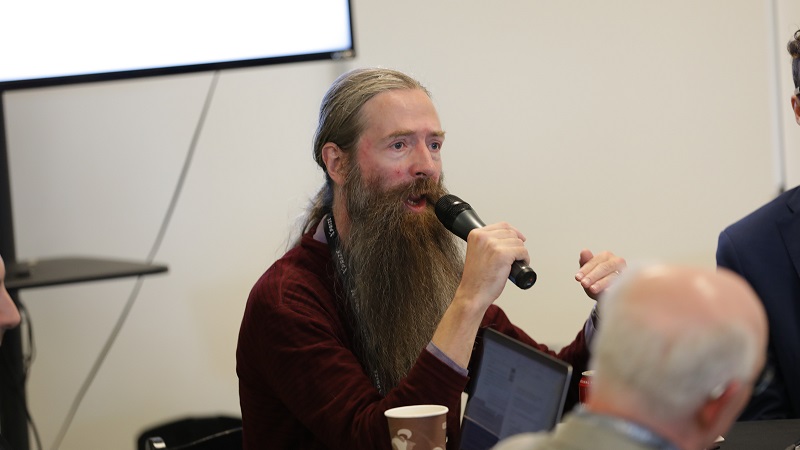
Because of the formidable hurdles to political-party ballot access on the State level, the candidates seeking the USTP’s endorsement would need to officially run as independent candidates. However, if those candidates qualify for inclusion on their States’ ballots, then, in approximately half of the jurisdictions in the United States, it would be possible to use a “political party designation” of “Transhumanist Party” to accompany the candidate’s name on the ballot.

Learn About the Candidates

The U.S. Transhumanist Party / Transhuman Party (USTP) has asked all of its declared candidates for its 2019 Presidential Primary to answer the same essential questions so as to inform the USTP membership of the candidates’ stances on key issues and provide each USTP member the opportunity to make an informed decision, including through comparisons of the candidates’ answers. The USTP will endeavor to pose the same questions and generate profiles for all of the candidates who make their intentions known to us via the Presidential Candidate Declaration of Interest Form.

The USTP has not, at this time, endorsed any Presidential candidate. Such an endorsement will occur as a consequence of the USTP Electronic Primary, which is intended to be held in August 2019. At this time, all contents of the candidate profiles are for informational purposes only, in order to contribute to a more informed membership and enable knowledge of the candidates and their positions to spread.

The order of presentation of the candidate profiles below is alphabetical by first name. It is not intended to indicate any preference or lack thereof for any of the candidates.

Brent

Reitze

Candidacy withdrawn on May 22, 2019

Charles

Holsopple

Dan

Good

Candidacy withdrawn on July 6, 2019

 Johannon

Ben Zion

Candidacy withdrawn on May 22, 2019

Rachel

Haywire

Endorsement and Electronic Primary Process – Anticipated Timeline

The following timeline is approximate and subject to change as circumstances may necessitate. However, it is intended to provide an overarching impression of the sequence and desirable speed of steps for reaching an endorsement of a candidate for President of the United States.

– April 5, 2019 – July 5, 2019: Candidates declare their intention to seek the USTP Presidential endorsement and begin to campaign through channels of their choosing (online and/or in person) to attract supporters and spread awareness of their messages.

– July 6, 2019: First Transhumanist Presidential Debate (Virtual)

– July 6 – August 3, 2019: Candidates continue to campaign; the USTP will introduce structured questions on various issues of interest for the candidates to respond to in writing. The candidates’ answers will be spread by the USTP, which will have the effect of further raising awareness of the candidates and their stances.

– July 16, 2019: The Transhumanism Handbook (edited by Newton Lee) is expected to be released. It is hoped that candidates will read this book (or significant portions thereof) and reference the ideas therein as part of their public outreach and campaign-related discussions.

– August 3, 2019: Second Transhumanist Presidential Debate (Virtual)

– August 3-10, 2019: Final week for candidates to campaign prior to the electronic primary.

– August 11-17, 2019: Electronic ranked-preference primary (7-day voting period, simultaneous for all USTP members).

– August 18-24, 2019: Votes from the electronic primary are tabulated and released. The candidate winning the USTP endorsement is announced simultaneously with the release of the results.

– August 24, 2019 – November 3, 2020: The candidate winning the USTP endorsement continues to campaign until Election Day 2020. The other candidates may seek the USTP’s endorsement for other federal, state, or local offices.

– August 24, 2019 – September 30, 2019: Potential separate campaign and primary process for the selection of the USTP Vice-Presidential nominee.

– Early October 2019: Potential for the candidate winning the USTP endorsement to deliver an official acceptance speech in a venue with a large number of attendees.

– October 15, 2019 – November 30, 2019: Selection of a Transhumanist Cabinet to assist the USTP Presidential nominee to demonstrate a model of governance and constructive policymaking in the event of a Transhumanist Presidency.

The USTP is committed to running a fair, transparent, and (small “d”) democratic election with no predetermined outcome. Each of these candidates has the opportunity to make his or her case to the USTP membership and to recruit new members prior to the August 10, 2019, cutoff date for registration. We find each candidate to be insightful, intelligent, accomplished, and representative of perspectives that constitute the transhumanist movement in all of its variety and will help shape that movement in the years to come. Accordingly, it is important that this election give voice to these perspectives and do so in a civil, orderly, and constructive manner. We will have true competition in this election – genuine debates, discussions of issues, consideration of the candidates’ similarities and differences. The candidates will be free to utilize the means, methods, and personal styles at their disposal to engage in such competition. At the same time, we will also have true structure in this election – an objective process that will apply equitably to all and provide a framework for different points of view to be articulated, with an aim of educating the public, raising the profile of the transhumanist movement, and hopefully resolving some key differences along the way, by means of the process itself.


Wealth, Power, and the Prospect of Reversing Aging – Article by Arin Vahanian

Wealth, Power, and the Prospect of Reversing Aging – Article by Arin Vahanian

May 18, 2019 Arin Vahanian Comments 0 Comment

Arin Vahanian


I often ask myself, “Why do wealthy and/or influential people seem to support spending billions of dollars on weapons and exploring outer space, when, with their massive wealth and resources, they could help reduce human suffering and dramatically improve the quality of life for billions of people?”

And this question takes me back to a discussion I had last year with gerontologist Aubrey de Grey, during which he recounted to me a meeting he had with an ultra high-net-worth (UHNW) individual. The purpose of the meeting was to raise money for aging and life-extension research, and the UHNW individual refused to donate to SENS Research Foundation, or even to get involved, stating something to the effect of, “It won’t happen in my lifetime.”

That response perplexed me. Here we had a very successful and intelligent person, who, rather than help ensure his own children (as well as others’ children) could live a healthier and longer life, refused to do anything, for the simple reason that he did not believe we could make much progress on reversing aging in his lifetime.

While this is indeed a selfish way to look at things, it is by no means uncommon. In fact, I have been racking my brain recently, trying to figure out why the people who are best-equipped to do something about life extension and aging, do not do so (or do not do enough).

To be fair, there are a few wealthy and influential people who support research into aging and life extension, the most notable being entrepreneur Jim Mellon. However, they seem to be the exception rather than the norm.

Indeed, why do people like Jeff Bezos, Richard Branson, and Elon Musk, who possess incredible resources and influence, choose to spend money and time on attempting to colonize hostile, uninhabitable planets hundreds of millions of kilometers away, especially considering that they and their loved ones (if they are lucky to live long enough) will die of aging-related causes such as heart disease, dementia, and cancer?

While I cannot speak for the aforementioned people, I believe there are several reasons why people in a position of power or wealth refuse to do much about supporting research on aging.

The first reason is that aging and death have been considered inevitable. Indeed, even though we have been able to put a human being on the Moon, we have been unable to prevent a single human being from aging. Enormously wealthy and successful people tend to be quite pragmatic, and so I imagine that they would not want to fund an endeavor or be a part of something they believed had no chance of success. However, we have evidence that we are making progress on this front, or at the very least, that reversing aging and implementing life-extension technologies are worthy endeavors.

In fact, in 2005, MIT Technology Review organized a panel of world-renowned experts (including molecular biologists) and offered a $20,000 prize to anyone who could disprove the SENS research program and demonstrate that reversing aging is not worthy of consideration. However, none of the contestants were able to do so. On the other hand, there is no evidence that human life is sustainable on any other planets in our solar system (while human life is perfectly sustainable on Earth), and by most professional estimates, it would take incredible technological advancements and financial resources to even enable people to temporarily stay on a planet such as Mars. We should also consider the fact that there have been no studies performed on the massive changes that would occur to the human body as a result of living on another planet.

Thus, it actually appears more realistic to work on reversing aging than it would be to work on colonizing other planets. But even if we are not able to completely reverse aging, what if we were able to slow aging? Wouldn’t it be desirable to have an additional five to 10 years of healthy life? Any progress we could make on life extension would be worth it, given that it would directly add healthy years to a person’s life. One thing is for certain – doing nothing ensures that very little will change, and that humans will more than likely continue living this average lifespan of 79 or so years (with very modest improvements over time), with much of it in the later years being in sickness and poor health.

Another reason for the refusal to fund aging and life extension research may be a rather pessimistic one. It is entirely possible that billionaires and governments are hedging their bets in the event that climate change or some other scenario causes wide-scale suffering (the likes of which have never been seen before) and a potential destruction of the planet, along with the rapid extinction of the human species. If that were the case, and Earth was about to be destroyed, it would make sense to pour resources into colonizing other planets. However, I think the likelihood of something like this occurring, at least in the near future, is extremely slim. Further, we have much evidence to support the fact that the planet could sustain a larger population and that technological improvements, as well as renewable energy, and seasteading, can prevent such an apocalyptic scenario from occurring. In fact, despite the challenges we are facing in terms of sustainability, we are making good progress, and it seems unreasonable to me to give all of this up, throw in the towel, and chase a pipe dream of living on another planet (when the one we have now is perfectly suited to human life). Also, given that we have the technology to save our planet from being engulfed in chaos and destruction, but do not currently have the technology to live on other planets, wouldn’t it make sense to save Earth first, rather than attempting to embark upon costly journeys to other planets, especially journeys that have little guarantee of success?

Yet another reason may be that many people, including those in a position of power, have bought into the idea of an afterlife. However, if we are completely honest with ourselves, there is no evidence that an afterlife exists, whereas there is evidence that we are making progress with reversing aging, even if that progress is arriving at a pace that is slower than we would have liked. With that being said, I would never want to deny anyone the right to believe in whatever they want. The question is, however, whether it is beneficial to adopt a zero-sum attitude to this matter. The fact is, believing in an afterlife and contributing to aging and life-extension research are not mutually exclusive. One can have any religious beliefs one likes, and subscribe to the idea that there is an afterlife, while also contributing to the beauty of existence here on Earth.

Finally, working on a cause such as reversing aging appears to not be as exciting as the prospect of exploring Mars, which is why people would rather update their LinkedIn (or Tinder) profile with “Entrepreneur” or “Swashbuckling Adventurer” or “Arms Dealer”, even, rather than “Gerontologist”.  In all seriousness, though, I have always found the idea of exploring faraway lands, as well as other planets, to be exciting. But if human beings are excited about exploring the unknown, shouldn’t we also be interested in exploring a process as complex as aging, especially given that there is much we still do not know about it? Also, the implications of making advancements in this field are huge. This is because the un-sexy work that gerontologists are doing will lead to us living longer, healthier lives, and so this very important work should not be ignored. In fact, it is a massive waste of resources to try to colonize uninhabitable planets at the expense of ensuring good health and longevity, when all of humanity battles with disease and death. It would even be more noble to focus our efforts on eliminating poverty (something that the Chinese government, for instance, has dedicated its efforts to).

I do not wish to dissuade anyone from exploring outer space, but neither should we avoid doing what needs to be done on our planet. I only wish to ask whether spending billions on space exploration is the best use of resources at our disposal, considering that there is still much work to be done here on Earth.

As mentioned previously, it should not be a zero-sum game. In an ideal world, we could dedicate resources to both aging research and space exploration. However, when the budget for NASA is $21.5 billion and the budget for aging research at the National Institute on Aging is $40 million, one has to start asking questions. Actually, one could argue neither budget is large enough, especially given that the U.S. Department of Defense budget is $686 billion.

Why do we spend hundreds of billions of dollars on missiles and bombs to combat a highly-exaggerated threat, when there is the absolute certainty that billions of people will suffer and then die, many of them prematurely, due to aging-related diseases such as heart disease, cancer, and dementia?

What makes exploring outer space so much more important than ensuring that billions do not die prematurely from aging-related diseases? Will picking up and holding red dust on a hostile, uninhabitable planet be more fulfilling than holding one’s child or loved one in one’s arms?

What does it say about our society when we are content to allow friends and family members to perish in undignified ways, while we dream about stockpiling as many weapons as possible, reliving fictional fantasies inspired by comic books and movies, and ignoring challenges here on Earth?

These are questions we must ask ourselves, and, more importantly, must demand those in power to ask themselves. At the end of the day, if we as a society are comfortable with the tradeoffs and decide en masse that dealing weapons and exploring outer space are more important than working on curing disease, reversing aging, and ensuring that everyone on Earth lives a dignified life, then we can rest assured knowing that we gave this most important of topics much consideration.

However, given the facts, I do not think we have reached that point yet. We have, however, reached a point where there is promise that we are making progress in fighting aging, and it is irresponsible and reckless to ignore these gains while entertaining fantasies of living on other planets. It makes little sense to try to live in a dignified manner on a dangerous, inhospitable, isolated planet that is not suitable for human life, when we are having difficulty living in a dignified manner here on Planet Earth (a planet that is perfectly suited to human life). The solution is not to dream about moving to Mars while leaving the elderly and unhealthy here to die. The solution is also not to increase defense funding, when we already have more weapons than we know what to do with. The solution is to help our brothers and sisters here on Earth live longer, healthier, more fulfilling lives. And thus, this is a call to action for those of you who are in a position of power or wealth and who can dedicate resources to ensuring that your loved ones, and everyone else’s loved ones, can live better.

One thing I would like to ask UHNW individuals and politicians is, what will you do with the great wealth, status, and power you have accumulated? Will you play golf and remark that “it won’t happen in my lifetime”? Or will you actually do something to ensure that your children won’t be doomed to a short life, during which they will suffer from debilitating disease and eventually die?

Arin Vahanian is the Director of Marketing for the U.S. Transhumanist Party / Transhuman Party.

Anti-Aging Gene Therapy for Dogs Coming This Fall – Article by Steve Hill

Anti-Aging Gene Therapy for Dogs Coming This Fall – Article by Steve Hill

May 11, 2019 Steve Hill Comments 0 Comment

Steve Hill


Editor’s Note: The U.S. Transhumanist Party features this article by Steve Hill of the Life Extension Advocacy Foundation (LEAF) originally published on the LEAF site on May 8th, 2019.  The article brings attention to a new program that aligns with our mission of ending age-related diseases, which the U.S. Transhumanist Party supports as part of our policy goals.

~ Brent Reitze, Director of Publication, United States Transhumanist Party, May 10th, 2019


In an article last May, we covered how Rejuvenate Bio, a startup biotech company led by Professor George Church, was planning to reverse aging in dogs as a step towards bringing these therapies to us. Those plans are now starting to move forward with news of a trial launch in the fall later this year.

Developing anti-aging therapies in dogs is the first step

Back in 2015, the Church lab at Harvard began testing a variety of therapies focused on age reversal using CRISPR, a gene editing system that was much easier and faster to use than older techniques. Since then, Professor Church and his lab have conducted a myriad of experiments and gathered lots of data with which to plan future strategies for tackling aging.

Last year, we learned that Rejuvenate Bio had already conducted some initial studies with beagles and were planning to reverse aging using CRISPR gene therapy. The goal was to move these studies forward to a larger scale as a step towards bringing similar therapies to humans to prevent age-related diseases. Professor Church was so confident that his team would find a solution, he even suggested that he may be one of the first human volunteers once therapies finally reach people.

“Dogs are a market in and of themselves,” Church said during the 2018 Radical Wellness event in Boston. “It’s not just a big organism close to humans. It’s something that people will pay for, and the FDA process is much faster. We’ll do dog trials, and that’ll be a product, and that’ll pay for scaling up in human trials.”

Choosing to develop therapies for dogs helps pave the way for therapies that address the aging processes in humans and could support their approval, which would otherwise be much more challenging. Currently, if you were to tell the FDA that you want to increase lifespan in humans by 20 years, you would need to come back in 20-30 years with the data, which just isn’t practical.

However, if Rejuvenate Bio can produce robust data in dogs showing that some processes of aging have been reversed, it lends considerable justification for human trials. The company is also taking a different tack; instead of focusing on increasing lifespan, it is instead targeting an age-related disease common in dogs, which should be cured if age reversal occurs.

This is based on the concept that in order to treat age-related diseases and cure them, you need to target the root causes of those diseases, which are the underlying aging processes themselves. If Rejuvenate Bio is successful, this would lend additional supporting evidence that directly treating aging to prevent age-related diseases could also work in humans.

Gene therapy trial for mitral valve disease

Rejuvenate Bio has now announced that it will be launching a gene therapy trial in dogs during the fall this year to combat mitral valve disease (MVD), a condition commonly encountered in the Cavalier King Charles Spaniel breed and directly caused by the aging processes. The study will initially focus on this particular breed and expand to include other dogs with MVD as time passes.

We are developing a novel cardio-protective gene therapy to stop the progression of heart failure in dogs. As a part of the technical development, we will launch a study in dogs with Mitral Valve Disease (MVD) in the fall of 2019. This study will provide valuable information that will aid our effort to address MVD.

MVD is due to the failure of the mitral valve in the heart, a one-way valve between the two chambers of the heart that prevents the backflow of blood as it is pumped around the body. As aging occurs, the mitral valve can degenerate, which allows backflow to occur, leading to left atrial chamber enlargement, congestive heart failure, and, ultimately, death.

This gene therapy is focused on adding a new piece of DNA into the cells of the dogs in order to halt the buildup of fibrotic scar tissue in the heart, which is linked to the progression of MVD and other forms of heart failure. Fibrotic tissue is the result of imperfect repair, which occurs when a more complete repair is not possible due to a lack of replacement cells or high levels of inflammation.

The researchers are keen to point out that this new piece of DNA is not passed onto the offspring of the animal and cannot transfer between dogs. This is because the therapy does not alter the DNA in the germline cells, the cells that are involved in reproduction and passing on genetics to an organism’s offspring.

If you wish to enroll your Cavalier King Charles Spaniel in the trial coming this fall, then register your interest with Rejuvenate Bio to learn more about eligibility and how to apply.

Conclusion

This is a very exciting study and, as the company discusses on its project page, the therapy may also be useful for other heart conditions, such as dilated cardiomyopathy (DCM). If the initial results are successful, it would be highly likely that we could see more dog breeds included as well as other conditions, including DCM, added to the program.

We wish Professor Church and Rejuvenate Bio every success, as this forms the basis for potentially moving such therapies into human trials more quickly as well as potentially helping our furry friends to live longer, healthier lives as well. We love our pets, and it is only logical that we should want the same healthy and longer lives for them as we do for ourselves, and the process for them is the same for us: new medical innovations that target the aging processes directly in order to end age-related diseases.

About  Steve Hill

As a scientific writer and a devoted advocate of healthy longevity technologies, Steve has provided the community with multiple educational articles, interviews and podcasts, helping the general public to better understand aging and the means to modify its dynamics. His materials can be found at H+ Magazine, Longevity reporter, Psychology Today and Singularity Weblog. He is a co-author of the book “Aging Prevention for All” – a guide for the general public exploring evidence-based means to extend healthy life (in press).

About LIFE EXTENSION ADVOCACY FOUNDATION (LEAF)

In 2014, the Life Extension Advocacy Foundation was established as a 501(c)(3) non-profit organization dedicated to promoting increased healthy human lifespan through fiscally sponsoring longevity research projects and raising awareness regarding the societal benefits of life extension. In 2015 they launched Lifespan.io, the first nonprofit crowdfunding platform focused on the biomedical research of aging.

They believe that this will enable the general public to influence the pace of research directly. To date they have successfully supported four research projects aimed at investigating different processes of aging and developing therapies to treat age-related diseases.

The LEAF team organizes educational events, takes part in different public and scientific conferences, and actively engages with the public on social media in order to help disseminate this crucial information. They initiate public dialogue aimed at regulatory improvement in the fields related to rejuvenation biotechnology.

Cyborg and Transhumanist Forum at the Nevada State Legislature – Scheduled for May 15, 2019

Cyborg and Transhumanist Forum at the Nevada State Legislature – Scheduled for May 15, 2019

May 9, 2019 Gennady Stolyarov II Comments 2 comments


If you are interested in transhumanism, life extension, biohacking, prosthetics, implantable technologies, advances to help the disabled, and the political and philosophical implications of all of these areas, then you are encouraged to come to the Cyborg and Transhumanist Forum at the Nevada State Legislature in Carson City, Nevada, on Wednesday, May 15, 2019. This promises to be the first event of its kind – a great opportunity for advocates of emerging technologies to communicate with legislators, lobbyists, media, and the general public, and educate them about transhumanism and its technological dimensions while also dispelling common fears and myths.

The Cyborg and Transhumanist Forum will be held from 9 a.m. to 5 p.m. on May 15.

Address:

Nevada State Legislature Building

401 S Carson St, Carson City, NV 89701

Second Floor Atrium (See the Second Floor Map)

Co-organized by the Future Grind podcast, the Nevada Transhumanist Party, and magician Anastasia Synn (who testified against Assembly Bill 226 at the Nevada Senate Judiciary Committee), and supported by the Nevada Technology Association, the Cyborg and Transhumanist Forum will feature practical demonstrations of emerging technologies, such as implantable microchips, in order to dispel common fears and myths about those technologies and educate the public about their capabilities and limitations. Also, the event will feature a discussion of technological augmentations, transhumanist philosophy, the uses of technology to overcome disabilities and extend longevity and health, the directions of technological evolution in the coming decades, and the policy implications stemming from these developments.

Most of the event will be in a conversational format as participants will interact with visitors and answer their questions.

If you could either travel to Carson City, Nevada, on Wednesday, May 15, 2019, or share this event with other transhumanists and life-extensionists who you think might be able to do so, it would be greatly appreciated. Even if you cannot attend yourself, you can help by spreading information about this event to others who might be in a position to attend – especially if they live in Northern Nevada or Northern California (but we welcome others who would have to travel farther!).

We need more transhumanists in attendance at this event! Please send an e-mail to U.S. Transhumanist Party Chairman and Nevada Transhumanist Party Chief Executive Gennady Stolyarov II if you wish to participate as one of the speakers educating people about transhumanism and emerging technologies. The more representation we have, the better! No matter what your areas of expertise or what flavor of transhumanism you espouse – whether you seek to pursue biological life extension, mechanical/electronic augmentations, policy reforms, or all of the above – your involvement and perspectives will be welcome. This is a unique opportunity for transhumanists to access policymakers and render them aware of the imperative of protecting the rights of technological innovators and creating an environment conducive to an acceleration of beneficial technological progress.

Supporting the SomosMiel Revolution: Time to Act – Article by David Wood

Supporting the SomosMiel Revolution: Time to Act – Article by David Wood

May 4, 2019 David Wood Comments 1 comment

David Wood


Editor’s Note: The U.S. Transhumanist Party features this article by David Wood, Chair of the London Futurists and Secretary of Humanity+.  He argues in support of the Somos Miel party and their work in Spain, initiatives which are similar to work supported by the US Transhumanist Party in the United States. This article was originally posted on David Wood’s blog on April 24, 2019.

~ Brent Reitze, Director of Publication, United States Transhumanist Party, May 2nd, 2019


The most important changes often arise from the bold actions of outsiders.

Those of us who desire positive humanitarian change need to be flexible enough to recognise which outsiders can be the best vehicles for the transformations we want to see in society.

And we need to be ready to get behind these opportunities when they arise.

Consider the key example of the transformation of healthcare, towards a new focus on the reversal of aging as providing the best route to better health for everyone.

For those of us who hold that vision of the forthcoming “abolition of aging”, what are the most practical steps to make that vision a reality?

Here’s my answer. It’s time to get behind “Somos Miel”.

Futuristicamente

Miel is a recently formed political party, which is taking part in Spain in the elections on the 26th of May to the European Parliament.

The word “miel” has two meanings. First, it’s the Spanish for “honey”. Somos Miel means “We are honey”. The association of honey with improved health exists in many cultures around the world.

Second, MIEL is the abbreviation for “Movimiento Independiente Euro Latino”. Translating from Spanish to English gives: “The Independent Latin Euro Movement”.

Heading the party’s list of candidates is José Cordeiro, described as follows in the introduction of his Wikipedia article:

José Luis Cordeiro is an engineer, economist, futurist, and transhumanist, who has worked on different areas including economic development, international relations, Latin America, the European Union, monetary policy, comparison of constitutions, energy trends, cryonics, and longevity. Books he has authored include The Great Taboo, Constitutions Around the World: A Comparative View from Latin America, and (in Spanish) El Desafio Latinoamericano (“The Latin American challenge”) and La Muerte de la Muerte (“The death of death”).

Cordeiro was born in Caracas, Venezuela from Spanish parents who emigrated from Madrid during the Franco dictatorship…

He’s evidently a man of many talents. He’s by no means a European political insider, infused by the old ways of doing politics. Instead, he brings with him a welcome spread of bold outsider perspectives.

When asked if he is from “the right” or “the left”, his answer, instead, is that he is from “the future”. Indeed, he often appends the greeting “futuristicamente” after his name, meaning “Yours futuristically”.

José is also known as a vocal advocate for “revolution” – a revolution in the potential of humanity. He has the courage to advocate ideas that are presently unpopular – ideas that he believes will soon grow in public understanding and public support.

Working together

I first met José at the TransVision 2006 conference in Helsinki, Finland. I remember how he spoke with great passion about the positive possibilities of technology in the next stage in the evolution of life on the earth. As the abstract from that long-ago talk proclaims:

Since the Big Bang, the universe has been in constant evolution and continuous transformation. First there were physical and chemical processes, then biological evolution, and finally now technological evolution. As we begin to ride the wave into human redesign, the destination is still largely unknown but the opportunities are almost limitless.

Biological evolution continues but it is just too slow to achieve the goals now possible thanks to technological evolution. Natural selection with trial and error can now be substituted by technical selection with engineering design. Humanity’s monopoly as the only advanced sentient life form on the planet will soon come to an end, supplemented by a number of posthuman incarnations. Moreover, how we re-engineer ourselves could fundamentally change the ways in which our society functions, and raise crucial questions about our identities and moral status as human beings.

Since that first meeting, the two of us have collaborated on many projects. For example, we both sit on the board of directors of Humanity+. José has spoken on a number of occasions at the London Futurists events I organise – such as TransVision 2019 which will take place in London on 6-7 July. And we are named as co-authors of the Spanish language book La Muerte de la Muerte which has attained wide press coverage throughout Spain.

Another thing we have in common is that we are both impatient for change. We’re not content to sit back and watch impersonal forces operate in society at their own pace and following their own inner direction. We believe in doing more than cheering from the sidelines. We both believe that the actions of individuals, wisely targeted, can have a huge impact on human affairs. We both believe that inspired political action, at the right time, can unleash vast public resources in support of important transformational projects.

We also recognise that delays have major consequences. Each single day that passes without the widespread availability of reliable treatments for biological aging, upwards of 100,000 people die as a result of aging-related diseases. That’s 100,000 unnecessary human deaths, every single day – preceded in almost every case by extended suffering and heartache.

Moving faster

On a positive note, there is considerable good news to report, regarding progress with regenerative medicine and rejuvenation biotechnology. The Undoing Aging conference in Berlin last month contained an encouraging set of reports from a host of world-leading scientists working in this field. Keep an eye on the Undoing Aging channel in YouTube for videos from that event. For a review of the human implications of these scientific breakthroughs, the forthcoming RAADfest in Las Vegas in October will be well worth attending – to hear about “the most powerful information and inspiration for staying alive”.

But the opportunity exists for progress to go much faster, if more elements of society decide to put their weight behind this project.

That’s where Miel comes in. José is a well-known figure in Spain, due to his many media appearances there. Current indications are that he stands a fighting chance of being elected to the European Parliament. If elected, he’ll be a tireless public advocate for the cause of rejuvenation healthcare. He’ll promote studies of the economic implications of different scenarios for the treatment of aging. He’ll also champion the creation of a European Agency for Anti-Aging, to boost research on how addressing aging can have multiple positive benefits for the treatments of individual aging-related diseases, such as dementia, cancer, and heart failure.

You’ll find a number of articles on the Miel blog about these aspects of Miel policy. For example, see “Within 25 years, dying will be optional” and “I’m not afraid of artificial intelligence, I’m afraid of human stupidity”.

You’ll also observe from its website how Miel is, wisely, giving voice in Spain to a community that perceives itself to be under-represented, namely the Latin Americans – people like José himself, who was born in Venezuela. Those of us who aren’t Latin Americans should appreciate the potential for positive change that this political grouping can bring.

Time for action

Despite the groundswell of popular support that Miel is receiving, it’s still in the balance whether the party will indeed receive enough votes throughout Spain to gain at least one member in the European Parliament.

I’m told that what will make a big difference is an old-fashioned word: money.

If it receives more donations, Miel will be able to place more advertisements in social media (Facebook, YouTube, Instagram, etc). With its messages in front of more eyeballs, the chance increases of popular support at the ballot box.

In a better world, money would have a lower influence over politics. But whilst we should all aspire to move politics into that better state, we need to recognise the present reality. In that reality, donations have a big role to play.

To support Miel, visit the party’s donation page. Donations are accepted via credit cards, debit cards, or PayPal.

But please don’t delay. The elections are in just one month’s time. The time for action is now.

Interview of Dr. José Luis Cordeiro by Elena Milova

Interview of Dr. José Luis Cordeiro by Elena Milova

May 2, 2019 Elena Milova Comments 0 Comment

Elena Milova
José Luis Cordeiro


Editor’s Note: The U.S. Transhumanist Party features this interview of Dr. José Luis Cordeiro by Elena Milova at LeafScience.Org, originally published on their site on April 19, 2019.  Dr. Cordeiro is working to foster transhumanist-friendly political policies in Spain, a goal supported by the U.S. Transhumanist Party as part of our policy objectives.

~ Brent Reitze, Director of Publication, United States Transhumanist Party, May 1st, 2019


At Undoing Aging 2019, jointly organized by SENS Research Foundation and Forever Healthy Foundation, there was a session focused on the ways to make healthy life extension and medical progress a greater part of the global agenda. Among the speakers there was Jose Cordeiro, the vice chair of Humanity Plus, director of The Millennium Project, fellow of the World Academy of Art and Science, and board member of the Lifeboat Foundation.

Jose earned his Bachelor’s and Master’s degrees in Mechanical Engineering at the Massachusetts Institute of Technology (MIT) in Cambridge, Massachusetts. His thesis was focused on the modeling of the International Space Station. Jose has also studied International Economics and Comparative Politics at Georgetown University in Washington, D.C., and received his MBA in France at INSEAD, where he focused on Finance and Globalization.

Last year, Jose decided to begin his political activities in order to foster the development of rejuvenation biotechnologies in Spain and to work on the integration of Latin American immigrants into Spain’s aging society and thus maintain the country’s productivity. He kindly agreed to give me an interview to discuss more about his ambitious initiative.

Hello, Jose, thanks for taking the time to talk with us. You are currently beginning your campaign to win several seats in the European parliament. This is a very unusual situation, because it’s still rare that transhumanist ideas like significant life extension are part of a political agenda. Before we dig into your political program, I would really want to know more about you as a person and what kind of experiences led you to becoming a transhumanist in the first place. Please tell us a few things about your childhood; what life events or books helped you to develop the vision that you have right now?

My family is from Spain. During the dictatorship of Francisco Franco, this country became very poor, and that pushed my family to consider moving to Venezuela. At the time, Venezuela was a prosperous country, so we had moved, and I grew up there. When I was a little child, there was no color TV; it was black and white back then. I remember that the first transmission in color was the moon landing of the Apollo mission. I was so fascinated by the idea that man had gone to the moon and also by the color picture, even though the moon was mostly gray. That sparked my interest in science fiction. My mother gave me books by Jules Verne. To me, he was an idol; I loved his writing. Then, there were other writers, like Isaac Asimov and Sir Arthur C. Clarke, who helped me develop my imagination.

When I was older, I even went to meet Sir Arthur C. Clarke in Colombo, Sri Lanka. It turned out that he had a scuba diving center in Indonesia. You see, he believed that going into outer space and going into the ocean were the ultimate experiences and that they both showed how weak our bodies were. To me, it was one more piece of proof that we really need technology to survive in outer space or in the oceans. I had an opportunity to invite him to talk at the transhumanist conference that I had organized. That was really beautiful.

Speaking of the other books, I also read Robert Heinlein’s books on Mars, and all of this combined really made me go into engineering. I decided to go to MIT, the Massachusetts Institute of Technology, and I majored in engineering in order to be able to participate in all these fascinating projects of mankind in space. I have been very lucky to have four Nobel laureates among my teachers, and I’ve been always following future trends. Since that time, I read the books of the Club of Rome and the World Future Society. There were many magazines about science, such as Popular Mechanics, Computer World, and others. Then, I learned about Extropians and the World Transhumanist Association when it was being created, and I learned a lot from this community, too.

I lived three years in Japan and four years in California. Then, I met Ray Kurzweil at MIT, as he was one of its board members. He’s a fantastic person, and I read all his books, the Age of intelligent machines was the first one, and then in 1998-99, he published the Age of Spiritual Machines, where he makes all his forecasts of the future.

It seems to me that there is still a huge gap between technology, which involves developing all sorts of machines and engineering, and life sciences, rejuvenation research, and life extension. What were your ideas or some events in your life that actually made you look into this direction as well?

Because of my science fiction reading and my training at MIT, I have been very much a technologist, futurist, and transhumanist. Like Ray Kurzweil, I believe that we will transcend the biological condition and move into a post-biological condition. Arthur C. Clarke said that we are carbon-based bipeds and that we should actually evolve and transcend.

I was not particularly interested in longevity and rejuvenation technologies until 1999-2000, when a friend of mine died. Also, sadly, my father died in 2013, and that really affected my life and my views. I was living in California back when the humanitarian crisis in Venezuela had happened. My father died of something that no one dies of today, which is a lack of access to dialysis. The crisis was so bad that there were no medical services, no food, no clean water, no electricity, no gasoline in the country with the largest oil reserves on the planet. My family had to witness how a bad government can destroy a country and put a whole nation into misery. I consider myself lucky that I managed to take my mother from Venezuela back to Spain, and I am so happy that she is alive. Then I decided to stay in Spain and work internationally.

I am traveling around the globe, as I am giving lectures at major universities in many countries. As you know, I teach in two universities in Moscow: in the MIPT and in the Higher School of Economics. I also teach in universities in Japan and in Korea, focusing on several main topics that are important for shaping the global agenda in a reasonable way. In the Higher School of Economics, I talk about technologies, because economists need to know about emerging technologies, while the MIPT is just the opposite; I talk more about the future of economics, the world moving from scarcity to abundance, and how technology can help with that. I talk about energy, about the necessity to switch from fossil fuels to renewables. Actually, I coined the word ‘energularity’: it’s an unlimited amount of energy that we can use for our needs. I talk about longevity, rejuvenation, regenerative medicine, the possibility to control aging and remain healthy for as long as we want. I am teaching the young generation of leaders how to build the future of global prosperity, and I decided to bring my knowledge and my vision to the political arena, too.

Could you please tell our readers about the pillars of your political program? What are the specific goals that you are going to focus on?

Two main things that I plan to focus on are the healthy longevity of the Spanish population and the integration of immigrants from Latin America. Let me explain why I consider these two topics extremely important and how they are intertwined.

Spain, as you know, is one of the countries with the highest life expectancy in the world. Our people live very long. However, this also means that our population is aging; there is a large and fast-growing share of people who are 65 years old and older, which is now over 20%, and these people have age-related chronic diseases. The medicine of the 20th century cannot restore health, and there are many age-related diseases that remain incurable, causing enormous amount of human suffering. However, it was recently proven in animal studies that by directly targeting the processes of aging, the root causes of aging, we could learn how to cure these diseases, reverse aging, and ensure better health and productivity in later life. If we support scientific research on the mechanisms of aging, we can develop cures for people very soon; in the next 10 years, there will already be several therapies of a new type that will be able to slow down and even partially reverse aging.

United Nations Department of Economic and Social Affairs/Population Division World Population Prospects: The 2017 Revision, Volume II: Demographic Profiles

So, healthy longevity for the Spanish population is my primary focal point. I have three very clear targets. The first is the creation of the European Institute on Aging to work on the problem of aging and on the latest rejuvenation biotechnologies and to put together all the knowledge in different areas and different countries to give our aging society innovative treatments as soon as possible.

The second target is the development of more flexible regulations. I actually like to say that Americans invent things, the Chinese or the Japanese improve things, and the Europeans regulate. Sadly, there is overregulation all over Europe. Let me give you an example. In Japan, if you have already done phase two of human clinical trials, which means that you have already proven that the treatment is safe and it works, even if the experimental group in phase two is not large, a patient can get those treatments, especially if the patient is in critical condition, or, even worse, terminal condition. People in Japan have a chance to use the innovation and a chance to overcome the disease. You can do that in Japan but not in Europe, despite the fact that the pace of population aging in Japan and in Europe is the same; we have many old people around.

The third target is an increase in the science and technology budget of the European Union. For the next framework program, which is called Horizon Europe, beginning in 2021, the budget is expected to increase to 100 billion euros, but I think it should be increased even more, to 120 billion. The projects sponsored by Horizon Europe should be more also focused on regenerative biotechnologies in order to cope with the massive population aging and population decline.

So, you would like to contribute to the creation of a coordination center on aging research, appropriate funding for this research, and on regulatory improvement in order to ensure that the emerging rejuvenation biotechnologies can be available as soon as possible?

That is right, and I have done a great deal preparing the ground for these improvements. As you know, as a proponent of healthy life extension, I have organized many scientific conferences in Spain, and I have invited international luminaries from the field of aging research, such as Dr. Aubrey de Grey, who was the first to recognize the mechanisms of aging as new therapeutic targets.

I have always tried to spread the word about the work of our brilliant Spanish scientists, and I have also written several books on this topic to educate the public on this matter and to allow more people to benefit from the development of rejuvenation technologies; the last one of my 13 books is currently a bestseller in Spain called La Muerte De La Muerte (The Death of Death).

Yes, I have seen it – are you planning to have it translated into other languages?

Yes, it is coming out now in Portuguese, then in Korean, and then in other languages. I hope that there will also be English and Russian translations soon enough.

However, this is only one part of my program. The other one is based on the other pressing issues of Spain. You have heard the motto of my campaign, #SomosMIEL – MIEL stands for ‘Movimiento Independiente EuroLatino’ (the Independent EuroLatino Movement).  Because of the crisis in Latin America, and especially Venezuela, Spain has become a home for many immigrants; around 10% of the Spanish population are immigrants. Think about it. The native Spanish population is aging, our population is declining, and our workforce is shrinking. The immigrants are people with a similar cultural and religious background, who speak Spanish perfectly, and who have a good education and could contribute to the development of the country much better if we removed certain barriers and restrictions.

First, I think we need to eliminate the Schengen visa for people in Ecuador, the Dominican Republic and Bolivia, at least in the case of family reunification. Next, I would focus on extending the approved period of being an independent worker from one to five years. The third target is to contribute to the homologation of titles and degrees in education. When all these immigrants come, even though we speak the same language, their degrees are not accepted. There is already a good precedent of solving this problem in Europe with the Bologna Declaration, the agreement that allows homologation of all titles in Europe. However, now we have to take this to the international level and certainly with Latin America.

There is one more question that I plan to work on: the recognition of Spanish as one of the official languages of the European Union. Spanish is the second most frequently spoken language in the world after Chinese. It is not even recognized in the European Union, which has only three official working languages: English, French, and German.

As we are moving towards a world that is more and more strongly connected, I think it makes perfect sense to facilitate communication and exchange of valuable knowledge and experience between the major regions, such as Spain, the European Union, Latin America, and the United States. There are 50 million Spanish speakers in the United States.

So, technically, what you’re trying to achieve with your program is to remove the barriers that prevent Spanish-speaking society from acting as a whole. One example is the integration of immigrants from Latin America, and the other one is the improvement of cross-border communication by making Spanish an official language of the European Union. I find that fascinating. Because, as we all know, there are these global challenges that we’re dealing with, like climate change, pollution, lack of renewable energy, and population aging, and they require global cooperation. The barriers become increasingly unwelcome, I would say, because these problems just cannot be solved at the level of one country. I find it a very valuable social experiment.

Yeah, that’s a beautiful way to put it. However, we have a long way to go. We live in a world of abundance that is full of opportunities brought to us by technological progress, and it is quite disappointing that we still have poverty, we still have suffering from aging, and we still find ourselves witnessing humanitarian crises like the one in Venezuela that killed my father. Five million Venezuelans have been forced to leave the country, five million. This is not a small number, and we still don’t know how to deal with it in a way that these people can have the decent lives that they deserve. We need to learn how to not leave anyone behind. We have to become more compassionate. This could happen to any country, like it happened to Germany during Hitler’s government. We have to collaborate to make sure that we will not make the same mistakes ever again. We live at the borderline between a fantastic positive future and a horrible, terrible past, and we have to move forward, positively contribute to it, and create a better society, a better world for everybody.

What insights would you like to share with our readers?

Life is so beautiful; it is a fantastic gift. I think everybody should enjoy life, should have a chance to improve and extend life and to do more things. I speak five languages, and I’d want to speak ten if I had the time. I have been to 137 countries, and I would like to go to two hundred more. I would like to write and read more books, watch many movies, and listen to so much more music, and there is no time. Time is so valuable. Ask yourself, who could you become if you had another century of healthy life? Therefore, we need more lifetime so that we can enjoy more, develop and reinvent ourselves to become better people, and make this world a better place. Going into politics for me is my reinvention. I think that I have enough experience to take all these fascinating academic findings and ideas professionally into politics and to make a difference. That is my mission: to bring healthy longevity and profound social integration to Spain. Wish me luck.

Hybrid Resonance and the Latin American Art of the East-End, Long Island: An Exhibition and Artist Talk Review – Article by Dinorah Delfin

Hybrid Resonance and the Latin American Art of the East-End, Long Island: An Exhibition and Artist Talk Review – Article by Dinorah Delfin

April 30, 2019 Dinorah Delfin Comments 0 Comment

Dinorah Delfin


“Hybrid Resonance” art exhibition at Ashawagh Hall, East Hampton, N.Y. April 5-7, 2019.

I was recently invited to be part of an art exhibition which explored some fundamental topics related to my area of artistic research and activist initiatives. The event, “Hybrid Resonance,” and the artist talk that followed two weeks later, revealed that Latin American art is not only a hybrid mix of cultural influences but also a mixed-breed of personal achievements and sacrifices in the pursuit of novelty, preservation, and adaptation.

In this article, my first exhibition review and account of the artist talk that followed, I hope to share a comprehensive reflection and critical analysis of contemporary Latin American art from Long Island, New York, and its global relevance as we continue to stand in solidarity towards Venezuela’s Liberation.

PART # 1 – HYBRID RESONANCE: AN ART EXHIBITION AND BENEFIT FOR VENEZUELA 

Artwork on view, from left to right: Aner Candelario, Gustavo Bonevardi, Alex Vignoli, & Enrique Martinez, a.k.a. Mago.

Thirteen East End, Long Island artists and a selection of contemporary Venezuelan art were selected for “Hybrid Resonance,” an exhibition organized by art consultant and curator, Esperanza Leon, to raise awareness about Latin American art and Venezuela’s current humanitarian crisis. 

Ms. Leon, also born in Venezuela, organized a powerfully relevant and emotional exhibition which displayed the hybrid nature of Latin-American art, re-defined by a global heritage of analog and digital hybridity. 

The art, the awareness, the solidarity, this exhibition was beyond personal. Works like “Venezuela Divided,” by American artist, Gustavo Bonevardi, captures the fractured spirit of a displaced nation whose hope persists as the flag’s iconic rainbow stars remain centered, never out of sight. Maria Schon’s reductive and organic shapes transcend location, as tropical greens, blues, and yellows resonate with childhood memories and the primal subconscious.

With resounding rhythm and improvisation, “Hybrid Resonance”, also featured live Latin music by the jazzy Velvet Mood; Hispanic vibes by D.J. Carlos Lama; and a selection of Venezuela’s Ron Diplomatico and traditional “arepas” from Caracas Arepa Bar restaurant. 

Latin American Art


Artwork by Venezuelan Reinaldo Crespo

What does it mean when Jerry Saltz, esteemed and renowned art critic, says: “Art contains a multitude”?

Artists embrace complexity and paradox. We often oscillate between different perspectives and painfully obsess over the spaces between objectivity and subjectivity. We want to strip it all off, or integrate it all – art, culture, spirituality, science, technology, the irrational – unveiling unexpected connections between seemingly unrelated disciplines. We often shift back and forth between fantasy and a rooted sense of reality, between playful extroversion and disciplined introspection, between a sense of abstraction and a concrete sense of self.  

So what makes Latin American art more pluralistic in its inherent multitude? 

When people think of Latin American art, it is often associated with murals depicting religious narratives, or political and social unrest; or one thinks of the optical and geometrical kinetic sculptures of the Venezuelan Avant-Gardes. While Latin American art shares the mestizo roots of our European, African, and Indigenous ancestry, this collective experience of conquest, slavery, and imperialism, has always provided a fertile ground for the cross-breed of new and exotic forms of artistic expression.

Today, Latin American art couldn’t be more relevant. As we become more active participants in global networks, not only we have our shared pre-Columbian and European influences to draw inspiration from, but we are also in a unique position to capture the multi-cultural conditions of the global citizen.

Artists present in “Hybrid Resonance” had roots in Venezuela (Maria Schon, Walt Lindveld, and myself), Puerto Rico (Aner Candelario and Darlene Charneco) Ecuador (E. Osbaldo Segura), Colombia (Mago), Brazil (Alex Vignoli and Dalton Portella), and Uruguay (Aurelio Torres), Gustavo Bonevardi (Argentina), Nadine Daskaloff (Mexico). 

Additionally, the exhibition showcased a selection of basketry from the Yekuana and Yanomami Venezuelan tribes, and folk art and other hand-crafted works created by Venezuelan artisans, designers, and fine artists, many of whom still reside there. In this section of the exhibition gallery, there were also the works of Reinaldo Crespo, Astolfo Funes, Eduardo Barcenas, Humberto Salas, and Abdul Vas. 

Venezuelan Crises

“The very rich culture of Venezuela is often overlooked due to the current crisis. In the past, the country was known for its petroleum, now, for its critical economic and humanitarian decline.” – Leon

In Venezuela, eight out of ten people currently live in poverty. There is extreme insecurity and shortages of food and medicine, with millions having access to barely one meal a day. Since 2015, the United Nations estimated that approximately three million people have left Venezuela, including many young males looking for opportunities and ways to help their families; leaving the children, women, and the elders behind.

“Hybrid Resonance” wasn’t only to raise awareness about Latin American art, but also to raise funds to help Venezuela. On the last day of the exhibition, Leon, Venezuelan artist Maria Schon, and I, also hosted a tour to discuss the art and the current humanitarian crisis in Venezuela. 

“Hybrid Resonance” was able to raise almost $3,000 which is given to selected charities providing aid in Venezuela. These organizations include Rescate Venezuela (rescatevenezuela.com), Alimenta la Solidaridad (alimentalasolidaridad.com), and International Rescue Committee (https://www.rescue.org/country/venezuela). 

Awareness with Foresight  

“Bob” by Dinorah Delfin. Image courtesy of Casey Dalene.

There were two instances during “Hybrid Resonance” that were of particular interest for me:

Self-learning algorithms: One person in the exhibition interested in learning about my art piece on display, “Bob” 2019, from my Hybrid series, expressed concern about self-learning algorithms and the possibility of a “Terminator-like” future. I sympathized. I happen to be part of a movement that raises awareness about issues related to advanced technologies. I explained that the most important thing one can do is to help raise awareness about these issues by also advocating against any form of prejudice and segregation.

The focus of my next body of works, a re-interpretation of Dante’s Divine Comedy, touches upon issues related to Artificial Intelligence (AI). Algorithmic bias is a rising global problem with unprecedented consequences – it is threatening to replace human thought and ability to form opinions with machine thinking. Some experts believe that as biased AI becomes more autonomous and ubiquitous, the greater the existential threat to humanity will be. 

AI doesn’t evolve in a vacuum, however. Just like our beliefs write the fate of our future, our thinking machines echo human flaws and values. The field of AI and GAI (General Artificial Intelligence) ethics is a stark wake-up call and a powerful reminder that a lack of spiritual maturity, or emotional intelligence, is one of humanity’s greatest existential risks. 

In our continuous liberation from injustice and prejudice, and as we push forth new ways to re-think what it means to be human, it is crucial to remember that every time an algorithm targets or discriminates against someone based on physical, or non-physical demographics, we are inadvertently training self-learning machines to discriminate against humanity as a whole.    

Transhumanists are as concerned as you are: Another interesting moment during “Hybrid Resonance” was when someone recognized me from my participation in the Transhumanist Movement. Apparently, the person had “unfriended” me from Facebook because of my affiliation to the movement. I was not surprised; the movement itself is dealing with an identity crisis as it strives to remain a truly progressive and beneficial asset to society. What is most important to keep in mind, however, is that the less we understand how advanced technologies affect our every day lives, the less prepared we will be at setting up the necessary infrastructure to ensure that “transhumanist” technologies are used fairly and responsibly.  

PART # 2 – ART + BIOCULTURALISM: AN ARTIST TALK

Art + Biculturalism: An Artist Talk hosted by Esperanza Leon and Casey Dalene at the Maidstone Hotel, East Hampton, N.Y.

If all art is autobiographical, what are oval-shaped nature escapes, recycled sculptural books, and sculptural pixelated faces telling us about our time; about an individual’s journey, cultures, and the global family as a whole?

Art + Biculturalism, an artist talk hosted by Esperanza Leon and Casey Dalene, as part of their Art Salon series, was organized two weeks following the exhibition “Hybrid Resonance,” to offer a more comprehensive understanding about the different influences shaping the individual expression of Latin American artists living in the East End, Long Island, New York. 

The talk featured artists Maria Schon, Alex Vignoli, and myself. We all shared how the advantages and challenges that come from migrating one’s birthplace and adapting to new territories, is an invaluable process which has not only shaped our unique individual expressions but also constitutes a reflection of the collective global experience.

The Gaia Within

There are different theories about what the 20,000-year-old Lascaux cave paintings signify. Whatever inspired these exquisite renditions of nature and the human condition, one thing is indisputable, these are the works by a unique breed of people who like to look at things, think about things, and record what they perceive, remember, and/or feel. These gentle cave-men and women were obsessed, expressive, sensible, naughty, and highly self-aware and skilled people who ventured into womb-like, almost inaccessible caves, to be able to create their harmony and pro-life-inspired wall carvings, stamps, and graffitis. 

Exuding a voluptuous luminosity and a palpable feel of nature’s texture, curves, and edges, which only a trained eye can masterfully illustrate, Schon’s paintings transport us to a place not so different from that experienced by our pre-historic ancestors. Behind Schon’s reductionist abstraction of childhood memories, as she later explained in her talk, there is also something beautifully dense and complex appealing to the primal subconscious. By juxtaposing basic design elements such as form, color, texture, light, and composition, Schon’s paintings gently trigger a universal drive to co-exist symbiotically and in harmony with Nature — our progenitor and co-creator. 

Opportunity Cost

Up-cycling meaning, through found books, is how artist Alex Vignoli cleverly integrates his photographic skills with his personal values — to conjured up still life images of social relevance and timeless beauty.

Pictures of open books, with folded and rolled up pages; as relics of the past as we become increasingly more digitized; or as relics of the wise, as those who cherish harmony understand that a sustainable future is for those who can leverage both of our digital and biological potentials.  

Vignoli’s sleek and minimal photographic images unfold into an equally relevant, and obscure, subject; the art market. Bringing awareness into paradoxical and controversial issues such as educational reformation and digital technologies, goes hand in hand with reformations needed in society’s moral value systems — humans make art to reflect back our humanness and flaws, we don’t want biased AI reflecting to, or for us.

Prejudice and discrimination are much more subtle and complex than it is normally spoken about, and it is no different in the art market, or the art community in the East End, Long Island — minorities have historically struggled for artistic recognition and financial success as academia tries to fit it all in one neat historical continuum. 

We are more than multi-cultural beings

Anthropology professor, Setha Low, during Art + Biculturalism shared about her interest in the idea of humans as “translocals” — beings embodying the physical sensation of living in two or more places at the same time. Corresponding to this idea is also that of “transhumans” — beings embodying both the physical sensation of living in two or more places at the same time, and the physical sensation of everything that is living, while on a journey to define and/or preserve the integrity of one’s individual essence and expression. 

In shifting to a conscious awareness of translocal spaces inhabited by humans transitioning into a posthuman era, we are experiencing a “re-inscription of old ideas and patterns but we are not holding on to it,” says Low. We are experiencing a political backlash and more segregation, she adds.

For “Hybrid Resonance,” I decided to showcase a piece of artwork which portrays the idea of a future hybrid being embodying both analog and digital qualities to bring awareness to this paradoxical issues. Evolution has taught us that life thrives on mutations and complexity; it isn’t up to humans to want to become ever more complex organisms. Transhumanism not only embraces this fundamental existential drive but also brings into light the dark side of the digital world and the dystopian futures we strive to prevent. We are all hybrids, and we are all accountable, after all.

Conclusion

“Hybrid Resonance” echoed the spirit of the international Latino artist as our stories revealed one of broadened perspectives, resilience, and adaptation. The show was a reminder that we are living at the edge of an era that calls for a pluralistic, integral, and holistic intervention as we transition into a more complex socio-technological world.

Belonging everywhere and nowhere, “Hybrid Resonance” was above all about the sincerity of process and subject matter.

Dinorah Delfin is the Director of Admissions and Public Relations for the U.S. Transhumanist Party / Transhuman Party.


Magician Anastasia Synn Testifies Against Banning RFID/NFC Microchip Implants

Magician Anastasia Synn Testifies Against Banning RFID/NFC Microchip Implants

April 27, 2019 Anastasia Synn Comments 0 Comment

Anastasia Synn


Transhumanist activism takes center stage at the Nevada Legislature: Magician and transhumanist Anastasia Synn testified on April 26, 2019, before the Nevada Senate Judiciary Committee in opposition to Nevada Assembly Bill 226 (AB 226). AB 226 would prohibit most implantation of NFC/RFID microchips, including voluntary programs for such implantation.

Ms. Synn demonstrated a variety of microchip technologies and their beneficial uses, as well as the difficulties in using voluntary implants to actually infringe on an individual’s privacy. Watch her testimony here.

The U.S. Transhumanist Party / Transhuman Party (USTP) initially raised awareness about AB 226 and its detrimental impacts in March 2019, via this article by R. Nicholas Starr: “Bait and Switch on Nevada AB226“.

The USTP, through Legislative Director Justin Waters, submitted a letter in opposition to AB 226 and encouraged others to submit public comments on the bill at the Nevada Legislature website here.  

Anastasia Synn answered the USTP’s call for vocal, articulate opposition to AB 226 and testified in person at the Senate Judiciary Committee in a manner that greatly impressed the Legislators and opened them to a new world of technology.

The USTP encourages our members to continue to express their concerns on AB 226 by writing the Senate Judiciary Committee here and Assemblyman  Richard “Skip” Daly, the sponsor of AB 226, here.

Transhumanist legislative activism has made a difference; let us work to enable it to continue to do so.

Become a member of the USTP for free, no matter where you reside. Apply in less than a minute here.

The music is excerpted from Movement 4 of Symphony No. 1, Op. 86, by Gennady Stolyarov II, Chairman of the U.S. Transhumanist Party. The theme is based on Mr. Stolyarov’s Transhumanist March, Op. 78.

Dr. Aubrey de Grey Accelerates His Estimates – Article by Steve Hill

Dr. Aubrey de Grey Accelerates His Estimates – Article by Steve Hill

April 16, 2019 Steve Hill Comments 0 Comment

Steve Hill


Editor’s Note: In this article, Mr. Steve Hill highlights a recent webinar where Dr. Aubrey de Grey, the Biogerontology Advisor of the U.S. Transhumanist Party / Transhuman Party, revised his projections for the arrival of rejuvenation treatments in a more optimistic direction. This article was originally published by the Life Extension Advocacy Foundation (LEAF).

~ Gennady Stolyarov II, Chairman, United States Transhumanist Party / Transhuman Party, April 16, 2019


On January 28, 2019, we held a webinar with the SENS Research Foundation as part of a new ongoing series of research webinars. During the webinar, we asked Dr. Aubrey de Grey how close we might be to achieving robust mouse rejuvenation (RMR) and robust human rejuvenation, and his answer was somewhat surprising.

RMR is defined as reproducibly trebling the remaining lifespan of naturally long-lived (~3 years average lifespan) mice with therapies begun when they are already two years old.

Dr. de Grey now suggests that there is a 50/50 chance of achieving robust mouse rejuvenation within 3 years from now; recent interviews and conversation reveal that he’d adjusted this figure down from 5-6 years. He has also moved his estimation of this to arrive from around 20 years to 18 years for humans.

So, what is the basis for this advance in schedule? Dr. de Grey is more optimistic about how soon we might see these technologies arrive, as the level of crosstalk between damages appears to be higher than he originally anticipated a decade ago. This means that robust mouse and human rejuvenation may be easier than he previously believed.

We also asked Dr. de Grey which of the seven damages of aging was the most challenging to address. Originally, he thought solving cancer through OncoSENS methods was the biggest challenge in ending age-related diseases. However, intriguingly, he speaks about his enthusiasm for immunotherapy and how it may potentially solve the cancer issue and negate the need for Whole-body Interdiction of Lengthening of Telomeres (WILT), which was always considered a last-resort approach to shutting down cancer.

There are two main components of the WILT approach. The first is to delete telomerase-producing genes from as many cells as possible, as human cancers lengthen telomeres through one of two available pathways, and the second is to avoid the harmful consequences of our cells no longer having telomerase by periodically transplanting fresh stem cells, which have also had their telomerase-associated genes knocked out, to replace losses.

This approach has always been considered extreme, and Dr. de Grey has always acknowledged that this was the case. However, over a decade ago when Dr. de Grey and Michael Rae originally proposed this in the book Ending Aging, immunotherapy was simply not on the radar. Now, there are alternatives to WILT that show true potential and less need for radical solutions, and it is reassuring to see that Dr. de Grey is so enthusiastic about them.

He now suggests that MitoSENS is probably the most challenging to tackle of the seven types of damage in the SENS model of aging. This is no surprise given that DNA and mtDNA damage are highly complex issues to fix.

On that note, we asked Dr. Amutha Boominathan from the MitoSENS team which mitochondrial gene was their next target after they had successfully created nuclear copies of the ATP-6 and ATP-8 genes.

MitoSENS will be launching a new fundraising campaign on Lifespan.io later this year with the aim of raising funds to progress to more of the mitochondrial genes. This time, the aim will be to move the approach to an animal model and demonstrate how it could be used to correct mitochondrial defects.

Finally, if you are interested in getting involved directly with these webinars and joining the live audience, check out the Lifespan Heroes page.

About  Steve Hill

As a scientific writer and a devoted advocate of healthy longevity technologies, Steve has provided the community with multiple educational articles, interviews and podcasts, helping the general public to better understand aging and the means to modify its dynamics. His materials can be found at H+ Magazine, Longevity reporter, Psychology Today and Singularity Weblog. He is a co-author of the book “Aging Prevention for All” – a guide for the general public exploring evidence-based means to extend healthy life (in press).

About LIFE EXTENSION ADVOCACY FOUNDATION (LEAF)

In 2014, the Life Extension Advocacy Foundation was established as a 501(c)(3) non-profit organization dedicated to promoting increased healthy human lifespan through fiscally sponsoring longevity research projects and raising awareness regarding the societal benefits of life extension. In 2015 they launched Lifespan.io, the first nonprofit crowdfunding platform focused on the biomedical research of aging.

They believe that this will enable the general public to influence the pace of research directly. To date they have successfully supported four research projects aimed at investigating different processes of aging and developing therapies to treat age-related diseases.

The LEAF team organizes educational events, takes part in different public and scientific conferences, and actively engages with the public on social media in order to help disseminate this crucial information. They initiate public dialogue aimed at regulatory improvement in the fields related to rejuvenation biotechnology.

Finally, Rejuvenation is a Thing! – Fresh Interview with Aubrey de Grey by Ariel VA Feinerman

Finally, Rejuvenation is a Thing! – Fresh Interview with Aubrey de Grey by Ariel VA Feinerman

April 15, 2019 Ariel VA Feinerman Comments 1 comment

logo_bg

Ariel VA Feinerman
Aubrey de Grey


This interview was originally published here. 

Preface

What is ageing? We can define ageing as a process of accumulation of the damage which is just a side-effect of normal metabolism. While researchers still poorly understand how metabolic processes cause damage accumulation, and how accumulated damage causes pathology, the damage itself — the structural difference between old tissue and young tissue — is categorized and understood pretty well. By repairing damage and restoring the previous undamaged — young — state of an organism, we can really rejuvenate it! It sounds very promising, and so it is. And for some types of damage (for example, for senescent cells) it is already proved to work!

Today in our virtual studio, somewhere between cold, rainy Saint-Petersburg and warm, sunny Mountain View, we meet Aubrey de Grey, again! For those of you who are not familiar with him, here is a brief introduction.

Dr Aubrey de Grey is the biomedical gerontologist who researched the idea for and founded SENS Research Foundation. He received his BA in Computer Science and Ph.D. in Biology from the University of Cambridge in 1985 and 2000, respectively. Dr. de Grey is Editor-in-Chief of Rejuvenation Research, is a Fellow of both the Gerontological Society of America and the American Aging Association, and sits on the editorial and scientific advisory boards of numerous journals and organizations. In 2011, de Grey inherited roughly $16.5 million on the death of his mother. Of this he assigned $13 million to fund SENS research.

Note: If you have not read “Ending Aging” yet I suggest you to do it as soon as possible, and to be more comfortable with the ideas we are discussing below I highly recommend you to read short introduction to SENS research on their web page. Also if you are interested in recent news and up-to-date reviews about [anti]ageing and rejuvenation research the best place to look for is Fight Aging! blog. Finally, if you are an investor or just curious, I highly encourage you to take a look at Jim Mellon’s book “Juvenescence”.

Interview

Ariel Feinerman: Hello, Dr Aubrey de Grey!

Aubrey de Grey: Hello Ariel — thanks for the interview.

Ariel Feinerman: How do you feel 2018 year? Can you compare 2018 to 2017 or early years? What is changing?

Aubrey de Grey: 2018 was a fantastic year for rejuvenation biotechnology. The main thing that made it special was the explosive growth of the private-sector side of the field — the number of start-up companies, the number of investors, and the scale of investment. Two companies, AgeX Therapeutics and Unity Biotechnology, went public with nine-digit valuations, and a bunch of others are not far behind. Of course this has only been possible because of all the great progress that has been made in the actual science, but one can never predict when that slow, steady progress will reach “critical mass”.

Ariel Feinerman: In 2017 SENS RF have received about $7 million. What has been accomplished in 2018?

Aubrey de Grey: We received almost all of that money right around the end of 2017, in the form of four cryptocurrency donations of $1 million or more, totalling about $6.5 million. We of course realised that this was a one-off windfall, so we didn’t spend it all at once! The main things we have done are to start a major new project at Albert Einstein College of Medicine, focused on stem cell therapy for Alzheimer’s, and to broaden our education initiative to include more senior people. See our website and newsletters for details.

Ariel Feinerman: What breakthroughs of 2018 can you name as the most important by your choice?

Aubrey de Grey: On the science side, well, regarding our funded work I guess I would choose our progress in getting mitochondrial genes to work when relocated to the nucleus. We published a groundbreaking progress report at the end of 2016, but to be honest I was not at all sure that we would be able to build quickly on it. I’m delighted to say that my caution was misplaced, and that we’ve continued to make great advances. The details will be submitted for publication very soon.

Ariel Feinerman: You say that many of rejuvenating therapies will work in clinical trials within five years. Giving that many of them are already working in clinical trials or even in the clinic (like immunotherapies, cell and gene therapies) do you mean the first — maybe incomplete — rejuvenation panel, when you speak of early 2020?

Aubrey de Grey: Yes, basically. SENS is a divide-and-conquer approach, so we can view it in three overlapping phases. The first phase is to get the basic concept accepted and moving. The second phase is to get the most challenging components moving. And the third phase is to combine the components. Phase 1 is pretty much done, as you say. Phase 2 is beginning, but it’s at an early stage. Phase 3 will probably not even properly begin for a few more years. That’s why I still think we only have about a 50% chance of getting to longevity escape velocity by 2035 or so.

Ariel Feinerman: Even now many investors are fearful of real regenerative medicine approaches. For example pharmacological companies which use small molecules, like Unity Biotechnology, received more than $300 million, in much more favour than real bioengineering companies like Oisin Biotechnologies, received less than $4 million, even though the biological approach is much more powerful, cheap, effective and safe! Why is this so in your opinion, and when can we see the shift?

Aubrey de Grey: I don’t see a problem there. The big change in mindset that was needed has already occurred: rejuvenation is a thing. It’s natural that small-molecule approaches to rejuvenation will lead the way, because that’s what pharma already knows how to do. Often, that approach will in due course be overtaken by more sophisticated approaches. Sometimes the small molecules will actually work well! It’s all good.

Ariel Feinerman: Do you agree that the small-molecule approach is generally the wrong way in the future rejuvenation therapies? Because they have many flaws — especially their main mechanism via interference with human metabolism. Unlike them SENS bioengineering therapies are designed to be metabolically inert — because they just eliminate the key damage, they do not need to interfere with metabolism, so it is much easier than usual to avoid side effects and interactions with other therapies. They just eliminate the key damage, which means they are easier to develop and test — and much safer.

Aubrey de Grey: Ah, no, that’s too simplistic. It’s not true that small molecules always just “mess with metabolism” whereas genetic and enzymatic approaches eliminate damage. Small molecules that selectively kill senescent cells are absolutely an example of SENS-esque damage repair; the only thing against them is that it may be more difficult to eliminate side-effects, but that’s not because of their mode of action, it’s because of an additional action.

Ariel Feinerman: In recent years many countries gave the green light for regenerative medicine. Fast-track approval in Japan, for example, allows for emerging treatments to be used so long as they have been proven safe. The similar approach works in Russia. What about the EU or USA?

Aubrey de Grey: There’s definitely a long way to go, but the regulatory situation in the West is moving in the right direction. The TAME trial has led the way in articulating an approvable endpoint for clinical trials that is ageing in all but name, and the WHO has found a very well-judged way to incorporate ageing into its classification.

Ariel Feinerman: Do you think of working with USA Army? As far as we know they conduct research on regeneration and are very interested in keeping soldiers healthier for longer. And they have much money!

Aubrey de Grey: The Department of Defense in the USA has certainly funded a lot of high-impact regenerative medicine research for many years. I’m sure they will continue to do so.

Ariel Feinerman: Is any progress in the OncoSENS programme? Have you found any ALT genes? Is any ongoing research in WILT?

Aubrey de Grey: No — in the end that program was not successful enough to continue with, so we stopped it. There is now more interest in ALT in other labs than there was, though, so I’m hopeful that progress will be made. But also, one reason why I felt that it was OK to stop was that cancer immunotherapy is doing so well now. I think there is a significant chance that we won’t need WILT after all, because we will really truly defeat cancer using the immune system.

Ariel Feinerman: Spiegel Lab has recently published an abstract where they say they have found 3 enzymes capable of breaking glucosepane. Very exiting info! When can we hear more on their research? Revel LLC is a very secretive company.

Aubrey de Grey: They aren’t really being secretive, they are just setting up.

Ariel Feinerman: When can we see the first clinical trial of glucosepane breaker therapy?

Aubrey de Grey: I think two years is a reasonable estimate, but that’s a guess.

Ariel Feinerman: What do you think of the Open Source approach in rejuvenation biotechnology? The computer revolution in the early 2000s has taken place only because Open Source caused an explosion in software engineering!

We have many examples when Big Pharma buys a small company which has patents on technology and then cancels all research. In the Open Source approach you cannot “close” any technology, while everyone can contribute, making protocol better and everyone can use that without any licence fee! Anyway, there are countries where you cannot protect your patents. Maybe it will be better to make technology open from the beginning?

Famous biohacker Josiah Zayner said: “In the gene therapy world most treatments are easy to replicate or pirate because you can reverse engineer the DNA from scientific papers or patents. Same exact treatment, same purity and quality I could give to someone rejected from the clinical trial. The cost? Hundreds or a few thousand dollars at most. Same deal with immunotherapy.”

Aubrey de Grey: I think you’ve pretty much answered your own question with that quote. The technologies that will drive rejuvenation are not so easy to suppress.

Ariel Feinerman: Is the SENS RF going to begin new research programmes in 2019?

Aubrey de Grey: Sure! But we are still deciding which ones. We expect that our conference in Berlin (Undoing Aging, March 28–30) will bring some new opportunities to our attention.

Ariel Feinerman: What are your plans for 2019?

Aubrey de Grey: I’d like to say less travelling, but that doesn’t seem very likely at this point. Really my goal is just to keep on keeping on — to do all I can to maintain the growth of the field and the emerging industry.

Ariel Feinerman: Thank you very much for your answers, hope to see you again!

Aubrey de Grey: My pleasure!

Ariel VA Feinerman is a researcher, author, and photographer, who believes that people should not die from diseases and ageing, and whose main goal is to improve human health and achieve immortality. If you like Ariel’s work, any help would be appreciated via PayPal: arielfeinerman@gmail.com.

U.S. Transhumanist Party / Transhuman Party Call for 2020 Presidential Candidates and Outline of 2019 Endorsement and Primary Process

U.S. Transhumanist Party / Transhuman Party Call for 2020 Presidential Candidates and Outline of 2019 Endorsement and Primary Process

April 5, 2019 Gennady Stolyarov II Comments 1 comment

Gennady Stolyarov II


The United States Transhumanist Party / Transhuman Party (USTP) issues its call for candidates wishing to run for President of the United States in the 2020 elections and seeking an endorsement from the USTP. Candidates are encouraged to officially announce their intentions via this form and then spread awareness of the USTP, its forthcoming debate and primary process, and possibilities for individuals to sign up for free membership in the USTP in time to participate as voters in this process.

Because of the formidable hurdles to political-party ballot access on the State level, the candidates seeking the USTP’s endorsement would need to officially run as independent candidates. However, if those candidates qualify for inclusion on their States’ ballots, then, in approximately half of the jurisdictions in the United States, it would be possible to use a “political party designation” of “Transhumanist Party” to accompany the candidate’s name on the ballot.

Endorsement and Electronic Primary Process – Anticipated Timeline

The following timeline is approximate and subject to change as circumstances may necessitate. However, it is intended to provide an overarching impression of the sequence and desirable speed of steps for reaching an endorsement of a candidate for President of the United States.

– April 5, 2019 – June 30, 2019: Candidates declare their intention to seek the USTP Presidential endorsement and begin to campaign through channels of their choosing (online and/or in person) to attract supporters and spread awareness of their messages.

– July 1, 2019: First Transhumanist Presidential Debate (Virtual)

– July 1 – August 3, 2019: Candidates continue to campaign; the USTP will introduce structured questions on various issues of interest for the candidates to respond to in writing. The candidates’ answers will be spread by the USTP, which will have the effect of further raising awareness of the candidates and their stances.

– July 16, 2019: The Transhumanism Handbook (edited by Newton Lee) is expected to be released. It is hoped that candidates will read this book (or significant portions thereof) and reference the ideas therein as part of their public outreach and campaign-related discussions.

– August 3, 2019: Second Transhumanist Presidential Debate (Virtual)

– August 3-10, 2019: Final week for candidates to campaign prior to the electronic primary.

– August 11-17, 2019: Electronic ranked-preference primary (7-day voting period, simultaneous for all USTP members).

– August 18-24, 2019: Votes from the electronic primary are tabulated and released. The candidate winning the USTP endorsement is announced simultaneously with the release of the results.

– August 24, 2019 – November 3, 2020: The candidate winning the USTP endorsement continues to campaign until Election Day 2020. The other candidates may seek the USTP’s endorsement for other federal, state, or local offices.

– Early October 2019: Potential for the candidate winning the USTP endorsement to deliver an official acceptance speech in a venue with a large number of attendees.

U.S. Presidential Candidate Qualifications and Expectations

Qualifications Pursuant to the United States Constitution

Pursuant to Article 2, Section 1, of the United States Constitution, to be eligible to become President of the United States, the candidate must:

(1) Be at least 35 years old as of January 20, 2021 (i.e., born on or before January 20, 1986);

(2) Be a natural-born citizen of the United States; and

(3) Have been a resident of the United States for at least 14 years.

The USTP considers the existence of the above restrictions unfortunate, as they could disqualify many otherwise fine candidates. However, in the absence of a Constitutional Amendment, they are insurmountable during the 2020 election season.

Expectations of the Candidate from the U.S. Transhumanist Party / Transhuman Party

(4) If officially endorsed, the candidate must commit to running for office until Election Day 2020 (November 3, 2020). During the time prior to Election Day 2020, the candidate shall not concede to or endorse another candidate from another political party. The candidate also shall not run on behalf of any other political party.

(5) Although the candidate is not obligated to either raise or spend funds, if the candidate does choose to fundraise, the candidate must agree to perform any such fundraising for the candidate’s campaign independently of the U.S. Transhumanist Party / Transhuman Party. Furthermore, any campaign committee and/or bank account established by or on behalf of the candidate must be organizationally separate from the USTP. The USTP will spread information and raise public awareness about the candidate, but the USTP is a non-monetary organization and so cannot collect or disburse funds directly. The candidate must also agree to independently comply with all campaign-finance laws and report campaign contributions and expenses in the manner required pursuant to all applicable state and federal laws. The candidate must agree that responsibility for such compliance is solely on the part of the candidate, and that, as a non-monetary organization which does not finance campaigns, the USTP has no obligation nor legal liability in regard to such compliance. (The USTP may, however, at times assist the candidate by providing relevant information, as long as such assistance is understood to be non-obligatory in nature.)

(6) The candidate must agree to participate in the USTP Endorsement and Electronic Primary process as set forth herein and to respect the outcome of that process, no matter whether or not the candidate is ultimately endorsed to run for the office of President of the United States.

(7) The candidate should be in agreement with the USTP Core Ideals:

Ideal 1. The Transhumanist Party supports significant life extension achieved through the progress of science and technology.

Ideal 2. The Transhumanist Party supports a cultural, societal, and political atmosphere informed and animated by reason, science, and secular values.

Ideal 3. The Transhumanist Party supports efforts to use science, technology, and rational discourse to reduce and eliminate various existential risks to the human species.

(8) The candidate should have significant areas of alignment with the USTP Platform. While complete agreement with all positions therein is not required, and diversity of perspectives is encouraged, it should be possible for the public to clearly perceive the candidate as being closer to the USTP Platform than any given non-USTP-endorsed candidate – for instance, a Democratic, Republican, Libertarian, or Green candidate – would be.

(9) The candidate must agree to work collaboratively with the USTP during the campaign season and not to disparage the USTP as well as not to work contrary to the interests and goals of the USTP during that time.

(10) If officially endorsed, and if the candidate raises $5,000 or more in contributions or incurs $5,000 or more in expenditures, the candidate must agree to register as an independent candidate for President with the Federal Election Commission (FEC). Guidance pertaining to this process can be found on the FEC website here or in video form here. However, nothing obligates the candidate to either raise or spend $5,000 or more; any fundraising is at the candidate’s discretion.

For any questions, please e-mail Gennady Stolyarov II, Chairman of the USTP, here.

You can also complete the embedded form below to express your interest in becoming a U.S. Presidential candidate who would participate in the USTP Endorsement and Electronic Primary Process:

The 2020 Undoing Aging Conference Will Take Place May 21 to 23 in Berlin, Germany – Announcement by Undoing Aging

The 2020 Undoing Aging Conference Will Take Place May 21 to 23 in Berlin, Germany – Announcement by Undoing Aging

April 4, 2019 Undoing Aging Comments 0 Comment

Undoing Aging


Editor’s Note: The U.S. Transhumanist Party features this announcement by the Undoing Aging Conference, a joint project between the SENS Foundation and the Forever Healthy Foundation,  originally published on their site on April 2, 2019.  The Undoing Aging Conference is focused on the cellular and molecular repair of age-related damage as the basis of therapies to bring aging under full medical control. Undoing Aging 2020 will once again bring together scientists and startups from around the globe, all pioneers in their respective fields, who are leading the charge in maintaining and restoring full health in old age. Such research is supported by the U.S. Transhumanist Party as part of our policy goals.

~ Brent Reitze, Applicant for Director of Publication, United States Transhumanist Party, April 4, 2019


April 2, 2019  Mountain View, California / Berlin, Germany

After the incredible success of the 2019 Undoing Aging Conference, SENS Research Foundation and Forever Healthy Foundation are pleased to announce Undoing Aging 2020, which will take place on May 21 – 23. As UA2019 was sold out with nearly 500 participants from over 30 countries, Undoing Aging 2020 will be moving to a larger venue.

Picture

The Undoing Aging Conference is focused on the cellular and molecular repair of age-related damage as the basis of therapies to bring aging under full medical control.  Among the 40 brilliant speakers at Undoing Aging 2019, there were giants in regenerative medicine such as: Dr. Nir Barzilai, Dr. Jerry Shay, Dr. Evan Snyder, Dr. Judith Campisi, and many more. Undoing Aging 2020 will once again bring together scientists and startups from around the globe, all pioneers in their respective fields, who are leading the charge in maintaining and restoring full health in old age. To accommodate the exciting growth of the emerging rejuvenation biotechnology industry, Undoing Aging 2020 will add a dedicated forum and exhibition space for rejuvenation biotech companies to present themselves to prospective investors and industry partners.

Additionally, the 2020 conference will add a special “Rejuvenation Now” session highlighting the first generation of human rejuvenation therapies that are either currently in clinical trials or are available today.

Undoing Aging 2020 is not only open to the scientific community, but also welcomes startups, investors, the general media, and all interested members of the broader rejuvenation movement. The conference will feature a student poster session showing the work of innovative undergraduate and graduate students in the field of damage repair.

“The accelerating rate of progress in rejuvenation research is now unmistakeable at all levels: publications, transfer into rapidly-funded startup companies, and even into the clinic. One marker of this is the worldwide proliferation of conferences focused on it. But I have no doubt that Undoing Aging will maintain its pre-eminence among them, with its strong focus on the most cutting-edge science, its long history dating back to my first Cambridge conference in 2003, and above all its steadfast support from Forever Healthy,” said Dr. Aubrey de Grey, CSO of SENS Research Foundation.

“We are very excited to work with SENS on Undoing Aging,” stated Michael Greve, founder, and CEO of the Forever Healthy Foundation. “Forever Healthy has two key goals for this conference: To support the remarkable scientific community and the rejuvenation biotechnology startups already working on repair of age-related damage and to create an unique opportunity to experience that bringing aging under complete, genuine medical control is realistic, achievable, and, indeed, beginning to happen.“

​
About Forever Healthy Foundation
Forever Healthy is a private, non-profit initiative with the mission to enable people to vastly extend their healthy lifespan and be part of the first generation to cure aging.

Thru its ‘Rejuvenation Now‘ and ‘Maximizing Health‘ initiatives, Forever Healthy seeks to continuously identify and evaluate new rejuvenation therapies on risks, benefits, and potential application and to harness the enormous wealth of the world’s cutting-edge medical knowledge to empower informed decisions about health and well-being.

In addition, Forever Healthy supports the development of rejuvenation therapies that undo the damage of aging by funding basic research, bringing together the world’s leading scientists at the Undoing Aging conference and supporting startups that work on actual therapies for human use. For more information, please visit forever-healthy.org

About SENS Research Foundation
SENS Research Foundation is a 501(c) nonprofit that works to research, develop and promote comprehensive regenerative medicine solutions for the diseases of aging. The foundation is focused on a damage-repair paradigm for treating the diseases of aging, which it advances through scientific research, advocacy, and education.

SENS Research Foundation supports research projects at universities and institutes around the world with the goal of curing such age-related diseases as heart disease, cancer, and Alzheimer’s disease. Educating the public and training researchers to support a growing regenerative medicine field are also significant endeavors of the organization that are being accomplished through advocacy campaigns and educational programs. For more information, please visit sens.org

To stay updated on Undoing Aging, you can follow their facebook page.

Announcing the Longevity Book Club for Lifespan Heroes – Announcement by Javier Noris

Announcing the Longevity Book Club for Lifespan Heroes – Announcement by Javier Noris

April 2, 2019 Javier Noris Comments 0 Comment

Javier Noris


Editor’s Note: The U.S. Transhumanist Party features this announcement by our cohorts at the Life Extension Advocacy Foundation, originally published on their site on March 19, 2019.  The program helps bring attention to published works promoting the mission of ending age-related diseases, a mission the U.S. Transhumanist Party supports as part of our policy goals.

~ Brent Reitze, Applicant for Director of Publication, United States Transhumanist Party, April 2, 2019


As mentioned in some recent articles, we are increasing our efforts to reward our loyal and invaluable monthly patrons that support us as Lifespan Heroes. We previously mentioned a brand-new, exclusive webinar series for Lifespan Heroes, and we want to take this opportunity to also announce another brand-new initiative that will commence in April.

Introducing the Longevity Book Club for Lifespan Heroes

As special thanks to our Lifespan Hero patrons, we are pleased to announce the launch of our new Longevity Book Club, where you can join other longevity enthusiasts in reading the most interesting works that relate to our mission of ending age-related diseases. You will also get the opportunity to listen to discussion panels and take part in Q&A sessions that are focused on books that touch on these important scientific, philosophical, moral and futuristic longevity topics. This is the ideal place to meet like-minded longevity enthusiasts who are working on building their knowledge on longevity and all of the implications that come with ending age-related diseases.

Our first book circle will be reading Homo Deus: A Brief History of Tomorrow by Yuval Noah Harari, a New York Times best-selling author.

Here is a brief synopsis of the book:

Yuval Noah Harari, author of the critically-acclaimed New York Times bestseller and international phenomenon Sapiens, returns with an equally original, compelling, and provocative book, turning his focus toward humanity’s future, and our quest to upgrade humans into gods.

Over the past century, humankind has managed to do the impossible and rein in famine, plague, and war. This may seem hard to accept, but, as Harari explains in his trademark style—thorough, yet riveting—famine, plague and war have been transformed from incomprehensible and uncontrollable forces of nature into manageable challenges. For the first time ever, more people die from eating too much than from eating too little; more people die from old age than from infectious diseases; and more people commit suicide than are killed by soldiers, terrorists and criminals put together. The average American is a thousand times more likely to die from binging at McDonalds than from being blown up by Al Qaeda.

What then will replace famine, plague, and war at the top of the human agenda? As the self-made gods of planet earth, what destinies will we set ourselves, and which quests will we undertake? Homo Deus explores the projects, dreams and nightmares that will shape the twenty-first century—from overcoming death to creating artificial life. It asks the fundamental questions: Where do we go from here? And how will we protect this fragile world from our own destructive powers? This is the next stage of evolution. This is Homo Deus.

With the same insight and clarity that made Sapiens an international hit and a New York Times bestseller, Harari maps out our future.

We feel this is a good book to get started with, as it’s written in a user-friendly style that can appeal to a broad audience and touches on many topics that are directly or indirectly related to our mission of ending age-related disease. As we progress as a group, we will shift into different categories, including philosophy, genetics, biochemistry, ethics, and many more topics that are of interest to our mission and book club members.

As a Hero, you will have the opportunity to join us for the first of many book discussions and have the opportunity to learn about the fascinating knowledge that these authors have to share with us as well as the deconstructed meanings behind the books as seen by our book club members. We’ll email the connection instructions to our Heroes soon, so please check your inbox for our announcement.

Calling all the Heroes

This year, our plan is to reach out to an even wider audience and engage with them about the need to end age-related diseases. We aim to hire another team member so that we can cover more news stories, buy new equipment, produce more films with popular Youtube channels, launch a two-day conference in NYC, and do more online shows, including this new webinar series.

However, to do this, we need your help.

We are very grateful for the support of our monthly patrons, the Lifespan Heroes, and we are asking you to consider joining them today in order to help us achieve our ambitious goals for 2019.

By becoming a Lifespan Hero, you become a monthly patron and can change or halt your contributions at any time. In return for your support, you get access to the Heroes’ private Discord channel, enjoy discounts on our event tickets, get early access to conference videos and live access to webinars, and receive regular reports on our progress and future plans.

Please consider becoming a Lifespan Hero today. We look forward to seeing you at the MitoSENS webinar and our Longevity Book Club meetings.

U.S. Transhumanist Party / Transhuman Party General Discussion Thread for the Second Quarter of 2019

U.S. Transhumanist Party / Transhuman Party General Discussion Thread for the Second Quarter of 2019

April 2, 2019 Gennady Stolyarov II Comments 9 comments

logo_bg


The purpose of this post is to facilitate member comments pertaining to transhumanism and the U.S. Transhumanist Party, which might not specifically fit the subjects of any other post or article on the U.S. Transhumanist Party website. This is the place for members to offer suggestions or converse about any areas of emerging technologies and their political, moral, societal, cultural, and esthetic implications. The general discussion thread is also an ideal location to suggest or propose platform planks that may be considered for future platform voting, and/or bring our attention to emerging legislative and societal developments that may affect the course and impact of emerging technologies.

The U.S. Transhumanist Party will endeavor to open one of these general comment threads per quarter. This comment thread pertains to the months of April, May, and June 2019.

Type in your comments below. Please note that, to protect against spambots, the first comment by any individual will be moderated. After passing moderation, a civil commenter should be able to post comments without future moderation – although we cannot guarantee that the technical aspect of this functionality will work as intended 100% of the time.

Augmented Democracy: A Radical Idea to Fix Our Broken Political System Using Artificial Intelligence – Presentation and Announcement by César Hidalgo

Augmented Democracy: A Radical Idea to Fix Our Broken Political System Using Artificial Intelligence – Presentation and Announcement by César Hidalgo

March 27, 2019 César Hidalgo Comments 2 comments

César Hidalgo


Editor’s Note: Is AI the future of politics? The U.S. Transhuman(ist) Party features this TED talk, in both English and Spanish, by César Hidalgo, Director of MIT’s Collective Learning group, where he presents the idea of Augmented Democracy – a system to automate and enhance democracy by empowering citizens to create personalized AI representatives to aid in legislative decision-making.

Mr. Hidalgo has launched a contest with cash prizes where participants are encouraged to submit proposals to explore new ways to practice democracy and direct participation in collective decision-making using AI. Below, you can find a statement from Mr. Hidalgo and a link to the contest. We encourage members of the USTP, and non-members, to look into this opportunity to participate and collaborate in building a more just future!  

                                                                                             ~ Dinorah Delfin, Director of Admissions and Public Relations, United States Transhuman(ist) Party, March 27, 2019


https://transhumanist-party.org/wp-content/uploads/2019/03/CesarHidalgo_2018-480p-TED2018.mp4

Source: TED2018 


https://transhumanist-party.org/wp-content/uploads/2019/03/CesarHidalgo_2018S-480p-TED-en-Espanol.mp4

Source: TED en Español

“Imagine that instead of having a (human) representative that represents you and a million of other people you can have a representative (AI) that represents only you. With your nuanced political views […] liberal on some […] and conservative on others.”   – Cesar Hidalgo


What I Learned a Week After Publishing a Talk about Augmented Democracy

Last week I released a talk presenting the idea of Augmented Democracy. Since then, I have been looking at people’s reactions to understand how this idea fits the larger context. Here are three things I would like to rescue:

First, the idea was received much better than I expected. I received many encouraging emails and replies. This honestly surprised me. I’ve noticed that the idea was received surprisingly well in South America and among young people. In fact, it appears that for many people, the idea of augmenting the government through data and A.I. technologies seems natural. Of course, people imagine this differently, and some are quick to paint a doomsday scenario. But I think that this is an idea that may be flying under the radar, because the people that are activated by it do not align neatly along the left-right axis of politics. As such, they do not have the shared political identity that is key to left-righters, and hence, go undetected. That may change as post-millennials come of age, and may be unexpected to many people.

Second, despite the talk receiving a large number of views, surprisingly few people visited the FAQ. This is interesting, because it leads to a funny but also important contradiction. Many critical comments were phrased as rhetorical questions of the form: “But how would you do that?!” Yet, all of the rhetorical questions I’ve seen so far were in the FAQ. What is funny here is that the talk is about the use of technologies to help people augment their cognitive capacities, by, for instance, reading text they don’t have time for. Yet, the people skeptic about the idea are also people who did not read the text. Of course, this does not mean that there are no questions missing in the FAQ (I have many of these), what it means is that, in the comments I’ve seen, I’ve yet to encounter a question that was not in the FAQ.

Third, going forward my focus–on this front–will be on the Augmented Democracy prize. What I want to do next, is to encourage people to imagine future users interfaces and systems of technologically augmented democracy. For that, I am giving up to USD 20,000 in prizes. If I get less than 100 proposals, I will give away two team prizes of 4,000 USD and two individual prizes of USD 1,000. If I receive more than 100 proposals I will open two more teams and two more individual prizes. So in the next days, I will start sharing links directly to the prize page. If you know of students, creatives, designers, artists, scientists, and writers, please help me share the prize-related posts.

Thanks!


3 Reasons Why “Ending Suffering” Should Be the #1 Transhumanist Priority – Article by Hank Pellissier

3 Reasons Why “Ending Suffering” Should Be the #1 Transhumanist Priority – Article by Hank Pellissier

March 26, 2019 Hank Pellissier Comments 1 comment

Hank Pellissier


Editor’s Note: The U.S. Transhumanist Party / Transhuman Party features this proposal by our member Hank Pellissier for a new website called Paradise2040, which will focus on the abolition of involuntary suffering and incremental ways of getting there within the next 21 years. This is an endeavor supported by Article IV of the Transhumanist Bill of Rights, Version 3.0. It is also a current within transhumanist thinking that, as Mr. Pellissier points out, could bring additional support to the movement. Different transhumanists will have different views as to what the most important aims of transhumanism should be. As an organization that embraces pluralism and diversity of thought, the U.S. Transhumanist Party / Transhuman Party would encourage any of our members who agree with the direction Mr. Pellissier proposes to collaborate with him on the creation of the Paradise2040 website.

~ Gennady Stolyarov II, Chairman, United States Transhumanist Party / Transhuman Party, March 25, 2019


A survey I conducted in 2010 of 818 transhumanists identified “brain enhancement” as the #1 priority, with “maximizing” health and life extension as #2 and #3.  The top three “values” of the U.S. Transhumanist Party (the Core Ideals) are #1) Life Extension, #2) “a cultural, societal, and political atmosphere informed and animated by reason, science, and secular values”, and #3) “to reduce and eliminate existential risks.”

I believe all these ambitions are important, but over-rated and mis-placed. My opinion, after ten years as a transhumanist, is this: the #1 goal of H+ should be the Abolition of Suffering. My view is advocated by multiple transhumanists, notably David Pearce, but… we’re in the minority.

Here’s three reasons why Abolition of Suffering deserves top consideration:

#1: Eternal Pain = Torture. It is shallow-thinking to not recognize super-longevity in a state of pain as undesirable; in fact, it is masochistic/sadistic. Ask yourself this: would you rather live 60 years in a state of bliss, joy, love, ecstasy, or at least moderate happiness, than exist for 120 years in pain, fear, anguish, despair, and horror? Quality of life is far more important than quantity, IMO.

I have three friends who suffer from depression. When I talk about “ending death”, they sigh forlornly and admit that they are “ready to die”, “sick to death of themselves”, and “have been punished by life long enough.” These people don’t want or need additional decades of misery, they need “happy days” as soon as possible. Hundreds of millions of humans live with chronic physical, mental, and emotional pain, and even the rest of us would appreciate higher doses of joy.

#2: Marketing “Ending Pain” sells better than “Ending Death.” When I tell acquaintances I’m a transhumanist and our #1 goal is elimination of death, they usually roll their eyes and dismiss me as a death-phobic weirdo. Sure, we can castigate these critics with the “Deathist” slur, but it is a superior strategy, I believe, to find common ground. Informing folks that the primary ambition of transhumanists is to elevate human happiness advertises us as charity-givers of cheerfulness, humanitarians of happiness, altruists of euphoria. Instead of billing ourselves as Slayers of the horrible Grim Reaper, we can offer ecstasy, contentment, increased friendship networks, psychedelic discoveries, purpose in life, etc. Recruitment will skyrocket!

#3: “Abolition of Suffering” is more Inclusive. Teenagers usually aren’t nervous about death, but they’re anxious about depression, body shame, bullying, and disempowerment, and don’t like their elders groaning and moaning in anguish. Religionists believe death opens a gate to heaven, but they experience the same pain from auto accidents, arthritis, and Alzheimer’s as atheists do, and they’re on board with extinguishing this.

My activist plan to end suffering is to launch a website called Paradise2040 – to promote cessation of suffering in the next 21 years.  The website will be ‘practical’ but fun and imaginative; it will list dozens of pains from hangnails to herpes to homelessness with links to research-supported cures and potential futurist remedies.

If anyone wants to help – contact hankpellissier@yahoo.com.


In Defense of Resurrecting 100 Billion Dead People – Article by Hilda Koehler

In Defense of Resurrecting 100 Billion Dead People – Article by Hilda Koehler

March 24, 2019 Hilda Koehler Comments 10 comments

Hilda Koehler


Editor’s Note: The U.S. Transhumanist Party / Transhuman Party has published this manifesto by Hilda Koehler to bring attention to a prospect for a more distant future – the technological resurrection of those who have already died. This idea has been posited by such proto-transhumanist thinkers as the Russian Cosmist Nikolai Fyodorov and is involved to various degrees in transhumanist projects such as cryonics, the creation of mindfiles, brain preservation, and the pursuit of various approaches toward mind uploading. There also arise various philosophical dilemmas as to the identities of such hypothetically resurrected individuals. Would they indeed be continuations of the original individuals’ lives, or, rather, close replicas of those individuals, with similar memories and patterns of thinking but distinct “I-nesses” which would come into being upon “resurrection” instead of continuing the “I-nesses” of the original individuals? For a more detailed exploration of this question, please see the essay “How Can I Live Forever?: What Does and Does Not Preserve the Self” (Gennady Stolyarov II, 2010). Nonetheless, even if a “resurrected” individual is a distinct person from the original, it may be valuable to have that person’s memories and patterns of thinking and acting available in the future. However, the question of the continuity of identity is crucial for addressing the issues of justice raised in the article by Ms. Chowhugger. For example, if a “resurrected” individual is not the same person as the original, it would not appear to be justified to hold that individual responsible for any transgressions committed by the original, previously deceased individual. Thoughts on these and other relevant questions and ideas are welcome in the comments for this article.

~ Gennady Stolyarov II, Chairman, United States Transhumanist Party / Transhuman Party, March 24, 2019


One of the long-term goals of the transhumanist movement is the physical resurrection of every single human being who has passed away since the beginning of homo sapiens as a species. This would entail using highly advanced technology to resurrect approximately 100 billion people. This sounds implausible. This sounds absolutely mad. But I would argue that it still has to be done. This is not only a potential project humanity must consider; it must be an absolutely imperative goal. In my argument below, I will explain some of the reasons why humanity needs to consider the scientific resurrection of every deceased human being in history to be an imperative long-term goal for all of humanity.

If there’s no afterlife, we have to make one for ourselves.

Unless there is some completely unforeseen breakthrough in science providing conclusive evidence that human consciousness can survive outside the brain beyond there, it is safe to say that developments in neuroscience have very much proven that all religious notions of the afterlife do not exist. If you take an agnostic position about the afterlife and claim that there is still a possibility that a physically-manifested afterlife could exist out there and one day be scientifically proven, fair enough. But I personally believe that we have a higher likelihood of finally being able to travel to a parallel universe only to discover that it is entirely inhabited by sentient Pikachus or clones of Brad Pitt.

An unfortunate position which currently plagues the modern atheist community is one of existential nihilism. The vast majority of atheists acknowledge that the afterlife does not physically exist.

But that’s defying the laws of nature!

And since when have things being unnatural stopped us from recognizing and utilizing their beneficial aspects? Birth control is unnatural; so is laser eye surgery. So are motor vehicles, and so is all of modern medicine. At this point I would like all our readers that there are people out there adamantly trying to stop their children from being vaccinated against measles on the grounds that vaccination is “unnatural”. Perhaps one day our descendants living in an age when technologically-enabled resurrection is as common as Botox shots or bypass surgeries are today will look back at us in condescending amusement.

You have a personal stake in it; so does everyone you love. If you had the option to be revived and continue living indefinitely after your initial demise, would you choose it?

You might ask, “What value is there in resurrecting a random Chinese peasant from the 15th century?” but one day in the far future, our descendants who actually have the viable technology to execute this may ask the same of you and your family.

It’s the economy, bruh.

Consider this final practical implication of the mass technological resurrection of 100 billion deceased people: it’s going to need a lot of manpower and a lot of resources to carry out. And it’s going to be a very long-term process from start to finish. One of the biggest concerns amongst economists right now is the possibility that artificial intelligence will leave the vast majority of the human population unemployed, or underemployed. Imagine the vast number of jobs that could be created if the governments of the world collaborated to undertake a massive resurrection project. We would not just need scientists and engineers to complete the biological process. A major implication our future descendants will have to deal with is the moral re-education of those who lived in more backwards societies or time periods. Imparting modern notions of racial and gender equality to the vast majority of people born before the 1900s is going to be no mean feat. So will educating them about the major historical events and technological advancements that have taken place since their passing.

The ultimate reparative justice

The current run-up to the 2020 US presidential elections has reignited the debate about whether or not African-Americans should receive reparations as a form of compensation for the injustices done to their ancestors during the Transatlantic Slave Trade. Shashi Tharoor caused an international stir with his claims that Britain has a moral obligation to pay reparations to India for the economic damage and loss of lives caused by the ravages of british colonialism. However, I would now like to propose an even more radical solution to the question of reparative justice for historical systemic injustices. What if we resurrected all 25 million slaves who were captured and trafficked during the Transatlantic Slave Trade, and then awarded compensation to each one of them? What if we resurrected all 26 million Russians killed during the Nazi invasion of the USSR and offered personal compensation to them, as well as telling them of the satisfying knowledge that the Nazis were the losers at the end of World War II. Zoltan Istvan has remarked that he himself has Jewish acquaintances who would be happy to see Hitler get resurrected if only to see him get officially tried in court and sentenced (presumably to an exceptionally harsh prison sentence like 6 million years of hard labor). Through resurrecting victims of past injustices, we could pursue the a direct form of reparative justice and give them the peace of mind they have been waiting decades, centuries, or even millennia to receive.

Hilda Koehler is a fourth-year political science major at the National University of Singapore. She is a proud supporter of the transhumanist movement and aims to do her best to promote transhumanism and progress towards the Singularity.

Statement on the Tragic Death of Danielle Baker and the Imperative for Improved Protections for Cryonics Patients

Statement on the Tragic Death of Danielle Baker and the Imperative for Improved Protections for Cryonics Patients

March 20, 2019 Gennady Stolyarov II Comments 9 comments


March 19, 2019: The United States Transhumanist Party / Transhuman Party (USTP) issues this statement in response to the unfortunate demise and cremation of Danielle Michelle Baker, which contravened her specific and documented wishes to be cryopreserved. We ask the members of the USTP to deliberate about specific measures that could be taken to prevent such violations of cryonics patients’ wishes and legitimate rights from arising again. These measures could include reforms to laws so as to improve protections for cryonics patients, as well as improved enforcement of existing laws which may offer some extent of protections at least in theory.

Danielle Michelle Baker, a 31-year-old cryonics advocate, disappeared on December 1, 2018, and was found dead on December 4, 2018, in Laurel County, Kentucky. Despite her expressly documented wishes and a legal contract into which she entered to be cryopreserved by Oregon Cryonics, she was cremated by Laurel County Coroner Doug Bowling at the behest of her family members.

Zoltan Istvan, the founder and former Chairman (2014-2016) of the USTP, now an independent commentator, transhumanist advocate, and USTP Political and Media Advisor, initially brought attention to Danielle Baker’s unfortunate cremation in an article published by Quartz on February 22, 2019, entitled “We need better laws to protect the rights of future frozen cryonicists”. Istvan then encouraged the USTP to provide more in-depth coverage to this issue than was possible through mainstream media outlets.

Zoltan Istvan expressed his views on cryonics to the USTP: “No longer just science fiction, cryonics represents the best scientific chance life extension advocates like Baker have to avoid permanent death. For those without faith in an afterlife, preserving the neurons, cerebral structure, and memories in their brains are the highest priority in both life and death. But the practice of cryonicists signing a Document of Gift doesn’t always work, as in the case of Baker, whose body was controversially cremated just three days” after her body was discovered.

Eric Homeyer, a USTP member and volunteer supporter of cryonics who assisted Oregon Cryonics in this matter but who is not affiliated with Oregon Cryonics in any official capacity, communicated to the USTP the story of Danielle Baker’s tragic and unfortunate situation from his point of view.

Homeyer relayed the following information: “It is rumored that [Baker] went missing from home since Saturday, December 1, 2018. She was reported missing on Monday, December 3, 2018. Her father found her deceased in the woods behind the residence on Tuesday, December 4, 2018, at approximately 3 p.m. I found out about her disappearance/death from a mutual friend when I was at home in Cincinnati at 9:30 p.m. on Tuesday, December 4, 2018. At that time I found out an Autopsy was scheduled in Frankfort, Kentucky, for the next morning, Wednesday, December 5, 2018. He asked me to go try to represent her interests since I was the closest cryonicist any of us knows to her physical location.”

Homeyer continued, describing his trip on Baker’s behalf: “I left Cincinnati at 2:15 a.m. on December 5, 2018 and drove to Frankfort. I got down to Frankfort at around 5 a.m., found the State Medical Examiner’s office, figuring that is where they do the autopsies, and went to the door to see their hours. The door was unlocked, so I went in and tried to find out if [Baker] was there. After a brief chat with the front-desk cop, I realized I was in the right place. I told him I was there on behalf of Danielle Baker to help facilitate her final wishes as an Anatomical Gift Act tissue donor and that I was primarily concerned with making sure brain tissue wasn’t damaged. He said they get started at 8 a.m. and to come back then. Then I went and sat in my car at a gas station five minutes away to wait for a little over two and a half hours. Just before 8 a.m., I returned to the Medical Examiner’s office, and spoke again, to a different cop at the desk. I had the security officer convey by phone to the Medical Examiner’s office that I was there as a volunteer representative of Oregon Cryonics on behalf of Danielle Michelle Baker, an anatomical tissue donor and that my boss Dr. Jordan Sparks would be calling in about an hour to make requests for the handling of the brain during and after the autopsy and the logistics of the release afterwards. I again stressed that of critical importance was that the brain tissue not be damaged.  At that time there weren’t any medical examiners in the office. They took down my number, and told me to check back in a couple of hours if I hadn’t heard from them. I got their fax number and forwarded it and all of the information I had found to [Dr. Sparks]. I then got a hotel nearby and stayed on standby. At 9:26 a.m. [Dr. Sparks] contacted me, told me he was in communication with the Medical Examiner’s office, and said that I didn’t need to go back. I left Frankfort at 5:36pm on December 5, 2018, heading back to Cincinnati, believing I had helped my friend.”

However, despite the efforts of Homeyer and the subsequent efforts of Dr. Jordan Sparks of Oregon Cryonics to advocate for the cryopreservation, Danielle Baker was cremated. Istvan, in his Quartz article of February 22, 2019, wrote that “despite the major parties knowing about the cryonics contract and Document of Gift, Baker’s family pushed for the cremation, which then was carried out by the coroner via a funeral home three days later.”

Homeyer notes that the cremation “was done at the crematory which happens to be co-owned by the coroner who was in charge of her case and in custody of her remains.”

Cryonics advocate Matthew Bryce Deutsch wrote, “Doug Bowling is the coroner, and Baker was cremated at Bowling Funeral home.” Bowling is the Laurel County Coroner in Kentucky, and was re-elected as a Republican for the job in 2018. He is listed as the President of Bowling Funeral home on its website.

Homeyer expressed his view in disapproval of Bowling’s decision to cremate Baker: “Not sure if that’s too much poking the bear… But if he ultimately stands to gain from ignoring her wishes, as an elected official who is supposed to uphold the law, that’s kind of messed up.”

Dr. Jordan Sparks, D.M.D., of Oregon Cryonics explained that “Usually, families don’t object to non-transplant donation, so there is no conflict. In this case, there was disagreement. Funeral directors and coroners are not supposed to be mediators in disputes. It was also an unexpected death, so emotions were very high. I was over 2000 miles away, so I could not be a strong advocate. Things might have been different if we were in the same town. Maybe. At least something like an injunction might have been an option.”

Homeyer expressed his view that he “arrived at the medical examiner’s office on the morning of her scheduled autopsy, in time to prevent damage, but despite this the cremation was carried out.” However, there is disagreement about whether Danielle Baker’s brain was in a sufficiently intact state to enable her memories, personality, and identity to be maintained in some form in the course of the cryopreservation process.

Sparks informed the USTP that “A body that lies undiscovered for three days will never be in good condition.  I think the mind was hopelessly lost by that time. I want to be clear that an [Oregon Cryonics] technician was not able to appear on site.  A volunteer friend showed up and tried to help, but that is very different.  My opinion is that a meaningful preservation can only be performed immediately or within maybe an hour.  At about 6 hours, all the cells are necrotic.  At about 12-24 hours, it becomes impossible to perfuse in all cases, and tissue breakdown is well underway. Because of the already hopeless condition of Danielle’s brain, I don’t believe that Doug Bowling’s actions harmed her.” However, Dr. Sparks also clarified his view that Bowling’s actions were nonetheless “illegal and unethical”. The USTP cannot claim expertise in Kentucky law and so cannot express an opinion on the current legality of Bowling’s behavior, but the USTP holds that legal protections should be established to clearly, unambiguously protect the wishes of cryonics patients, notwithstanding the objections of any other party. The USTP also concurs with Dr. Sparks that cremating an individual against that individual’s express, known wishes is indeed unethical.

Homeyer stated his perspective that “Although I never laid eyes on the body, so I cannot with certainty claim knowledge of her state of decay, as far as I know, Mr. Bowling is not an expert in information-theoretic demise, and nobody currently alive is an expert in the capabilities of future revival technology, therefore his opinion of how well she could have been preserved, seems irrelevant with respect to his ability to carry out what he knew were her final wishes.”

In subsequent communications with the USTP, Istvan commented that “Dr. Sparks here is speaking on matters of the mind. This is not his expertise. And frankly, that’s not for any of us to understand in 2019. We know the research today. But they thought they knew the research in the 1920s with blood tests for murders. What they didn’t know was DNA would overturn the entire field and exonerate many people a century later (as well as ruin many lives unfairly in prison). The point here is we simply cannot know these things, but we do know is Baker had a legit signed contract. And her rights were not followed. And [we know] that a preserved slightly decayed corpse is better than ashes for a person who wanted to come back alive. You have to put yourself in this position and ask what you’d want to be done. I think it’s safe to say: all of us would want the chance to be preserved, whether or not the cryonics process was in optimal conditions.”

The USTP Platform is clear on where we stand in regard to the decision that should have been made in Danielle Baker’s situation. Article III, Section VI, of the USTP Platform, focusing on morphological freedom, reads, in part, that “The United States Transhumanist Party considers morphological freedom to include the prerogative for a sentient intelligence to set forth in advance provisions for how to handle its physical manifestation, should that intelligence enter into a vegetative, unconscious, or similarly inactive state, notwithstanding any legal definition of death. For instance, a cryonics patient should be entitled to determine in advance that the patient’s body shall be cryopreserved and kept under specified conditions, in spite of any legal definition of death that might apply to that patient under cryopreservation.” The concluding paragraph of Section VI also recognizes cryonics as a choice which should “be the purview of […] individual [sapient] beings, and holds that no other group, individual, or government has the right to limit those choices”. The right to morphological freedom is reiterated in Article X of the Transhumanist Bill of Rights, Version 3.0, with essentially the same language as contained in Article III, Section VI, of the USTP Platform. This principle is a matter on which every cryonics supporter – including Istvan, Sparks, Homeyer, and Deutsch – would also express a fundamental agreement.

As noted above, the USTP takes no position on whether or not Doug Bowling’s actions were in violation of current law; however, we invite our members to consider how applicable laws could be interpreted or improved in order to render the protection of cryonics patients’ wishes unambiguous and incapable of being lawfully abrogated by a third party. The USTP also invites ideas on how to foster improved social acceptance of cryonics so as to at least facilitate its toleration by non-adopters to the same degree that various funeral practices – such as burial, embalming, or cremation – are tolerated today. Members may and will differ in their opinions as to whether Danielle Baker as a person could have been saved even through cryopreservation, and further consideration of this question may be valuable as a theoretical discussion of what cryonics can and what it cannot achieve. Ultimately, though, we have an opportunity to craft a proposal for a “Danielle’s Law” that would protect those cryonicists who do stand a chance to ultimately be revived if their wishes are honored in a sufficiently prompt fashion after legal death.

We encourage you to post your thoughts in the comment thread accompanying this statement.

The U.S. Transhumanist Party / Transhuman Party Achieves Its First Legislative Victory

The U.S. Transhumanist Party / Transhuman Party Achieves Its First Legislative Victory

March 18, 2019 Gennady Stolyarov II Comments 1 comment

Gennady Stolyarov II


The U.S. Transhumanist Party / Transhuman Party has achieved its first legislative victory. We previously issued an alert about Nevada Assembly Bill 226 (AB226), which originally was written only to prohibit compulsory microchip implants, but whose sponsor, Assemblyman Richard “Skip” Daly, proposed an amendment to also prohibit all voluntary programs for the implantation of a microchip. This concerned us greatly, as it would have essentially prohibited both medical implants with electronic components, as well as implants pursued for reasons of esthetics, self-expression, and functional improvement.

Although we learned of the proposed amendment only two days before the March 15, 2019, Work Session at the Assembly Judiciary Committee, the dedicated grassroots activists among our membership sprang into action. USTP activists quickly published an article, circulated tens of posts via social media, informed prominent transhumanists via e-mail, submitted comments on the Nevada Legislature and to the Assembly Judiciary Committee, and reached out to Legislators. We greatly appreciate that Assemblyman Richard “Skip” Daly took our concerns into account and proposed Subsection 3 within his amendment (below), which defines “microchip implant” in quite a narrow manner, addressing his concerns about potential future institutional pressure to use implanted identification markers, while exempting from the bill’s scope any medical devices, artistic implants, or implants pursued for reasons of personal expression. This amendment was incorporated into AB226 at the Assembly Judiciary Committee Work Session on March 15, 2019.

The U.S. Transhumanist Party / Transhuman Party believes that AB226, as amended, is no longer a cause for significant concern. While we are not thrilled about any restrictions on voluntary, peaceful activity, we believe that medical innovators, patients, artists, biohackers, grinders, cyborgs, fitness enthusiasts, and many other users of functional implantable technologies will not be at risk from this bill. Thank you to the transhumanist community for mobilizing so effectively to achieve this victory!

This, friends, is why we need a Transhumanist Party. Join us for free.

It is also noteworthy that AB226 has not yet been enacted into law. It will still need to come before a vote of the full Assembly Floor Session, after which the bill would move to the Senate, where a public hearing and a Senate Judiciary Committee work session would need to be held before a full Senate vote. The public hearing in the Senate would be the opportunity of those with remaining concerns to testify on AB226. Furthermore, the Nevada Legislature website allows members of the public to submit their opinions about specific bills, and it is also possible to contact Assemblyman Richard “Skip” Daly,  the sponsor of AB226, as well as the Assembly Judiciary Committee and the Senate Judiciary Committee to express one’s views. AB226 can also be monitored on NELIS, the Nevada Legislature’s online informational system.

To respond to some of the critical comments made by R. Nicholas Starr in his dissenting article, it is important to recognize that the inclusion of Subsection 3 in AB226 is at least an incremental victory, because it turned an essentially absolute ban on all implants (which would have crippled medical progress) into a more limited ban on implantation of NFC devices used as identification markers. It is still possible that a technical reading of the text – particularly of the phrase “intended to act as an identification marker” – in fact creates a safe harbor for many NFC implants that are not intended for identification purposes. For instance, if Person X were to have a functional NFC implant that enabled him to open car doors but that did not specifically identify him as Person X, a strong case could be made that participating in a voluntary program to receive this implant would not be prohibited if AB226 were to be enacted.

The NFC tag may have a number assigned to it, but if the number is not also assigned to an individual, this tag may not be an “identification marker”. For instance, a person could hypothetically have two or more tags with distinct numbers that have a similar or identical intended function. If neither of the unique tag numbers would necessarily be associated with that person as an individual, then one could make the argument that the number of the object (the tag) is not a number that has any relevance to the identity of the person in whom the tag is implanted.

The USTP does acknowledge, however, that services which specifically market themselves as providing identity-related security and verification would find the amended version of AB226 problematic, and representatives of such services are encouraged to voice their views, including by using the Legislative contact information and opinion-sharing functionality linked herein.

This Was No Victory – Article by R. Nicholas Starr

This Was No Victory – Article by R. Nicholas Starr

March 18, 2019 Gennady Stolyarov II Comments 1 comment

R. Nicholas Starr


Editor’s Note: The U.S. Transhumanist Party / Transhuman Party has published this dissenting view by our member R. Nicholas Starr, in response to the USTP’s efforts to mitigate the harms of the proposal in Nevada’s Assembly Bill 226 (AB226) to ban participation in voluntary programs for the implantation of microchips. The USTP issued a statement regarding the success of our efforts here. We would recommend that our members read both the USTP’s statement and Mr. Starr’s dissenting point of view and arrive at their own thoughts as to the extent to which, if any, AB226, as amended, would continue to pose barriers, risks, and/or inconveniences to research efforts and attempts at personal self-improvement through technology which the USTP wholly supports. It is also noteworthy that AB226 has not yet been enacted into law. It will still need to come before a vote of the full Assembly Floor Session, after which the bill would move to the Senate, where a public hearing and a Senate Judiciary Committee work session would need to be held before a full Senate vote. The public hearing in the Senate would be the opportunity of those with remaining concerns to testify on AB226. Furthermore, the Nevada Legislature website allows members of the public to submit their opinions about specific bills, and it is also possible to contact Assemblyman Richard “Skip” Daly,  the sponsor of AB226, as well as the Assembly Judiciary Committee and the Senate Judiciary Committee to express one’s views. AB226 can also be monitored on NELIS, the Nevada Legislature’s online informational system.

~ Gennady Stolyarov II, Chairman, United States Transhumanist Party, March 17, 2019


TL;DR- Nevada still intends to ban voluntary NFC/RFID implants.

On March 15, 2019, the USTP claimed victory against legislation intended to ban all “microchip” implants. And while our last-minute action produced a result, it wasn’t one of any substance. If anything we fell victim to smart political wordsmithing, and I guess we’re supposed to be happy about that.

Nevada AB226 is a bill that, when it was first introduced, banned forced implantation of RFID/NFC tags, which they like to call microchips. On March 4th the bill’s original author, Skip Daly (D – Sparks), added an amendment banning voluntary implantation as well. This bill went to an Assembly Work Session on March 15th, where the amendment was modified, accepted, and passed out of Committee for vote on a later date. But to be clear, the modification of the amendment did nothing to stop a ban on voluntary NFC/RFID implants. Let’s examine the new language, which is contained in Subsection 3.

3. For the purposes of this section “microchip implant” means a near field communication technology that allows wireless communication of electronic devices over short distances where the device is intended to act as an identification marker.
(a) The term does not include any non-transmitting device, implant or marking for medical or for self-expression purposes or;
(b) Any transmitting medical device or implant provided the transmitting medical device or implant is not used as an identification marker and records or sends only the information necessary to carry out the primary purpose of the transmitting medical device or implant.

At the top of this section we see their definition for a microchip implant; that’s a pretty standard definition. The exception for medical devices in paragraph (b) also seems fairly well-thought-out and provides no issues. Subsection A is where the problem lies. It clarifies an exemption for NON-TRANSMITTING devices, implants, or other markers for medical or self expression purposes. Why are we talking about non-transmitting implants in a bill that is specifically about transmitting implants?

It’s a clever attempt by the author to placate naysayers with something that looks like a concession, if you skim past key words. And judging by the reaction of many over the past several days, it worked. The State of Nevada doesn’t have a problem with voluntary implants that don’t transmit anything. Just visit any strip club in the state if you want graphic proof of that. What is a non-transmitting implant? Breast augmentation, silicone horns, transdermal piercings… you get the idea. Inert stuff that we have been shoving under our skin for aesthetic purposes for a very long time now. These are all already legal and have their own regulations. They didn’t need to be included in the bill. The only purpose of adding this “exception” was to distract from the fact that they still want to ban implantable RFID/NFC tags.

And lots of transhumanists have these tags, myself included! We get these tags because they transmit a signal, given power by a reader, to complete various tasks. Many of us in the Party are actively using and developing this technology, and on March 15 the Party failed them – not for valiantly trying to stop the amendment, but for claiming victory over meaningless words that changed nothing. This was not a victory, and I’m embarrassed that anyone would say so. We got played.

But you know what? This does prove something that every transhumanist should consider. Providing remarks during public comment is not enough. We need active politicians who can use legislative tools and face-to-face debate to identify and stop attempts to placate us with empty words. Force them to look at the facts and stop them from doing damage to an individual’s freedom, especially in fear-based preemptive bills like this. To take a step in that direction, I have developed a Proposal to Establish a Legislative Action Framework on which I encourage input from our members.

Ryan Starr (R. Nicholas Starr) is a member of the U.S. Transhumanist Party / Transhuman Party and the founder of the Transhumanist Party of Colorado. 

Proposal to Establish a Legislative Action Framework – Post by R. Nicholas Starr

Proposal to Establish a Legislative Action Framework – Post by R. Nicholas Starr

March 17, 2019 R. Nicholas Starr Comments 5 comments

R. Nicholas Starr


In light of recent legislative action pursued by the United States Transhumanist Party (USTP), and the urgent need for response on a topic that could have been identified much earlier, I propose the establishment of a legislation tracking and analysis structure as detailed below. The goal is not necessarily to write new legislation (we have no members currently serving in government positions), but to act as a think tank or watchdog organization as legislation is presented in federal or state governments.

Core requirements:

  • Compilation of a comprehensive topic/keyword database, sorted into issue groups
    • If possible, the creation of a legislative keyword tracking program made available to analysts in a cross platform or web-based architecture
  • A chain of command detailing positions and the responsibilities their responsibilities 

Chain of Command

Chairman
|
Legislative Director ————> Expert Advisors
^
/
  Issue Analysts

Issues may include, but are not limited to:

• Artificial Intelligence
• Biohacking hardware
• Biomedical research and practical application
• Computer and data sciences
• Education
• Environment and ecology
• Existential risk
• Foreign policy
• Life extension
• Privacy, surveillance, and security
• Robotics
• Science and exploration

Keywords shall be gathered for each issue, and analysts should be provided with a thorough and frequently updated list from which to search all available resources (legislation trackers, search engines, government databases, etc.). Eventually, understanding the massive amount of work this would require, we should develop our own legislation tracking system to streamline operations and increase effectiveness.

The Legislative Director would ideally have a background in law/policy making. It would be the responsibility of the Legislative Director to inform the Chairman of all relevant legislation on a state and federal level as provided by analysts or personal observation. It would also be the Legislative Director’s responsibility to identify national policy trends and make suggestions for yearly priorities. The Legislative Director should, when necessary, reach out to our expert Advisors as listed on the USTP Advisors page.

Analysts would ideally have knowledge of/passion for the issues they desire to monitor. There should be no limit to how many analysts cover any particular issue, and individual analysts can cover multiple issues if they desire. Before an analyst submits a legislative report to the Legislative Director, they must provide a link to the legislation and try to answer the following:

  • How urgent is the matter?
    • Could this cause harm to an individual’s physical/mental health or civil rights?
  • Which article of our Platform does this pertain to?
    • If none, please explain its relevance. 
  • Does this apply to other issue groups?
  • What do you propose the Party do?
    • Provide evidence to support your position.

Many of these issues will overlap each other, which is ideal, as it may provide different analyst perspectives on a particular issue. Many of these issues may also have other prominent organizations (ACLU, EFF) that may be better equipped to address a particular issue. In such cases it is important that we identify to what extent the topic impacts our platform and whether or not it relates to future technology/advancements or present-day capabilities.

This is by no means an exhaustive recommendation, and the nature of this body should be flexible to meet the USTP’s current and future needs. Please provide your comments, recommendations, and criticisms below.

Ryan Starr (R. Nicholas Starr) is a member of the U.S. Transhumanist Party / Transhuman Party and the founder of the Transhumanist Party of Colorado. 

Bait and Switch on Nevada AB226 – Article by R. Nicholas Starr

Bait and Switch on Nevada AB226 – Article by R. Nicholas Starr

March 14, 2019 R. Nicholas Starr Comments 8 comments

R. Nicholas Starr


TL;DR – Nevada Assembly Bill 226 is an attack on bodily autonomy hidden in a good idea.

On February 22nd, 2019, Assemblyman Skip Daly (D-Sparks) presented AB226 for review and debate. The act, in its original form, is a good thing. It prevents against forced implantation of a “microchip or other identifying marker”, punishable as a class C felony (up to 5 years in prison and/or $10,000 fine). Fantastic! No one should be forced to do anything to their bodies they don’t want to do! But on March 4th Daly proposed an amendment  to his own bill that also bans VOLUNTARY implantation. This is a staggering attack on bodily autonomy and self determination. To be clear, the exact language of the bill and amendment is below.

1. An officer or employee of this State or any political- subdivision thereof or any other person shall not~

(a- original language) Require another person to undergo the implantation of a microchip or other permanent identification marker of any kind or nature. 

(b- amendment) Establish or participate in a voluntary program for the implantation of a microchip or other permanent identification marker of any kind or nature.

2. A person who violates the provisions of this section is guilty of a category C felony and shall be punished as provided in NRS 193.130.

3. Each day or part of a day during which a violation of this section is continued or repeated constitutes a separate offense.

First of all, I find this amendment suspicious. Why would the original author amend his own bill that he said was inspired by a company’s voluntary program? It appears to me that the amendment’s ban on voluntary implantation was always the intent, but Daly knew that it would never pass on its own. And he’s right! Such a blatant attack on a person’s bodily autonomy, even under the pretense of privacy concerns, would certainly create resistance. And let’s be clear, today’s implants pose no privacy threat. They actually help maintain an individual’s privacy and data security. We also aren’t talking about dangerous devices or chemicals. These implants are extensively tested and biosafe. Any attempt to say otherwise is either deliberate, or ignorant, fear mongering.

The consequences of violating this act, in its amended form, are also extreme. I certainly support felony charges against a person forcing implantation on another. But voluntary implantation carrying the same punishment? That is beyond extreme. Let’s examine Sections 2 and 3 in a realistic scenario. DEF CON, an annual conference held in Las Vegas, has hosted biohacking and implantation during the event since 2015. Indeed, many have traveled to the conference to get their implants. If each implant is a separate offense, and each offense carries a maximum prison sentence of 5 years’ imprisonment, the person performing the implantations could effectively earn a life sentence by lunch! All for agreeing to implant a biosafe tag in a person who volunteered and given their informed consent. 

Bodily autonomy and free determination: these are human rights that guarantee control over your own body. Getting “chipped”, or not, has always been a choice left to the individual with zero known incidents of forced implantation. Mr. Daly’s concern, while appearing noble on the surface, has no basis in reality, but rather arises out of fear and fiction. Sadly, those are two things easily sold these days. Let’s make sure we set the record straight and prevent a crisis where it doesn’t exist.

Ryan Starr (R. Nicholas Starr) is a member of the U.S. Transhumanist Party / Transhuman Party and the founder of the Transhumanist Party of Colorado. 


Transhumanism and Tolerance – Article by Arin Vahanian

Transhumanism and Tolerance – Article by Arin Vahanian

March 11, 2019 Arin Vahanian Comments 1 comment

Arin Vahanian


In the midst of working on challenges as daunting and complex such as reversing aging, curing disease, and alleviating poverty, many people involved in Transhumanism understandably often do not have much time to stop and focus on other topics. This includes those not necessarily related to science, engineering, or medicine.

However, if we are to expand Transhumanism, change public perception, and debunk the claim that Transhumanism is a niche movement, I believe we should also explore themes that are less scientific or technical in nature. Indeed, we should focus not only on how Transhumanism is perceived among the general public, but we should also look at ourselves to see what sort of messages we are communicating through our daily words and actions.

If we agree that the main goal of Transhumanism is to ethically use science, technology, and other subjects in order to improve the human condition, then we are implying that Transhumanism can, and should, benefit all humans, and not just those who call themselves Transhumanists.

If this is true, then we must also take a deep look at whether our thoughts, beliefs, and actions are enabling all humans to partake in the benefits that we are advocating for, or whether we are unwillingly creating a gulf between those who agree with the goals of Transhumanism and those who disagree.

While terms such as “deathist” (used for people who argue that death is natural, inevitable, and even desirable) and “Luddite” (used for people who are opposed to new technologies) are usually well-intentioned, they come across as derogatory and might even dissuade people from getting involved in our movement and ultimately seeing its many benefits.

Indeed, nearly no one becomes receptive to a new idea if they feel they are being attacked. Rather, it is human nature to retreat and perhaps even become defensive when we feel that we are being criticized or when our worldview is being challenged.

We can find evidence to support nearly any conclusion. But rather than engage in mental gymnastics and become embroiled in needless debate, it is better to demonstrate one’s findings through action, with the intent of inspiring and enlightening, rather than lecturing and criticizing.

Transhumanism isn’t only for Transhumanists. It can be for anyone, whether that person is male, female, Christian, Muslim, Atheist, Caucasian, Asian, Hispanic, and no matter what occupation they hold or what their socioeconomic background may be. Indeed, a movement that promotes something as personal as morphological freedom (the right for one to modify their body as they wish) is a movement that is inclusive and empathetic to the needs of all humans, and not just a few.

Therefore, my call to action today is for us to be more tolerant of opposing viewpoints while at the same time demonstrating to the world the many benefits of Transhumanism and how it can improve the quality of life for humanity. Rather than vehemently arguing that a certain position is correct (while another is incorrect) with the hope that we will change people’s minds, we should calmly and rationally display how Transhumanism can improve the human condition, and then allow people to make up their own minds.

As much as it saddens me, there are plenty of people I have spoken with who say they do not wish to live indefinitely, and who do not believe the human life should be dramatically increased (even if that increase occurred alongside good health). No one can force anyone else to live healthier or longer. We must respect other people’s opinions, even if they differ from our own, and we must not take it upon ourselves to convince the whole of humanity to go down a certain path in life. Each person is responsible for their own life, and this includes the decision to take steps toward living longer and healthier.

What we should be focusing on, rather, is helping those who really want to be helped, while at the same time leaving the door open in the event that those who disagree might someday change their minds and decide to get involved in Transhumanism.

A movement, worldview, and philosophy with the word “human” in it shouldn’t be for a select few people. It should be for all humans, regardless of where they come from, what their socioeconomic background is, or what their religious or spiritual beliefs may be. This is because humanity, since the beginning of time, has strived to overcome challenges and transcend its limitations, and this desire isn’t limited to a small group of people.

Wanting to become a better person is part of being human. Defining ourselves as more than the sum of our limitations is what’s natural. If one of the goals of Transhumanism is to create better and more evolved humans, then we ourselves must be better and more evolved. We must set an example for the world of what is possible with the Transhumanist movement. And that begins with displaying traits such as tolerance, compassion, enthusiasm, and kindness, while working on projects and endeavors that will lead to improving the condition and quality of life for all humans.

Arin Vahanian is Director of Marketing for the U.S. Transhumanist Party.

#IAmTranshuman – Video Compilation #1

#IAmTranshuman – Video Compilation #1

March 10, 2019 Gennady Stolyarov II Comments 1 comment

logo_bgB.J. Murphy
Ira Pastor
Tom Ross
José Luis Cordeiro
Charlie Kam
Bill Andrews
Gennady Stolyarov II


Leading transhumanists from a variety of backgrounds and perspectives provide concise, powerful statements as to why they are transhuman. The Transhuman Era has arrived; some of us are aware of this already, whereas others are transhuman but do not know it yet. The #IAmTranshuman campaign helps illustrate how emerging technologies and the accompanying shifts in thinking are already transforming everyday life.

This video was compiled and formatted by Tom Ross, the U.S. Transhumanist Party / Transhuman Party’s Director of Media Production.

The following transhumanists are featured, in order of appearance:

– B.J. Murphy, Director of Social Media, U.S. Transhumanist Party / Transhuman Party
– Ira Pastor, Regeneration Advisor, U.S. Transhumanist Party / Transhuman Party
– Tom Ross, Director of Media Production, U.S. Transhumanist Party / Transhuman Party
– José Luis Cordeiro, Technology Advisor and Ambassador to Spain, U.S. Transhumanist Party / Transhuman Party
– Charlie Kam, Director of Networking, California Transhumanist Party
– Bill Andrews, Biotechnology Advisor, U.S. Transhumanist Party / Transhuman Party
– Gennady Stolyarov II, Chairman, U.S. Transhumanist Party / Transhuman Party

Learn more about the #IAmTranshuman campaign, the Transhuman Present Project (#TranshumanPresent), and how you can readily participate here.

You can participate in the #IAmTranshuman campaign by submitting still images or video recordings of one minute or less (15 seconds or less for Instagram stories, one minute or less for Instagram-compatible videos). Use the hashtag #IAmTranshuman, and let us know if you would like your video included in a subsequent compilation!

Become a member of the U.S. Transhumanist Party for free, no matter where you reside. Apply here in less than a minute.
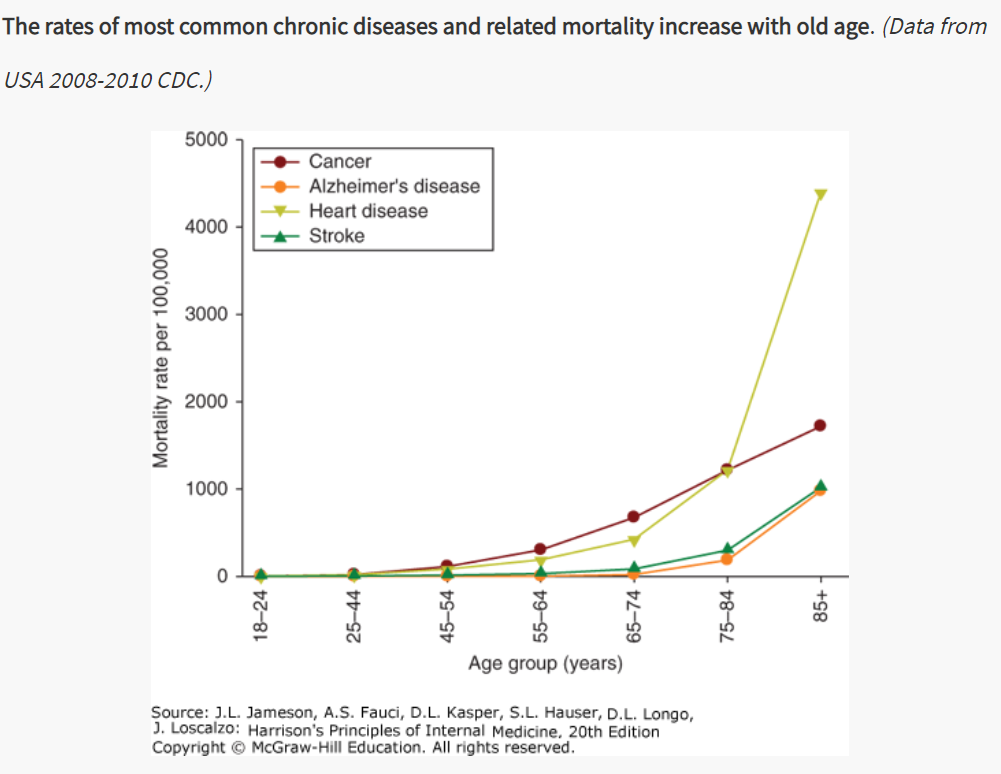
Become a Foreign Ambassador for the U.S. Transhumanist Party. Apply here.

U.S. Transhumanist Party Public-Service Announcement by Casey Cockrell

U.S. Transhumanist Party Public-Service Announcement by Casey Cockrell

March 3, 2019 Casey Cockrell Comments 4 comments

logo_bg

Casey Cockrell


The U.S. Transhumanist Party / Transhuman Party is pleased to feature this public-service announcement created by our member Casey Cockrell. You can view it on YouTube here. 

You can also share it via the following embed code:

<iframe width=”560″ height=”315″ src=”https://www.youtube.com/embed/4STsaZ3NmvA” frameborder=”0″ allow=”accelerometer; autoplay; encrypted-media; gyroscope; picture-in-picture” allowfullscreen></iframe> 

Become a member of the U.S. Transhumanist Party for free, no matter where you reside. Apply here in less than a minute.


James Hughes’ Problems of Transhumanism: A Review (Part 5) – Article by Ojochogwu Abdul

James Hughes’ Problems of Transhumanism: A Review (Part 5) – Article by Ojochogwu Abdul

March 2, 2019 Ojochogwu Abdul Comments 4 comments

logo_bg

Ojochogwu Abdul


Part 1 | Part 2 | Part 3 | Part 4 | Part 5

Part 5: Belief in Progress vs. Rational Uncertainty

The Enlightenment, with its confident efforts to fashion a science of man, was archetypal of the belief and quest that humankind will eventually achieve lasting peace and happiness. In what some interpret as a reformulation of Christianity’s teleological salvation history in which the People of God will be redeemed at the end of days and with the Kingdom of Heaven established on Earth, most Enlightenment thinkers believed in the inevitability of human political and technological progress, secularizing the Christian conception of history and eschatology into a conviction that humanity would, using a system of thought built on reason and science, be able to continually improve itself. As portrayed by Carl Becker in his 1933 book The Heavenly City of the Eighteenth-Century Philosophers, the philosophies “demolished the Heavenly City of St. Augustine only to rebuild it with more up-to-date materials.” Whether this Enlightenment humanist view of “progress” amounted merely to a recapitulation of the Christian teleological vision of history, or if Enlightenment beliefs in “continual, linear political, intellectual, and material improvement” reflected, as James Hughes posits, “a clear difference from the dominant Christian historical narrative in which little would change until the End Times and Christ’s return”, the notion, in any case, of a collective progress towards a definitive end-point was one that remained unsupported by the scientific worldview. The scientific worldview, as Hughes reminds us in the opening paragraph of this essay within his series, does not support historical inevitability, only uncertainty. “We may annihilate ourselves or regress,” he says, and “Even the normative judgment of what progress is, and whether we have made any, is open to empirical skepticism.”

Hereby, we are introduced to a conflict that exists, at least since after the Enlightenment, between a view of progressive optimism and that of radical uncertainty. Building on the Enlightenment’s faith in the inevitability of political and scientific progress, the idea of an end-point, salvation moment for humankind fuelled all the great Enlightenment ideologies that followed, flowing down, as Hughes traces, through Comte’s “positivism” and Marxist theories of historical determinism to neoconservative triumphalism about the “end of history” in democratic capitalism. Communists envisaged that end-point as a post-capitalist utopia that would finally resolve the class struggle which they conceived as the true engine of history. This vision also contained the 20th-century project to build the Soviet Man, one of extra-human capacities, for as Trotsky had predicted, after the Revolution, “the average human type will rise to the heights of an Aristotle, a Goethe, or a Marx. And above this ridge new peaks will rise”, whereas for 20th-century free-market liberals, this End of History had arrived with the final triumph of liberal democracy, with the entire world bound to be swept in its course. Events though, especially so far in the 21st century, appear to prove this view wrong.

This belief moreover, as Hughes would convincingly argue, in the historical inevitability of progress has also always been locked in conflict with “the rationalist, scientific observation that humanity could regress or disappear altogether.” Enlightenment pessimism, or at least realism, has, over the centuries, proven a stubborn resistance and constraint of Enlightenment optimism. Hughes, citing Henry Vyberg, reminds us that there were, after all, even French Enlightenment thinkers within that same era who rejected the belief in linear historical progress, but proposed historical cycles or even decadence instead. That aside, contemporary commentators like John Gray would even argue that the efforts themselves of the Enlightenment on the quest for progress unfortunately issued in, for example, the racist pseudo-science of Voltaire and Hume, while all endeavours to establish the rule of reason have resulted in bloody fanaticisms, from Jacobinism to Bolshevism, which equaled the worst atrocities attributable to religious believers. Horrendous acts like racism and anti-Semitism, in the verdict of Gray: “….are not incidental defects in Enlightenment thinking. They flow from some of the Enlightenment’s central beliefs.”

Even Darwinism’s theory of natural selection was, according to Hughes, “suborned by the progressive optimistic thinking of the Enlightenment and its successors to the doctrine of inevitable progress, aided in part by Darwin’s own teleological interpretation.” Problem, however, is that from the scientific worldview, there is no support for “progress” as to be found provided by the theory of natural selection, only that humanity, Hughes plainly states, “like all creatures, is on a random walk through a mine field, that human intelligence is only an accident, and that we could easily go extinct as many species have done.” Gray, for example, rebukes Darwin, who wrote: “As natural selection works solely for the good of each being, all corporeal and mental endowments will tend to progress to perfection.” Natural selection, however, does not work solely for the good of each being, a fact Darwin himself elsewhere acknowledged. Nonetheless, it has continually proven rather difficult for people to resist the impulse to identify evolution with progress, with an extended downside to this attitude being equally difficult to resist the temptation to apply evolution in the rationalization of views as dangerous as Social Darwinism and acts as horrible as eugenics.

Many skeptics therefore hold, rationally, that scientific utopias and promises to transform the human condition deserve the deepest suspicion. Reason is but a frail reed, all events of moral and political progress are and will always remain subject to reversal, and civilization could as well just collapse, eventually. Historical events and experiences have therefore caused faith in the inevitability of progress to wax and wane over time. Hughes notes that among several Millenarian movements and New Age beliefs, such faith could still be found that the world is headed for a millennial age, just as it exists in techno-optimist futurism. Nevertheless, he makes us see that “since the rise and fall of fascism and communism, and the mounting evidence of the dangers and unintended consequences of technology, there are few groups that still hold fast to an Enlightenment belief in the inevitability of conjoined scientific and political progress.” Within the transhumanist community, however, the possession of such faith in progress can still be found as held by many, albeit signifying a camp in the continuation therefore of the Enlightenment-bequeathed conflict as manifested between transhumanist optimism in contradiction with views of future uncertainty.

As with several occasions in the past, humanity is, again, currently being spun yet another “End of History” narrative: one of a posthuman future. Yuval Harari, for instance, in Homo Deus argues that emerging technologies and new scientific discoveries are undermining the foundations of Enlightenment humanism, although as he proceeds with his presentation he also proves himself unable to avoid one of the defining tropes of Enlightenment humanist thinking, i.e., that deeply entrenched tendency to conceive human history in teleological terms: fundamentally as a matter of collective progress towards a definitive end-point. This time, though, our era’s “End of History” glorious “salvation moment” is to be ushered in, not by a politico-economic system, but by a nascent techno-elite with a base in Silicon Valley, USA, a cluster steeped in a predominant tech-utopianism which has at its core the idea that the new technologies emerging there can steer humanity towards a definitive break-point in our history, the Singularity. Among believers in this coming Singularity, transhumanists, as it were, having inherited the tension between Enlightenment convictions in the inevitability of progress, and, in Hughes’ words, “Enlightenment’s scientific, rational realism that human progress or even civilization may fail”, now struggle with a renewed contradiction. And here the contrast as Hughes intends to portray gains sharpness, for as such, transhumanists today are “torn between their Enlightenment faith in inevitable progress toward posthuman transcension and utopian Singularities” on the one hand, and, on the other, their “rational awareness of the possibility that each new technology may have as many risks as benefits and that humanity may not have a future.”

The risks of new technologies, even if not necessarily one that threatens the survival of humanity as a species with extinction, may yet be of an undesirable impact on the mode and trajectory of our extant civilization. Henry Kissinger, in his 2018 article “How the Enlightenment Ends”, expressed his perception that technology, which is rooted in Enlightenment thought, is now superseding the very philosophy that is its fundamental principle. The universal values proposed by the Enlightenment philosophes, as Kissinger points out, could be spread worldwide only through modern technology, but at the same time, such technology has ended or accomplished the Enlightenment and is now going its own way, creating the need for a new guiding philosophy. Kissinger argues specifically that AI may spell the end of the Enlightenment itself, and issues grave warnings about the consequences of AI and the end of Enlightenment and human reasoning, this as a consequence of an AI-led technological revolution whose “culmination may be a world relying on machines powered by data and algorithms and ungoverned by ethical or philosophical norms.” By way of analogy to how the printing press allowed the Age of Reason to supplant the Age of Religion, he buttresses his proposal that the modern counterpart of this revolutionary process is the rise of intelligent AI that will supersede human ability and put an end to the Enlightenment. Kissinger further outlines his three areas of concern regarding the trajectory of artificial intelligence research: AI may achieve unintended results; in achieving intended goals, AI may change human thought processes and human values, and AI may reach intended goals, but be unable to explain the rationale for its conclusions. Kissinger’s thesis, of course, has not gone without both support and criticisms attracted from different quarters. Reacting to Kissinger, Yuk Hui, for example, in “What Begins After the End of the Enlightenment?” maintained that “Kissinger is wrong—the Enlightenment has not ended.” Rather, “modern technology—the support structure of Enlightenment philosophy—has become its own philosophy”, with the universalizing force of technology becoming itself the political project of the Enlightenment.

Transhumanists, as mentioned already, reflect the continuity of some of those contradictions between belief in progress and uncertainty about human future. Hughes shows us nonetheless that there are some interesting historical turns suggesting further directions that this mood has taken. In the 1990s, Hughes recalls, “transhumanists were full of exuberant Enlightenment optimism about unending progress.” As an example, Hughes cites Max More’s 1998 Extropian Principles which defined “Perpetual Progress” as “the first precept of their brand of transhumanism.” Over time, however, Hughes communicates how More himself has had cause to temper this optimism, stressing rather this driving principle as one of “desirability” and more a normative goal than a faith in historical inevitability. “History”, More would say in 2002, “since the Enlightenment makes me wary of all arguments to inevitability…”

Rational uncertainty among transhumanists hence make many of them refrain from an argument for the inevitability of transhumanism as a matter of progress. Further, there are indeed several possible factors which could deter the transhumanist idea and drive for “progress” from translating to reality: A neo-Luddite revolution, a turn and rise in preference for rural life, mass disenchantment with technological addiction and increased option for digital detox, nostalgia, disillusionment with modern civilization and a “return-to-innocence” counter-cultural movement, neo-Romanticism, a pop-culture allure and longing for a Tolkien-esque world, cyclical thinking, conservatism, traditionalism, etc. The alternative, backlash, and antagonistic forces are myriad. Even within transhumanism, the anti-democratic and socially conservative Neoreactionary movement, with its rejection of the view that history shows inevitable progression towards greater liberty and enlightenment, is gradually (and rather disturbingly) growing a contingent. Hughes talks, as another point for rational uncertainty, about the three critiques: futurological, historical, and anthropological, of transhumanist and Enlightenment faith in progress that Phillipe Verdoux offers, and in which the anthropological argument holds that “pre-moderns were probably as happy or happier than we moderns.” After all, Rousseau, himself a French Enlightenment thinker, “is generally seen as having believed in the superiority of the “savage” over the civilized.” Perspectives like these could stir anti-modern, anti-progress sentiments in people’s hearts and minds.

Demonstrating still why transhumanists must not be obstinate over the idea of inevitability, Hughes refers to Greg Burch’s 2001 work “Progress, Counter-Progress, and Counter-Counter-Progress” in which the latter expounded on the Enlightenment and transhumanist commitment to progress as “to a political program, fully cognizant that there are many powerful enemies of progress and that victory was not inevitable.” Moreover, the possible failure in realizing goals of progress might not even result from the actions of “enemies” in that antagonistic sense of the word, for there is also that likely scenario, as the 2006 movie Idiocracy depicts, of a future dystopian society based on dysgenics, one in which, going by expectations and trends of the 21st century, the most intelligent humans decrease in reproduction and eventually fail to have children while the least intelligent reproduce prolifically. As such, through the process of natural selection, generations are created that collectively become increasingly dumber and more virile with each passing century, leading to a future world plagued by anti-intellectualism, bereft of intellectual curiosity, social responsibility, coherence in notions of justice and human rights, and manifesting several other traits of degeneration in culture. This is yet a possibility for our future world.

So while for many extropians and transhumanists, nonetheless, perpetual progress was an unstoppable train, responding to which “one either got on board for transcension or consigned oneself to the graveyard”, other transhumanists, however, Hughes comments, especially in response to certain historical experiences (the 2000 dot-com crash, for example), have seen reason to increasingly temper their expectations about progress. In Hughes’s appraisal, while, therefore, some transhumanists “still press for technological innovation on all fronts and oppose all regulation, others are focusing on reducing the civilization-ending potentials of asteroid strikes, genetic engineering, artificial intelligence and nanotechnology.” Some realism hence need be in place to keep under constant check the excesses of contemporary secular technomillennialism as contained in some transhumanist strains.

Hughes presents Nick Bostrom’s 2001 essay “Analyzing Human Extinction Scenarios and Related Hazards” as one influential example of this anti-millennial realism, a text in which Bostrom, following his outline of scenarios that could either end the existence of the human species or have us evolve into dead-ends, then addressed not just how we can avoid extinction and ensure that there are descendants of humanity, but also how we can ensure that we will be proud to claim them. Subsequently, Bostrom has been able to produce work on “catastrophic risk estimation” at the Future of Humanity Institute at Oxford. Hughes seems to favour this approach, for he ensures to indicate that this has also been adopted as a programmatic focus for the Institute for Ethics and Emerging Technologies (IEET) which he directs, and as well for the transhumanist non-profit, the Lifeboat Foundation. Transhumanists who listen to Bostrom, as we could deduce from Hughes, are being urged to take a more critical approach concerning technological progress.

With the availability of this rather cautious attitude, a new tension, Hughes reports, now plays out between eschatological certainty and pessimistic risk assessment. This has taken place mainly concerning the debate over the Singularity. For the likes of Ray Kurzweil (2005), representing the camp of a rather technomillennial, eschatological certainty, his patterns of accelerating trendlines towards a utopian merger of enhanced humanity and godlike artificial intelligence is one of unstoppability, and this Kurzweil supports by referring to the steady exponential march of technological progress through (and despite) wars and depressions. Dystopian and apocalyptic predictions of how humanity might fare under superintelligent machines (extinction, inferiority, and the likes) are, in the assessment of Hughes, but minimally entertained by Kurzweil, since to the techno-prophet we are bound to eventually integrate with these machines into apotheosis.

The platform, IEET, thus has taken a responsibility of serving as a site for teasing out this tension between technoprogressive “optimism of the will and pessimism of the intellect,” as Hughes echoes Antonio Gramsci. On the one hand, Hughes explains, “we have championed the possibility of, and evidence of, human progress. By adopting the term “technoprogressivism” as our outlook, we have placed ourselves on the side of Enlightenment political and technological progress.”And yet on the other hand, he continues, “we have promoted technoprogressivism precisely in order to critique uncritical techno-libertarian and futurist ideas about the inevitability of progress. We have consistently emphasized the negative effects that unregulated, unaccountable, and inequitably distributed technological development could have on society” (one feels tempted to call out Landian accelerationism at this point). Technoprogressivism, the guiding philosophy of IEET, avails as a principle which insists that technological progress needs to be consistently conjoined with, and dependent on, political progress, whilst recognizing that neither are inevitable.

In charting the essay towards a close, Hughes mentions his and a number of IEET-led technoprogresive publications, among which we have Verdoux who, despite his futurological, historical, and anthropological critique of transhumanism, yet goes ahead to argue for transhumanism on moral grounds (free from the language of “Marxism’s historical inevitabilism or utopianism, and cautious of the tragic history of communism”), and “as a less dangerous course than any attempt at “relinquishing” technological development, but only after the naive faith in progress has been set aside.” Unfortunately, however, the “rational capitulationism” to the transhumanist future that Verdoux offers, according to Hughes, is “not something that stirs men’s souls.” Hughes hence, while admitting to our need “to embrace these critical, pessimistic voices and perspectives”, yet calls on us to likewise heed to the need to “also re-discover our capacity for vision and hope.” This need for optimism that humans “can” collectively exercise foresight and invention, and peacefully deliberate our way to a better future, rather than yielding to narratives that would lead us into the traps of utopian and apocalyptic fatalism, has been one of the motivations behind the creation of the “technoprogressive” brand. The brand, Hughes presents, has been of help in distinguishing necessarily “Enlightenment optimism about the “possibility” of human political, technological and moral progress from millennialist techno-utopian inevitabilism.”

Presumably, upon this technoprogressive philosophy, the new version of the Transhumanist Declaration, adopted by Humanity+ in 2009, indicated a shift from some of the language of the 1998 version, and conveyed a more reflective, critical, realistic, utilitarian, “proceed with caution” and “act with wisdom” tone with respect to the transhumanist vision for humanity’s progress. This version of the declaration, though relatively sobered, remains equally inspiring nonetheless. Hughes closes the essay with a reminder on our need to stay aware of the diverse ways by which our indifferent universe threatens our existence, how our growing powers come with unintended consequences, and why applying mindfulness on our part in all actions remains the best approach for navigating our way towards progress in our radically uncertain future.

Conclusively, following Hughes’ objectives in this series, it can be suggested that more studies on the Enlightenment (European and global) are desirable especially for its potential to furnish us with richer understanding into a number of problems within contemporary transhumanism as sprouting from its roots deep in the Enlightenment. Interest and scholarship in Enlightenment studies, fortunately, seems to be experiencing some current revival, and even so with increasing diversity in perspective, thereby presenting transhumanism with a variety of paths through which to explore and gain context for connected issues. Seeking insight thence into some foundations of transhumanism’s problems could take the path, among others: of an examination of internal contradictions within the Enlightenment, of the approach of Max Horkheimer and Theodor Adorno’s “Dialectic of Enlightenment”; of assessing opponents of the Enlightenment as found, for example, in Isaiah Berlin’s notion of “Counter Enlightenment”; of investigating a rather radical strain of the Enlightenment as presented in Jonathan Israel’s “Radical Enlightenment”, and as well in grappling with the nature of the relationships between transhumanism and other heirs both of the Enlightenment and the Counter-Enlightenment today. Again, and significantly, serious attention need be paid now and going forwards in jealously guarding transhumanism against ultimately falling into the hands of the Dark Enlightenment.


Ojochogwu Abdul is the founder of the Transhumanist Enlightenment Café (TEC), is the co-founder of the Enlightenment Transhumanist Forum of Nigeria (H+ Nigeria), and currently serves as a Foreign Ambassador for the U.S. Transhumanist Party in Nigeria. 

James Hughes’ Problems of Transhumanism: A Review (Part 4) – Article by Ojochogwu Abdul

James Hughes’ Problems of Transhumanism: A Review (Part 4) – Article by Ojochogwu Abdul

February 28, 2019 Ojochogwu Abdul Comments 5 comments

logo_bg

Ojochogwu Abdul


Part 1 | Part 2 | Part 3 | Part 4 | Part 5

Part 4: Moral Universalism vs. Relativism

James Hughes’ essays on the problems of transhumanism continue with a discussion on conflicts, borrowed from the Enlightenment, between universalism and relativism within transhumanism. The Enlightenment event (European and global), in addition to its attack and severance of the roots of traditional European culture in the sacred, magic, kingship, and hierarchy, thereby secularizing all institutions and ideas, also (intellectually and to some extent in practice) effectively set on course the demolition of all legitimizing basis of monarchy, aristocracy, woman’s subordination to man, ecclesiastical authority, and slavery. These were replaced with the principles of universality, equality, and democracy. Included in this was also an argument for moral universalism, a position that ethics and law should apply equally to all humans.

Now, despite profound differences of outlook among the Enlightenment thinkers, there was a wide area of agreement about some fundamental points, i.e., the reality of natural law (in a formulation that signaled a departure from the language of orthodox Catholic or Protestant doctrine), of eternal principles the adherence to which alone could make humans enjoy wisdom, happiness, virtue, and freedom. For theists, deists and atheists, for optimists and pessimists, and for puritans, primitivists, as well as believers in progress and the finest fruits of science and culture, only and just one set of universal and unalterable principles governed the world. These laws were the principles that governed inanimate and animate nature, facts and events, means and ends, private and public life, as well as all societies, epochs and civilizations. Humans degenerate into crime, vice and misery only by failing to follow them. There may have been differences and disagreements among the Enlightenment thinkers about the nature of these laws, the process of their discovery, or who even possessed the qualification to expound them; but that these laws were real, and could be known, be it with certainty or probability, was the widely accepted and central “dogma” of the entire Enlightenment.

Enlightenment thinkers proposed that all humans should be accorded the Rights of Man, though the legitimacy itself of universal, equal rights was advanced by several varieties of argument within the Enlightenment. John Locke, for example, as Hughes explains, argued for universal rights on the grounds that in the human state of nature, as created by God before civilization, we were given possession of our bodies. All humans, therefore, possess these natural rights equally, and interference with individual rights violates natural and divine law. Thomas Jefferson’s statement in the Declaration of Independence: “We hold these truths to be self-evident, that all men are created equal, that they are endowed by their Creator with certain unalienable Rights…” rested upon this logic. …

Read More Read More

James Hughes’ Problems of Transhumanism: A Review (Part 3) – Article by Ojochogwu Abdul

James Hughes’ Problems of Transhumanism: A Review (Part 3) – Article by Ojochogwu Abdul

February 24, 2019 Ojochogwu Abdul Comments 6 comments

logo_bg

Ojochogwu Abdul


Part 1 | Part 2 | Part 3 | Part 4 | Part 5

Part 3: Liberal Democracy Versus Technocratic Absolutism

“Transhumanists, like Enlightenment partisans in general, believe that human nature can be improved but are conflicted about whether liberal democracy is the best path to betterment. The liberal tradition within the Enlightenment has argued that individuals are best at finding their own interests and should be left to improve themselves in self-determined ways. But many people are mistaken about their own best interests, and more rational elites may have a better understanding of the general good. Enlightenment partisans have often made a case for modernizing monarchs and scientific dictatorships. Transhumanists need to confront this tendency to disparage liberal democracy in favor of the rule by dei ex machina and technocratic elites.” (James Hughes, 2010)

Hughes’ series of essays exploring problems of transhumanism continues with a discussion on the tensions between a choice either for liberal democracy or technocratic absolutism as existing or prospective within the transhumanist movement. As Hughes would demonstrate, this problem in socio-political preference between liberalism and despotism turns out as just one more among the other transhumanist contradictions inherited from its roots in the Enlightenment. Liberalism, an idea which received much life during the Enlightenment, developed as an argument for human progress. Cogently articulated in J.S. Mill’s On Liberty, Hughes re-presents the central thesis: “if individuals are given liberty they will generally know how to pursue their interests and potentials better than will anyone else. So, society generally will become richer and more intelligent if individuals are free to choose their own life ends rather than if they are forced towards betterment by the powers that be.” This, essentially, was the Enlightenment’s ground for promoting liberalism. …

Read More Read More

U.S. Transhumanist Party Virtual Meeting and Q&A – February 23, 2019

U.S. Transhumanist Party Virtual Meeting and Q&A – February 23, 2019

February 24, 2019 Gennady Stolyarov II Comments 0 Comment

logo_bg

Gennady Stolyarov II
Denisa Rensen
Palak Madan
Pam Keefe
Dinorah Delfin
Arin Vahanian
Tom Ross
B.J. Murphy


On February 23, 2019, the U.S. Transhumanist Party invited many of its Officers and Ambassadors to discuss recent activities and plans for 2019, including the upcoming Presidential nomination process. The meeting included a public chat and portions where inquiries from members and the general public were addressed. Find the video recording of the meeting and the accompanying YouTube Live chat here.

Agenda
– Gennady Stolyarov II: Overview of 2019 Transhumanist Presidential Nomination/Debate/Primary Process
– Ambassadors – Denisa Rensen, Palak Madan, Pam Keefe: Discussions on Transhumanist Sentiment / Attitudinal Environment in Japan, India, and Hong Kong
– Denisa Rensen: Report on TransVision 2018 in Madrid
– Gennady Stolyarov II: Integration with the Transhuman Party / Dissolution of the TNC
– Dinorah Delfin: Discussion of Forthcoming Article in The Transhumanism Handbook: “An Artist’s Creative Process: A Model of Conscious Evolution”
– Arin Vahanian: Report on Premiere of “Immortality or Bust” Documentary
– Group Discussion: How to Reach 10,000 Members? (What demographics have yet to be exposed to transhumanist ideas and the existence of the USTP? How can we be more effective in getting people “in the door” to even be aware of our existence and content?)
   Potential Ideas
– Social-Media Digital Poster Contest (Suggestion by Tom Ross)
– Incentives for Members to Recruit Other Members (Suggestion by Tom Ross)
– Appeal to Subcultures – e.g., Steampunk, Cyborg Communities (Suggestion by Tom Ross)
– Question for Discussion: Should we engage with conspiracy theorists (e.g., attempt to rebut them) or distance ourselves from them as much as possible?
– Any questions from the audience

Note: The meeting livestream terminated slightly prematurely due to an Internet disconnection. However, the meeting did proceed over the course of the planned two-hour timeframe, and the vast majority of the intended subjects were covered.

Become a member of the U.S. Transhumanist Party for free, no matter where you reside. Fill out our Membership Application Form.

Become a Foreign Ambassador for the U.S. Transhumanist Party. Fill out the application form here.

James Hughes’ Problems of Transhumanism: A Review (Part 2) – Article by Ojochogwu Abdul

James Hughes’ Problems of Transhumanism: A Review (Part 2) – Article by Ojochogwu Abdul

February 21, 2019 Ojochogwu Abdul Comments 4 comments

logo_bg

Ojochogwu Abdul


Part 1 | Part 2 | Part 3 | Part 4 | Part 5

Part 2: Deism, Atheism and Natural Theology

“The dominant trajectory of Enlightenment thought over the last three hundred years has been towards atheism. Most transhumanists are atheists. But some transhumanists, like many of the original Enlightenment thinkers, are attempting to reconcile naturalism and their religious traditions. Some transhumanists even believe that the transcendent potentials of intelligence argue for a new form of scientific theology.” (James Hughes, 2010)

The Enlightenment was the age of the triumph of science (Newton, Leibniz, Bacon) and of philosophy (Descartes, Locke, Spinoza, Kant, Voltaire, Diderot, Montesquieu). Unlike the Renaissance philosophers, the Enlightenment thinkers ceased the search for validation in the texts of the Greco-Roman philosophers, but were predicated more solidly on rationalism and empiricism. Religious tolerance and skepticism about superstition and Biblical literalism was also a central theme of the Enlightenment. Most of the Enlightenment philosophers of the 17th century through the 19th century, however, were theists of some sort who, in general, were attempting to reconcile belief in God with rational skepticism and naturalism. There were, of course, atheists among them as well as devout Christians, but if there was a common theological stance and belief about the divine among Enlightenment philosophers, it was probably Deism, a worldview consisting in the rejection of blind faith and organized religion, an advocacy for the discovery of religious truth through reason and direct empirical observation, and a belief that divine intervention in human affairs stopped with the creation of the world.

Deism, as James Hughes accounts, declined in the nineteenth century, gradually replaced by atheist materialism. Nonetheless, the engagement with Enlightenment values continued in liberal strains of Christianity such as Unitarianism and Universalism, united today among some communities as Unitarian Universalism (UU), and hosting congregations with individuals of varying beliefs that range widely to include atheism, agnosticism, pantheism, deism, Judaism, Islam, Christianity, Neopaganism, Hinduism, Buddhism, Daoism, Humanism, and many more. …

Read More Read More

James Hughes’ Problems of Transhumanism: A Review (Intro + Part 1) – Article by Ojochogwu Abdul

James Hughes’ Problems of Transhumanism: A Review (Intro + Part 1) – Article by Ojochogwu Abdul

February 19, 2019 Ojochogwu Abdul Comments 4 comments

logo_bg

Ojochogwu Abdul


Part 1 | Part 2 | Part 3 | Part 4 | Part 5

Introduction

In 2010, James Hughes, Executive Director of the Institute for Ethics and Emerging Technologies (IEET), having then just stepped down from the Board of Directors of the World Transhumanist Association (presently known as Humanity+), took up an interesting challenge during the Spring of that year to reflect on the current state of transhumanist thought and determine what the questions were that the transhumanist movement needed to answer in order to move forward. Introducing a series of articles with which he hoped to navigate through a number of heady ideas and issues concerning transhumanism, Hughes opens by posing: “What are the current unresolved issues in transhumanist thought? Which of these issues are peculiar to transhumanist philosophy and the transhumanist movement, and which are more actually general problems of Enlightenment thought?” Further, he queried, “Which of these are simply inevitable differences of opinion among the more or less like-minded, and which need a decisive resolution to avoid tragic errors of the past?”

Some clarification is made by Hughes on the “Enlightenment” as referring to a wide variety of thinkers and movements beginning in the seventeenth century, continuing through the early nineteenth century, and centered in Britain, France, Germany, and as increasingly demonstrated by recent scholarship, manifesting on a global dimension with significant contributions from thinkers and movements across Europe, North America, and the Caribbean. Hughes points out further the relevance of these thinkers and movements in terms of their endeavour in broadly emphasizing the capacity of individuals for achieving social and technological progress through application of critical reason to investigate nature, establish new forms and institutions of governance, and transcend such stagnating (or even retrogressive) forces as superstition and authoritarianism.

The engagement Hughes then sets for himself as he proceeded forward were a set of reflections which he was to structure around two general questions:

  1. An attempt to parse out which unresolved problems transhumanism has inherited from the Enlightenment; and
  2. How transhumanist technological utopianism has both inspired and delayed scientific and political progress over the last 300 years.

By addressing these questions, Hughes proposed to challenge a prevailing anti-utopian sentiment and hopefully furnish awareness of the way that dynamic optimism about transcendent possibilities motivated scientific innovation and democratic reform through the work of such thinkers and proto-transhumanists like the Marquis de Condorcet, Joseph Priestley, and J.B.S. Haldane. Indeed, for Hughes, transhumanism and techno-utopianism are part of the family of Enlightenment philosophies, both of which could be traced back to the original Enlightenment thinkers 300 years ago. The ideological conflicts within transhumanism today are, therefore, as Hughes would argue, to be understood by transhumanists as but the product of some 300-year-old conflicts within the Enlightenment itself.

The outcome of this effort, thankfully undertaken by Hughes, was a series of six essays grappling with diverse transhumanism-related issues ranging from problems surrounding the unsustainable autonomy of reason/rationality, and the belief in progress in contrast with rational uncertainty, to matters of deism, atheism and naturalist theology, from liberal democracy and technological absolutism to moral universalism and relativism, and from ideas concerning liberal individualism to the (threat of) erosion of personal identity.

Hughes titled this series of essays “Problems of Transhumanism”, each with its distinctive sub-title. And if one thing at least is to be appreciated from reading these articles, it is, in my modest opinion, the success with which they present the modern transhumanist project as bearing within its character and objective “the unfinished internal contradictions of the Enlightenment tradition.” The author, of course, emphasizes from the onset a yet important motive to his attempt which was to make clear which criticisms of transhumanism are internal contradictions, and which proceed from “external, non-Enlightenment predicates.”

Over the next week or so, I’ll be doing a review of these articles serially, starting with Part 1 below, while also incorporating some relevant views from a number of other thinkers as may be necessary, to aid commentary or analysis of Hughes’ arguments. This exercise, on my part, is essentially intended and hopefully geared to serve as an expository approach towards highlighting the contemporary philosophy and cultural movement of transhumanism whilst encouraging further discourse on the subject.

I invite and would be glad to have as many that may be interested in working through these ideas and issues with me, even as I endeavour, with these series of articles, to open conversations about them. …

Read More Read More

Transhumanist Ideas for Reforming Political Processes and Improving Government Accountability – Presentation by Gennady Stolyarov II

Transhumanist Ideas for Reforming Political Processes and Improving Government Accountability – Presentation by Gennady Stolyarov II

February 16, 2019 Gennady Stolyarov II Comments 0 Comment

logo_bg

Gennady Stolyarov II


On February 13, 2019, Gennady Stolyarov II, Chairman of the U.S. Transhumanist Party / Transhuman Party, spoke to the Young Americans for Liberty Chapter at the University of Nevada, Reno (UNR) in a wide-ranging discussion on the intersection of technology and politics and the types of reforms that could pave the way to the new technological era of major progress and radical abundance. Watch Mr. Stolyarov’s presentation on YouTube here.

Mr. Stolyarov discussed policy positions from the U.S. Transhumanist Party Platform, such as support for ranked-preference voting, greatly lowered ballot-access thresholds, simultaneous nationwide primaries, shorter campaign seasons, AI-assisted redistricting, germaneness rules for legislation, minimum consideration timeframes for amendments, and the general desirable shift in the balance away from special-interest lobbies and toward intelligent laypersons.

See Mr. Stolyarov’s presentation slides here.

Become a member of the U.S. Transhumanist Party for free, no matter where you reside. Apply here in less than a minute.

Watch Mr. Stolyarov’s interview of Ray Kurzweil at RAAD Fest 2018.

Watch the presentation by Gennady Stolyarov II at RAAD Fest 2018, entitled, “The U.S. Transhumanist Party: Four Years of Advocating for the Future”.

Dr. Bill Andrews Interviewed by John Murrieta of the Science-Based Species Channel

Dr. Bill Andrews Interviewed by John Murrieta of the Science-Based Species Channel

February 5, 2019 John Murrieta Comments 0 Comment

logo_bg

Bill Andrews
John Murrieta


John Murrieta of the channel Science-Based Species interviewed Dr. Bill Andrews, the U.S. Transhumanist Party’s Biotechnology Advisor, in October 2018. Watch this interview on YouTube here.

In this video, Dr. Andrews discusses the research he does at Sierra Sciences with the aim to reverse aging and extend lifespans by extending telomeres, as well as the forthcoming gene-therapy clinical trial by Libella Gene Therapeutics.

This interview with recorded by U.S. Transhumanist Party Secretary Bobby Ridge at the Fifth Enlightenment Salon, hosted by U.S. Transhumanist Party Chairman Gennady Stolyarov II.

The U.S. Transhumanist Party / Transhuman Party: The Last, Best Hope for Transhumanist Politics

The U.S. Transhumanist Party / Transhuman Party: The Last, Best Hope for Transhumanist Politics

January 26, 2019 Gennady Stolyarov II Comments 1 comment

logo_bg

Gennady Stolyarov II


The Transhuman National Committee of the United States (TNC) has disbanded, and the Transhuman Party is being integrated into the U.S. Transhumanist Party.  We (including our State-level affiliates) are now the sole transhumanist political organization in the United States.

The United States Transhumanist Party issues this statement to bring attention to a series of rapid developments during January 2019, at the end of which our political party (including its State-level affiliates) remains the sole transhumanist political organization in the United States. As Chairman of this sole transhumanist political organization, I am determined to continue to grow it and maintain its distinctive identity and purpose above the toxic “mainstream” partisan fray. I invite all transhumanists to apply for free membership within our growing and vibrant party, which has reached 1,282 members and continues to expand daily.

In short succession, the following events recently transpired.

Integration of the Transhuman Party

The Transhuman Party, a 25-member experimental splinter party founded in October 2017, recently became defunct due to lack of activity. On December 30, 2018, I acquired the website (not yet edited except for the statement on the front page) and Facebook page for the Transhuman Party and issued a standing invitation to its former members to become members of the U.S. Transhumanist Party, with an option to take Officer or Advisor roles. So far approximately half of the former Transhuman Party members have accepted the offer, and the process of integration is ongoing, with the intention to continue to issue such invitations as time advances.

The Transhuman Party was originally formed because its members disapproved of the term “Transhumanist Party” having been trademarked by Zoltan Istvan. (This matter is extensively addressed in the U.S. Transhumanist Party FAQ. Furthermore, Zoltan Istvan has not had any role in the governance of the Transhumanist Party since November 2016 and has also specifically stated that he views favorably the course that the Transhumanist Party has taken; from this one can conclude that he has no desire or reason to intervene.)

However, to assuage any concerns of those who criticized the existence of the trademark, there will now exist two options for how to call our party.  Accordingly, the name “Transhuman Party” will be preserved. Previous efforts by former Transhuman Party members to trademark this term had been abandoned, and any such efforts are likely to fail from a legal standpoint due to the similarity of this term to the term “Transhumanist Party”. However, it is desirable to preserve “Transhuman Party” as a non-trademarked term that those who object to the trademark of “Transhumanist Party” may use to enable their participation in our organization nonetheless.

Accordingly, the full name of our organization hereby becomes “United States Transhumanist Party / Transhuman Party”. Members henceforth have the choice to refer to it as either the “Transhumanist Party” (the trademarked term) or the “Transhuman Party” (the non-trademarked term), using these terms either together or apart or interchangeably, as they please. We hope that these options will enable individuals to bypass arguments over the trademark and collaborate on substantive matters with the knowledge that at least one (and most likely both) of these terms will remain available for us to use, no matter what.

The U.S. Transhumanist Party / Transhuman Party seeks to be a “big tent” for the transhumanist movement. We welcome the involvement and perspectives of the original Transhuman Party members, as well as others from various backgrounds and organizations within the broader transhumanist community. Our eventual aim is to end transhumanist infighting to the extent possible and to replace it with a deliberative and democratic process where ideas are civilly and constructively discussed and translated into suggestions for policies and general technological, societal, and cultural improvements.

The new logo of the U.S. Transhumanist Party / Transhuman Party intentionally allows the party’s name to be read as either “Transhumanist Party” or “Transhuman Party”. The color scheme also places emphasis on the term “human”; we are the only political party in the United States with the word “human” in our name. This is justified, as our ultimate focus is the well-being of humans (and other sentient entities) and the championing of technological and societal improvements that enable all humans to overcome their limitations, actualize their potential, and live and improve without bound. 

Dissolution of the Transhuman National Committee of the United States (TNC)

The Transhuman National Committee of the United States (TNC) was originally formed in October 2015 as an alternative transhumanist political organization that sought to eventually form a Political Action Committee (PAC) but never officially did so.

On January 25, 2019, the Board of the Transhuman National Committee of the United States (TNC) voted unanimously to disband the TNC. Two Officers of the U.S. Transhumanist Party – Gennady Stolyarov II and B.J. Murphy – were members of the TNC Board and were present at the virtual TNC Board meeting of January 25, 2019.

The U.S. Transhumanist Party acknowledged the validity of the reasons for the dissolution of the TNC. We had long considered the TNC to be an Allied Organization but took a fundamentally different approach from that espoused by the TNC Chair – e.g., the U.S. Transhumanist Party is a non-monetary, all-volunteer organization and therefore is not reliant on funding, whose cessation essentially ended the viability of the TNC. Furthermore, the U.S. Transhumanist Party favors a principles-based, idea-oriented, and pluralistic approach to public outreach, education, and transformation of the intellectual and cultural landscape – whereas the TNC sought (unsuccessfully) to become a lobbying organization and to adopt the often questionable tactics of mainstream politics. Playing by the rules of mainstream politics is a self-defeating approach, as I explained in “The Great Transhumanist Game” video series (Part 1 and Part 2); the unscrupulous expert political operatives will win every time. Only by changing the rules to those of the new era of our civilization and leading by example under those rules, can transhumanists hope to effectuate constructive change notwithstanding existing political roadblocks.

However, in order to salvage any of the beneficial objectives of the TNC, the U.S. Transhumanist Party reached out in hopes of enabling the people who were involved in it to continue their political activism under the auspices of the U.S. Transhumanist Party. I extended a standing offer to any of the former TNC Officers and Board Members to take on roles as Officers, Advisors, or Ambassadors within the U.S. Transhumanist Party, depending on their individual circumstances, skill sets, and preferences.

Unfortunately, the former TNC Chair used the proxy votes at the last TNC Board meeting to push through a series of divisive and contested statements which encouraged transhumanists to work within the two major political parties instead of any minor political parties or the U.S. Transhumanist Party. I offered motions to surgically excise these counterproductive recommendations from the statements, and the majority of TNC Board members present on the call expressed similar concerns regarding the former TNC Chair’s attempts to push through what was clearly not a consensus position within either the TNC or the broader transhumanist community – much of which remains interested in a distinctively transhumanist political approach. It is unfortunate that, because of the TNC Chair’s use of the proxy votes at his disposal, the TNC’s last gesture will be one of division rather than unification. This outcome illustrates one reason for the TNC’s failure – an approach which favored adversarial “hardball” tactics over attempts to reach consensus. However, as the last remaining transhumanist political organization in the United States, the U.S. Transhumanist Party / Transhuman Party can carry on in expressing its principled views and eschewing the tragi-comical theater that “mainstream” politics has become. The tactics of contemporary political operatives are inimical to the nobler mindset that is needed to build the next era of our civilization. Adversarial “hardball” is precisely one of the unfortunate aspects of the present that needs to be transcended if we are to overcome the roadblocks that stand in the way of technological, cultural, and policy progress.

As I expressed in a statement to the TNC Board, I consider the two main parties to have thoroughly discredited themselves. The Democratic and Republican Parties are essentially committing suicide via their tactics of partisan toxicity that set people against one another and prevent constructive policy discussions and solutions. The recent fiasco of the U.S. federal government shutdown is just the most recent example of this toxicity getting in the way of even routine operations.

The transhumanist movement is indeed small at this stage, although we are growing and are much larger than we were several years ago. That being said, if transhumanists attempt to work within the two major parties, they will just contribute infinitesimally to these gargantuan political machines that have wrongfully subsumed American political discourse. This is exactly what happened to the Futurist Party, which rendered itself irrelevant when it endorsed Bernie Sanders in 2015; it essentially then became just one of the numerous feeder organizations into the Democratic Party, which ultimately benefited the Hillary Clinton campaign. While the U.S. Transhumanist Party / Transhuman Party welcomes all individual transhumanists – including those who also participate in the major political parties in some capacity – it cannot, as an organization, endorse any of the major political parties or their candidates due to the concern that such endorsements would subsume the U.S. Transhumanist Party / Transhuman Party within the partisan fray, where completely unrelated “wedge” issues are used solely to perpetuate animosity and strife at the expense of constructive exploration of future possibilities.

Contrary to the opinions of the former TNC Chair, the value of the U.S. Transhumanist Party / Transhuman Party (or any other standalone transhumanist organization, for that matter) is that it can stand above that toxic fray and look toward long-term policy solutions and shifting the climate of ideas. It does not matter if we can elect candidates to the office in the immediate future (although James Schultz and I put forth valiant efforts in 2018). We will, of course, continue to endorse other independent or nonpartisan candidates in the coming years and use each electoral race as an educational opportunity. Our nomination process for the 2020 Presidential election will hopefully attract unprecedented participation within the transhumanist community as well as considerable external interest in transhumanist political discourse. Our main vision, however, is far longer-term. The key is for the Transhumanist Party / Transhuman Party to exist and to remain active in the meantime, with whatever resources and volunteer efforts are available at its disposal. This dynamic of activity and gradual growth is one that I believe can be sustained indefinitely until a power vacuum arises when the two main parties implode. (This will happen eventually, but it is impossible to predict when.) If the Transhumanist Party / Transhuman Party is ready to step into the vacuum and, in the meantime, establishes a reputation for respectable, thoughtful discourse, advocacy, and activism, then it may be possible to become a major player on the political scene virtually overnight once that power vacuum forms. In the meantime, we should continue gradually, patiently building up the infrastructure that would enable us to take advantage of that inflection point.

The U.S. Transhumanist Party / Transhuman Party continues to grow in membership and expand its reach. An easy and highly effective contribution that anyone can make is to sign up for free membership, which takes less than a minute and brings additional benefits to the member. The TNC and its statements are now only part of history, but we have a future to build. As Chairman of the sole surviving political transhumanist organization in the United States, I am committed to preserving and growing a distinctive alternative to the two main political parties, whose very existence and example in deed are what transhumanists need in order to overcome the continually downward-spiraling political “mainstream” in the United States. The path toward this goal includes the necessity of achieving a widespread recognition of common purpose or at least non-antagonism within the transhumanist movement itself. Eventually a vacuum will form within the political landscape, and the party that survives with integrity will be the one that gets to fill that vacuum. Anyone who wishes to join us in taking the high road toward transhumanist unity and the next era of our civilization is welcome to do so.

~ Gennady Stolyarov II, Chairman, United States Transhumanist Party, January 26, 2019

Discount for RAAD Fest 2019 Registration Until January 31, 2019 – The U.S. Transhumanist Party Will Be There on October 3-6, 2019

Discount for RAAD Fest 2019 Registration Until January 31, 2019 – The U.S. Transhumanist Party Will Be There on October 3-6, 2019

January 18, 2019 Gennady Stolyarov II Comments 2 comments

logo_bg


The U.S. Transhumanist Party will again have a presence at RAAD Fest in 2019 at the fourth RAAD Fest in Las Vegas during October 3-6, 2019. RAAD Fest has been an excellent venue for building alliances and collaborations among supporters of longevity, health, and technological advancement and interfacing with a multiplicity of perspectives on these areas and their relation to politics and policy.

To find out more and register, visit the RAAD Fest website at https://www.raadfest.com/. A 10% discount on the cost of registration applies until January 31, 2019.

Watch the U.S. Transhumanist Party’s prior appearances at RAAD Fests in 2017 and 2018 below. You will want to be present for what we have planned in 2019!

RAAD Fest 2017

The U.S. Transhumanist Party – Pursuing a Peaceful Political Revolution for Longevity – August 11, 2017

Advocating for the Future – Panel at RAAD Fest 2017 – Gennady Stolyarov II, Zoltan Istvan, Max More, Ben Goertzel,

RAAD Fest 2018

The U.S. Transhumanist Party: Four Years of Advocating for the Future – Gennady Stolyarov II at RAAD Fest 2018 – September 21, 2018

Gennady Stolyarov II Interviews Ray Kurzweil at RAAD Fest 2018 – September 21, 2018

U.S. Transhumanist Party Meeting at RAAD Fest 2018 – September 22, 2018

Andrés Grases Interviews Gennady Stolyarov II on Transhumanism and the Transition to the Next Technological Era – September 23, 2018


Gennady Stolyarov II Interviews Ray Kurzweil at RAAD Fest 2018

Gennady Stolyarov II Interviews Ray Kurzweil at RAAD Fest 2018

January 16, 2019 Gennady Stolyarov II Comments 0 Comment

logo_bg

Gennady Stolyarov II
Ray Kurzweil


The Stolyarov-Kurzweil Interview has been released at last! Watch it on YouTube here.

U.S. Transhumanist Party Chairman Gennady Stolyarov II posed a wide array of questions for inventor, futurist, and Singularitarian Dr. Ray Kurzweil on September 21, 2018, at RAAD Fest 2018 in San Diego, California. Topics discussed include advances in robotics and the potential for household robots, artificial intelligence and overcoming the pitfalls of AI bias, the importance of philosophy, culture, and politics in ensuring that humankind realizes the best possible future, how emerging technologies can protect privacy and verify the truthfulness of information being analyzed by algorithms, as well as insights that can assist in the attainment of longevity and the preservation of good health – including a brief foray into how Ray Kurzweil overcame his Type 2 Diabetes.

Learn more about RAAD Fest here. RAAD Fest 2019 will occur in Las Vegas during October 3-6, 2019.

Become a member of the U.S. Transhumanist Party for free, no matter where you reside. Fill out our Membership Application Form.

Watch the presentation by Gennady Stolyarov II at RAAD Fest 2018, entitled, “The U.S. Transhumanist Party: Four Years of Advocating for the Future”.

Advocating for the Future – Panel at RAAD Fest 2017 – Gennady Stolyarov II, Zoltan Istvan, Max More, Ben Goertzel, Natasha Vita-More

Advocating for the Future – Panel at RAAD Fest 2017 – Gennady Stolyarov II, Zoltan Istvan, Max More, Ben Goertzel, Natasha Vita-More

January 16, 2019 Gennady Stolyarov II Comments 0 Comment

logo_bg

Gennady Stolyarov II
Zoltan Istvan
Max More
Ben Goertzel
Natasha Vita-More


Gennady Stolyarov II, Chairman of the United States Transhumanist Party, moderated this panel discussion, entitled “Advocating for the Future”, at RAAD Fest 2017 on August 11, 2017, in San Diego, California.

Watch it on YouTube here.

From left to right, the panelists are Zoltan Istvan, Gennady Stolyarov II, Max More, Ben Goertzel, and Natasha Vita-More. With these leading transhumanist luminaries, Mr. Stolyarov discussed subjects such as what the transhumanist movement will look like in 2030, artificial intelligence and sources of existential risk, gamification and the use of games to motivate young people to create a better future, and how to persuade large numbers of people to support life-extension research with at least the same degree of enthusiasm that they display toward the fight against specific diseases.

Learn more about RAAD Fest here.

Become a member of the U.S. Transhumanist Party for free, no matter where you reside. Fill out our Membership Application Form.

Watch the presentations of Gennady Stolyarov II and Zoltan Istvan from the “Advocating for the Future” panel.

Transhumanism and a Cure for Depression – Article by Arin Vahanian

Transhumanism and a Cure for Depression – Article by Arin Vahanian

January 11, 2019 Arin Vahanian Comments 2 comments

Arin Vahanian


In the quest to transcend humankind’s limits and take humanity to its next level of development physically, mentally, emotionally and socially, much is written and discussed about topics such as life extension and human augmentation. And this is for good reason, as humans have strived, since the beginning of time, to overcome their limits, do more, and be better. This includes, of course, living longer and healthier, which is among the most noble of all human goals.

However, in the midst of all this, there is a topic that is seldom discussed in Transhumanist circles, and that is the topic of depression, a condition which, according to the World Health Organization (WHO), affects more than 300 million people worldwide.

Making matters worse is the fact that depression is the leading cause of disability worldwide, a major contributor to disease, and in some cases, leads to suicide.

Given these facts, one would think more should be done to combat the plague of depression, but alas, we appear to be stuck with outdated treatments for a condition that cripples large segments of humanity and for many, threatens the very possibility of living longer and healthier.

Contrary to what many people may believe, an individual suffering from depression cannot simply “snap out of it,” and there is, as of yet, no established cure for depression, as there is for diseases such as smallpox. Indeed, depression is a particularly thorny problem to solve for many reasons, which include the fact that diagnosing it isn’t as cut and dried as other conditions, but also that the treatments for it have thus far not been very efficacious.

Those treatments include pharmacological (selective serotonin reuptake inhibitors, or SSRIs, such as Paxil, Prozac, and Zoloft), non-pharmacological (cognitive behavioral therapy), and technological (cranial electrotherapy stimulation) solutions. However, if we are honest with ourselves, the data reveals that what we have been doing hasn’t been very effective, given that depression is on the rise worldwide. According to the WHO, the total estimated number of people living with depression worldwide increased by 18.4 percent between 2005 and 2015 to 322 million. Even if this increase is due to better and more accurate diagnoses, the incidence of depression isn’t decreasing, which is cause for concern.

Given these statistics, it is time to do something other than what has been done before. It is time for a new approach and a new way of thinking when it comes to treating and curing depression. Transhumanism may offer that light at the end of the tunnel. Indeed, Transhumanism may very well be humanity’s best hope for a cure for depression, because it leaves no stone unturned in the quest to live a life of fewer limits, as well as improved health, and greater happiness and fulfillment. Imagine what could be done to solve depression if we approached treatment and a cure not in the standard ways, but by harnessing the full power of science and technology to do whatever it takes to assist the hundreds of millions of people who are suffering.

For instance, why is the technology of deep brain stimulation approved for treating Parkinson’s Disease, which, according to the Parkinson’s Foundation, affects 10 million people worldwide, but not approved for treating depression, which affects more than 300 million people globally? Scientific and technological breakthroughs should be leveraged to relieve the suffering of all people, and not just a few. This is the promise of Transhumanism – that all humans are worthy of a cure for what ails them, and therefore, all people inflicted with depression should get the help they need so that they can transcend the condition that threatens to wreck their lives.

Why is it that the most commonly-prescribed treatments for post-traumatic stress disorder (PTSD), which are the SSRIs Paxil and Zoloft, require daily dosing for many weeks to months, and have little to no effect in curing PTSD? On the other hand, MDMA-assisted psychotherapy, conducted by the Multidisciplinary Association for Psychedelic Studies (MAPS), has been proven to treat PTSD successfully in two to three sessions, yet it remains illegal as a Schedule 1 drug. This is the promise of Transhumanism – that we should look for creative, out-of-the-box ways to relieve suffering, which includes pharmacological, non-pharmacological, technological, and scientific methods.

If we are really serious about curing depression, as opposed to just putting bandages on a gaping wound in humanity’s well-being, we will have to do much more than we are doing right now, and we will have to reassess the way we are treating depression.

But why focus on depression, besides the fact that it destroys the lives of many millions of people and the treatments so far have been ineffective in curing it? Because depression does not care whether you are young or old, whether you are black or white, whether you are rich or poor, and whether you are physically healthy or not. Depression is an equal-opportunity destroyer of life. While heart attacks and pancreatic cancer may end lives quickly, depression ends lives slowly, ruthlessly robbing people of their happiness, sadistically stripping away their dignity, and mercilessly beating and drowning them in a dark, dreary swamp with little hope for a better future.

It is inhuman to ignore the plight of those suffering from depression and to give up the fight for a brighter, happier future for every individual on Earth. Transhumanism not only offers hope for a better future through inspiring and motivating humans to transcend their limits, but it also encourages us to look at problems from many different angles, and to dedicate our efforts toward actually resolving the challenges that humanity is facing.

Many Transhumanists are, understandably, focused on life extension and reversing aging, since life is the most precious thing we have. But life is a lot less beautiful when one is trapped in an inescapable labyrinthine nightmare, enfeebling one’s mind and tormenting one with endless movie-like scenes of their perceived past failures. In a sense, some people with depression feel there is not much point in attempting to extend their lives when they are continuously engulfed in profound sadness.

But the truth of the matter is that it is not people suffering from depression who have failed; it is we as a society who have failed them.

One of the ways we can rectify this situation and offer a real solution for those battling depression is by advocating for and creating breakthrough technologies and medicines that will successfully treat and cure this dreadful condition that has ruined so many precious, promising lives. Transhumanism is not just about advocating for life extension, it is also about advocating for a better quality of life through leveraging advances in science and technology to treat conditions such as depression.

Arin Vahanian is Director of Marketing for the U.S. Transhumanist Party.

Consumerism Qua Materialism: A Modern Confusion – Article by Kaiter Enless

Consumerism Qua Materialism: A Modern Confusion – Article by Kaiter Enless

January 9, 2019 Kaiter Enless Comments 0 Comment

Kaiter Enless


Editor’s Note: The U.S. Transhumanist Party has published this article by our member Kaiter Enless, originally posted on the Logos website,  to illustrate the importance of clarity in the use of philosophical terms. Mr. Enless articulates a distinction between materialism and consumerism that is often missing from contemporary discourse; this is particularly needed, as popular thinking regarding materialism indeed tends to be quite muddled and too often associates materialist philosophical frameworks with the kind of consumerism that is alleged to be problematic. Many transhumanists are ontological materialists and seek to more effectively harness the material world and its workings for human benefit. If the false equivalency between this approach and stereotypical consumerism can be dispelled, this would assist with the public acceptance of the transhumanist worldview and aspirations. 

~ Gennady Stolyarov II, Chairman, United States Transhumanist Party, January 9, 2019


Materialism has become a rather dirty word, principally through its connection to consumerism. Indeed materialism seems to have become so thoroughly conflated with consumerism as to be wholly indistinguishable. For example, in the study, Changes In Materialism, Changes In Psychological Well-Being: Evidence For Three Longitudinal Studies & An Intervention Experiment, the authors write: “Studies 1, 2, and 3 examined how changes in materialistic aspirations related to changes in well-being, using varying time frames (12 years, 2 years, and 6 months), samples (US young adults and Icelandic adults), and measures of materialism and well-being.”

It would be mistaken to conflate a philosophy of materialism, with mere consumerism as behavioral practice. I am not here suggesting that this is what the authors of the document have done (indeed, it appears as if they are simply using ‘materialism’ as a placeholder for ‘material object; principally, those objects manufactured and distributed in modern western society’), however, at first glance, it is difficult to tell and this is the crux of the problem. When one word is conflated with another, after a sufficient period of usage the two become implicitly associated, regardless of whether they are actually interlaced in any meaningful way. Thus, when one deploys the term ‘consumerism’ one instantly thinks of ‘materialism’ and vice-versa. This, I shall argue, is wholly mistaken; however, before proceeding, let us define our terms.

Consumerism is a term which rose to prominence in the 20th Century with the advent of mass production and denotes a social order wherein goods are purchased and used (‘consumed’) in ever increasing quantities. It has a few other more technical definitions, however, this is generally the explicit meaning of the term when it is negatively deployed (and it is almost always negatively deployed, at least, as of this writing, though positive variations of the term were used, such as by J. S. Bugas who deployed the word to refer to consumer sovereignty). In this negative characterization, consumerism is keeping-up-with-the-Jones or Patrick Batemanism — normative behaviors which privilege non-noetic objects over noetic ones with the exception of the referent consumer (the individual who is consuming the non-noetic objects, who naturally does so, not because they care solely about the objects themselves, but because they gain something from the consumption of those objects).

Materialism, broadly, briskly and vulgarly speaking, is a philosophical position generally characterized by substance monism, which holds that because everything which has been observed is energy and matter, it is rational to conclude everything that exists is (or is likely to be) composed of energy and matter (the same inductive reasoning is at work in expanding the theory of gravity to all places in the universe, even those wholly unobserved). As a school of thought, it has gone through numerous incarnations ranging from Democritus the atomist, to the cosmic mechanists prior to Newton, to the scientistic physicalists of the modern age (such as Hawking, Krauss and Dawkins).

More rigorous, sophisticated and logically defensible forms of ontological naturalism (sometimes referred to as ‘realism’ in contradistinction to ‘idealism’) which have been referred to as various materialisms can be found in the work of such philosophers as Wilfrid Sellars, John McDowell and Jeremy Randel Koons, and the neuroscientist, Paul M. Churchland.

Regardless of whether or not one agrees with the ontological assertions or arguments of any variation of materialism – atomist, mechanist, Sellarsian or eliminativist – it should be clearly noted that consumerism is a descriptive set of social practices, not a holistic formal ontology. One may be a Buddhist, Christian, Muslim or Daoist and still be a consumerist. Indeed, the vast majority of those who have ever lived western consumerist lifestyles within modern society have been Christians (principally Catholics and Protestants), not scientistic materialists (as is sometimes alleged); this is demonstrable simply by reference to religio-demographic composition, as most consumer societies were, from their inception, constituted by Christians who are, obviously, non-materialists (philosophically speaking). Of course, it is perfectly possible to be a stalwart materialist (in the philosophical sense) and still be a consumerist, but it is not intrinsic to the position.

Drawing a clear distinction between materialism and consumerism is important given that because consumerism has become so thoroughly disdained, referent to it likewise besmirches any materialist ontology through negative moral assignation, RATHER than through rigorous logical refutation, thus engendering an impairment, not only of the thorough-going materialist diagrams, but also of critical, logical thought itself.

Kaiter Enless is the administrator and principal author of the Logos website and literary organization.

Fractal of 85 – Art by Gennady Stolyarov II

Fractal of 85 – Art by Gennady Stolyarov II

January 9, 2019 Gennady Stolyarov II Comments 1 comment

Gennady Stolyarov II


Fractal of 85 – by Gennady Stolyarov II

Note: Left-click on this image to get a full view of this digital work of fractal art.

This fractal was created by U.S. Transhumanist Party Chairman Gennady Stolyarov II as a present from one mathematician to another, based on 85-fold rotational symmetry for the 85th Birthday of his grandfather and namesake, Gennady Stolyarov I, on October 24, 2018. Notice how the rings can continue to stack along their orbit.

Gennady Stolyarov I, upon seeing the fractal, remarked that it illustrated to him that an entire lifetime is indeed long. However, in the view of Gennady Stolyarov II, it should be made even longer!

This digital artwork was created by Mr. Stolyarov in Apophysis, a free program that facilitates deliberate manipulation of randomly generated fractals into intelligible shapes.

This fractal is an extension of Mr. Stolyarov’s artistic style of Abstract Orderism, whose goal is the creation of abstract objects that are appealing by virtue of their geometric intricacy — a demonstration of the order that man can both discover in the universe and bring into existence through his own actions and applications of the laws of nature.

Fractal art is based on the idea of the spontaneous order – which is pivotal in economics, culture, and human civilization itself. Now, using computer technology, spontaneous orders can be harnessed in individual art works as well.

The First Step Toward Reversing Aging and Curing Disease – Article by Arin Vahanian

The First Step Toward Reversing Aging and Curing Disease – Article by Arin Vahanian

January 7, 2019 Arin Vahanian Comments 0 Comment

Arin Vahanian


The dawn of every new year brings renewed hope and numerous promises made by individuals across the world to improve their lot in life, whether through increased exercise, a new diet, or a career change. However, according to extensive research conducted on the topic, most of these resolutions are seldom kept long-term, and many people eventually revert back to old habits and modes of thought.

While failing to keep a promise to oneself to find a new job may not have catastrophic consequences for that person, an entire society or parts of the world falling short of goals such as reversing climate change may have disastrous implications for the rest of the world.

However, this article isn’t necessarily about saving the world. It’s about a topic that is very near and dear to me; specifically, personal responsibility, especially when it comes to longevity.

Whether we read about this topic, discuss it with others, watch interviews with experts and laypeople, or read polls, almost everyone would agree that the idea of living longer and healthier is very appealing to them.

Why is it, then, that observing people’s actions reveals that many of us do things that will prevent us from living longer and healthier? Why do so many people who claim longevity is important to them turn around and engage in behaviors such as overeating, smoking tobacco products, not exercising regularly, and so on?

Thankfully, there are some people out there who take longevity and health seriously, and these individuals eagerly follow new developments and hope for the scientific breakthroughs that will finally reverse aging and cure debilitating diseases that have plagued humankind for so long.

However, the first step toward curing disease and reversing the process of aging does not start with the chemists who come up with new medicines or the gerontologists who study aging or the governments that fund projects; it starts with the individual.

If you don’t believe me, simply take a closer look the next time you are at a restaurant or supermarket and observe what many people are purchasing and putting in their bodies. You may well be shocked at the sorts of things we are consuming on a daily basis. Several decades ago, there was a fear that humanity would face starvation on a global scale, but that threat never materialized. In fact, we now have far more food than we know what to do with. Indeed, our problem isn’t that we do not have enough food, it is that we have too much food, and too much of what we consume is unhealthy, thus reducing our life span and health span.

Even if we may not want to admit it, the first step toward living a longer and healthier life is entirely in our hands.  The actions we take on a daily basis determine, in no small part, whether we can put ourselves in a situation to take advantage of the advances in medicine and technology that may cure us of disease and reverse the process of aging in our bodies and minds.

In my humble opinion, it is irresponsible for someone to neglect their health and well-being while at the same time waiting and hoping for a cure for aging or disease. There is, currently, no magic pill one can take that will cure them of poor health or magically reverse aging. Thus, the impetus is on each person to do all they can to take care of themselves and their health, while the organizations and individuals that are working on curing disease and reversing aging come up with the requisite scientific and technological breakthroughs. In fact, we could even argue that in addition to managing one’s health and diet very closely, we should do more to support the organizations and individuals dedicated to curing disease and reversing senescence, but that is perhaps another topic for another time.

Of course, by focusing on personal responsibility, I do not wish to ignore the numerous situational and socioeconomic factors that may contribute to people being unable to fully take responsibility for their health. Some people, due to conditions such as extreme poverty, are not in a position to take control of their lives in the way those of us in developed countries are able to. Similarly, though, I do not wish to ignore the plight of many residents of developed countries who face hardships (of the medical variety or otherwise) every day that prevent them from fully taking the advice in this article. Life is not black-and-white, but rather, gray, and I would never advocate for the law of the jungle in any society.

Thus, I also want to make clear that we as a society should do whatever we can to ensure that people who need medical care receive the care that they need, in a cost-effective and dignified manner. In a world of abundance, there is no reason why people suffering from curable conditions (or otherwise) should go untreated, and no reason why anyone should be bankrupted by medical bills. However, these are not the persons I have dedicated this article to. A tragedy of modern life is that so many people are easily able to make changes in their life that would lead to a healthier and longer life, but instead choose to not do so, and continue engaging in destructive behaviors.

Regardless of your views on disease and aging, it is not unreasonable to say that we should, at the very least, do whatever is in our power to take care of our own health.

Therefore, the next time you think about gorging yourself on donuts and guzzling the soda offered at the next company party, you might want to reconsider, because what many people are eating and drinking is literally killing them.

The next time you decide to sit at home and watch TV instead of doing 20 minutes of light exercise at the park or the gym, remember that lethargy has consequences.

The next time you tell yourself “I’ll quit smoking someday,” or “I’ll start exercising when I have more time,” please pause for a moment and ask yourself whether you are really being honest.

I do not wish to insinuate that we should try to be perfect all the time when it comes to health, diet, and exercise. Indeed, there is no way to get it right all the time, and the occasional piece of cake or glass of beer won’t derail your journey toward good health if you’re consistently and methodically taking good care of yourself. Rather, what I believe we should strive for is doing the best that we can on a daily basis, and if we need to make minor changes, to take small steps toward improvement every day.

There is a famous quote attributed to Mahatma Gandhi that goes, “You must be the change you wish to see in the world.” I agree wholeheartedly, and would add that we must be the change we wish to see in ourselves. Because no one is more responsible for your own personal well-being than you. And no one can do as much for your own longevity as you can.

Arin Vahanian is Director of Marketing for the U.S. Transhumanist Party.

Posts navigation

OLDER POSTS
NEWER POSTS

Social Media

Constitution of the U.S. Transhumanist Party

Transhumanist Bill of Rights – Version 3.0

U.S. Transhumanist Party Facebook Feed

Free Transhumanist Symbols

Guidelines for Community Conduct

SUBMIT A POST

LEV: The Game

Subject Categories

    - Life Extension
    - Artificial Intelligence
    - Space Colonization
    - Robotics
    - Biotechnology
    - Nanotechnology
    - Autonomous Vehicles
    - 3D Printing
    - Cryptocurrencies
    - Vertical Farming
    - Universal Basic Income
    - Existential Risk
    - Rationality

Hashtags

    #USTranshumanistParty, #TranshumanistParty, #TranshumanistPolitics, #TomRoss2024, #RossTwedt2024

Recent Posts

  • USTP Commends FDA’s “Commissioner’s National Priority Voucher” (CNPV) Program
  • U.S. Transhumanist Party Statement in Opposition to the United States’ and Israel’s War with Iran and Its Needless Escalation
  • A Bitter Taste in My Mouth – Article by Zach Richardson
  • U.S. Transhumanist Party Applauds Supreme Court Decision Upholding Birthright Citizenship in Trump v. Barbara
  • U.S. Transhumanist Party Congratulates Pete Karas on Securing Ballot Access for Wisconsin Secretary of State Campaign
  • ‘Human, All Too Human’: Will We Become Hostages to Our Own Minds by Implementing Universal AI? – Article by Ariel VA Feinerman
  • Hello, World! – A Hypothetical Scenario by François Joinneau
  • U.S. Transhumanist Party Mourns the Death of Jim Rutt (1953-2026), Previous Virtual Enlightenment Salon Guest
  • Seizing Policy Opportunities for Life Extension and Overcoming Political Obstacles in 2026 – Workshop at Vitalist Bay by Gennady Stolyarov II – May 14, 2026
  • U.S. Transhumanist Party Endorsements of Pete Karas for Secretary of State in Wisconsin and Blase Henry for Legislative District 17 in Arizona
  • U.S. Transhumanist Party Vote on the Question of Endorsing Pete Karas for Secretary of State in Wisconsin
  • U.S. Transhumanist Party Endorsement of Drew Bingaman, Candidate for Pennsylvania State House, 108th District
  • U.S. Transhumanist Party Reiterates Its Condemnation of Jeffrey Epstein and His Crimes, Calls for Transparency and a Focus on Truth, and Condemns the Close Association of Anti-Transhumanist Conspiracy Theorist Steve Bannon with Epstein
  • The Next Earthling: A Call for Humanity’s Upgrade – Article by Tom Ross
  • How Myth Could Teach AI to Grow a Conscience – Article by Tom Ross
  • U.S. Transhumanist Party Condemns Killings of Renee Good and Alex Pretti and Heavy-Handed ICE and Border Patrol Enforcement Tactics, Calls for Rule of Law and Respect for Truth, and Protection of All Individuals’ Constitutional and Human Rights
  • 6 Steps to Paradise: How Do We Prepare for a Post-Scarcity Society? – Article by Tom Ross
  • From Instrumentalist to Conductor: AI as a Catalyst for Human Creative Orchestration – Article by Tom Ross
  • U.S. Transhumanist Party Endorsement of Hunter Rand, Candidate for City Council in Sparks, Nevada, Ward 2
  • Piano Sonata No.3 in G minor, “Death is Wrong” – Composed by Adriano G. Santos, Inspired by the “Death is Wrong” Book Written by Gennady Stolyarov II

Recent Comments

  • R. Nicholas Starr on U.S. Transhumanist Party General Discussion Thread for 2026
  • Gennady Stolyarov II on U.S. Transhumanist Party General Discussion Thread for 2026
  • R. Nicholas Starr on U.S. Transhumanist Party General Discussion Thread for 2026
  • R. Nicholas Starr on U.S. Transhumanist Party General Discussion Thread for 2026
  • R. Nicholas Starr on U.S. Transhumanist Party General Discussion Thread for 2026

Archives

  • August 2026 (1)
  • July 2026 (3)
  • June 2026 (4)
  • May 2026 (1)
  • April 2026 (3)
  • February 2026 (3)
  • January 2026 (6)
  • December 2025 (1)
  • November 2025 (2)
  • October 2025 (1)
  • September 2025 (1)
  • August 2025 (6)
  • June 2025 (1)
  • May 2025 (1)
  • March 2025 (3)
  • February 2025 (1)
  • January 2025 (3)
  • December 2024 (2)
  • November 2024 (6)
  • October 2024 (3)
  • September 2024 (2)
  • August 2024 (5)
  • July 2024 (4)
  • June 2024 (3)
  • May 2024 (1)
  • March 2024 (1)
  • February 2024 (1)
  • January 2024 (8)
  • October 2023 (11)
  • September 2023 (6)
  • August 2023 (1)
  • July 2023 (4)
  • May 2023 (3)
  • April 2023 (3)
  • March 2023 (2)
  • February 2023 (12)
  • January 2023 (23)
  • December 2022 (2)
  • November 2022 (2)
  • October 2022 (3)
  • August 2022 (3)
  • July 2022 (2)
  • May 2022 (6)
  • March 2022 (3)
  • February 2022 (4)
  • January 2022 (7)
  • December 2021 (11)
  • November 2021 (4)
  • October 2021 (5)
  • September 2021 (2)
  • August 2021 (2)
  • July 2021 (3)
  • June 2021 (2)
  • May 2021 (6)
  • April 2021 (7)
  • March 2021 (4)
  • February 2021 (5)
  • January 2021 (6)
  • December 2020 (10)
  • November 2020 (4)
  • October 2020 (2)
  • September 2020 (1)
  • August 2020 (4)
  • July 2020 (5)
  • June 2020 (6)
  • May 2020 (3)
  • April 2020 (3)
  • March 2020 (6)
  • February 2020 (1)
  • January 2020 (6)
  • December 2019 (3)
  • November 2019 (2)
  • October 2019 (9)
  • September 2019 (10)
  • August 2019 (12)
  • July 2019 (18)
  • June 2019 (17)
  • May 2019 (12)
  • April 2019 (8)
  • March 2019 (12)
  • February 2019 (7)
  • January 2019 (13)
  • December 2018 (9)
  • November 2018 (5)
  • October 2018 (9)
  • September 2018 (5)
  • August 2018 (10)
  • July 2018 (13)
  • June 2018 (14)
  • May 2018 (8)
  • April 2018 (8)
  • March 2018 (10)
  • February 2018 (15)
  • January 2018 (17)
  • December 2017 (8)
  • November 2017 (17)
  • October 2017 (19)
  • September 2017 (11)
  • August 2017 (11)
  • July 2017 (16)
  • June 2017 (15)
  • May 2017 (10)
  • April 2017 (7)
  • March 2017 (8)
  • February 2017 (16)
  • January 2017 (8)
  • December 2016 (6)
  • November 2016 (5)

Categories

  • Allied Projects
  • Announcements
  • Art
  • Candidates
  • Debate
  • Discussion Panels
  • Distributed Computing
  • Exposure Periods
  • Foreign Ambassadors
  • General Discussion
  • Guest Articles
  • Inclusion
  • Interviews
  • Legislative Analysis
  • Official Ballots
  • Petitions
  • Platform
  • Presentations
  • Press Releases
  • Research
  • Sample Ballots
  • Science Fiction
  • Statements
  • Tolerance
  • Virtual Enlightenment Salons
  • Vote Results
  • Working Groups

Victor Run Virtual Race – June 4-6, 2021

Historical Archive – 2020 U.S. Presidential Ticket – Charlie Kam and Liz Parrish

Historical Archive – 2024 U.S. Presidential Ticket – Tom Ross and Daniel Twedt

© 2026   Copyright - U.S. Transhumanist Party - All Rights Reserved | WordPress design: Art Ramon Paintings