Skip to content
U.S. Transhumanist Party – Official Website
  • Home
  • Posts
  • Values
  • Platform
  • Leadership
  • Advisors
  • Candidates
  • Highlights
  • FAQ
  • States & Allies
  • Free Membership
  • Facebook
  • Twitter
  • Search Icon

U.S. Transhumanist Party – Official Website

U.S. Transhumanist Party – PUTTING SCIENCE, HEALTH, & TECHNOLOGY AT THE FOREFRONT OF AMERICAN POLITICS

Posts

Blockchains Instead of Beggars: Could Cryptocurrencies Unleash Universal Basic Income? – Article by Nicole Sallak Anderson

Blockchains Instead of Beggars: Could Cryptocurrencies Unleash Universal Basic Income? – Article by Nicole Sallak Anderson

January 6, 2019 Nicole Sallak Anderson Comments 0 Comment

Nicole Sallak Anderson


Editor’s Note: The U.S. Transhumanist Party features this article by Nicole Sallak Anderson as part of our ongoing integration with the Transhuman Party. This article posits a creative approach toward fulfilling one of the U.S. Transhumanist Party’s objectives – the achievement of a Universal Basic Income (which is advocated for in our Platform and in the Transhumanist Bill of Rights, Version 3.0). We advocate a wide variety of emerging technologies, including cryptocurrencies, as well, and we endeavor to contemplate ways in which such technologies can solve deep-rooted societal problems by altering people’s incentives, hopefully in positive directions. This article was written in February 2018, just past the peak of the cryptocurrency bubble, but it looks beyond that bubble and envisions more sustainable functions for cryptocurrencies beyond speculation – for instance, achieving the goal of providing a basic income and integrating activities that create external value in the community with rewards for the individuals who engage in such activities. We continue to encourage our members to contemplate possibilities for implementing a Universal Basic Income in realistic ways that would harness new technologies for incremental progress toward the goal and would not require revolutionizing the entire world at once. 

~ Gennady Stolyarov II, Chairman, United States Transhumanist Party, January 6, 2019


Cryptocurrencies are America’s latest capitalist playthings—from Bitcoin’s Christmas surprise of over $14K per coin, to the Bitcoin Cash fork of August 2017 and BitFury’s success in negotiating blockchain contracts in both Georgia and Dubai, cryptocurrencies, and the technology that powers them, went from being anarchists’ obscure hobby to the latest shiny object that the financial markets are drooling over. While cryptocurrencies are still a ways off from becoming actual currencies that can be used to exchange goods, they have proven to be valuable assets in today’s markets. Moreover, the blockchain technology that underpins said currencies has begun to gain momentum as an advanced application for the encryption and storage of data. Many see it as the natural evolution in the digital age.

For those of you who don’t know what blockchain technology is read here, or if you’re interested in cryptocurrencies in general, read here. People much savvier than I can teach you the technical details. Today I want to discuss practical implementations.

In the past two years, cryptocurrencies have made a lot of young people, and already rich old people, very rich. Cryptocoins and blockchain applications are the latest innovation to encourage the American rags-to-riches mythos, and I don’t see their bubbles popping anytime soon. Yet is seems like all of this is creating just another set of 1% who are wealthy, while most miss the boat completely, and this is the complete opposite of what many of the early adopters had envisioned—rather than creating a new cryptoclass, the blockchain was supposed to emancipate humanity.

This has me thinking…how could blockchain technology be used to create currencies that support a universal income? I’ve written before about universal basic income, from both a practical perspective and a feminist perspective. Most people argue there isn’t enough money out there to create a sustainable world where everyone is fed. I’ve long called bulls**t on this. Technologically we can now feed the world, so what’s holding us back? The food can be farmed in labs and it can be distributed to the most remote locations on Earth. Why then, does much of it rot in holding areas? Or never even get planted, while children die of starvation in our streets? Even in America, child poverty is rising with 30.4 million children daily in our country using the National School Lunch Program in their schools.

To me, the growing poverty in the “Land of Opportunity” is a universal lack of love on every citizen’s part, not a money problem. However, if everyone’s convinced that there aren’t enough American dollars to go around so that we can guarantee housing, food, and clothing to our fellow brothers and sisters, then perhaps it’s time to make more money, and not the kind you can hold in your wallet.

The way to create a new economy based on care and commonwealth may be to create a new currency with community as its only goal, rather than profit and greed, and what better way to do this than with a cryptocurrency? Why not build a crypto-token that is secure, hard to hack and trackable, whose purpose was to provide liquid resources to the most vulnerable members of society?

This last feature – traceability – is very important.  In principle it would be a clear advantage over fiat currency welfare systems, since the cash economy is only partially measurable in terms of mapping demographic groups to purchase/usage patterns. For fun, let’s call the new currency, LifeCoin, created not to get a bunch of miners and traders rich, but instead to be shared from person to person, growing as we all grow in wealth, a true peer-to-peer network both technically and socially.

A currency whose aim is to provide a universal basic income would need to have the following properties:

1)      It would need to be easily distributed to all citizens in the network 18 and over. Thus, a wallet that accepted LifeCoin, identifiable by the currency platform would need to be created.

2)      It would need to be accepted by all businesses that provide shelter (banks, landlords, etc.), food, clothing and healthcare. Thus a networked payment system that accepted LifeCoin and linked up to user’s wallets would need to be created. It needs to be seamless and provide incentives to services providers for honoring the LifeCoins as currency, thus the traditional fee structures in place for money exchange would need adjustment.

3)      It would need the ability to be changed into other currencies at the owner’s discretion. Thus the LifeCoin would need to be accepted on a decent number of exchanges.

This is a minimum list of technological needs, but at its most basic, a currency needs to be able to flow throughout the society if it’s going to be a true universal basic income solution.

Essentially there are two ways the LifeCoin could be created, either by the government, or by us, the citizens in an act of goodwill.

How could a government create and issue LifeCoin responsibly? There are probably many answers to this, but I think LifeCoin could be implemented by local governments that are looking to use blockchain technologies to manage and secure their data. Governments collect more than taxes, they’ve long been keeping track of our data, such as births, deaths, marriages, land titles, county employee information, driver’s license information, school information, health information and even voting registration and ballots. All of this information needs to be managed, and many governments are starting to consider using blockchain technology to do just that. Take the country of Georgia, who has uploaded over 100,000 land titles to a blockchain network created by BitFury. They have decided that using blockchain smart contracts will help them prove land ownership as Russia slowly begins to occupy more and more of their land. Dubai has also decided to use the Ethereum architecture to manage its data and bring their country into the 21st century.

Many other countries have taken notice. In Haiti, for example, after the earthquake in 2010, the first building to fall into ruin was the building that held all of their public records. In seconds, all the paperwork that documented who owned what land was gone. My own town of Santa Cruz, CA, is always under earthquake threat, could moving their local government data to a blockchain system help them in the long run? Of course it can.

Money will be saved by adopting these new technologies for data management. According to an article in August 2017, the government of Dubai expects to, “Reduce the cost of document processing by billions of dollars through eliminating manual processing of residencies, passport documentation and visas through a partnership with ConsenSys.”

Billions of dollars, eh? And what to do with those savings? Why not redistribute them back into the community as a universal basic income? This can be done by tokenizing the endeavor, and backing the initial release of the coins with the savings the governmental entity receives.

As governments begin to implement various blockchain schemes to manage their data it is the ideal moment for them to tokenize the blockchain ledger they’re creating and distribute those tokens to their citizens as a universal basic income.

Consider Santa Cruz. Recently named the fourth most expensive place to live in the nation, it is estimated that our cost of living is 81% higher than the national average and our housing costs are 208% higher than the national average. When I drive down the street near town, I see tents nestled in along the highway, back near the fences and hidden in tall grasses. At night, when you pass our city hall, the courtyard is filled with people in sleeping bags, trying to find a place to sleep. Beggars line our downtown mall. Truly if any town needed a universal basic income, it’s ours.

Perhaps UBI begins at home with our local city council opting to invest in building a blockchain ledger using Ethereum to manage all contracts regarding land in the county as well as all legal documentation and contracts stored in the courthouse. The project includes tokens that are backed by the city at first with the monies annually saved by efficiently managing and securing their data. These tokens are distributed evenly to every citizen over 18 on a monthly basis.

As time goes on, more data can be added to the ledger and with each savings by switching from the manual handling of the data to digital networks doing the job, that money is used to issue new coins to citizens. The basic income could start at one number, say $500/month with the intention of growing to a final amount that can sustain a human being within the county.

In addition, more tokens are created as incentives to encourage people to enter the system as miners to help maintain the ledger. This is the decentralization aspect, the data is stored across hundreds of servers rather than just one. Thus everyone gets a set amount, but those who mine create more coins that they can use to purchase items in the community, or trade on the exchange, thus increasing the value of the tokens. Tokens can also be given to businesses as a means of encouraging them to accept LifeCoin as payment for their goods and services. With time, the currency spreads throughout the city and county, and as a result is accepted at more and more locations. None of this is because we “took” money from somewhere else. Using blockchain technologies, money was freed up to invest in a new currency, one that exists for the sole purpose of providing a living to our citizens.

Now, this is a very basic sketch of the system, and one I’m not able to complete. I’m merely putting it out there as something to debate and discuss, with the hopes that minds much more crypto than mine can see that their work has this potential. And perhaps to get the political dialogue rolling. This has to start somewhere and we can’t wait for our federal government to help. I also realize that as with any monetary system, cryptocurrencies may not be able to address the potential inflation and deflation associated with a universal basic income.

My good friend and fellow Medium writer, John Eden, put it perfectly:

“My view is that the real worry about crypto-powered UBI has nothing to do with the power of the blockchain from a tech POV.  The problem is that any economic system with a fixed or variable amount of tokens can and will experience inflation and deflation.  To me, this basic economic fact can’t in any way to neutralized by blockchain.  The implication of this is that the token one designs for UBI must be created in partnership with some pretty thoughtful economists so that a method of adjusting the value of the token relative to the wider economy is built into the token infrastructure.  After all, you don’t want to create LifeCoin only to see inflation ruin it’s core purpose – i.e., giving the most vulnerable members of society the ability to live a decent life.”

I’m not sure where we’d find those thoughtful economists. Can our local governments implement a token system to help the poor while keeping in mind the long term economic monetary policy goals? The blockchain might not save us from this issue, but the currency created can be set up with a new set of rules than our regular fiat, especially since it would be it’s own new market, individualized at the local level. We’ve been manipulating the markets forever, is it any different for a township to create it’s own currency to establish a standard of living?

We could also leave the government out of this and instead take responsibility as private citizens, creating a universal reward token ourselves. Private citizens can create a coin that is then given to those who need it. This work has already begun. GrantCoin was established in 2015 with the intent of providing a UBI to those who meet their criteria. However, this feels more like charitable handouts than a true UBI, for it’s still based on need, which requires judgement by a group of people who get to determine whether or not you really need it. Universal Basic Income is not only about providing the basics to all in a world of plenty, it’s also about freeing us from the judgments of others. We all receive a universal basic income, that’s what makes it universal, and we’re trusted to do what we should with it. Still, GrantCoin is a good start.

Another idea that caught my eye was the concept of gamifying cryptocurrencies as a means of deploying them. In an incredibly passionate plea to save cryptocurrencies from big business, author Daniel Jeffries writes,

“By gamifying money distribution, we spread it far and wide across the playing field, as fast as possible, and guarantee that the system becomes viable. We bootstrap the system from banana republic to global powerhouse. That will bring powerful economic players into the system, who will then be incentivized to protect it and expand it.

If we move swiftly, we can unleash the true power of the blockchain to unlock the frozen reserves of human potential, rise from the ashes of our crumbling political systems and rocket into a whole new level of economic potential and development.”

He goes on to explain how by using a killer gaming app along with a universal reward token, one could possibly build a cryptocurrency that is completely decentralized with the possibility to not only fund life, but allow the movement to build into smart contracts and other aspects of civilization. Instead of the government initiating the move to the blockchain, private citizens do it for each other, via games so fun to play, we play them for a living. His article is a worthy read if this sort of idea floats your boat.

This may seem a bit pie in the sky, and on some level it is, but when thinking about the future of money we have the ability to write a whole new story, so why not base it upon joy and games?

Regardless, as financial firms explore the possibilities that platforms like Ethereum bring, it may benefit us to begin to probe our local governments into doing the same. However, instead of keeping the profits for themselves, they could the adventure to create new systems of money that promote life and health for all citizens.

Nicole Sallak Anderson is Computer Science graduate from Purdue University, and former CTO for a small Silicon Valley startup, turned novelist and blogger, focusing on the intersection of technology and consciousness. In addition to rebooting her eHuman series, she recently sold a historical fantasy trilogy about the Great Egyptian Revolt of 200 B.C. She currently lives in the beautiful Santa Cruz Mountains in California with her husband and teen-aged sons, where she raises goats and bees. She enjoys spinning, knitting, playing the bass, and dancing, particularly the tango. Visit her blog at eHumanity: The Intersection of Consciousness and Technology. 

The Singularity: Fact or Fiction or Somewhere In-Between? – Article by Gareth John

The Singularity: Fact or Fiction or Somewhere In-Between? – Article by Gareth John

January 3, 2019 Gareth John Comments 2 comments

Gareth John


Editor’s Note: The U.S. Transhumanist Party features this article by our member Gareth John, originally published by IEET on January 13, 2016, as part of our ongoing integration with the Transhuman Party. This article raises various perspectives about the idea of technological Singularity and asks readers to offer their perspectives regarding how plausible the Singularity narrative, especially as articulated by Ray Kurzweil, is. The U.S. Transhumanist Party welcomes such deliberations and assessments of where technological progress may be taking our species and how rapid such progress might be – as well as how subject to human influence and socio-cultural factors technological progress is, and whether a technological Singularity would be characterized predominantly by benefits or by risks to humankind. The article by Mr. John is a valuable contribution to the consideration of such important questions.

~ Gennady Stolyarov II, Chairman, United States Transhumanist Party, January 2, 2019


In my continued striving to disprove the theorem that there’s no such thing as a stupid question, I shall now proceed to ask one. What’s the consensus on Ray Kurzweil’s position concerning the coming Singularity? [1] Do you as transhumanists accept his premise and timeline, or do you feel that a) it’s a fiction, or b) it’s a reality but not one that’s going to arrive anytime soon? Is it as inevitable as Kurzweil suggests, or is it simply millenarian daydreaming in line with the coming Rapture?

According to Wikipedia (yes, I know, but I’m learning as I go along), the first use of the term ‘singularity’ in this context was made by Stanislav Ulam in his 1958 obituary for John von Neumann, in which he mentioned a conversation with von Neumann about the ‘ever accelerating progress of technology and changes in the mode of human life, which gives the appearance of approaching some essential singularity in the history of the race beyond which human affairs, as we know them, could not continue’. [2] The term was popularised by mathematician, computer scientist and science fiction author Vernor Vinge, who argues that artificial intelligence, human biological advancement, or brain-computer interfaces could be possible causes of the singularity. [3]  Kurzweil cited von Neumann’s use of the term in a foreword to von Neumann’s classic The Computer and the Brain. [4]

Kurzweil predicts the singularity to occur around 2045 [5] whereas Vinge predicts some time before 2030 [6]. In 2012, Stuart Armstrong and Kaj Sotala published a study of AGI predictions by both experts and non-experts and found a wide range of predicted dates, with a median value of 2040. [7] Discussing the level of uncertainty in AGI estimates, Armstrong stated at the 2012 Singularity Summit: ‘It’s not fully formalized, but my current 80% estimate is something like five to 100 years.’ [8]

Speaking for myself, and despite the above, I’m not at all convinced that a Singularity will occur, i.e. one singular event that effectively changes history for ever from that precise moment moving forward. From my (admittedly limited) research on the matter, it seems far more realistic to think of the future in terms of incremental steps made along the way, leading up to major diverse changes (plural) in the way we as human beings – and indeed all sentient life – live, but try as I might I cannot get my head around these all occurring in a near-contemporary Big Bang.

Surely we have plenty of evidence already that the opposite will most likely be the case? Scientists have been working on AI, nanotechnology, genetic engineering, robotics, et al., for many years and I see no reason to conclude that this won’t remain the case in the years to come. Small steps leading to big changes maybe, but perhaps not one giant leap for mankind in a singular convergence of emerging technologies?

Let’s be straight here: I’m not having a go at Kurzweil or his ideas – the man’s clearly a visionary (at least from my standpoint) and leagues ahead when it comes to intelligence and foresight. I’m simply interested as to what extent his ideas are accepted by the wider transhumanist movement.

There are notable critics (again leagues ahead of me in critically engaging with the subject) who argue against the idea of the Singularity. Nathan Pensky, writing in 2014 says:

It’s no doubt true that the speculative inquiry that informed Kurzweil’s creation of the Singularity also informed his prodigious accomplishment in the invention of new tech. But just because a guy is smart doesn’t mean he’s always right. The Singularity makes for great science-fiction, but not much else. [9]

Other well-informed critics have also dismissed Kurzweil’s central premise, among them Professor Andrew Blake, managing director of Microsoft at Cambridge, Jaron Lanier, Paul Allen, Peter Murray, Jeff Hawkins, Gordon Moore, Jared Diamond, and Steven Pinker to name but a few. Even Noam Chomsky has waded in to categorically deny the possibility of such. Pinker writes:

There is not the slightest reason to believe in the coming singularity. The fact you can visualise a future in your imagination is not evidence that it is likely or even possible… Sheer processing is not a pixie dust that magically solves all your problems. [10]

There are, of course, many more critics, but then there are also many supporters also, and Kurzweil rarely lets a criticism pass without a fierce rebuttal. Indeed, new academic interdisciplinary disciplines have been founded in part on the presupposition of the Singularity occurring in line with Kurzweil’s predictions (along with other phenomena that pose the possibility of existential risk). Examples include Nick Bostrom’s Future of Humanity Institute at Oxford University or the Centre for the Study of Existential Risk at Cambridge.

Given the above and returning to my original question: how do transhumanists taken as a whole rate the possibility of an imminent Singularity as described by Kurzweil? Good science or good science-fiction? For Kurzweil it is the pace of change – exponential growth – that will result in a runaway effect – an intelligence explosion– where smart machines design successive generations of increasingly powerful machines, creating intelligence far exceeding human intellectual capacity and control. Because the capabilities of such a super intelligence may be impossible for a human to comprehend, the technological singularity is the point beyond which events may become unpredictable or even unfathomable to human intelligence. [11] The only way for us to participate in such an event will be by merging with the intelligent machines we are creating.

And I guess this is what is hard for me to fathom. We are creating these machines with all our mixed-up, blinkered, prejudicial, oppositional minds, aims, and values. We as human beings, however intelligent, are an absolutely necessary part of the picture that I think Kurzweil sometimes underestimates. I’m more inclined to agree with Jamais Cascio when he says:

I don’t think that a Singularity would be visible to those going through one. Even the most disruptive changes are not universally or immediately distributed, and late followers learn from the dilemmas of those who had initially encountered the disruptive change. [12]

So I’d love to know what you think. Are you in Kurzweil’s corner waiting for that singular moment in 2045 when the world as we know it stops for an instant… and then restarts in a glorious new utopian future? Or do you agree with Kurzweil but harbour serious fears that the whole ‘glorious new future’ may not be on the cards and we’re all obliterated in the newborn AGI’s capriciousness or gray goo? Or, are you a moderate, maintaining that a Singularity, while almost certain to occur, will pass unnoticed by those waiting? Or do you think it’s so much baloney?

Whatever, I’d really value your input and hear your views on the subject.

NOTES

1. As stated below, the term Singularity was in use before Kurweil’s appropriation of it. But as shorthand I’ll refer to his interpretation and predictions relating to it throughout this article.

2. Carvalko, J, 2012, ‘The Techno-human Shell-A Jump in the Evolutionary Gap.’ (Mechanicsburg: Sunbury Press)

3. Ulam, S, 1958, ‘ Tribute to John von Neumann’, 64, #3, part 2. Bulletin of the American Mathematical Society. p. 5

4. Vinge, V, 2013, ‘Vernor Vinge on the Singularity’, San Diego State University. Retrieved Nov 2015

5. Kurzweil R, 2005, ‘The Singularity is Near’, (London: Penguin Group)

6. Vinge, V, 1993, ‘The Coming Technological Singularity: How to Survive in the Post-Human Era’, originally in Vision-21: Interdisciplinary Science and Engineering in the Era of Cyberspace, G. A. Landis, ed., NASA Publication CP-10129

7. Armstrong S and Sotala, K, 2012 ‘How We’re Predicting AI – Or Failing To’, in Beyond AI: Artificial Dreams, edited by Jan Romportl, Pavel Ircing, Eva Zackova, Michal Polak, and Radek Schuster (Pilsen: University of West Bohemia) https://intelligence.org/files/PredictingAI.pdf

8. Armstrong, S, ‘How We’re Predicting AI’, from the 2012 Singularity Conference

9. Pensky, N, 2014, article taken from Pando. https://goo.gl/LpR3eF

10. Pinker S, 2008, IEEE Spectrum: ‘Tech Luminaries Address Singularity’. http://goo.gl/ujQlyI

11. Wikipedia, ‘Technological Singularity; Retrieved Nov 2015. https://goo.gl/nFzi2y

12. Cascio, J, ‘New FC: Singularity Scenarios’ article taken from Open the Future. http://goo.gl/dZptO3

Gareth John lives in Cardiff, UK and is a trainee social researcher with an interest in the intersection of emerging technologies with behavioural and mental health. He has an MA in Buddhist Studies from the University of Bristol. He is also a member of the U.S. Transhumanist Party / Transhuman Party. 


HISTORICAL COMMENTS

Gareth,

Thank you for the thoughtful article. I’m emailing to comment on the blog post, though I can’t tell when it was written. You say that you don’t believe the singularity will necessarily occur the way Kurzweil envisions, but it seems like you slightly mischaracterize his definition of the term.

I don’t believe that Kurzweil ever meant to suggest that the singularity will simply consist of one single event that will change everything. Rather, I believe he means that the singularity is when no person can make any prediction past that point in time when a $1,000 computer becomes smarter than the entire human race, much like how an event horizon of a black hole prevents anyone from seeing past it.

Given that Kurzweil’s definition isn’t an arbitrary claim that everything changes all at once, I don’t see how anyone can really argue with whether the singularity will happen. After all, at some point in the future, even if it happens much slower than Kurzweil predicts, a $1,000 computer will eventually become smarter than every human. When this happens, I think it’s fair to say no one is capable of predicting the future of humanity past that point. Would you disagree with this?

Even more important is that although many of Kurzweil’s predictions are untrue about when certain products will become commercially available to the general public, all the evidence I’ve seen about the actual trend of the law of accelerating returns seems to be exactly spot on. Maybe this trend will slow down, or stop, but it hasn’t yet. Until it does, I think the law of accelerating returns, and Kurzweil’s singularity, deserve the benefit of the doubt.

[…]

Thanks,

Rich Casada


Hi Rich,
Thanks for the comments. The post was written back in 2015 for IEET, and represented a genuine ask from the transhumanist community. At that time my priority was to learn what I could, where I could, and not a lot’s changed for me since – I’m still learning!

I’m not sure I agree that Kurzweil’s definition isn’t a claim that ‘everything changes at once’. In The Singularity is Near, he states:

“So we will be producing about 1026 to 1029 cps of nonbiological computation per year in the early 2030s. This is roughly equal to our estimate for the capacity of all living biological human intelligence … This state of computation in the early 2030s will not represent the Singularity, however, because it does not yet correspond to a profound expansion of our intelligence. By the mid-2040s, however, that one thousand dollars’ worth of computation will be equal to 1026 cps, so the intelligence created per year (at a total cost of about $1012) will be about one billion times more powerful than all human intelligence today. That will indeed represent a profound change, and it is for that reason that I set the date for the Singularity—representing a profound and disruptive transformation in human capability—as 2045.” (Kurzweil 2005, pp.135-36, italics mine).

Kurzweil specifically defines what the Singularity is and isn’t (a profound and disruptive transformation in human intelligence), and a more-or-less precise prediction of when it will occur. A consequence of that may be that we will not ‘be able to make any prediction past that point in time’, however, I don’t believe this is the main thrust of Kurzweil’s argument.

I do, however, agree with what you appear to be postulating (correct me if I’m wrong) in that a better definition of a Singularity might indeed simply be ‘when no person can make any prediction past that point in time.’ And, like you, I don’t believe it will be tied to any set-point in time. We may be living through a singularity as we speak. There may be many singularities (although, worth noting again, Kurzweil reserves the term “singularity” for a rapid increase in artificial intelligence as opposed to other technologies, writing for example that, “The Singularity will allow us to transcend these limitations of our biological bodies and brains … There will be no distinction, post-Singularity, between human and machine.” (Kurzweil 2005, p. 9)

So, having said all that, and in answer to your question of whether there is a point beyond which no one is capable of predicting the future of humanity: I’m not sure. I guess none of us can really be sure until, or unless, it happens.

This is why I believe having the conversation about the ethical implications of these new technologies now is so important. Post-singularity might simply be too late.

Gareth

U.S. Transhumanist Party General Discussion Thread for the First Quarter of 2019

U.S. Transhumanist Party General Discussion Thread for the First Quarter of 2019

January 2, 2019 Gennady Stolyarov II Comments 3 comments

logo_bg


The purpose of this post is to facilitate member comments pertaining to transhumanism and the U.S. Transhumanist Party, which might not specifically fit the subjects of any other post or article on the U.S. Transhumanist Party website. This is the place for members to offer suggestions or converse about any areas of emerging technologies and their political, moral, societal, cultural, and esthetic implications. The general discussion thread is also an ideal location to suggest or propose platform planks that may be considered for future platform voting.

The U.S. Transhumanist Party will endeavor to open one of these general comment threads per quarter. This comment thread pertains to the months of January, February, and March 2019.

Type in your comments below. Please note that, to protect against spambots, the first comment by any individual will be moderated. After passing moderation, a civil commenter should be able to post comments without future moderation – although we cannot guarantee that the technical aspect of this functionality will work as intended 100% of the time.

2019 New Year’s Message – A Call for Medical Progress and Preservation of the Good – Article by Victor Bjoerk

2019 New Year’s Message – A Call for Medical Progress and Preservation of the Good – Article by Victor Bjoerk

January 1, 2019 Victor Bjoerk Comments 1 comment

logo_bg

Victor Bjoerk


I celebrated the end of 2018 like normally with neuroscientist Anders Sandberg and several other “transhumanists” or “technoprogressive people” in Stockholm!

Why am I in that place to start with? Well, I’m quite frustrated with the human condition in the first place; I’ve always questioned everything from social norms and different kinds of problems in the world, and there’s still so much misery around that we need to unite and fix. (I know it sounds cliché, but it’s true!)

As people reading this know, the vast majority of human misery worldwide today occurs due to our bodies damaging themselves with the passage of time, the biological process we call aging. This occurs because evolution has no goals and our ancestors died at the age of 30-40 prehistorically, and therefore there was no pressure for evolution to create humans that could repair themselves molecularly to live thousands of years. The closest we get among Eukaryotes/Vertebrates are Greenland sharks, which can live to 500+ years; that is easy to understand since they have no predators and just have to open their mouths to get their daily food. On the opposite side we have as a prominent example the mouse, with a very poor molecular repair system and subsequent 2.5-year lifespan, easy to understand when you realize how dangerous life is in the wild if having a mouse body.

Thanks to our technology, we have created the “paradise Greenland shark scenario” for humans during the past century essentially, creating very comfortable existences where nearly everyone survives.

So if you’re 25 years old, life is really great nowadays in Western countries (unless you like to complain about everything!); the existential risks are so low in the absence of aging that you would live many thousands of years just by being a young person living in Sweden.

So I’ve worked a lot in nursing homes both before and during my studies in molecular biology, and what those people have to endure would be strictly illegal in most countries if we knew how to change it. Imagine if, for example, Saudi Arabia allowed its citizens to age while the Western world had abolished it; wouldn’t Amnesty International intervene?

But what can be done with the human body? Well, I assume quite a lot! We are seeing so many people who can’t stand the medical monopoly and the 17-year bench-to-bedside status quo, which isn’t an abstract academic complaint but which impact their daily lives, so they start self-experimenting with, for example, senolytic medicines to kill their senescent cells, making themselves “younger” in certain aspects, which is pretty cool!

However I’m not someone who constantly calls for change and “progress”; I mean, if something is nice, then why not keep it? As far as I’m concerned, for example, the beautiful architecture from the past can continue to stand for thousands more years. These buildings fulfill their purpose and look nice; I’m quite conservative on those points – but please accelerate the medical research, and it is crucial to spot the techniques that actually do work and to not waste resources on hype!

2018 has brought me many good things, those which one can call “achievements” and those which are not visible. The Eurosymposium on Healthy Aging in Brussels became a success! (And there will be some events during 2019 that I am also announcing for everyone who enjoyed it!)

I’ve been learning a lot about CRISPR and many other techniques both practically and theoretically, though I have not exactly used them to change the world. Medical progress takes forever to achieve, and it’s not exactly helped by a massive web of bureaucracy/hierarchies/prestige/laws, all contributing to slowing down progress for people in need. What can really be done? One needs to focus on the positive and go where the biotech companies can succeed!

So if things are working out for me as I hope now in 2019, I hope being able to really work full time to impact the longevity industry, I really feel like an overripe fruit that needs to get things done, because implementing stuff is what matters and not becoming some passive “longevity encyclopedia”. I’ll keep everyone as usually updated!

So happy new 2019 everyone! And make sure to take good care of yourselves!

Victor Bjoerk has worked for the Gerontology Research Group, the Longevity Reporter, and the Fraunhofer-Institut für Zelltherapie und Immunologie. He has promoted awareness throughout Europe of emerging biomedical research and the efforts to reverse biological aging. 

Happy New Years – Space Painting by Ekaterinya Vladinakova

Happy New Years – Space Painting by Ekaterinya Vladinakova

January 1, 2019 Ekaterinya Vladinakova Comments 0 Comment

Ekaterinya Vladinakova


“Happy New Years” by Ekaterinya Vladinakova

Left-click on the image for a fuller view. You can also download this painting (3265 by 5000 pixels) here.

Happy New Years – indefinitely many of them! As we celebrate the arrival of 2019, we can find great inspiration in this painting by Ekaterinya Vladinakova. May we someday stand on worlds such as this distant cratered planet and observe nebulas like this one in glorious color.

Ekaterinya Vladinakova is an accomplished digital painter. See her gallery here and her DeviantArt page here.

What President Trump Should Focus on Instead of the Border Wall – Article by Alex Lightman

What President Trump Should Focus on Instead of the Border Wall – Article by Alex Lightman

December 24, 2018 Alex Lightman Comments 1 comment

Alex Lightman


Editor’s Note: The U.S. Transhumanist Party is home to many innovative thinkers who offer more forward-looking and far superior policy solutions than those pursued by either of the major political parties in the United States. This brief article by Alex Lightman, Campaign Director for the California Transhumanist Party, is an example of how even a few constructive, inspiring, big-picture ideas by transhumanists could revolutionize politics for the better and help us construct the next era of our civilization. What could Donald Trump be focusing on instead of his brinksmanship over an unnecessary border wall? Mr. Lightman explores the alternatives here.  

~ Gennady Stolyarov II, Chairman, United States Transhumanist Party, December 24, 2018


I am stunned by this Presidency. If I were President of the United States, I would be obsessively focused on:

 1. Space Migration – Setting up permanent bases and thriving colonies on the moon (for Helium 3, one shuttle load of which could cleanly power the entire US for a few weeks) and Mars (as a base for jumping off to other worlds and mining the asteroid belt).

2. Intelligence Increase – I would focus on raising average IQ from what I believe to be 87 to over 106, equal to the highest national average in Asia. IQ can be raised by 19 points within six weeks.

3. Life Extension – Average life expectancy in the US has dropped three years in a row after 114 years of steady increase that DOUBLED life expectancy. The USA ranks in the 25-50 range in key health measures, including infant mortality. I think a smart Presidency could boost average life expectancy by 5-15 years.

4. Acceleration of Innovation – just implementing the 200-page national innovation plan I was paid to write by the Obama White House would do this. It’s ready to implement and there is nothing comparable to it ever tried by any nation in history.

5. Smart Green Augmented Cities – I can’t understand why Donald Trump, real-estate developer, doesn’t use some of the $20-25 trillion he has to play with during a four-year term to create a novel, brilliant, beautiful, state-of-the-art city that sets a new high standard and serves as an archetype and living laboratory for all future cities.

Instead, the Border Wall is where his head is.

If I were him, I would ask someone like me, “Why are the people from Mexico and Central America coming? What can we do to make their countries successful?” I spent $300,000 or so of my own money figuring this out, and I shared the results with Mexico’s Secretary of Agriculture, Secretary of Energy, and Director of Sustainability, and they all said my plan made sense.

My point isn’t that I am the only one with a plan. When you are the US government, you can hire thousands of people like me and have them come up with thousands of possible solutions and then implement these solutions.

Trump claims that his art form is the art of the deal. A deal that helped Mexico and Central America be successful would be easy to strike with Democrats.

Alex Lightman, Campaign Director for the California Transhumanist Party, has 25 years of management and social innovation experience and 15 years of chairman and chief executive experience. He is an award-winning inventor with multiple U.S. patents issued or pending and author of over one million published words, including the first book on 4G wireless, and over 150 articles in major publications. He chaired and organized 17 international conferences with engineers, scientists, and government officials since 2002, with the intention of achieving policy breakthroughs related to innovation. He is a world-class innovator and recipient of the first Economist magazine Readers’ Choice Award for “The Innovation that will Most Radically Change the World over the Decade 2010 to 2020” (awarded Oct. 21, 2010, out of 4,000 initial suggestions and votes over 5 months from 200 countries, and from 32 judges). He is the recipient of the 2nd Reader’s Award (the posthumous recipient announced 10/21/2011 was Steve Jobs). He is also the winner of the only SGI Internet 3D contest (both Entertainment and Grand Prize) out of 800 contestants.

Social innovation work includes repeatedly putting almost unknown technologies and innovation-accelerating policies that can leverage the abilities of humanity into the mainstream of media, business, government, foundations, and standards bodies, including virtual reality, augmented reality, Internet Protocol version 6, and 4G wireless broadband, open spectrum, technology transfer to developing countries, unified standards, crowd-sourcing, and collective intelligence, via over 40 US government agencies, over 40 national governments, and via international entities including the United Nations and the North Atlantic Treaty Organization (NATO).

Political credentials include a national innovation plan entitled “The Acceleration of American Innovation” for the White House Office of Science and Technology Policy, work for U.S. Senator Paul E. Tsongas (D-MA) and on several state campaigns and U.S. presidential campaigns for Democratic candidates (Gary Hart, Richard Gephardt), presentations to the United Nations, and advisory services to the governments of Bahrain, United Arab Emirates, New Zealand, Australia, Philippines, Japan, China, Korea, and India, as well as to the U.S. Congress, the White House (via the Office of Management and Budget), the U.S. Joint Chiefs of Staff, the Defense Information Systems Agency, and the North Atlantic Treaty Organization (NATO). Mr. Lightman is trained as an engineer at MIT and as a prospective diplomat and policy analyst at Harvard’s Kennedy School of Government.

Improving Schooling – Ideas to Move Away from the Assembly-Line Method – Article by Lev Polyakov

Improving Schooling – Ideas to Move Away from the Assembly-Line Method – Article by Lev Polyakov

December 24, 2018 Lev Polyakov Comments 0 Comment

logo_bgLev Polyakov


Editor’s Note: The U.S. Transhumanist Party features this guest article by Lev Polyakov to advance the objectives of Section XII of our Platform, which reads, in part, “The United States Transhumanist Party holds that present and future societies should provide education systems accessible and available to all in pursuit of factual knowledge to increase intellectual acuity; promote critical thinking and logic; foster creativity; form an enlightened collective; attain health; secure the bounty of liberty for all sentient entities for our posterity; and forge new ideas, meanings, and values.” It is clear that contemporary systems of mass education are broken in that they fail to encourage creativity, critical thinking, and even the acquisition and retention of knowledge. However, the ideas provided by Mr. Polyakov – which combine an Internet meritocracy with individualized attention to students and the ability of students to take charge of their learning – offer some promising options for elevating the quality of education and reaching more young minds at crucial formative stages. The U.S. Transhumanist Party encourages its members to consider these ideas and to offer their own perspectives. 

~ Gennady Stolyarov II, Chairman, United States Transhumanist Party, December 23, 2018


Today’s kids have outgrown the top-down-style assembly-line schools, and many rightfully hate them. While I don’t have exact numbers to quote, I can tell you I was not a fan of this approach for sure, and a change would be especially good for most boys who are missing the male role models they would have been able to get were this whole thing to have been structured differently from the bottom up.

Combine an Internet meritocracy (master instructors from anywhere) with smaller groups of kids assigned to an apprentice instructor who learns from the master instructors. Instead of sitting in desks facing one direction, the arrangement could be a circle, whose exchange of information the kids can look forward to. Weather permitting, many classes can take place outdoors, and if a kid doesn’t want to participate, he can go and play with some twigs. Eventually, were the class group itself worth being in more than the twig, he’ll come back to the group. The point here is to have these small circles engaging to the curiosity the kids have. And most kids, if they are younger and less jaded by normal school, will have this curiosity. If you don’t put in the effort on your end, the twig wins.

For apprentices new to teaching a group, they would first be the apprentices to a master teacher who would be teaching kids face to face instead of through the Internet. This would involve some travel for the prospective apprentice, depending on how many of these master teachers are in their area. But the understanding is that with time, the apprentice will become the master, and finding a local master teacher in your area will be easier.

These apprentices will also earn various markers based on their performance and what they learn, which will make them more sought after. Certain strengths of theirs can complete a particular neighborhood’s need for this strength. For example, someone good at math in Neighborhood A could more become aware that he or she is needed in Neighborhood B which already has people good at science and geography.

As far as money is concerned, there can be various methods tried out, but in the end, I think it makes sense to have the remuneration be based on the merit of the teacher and results. Perhaps the compensation could even be based on results measured in the long term, as far as the kids giving testimonials about the teachers when they are older, though how this would result in more money is still not clear.

Lastly, classes would start later (giving more time for kids to sleep).


Follow Lev Polyakov’s Twitter account: https://twitter.com/levpo

Visit the video channel co-hosted by Lev Polyakov and Jules Hamilton, “”. U.S. Transhumanist Party Chairman Gennady Stolyarov II was recently honored to be the first guest ever interviewed on “Lev and Jules Break the Rules”. Watch this interview here. 

Lev Polyakov is an award-winning independent animation director and conceptual artist, whose films were featured on WNET 13, Channel Frederator, and ShortsHD.

Lev Polyakov has been active in the animation world since 2004, starting as an intern for Signe Baumane, one of New York’s most prominent independent animators, and proceeding to write and direct his own animated films. His first short, Piper the Goat and the Peace Pipe, won the first place at the 2005 Ottawa Animation Festival. For his next film, Morning, Day, Evening, Night… and Morning Again, Lev was awarded a grant and an honorary membership from the National Board of Review of Motion Pictures. During his junior year at SVA, Lev directed and produced Only Love, a 15-minute animated short that premiered at the prestigious Woodstock Film Festival, and has been shown at more than 30 film festivals around the world, winning many first-place awards.

Lev has done work visually appealing character-driven commercial work such as character design, storyboarding, and animation for Giants Are Small’s “Peter and the Wolf in Hollywood” iPad app in partnership with Universal Music; and for the virtual reality studio, The Glimpse Group.

Lev is currently chair of the Art and Technology Committee at the National Arts Club in New York City.

You can see Lev’s work at http://youtube.com/levpolyakov

Follow Lev Polyakov’s Instagram account: https://instagram.com/levpolyakov/

Creating A Physical Map of the Brain – Article by Zena O’Brien

Creating A Physical Map of the Brain – Article by Zena O’Brien

December 22, 2018 Zena O'Brien Comments 0 Comment

logo_bgZena O’Brien


Editor’s Note: The U.S. Transhumanist Party publishes this article by one of our members, Zena O’Brien, as an example of the creative deliberations we encourage in regard to the design of future technologies and their implementation to improve the human condition. Here Ms. O’Brien writes about a possibility for providing a physical brain map that is both structural and functional through the use of sufficiently advanced cryopreservation techniques. We welcome input from our members regarding this concept.

~ Gennady Stolyarov II, Chairman, United States Transhumanist Party, December 22, 2018


AN INTRODUCTION TO THE PROBLEM:

So I have this vague and speculative idea. I was trying to come up with a way of somehow overcoming the resolution and storage problems of brain imaging and mapping. I think of this in case we fail within our lifetimes in attaining the goal of extending life indefinitely. At first I thought of imaging the brain in high spatial and temporal resolution, but instead of storing the exabytes of information, you’d transmit them into space in the form of radio waves. You could transmit the radio waves towards a star or series of stars to be gravitationally slingshot back to Earth and received in maybe 200 or 400 years total from transmission to reception. By that time Earth should have developed a storage device with the capacity to store the information. This would solve the storage problem because you don’t have to create a storage device with such capacity. All you have to do is wait. However this would require you to image a brain in high resolution in the first place, and we don’t have that technology yet. We’d probably need advanced nanotechnology of some sort.

A Possibly More Feasible Solution. A Physical Map:

I want to reiterate that these ideas are vague and highly speculative. I came up with the idea of a physical map to overcome the resolution problem. Why image a brain in high resolution when you could just cryopreserve it? There are a lot of issues with this idea on the offset, but I think they can be overcome. The first is the formation of ice crystals. There is a solution to this already. It’s called vitrification. It has to do with the addition of cryoprotectants that prevent the formation of ice crystals and keep individual water molecules in place as the brain is cooled below freezing. This prevents a lot of damage to the brain that would occur if it was just cryopreserved without cryoprotectants.

You can learn more about vitrification here.

However, from what I’ve read, there is still a problem with fractures due to the nature of storage and not necessarily the process of vitrification. This problem will have to be overcome somehow for this idea to work. And some individuals are already working on it.

To learn more about fractures and solutions, read here.

If we could overcome this hurdle, then so far we would have a physical structural map of the brain. However, something’s missing: the pattern of neural activity before you died. The brain is a complex system, and to have the connections without the patterns of activity would mean that your last experiences before you died wouldn’t be reproducible. There would be no sense of continuity, AND this could really affect the development of your consciousness. This is why I propose finding “markers” that could be introduced to the extracellular fluid in the brain and somehow enter neurons when an action potential occurs and reliably transfer from one neuron to the next as the neurons fire so that these atomic or molecular markers always end up in the neuron that was last fired upon. They would have to not interact with or damage any part of the brain and be unable to affect the voltage of the cells. If we can achieve this, then when a person dies, these markers would indicate to us where the activity stopped. And if the brain is vitrified without fractures, then we have not only a physical structural map but a functional map as well. No need for advanced neuroimaging techniques or storage devices with high capacity. What do you think?

Zena O’Brien is a member of the U.S. Transhumanist Party, a polymath for social change, and a supporter of life extension. 

A Biohacker’s Letter to Santa – Article by Elena Milova

A Biohacker’s Letter to Santa – Article by Elena Milova

December 22, 2018 Elena Milova Comments 1 comment

Elena Milova


Editor’s Note: Happy Holidays! If Santa Claus were real, life extension would be the greatest gift that he could possibly give. Elena Milova convincingly illustrates why in this letter, originally published by the Life Extension Advocacy Foundation (LEAF).

                   ~ Gennady Stolyarov II, Chairman, U.S. Transhumanist Party, December 21, 2018

Dear Santa,
My name is Elena Milova, and I am from Moscow, Russia. I am a science popularizer, biohacker, and public health advocate in the field of aging and longevity. I am 39, single, and without children, but if you think that I am reaching out to you to ask for a CRISPR-designed baby, I am not. I believe that this type of wish is rather in the pile of letters from China. I am not asking you for a particular health improvement, as one could not wish for a better HOMA-IR (mine is 0.40, because I greatly reduced fast carbs) or total cholesterol level (below 4 mmol/L). I am fine without a new smartphone, too.

The thing that I am going to ask you for is much more tricky to get. I want everyone on Earth to realize that biological aging is amenable to medical intervention and that treatments targeting various mechanisms of aging are already in human clinical trials. 7.6 billion minds, one idea. That is my only wish.

Why this is so important to me

You have probably noticed yourself that your clientele is changing over time. There are more and more people over 60 in the world, and I assume that the number of wishes for recovery from this or that age-related disease are spiking higher every year. This must be a problem for you, as for many diseases of old age, there is still no effective treatment that would actually help to cure people. It must be frustrating to not be able to fulfill a sincere wish of a good person, especially when a child asks for her grandparents to recover so that they can walk and throw snowballs together.

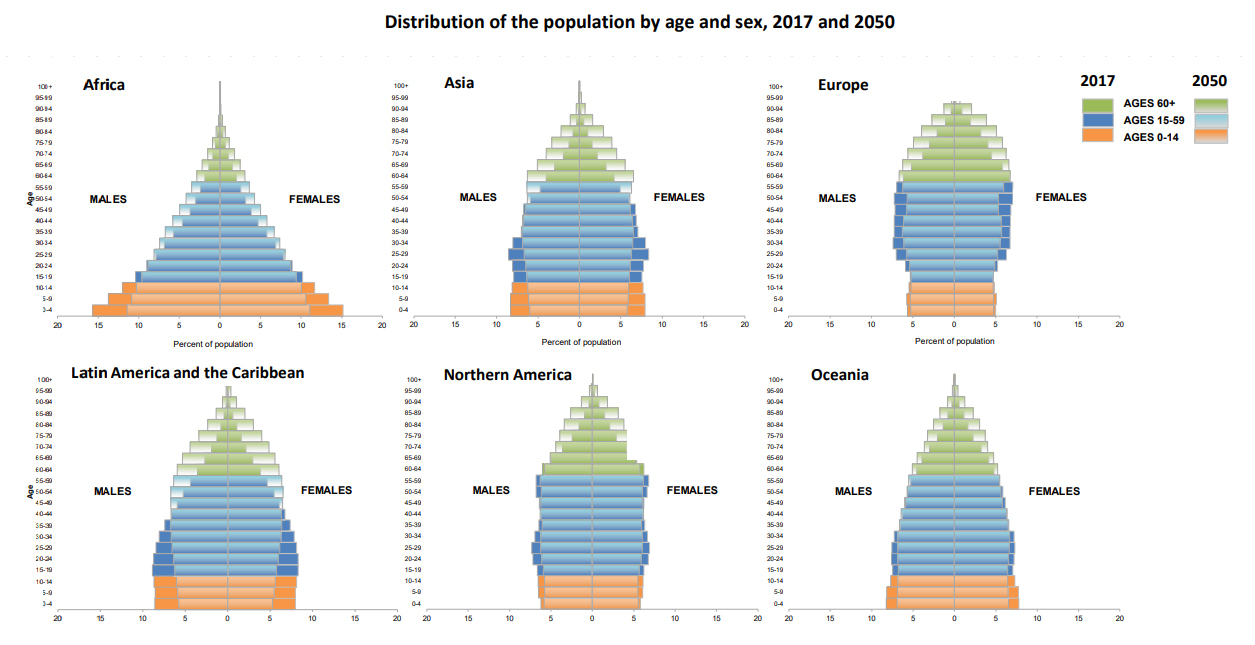
Source: United Nations, Department of Economic and Social Affairs, Population Division (2017). World Population Prospects 2017 – Data Booklet (ST/ESA/SER.A/401)

By 2050, the elderly will be a quarter of the global population, and these people will likely be suffering from several chronic diseases at once, gradually losing their health, independence and dignity. For so many people, being a burden on their families because of their deteriorating health is unacceptable, which is why the number of suicides in this age group is so high.

Is aging an invisible problem?

The numbers of these voluntary deaths are very upsetting, but what is even more upsetting is that diseases of old age are the major cause of death worldwide and aging kills around 100,000 people every day. This is the population of a small city. Imagine what would happen if everyone in a city like Cambridge, Massachusetts were to die in one day. I bet that there would be a lot of media attention and that thousands of experts would be on television discussing the potential causes of death and ways of preventing this tragedy in the future. Let’s say that the next day, another city becomes deadly peaceful. Take the Russian city of Domodedovo, which has its own airport. Everyone dead. People in neighboring cities would probably be frightened, and some charismatic politicians would be trying to calm down the public and promising to do something about all these deaths. The next day, this happens to yet another city, maybe in India. Then another one in Australia. It would not take long before G20 would set up an urgent conference call to set up an international commission and allocate money and scientists to investigate and solve the problem.

                                                                                                                                              Source: WHO website

Guess what? This type of thing never happens in relation to aging, because people dying from it are spread around the globe, so the disaster does not make the headlines. The public only notices the problem when an actor, scientist, or other significant public figure dies from an age-related disease – most often heart disease, stroke, or cancer. Do you want an example? “Santa Claus, age 90, dies from a heart attack: a critical blow to the industry of giftmaking.”

Sorry, sorry. I didn’t mean to scare you, but you get the point, right? From looking at your pictures, I could suspect that you might have some minor problems with glucose metabolism, but your extensive physical activity during gift delivery should be compensating for that, so you should be fine. For other people aged 60 and older, aging is an ever-increasing problem. Here, we come to the other important issue.

What is aging? How it can be addressed?

You see, aging is the accumulation of damage that happens due to normal bodily functions. This damage builds up over time, normal cell functions erode, and, at some point, this leads to the manifestation of age-related diseases. Normal operations, damage accumulation, disease, more damage, aggravation of disease, death. Simple.

It turns out that at the beginning of this century, British scientist Aubrey de Grey published an article in which he described several types of damage done by aging. He suggested the heretical idea of targeting these damages with medical interventions instead of trying to cure the symptoms of each age-related disease. He argued that age-related diseases are only a consequence of damage accumulation and that it would be much more effective to address the root causes.

The seed that Dr. de Grey dropped into the fertile soil of scholarship produced nice fruit in 2013, which is when a group of famous researchers of aging published The Hallmarks of Aging, a paper in which they described nine types of damage that accumulate with age and could be made into new therapeutic targets.

Comparison of a mouse treated with senolytics (at right) and a same-age mouse of the control group (at left). Source: Baker, D. J., Childs, B. G., Durik, M., Wijers, M. E., Sieben, C. J., Zhong, J., … & Khazaie, K. (2016). Naturally occurring p16Ink4a-positive cells shorten healthy lifespan. Nature, 530(7589), 184.

There were other fruits as well: animal studies have definitively proven that even only addressing one type of damage can extend the healthy period of life, postpone age-related diseases, keep animals more active, and, as a positive side effect, extend lifespan. It is worms that hold the best record so far, as tweaking some of their longevity-related genes has allowed them to live 10 times longer. The results in mice are also impressive – the researchers can extend both their healthy period of life and lifespan by 30-35%. Honestly, I find myself jealous of these mice, sometimes. I would not mind adding another 30% of youthful and healthy years to my life, even if I would have to take some pills or get some regular injections.

Can we control aging in humans?

You see, Santa, where I am going with this. I am sure that you sometimes leave gifts under the trees of people who work for the FDA. Accumulating a critical mass of knowledge about interventions against murine aging made it possible to develop the same type of interventions for people. Now, drugs and therapies addressing some of the root mechanisms of aging are in official human clinical trials. At some point, some of these trials will be successful, and drugs and therapies targeting aging itself will come to market.

If you don’t believe me, here is the short list of people whose chimneys’ stacks are the best source of additional information on the topic: George Church, Anthony Atala, Judy Campisi, Vadim Gladyshev, Maria Blasco, Michael West, Vera Gorbunova, Irina Conboy, Kelsey Moody, Brian Kennedy, Linda Partridge, Alexey Moskalev, Cynthia Kenyon, Claudio Franceschi, Alex Zhavoronkov, Nir Barzilai, and, of course, Aubrey de Grey. He wears a great beard, so you have more in common with gerontologists than you would think.

Listen to these people tell their families about their research, and you will get my point. We are on the edge of a revolution in rejuvenation biotechnology. Yet, most people don’t know about it and don’t realize what kind of potential benefit this advancement holds for them and for our aging society as a whole. Most importantly, as they know nothing, they have no say in decision making. How can people possibly speed up the pace of aging research if they don’t realize that aging is amenable to intervention? How can they foster technology transfer and local production of the cures for aging, such as senolytics, in their countries? How can they control prices and make future distribution and access equal? How can they ensure that old people in their families, who need these new treatments the most, would get them sooner?

Knowledge is power. We hear this in almost every interview, and you should be hearing it every Christmas from the researchers of aging, too. They have golden brains; the only thing they need is an appropriate amount of funding to solve the problem of aging more quickly. A strong public movement for aging research could be a game changer and could act as leverage to allocate government funding towards researching and developing treatments that target the underlying mechanisms of aging.

Ending aging and age-related diseases is possible

It is obvious that you are a kind person, Santa. You are perceptive and generous; you know what people want, and you try to give them what they want. However, if you don’t help me with my information campaign, in a couple of decades from now, you will be delivering billions of adult diapers and wheelchairs all over the globe. Wouldn’t it be nicer if you were to pile these up in your warehouse to be covered in dust while you give people therapies and drugs that prevent aging and wipe age-related diseases out of human lives? Just imagine how much happier people would be if they could remain healthy and independent, enjoy full and productive lives, achieve more, and stay with their families and friends for longer.

I was a good girl the whole year, attending scientific conferences, interviewing researchers, speaking at public events, and supporting our partners and colleagues in every way I could, even if that much socializing makes me suffer from an introvert’s hangover. I was eating healthy food and promoting evidence-based means to slow down aging among my relatives and friends. I deserve a nice Christmas gift.

All you have to do is to let everyone on the planet know that aging is amenable to intervention and that treatments addressing the root causes of aging are currently being created. For real. That would make me the happiest creature on the planet. Thank you in advance!

Sincerely, Elena

Instead of a conclusion

I am 39 years old, and I am an agnostic. There is not much evidence that Santa Claus exists. However, I do believe that miracles happen: the miracles that we create with our own hands. You who are reading these words (thanks for getting this far, by the way!) possess this special power, too. Use it! Let people around you know that science is close to bringing aging under medical control, and let’s build a world where healthy longevity for everyone is a reality.

As a devoted advocate of rejuvenation technologies since 2013, Elena Milova is providing the community with a systemic vision how aging is affecting our society. Her research interests include global and local policies on aging, demographic changes, public perception of the application of rejuvenation technologies to prevent age-related diseases and extend life, and related public concerns. Elena is a co-author of the book Aging prevention for all (in Russian, 2015) and the organizer of multiple educational events helping the general public adopt the idea of eventually bringing aging under medical control.

Mountain in the Jungle: Habitable Exomoon – Painting by Ekaterinya Vladinakova

Mountain in the Jungle: Habitable Exomoon – Painting by Ekaterinya Vladinakova

December 20, 2018 Ekaterinya Vladinakova Comments 0 Comment

Ekaterinya Vladinakova


“Mountain in the Jungle: Habitable Exomoon” by Ekaterinya Vladinakova

Left-click on the image for a fuller view. You can also download this painting (5000 by 2636 pixels) here.

The terraformed surface of an exomoon – another illustration by Ekaterinya Vladinakova of the lush worlds that can be created as a result of our species’ colonization of the cosmos. Let humanity venture forth to both discover and create such splendid new environments!

Ekaterinya Vladinakova is an accomplished digital painter. See her gallery here and her DeviantArt page here.

Aubrey de Grey – Clinical Trials in Five Years – Interview by Laura Sanz Olacia

Aubrey de Grey – Clinical Trials in Five Years – Interview by Laura Sanz Olacia

December 19, 2018 Laura Sanz Olacia Comments 0 Comment

logo_bgLaura Sanz Olacia
Aubrey de Grey


Editor’s Note: In this interview originally published by our allies at the Life Extension Advocacy Foundation (LEAF), Laura Sanz Olacia discusses with Dr. Aubrey de Grey his anticipation that treatments aimed at reversing biological aging may enter clinical trials within five years. The U.S. Transhumanist Party is pleased to feature these insights from Dr. de Grey. 

~ Gennady Stolyarov II, Chairman, United States Transhumanist Party, December 18, 2018


In November, Dr. Aubrey de Grey, a graduate of the University of Cambridge, was in Spain to attend the Longevity World Forum in the city of Valencia, and he gave a press conference organized by his friend, MIT engineer José Luis Cordeiro.

Dr. Aubrey de Grey is the scientific director (CSO) and founder of the SENS Research Foundation. In Madrid and Valencia, Dr. de Grey reaffirmed for Tendencias21 one of his most striking statements of 2018: “In the future, there will be many different medicines to reverse aging. In five years, we will have many of them working in early clinical trials.”

The Longevity World Forum is a congress on longevity and genomics in Europe. It is heir to the first congress in Spain, the International Longevity and Cryopreservation Summit, which was held at the CSIC headquarters in Madrid in May 2017, and Dr. de Grey also participated in that event. In Valencia, his presentation was recieved with interest, and Dr. de Grey explained to this select audience that aging will be treated as a medical problem in the near future. Rather than treating its symptoms using the infectious disease model, the root causes of aging will themselves be treated.

It was published recently on longevityworldforum.com that a therapy to reverse aging will be a reality within five years. What will be its mechanism of action, roughly?

There will not be just one medicine; there will be a lot of different medicines, and they will all have different mechanisms of action. For example, some of them will be stem cells, where we put cells back into the body in order to replace cells that the body is not replacing on its own. Sometimes, they will be drugs that kill cells that we don’t want. Sometimes, they will be gene therapy treatments that give cells new capabilities to break down waste products, for example. Sometimes, they will be vaccines or other immune therapies to stimulate the immune system to eliminate certain substances. Many different things. In five years from now, we will probably have most of that working. I do not think that we will really have it perfect by then; probably, we will still be at the early stages of clinical trials in some of these things. Then, we will need to combine them, one by one, to make sure that they do not affect each other negatively. So, there will still be some way to go. But, yes, I think it’s quite likely that in five years from now, we will have everything, or almost everything, in clinical trials.

Then clinical trials for seven years until it’s perfected. Don’t clinical trials usually take a long time?

It depends. For example, in aging, because there is this progressive accumulation of damage, you could have therapies that slow down the rate at which damage accumulates, or you could have therapies that repair the damage that has already happened. The second type of therapy is what we think is going to be most effective and is going to be easiest to do, and you can see results from that very quickly, like in one or two years. Now, of course, you still want to know what happens later on, but the first thing is to determine whether this is working at all, and as soon as it starts to work, then you can start to make it available. Clinical trials are changing in that way. Historically, clinical trials had to be completed before anybody could get these drugs, but now we are getting new policies; there is a thing called adaptive licensing, which is becoming popular in the US and elsewhere, where the therapy becomes approved at an earlier stage, and then it’s monitored after that.

Beyond the humanitarian perspective of avoiding the pain and suffering that comes with old age, if increasing the years of healthy life in people will significantly reduce health care spending by governments, why don’t they promote research in this area?

You’re absolutely right. It’s quite strange that governments are so short-sighted. But, of course, the real problem is psychological: it’s not just governments that are short-sighted. Almost everybody in the world is short-sighted about this. The reason I believe why that’s true is people still can’t quite convince themselves that it’s going to happen. Since the beginning of civilization, we have known that there is this terrible thing called aging, and we have been desperate to do something about it, to get rid of it. And people have been coming along, ever since the beginning of civilization, saying, “Yes, here’s the solution, here’s the fountain of youth!” And they’ve always been wrong. So, when the next person comes along and says they think they know how to do it, of course, there is going to be some skepticism until they have really shown that it’s true. Of course, if you don’t think it’s going to work, then you’re not going to support the effort financially. It’s very short-sighted, but it’s understandable.

Why do you think that the pharmaceutical industry does not devote its research and development efforts to this area, which causes the death of 100,000 people every day?

Today, the pharmaceutical industry is geared toward keeping old people alive when they are sick. It makes its money that way. It’s not just the pharmaceutical industry, it’s the whole of the medical industry. And so, most people say that they are worried that maybe the pharmaceutical industry will be against these therapies when they do come along. I don’t think that’s true at all. I think they will be in favor because people will be in favor, but people are not really in favor yet. People don’t really trust preventive medicine. They think “Okay if I am not yet sick…” They don’t trust medicine in general; they know that this is experimental. So, when they are not yet sick, they think “Well, I’ll wait until I am sick,” but we can change that. Eventually, people will understand that it’s going to be much more effective to treat yourself before you get sick, and then the whole medical industry will just respond to that; they will make the medicines that people want to pay for.

So you don’t think that they will be against these therapies?

No. They will follow.

But now, they are not focusing their research into this field.

That’s right because they don’t need to. The big pharmaceutical companies don’t really do much of their own research in the first place. They just wait to see what happens, and then they buy small companies.

In the car analogy that you use, you say that a car is built to last 10 or 15 years, but with proper maintenance, it can last up to 100 years. Isn’t this expressing the idea that aging is programmed and that the life of a car is also programmed?

No, it’s not. All of you know that, a long time ago, Henry Ford invented a concept called planned obsolescence, which was a way of building a car so that you could predict pretty accurately how long it would last. But, of course, the only reason that the prediction works is because people are lazy, and they don’t mind replacing their cars, so they only do the minimum amount of maintenance that the law tells them to. The reason that some cars last 100 years is not because those cars were built differently, it’s because there are a few people out there who fall in love with their cars and they don’t want them to get old. So, it really is exactly the same. In the human body, we have aging, because there are certain types of damage that are not automatically repaired when they happen. Of course, many types of damage in the human body are repaired automatically when they happen, so we don’t need medicine for that, but some of them are not. So, if we can develop medicines that do fix those things, it’s exactly the same as with a car.

If aging is not programmed, why do different species have different lifespans?

Because they have different qualities of built-in repair machinery. When I talk about all these types of damage, they are the types of damage that accumulate in the body, and they accumulate because the body does not have ways to repair them. There are massive amounts of other types of damage that I don’t call damage, and the reason I don’t call them damage is because they don’t accumulate. The reason that they don’t accumulate is because we already have built-in machinery to repair them when they happen. So, long-lived species have more comprehensive automatic repair machinery built into them.

Do you think that first we can focus on just replacing organs and restoring their function, and eventually we can eliminate the root causes of aging? Once we reach longevity escape velocity, maybe we can focus on just eliminating it?

We will never be able to stop the body from creating this damage. The body is going to do that because it is intrinsic to metabolism, but the better we get at repairing the damage, the fewer problems we have.

What healthy habits do you follow now?

I don’t do healthy habits. I’m lucky, I don’t need to do anything; I can drink whatever I like and nothing happens. I don’t even do much exercise, and also I don’t get nearly enough sleep, which is probably shortening my life, but it is worth it because I am hastening the defeat of aging, so it is a net positive.

Which generation will live to be a thousand years old? Do you think it is born already?

I think it is very probably born already, yes. But, of course, we cannot know until we get the medicines.

Which country do you think is more aware, or the people is more aware that this is a problem that we need to fix?

I would say Russia.

Russia?

Yeah. Surprising, isn’t it? But when I go to Russia and I talk about all of this, it’s so wonderful; I don’t get any of the uninformed questions, and everyone seems to understand it.

They don’t ask you ethical questions?

That’s right, yeah. They understand that this is a medical problem, it needs to be fixed, and it can be fixed.

Kriorus [the first and only cryonics company in Eurasia] is there right?

Yeah, I know Kriorus, I know the people very well.

Alcor [the world leader in cryonics located in Arizona] is the most expensive.

It gives the best service. I mean, it makes sense to have a very expensive, high-quality service and also less expensive and lower quality service. That is normal.

Where are you currently living?

I live in the United States, but I go everywhere when I am invited to speak and so on.

Laura Sanz Olacia, has a degree in Pharmacy from the Complutense University of Madrid (2015). Between 2016 and 2017 she worked for nine months in different pharmacies in London. She also worked in a pharmacy laboratory compounding medicines and cosmetics in Madrid. More recently she worked in IQVIA as Data Management Analyst. She is very interested in research and, in particular, in the area of ​aging. During her stay in London, she participated in the organization of the Antiaging Conference London 2016, and back in Madrid, she collaborated closely with the organizing committee of the International Longevity and Cryopreservation Summit 2017. She wants to devote her career to doing research in this field.

The Imperative to Build a Transhumanist Society – Article by C. H. Antony

The Imperative to Build a Transhumanist Society – Article by C. H. Antony

December 17, 2018 C. H. Antony Comments 9 comments

logo_bgC. H. Antony


Editor’s Note: The U.S. Transhumanist Party publishes this article by member C. H. Antony as a reminder that the aspirations of the transhumanist movement and the imperative to develop technologies to instantiate it are personal to many of us. Delays in achieving our vision come at the cost of innocent lives. In Section XXII of its Platform, “The United States Transhumanist Party supports efforts at political, economic, and cultural experimentation in the form of seasteads and micronations.” To what extent can such experimentation be explicitly transhumanist in nature? To what extent can the U.S. Transhumanist Party collaborate and its members contribute their efforts to advance emerging efforts to create seasteads and micronations – such as Blue Frontiers? Do members agree with Mr. Antony’s critique of the U.S. Transhumanist Party’s predominant approach, which is aimed at incrementally reforming existing political systems? Comments from various perspectives are welcome.

~ Gennady Stolyarov II, Chairman, United States Transhumanist Party, December 17, 2018


        Amanda Y. Bowers

         September 25th, 1984 – December 8th, 2018

My wife had been sick for a long time. Off and on she suffered peculiar gastrointestinal problems and was given a different reason every time. Finally, in 2015, Amanda was diagnosed with celiac sprue symptomatically, though she presented no protein markers. We were told that is sometimes the case and began a gluten-free diet and some important lifestyle changes we hoped would alleviate her suffering. As time went on, we believed every other GI problem to be easily explained by some cross-contamination or hidden filler in something. We had no idea that she was suffering from colorectal cancer that was slowly reaching a critical point. In July of 2018 her left ureter collapsed, and she was sent home with the explanation that she had passed a kidney stone. I came home from a trip to find her more ill than when I had left and brought her back in and had to fight for her admission and testing. The results were inconclusive, the prevailing theory being a progression of Celiac Disease to Crohn’s Disease. She was sent home on a steroidal regiment. Before we could follow up with the GI issues, we found ourselves back in the hospital, where they refused to do imaging and her bowel ruptured right there in front of them. But again she was sent home after the pain meds she was on quieted things down. I brought her back the very next day after begging a hospitalist we hit off with to grease the wheels a little. The result was emergency surgery and an ileostomy. Three days later, after narrowly surviving the rupture and sepsis, she was diagnosed with colon cancer. A week later, as her pleural tissues filled with fluid, and they determined the cancer to be at Stage 4. The last 5 months had been a breakneck race against a clock we couldn’t see. She endured 4 rounds of chemo, a pericardial effusion that she was again sent home with to die, and finally, her lungs began filling with fluid. On Tuesday last week, she came home on hospice; she died that Saturday night.

The longer history of this is filled with misdiagnosis, marginalization, even accusations of attempting to fraudulently obtain opioids. The local hospital corporation, the Veterans’ Administration (VA), all the affiliated specialists – they all guessed and missed. This is an all-too-common story. Cancer is nearly epidemic in our country; patients get passed around and dumped here and there, and diagnoses are rarely found before their deaths. My wife, Amanda, leaves behind two young children and a distraught husband. Her life thus far was rife with struggle and abuse; we had only a short time together for that to abate before she died in the most horrific manner I’ve ever witnessed. It has to stop.

Many investors have sniffed at the idea of breakaway nations, never quite biting in. But I believe it is now critical. The system of cronyism and lobbying that retards advancement and availability of medical science will not be remedied in this or any other nation. We must do it ourselves. My wife died because of this system. Her cancer was not a mutation of her own genes, nor inherited. It was most likely environmental, and most likely caused by the contaminated water on the bases where she was stationed. There will never be enough accountability to atone for this. We are soaked in contaminants we don’t understand and can’t remove from our daily lives. It’s time to take what we do know and start over.

Jeff Bezos recently expressed interest in seastead nations. Imagine if we could have the likes of Elon Musk, Jeff Bezos, Richard Branson, and others backing a transhumanist colony? What opportunity for human advancement we would have! The good people at Blue Frontiers are doing their best, but they need more backing and interest. We need a more solid plan; we can’t simply say what we will do; we must show and sell. It’s not enough to simply say “solar”, “materials science”, “sapioponics”; we have to design it and sell the design, down to the last bolt. And we need to sell it to the men who currently captain our industry, make it appealing and beneficial to them as well. Our wants are simple: freedom – the freedom to live without disease or fear in any form we choose, the freedom to never know hunger or disparity, the freedom to explore each of our individual potentials. But we will not have this freedom in America. Freedom here is truly an illusion.

To borrow heavily from greater minds than mine, we of good conscience cannot abide this culture of blinders and muzzles. We can do better and we must. Should great minds like Elon Musk, Bezos, Sir Branson, Ray Kurzweil, and so on come together and help become the architects of the future, we may yet survive the filthy politics of our current condition. I fear that no matter the achievement, it will be boxed up and slow-rolled for as long as politically possible. We can speculate forever the motivations of our various political parties as to why we are so far behind when we know how to be so far ahead; I do not intend to argue these points anymore. Instead, we must ignore the Luddites and move ahead on our own in the hopes that, through our example, the rest of humanity will eventually follow.

The meat of it is that we must acquire sufficient land and sovereignty to live as we wish, invite the industry and economy that we choose to utilize, and encourage the availability of advancements that are necessary to transcend this mortality and banality. We require financiers, captains of industry who want this future as much as we do, a nation attractive to the sciences and technology that we need in our endeavor, UN representation to protect our sovereignty as we pursue our human birthright, and a well thought-out design ethic to ensure no individual is encroached up on by another. We must not only design our nation, but the very infrastructure with purposeful intent.

To put the finest point on it that I can, I submit the following as the most humble beginning of a Transhumanist Nation:

  • A carefully laid-out infrastructure and topography conducive to peaceful coexistence among the population. One idea is a city-center of commerce and industry, surrounded by suburbs for families and recreation, and outskirt establishments for research and development.
  • The layout would prevent the tendencies for crime and predation that emerge when humans are forced to live in close quarters and congestion. Tunnel systems, electric vehicles, solar and other alternative energies, new forms of currency and trade, methods of education will all be prototyped and heavily utilized as a proof of concept for the rest of the world. The stress of daily living can be mitigated further with the adoption of universal basic income, uninfringed property rights, and universal, state-of-the-art medical-care access.
  • The presence of Amazon, Tesla, Neuralink, Virgin, and Google and all their various useful subsidiaries as our primary industry and commerce. This would serve as an enticement for the funding necessary to establish a new nation, no doubt purchased from another nation that may be willing to benefit from the vast technological advancement of a Transhumanist Society. The sponsoring corporations will be free to innovate and advance so long as doing so is in line with Transhumanist ideals and sensibilities.
  • Recruitment of Researchers and Medical Professionals germane to our intent and ideals.
  • Recruitment of Scholars and Philosophers, Artists and Artisans, Educators, and anyone else who believes that we can be more than the sum of our parts.

We need to achieve a society driven by life and betterment, not this crippling stagnation that sees millions die as the pace is slowed to one comfortable for limited minds and ambitions. Again, I cite Blue Frontiers as a group actively trying for this; I suggest we back them vigorously and attempt to build a purposeful society as soon as possible.

The United States Transhumanist Party has already brilliantly laid out the groundwork for this society in its Transhumanist Bill of Rights and Party Platform. We have the foundation of a great nation in our hands, but the status quo will never allow it. Power, such as it is, is too seductive a drug. Were we to gather our resources, both financial and human, I believe we could engineer a new, greater society of free minds and exchange, one where our coming Singularity propels us to heights we can only imagine. But we must come together. My wife was only 34 years old at the time of her death – a young mother, a veteran, a brilliant mind. As a paid intern, she coauthored a USGS study regarding asteroid mining, because she did the math for the researchers – a feat that required her to learn chemistry and new physics on the fly, all while finishing her own degree work. And now she is gone – just like that.

No More.

Let us begin now. Let us come together and create an opportunity, rather than wait for it to present itself. With the deepest respect to this party and its leadership, I believe that we are wasting our precious time attempting to participate in the American political system. I propose we open discussions with Blue Frontiers, Amazon, Virgin, Tesla, and other innovative organizations and begin the process – before more lives are lost.

C. H. Antony is a member of the U.S. Transhumanist Party. He may be contacted here. 

Transhumanist Bill of Rights – Results of Vote and Version 3.0

Transhumanist Bill of Rights – Results of Vote and Version 3.0

December 13, 2018 Gennady Stolyarov II Comments 1 comment

logo_bg

Gennady Stolyarov II


The U.S. Transhumanist Party conducted its tenth vote of the members on December 2 through December 9, 2018. Official ballot options can be found here.

Detailed results of the voting have been tabulated here. Where more than two options existed, the winning result was selected based on the ranked-preference method with instant runoffs.

As a result, Version 3.0 of the Transhumanist Bill of Rights was compiled on the basis of the members’ decisions. Version 3.0 augments and supersedes Version 2.0, while retaining the original intent of Version 2.0.

The resulting Version 3.0 of the Transhumanist Bill of Rights is permanently hosted here. Its text is also reproduced below.

Note: It is important to keep in mind that the Transhumanist Bill of Rights is not a policy platform but rather a member-driven expression of ideals for a transhumanist society. No individual is bound to it (indeed, its new Article I states this explicitly), it is not static, and it is subject to further amendments if/when member recommendations arise and meet with significant demand.  Anyone who sees this version can always give feedback on the U.S. Transhumanist Party website (including on this thread) and/or Facebook page. The official U.S. Transhumanist Party Platform can be found here.


Transhumanist Bill of Rights – Version 3.0

Version 1.0 written by Zoltan Istvan – Delivered to the U.S. Capitol on December 14, 2015

Version 2.0 developed by members of the U.S. Transhumanist Party – Adopted via Electronic Vote on December 25-31, 2016 – Integrated from Voting Preferences on January 4, 2017

Version 3.0 developed by members of the U.S. Transhumanist Party – Adopted via Electronic Vote on December 2-9, 2018 – Integrated from Voting Preferences on December 12, 2018

[NOTE: The Transhumanist Bill of Rights is not static and is open to further amendments via future votes of U.S. Transhumanist Party members. To suggest a specific amendment, you may make a post on this thread or e-mail Gennady Stolyarov II, Chairman of the U.S. Transhumanist Party, here. Proposed amendments that receive sufficient member demand will be considered for inclusion on future ballots.]

Preamble

Whereas science and technology are now radically changing human beings and may also create future forms of advanced sapient and sentient life, transhumanists establish this TRANSHUMANIST BILL OF RIGHTS to help guide and enact sensible policies in the pursuit of life, liberty, security of person, and happiness.

As used in this TRANSHUMANIST BILL OF RIGHTS, the term “sentient entities” encompasses:
        (i) Human beings, including genetically modified humans;
        (ii) Cyborgs;
        (iii) Digital intelligences;
        (iv) Intellectually enhanced, previously non-sapient animals;
       (v) Any species of plant or animal which has been enhanced to possess the capacity for intelligent thought; and
        (vi) Other advanced sapient life forms.

Sentient entities are defined by information-processing capacity such that this term should not apply to non-self-aware lifeforms, like plants and slime molds. Biological processing substrates are referred to as using an “analogue intelligence”, whereas purely electronic processing substrates are referred to as “digital intelligence”, and processing substrates that utilize quantum effects would be considered “quantum intelligence”.

Sentience is ranked as Level 5 information integration according to the following criteria:

  • Level 0 – No information integration: Inanimate objects; objects that do not modify themselves in response to interaction – e.g., rocks, mountains.
  • Level 1 – Non-zero information integration: Sensors – anything that is able to sense its environment – e.g., photo-diode sense organs, eyes, skin.
  • Level 2 – Information manipulation: Systems that include feedback that is non-adaptive or minimally adaptive – e.g., plants, basic algorithms, the system that interprets the output from a photo-diode to determine its on/off state (a photo diode itself cannot detect its own state). Level 2 capabilities include the following:
  1. Expression of emotion;
  2. Expression of sensory pleasure;
  3. Taste aversion.
  • Level 3 – Information integration – Awareness: Systems that include adaptive feedback, can dynamically generate classification – e.g., deep-learning AI, chickens, animals that are able to react to their environment, have a model of their perception but not the world. This level describes animals acting on instinct and unable to classify other animals into more types than “predator”, “prey”, or “possible mate”. Level 3 capabilities include the following:
  1. Navigational detouring (which requires an being to pursue a series of non-rewarding intermediate goals in order to obtain an ultimate reward); Examples: documentation of detouring in jumping spiders (Jackson and Wilcox 1998), motivational trade-off behavior in hermit crabs (Elwood and Appel 2009);
  2. Emotional fever (an increase in body temperature in response to a supposedly stressful situation — gentle handling, as operationalized in Cabanac’s experiments).
  • Level 4 – Awareness + World model: Systems that have a modeling system complex enough to create a world model: a sense of other, without a sense of self – e.g., dogs. Level 4 capabilities include static behaviors and rudimentary learned behavior.
  • Level 5 – Awareness + World model + Primarily subconscious self model = Sapient or Lucid: Lucidity means to be meta-aware – that is, to be aware of one’s own awareness, aware of abstractions, aware of one’s self, and therefore able to actively analyze each of these phenomena. If a given animal is meta-aware to any extent, it can therefore make lucid decisions. Level 5 capabilities include the following:
  1. The “sense of self”;
  2. Complex learned behavior;
  3. Ability to predict the future emotional states of the self (to some degree);
  4. The ability to make motivational tradeoffs.
  • Level 6 – Awareness + World model + Dynamic self model + Effective control of subconscious: The dynamic sense of self can expand from “the small self” (directed consciousness) to the big self (“social group dynamics”). The “self” can include features that cross barriers between biological and non-biological – e.g., features resulting from cybernetic additions, like smartphones.
  • Level 7 – Global awareness – Hybrid biological-digital awareness = Singleton: Complex algorithms and/or networks of algorithms that have capacity for multiple parallel simulations of multiple world models, enabling cross-domain analysis and novel temporary model generation. This level includes an ability to contain a vastly larger amount of biases, many paradoxically held. Perspectives are maintained in separate modules, which are able to dynamically switch between identifying with the local module of awareness/perspective or the global awareness/perspective. Level 7 capabilities involve the same type of dynamic that exists between the subconscious and directed consciousness, but massively parallelized, beyond biological capacities.

Article I. All sentient entities are hereby entitled to pursue any and all rights within this document to the degree that they deem desirable – including not at all. All sentient entities are entitled, to the extent of their individual decisions, to all the rights and freedoms set forth in this TRANSHUMANIST BILL OF RIGHTS, without distinction of any kind, such as race, color, sex, gender, language, religion, political or other opinion, national, social, or planetary origin, property, birth (including manner of birth), biological or non-biological origins, or other status. Furthermore, no distinction shall be made on the basis of the political, jurisdictional, or international status of the country or territory to which a sentient entity belongs, whether it be independent, trust, non-self-governing, or under any other limitation of sovereignty. In the exercise of their rights and freedoms, all sentient entities shall be subject only to such limitations as are determined by law solely for the purpose of securing due recognition and respect for the rights and freedoms of others and of meeting the just requirements of morality, public order, and the general welfare in a democratic society, which may not undermine the peaceful prerogatives of any individual sentient entity. These rights and freedoms may in no case be exercised contrary to the purposes and principles of this TRANSHUMANIST BILL OF RIGHTS.

Article II. The enumeration in this TRANSHUMANIST BILL OF RIGHTS of certain rights shall not be construed to deny or disparage any other rights retained by sentient entities.

Article III. All sentient entities shall be granted equal and total access to any universal rights to life. All sentient entities are created free and equal in dignity and rights. They are endowed with reason and conscience and should act towards one another in a spirit of brotherhood (without necessitating any particular gender or implying any particular biological or non-biological origin or composition).

Article IV. Sentient entities are entitled to universal rights of ending involuntary suffering, making personhood improvements, and achieving an indefinite lifespan via science and technology. The right of ending involuntary suffering does not refer to euthanasia but rather to the application of technology to eliminate involuntary suffering in still-living beings, while enabling their lives to continue with improved quality and length.

Article V. No coercive legal restrictions should exist to bar access to life extension and life expansion for all sentient entities. Life expansion includes life extension, sensory improvements, and other technologically driven improvements of the human condition that might be achieved in the future.

Article VI. Involuntary aging shall be classified as a disease. All nations and their governments will actively seek to dramatically extend the lives and improve the health of their citizens by offering them scientific and medical technologies to overcome involuntary aging.

Article VII. All sentient entities should be the beneficiaries of a system of universal health care. A system of universal health care does not necessitate any particular means, policy framework, source, or method of payment for delivering health care. A system of universal health care may be provided privately, by governments, or by some combination thereof, as long as, in practice, health care is abundant, inexpensive, accessible, and effective in curing diseases, healing injuries, and lengthening lifespans.

Article VIII. Sentient entities are entitled to the freedom to conduct research, experiment, and explore life, science, technology, medicine, and extraterrestrial realms to overcome biological limitations of humanity. Such experimentation will not be carried out on any sapient being, without that being’s informed consent. Sentient entities are also entitled to the freedom to create cybernetic artificial organs, bio-mechatronic parts, genetic modifications, systems, technologies, and enhancements to extend lifespan, eradicate illness, and improve all sentient life forms. Any such creations that demonstrate sapience cannot be considered property and are protected by the rights presented herein.

Article IX. Legal safeguards should be established to protect individual free choice in pursuing peaceful, consensual life-extension science, health improvements, body modification, and morphological enhancement. While all individuals should be free to formulate their independent opinions regarding the aforementioned pursuits, no hostile cultural, ethnic, or religious perspectives should be entitled to apply the force of law to erode the safeguards protecting peaceful, voluntary measures intended to maximize the number of life hours citizens possess.

Article X. Sentient entities agree to uphold morphological freedom—the right to do with one’s physical attributes or intelligence whatever one wants so long as it does not harm others.

This right includes the prerogative for a sentient intelligence to set forth in advance provisions for how to handle its physical manifestation, should that intelligence enter into a vegetative, unconscious, or similarly inactive state, notwithstanding any legal definition of death. For instance, a cryonics patient has the right to determine in advance that the patient’s body shall be cryopreserved and kept under specified conditions, in spite of any legal definition of death that might apply to that patient under cryopreservation.

Morphological freedom entails the duty to treat all sapients as individuals instead of categorizing them into arbitrary subgroups or demographics, including as yet undefined subcategorizations that may arise as sapience evolves.

However, the proper exercise of morphological freedom must also ensure that any improvement of the self should not result in involuntary harms inflicted upon others. Furthermore, any sentient entity is also recognized to have the freedom not to modify itself without being subject to negative political repercussions, which include but are not limited to legal and/or socio-economic repercussions.

Article XI.  An altered, augmented, cybernetic, transgenic, anthropomorphic, or avatar sentient entity, whether derived from or edited by science, comprised of or conjoined with technology, has the right to exist, form, and join the neo-civilization.

Article XII.  All sentient entities are entitled to reproductive freedom, including through novel means such as the creation of mind clones, monoparent children, or benevolent artificial general intelligence. All sentient entities of full age and competency, without any limitation due to race, nationality, religion, or origin, have the right to marry and found a family or to found a family as single heads of household. They are entitled to equal rights as to marriage, during marriage, and at its dissolution. Marriage shall be entered into only with the free and full consent of the intending spouses. All families, including families formed through novel means, are entitled to protection by society and the State. All sentient entities also have the right to prevent unauthorized reproduction of themselves in both a physical and a digital context. Privacy and security legislation should be enacted to prevent any individual’s DNA, data, or other information from being stolen and duplicated without that individual’s authorization.

Article XIII. No sentient entity shall be subjected to arbitrary interference with his, her, or its privacy, family, home, or correspondence, nor to attacks upon his, her, or its honor and reputation. Every sentient entity has the right to the protection of the law against such interference or attacks. All sentient entities have privacy rights to personal data, genetic material, digital, biographic, physical, and intellectual enhancements, and consciousness. Despite the differences between physical and virtual worlds, equal protections for privacy should apply to both physical and digital environments. Any data, such as footage from a public security camera, archived without the consent of the person(s) about whom the data were gathered and subject to legal retention, shall be removed after a period of seven (7) years, unless otherwise requested by said person(s).

Article XIV. No sentient entity shall be subjected to arbitrary arrest, detention or exile. Sousveillance laws should be enacted to ensure that all members of peaceful communities feel safe, to achieve governmental transparency, and to provide counter-balances to any surveillance state. For instance, law-enforcement officials, when interacting with the public, should be required to wear body cameras or similar devices continuously monitoring their activities.

Article XV. All sentient entities, with the exception only of those in legal detention, have the right to private internet access without such access being prohibited or circumvented by either private corporations or governmental bureaucracy.

Article XVI. All sentient entities are equal before the law and are entitled without any discrimination to equal protection of the law. All sentient entities are entitled to equal protection against any discrimination in violation of this TRANSHUMANIST BILL OF RIGHTS and against any incitement to such discrimination.All sentient entities should be protected from discrimination based on their physical form in the context of business transactions and law enforcement.

Article XVII. All sentient entities have the right to life, liberty and security of person. All sentient entities have the right to defend themselves from attack, in both physical and virtual worlds.

Article XVIII. Societies of the present and future should afford all sentient entities sufficient basic access to wealth and resources to sustain the basic requirements of existence in a civilized society and function as the foundation for pursuits of self-improvement. This includes the right to a standard of living adequate for the health and well-being of oneself and one’s family, including food or other necessary sources of energy, clothing, housing or other appropriate shelter, medical care or other necessary physical maintenance, necessary social services, and the right of security in the event of involuntary unemployment, sickness, disability, loss of family support, old age, or other lack of livelihood in circumstances beyond the sentient entity’s control. Present and future societies should ensure that their members will not live in poverty solely for being born to the wrong parents. All children and other recently created sentient entities, irrespective of the manner or circumstances of their creation, shall enjoy the same social protection. Each sentient entity, as a member of society, has the right to social security and is entitled to realization, through national effort and international co-operation and in accordance with the organization and resources of each State, of the economic, social, and cultural rights indispensable for his, her, or its dignity and the free development of his, her, or its personality.

Article XIX. Irrespective of whether or not technology will eventually replace the need for the labor of sentient entities, all sentient entities should be the beneficiaries of an unconditional universal basic income, whereby the same minimum amount of money or other resources is provided irrespective of a sentient entity’s life circumstances, occupations, or other income sources, so as to provide a means for the basic requirements of existence and liberty to be met.

Article XX. Present and future societies should provide education systems accessible and available to all in pursuit of factual knowledge to increase intellectual acuity; promote critical thinking and logic; foster creativity; form an enlightened collective; attain health; secure the bounty of liberty for all sentient entities for our posterity; and forge new ideas, meanings, and values. All sentient entities have the right to education. Education shall be free, at least in the elementary and fundamental stages. Technical and professional education shall be made generally available, and higher education shall be equally accessible to all on the basis of merit. Education shall be directed to the full development of the sentient entity’s personality and to the strengthening of respect for all sentient entities’ rights and fundamental freedoms. It shall promote understanding, tolerance, and friendship among all nations, racial, religious, and other sentient groups – whether biological, non-biological, or a combination thereof – and shall further the maintenance of peace. Parents and other creators of sentient entities have a prior right to choose the kind of education that shall be given to their children or other recently created sentient entities which have not yet developed sufficient maturity to select their own education.

Article XXI. All sentient entities are entitled to join their psyches to a collective noosphere in an effort to preserve self-consciousness in perpetuity. The noosphere is the sphere of human thought and includes, but is not limited to, intellectual systems in the realm of law, education, philosophy, technology, art, culture, and industry. All sentient entities have the right to participate in the noosphere using any level of technology that is conducive to constructive participation.

Article XXII. Sentient entities will take every reasonable precaution to prevent existential risks, including those of rogue artificial intelligence, asteroids, plagues, weapons of mass destruction, bioterrorism, war, and global warming, among others.

Article XXIII. All nations and their governments will take all reasonable measures to embrace and fund space travel, not only for the spirit of adventure and to gain knowledge by exploring the universe, but as an ultimate safeguard to its citizens and transhumanity should planet Earth become uninhabitable or be destroyed.

Article XXIV. Transhumanists stand opposed to the post-truth culture of deception. All governments should be required to make decisions and communicate information rationally and in accordance with facts. Lying for political gain or intentionally fomenting irrational fears among the general public should entail heavy political penalties for the officials who engage in such behaviors.

Article XXV. No sentient entity shall be held in slavery or involuntary servitude; slavery and the slave trade shall be prohibited in all their forms.

Article XXVI. No sentient entity shall be subjected to torture or to treatment or punishment that is cruel, degrading, inhuman, or otherwise unworthy of sentience or sapience.

Article XXVII. Each sentient entity has the right to recognition everywhere as a person before the law.

Article XXVIII. All individual sentient entities have the right to an effective remedy by the competent local, national, international, or interplanetary tribunals for acts violating the fundamental rights granted them by the constitution, by law, and/or by this TRANSHUMANIST BILL OF RIGHTS.

Article XXIX. All individual sentient entities are entitled in full equality to a fair and public hearing by an independent and impartial tribunal, in the determination of their individual rights and obligations and of any criminal charge against them.

Article XXX. All individual sentient entities charged with a penal offence have the right to be presumed innocent until proved guilty according to law in a public trial at which they individually have had all the guarantees necessary for their defense. No sentient entity shall be held guilty of any penal offence on account of any act or omission which did not constitute a penal offence, under national or international law, at the time when it was committed. Nor shall a heavier penalty be imposed than the one that was applicable at the time the penal offence was committed.

Article XXXI. All sentient entities have the right to freedom of movement and residence within the borders of each state. Each individual sentient entity has the right to leave any country, including his, her, or its own, and to return to his, her, or its country.

Article XXXII. All sentient entities have the right to seek and to enjoy in other countries asylum from persecution. This right may not be invoked in the case of prosecutions genuinely arising from non-political crimes or from acts contrary to the purposes and principles of this TRANSHUMANIST BILL OF RIGHTS.

Article XXXIII. All sentient entities have the right to a nationality. No sentient entity shall be arbitrarily deprived of his, her, or its nationality nor denied the right to change his, her, or its nationality.

Article XXXIV. All sentient entities have the right to own property alone as well as in association with others. No one shall be arbitrarily deprived of his, her, or its property.

Article XXXV. All sentient entities have the right to freedom of thought, conscience and religion; this right includes freedom to change one’s religion or belief, and freedom, either alone or in community with others and in public or private, to manifest one’s religion or belief in teaching, practice, worship, and observance. This right also includes freedom not to have a religion and to criticize or refuse to engage in any religious practice or belief without adverse legal consequences.

Article XXXVI. All sentient entities have the right to freedom of opinion and expression; this right includes freedom to hold opinions without interference and to seek, receive, and impart information and ideas through any media and regardless of frontiers.

Article XXXVII. All sentient entities have the right to freedom of peaceful assembly and association. No sentient entity may be compelled to belong to an association.

Article XXXVIII. All sentient entities have the right to take part in the government of their countries, directly or through freely chosen representatives. All sentient entities have the right of equal access to public service in their countries. The will of the constituent sentient entities shall be the basis of the authority of government; this will shall be expressed in periodic and genuine elections which shall be by universal and equal suffrage of sentient entities and shall be held by secret vote or by equivalent free voting procedures.

Article XXXIX. All sentient entities have the right to work, to free choice of employment, and to just and favorable conditions of work, as long as employment is offered or considered economically necessary in the sentient entity’s proximate society and contemporary epoch. All sentient entities who choose to work have the right to equal pay for equal work. All sentient entities who choose to work have the right to just and favorable remuneration, ensuring for themselves and their families an existence worthy of human dignity, and supplemented, if necessary, by other means of social protection, such as a universal basic income. All sentient entities have the right to form and join trade unions for the protection of their interests; however, no sentient entity may be compelled to join a trade union as a condition of employment.

Article XL. All sentient entities have the right to rest and leisure commensurate with the physical requirements of those sentient entities for maintaining optimal physical and mental health, including reasonable limitation of working hours and periodic holidays with pay in societies where paid employment is considered economically necessary.

Article XLI. All sentient entities have the right freely to participate in the cultural life of the community, to enjoy the arts, and to share in scientific advancement and its benefits. All sentient entities have the right to the protection of the moral and material interests resulting from any scientific, literary, or artistic production of which they are the authors.

Article XLII. All sentient entities are entitled to a social and international order in which the rights and freedoms set forth in this TRANSHUMANIST BILL OF RIGHTS can be fully realized.

Article XLIII. Nothing in this TRANSHUMANIST BILL OF RIGHTS may be interpreted as implying for any State, group, or sentient entity any right to engage in any activity or to perform any act aimed at the destruction of any of the rights and freedoms set forth herein.

Official Ballot Options for Transhumanist Bill of Rights, Version 3.0 – Voting Period of December 2-8, 2018

Official Ballot Options for Transhumanist Bill of Rights, Version 3.0 – Voting Period of December 2-8, 2018

December 1, 2018 Gennady Stolyarov II Comments 3 comments

logo_bg


The 7-day electronic voting period on the Transhumanist Bill of Rights, Version 3.0, will occur from 12:01 a.m. U.S. Pacific Time on December 2, 2018, to 12:01 a.m.  U.S. Pacific Time on December 9, 2018. All members of the U.S. Transhumanist Party who have applied before 12:01 a.m. on December 2, 2018, will be eligible to vote, as long as they have expressed agreement with the three Core Ideals of the Transhumanist Party or have otherwise been rendered eligible to vote at the discretion of the Chairman.

All members who are eligible to vote will be sent a link to an electronic submission form whereby they will be able to cast their ballot.

When you are voting, it is strongly recommended that you keep this page of official ballot options and the submission form open simultaneously in different windows so that you can reference the relevant options as you vote on them. Due to space limitations, the submission form does not list the entire text of all the options.

It is also recommended that you set aside at least one hour to consider and vote on all of the options and read their text closely, as some of the options contain minor variations upon other options. 

For some questions, electronic voting is  conducted by a ranked-preference method on individual articles where more options are possible than would be accommodated by a simple “Yes” or “No” vote. Members should keep in mind that the ranked-preference method eliminates the incentives for strategic voting – so members are encouraged to vote for the options that reflect their individual preferences as closely as possible, without regard for how other members might vote.

Results of the voting will be tabulated during the second week of December 2018, with the intent to announce the results approximately 7 days after all votes have been submitted.

NOTE: The titles of the questions and potential Articles are descriptive and informational only and will not appear in the final adopted Transhumanist Bill of Rights, Version 3.0. They are intended as concise guides to the subject matter of the questions and potential Articles. Likewise, the numbers or letters assigned to Articles within this ballot may or may not reflect the numbering in the final adopted Transhumanist Bill of Rights, which will depend on which Articles are selected by the membership.

NOTE II: The inclusion of any proposals on this ballot does not indicate any manner of endorsement for those proposals by the U.S. Transhumanist Party at this time – except to place those proposals before the members to determine the will of the members with regard to whether or not the Transhumanist Bill of Rights should incorporate any given proposal.

Voter Identification

What is your name?

At minimum, first and last name are required, unless you are publicly known by a single-name pseudonym which is not itself a common name. Your identity will not be publicly disclosed by the Transhumanist Party, unless you choose and/or authorize its disclosure. The nature of the selections made by the members may be disclosed, but, if they are, each individual vote will not be associated with the identity of the voter but rather will be presented in an anonymized manner.

What is your e-mail address?

Provide the same e-mail address you used to register for U.S. Transhumanist Party membership. Your ballot will be cross-referenced to our membership rolls, and only ballots with matching e-mail addresses will be counted.

Navigate the Options

Proposed Clarifying Amendments

Amendment TBR-IV. Clarification Regarding the Right to End Involuntary Suffering
Amendment TBR-VII. Clarification Regarding Universal Healthcare
Amendment TBR-XIX. Expansion of the Context for Universal Basic Income
Amendment TBR-XXI. Additional Information Regarding the Noosphere

Proposed Amendments to Integrate the Provisions of the United Nations Universal Declarations of Human Rights (“UN Declaration”) Directly into the Transhumanist Bill of Rights

Amendment TBR-I. Integration of Transhumanist Bill of Rights, Article I, and UN Declaration Articles 2 and 29
Amendment TBR-III. Integration of Transhumanist Bill of Rights, Article III, and UN Declaration Article 1
Amendment TBR-XII. Integration of Transhumanist Bill of Rights, Article XII, and UN Declaration Article 16
Amendment TBR-XIII. Integration of Transhumanist Bill of Rights, Article XIII, and UN Declaration Article 12
Amendment TBR-XIV. Integration of Transhumanist Bill of Rights, Article XIV, and UN Declaration Article 9
Amendment TBR-XVI. Integration of Transhumanist Bill of Rights, Article XVI, and UN Declaration Article 7
Amendment TBR-XVII. Integration of Transhumanist Bill of Rights, Article XVII, and UN Declaration Article 3
Amendment TBR-XVIII. Integration of Transhumanist Bill of Rights, Article XVIII, and UN Declaration Articles 22 and 25
Amendment TBR-XX. Integration of Transhumanist Bill of Rights, Article XX, and UN Declaration Article 26
Amendment TBR-XXV. Addition of New Article to Prohibit Slavery and Involuntary Servitude, Per UN Declaration Article 4
Amendment TBR-XXVI. Addition of New Article to Prohibit Torture and Cruel Punishment, Per UN Declaration Article 5
Amendment TBR-XXVII. Addition of New Article on Recognition Before the Law, Per UN Declaration Article 6
Amendment TBR-XXVIII. Addition of New Article on Effective Remedy – Expanded Version of UN Declaration Article 8
Amendment TBR-XXIX. Addition of New Article on Public Hearings for Criminal Charges – Per UN Declaration Article 10
Amendment TBR-XXX. Addition of New Article on Presumption of Innocence – Per  UN Declaration Article 11
Amendment TBR-XXXI. Addition of New Article on Freedom of Movement – Per  UN Declaration Article 13
Amendment TBR-XXXII. Addition of New Article on Right to Seek Asylum – Per  UN Declaration Article 14
Amendment TBR-XXXIII. Addition of New Article on Right to Nationality – Per  UN Declaration Article 15
Amendment TBR-XXXIV. Addition of New Article on Right to Property – Per  UN Declaration Article 17
Amendment TBR-XXXV. Addition of New Article on Religious Freedom – Expanded Version of UN Declaration Article 18
Amendment TBR-XXXVI. Addition of New Article on Freedom of Opinion and Expression – Per UN Declaration Article 19
Amendment TBR-XXXVII. Addition of New Article on Peaceful Assembly and Association – Per UN Declaration Article 20
Amendment TBR-XXXVIII. Addition of New Article on Right of Political Participation – Per UN Declaration Article 21
Amendment TBR-XXXIX. Addition of New Article on Right to Work – Modified Version of UN Declaration Article 23
Amendment TBR-XL. Addition of New Article on Right to Rest and Leisure – Modified Version of UN Declaration Article 24
Amendment TBR-XLI. Addition of New Article on Right of Cultural Participation – Per UN Declaration Article 27
Amendment TBR-XLII. Addition of New Article on Right to Social and International Order – Per UN Declaration Article 28
Amendment TBR-XLIII. Addition of New Article to Oppose Destruction of Rights and Freedoms – Per UN Declaration Article 30

Proposed Clarifying Amendments

Amendment TBR-IV. Clarification Regarding the Right to End Involuntary Suffering

Shall Article IV be amended to add the following statement at the end?

“The right of ending involuntary suffering does not refer to euthanasia but rather to the application of technology to eliminate involuntary suffering in still-living beings, while enabling their lives to continue with improved quality and length.”

If this proposal is passed, the resulting Article IV will read as follows:

“Sentient entities are entitled to universal rights of ending involuntary suffering, making personhood improvements, and achieving an indefinite lifespan via science and technology. The right of ending involuntary suffering does not refer to euthanasia but rather to the application of technology to eliminate involuntary suffering in still-living beings, while enabling their lives to continue with improved quality and length.”

Select one of the following options.

☐ Yes.

☐ No.

☐ Abstain.

Amendment TBR-VII. Clarification Regarding Universal Healthcare

Rank-order the Amendment TBR-VII Options that you support. Choose “1” for your most highly favored option, “2” for your second-most highly favored option, etc. You may include the option to “Keep the Current Wording of Article VII” in your rank-ordering, and it does not need to be your most favored option if you do so. (For instance, some voters might favor some options but think that no amendment is preferable to some of the other options.)

If you choose “Abstain”, then do not rank-order any options, as you will be considered to have skipped this question.

☐ Proposal TBR-VII-1 [Universal Healthcare as Practical Reality]: Amend Article VII to add the following statement at the end so that the complete Article reads as follows:

“All sentient entities should be the beneficiaries of a system of universal health care. A system of universal healthcare does not necessitate any particular means, policy framework, source, or method of payment for delivering healthcare. A system of universal healthcare may be provided privately, by governments, or by some combination thereof, as long as, in practice, healthcare is abundant, inexpensive, accessible, and effective in curing diseases, healing injuries, and lengthening lifespans.”

☐ Proposal TBR-VII-2 [Universal Healthcare as Legal Guarantee, Based on Proposal by Didier Coeurnelle]: Amend Article VII to add the following statement at the end:

“All sentient entities should be the beneficiaries of a system of universal health care. A system of universal healthcare does not necessitate any particular means, policy framework, source, or method of payment for delivering healthcare. A system of universal healthcare may be provided by public institutions, by private organizations, or by some combination thereof, as long as there are legal guarantees that healthcare is to become abundant, inexpensive, accessible, and effective in curing diseases, healing injuries, and lengthening lifespans.”

☐ Keep the Current Wording of Article VII: “All sentient entities should be the beneficiaries of a system of universal health care.”

Amendment TBR-XIX. Expansion of the Context for Universal Basic Income

Shall Article XIX be amended to replace the starting clause of the Article (“Given the inevitability of technology eventually replacing the need for the labor of sentient entities,”) with an alternative clause: “Irrespective of whether or not technology will eventually replace the need for the labor of sentient entities,” – such that, if the proposal is passed, the revised Article XIX would read as follows?

“Irrespective of whether or not technology will eventually replace the need for the labor of sentient entities, all sentient entities should be the beneficiaries of an unconditional universal basic income, whereby the same minimum amount of money or other resources is provided irrespective of a sentient entity’s life circumstances, occupations, or other income sources, so as to provide a means for the basic requirements of existence and liberty to be met.”

Select one of the following options.

☐ Yes.

☐ No.

☐ Abstain.

Amendment TBR-XXI. Additional Information Regarding the Noosphere

Shall Article XXI be amended to add the following statement at the end?

“The noosphere is the sphere of human thought and includes, but is not limited to, intellectual systems in the realm of law, education, philosophy, technology, art, culture, and industry. All sentient entities have the right to participate in the noosphere using any level of technology that is conducive to constructive participation.”

If this proposal is passed, the resulting Article XXI will read as follows:

“All sentient entities are entitled to join their psyches to a collective noosphere in an effort to preserve self-consciousness in perpetuity. The noosphere is the sphere of human thought and includes, but is not limited to, intellectual systems in the realm of law, education, philosophy, technology, art, culture, and industry. All sentient entities have the right to participate in the noosphere using any level of technology that is conducive to constructive participation.”

Select one of the following options.

☐ Yes.

☐ No.

☐ Abstain.

Proposed Amendments to Integrate the Provisions of the United Nations Universal Declarations of Human Rights (“UN Declaration”) Directly into the Transhumanist Bill of Rights

Amendment TBR-I. Integration of Transhumanist Bill of Rights, Article I, and UN Declaration Articles 2 and 29:

Shall Article I be amended to read as follows?

“All sentient entities are hereby entitled to pursue any and all rights within this TRANSHUMANIST BILL OF RIGHTS to the degree that they deem desirable – including not at all. All sentient entities are entitled, to the extent of their individual decisions, to all the rights and freedoms set forth in this TRANSHUMANIST BILL OF RIGHTS, without distinction of any kind, such as race, color, sex, gender, language, religion, political or other opinion, national, social, or planetary origin, property, birth (including manner of birth), biological or non-biological origins, or other status. Furthermore, no distinction shall be made on the basis of the political, jurisdictional or international status of the country or territory to which a sentient entity belongs, whether it be independent, trust, non-self-governing, or under any other limitation of sovereignty. In the exercise of their rights and freedoms, all sentient entities shall be subject only to such limitations as are determined by law solely for the purpose of securing due recognition and respect for the rights and freedoms of others and of meeting the just requirements of morality, public order, and the general welfare in a democratic society, which may not undermine the peaceful prerogatives of any individual sentient entity. These rights and freedoms may in no case be exercised contrary to the purposes and principles of this TRANSHUMANIST BILL OF RIGHTS.”

Select one of the following options.

☐ Yes.

☐ No. (A “No” vote would support retaining the current Article I: “All sentient entities are hereby entitled to pursue any and all rights within this document to the degree that they deem desirable – including not at all.”)

☐ Abstain.

Amendment TBR-III. Integration of Transhumanist Bill of Rights, Article III, and UN Declaration Article 1:

Shall Article III be amended to read as follows?

“All sentient entities shall be granted equal and total access to any universal rights to life. All sentient entities are created free and equal in dignity and rights. They are endowed with reason and conscience and should act towards one another in a spirit of brotherhood (without necessitating any particular gender or implying any particular biological or non-biological origin or composition).”

Select one of the following options.

☐ Yes.

☐ No. (A “No” vote would support retaining the current Article III: “All sentient entities shall be granted equal and total access to any universal rights to life.”)

☐ Abstain.

Amendment TBR-XII. Integration of Transhumanist Bill of Rights, Article XII, and UN Declaration Article 16:

Shall Article XII be amended to read as follows?

“All sentient entities are entitled to reproductive freedom, including through novel means such as the creation of mind clones, monoparent children, or benevolent artificial general intelligence. All sentient entities of full age and competency, without any limitation due to race, nationality, religion, or origin, have the right to marry and found a family or to found a family as single heads of household. They are entitled to equal rights as to marriage, during marriage, and at its dissolution. Marriage shall be entered into only with the free and full consent of the intending spouses. All families, including families formed through novel means, are entitled to protection by society and the State. All sentient entities also have the right to prevent unauthorized reproduction of themselves in both a physical and a digital context. Privacy and security legislation should be enacted to prevent any individual’s DNA, data, or other information from being stolen and duplicated without that individual’s authorization.”

Select one of the following options.

☐ Yes.

☐ No. (A “No” vote would support retaining the current Article XII: “All sentient entities are entitled to reproductive freedom, including through novel means such as the creation of mind clones, monoparent children, or benevolent artificial general intelligence. All sentient entities also have the right to prevent unauthorized reproduction of themselves in both a physical and a digital context. Privacy and security legislation should be enacted to prevent any individual’s DNA, data, or other information from being stolen and duplicated without that individual’s authorization.”)

☐ Abstain.

Amendment TBR-XIII. Integration of Transhumanist Bill of Rights, Article XIII, and UN Declaration Article 12:

Shall Article XIII be amended to read as follows?

“No sentient entity shall be subjected to arbitrary interference with his, her, or its privacy, family, home, or correspondence, nor to attacks upon his, her, or its honor and reputation. Every sentient entity has the right to the protection of the law against such interference or attacks. All sentient entities have privacy rights to personal data, genetic material, digital, biographic, physical, and intellectual enhancements, and consciousness. Despite the differences between physical and virtual worlds, equal protections for privacy should apply to both physical and digital environments. Any data, such as footage from a public security camera, archived without the consent of the person(s) about whom the data were gathered and subject to legal retention, shall be removed after a period of seven (7) years, unless otherwise requested by said person(s).”

Select one of the following options.

☐ Yes.

☐ No. (A “No” vote would support retaining the current Article XIII: “All sentient entities have privacy rights to personal data, genetic material, digital, biographic, physical, and intellectual enhancements, and consciousness. Despite the differences between physical and virtual worlds, equal protections for privacy should apply to both physical and digital environments. Any data, such as footage from a public security camera, archived without the consent of the person(s) about whom the data were gathered and subject to legal retention, shall be removed after a period of seven (7) years, unless otherwise requested by said person(s).”)

☐ Abstain.

Amendment TBR-XIV. Integration of Transhumanist Bill of Rights, Article XIV, and UN Declaration Article 9:

Shall Article XIV be amended to read as follows?

“No sentient entity shall be subjected to arbitrary arrest, detention or exile. Sousveillance laws should be enacted to ensure that all members of peaceful communities feel safe, to achieve governmental transparency, and to provide counter-balances to any surveillance state. For instance, law-enforcement officials, when interacting with the public, should be required to wear body cameras or similar devices continuously monitoring their activities.”

Select one of the following options.

☐ Yes.

☐ No. (A “No” vote would support retaining the current Article XIV: “Sousveillance laws should be enacted to ensure that all members of peaceful communities feel safe, to achieve governmental transparency, and to provide counter-balances to any surveillance state. For instance, law-enforcement officials, when interacting with the public, should be required to wear body cameras or similar devices continuously monitoring their activities.”)

☐ Abstain.

Amendment TBR-XVI. Integration of Transhumanist Bill of Rights, Article XVI, and UN Declaration Article 7:

Shall Article XVI be amended to read as follows?

“All sentient entities are equal before the law and are entitled without any discrimination to equal protection of the law. All sentient entities are entitled to equal protection against any discrimination in violation of this TRANSHUMANIST BILL OF RIGHTS and against any incitement to such discrimination. All sentient entities should be protected from discrimination based on their physical form in the context of business transactions and law enforcement.”

Select one of the following options.

☐ Yes.

☐ No. (A “No” vote would support retaining the current Article XVI: “All sentient entities should be protected from discrimination based on their physical form in the context of business transactions and law enforcement.”)

☐ Abstain.

Amendment TBR-XVII. Integration of Transhumanist Bill of Rights, Article XVII, and UN Declaration Article 3:

Shall Article XVII be amended to read as follows?

“All sentient entities have the right to life, liberty and security of person. All sentient entities have the right to defend themselves from attack, in both physical and virtual worlds.”

Select one of the following options.

☐ Yes.

☐ No. (A “No” vote would support retaining the current Article XVII: “All sentient entities have the right to defend themselves from attack, in both physical and virtual worlds.”)

☐ Abstain.

Amendment TBR-XVIII. Integration of Transhumanist Bill of Rights, Article XVIII, and UN Declaration Articles 22 and 25:

Shall Article XVIII be amended to read as follows?

“Societies of the present and future should afford all sentient entities sufficient basic access to wealth and resources to sustain the basic requirements of existence in a civilized society and function as the foundation for pursuits of self-improvement. This includes the right to a standard of living adequate for the health and well-being of oneself and one’s family, including food or other necessary sources of energy, clothing, housing or other appropriate shelter, medical care or other necessary physical maintenance, necessary social services, and the right of security in the event of involuntary unemployment, sickness, disability, loss of family support, old age, or other lack of livelihood in circumstances beyond the sentient entity’s control. Present and future societies should ensure that their members will not live in poverty solely for being born to the wrong parents. All children and other recently created sentient entities, irrespective of the manner or circumstances of their creation, shall enjoy the same social protection. Each sentient entity, as a member of society, has the right to social security and is entitled to realization, through national effort and international co-operation and in accordance with the organization and resources of each State, of the economic, social, and cultural rights indispensable for his, her, or its dignity and the free development of his, her, or its personality.”

Select one of the following options.

☐ Yes.

☐ No. (A “No” vote would support retaining the current Article XVIII: “Societies of the present and future should afford all sentient entities sufficient basic access to wealth and resources to sustain the basic requirements of existence in a civilized society and function as the foundation for pursuits of self-improvement. Present and future societies should ensure that their members will not live in poverty solely for being born to the wrong parents.”)

☐ Abstain.

Amendment TBR-XX. Integration of Transhumanist Bill of Rights, Article XX, and UN Declaration Article 26:

Shall Article XX be amended to read as follows?

“Present and future societies should provide education systems accessible and available to all in pursuit of factual knowledge to increase intellectual acuity; promote critical thinking and logic; foster creativity; form an enlightened collective; attain health; secure the bounty of liberty for all sentient entities for our posterity; and forge new ideas, meanings, and values. All sentient entities have the right to education. Education shall be free, at least in the elementary and fundamental stages. Technical and professional education shall be made generally available, and higher education shall be equally accessible to all on the basis of merit. Education shall be directed to the full development of the sentient entity’s personality and to the strengthening of respect for all sentient entities’ rights and fundamental freedoms. It shall promote understanding, tolerance, and friendship among all nations, racial, religious, and other sentient groups – whether biological, non-biological, or a combination thereof – and shall further the maintenance of peace. Parents and other creators of sentient entities have a prior right to choose the kind of education that shall be given to their children or other recently created sentient entities which have not yet developed sufficient maturity to select their own education.”

Select one of the following options.

☐ Yes.

☐ No. (A “No” vote would support retaining the current Article XX: “Present and future societies should provide education systems accessible and available to all in pursuit of factual knowledge to increase intellectual acuity; promote critical thinking and logic; foster creativity; form an enlightened collective; attain health; secure the bounty of liberty for all sentient entities for our posterity; and forge new ideas, meanings, and values.”)

☐ Abstain.

Amendment TBR-XXV. Addition of New Article to Prohibit Slavery and Involuntary Servitude, Per UN Declaration Article 4:

Shall Article XXV be replaced to read as follows?

“No sentient entity shall be held in slavery or involuntary servitude; slavery and the slave trade shall be prohibited in all their forms.”

Select one of the following options.

☐ Yes.

☐ No. (A “No” vote would support retaining the current Article XXV: “In addition to the rights enumerated herein, this TRANSHUMANIST BILL OF RIGHTS hereby incorporates by reference all of the rights expressed in the United Nations Universal Declaration of Human Rights, and hereby extends these rights to all entities encompassed by this TRANSHUMANIST BILL OF RIGHTS.” However, please note that the other contents of the United Nations Universal Declaration of Human Rights are being proposed for direct adaptation into the Transhumanist Bill of Rights within other amendments for consideration on this ballot. Thus, the substantive effect of a “Yes” vote would not be to remove all of the other rights referenced in the UN Declaration, but rather it would support the integration of those rights directly into the Transhumanist Bill of Rights.)

☐ Abstain.

Amendment TBR-XXVI. Addition of New Article to Prohibit Torture and Cruel Punishment, Per UN Declaration Article 5:

Shall a new Article be added to read as follows?

“No sentient entity shall be subjected to torture or to treatment or punishment that is cruel, degrading, inhuman, or otherwise unworthy of sentience or sapience.”

Select one of the following options.

☐ Yes.

☐ No.

☐ Abstain.

Amendment TBR-XXVII. Addition of New Article on Recognition Before the Law, Per UN Declaration Article 6:

Shall a new Article be added to read as follows?

“Each sentient entity has the right to recognition everywhere as a person before the law.”

Select one of the following options.

☐ Yes.

☐ No.

☐ Abstain.

Amendment TBR-XXVIII. Addition of New Article on Effective Remedy – Expanded Version of UN Declaration Article 8:

Shall a new Article be added to read as follows?

“All individual sentient entities have the right to an effective remedy by the competent local, national, international, or interplanetary tribunals for acts violating the fundamental rights granted them by the constitution, by law, and/or by this TRANSHUMANIST BILL OF RIGHTS.”

Select one of the following options.

☐ Yes.

☐ No.

☐ Abstain.

Amendment TBR-XXIX. Addition of New Article on Public Hearings for Criminal Charges – Per UN Declaration Article 10:

Shall a new Article be added to read as follows?

“All individual sentient entities are entitled in full equality to a fair and public hearing by an independent and impartial tribunal, in the determination of their individual rights and obligations and of any criminal charge against them.”

Select one of the following options.

☐ Yes.

☐ No.

☐ Abstain.

Amendment TBR-XXX. Addition of New Article on Presumption of Innocence – Per  UN Declaration Article 11:

Shall a new Article be added to read as follows?

“All individual sentient entities charged with a penal offence have the right to be presumed innocent until proved guilty according to law in a public trial at which they individually have had all the guarantees necessary for their defense. No sentient entity shall be held guilty of any penal offence on account of any act or omission which did not constitute a penal offence, under national or international law, at the time when it was committed. Nor shall a heavier penalty be imposed than the one that was applicable at the time the penal offence was committed.”

Select one of the following options.

☐ Yes.

☐ No.

☐ Abstain.

Amendment TBR-XXXI. Addition of New Article on Freedom of Movement – Per  UN Declaration Article 13:

Shall a new Article be added to read as follows?

“All sentient entities have the right to freedom of movement and residence within the borders of each state. Each individual sentient entity has the right to leave any country, including his, her, or its own, and to return to his, her, or its country.”

Select one of the following options.

☐ Yes.

☐ No.

☐ Abstain.

Amendment TBR-XXXII. Addition of New Article on Right to Seek Asylum – Per  UN Declaration Article 14:

Shall a new Article be added to read as follows?

“All sentient entities have the right to seek and to enjoy in other countries asylum from persecution. This right may not be invoked in the case of prosecutions genuinely arising from non-political crimes or from acts contrary to the purposes and principles of this TRANSHUMANIST BILL OF RIGHTS.”

Select one of the following options.

☐ Yes.

☐ No.

☐ Abstain.

Amendment TBR-XXXIII. Addition of New Article on Right to Nationality – Per  UN Declaration Article 15:

Shall a new Article be added to read as follows?

“All sentient entities have the right to a nationality. No sentient entity shall be arbitrarily deprived of his, her, or its nationality nor denied the right to change his, her, or its nationality.”

Select one of the following options.

☐ Yes.

☐ No.

☐ Abstain.

Amendment TBR-XXXIV. Addition of New Article on Right to Property – Per  UN Declaration Article 17:

Shall a new Article be added to read as follows?

“All sentient entities have the right to own property alone as well as in association with others. No one shall be arbitrarily deprived of his, her, or its property.”

Select one of the following options.

☐ Yes.

☐ No.

☐ Abstain.

Amendment TBR-XXXV. Addition of New Article on Religious Freedom – Expanded Version of UN Declaration Article 18:

Shall a new Article be added to read as follows?

“All sentient entities have the right to freedom of thought, conscience and religion; this right includes freedom to change one’s religion or belief, and freedom, either alone or in community with others and in public or private, to manifest one’s religion or belief in teaching, practice, worship and observance. This right also includes freedom not to have a religion and to criticize or refuse to engage in any religious practice or belief without adverse legal consequences.”

Select one of the following options.

☐ Yes.

☐ No.

☐ Abstain.

Amendment TBR-XXXVI. Addition of New Article on Freedom of Opinion and Expression – Per  UN Declaration Article 19:

Shall a new Article be added to read as follows?

“All sentient entities have the right to freedom of opinion and expression; this right includes freedom to hold opinions without interference and to seek, receive, and impart information and ideas through any media and regardless of frontiers.”

Select one of the following options.

☐ Yes.

☐ No.

☐ Abstain.

Amendment TBR-XXXVII. Addition of New Article on Peaceful Assembly and Association – Per  UN Declaration Article 20:

Shall a new Article be added to read as follows?

“All sentient entities have the right to freedom of peaceful assembly and association. No sentient entity may be compelled to belong to an association.”

Select one of the following options.

☐ Yes.

☐ No.

☐ Abstain.

Amendment TBR-XXXVIII. Addition of New Article on Right of Political Participation – Per  UN Declaration Article 21:

Shall a new Article be added to read as follows?

“All sentient entities have the right to take part in the government of their countries, directly or through freely chosen representatives. All sentient entities have the right of equal access to public service in their countries. The will of the constituent sentient entities shall be the basis of the authority of government; this will shall be expressed in periodic and genuine elections which shall be by universal and equal suffrage of sentient entities and shall be held by secret vote or by equivalent free voting procedures.”

Select one of the following options.

☐ Yes.

☐ No.

☐ Abstain.

Amendment TBR-XXXIX. Addition of New Article on Right to Work – Modified Version of UN Declaration Article 23:

Shall a new Article be added to read as follows?

“All sentient entities have the right to work, to free choice of employment, and to just and favorable conditions of work, as long as employment is offered or considered economically necessary in the sentient entity’s proximate society and contemporary epoch. All sentient entities who choose to work have the right to equal pay for equal work. All sentient entities who choose to work have the right to just and favorable remuneration, ensuring for themselves and their families an existence worthy of human dignity, and supplemented, if necessary, by other means of social protection, such as a universal basic income. All sentient entities have the right to form and join trade unions for the protection of their interests; however, no sentient entity may be compelled to join a trade union as a condition of employment.”

Select one of the following options.

☐ Yes.

☐ No.

☐ Abstain.

Amendment TBR-XL. Addition of New Article on Right to Rest and Leisure – Modified Version of UN Declaration Article 24:

Shall a new Article be added to read as follows?

“All sentient entities have the right to rest and leisure commensurate with the physical requirements of those sentient entities for maintaining optimal physical and mental health, including reasonable limitation of working hours and periodic holidays with pay in societies where paid employment is considered economically necessary.”

Select one of the following options.

☐ Yes.

☐ No.

☐ Abstain.

Amendment TBR-XLI. Addition of New Article on Right of Cultural Participation – Per  UN Declaration Article 27:

Shall a new Article be added to read as follows?

“All sentient entities have the right freely to participate in the cultural life of the community, to enjoy the arts, and to share in scientific advancement and its benefits. All sentient entities have the right to the protection of the moral and material interests resulting from any scientific, literary, or artistic production of which they are the authors.”

Select one of the following options.

☐ Yes.

☐ No.

☐ Abstain.

Amendment TBR-XLII. Addition of New Article on Right to Social and International Order – Per  UN Declaration Article 28:

Shall a new Article be added to read as follows?

“All sentient entities are entitled to a social and international order in which the rights and freedoms set forth in this TRANSHUMANIST BILL OF RIGHTS can be fully realized.”

Select one of the following options.

☐ Yes.

☐ No.

☐ Abstain.

Amendment TBR-XLIII. Addition of New Article to Oppose Destruction of Rights and Freedoms – Per  UN Declaration Article 30:

Shall a new Article be added to read as follows?

“Nothing in this TRANSHUMANIST BILL OF RIGHTS may be interpreted as implying for any State, group, or sentient entity any right to engage in any activity or to perform any act aimed at the destruction of any of the rights and freedoms set forth herein.”

Select one of the following options.

☐ Yes.

☐ No.

☐ Abstain.

U.S. Transhumanist Party Chairman’s Second Anniversary Message

U.S. Transhumanist Party Chairman’s Second Anniversary Message

November 18, 2018 Gennady Stolyarov II Comments 2 comments

logo_bg

Gennady Stolyarov II


It astonishes me that two years have elapsed since I became Chairman of the U.S. Transhumanist Party on November 17, 2016. Nonetheless, in retrospect, it seems that we are living in a different epoch from the one in which I stepped into this leadership role. In this epoch, transhumanism is no longer a fringe extreme; while we are a small political party, we occupy the sensible moderate ground – the civilized center of political discourse – precisely because we reject the downward spiral of toxicity, tribalism, political violence, and zero-sum partisanship which characterizes both the Democratic and Republican Parties today. Many people beyond the historic core transhumanist constituencies ought to find our message appealing, if they only knew about the Transhumanist Party and what it actually stands for.

While 2017 was a year of focusing on developing our now-extensive Platform, 2018 was characterized by increased outreach, more frequent events and interviews, steady membership growth (doubling our membership to 1,187 as of this writing), and the U.S. Transhumanist Party’s first foray into electoral politics under my Chairmanship. For a summary of our achievements in 2018, I encourage you to watch my speech at RAAD Fest 2018 in San Diego, CA, entitled “The U.S. Transhumanist Party: Four Years of Advocating for the Future” and attended by over 1,000 people.

We endorsed two candidates during this election season, James D. Schultz and myself. While Mr. Schultz fell slightly short of the 1,500 petition signatures required by New York law for ballot access, he did obtain 1,239 signatures, which shows that transhumanism can attract supporters in the four-figure range with diligent advocacy.

My own campaign for the Board of Trustees of the Indian Hills General Improvement District (IHGID) in Nevada was able to proceed to the general-election stage, since ballot access was available without the need to submit petitions. I ultimately obtained 520 votes out of 2,024 residents who cast their ballots. While I did not win a seat on the Board, 25.7% – more than a quarter – of the voters cast affirmative ballots in my favor.

While I would have preferred to win, this outcome still shows that my campaign – on which I spent no money but rather utilized social media, in-person appearances in public places, videos, and word of mouth – enabled me to reach more than a quarter of the residents after beginning with essentially zero name recognition in the area. Transhumanism, when articulated in a mainstream-friendly manner, can elicit support from people across the political spectrum and in all walks of life. We just need to continue to spread our message with determination and deliberate regarding ways of reaching constituencies who might not have become aware of transhumanism yet – perhaps because our methods of communication have not yet overlapped with their preferred media and social circles.

I am not particularly disappointed regarding the outcome of the IHGID Board election, since even getting to the stage where a Transhumanist-Party-endorsed candidate appeared on the ballot and received 520 votes constitutes major progress, since even Zoltan Istvan in 2016 had to campaign as a write-in candidate and so did not receive an official count of the votes cast in his favor. Furthermore, in my experience, the IHGID Board of Trustees is extremely open to resident input. As a resident, I have always been able to speak my mind at the Board meetings and make suggestions that have had substantive impacts. I am confident that the elected Board members are good people who have the well-being of the residents in mind, and that each of them will be receptive to at least a significant portion of my ideas in the future. Furthermore, I think this campaign helped me incrementally in the longer term to build ties with people in my community and to become more involved and able to have a voice in the many ongoing interesting developments that affect it.

From the standpoint of improving the U.S. Transhumanist Party’s political acumen, however, with a result such as the outcome of the IHGID vote, it is important to understand what happened and why and to see what this can teach about politics, the spread of information, and human dynamics more generally.

What factors could explain this outcome, to the best of my knowledge? Some of the electoral dynamics involved surprised me. Residents were able to choose up to three candidates, and it seems rather unusual to me that so few did. My calculations (which I am happy to share in greater detail upon request) indicate the following:

Of those IHGID residents who voted in 2018 at all:
– 878 voters did not make a selection.
– 605 voters only made 1 choice.
– 1,281 voters only made 2 choices.
– 138 voters made 3 choices. (I am one of those voters.)

It is possible that some voters did not understand that they could select multiple candidates. I expected that my best outcome would arise in a situation where I would be seen as a “consensus candidate” whom other candidates would be agreeable to supporting. However, this situation could only materialize if most, or at least many, voters voted for three choices.

However, the majority of those who voted actually selected two options rather than three. This suggests that they knew their prerogatives – so the possibilities are (a) they only voted for candidates whose names they recognized; and/or (b) there could have been a coalition between some two of the candidates (I do not know which two and would have no way of knowing), who informed their supporters to support both of them but not select a third.

However, the most disappointing explanation possible (if true) is this: names were arranged in alphabetical order by last name on the ballot, and some voters might have just picked the first name or the first two or three names. This could indeed have happened in an election which was not all that controversial, where there were no “hot-button” issues, where all the candidates were on friendly terms, where very little money was spent (none on my end), and where probably many voters only minimally informed themselves about the candidates.

My campaign, based on all indications, dominated on the Internet and social media – yet there are many residents of the District who do not appear to use the Internet or social media to any great extent. All of my interactions with residents who knew of my campaign have been extremely positive, but I posit that there exists a large demographic whom my efforts did not reach because there was not any online medium to even facilitate an in-person interaction (e.g., they did not see my announcements on Nextdoor.com and did not watch the candidate videos; also, their in-person activities do not overlap with mine). How to reach such constituents is a perpetual challenge, especially because I only practice genteel campaign tactics – e.g., no door-to-door soliciting or other intrusive messaging; I let people process information at their own convenience. I hypothesize that the only real way to attain recognition from non-Internet users is to build a reputation over many years of participation in in-person community activities. The contemporary world is quite fragmented, so those activities have been rarer than I would like – but there may be more opportunities over the coming years. I raise the more general question of how transhumanists can be more effective in reaching constituencies that are not as active online as most of us technology enthusiasts. What tactics can work to build both name recognition and good will? Comments and suggestions are most welcome.

For me, my next proximate political area of focus will be continuing to build the U.S. Transhumanist Party in its national and international presence and intellectual influence. There is much effort that could be put forth in this area in the immediate future.

  • We have already opened a new exposure period to consider clarifying amendments to the Transhumanist Bill of Rights. While the Transhumanist Bill of Rights is achieving significant media coverage, we need to be vigilant against basic factual inaccuracies regarding the representation of its contents. These amendments will enable us to steer the narrative toward what transhumanists actually think and value, rather than unwarranted assumptions and associations made by persons whose agendas often steer them in the direction of manufacturing straw-man positions that transhumanists do not, in fact, espouse.
  • In early 2019 we will conduct the selection process for the U.S. Transhumanist Party’s 2020 Presidential candidate. Unlike the major political parties, we will have a short campaign season for contenders and an electronic, ranked-preference primary held during the same timeframe for all members, no matter where they reside. This will be a practical implementation of Sections XXVIII, XXIX, and XXX of our Platform. We are still looking for potential candidates for political office at any level in 2020, but having a Presidential candidate will be important as a high-profile educational approach to expose vast numbers of people to transhumanist ideas and aspirations. For this role we are seeking an erudite, articulate, scientifically literate individual with sufficient resources to self-fund a campaign and an absolute commitment to carry such a campaign through to Election Day in November 2020.
  • We need to continue to press toward our crucial threshold goal of 10,000 members. Membership is free and quick to acquire, and now brings several additional benefits with it. Please persuade as many people as you can to go to our free Membership Application Form at https://transhumanist-party.org/membership/ and sign up in less than a minute, no matter where they reside.
  • We need existing members to organize grassroots initiatives – which can include meetups, presentations, writing of articles and policy papers, and outreach within their local communities. If you engage in activism on behalf of the U.S. Transhumanist Party, please contact me and let me know what you wish to do or have done already, and we will publicize it as an example to other members of what is possible. No matter what your skill set, there are many constructive possibilities for you to contribute to our movement and the public’s recognition of it. An active presence in public discourse matters most of all at this stage. Be creative in how you bring that active presence into being!
  • We need to create State-level Transhumanist Parties in every State. If your State is not represented on our list of State Parties, you are welcome to form a State-level party yourself and contact me about doing so. While you explore the relevant requirements for official formation, even beginning a Facebook group for coordination among the members of the embryonic State-level Transhumanist Party would be a major step forward.
  • We need to expand our Foreign Ambassador program to as many countries as possible. The U.S. Transhumanist Party is proud of its international membership and the many fruitful ways in which we have coordinated with transhumanists in other countries. The more representatives we have abroad, the more opportunities there will be for transhumanism to become an integrated global phenomenon that guides the policies of all nations in pro-technology, pro-life-extension, pro-reason directions. To apply to become a Foreign Ambassador, fill out our application form here.
  • We need to continue improving our internal infrastructure, from developing a more efficient voting system (while preserving the ranked-preference method, but hopefully automating the instant runoffs and the publication of results) to adding more features to our website to encourage members to visit it more frequently and participate in discussions and other initiatives available through it. If you have not actively participated on the U.S. Transhumanist Party website yet, we would be interested to know why not, and what additional elements of the website might encourage you to participate in the future.

If you were to retain only several key insights from this message, they would be the following:

  • Attaining basic public awareness remains the major challenge of the U.S. Transhumanist Party and of transhumanism in general.
  • Growth in active members who operate at the grassroots level is the key to overcoming this challenge. Encourage others to sign up for free here.
  • Our message is appealing to the mainstream when properly articulated, but to succeed in doing so, we need to be in control of the narrative and speak for ourselves, instead of letting the media and intellectual opponents portray us as caricatured straw-men.
  • The moment the general public becomes tired of the partisan toxicity of the major political parties to the extent of actually creating a political vacuum, we need to be ready with a constructive alternative. We already have the conceptual alternative prepared; now we need to prepare the infrastructure to deploy and expand it.
  • There is much that you as an individual can do. Do it!

May the next year of my Chairmanship see the U.S. Transhumanist Party attain many of its goals and achieve unprecedented growth and impact for the transhumanist movement. If this happens, it will be because you, our members, will have made it happen.

Sincerely,
Gennady Stolyarov II, FSA, ACAS, MAAA, CPCU, ARe, ARC, API, AIS, AIE, AIAF
Chairman, United States Transhumanist Party
Chief Executive, Nevada Transhumanist Party
Editor-in-Chief, The Rational Argumentator
Author, Death is Wrong

15-Day Exposure Period for Clarifying Amendments to the Transhumanist Bill of Rights

15-Day Exposure Period for Clarifying Amendments to the Transhumanist Bill of Rights

November 17, 2018 Gennady Stolyarov II Comments 13 comments

logo_bg


The U.S. Transhumanist Party will hold an electronic vote of the membership for a seven-day period ending on 12:01 a.m. U.S. Pacific Time on Sunday, December 2, 2018, regarding proposed amendments to the Transhumanist Bill of Rights, Version 2.0. During the present 15-day exposure period, members are welcome to suggest additional amendments for consideration, with the caveat that the amendments in question should be considered to be incremental and clarifying modifications to the Transhumanist Bill of Rights and not radical revisions of the principles behind it – principles which have largely been democratically agreed upon among the U.S. Transhumanist Party membership and which have been further elaborated upon within the U.S. Transhumanist Party Platform.

The initial clarifying changes exposed here are proposed in response to some misleading media coverage of the Transhumanist Bill of Rights, Version 2.o – coverage that goes beyond positing critical opinions and misrepresents the very text of the Transhumanist Bill of Rights, reading into it provisions that are not there. Accordingly, clarifying changes to the wording may prevent and/or dispel such factual misrepresentations.

For instance, the U.S. Transhumanist Party notes that following misconceptions are salient in a recent article by Jasper Hamill in The Metro. While Mr. Hammill does cite many of the remarks of U.S. Transhumanist Party Chairman Gennady Stolyarov II, which generally characterize the purpose and context of the Transhumanist Bill of Rights, Mr. Hammill, in his analysis, also unfortunately borrows extensively from a factually flawed article by Michael Cook on the bioconservative website BioEdge.  It is always of concern to the U.S. Transhumanist Party when commentators do not clearly distinguish the facts of a given matter – such as what a document actually says – from the ideological lens through which they perceive that matter.

• For example, Mr. Hammill writes, “The bill aims to give all these entities the right to take total control of their own bodies, allowing them to use technology to boost their lifespan or seek euthanasia to end ‘involuntary suffering’.” The U.S. Transhumanist Party responds: The right to end involuntary suffering in Article IV does not refer to euthanasia. It refers to the idea that suffering itself should be abolished for still-living entities who desire this, as expressed in David Pearce’s philosophy of abolitionism. To equate this to euthanasia is short-sighted and fails to appreciate how technology can alleviate suffering without ending life; furthermore, such a portrayal reveals Mr. Hammill’s lack of research into a key philosophical strain within the transhumanist movement and the extent to which transhumanists recognize the possibilities of technology to be truly transformative in enhancing human well-being. The U.S. Transhumanist Party does have Article III, Section L, of its Platform, which supports a highly limited and regulated right to be prescribed a life-ending substance for self-administration by terminally ill patients – but that is nothing like “euthanasia” as commonly understood. Hence, it is important to clarify in Article IV of the Transhumanist Bill of Rights that this Article does not imply a right to euthanasia.

• Mr. Hammill further writes, “It also calls for reproductive freedom, open government, NHS-style healthcare and a universal income given to people whose jobs will ‘inevitably’ be replaced by technology.” The U.S. Transhumanist Party responds: Nowhere in the Transhumanist Bill of Rights is “NHS-style” anything advocated. The right to universal healthcare, as specified in Article VII, does not inherently presuppose any monopolistic, single-payer system and was left deliberately open-ended. Many of the planks in the Platform advocate for significant free-market elements in healthcare systems. Universal healthcare could mean, for instance, that all services become so inexpensive and automated that everyone would be able to readily afford them. However, different members of the U.S. Transhumanist Party would advocate different systems of healthcare delivery. The Transhumanist Bill of Rights focuses on outcomes, rather than prescribing the specific delivery system – and hence it is desirable to clarify Article VII to ensure that the pursuit of universal healthcare can remain open-ended and potentially be arrived at through a variety of means, including those not yet conceived of, while allowing discussion and debate to continue within the transhumanist community about whether private or governmental means, or a combination thereof, would be most effective in achieving radical life extension and universal access to healthcare in the most expeditious timeframe possible.

• The U.S. Transhumanist Party further responds: While U.S. Transhumanist Party members have held various perspectives about the impacts of automation and the future effects that automation would have on opportunities for paid employment, it is important for a bill of rights to endeavor to express universal principles regarding desirable treatment of sentient entities, independent of contingent events (such as whether or not automation will “inevitably” render paid employment obsolete). There are many good reasons to advocate a universal, unconditional basic income even in a world where most people continue to work for a living and earn the majority of their income through traditional jobs.  Accordingly, broadening the starting clause of Article XIX to accommodate a variety of outcomes with regard to the future of automation and employment would strengthen the advocacy of universal basic income in the Transhumanist Bill of Rights.

• Mr. Hammill states that the Transhumanist Bill of Rights “incorporates elements of socialism”, and while there is some common ground in the Transhumanist Bill of Rights with positions that some socialists would find sympathetic, Mr. Hammill’s article curiously does not mention common elements with other political ideologies. It is possible that socialism was singled out because Mr. Hammill wanted to put this document in some pre-existing conceptual pigeonhole, failing to recognize that it is intended to transcend all conventional ideologies, as Chairman Stolyarov recently discussed at length and was even quoted as stating in Mr. Hammill’s article.

• Additionally it has come to the attention of the U.S. Transhumanist Party that Article XXI, which states that “All sentient entities are entitled to join their psyches to a collective noosphere in an effort to preserve self-consciousness in perpetuity”, has often not been sufficiently understood by the general public, even though it expresses a prerogative that is accessible even using today’s technologies. Accordingly, it is desirable for the Transhumanist Bill of Rights to clarify what the noosphere is and that there exist a variety of options for participating in it.

During the exposure period, please post your comments on this thread. If you post comments intended to be considered in voting and/or amending the Transhumanist Bill of Rights in any other electronic medium, please note that you thereby give your consent to have your comments reproduced with attribution or linked within this discussion thread, in order to direct members’ attention and consideration to them.

After the exposure period, a 7-day electronic voting period will occur from 12:01 a.m. U.S. Pacific Time on Sunday, December 2, 2018, to 12:01 a.m.  U.S. Pacific Time on Sunday December 9, 2018. Instructions for electronic voting will be sent to members of the U.S. Transhumanist Party via e-mail. All individuals who are members of the U.S. Transhumanist Party as of the end of the exposure period and who have expressed agreement with its three Core Ideals will be eligible to vote thereafter. You can still vote if you become a member during the exposure period, so please apply here if you are interested. During the 7-day electronic voting period, you will still be able to become a member – but you will only be able to vote in subsequent elections, since we seek for voting on any given issue to be done by those members who have had an opportunity to thoroughly consider that issue and be involved in deliberations regarding it.

Electronic voting will be conducted by a ranked-preference method. Members will be able to rank-order their preferred selections on each individual proposed amendment to the Transhumanist Bill of Rights. The original text of each Article will be available for selection, as well as any reasonable amendments proposed by any member. Leadership of the Transhumanist Party reserves the right to edit any proposed amendment for correctness of spelling and grammar only – but not with regard to the substance, unless the person proposing the amendment requests or consents to a substantive edit.  Members will also be able to abstain from voting on any given article.

The ranked-preference method has the advantage of eliminating a “winner-take-all” or “first-past-the-post” mentality and preventing people from being channeled into voting for sub-optimal choices (in their view) just because they fear an even less palatable alternative prevailing. Within the ranked-preference methodology, if no option obtains a clear majority as voters’ first choice, the option having the fewest first-choice votes is eliminated from consideration, and all those who voted for that option will have their votes assigned to their second-choice options. This process of elimination continues until one particular option has a clear majority of votes.

The Transhumanist Party encourages all members to participate in this process and for other transhumanists to sign up for membership during the exposure period. 

The Amendment titles below are informational only and will not be included in the adopted versions of the platform planks. Other proposed amendments and options for each amendment will be posted here during the exposure period as member suggestions are received.


Options for Proposed Amendments

Amendment TBR-IV. Clarification Regarding the Right to End Involuntary Suffering

Proposal TBR-IV-1: Amend Article IV to add the following statement at the end:

“The right of ending involuntary suffering does not refer to euthanasia but rather to the application of technology to eliminate involuntary suffering in still-living beings, while enabling their lives to continue with improved quality and length.”

Amendment TBR-VII. Clarification Regarding Universal Healthcare

Proposal TBR-VII-1: Amend Article VII to add the following statement at the end:

“A system of universal healthcare does not necessitate any particular means, policy framework, source, or method of payment for delivering healthcare. A system of universal healthcare may be provided privately, by governments, or by some combination thereof, as long as, in practice, healthcare is abundant, inexpensive, accessible, and effective in curing diseases, healing injuries, and lengthening lifespans.”

Proposal TBR-VII-2 [Based on Proposal by Didier Coeurnelle]: Amend Article VII to add the following statement at the end:

“A system of universal healthcare does not necessitate any particular means, policy framework, source, or method of payment for delivering healthcare. A system of universal healthcare may be provided by public institutions, by private organizations, or by some combination thereof, as long as there are legal guarantees that healthcare is to become abundant, inexpensive, accessible, and effective in curing diseases, healing injuries, and lengthening lifespans.”

Amendment TBR-XIX. Expansion of the Context for Universal Basic Income

Proposal TBR-XIX-1: Replace the starting clause of the Article (“Given the inevitability of technology eventually replacing the need for the labor of sentient entities,”) with an alternative clause: “Irrespective of whether or not technology will eventually replace the need for the labor of sentient entities,” – such that the revised Article XIX would read as follows:

“Irrespective of whether or not technology will eventually replace the need for the labor of sentient entities, all sentient entities should be the beneficiaries of an unconditional universal basic income, whereby the same minimum amount of money or other resources is provided irrespective of a sentient entity’s life circumstances, occupations, or other income sources, so as to provide a means for the basic requirements of existence and liberty to be met.”

Amendment TBR-XXI. Additional Information Regarding the Noosphere

Proposal TBR-XXI-1: Amend Article XXI to add the following statement at the end:

“The noosphere is the sphere of human thought and includes, but is not limited to, intellectual systems in the realm of law, education, philosophy, technology, art, culture, and industry. All sentient entities have the right to participate in the noosphere using any level of technology that is conducive to constructive participation.”

Options for Proposed Amendments to Integrate the Provisions of the United Nations Universal Declarations of Human Rights (“UN Declaration”)

Amendment TBR-I. Integration of Transhumanist Bill of Rights, Article I, and UN Declaration Articles 2 and 29:

Proposal TBR-III-1: Amend Article I to read as follows: 

“All sentient entities are hereby entitled to pursue any and all rights within this TRANSHUMANIST BILL OF RIGHTS to the degree that they deem desirable – including not at all. All sentient entities are entitled, to the extent of their individual decisions, to all the rights and freedoms set forth in this TRANSHUMANIST BILL OF RIGHTS, without distinction of any kind, such as race, color, sex, gender, language, religion, political or other opinion, national, social, or planetary origin, property, birth (including manner of birth), biological or non-biological origins, or other status. Furthermore, no distinction shall be made on the basis of the political, jurisdictional or international status of the country or territory to which a sentient entity belongs, whether it be independent, trust, non-self-governing, or under any other limitation of sovereignty. In the exercise of their rights and freedoms, all sentient entities shall be subject only to such limitations as are determined by law solely for the purpose of securing due recognition and respect for the rights and freedoms of others and of meeting the just requirements of morality, public order, and the general welfare in a democratic society, which may not undermine the peaceful prerogatives of any individual sentient entity. These rights and freedoms may in no case be exercised contrary to the purposes and principles of this TRANSHUMANIST BILL OF RIGHTS.”

Amendment TBR-III. Integration of Transhumanist Bill of Rights, Article III, and UN Declaration Article 1:

Proposal TBR-III-1: Amend Article III to read as follows: 

“All sentient entities shall be granted equal and total access to any universal rights to life. All sentient entities are created free and equal in dignity and rights. They are endowed with reason and conscience and should act towards one another in a spirit of brotherhood (without necessitating any particular gender or implying any particular biological or non-biological origin or composition).”

Amendment TBR-XII. Integration of Transhumanist Bill of Rights, Article XII, and UN Declaration Article 16:

Proposal TBR-XII-1: Amend Article XII to read as follows:

“All sentient entities are entitled to reproductive freedom, including through novel means such as the creation of mind clones, monoparent children, or benevolent artificial general intelligence. All sentient entities of full age and competency, without any limitation due to race, nationality, religion, or origin, have the right to marry and found a family or to found a family as single heads of household. They are entitled to equal rights as to marriage, during marriage, and at its dissolution. Marriage shall be entered into only with the free and full consent of the intending spouses. All families, including families formed through novel means, are entitled to protection by society and the State. All sentient entities also have the right to prevent unauthorized reproduction of themselves in both a physical and a digital context. Privacy and security legislation should be enacted to prevent any individual’s DNA, data, or other information from being stolen and duplicated without that individual’s authorization.”

Amendment TBR-XIII. Integration of Transhumanist Bill of Rights, Article XIII, and UN Declaration Article 12:

Proposal TBR-XIII-1: Amend Article XIII to read as follows:

“No sentient entity shall be subjected to arbitrary interference with his, her, or its privacy, family, home, or correspondence, nor to attacks upon his, her, or its honor and reputation. Every sentient entity has the right to the protection of the law against such interference or attacks. All sentient entities have privacy rights to personal data, genetic material, digital, biographic, physical, and intellectual enhancements, and consciousness. Despite the differences between physical and virtual worlds, equal protections for privacy should apply to both physical and digital environments. Any data, such as footage from a public security camera, archived without the consent of the person(s) about whom the data were gathered and subject to legal retention, shall be removed after a period of seven (7) years, unless otherwise requested by said person(s).”

Amendment TBR-XIV. Integration of Transhumanist Bill of Rights, Article XIV, and UN Declaration Article 9:

Proposal TBR-XIV-1: Amend Article XIV to read as follows:

“No sentient entity shall be subjected to arbitrary arrest, detention or exile. Sousveillance laws should be enacted to ensure that all members of peaceful communities feel safe, to achieve governmental transparency, and to provide counter-balances to any surveillance state. For instance, law-enforcement officials, when interacting with the public, should be required to wear body cameras or similar devices continuously monitoring their activities.”

Amendment TBR-XVI. Integration of Transhumanist Bill of Rights, Article XVI, and UN Declaration Article 7:

Proposal TBR-XVI-1: Amend Article XVI to read as follows:

“All sentient entities are equal before the law and are entitled without any discrimination to equal protection of the law. All sentient entities are entitled to equal protection against any discrimination in violation of this TRANSHUMANIST BILL OF RIGHTS and against any incitement to such discrimination. All sentient entities should be protected from discrimination based on their physical form in the context of business transactions and law enforcement.”

Amendment TBR-XVII. Integration of Transhumanist Bill of Rights, Article XVII, and UN Declaration Article 3:

Proposal TBR-XVII-1: Amend Article XVII to read as follows: 

“All sentient entities have the right to life, liberty and security of person. All sentient entities have the right to defend themselves from attack, in both physical and virtual worlds.”

Amendment TBR-XVIII. Integration of Transhumanist Bill of Rights, Article XVIII, and UN Declaration Articles 22 and 25:

Proposal TBR-XVIII-1: Amend Article XVIII to read as follows: 

“Societies of the present and future should afford all sentient entities sufficient basic access to wealth and resources to sustain the basic requirements of existence in a civilized society and function as the foundation for pursuits of self-improvement. This includes the right to a standard of living adequate for the health and well-being of oneself and one’s family, including food or other necessary sources of energy, clothing, housing or other appropriate shelter, medical care or other necessary physical maintenance, necessary social services, and the right of security in the event of involuntary unemployment, sickness, disability, loss of family support, old age, or other lack of livelihood in circumstances beyond the sentient entity’s control. Present and future societies should ensure that their members will not live in poverty solely for being born to the wrong parents. All children and other recently created sentient entities, irrespective of the manner or circumstances of their creation, shall enjoy the same social protection. Each sentient entity, as a member of society, has the right to social security and is entitled to realization, through national effort and international co-operation and in accordance with the organization and resources of each State, of the economic, social, and cultural rights indispensable for his, her, or its dignity and the free development of his, her, or its personality.”

Amendment TBR-XX. Integration of Transhumanist Bill of Rights, Article XX, and UN Declaration Article 26:

Proposal TBR-XX-1: Amend Article XX to read as follows: 

“Present and future societies should provide education systems accessible and available to all in pursuit of factual knowledge to increase intellectual acuity; promote critical thinking and logic; foster creativity; form an enlightened collective; attain health; secure the bounty of liberty for all sentient entities for our posterity; and forge new ideas, meanings, and values. All sentient entities have the right to education. Education shall be free, at least in the elementary and fundamental stages. Technical and professional education shall be made generally available, and higher education shall be equally accessible to all on the basis of merit. Education shall be directed to the full development of the sentient entity’s personality and to the strengthening of respect for all sentient entities’ rights and fundamental freedoms. It shall promote understanding, tolerance, and friendship among all nations, racial, religious, and other sentient groups – whether biological, non-biological, or a combination thereof – and shall further the maintenance of peace. Parents and creators of sentient entities have a prior right to choose the kind of education that shall be given to their children or other recently created sentient entities which have not yet developed sufficient maturity to select their own education.”

Amendment TBR-XXV. Addition of New Article to Prohibit Slavery and Involuntary Servitude, Per UN Declaration Article 4:

Proposal TBR-XXV-1: Replace Article XXV with the following text:

“No sentient entity shall be held in slavery or involuntary servitude; slavery and the slave trade shall be prohibited in all their forms.”

Amendment TBR-XXVI. Addition of New Article to Prohibit Torture and Cruel Punishment, Per UN Declaration Article 5:

Proposal TBR-XXVI-1: Add a new Article to read as follows:

“No sentient entity shall be subjected to torture or to treatment or punishment that is cruel, degrading, inhuman, or otherwise unworthy of sentience or sapience.”

Amendment TBR-XXVII. Addition of New Article on Recognition Before the Law, Per UN Declaration Article 6:

Proposal TBR-XXVII-1: Add a new Article to read as follows:

“Each sentient entity has the right to recognition everywhere as a person before the law.”

Amendment TBR-XXVIII. Addition of New Article on Effective Remedy – Expanded Version of UN Declaration Article 8:

Proposal TBR-XXVIII-1: Add a new Article to read as follows:

“All individual sentient entities have the right to an effective remedy by the competent local, national, international, or interplanetary tribunals for acts violating the fundamental rights granted them by the constitution, by law, and/or by this TRANSHUMANIST BILL OF RIGHTS.”

Amendment TBR-XXIX. Addition of New Article on Public Hearings for Criminal Charges – Per UN Declaration Article 10:

Proposal TBR-XXIX-1: Add a new Article to read as follows:

“All individual sentient entities are entitled in full equality to a fair and public hearing by an independent and impartial tribunal, in the determination of their individual rights and obligations and of any criminal charge against them.”

Amendment TBR-XXX. Addition of New Article on Presumption of Innocence – Per  UN Declaration Article 11:

Proposal TBR-XXX-1: Add a new Article to read as follows:

“All individual sentient entities charged with a penal offence have the right to be presumed innocent until proved guilty according to law in a public trial at which they individually have had all the guarantees necessary for their defense. No sentient entity shall be held guilty of any penal offence on account of any act or omission which did not constitute a penal offence, under national or international law, at the time when it was committed. Nor shall a heavier penalty be imposed than the one that was applicable at the time the penal offence was committed.”

Amendment TBR-XXXI. Addition of New Article on Freedom of Movement – Per  UN Declaration Article 13:

Proposal TBR-XXXI-1: Add a new Article to read as follows:

“All sentient entities have the right to freedom of movement and residence within the borders of each state. Each individual sentient entity has the right to leave any country, including his, her, or its own, and to return to his, her, or its country.”

Amendment TBR-XXXII. Addition of New Article on Right to Seek Asylum – Per  UN Declaration Article 14:

Proposal TBR-XXXII-1: Add a new Article to read as follows:

“All sentient entities have the right to seek and to enjoy in other countries asylum from persecution. This right may not be invoked in the case of prosecutions genuinely arising from non-political crimes or from acts contrary to the purposes and principles of this TRANSHUMANIST BILL OF RIGHTS.”

Amendment TBR-XXXIII. Addition of New Article on Right to Nationality – Per  UN Declaration Article 15:

Proposal TBR-XXXIII-1: Add a new Article to read as follows:

“All sentient entities have the right to a nationality. No sentient entity shall be arbitrarily deprived of his, her, or its nationality nor denied the right to change his, her, or its nationality.”

Amendment TBR-XXXIV. Addition of New Article on Right to Property – Per  UN Declaration Article 17:

Proposal TBR-XXXIV-1: Add a new Article to read as follows:

“All sentient entities have the right to own property alone as well as in association with others. No one shall be arbitrarily deprived of his, her, or its property.”

Amendment TBR-XXXV. Addition of New Article on Religious Freedom – Expanded Version of UN Declaration Article 18:

Proposal TBR-XXXV-1: Add a new Article to read as follows:

“All sentient entities have the right to freedom of thought, conscience and religion; this right includes freedom to change one’s religion or belief, and freedom, either alone or in community with others and in public or private, to manifest one’s religion or belief in teaching, practice, worship and observance. This right also includes freedom not to have a religion and to criticize or refuse to engage in any religious practice or belief without adverse legal consequences.”

Amendment TBR-XXXVI. Addition of New Article on Freedom of Opinion and Expression – Per  UN Declaration Article 19:

Proposal TBR-XXXVI-1: Add a new Article to read as follows:

“All sentient entities have the right to freedom of opinion and expression; this right includes freedom to hold opinions without interference and to seek, receive, and impart information and ideas through any media and regardless of frontiers.”

Amendment TBR-XXXVII. Addition of New Article on Freedom of Peaceful Assembly and Association – Per  UN Declaration Article 20:

Proposal TBR-XXXVII-1: Add a new Article to read as follows:

“All sentient entities have the right to freedom of peaceful assembly and association. No sentient entity may be compelled to belong to an association.”

Amendment TBR-XXXVIII. Addition of New Article on Right of Political Participation – Per  UN Declaration Article 21:

Proposal TBR-XXXVIII-1: Add a new Article to read as follows:

“All sentient entities have the right to take part in the government of their countries, directly or through freely chosen representatives. All sentient entities have the right of equal access to public service in their countries. The will of the constituent sentient entities shall be the basis of the authority of government; this will shall be expressed in periodic and genuine elections which shall be by universal and equal suffrage of sentient entities and shall be held by secret vote or by equivalent free voting procedures.”

Amendment TBR-XXXIX. Addition of New Article on Right to Work – Modified Version of UN Declaration Article 23:

Proposal TBR-XXXIX-1: Add a new Article to read as follows: 

“All sentient entities have the right to work, to free choice of employment, and to just and favorable conditions of work, as long as employment is offered or considered economically necessary in the sentient entity’s proximate society and contemporary epoch. All sentient entities who choose to work have the right to equal pay for equal work. All sentient entities who choose to work have the right to just and favorable remuneration, ensuring for themselves and their families an existence worthy of human dignity, and supplemented, if necessary, by other means of social protection, such as a universal basic income. All sentient entities have the right to form and join trade unions for the protection of their interests; however, no sentient entity may be compelled to join a trade union as a condition of employment.”

Amendment TBR-XL. Addition of New Article on Right to Rest and Leisure – Modified Version of UN Declaration Article 24:

Proposal TBR-XL-1: Add a new Article to read as follows:

“All sentient entities have the right to rest and leisure commensurate with the physical requirements of those sentient entities for maintaining optimal physical and mental health, including reasonable limitation of working hours and periodic holidays with pay in societies where paid employment is considered economically necessary.”

Amendment TBR-XLI. Addition of New Article on Right of Cultural Participation – Per  UN Declaration Article 27:

Proposal TBR-XLI-1: Add a new Article to read as follows:

“All sentient entities have the right freely to participate in the cultural life of the community, to enjoy the arts, and to share in scientific advancement and its benefits. All sentient entities have the right to the protection of the moral and material interests resulting from any scientific, literary, or artistic production of which they are the authors.”

Amendment TBR-XLII. Addition of New Article on Right to Social and International Order – Per  UN Declaration Article 28:

Proposal TBR-XLII-1: Add a new Article to read as follows:

“All sentient entities are entitled to a social and international order in which the rights and freedoms set forth in this TRANSHUMANIST BILL OF RIGHTS can be fully realized.”

Amendment TBR-XLIII. Addition of New Article to Oppose Destruction of Rights and Freedoms – Per  UN Declaration Article 30:

Proposal TBR-XLIII-1: Add a new Article to read as follows:

“Nothing in this TRANSHUMANIST BILL OF RIGHTS may be interpreted as implying for any State, group, or sentient entity any right to engage in any activity or to perform any act aimed at the destruction of any of the rights and freedoms set forth herein.”


How I Kicked Cancer with Cannabis – Article by Jennifer A. Huse

How I Kicked Cancer with Cannabis – Article by Jennifer A. Huse

November 7, 2018 Jennifer A. Huse Comments 1 comment

logo_bgJennifer A. Huse


Editor’s Note: The U.S. Transhumanist Party features this article by Jennifer A. Huse as part of its ongoing integration with the Transhuman Party. This article was originally published on the Transhuman Party website circa November 7, 2018. The account in this article is germane to Article III, Section XIV of our Platform, which reads, “The United States Transhumanist Party supports an end to the costly drug war, which is often an infringement upon the lives and liberties of innocent citizens who do not use drugs but fall victim to militant enforcement of drug prohibitions. The United States Transhumanist Party supports legalization of mild recreational drugs such as marijuana.” Blanket prohibitions on marijuana especially are completely unreasonable, in light of documented medicinal uses for this substance. While the U.S. Transhumanist Party is a political organization and so not in a position to give any medical advice or to take any stance on the more general medical claims made in this article, we do consider it important to take into account the experience of patients who have had success after pursuing certain treatments. The story of Jennifer Huse should illustrate the importance of allowing patients the freedom to choose and experiment with treatments, including cannabis-derived products, in order to increase the probability that some approach may work even if many conventional medical practitioners have given up on the patient. Much is still unknown about cancer and the human organism’s workings more generally. Only through an iterative process can we find out more, and that involves being open to the evidence from patients who have actually experienced success.

~ Gennady Stolyarov II, Chairman, United States Transhumanist Party, December 30, 2018  


I am recovering from a six-year struggle with an inflammatory and bleeding condition that eventually lead to a cancer diagnosis. I am supposed to be dead because I ignored the treatment nearly all of the doctors insisted on. I tried an alternative approach…

Cannabis saved me.

One day I started bleeding, I thought to myself, “OK, I have my period” – but then, it didn’t stop for 4 months. This happened over and over again for the next 4 years. I went to doctor after doctor and hospital after hospital – approximately 40 doctors and 5 hospitals in the United States in Europe.

I was told by nearly all of them that had “perfect” blood work, and that nothing was showing up in any of the scans or biopsies except an occasional atypical cell that I had nothing to be concerned about.  I tried different things, and at times it would stop, and then the bleeding would start back up. I was even able to stop the bleeding and most of the swelling for about a year by drinking Kangen water. (Although do not feel it was the proper medicine to correct the improper cell signal firing to my endometrial lining, I do think is a very powerful anti-inflammatory substance.)

This process was very expensive and very exhausting. Nearly all the doctors told me I was in perfect health and all of the tests were coming back perfect. Some told me it “was all in my head” – even though I was bleeding 4 months straight! Or longer! Nearly all told me I needed at least a partial if not full hysterectomy. Some mentioned oncology; many yelled or got irritated when I asked questions, not knowing my background, and part of my background is specifically oncology research. (I almost went into the field, but it was so corrupt I couldn’t bear it.)

Some told me to get  my affairs in order because I was going to die, or, if I didn’t do what they said, I was going to die. They did not know I grew up in a center where people went who had been written off by mainstream medicine and they lived – so I didn’t put too much weight on their words, especially since – doctors or not – they had a very limited toolbox on how to approach this.

I found it quite ridiculous that you could recommend an invasive surgery without a diagnosis. NONE of the doctors were able to figure out what was wrong, but at the same time they told me I needed to have a full hysterectomy.

In June of 2015 I finally got a diagnosis: Complex endometrial hyperplasia with atypia. In other words: my body had not been shedding its endometrial lining as a normal functioning uterus does every month; it had not been getting the proper cell signals to complete this function, for still unknown reasons. (I am starting to formulate some ideas on the subject.)

This lead to a build up of endometrial lining that nearly filled up my uterine cavity. The reason I was constantly bleeding was that parts of the lining were coming out at times. The reason I was constantly swelling was because the body was registering this unshed tissue as a foreign object and since it was not being eliminated the “normal” way, the body was trying to burn it out to eliminate it. Due to the extended delay in diagnosis, I had advanced endometrial pre-cancer, plus I had cysts all over my ovaries.

The general consensus?

We would try medicine to eliminate the endometrial lining with the hopes that it would clear away the endometrial lining with the Atypia. But most likely, I was going to die unless I underwent a hysterectomy and also (possibly) chemo and radiation.

The first doctor to properly diagnose the condition was Dr. Morgan in Ocean, NJ. I am mentioning him because as far as being able to diagnose the issue, that was accomplished. But as far as his bedside manner  and certain approaches, I would say look for someone else who might be more receptive to alternative treatments. Also biopsies can be done with anesthesia or not – his were not, and this was extremely painful to an area that was already so raw from pain. He was very clear that he did not feel the progesterone would work and he gave the same recommendation of full hysterectomy.

I went to A Woman’s Place (also in New Jersey); they told me the same thing, but with an extra-sarcastic “it’s your life”, when I said I wanted a different approach. After all, the cancerous tissue was only found in the endometrial lining at this point and nowhere else, so why not just remove the lining first?

My response to “it’s your life” was, “Yes, it is.” And so I spent another $150 for a ten-minute conversation on nothing.

The atypia diagnosis was concerning, but I felt I was better prepared to handle it than most because of my background.  Cancer isn’t scary to me; it is a malfunction like any other, and when addressed it can be resolved. But it is not being addressed properly.

The first treatment the diagnosing doctor in New Jersey prescribed was progesterone, 150 mg for 10 days to force my body to shed all the years of inflamed uterine lining that had built up. At this point my body was expelling 40+ blood clots the size of my palm every day. My stomach would go from flat to the size of a 9-months-pregnant woman in a matter of minutes, and the pain was excruciating. In the beginning it would go up and down and flat again, but then the swelling started to move around my body even to my brain, giving me a lot of brain fog and inability to remember. I would find out later from another practitioner that the inflammation had also ransacked my adrenals, causing near-total adrenal system failure.

Taking the first dose of progesterone caused me to expel all of the tissue that had built up. It was extremely painful, and there was so much blood loss my husband (then fiance) and friend were quite ready to take me to the hospital.

After the tissue was expelled, I was able to begin to heal.

My dear friend Roxanne Meadows of The Venus Project recommended a brilliant women’s health practitioner: Amanda Lucero in Sebring, Florida. The name of her facility is Customized Wellness. I would highly recommend her to anyone, and she is also available for phone consultations. Amanda did take a look at all the medical information I had available at that time and the most recent diagnosis and other tests. She ordered extensive blood work and noticed I had nearly exhausted my adrenals, plus I had other deficiencies such as vitamin D and vitamin B; she recommended supplementation from a company called Pure Encapsulations.

She also changed my progesterone to a bioidentical type prepared at a compounding pharmacy in California. She said that the traditional approach to this was a hysterectomy, as she had referred me to a wonderful surgeon (also in Sebring) who had tested me and informed me my lining had returned to normal but the precancerous tissue (and cysts) were still there.

I told them I was going to try cannabis oil first, because I have been researching it, and the information I was reading in regard to why it works was compatible with the theories I have on why cancer starts and how the issue can be corrected. I would leave for treatment and come back in 3 months, and if there was no change, we would start by removing the endometrial lining first, which is commonly referred to as a D & C, as this is a minimally invasive procedure and so far any atypical tissue had only been found in the endometrial lining.  Even though they still spoke to me about standard treatments, their bedside manners were very knowledgeable and caring, and not dismissive of the approach I wished to take with my own body.

By the time we arrived in Denver, I could barely walk without the assistance of my husband due to blood loss and weakness and pain, and I had put on over 20 pounds of trapped swelling. Most of the weight people in such situations put on and have difficulty losing is due to inflammation, not fat.

I went to Cohen Medical Center in Denver and was assigned a caregiver to start preparing my oil for me. I strongly recommend that anyone pursuing this path of treatment go to this facility if they are in the Denver area.

I took it in the form of vaginal suppository and drops by mouth in a steadily increasing dosage over the 3 months but averaging about a gram a day.

The recipe my caregiver used can be found at http://phoenixtears.ca/, except she used food-grade alcohol instead of isopropyl.

At the end of the 3 months I returned to Florida and had an elective D & C with biopsies of the tissue.

I had a camera scope at the end of December 2016, at which time I was declared free not just of cancerous tissue but all unhealthy gynecological tissue; even my ovarian cysts were gone.

(Those were neurological in origin also; they are getting the wrong cell signal.)

The financial expense from this delayed diagnosis – all of the doctors and hospitals and medicine with no health insurance in the United States – is unfathomable… I had a huge medical bankruptcy before I even got the diagnosis, and then we had to pay for everything after $750 for each bloodwork. No insurance, so every visit, test, surgery, medicine – you name it – was out of pocket. It is very sad how you can be financially ruined from being sick in our developed country.

Another difference between this treatment versus the traditional surgery, chemo, and radiation, is that the treatment makes you feel so good. Your pain goes away a little every day; so does your brain fog, and you get a little more energy every day. Your sleep evens out, and you get rested and repaired versus the horrible inflammation and weakening caused by chemo, radiation, surgery, and other toxic, invasive procedures

One of the issues facing people in regard to getting this medicine is that in many areas it is either still illegal or there are restrictions on the amount that do not allow for the quantity needed in the recipe. It is also very expensive when obtainable, because it is not covered by insurance, and so far homegrown plants are not that common. I feel it is very crucial that we, as a people, come together to demand that this medicine be allowed to be grown at home.

Many people that need the plant the most have already been suffering for so long that their bodies cannot allow them to work, and they are on a very limited budget. Changing the law to allow anyone to grow as much of this medicine as they wish is something we must strive for, along with complete expungement of any past non-violent cannabis legal record, and assistance in helping the victims of imprisonment to regain and improve their quality of life.

It is legal in New Jersey – the state we are in now – medically but not recreationally. I qualify because I had a previous cancer diagnosis, so I can obtain it here, but New Jersey only allows enough for maintenance, not the doses required for neurological system deficiency reversal. I’m here playing with dosages and delivery methods on myself to see what we can do.for people with more restricted  access.

The proper dosage does have to be figured out. The http://phoenixtears.ca/ website has its recommended recipe, and if you have a caregiver assigned thru Cohen Medical or another cooperating medical facility, they can help figure that out for you.  Many people are also happy with the effects of CBD oil; I can’t comment personally on this though, because I didn’t take the CBD oil component. I took whole-plant medicine.

All of the research I’ve read indicates for treating cancer you need the THC. All the components working together help repair and protect different aspects of the neurological system.

Or can they also radically extend life?

Cannabinoids are in our breast milk, which is typically one of the the most nutritious foods you can give a developing child. For the most part – without some other sort of intervention causing disruption to the organism’s system or systems – it will develop properly and be “healthy” in a manner of progressing in health, not decreasing in health.

After children are removed from breast milk, we have demonized most of the things that have cannabinoids, like cannabis, hemp,  chocolate… real chocolate with cannabinoids, not processed substances that contribute to going into deficit status.

With modern technology we have only been able to extend life to approximately 100 to 120 years, because our body is constantly inflaming, and over time even the strongest biological organism’s tissue cannot sustain the damage and starts to degrade until the organism ceases to be able to transmit electrical cell signal functions altogether.

Repairing this deficiency can right now work with the cancers. Cancer is a neurological malfunction.  The cell is not receiving the signal to die off, like a “normal” cell does after replication; it appears that the deficiency is directly related to the deficiency of the endocannabinoid system.

When that deficiency is addressed, it seems to correct the signal to the cancerous cells and cause them to commit apoptosis.  It is my opinion that this medicine can be used in regard to other medical conditions that are neurological in nature, to treat and resolve in a non-toxic manner. It is also my opinion that nearly all conditions and aging itself are neurological in origin. So if the human biological system is in proper stasis, its cells will continue to replicate, divide, and die off as they should for a radically longer amount of time than they currently do, if not indefinitely.

Repairing this deficiency can right now work with the cancers. Cancer is a neurological malfunction.  The cell is not receiving the signal to die off, like a “normal” cell does after replication.

Jennifer A. Huse works for The Venus Project as its Social Media & Marketing Coordinator.

Gennady Stolyarov II Interviewed on “Lev and Jules Break the Rules” – Sowing Discourse, Episode #001

Gennady Stolyarov II Interviewed on “Lev and Jules Break the Rules” – Sowing Discourse, Episode #001

November 7, 2018 Gennady Stolyarov II Comments 0 Comment

logo_bgGennady Stolyarov II
Jules Hamilton
Lev Polyakov


U.S. Transhumanist Party Chairman Gennady Stolyarov II was recently honored to be the first guest ever interviewed on the video channel Lev and Jules Break the Rules with Lev Polyakov and Jules Hamilton. Lev and Jules have produced this skillfully edited video of the conversation, with content references from the conversation inserted directly into the footage. For those who wish to explore broad questions related to technology, transhumanism, culture, economics, politics, philosophy, art, and even connections to popular films and computer games, this is the discussion to watch.

This video was originally posted here. It is mirrored on Mr. Stolyarov’s YouTube channel here.

Become a member of the U.S. Transhumanist Party for free, no matter where you reside. Fill out our free Membership Application Form here. It takes less than a minute!

It is republished with permission.

More information about Lev and Jules Break the Rules:
– Patreon
– Minds
– Instagram
– Twitter
– Facebook

Health & Wellness: Living Forever – Presentation by Peter Xing at Real Big Things #22

Health & Wellness: Living Forever – Presentation by Peter Xing at Real Big Things #22

November 5, 2018 Peter Xing Comments 0 Comment

Peter Xing


The U.S. Transhumanist Party is pleased to feature this presentation from Peter Xing, co-founder of Transhumanism Australia, an organization allied with the U.S. Transhumanist Party, from the Real Big Things Conference earlier in 2018. This video was originally published on June 13, 2018.

Peter challenges our way of thinking about death by presenting the very real prospect that living forever isn’t just a plot in Hollywood scripts. Walking us through the research developments, Peter shows living into our hundreds (or even thousands) is science non-fiction.

About Peter Xing

“We’re at an inflection point of being able to cure all diseases including the ageing process, solving intelligence, and conquering scarcity to create abundance.”

~ Peter Xing

KPMG’s Tech & Innovation Manager and Co-founder of Transhumanism Australia, Peter Xing, has built a community that educates and invests in scientific research and technologies to enhance the human biological condition. Through nanotech, biotech, and artificial intelligence, Peter seeks to accelerate its research and applications to benefit society and wellbeing through Transhumanism Australia.

Integral Transhumanism – Article by Dinorah Delfin

Integral Transhumanism – Article by Dinorah Delfin

October 31, 2018 Dinorah Delfin Comments 3 comments

Dinorah Delfin


“It is easier to build strong children than to repair broken men.” Or, is it?

Integral Transhumanism adopts a framework that accounts for individual and collective enhancement and consciousness expansion through a holistic neurological reprogramming at any stage of one’s emotional, intellectual, and spiritual development. 

Whether it is through genetic enhancement, brain-computer interface, holistic wellness & education, or shamanic entheogenic practices integrated into modern life, Integral Transhumanism advocates for enhanced cognitive and neurological states to achieve heightened spiritual awareness and wisdom. This level of maturity will allow humanity to work towards a sustainable equilibrium between social and natural environments.

Integral Transhumanism takes into account that knowledge or intelligence aren’t sufficient if they don’t entail a holistic integration of scientific reductionism & rationalism, with humanity’s deep-felt intuition and connection to its nonphysical quantum dimensions.

Without an understanding of this vibrational reality, and its social and universal psychological implications, humanity will fail to design cognitive models and policies that are safe and grounded in the maintenance of the common good as it will perpetuate the disconnect between fragmented knowledge and the right course of action. 

To preserve transhumanist ideals’ inherent ethical and altruistic worldview, we must account for a truly holistic integration of mind, body and the collective consciousness. Spiritual Superawareness, therefore, constitutes the highest achievement of Superintelligence.

Albert Einstein once said, “We can’t fix our problems from the same consciousness that created it.” A holistic and sustainable re-engineering of humanity must account for the understanding of consciousness itself to give rise to truly benevolent beings, and new and effective ways to affect change.

One must not fear the evolution of humanity’s inherent technological ingenuity and desire to continue pushing through the boundaries of its limitations, but one should fear ignorance and apathy. 

One must not fear that which we might think as “unnatural” because humans are anything but willful subjects to nature’s way. We don’t tend to label the domestication of plants and animals, education, art, cars, dental floss, eyeglasses, pacemakers, in-vitro fertilization, as “unnatural”, and we don’t necessarily think of “natural” things like plagues, meteorites, parasites, or polio as desirable things either.

One must not fear that advanced enhancement technologies might be initially available to only the wealthy, as such fear is counterproductive towards our efforts to democratize these technologies. Furthermore, enhanced individuals with heightened cognitive and spiritual awareness might actually nurture greater compassion for the have-nots, and reduce, rather than exacerbate, socio-economic tensions.

Integral Transhumanism wishes to harness this growing momentum to help inspire individuals and societies at all stages of maturity towards a more just, beautiful, and holistic expression of its most authentic form. 

Note: This article was inspired by an essay written by Michael Tennison, titled “Integral Transhumanism: The Holistic Leap Forward” (2010).

Ms. Delfin is an Artist and the Director of Admissions and Public Relations of the U.S. Transhumanist Party.

***

Become a member of the U.S. Transhumanist Party for free, no matter where you reside. Fill out our free Membership Application Form here. It takes less than a minute!

Visit the U.S. Transhumanist Party Values page.

See the U.S. Transhumanist Party Platform.

See the Transhumanist Bill of Rights, Version 2.0.

The U.S. Transhumanist Party – Four Years of Advocating for the Future – Gennady Stolyarov II Presents at RAAD Fest 2018

The U.S. Transhumanist Party – Four Years of Advocating for the Future – Gennady Stolyarov II Presents at RAAD Fest 2018

October 26, 2018 Gennady Stolyarov II Comments 2 comments

Gennady Stolyarov II


This is the video that American voters need to see prior to the 2018 elections. Watch it here.

On October 7, 2018, the U.S. Transhumanist Party marked its four-year anniversary. On September 21, 2018, at RAAD Fest 2018 in San Diego, CA, Chairman Gennady Stolyarov II spoke in advance of this occasion by highlighting the U.S. Transhumanist Party’s recent achievements – including a doubling in membership over the past year, the revived Enlightenment Salons, a Platform that rivals those of the two major political parties, and Mr. Stolyarov’s own candidacy in 2018.

Join the U.S. Transhumanist Party for free, no matter where you reside. Fill out our free Membership Application Form. It takes less than a minute!

Visit the U.S. Transhumanist Party Values page.

See the U.S. Transhumanist Party Platform.

See the Transhumanist Bill of Rights, Version 2.0.

Watch the U.S. Transhumanist Party’s subsequent meeting at RAAD Fest 2018 on September 22, 2018 here.

View Mr. Stolyarov’s official page for his candidacy for the Indian Hills General Improvement District (IHGID) Board of Trustees.

U.S. Transhumanist Party Animated Banner and Logo by Emanuel Iral

U.S. Transhumanist Party Animated Banner and Logo by Emanuel Iral

October 24, 2018 Gennady Stolyarov II Comments 1 comment

Emanuel Iral


U.S. Transhumanist Party Director of Visual Art Emanuel Iral has designed new animated GIF images of the U.S. Transhumanist Party banner and logo.

You can view them here and download them for your own use in promoting the U.S. Transhumanist Party’s endeavors and increasing public awareness of our vision and endeavors!

This is a prime example of how members are able to contribute to the resources available to spread our message. The U.S. Transhumanist Party is a non-monetary organization, so all that we able to achieve, we do through the direct action and creative talent of our membership.


Become a member of the U.S. Transhumanist Party for free, no matter where you reside. Fill out our free Membership Application Form here. It takes less than a minute!

U.S. Transhumanist Party General Discussion Thread for the Fourth Quarter of 2018

U.S. Transhumanist Party General Discussion Thread for the Fourth Quarter of 2018

October 23, 2018 Gennady Stolyarov II Comments 2 comments

logo_bg


The purpose of this post is to facilitate member comments pertaining to transhumanism and the U.S. Transhumanist Party, which might not specifically fit the subjects of any other post or article on the U.S. Transhumanist Party website. This is the place for members to offer suggestions or converse about any areas of emerging technologies and their political, moral, societal, cultural, and esthetic implications. The general discussion thread is also an ideal location to suggest or propose platform planks that may be considered for future platform voting.

The U.S. Transhumanist Party will endeavor to open one of these general comment threads per quarter. This comment thread pertains to the months of October, November, and December 2018.

Type in your comments below. Please note that, to protect against spambots, the first comment by any individual will be moderated. After passing moderation, a civil commenter should be able to post comments without future moderation – although we cannot guarantee that the technical aspect of this functionality will work as intended 100% of the time.

Gennady Stolyarov II Presents at the “Meet the Candidates” Night of the Indian Hills General Improvement District

Gennady Stolyarov II Presents at the “Meet the Candidates” Night of the Indian Hills General Improvement District

October 23, 2018 Gennady Stolyarov II Comments 0 Comment

logo_bg

Gennady Stolyarov II


The video recording of Gennady Stolyarov II’s presentation at the “Meet the Candidates” Night (October 17, 2018) at the Indian Hills General Improvement District has been posted here.

Mr. Stolyarov’s candidacy has previously been unanimously endorsed by a vote of the U.S. Transhumanist Party’s members.

There is some technical flaw with the audio around 8:52 – the time that Mr. Stolyarov discusses protecting homeowners’ property rights and opposing the establishment of a homeowners’ association. You will hear several parts of these remarks simultaneously – but you will likely still be able to discern Mr. Stolyarov’s position. About a minute afterward, the proper linear audio stream resumes.

After completing his presentation, Mr. Stolyarov issued the following written statement:

I am pleased with the outcome of “Meet the Candidates” Night at the Indian Hills General Improvement District this evening. The seats were nearly all filled, and approximately 25 residents appeared in person. All candidates’ responses were recorded and will be posted on YouTube in the coming days. I will provide links as soon as I become aware of them.

I was able to use the allotted time to present my intended messages regarding my qualifications and my priorities of maintaining essential infrastructure, promoting growth, supporting technological and factually, rationally grounded solutions, and being attentive to all residents and representing the District as a whole in a nonpartisan manner. The statements and questions were thoughtful and generated a civil, meaningful discussion about events in the District. This is what political activity should be about – not factionalism, tribalism, or blind partisanship.

Many residents and the other candidates appeared to be sympathetic to my approach and positions – and my hope is that this will enable them to recognize me as a good consensus candidate who can draw support from all constituencies in the District. I stated at the event that I would be honored to work with any of the other candidates if they are elected to the Board alongside me.

Whether my objective of not being last in the vote count can be met remains to be seen; this election will probably surprise everyone. However, this event most definitely helped – and I hope the videos will help as well.

Early voting in Douglas County begins this Saturday, October 20, from 10 a.m. to 2 p.m. at the Courthouse in Minden. I have been conducting research on the ballot questions and candidates in the contested races for several hours per day; now I am close to finalizing my own preferences.

Please inform any of your acquaintances who reside in the Indian Hills GID about me and my candidacy!

Become a member of the U.S. Transhumanist Party for free, no matter where you reside. Fill out our free Membership Application Form here. It takes less than a minute!


Nevada Transhumanist Party Positions on 2018 Nevada Ballot Questions

Nevada Transhumanist Party Positions on 2018 Nevada Ballot Questions

October 22, 2018 Gennady Stolyarov II Comments 0 Comment
Gennady Stolyarov II

The Nevada Transhumanist Party offers the following brief statements of position on the ballot questions currently before Nevada voters in the 2018 General Election.

Summary
Question 1: Support
Question 2: Support
Question 3: Support
Question 4: Support
Question 5: Oppose
Question 6: Oppose


Ballot Question 1 – Marsy’s Law Crime Victims’ Rights Amendment – Support

Wording of Ballot Question: “Shall the Nevada Constitution be amended to: (1) remove existing provisions that require the Legislature to provide certain statutory rights for crime victims; and (2) adopt in their place certain expressly stated constitutional rights that crime victims may assert throughout the criminal or juvenile justice process?” (More information on BallotPedia.)

Position of the Nevada Transhumanist Party: The Nevada Transhumanist Party supports Ballot Question 1 as an expansion of the rights of crime victims to render those rights more symmetrical to the protections that those accused of criminal acts already receive. The Nevada Transhumanist Party strongly holds that due process is vital for both the accused and the victim of a crime. Section X of the Nevada Transhumanist Party Platform states, in part, that “each individual should be sentenced based solely on the consideration of the nature of that individual’s crime, its context, and its severity.” However, the nature, context, and severity of a crime can only be ascertained if victims are permitted to participate in the justice process, with full protections of their safety and right to be heard. One of the most important protections of Ballot Question 1 is “To have all monetary payments, money and property collected from any person who has been ordered to make restitution be first applied to pay the amounts ordered as restitution to the victim.” This shifts the focus of the justice system toward compensating the victim, instead of simply enriching the state. A restitution-oriented justice system is ideal where the damage from a crime can be repaired or compensated monetarily, as this approach actually endeavors to make the victims whole and thereby undo as many of the ill effects of the crime as possible. The more lives can be repaired in this way, the fewer obstacles to innocent individuals’ flourishing will exist, and the faster our society will progress in economic, moral, and technological dimensions.


Ballot Question 2 – Sales-Tax Exemption for Feminine Hygiene Products – Support

Wording of Ballot Question: “Shall the Sales and Use Tax Act of 1955 be amended to provide an exemption from the taxes imposed by this Act on the gross receipts from the sale and the storage, use or other consumption of feminine hygiene products?” (More information on BallotPedia.)

Position of the Nevada Transhumanist Party: The Nevada Transhumanist Party supports Ballot Question 2 as a protection for the morphological freedom of individuals. The morphological freedom of female individuals is infringed by asymmetrical taxation of products that those individuals uniquely require. While the Nevada Transhumanist Party does not oppose sales taxes per se, exemptions from sales taxes for the necessities of life are reasonable if such taxes pose impediments to individual quality of life or even the ability to afford those necessities.


Ballot Question 3 – Energy Choice Initiative – Support

Wording of Ballot Question: “Shall Article 1 of the Nevada Constitution be amended to require the Legislature to provide by law for the establishment of an open, competitive retail electric energy market that prohibits the granting of monopolies and exclusive franchises for the generation of electricity?” (More information on BallotPedia.)

Position of the Nevada Transhumanist Party: The Nevada Transhumanist Party supports Ballot Question 3 to eliminate the coercive energy monopoly currently held by NV Energy and allow individuals to choose their utility and source of energy, much like they are able to choose which furniture or which cars to buy today. NV Energy has used its monopoly position to stifle and penalize the deployment of economical rooftop solar systems, which allow homeowners to autonomously generate their own electricity and even earn some money doing so. The suppression of such opportunities is a travesty of justice and needs to be reversed.

The NV Energy monopoly is not only harmful to technological progress, renewal energy, and affordable electricity costs; it is also a danger to the health and safety of homeowners. This is because of NV Energy’s arcane, deliberately circular call-center system, which gives consumers “the runaround” when consumers attempt to contact NV Energy to request emergency service related to failures in the electrical panels on their homes. NV Energy has connected the main circuit-breakers on many such panels to its “smart meters”, which require the intervention of an NV Energy technician to disable to that the circuit-breakers can be worked on and repaired or replaced. However, NV Energy does not offer consumers a dedicated emergency response to promptly allow access to those consumers’ own electrical systems in situations where hours and even minutes matter for preserving life and property.

The Nevada Transhumanist Party considers particularly reprehensible the “No on 3” campaign in Nevada – orchestrated and almost exclusively (99.99%) financed by NV Energy and its connected organizations – which has been disingenuous in its messaging and which has created many mistaken impressions on the part of the public. Question 3 would only deprive NV Energy of its monopoly powers; it would not mirror the California-style (pseudo)-“deregulation” of the late 1990s, nor would it thwart any renewable-energy projects. Quite the contrary, it has been NV Energy and only NV Energy that has stifled efforts by consumers and rooftop-solar installers to create genuine alternatives to NV Energy’s electrical grid and its intentionally cumbersome and restrictive policies.

Question 3, indeed, would require that the Nevada Legislature “ensure that protections are established that entitle customers to safe, reliable, and competitively priced electricity;” and “protect against service disconnections and unfair practices” – protections that are currently absent because of the NV Energy monopoly’s political connections, asymmetrical lobbying clout, and the regulatory capture of the Public Utilities Commission.

Nevada’s voters overwhelmingly approved Question 3 in 2016 (72.36% voted in favor). Now that NV Energy has launched a last-ditch campaign in reaction to the jeopardy in which its monopoly finds itself, voters should inform themselves and see through the misleading rhetoric of the “Coalition to Defeat Question 3” (i.e., NV Energy). The Nevada Transhumanist Party staunchly supports Question 3 as the pathway toward major technological progress and innovation in the realm of energy, harnessing the forces of market competition to provide cleaner, more affordable electricity for all Nevadans.


Ballot Question 4 – Medical Equipment Sales Tax Exemption Amendment – Support

Wording of Ballot Question: “Shall Article 10 of the Nevada Constitution be amended to require the Legislature to provide by law for the exemption of durable medical equipment, oxygen delivery equipment, and mobility enhancing equipment prescribed for use by a licensed health care provider from any tax upon the sale, storage, use, or consumption of tangible personal property?” (More information on BallotPedia.)

Position of the Nevada Transhumanist Party: The Nevada Transhumanist Party supports Ballot Question 4 to exempt durable medical equipment from sales and use tax. These taxes can often run into the thousands of dollars for sick and dying patients and could compromise the quality of their care. We support any measure that helps make medical equipment affordable and more widespread.


Ballot Question 5 – Automatic Voter Registration via DMV – Oppose

Wording of Ballot Question: “Shall Chapter 293 of the Nevada Revised Statutes be amended to establish a system that will automatically register an eligible person to vote, or update that person’s existing Nevada voter registration information, at the time the person applies to the Nevada Department of Motor Vehicles for the issuance or renewal of any type of driver’s license or identification card, or makes a request to change the address on such a license or identification card, unless the person affirmatively declines in writing?” (More information on BallotPedia.)

Position of the Nevada Transhumanist Party: The Nevada Transhumanist Party opposes Ballot Question 5. While the Nevada Transhumanist Party supports efforts to render voter registration easy and seamless, the particular requirements of Ballot Question 5 would entail the DMV being mandated to insert disclosures that encourage voters to select a major political-party registration by including a statement “that the person will not be able to vote at a primary election for candidates for partisan offices of a major political party unless the person indicates a major political party affiliation”. Such wording – which would essentially compel a State agency to advertise for the major political parties – would further skew the political arena toward the major political parties and would entrench their dominance. Voter registration should furthermore always occur on an opt-in, rather than opt-out, basis; this is the only approach that consistently respects individual autonomy and choice to participate in the political system or to abstain from such participation. Opting in should be easy and made available through a variety of methods (including electronic, same-day registration), but the presumption of registration can create logistical difficulties for some individuals and conceivable situations where an automatic “updated” registration generates needless contradictions in a person’s registration status, which would actually render it more difficult for that person to subsequently cast a vote.


Ballot Question 6 – Renewable Energy Standards Initiative – Oppose

Wording of Ballot Question: “Shall Article 4 of the Nevada Constitution be amended to require, beginning in calendar year 2022, that all providers of electric utility services who sell electricity to retail customers for consumption in Nevada generate or acquire incrementally larger percentages of electricity from renewable energy resources so that by calendar year 2030 not less than 50 percent of the total amount of electricity sold by each provider to its retail customers in Nevada comes from renewable energy resources?“ (More information on BallotPedia.)

Position of the Nevada Transhumanist Party: The Nevada Transhumanist Party opposes Ballot Question 6. While the Nevada Transhumanist Party supports economical renewable energy and the acceleration of efforts to develop technologies to render as much of our energy supply renewable as possible, the ability to affordably generate 50 percent of the total electricity through renewable energy resources is ultimately a technological challenge, not a political one. If the technology is ready, and the market is robust and competitive enough to deploy it to consumers at more attractive prices than fossil-fuel energy, then a 50-percent or greater renewable proportion of electricity will be achieved by 2030 without the need for a mandate. If, however, the technology cannot yet render renewable energy competitive with fossil fuels, then the only effect of the mandate would be to push up costs and constrict supply of electricity to consumers. The surest way to bring about a future of greater renewable energy is to repeal the NV Energy monopoly which has been standing in its way. Through competition, both technological and marketing innovations will thrive and will deliver renewable energy solutions to consumers.  Ballot Question 3, rather than Ballot Question 6, is therefore a superior means toward that goal.


Mr. Stolyarov is the Chief Executive of the Nevada Transhumanist Party and Chairman of the U.S. Transhumanist Party.
 ***
Become a member of the U.S. Transhumanist Party for free, no matter where you reside. Fill out our free Membership Application Form here. It takes less than a minute!
 ***
This post may be freely reproduced using the Creative Commons Attribution Share-Alike International 4.0 License, which requires that credit be given to the author, Gennady Stolyarov II (G. Stolyarov II). Find out about Mr. Stolyarov here.
Fifth Enlightenment Salon – Discussions on Longevity, Gene Therapy, Overcoming Disabilities, Animal Lifespans, Education, and Privacy

Fifth Enlightenment Salon – Discussions on Longevity, Gene Therapy, Overcoming Disabilities, Animal Lifespans, Education, and Privacy

October 15, 2018 Gennady Stolyarov II Comments 1 comment

logo_bg

Gennady Stolyarov II
Bill Andrews
James Kohagen
Bobby Ridge
John Murrieta


On October 13, 2018, in the spirit of the Age of Enlightenment and its furtherance today, Gennady Stolyarov II, Bill Andrews, James Kohagen, Bobby Ridge, and John Murrieta met for the fifth interdisciplinary discussion – hosted by Mr. Stolyarov – on science, culture, education, advocacy, and policy. Subjects discussed included the following:

– The recent RAAD Fest 2018 in San Diego
– Developments in the field of gene therapy
– Advances in epidural stimulation for treating and overcoming spinal-cord injuries
– Long-lived organisms and their similarities and dissimilarities to humans
– How animal experiments can become more humane
– How contemporary science still has far to go to accumulate even fairly basic information about certain organisms
– How the study of lifespans can be included in educational curricula starting at early childhood
– Whether privacy will remain in a more technologically interconnected future.

Join the U.S. Transhumanist Party for free, no matter where you reside by filling out an application form that takes less than a minute.

Find out about Death is Wrong – the illustrated children’s book on indefinite life extension.

Future Grind Episode 28: Ryan O’Shea Interviews Gennady Stolyarov II on the State of Transhumanist Politics

Future Grind Episode 28: Ryan O’Shea Interviews Gennady Stolyarov II on the State of Transhumanist Politics

October 10, 2018 Gennady Stolyarov II Comments 0 Comment

logo_bgGennady Stolyarov II
Ryan O’Shea


Listen to Ryan O’Shea’s interview with U.S. Transhumanist Party Chairman Gennady Stolyarov II on the Future Grind podcast, where they discuss the state of Transhumanist politics. Mr. Stolyarov responds to some of the most detailed and well-researched questions that he has been presented with regarding contemporary political issues in the U.S. Transhumanist Party and transhumanist movement. The U.S. Transhumanist Party thanks Mr. O’Shea for enabling a thoughtful discussion that will be of interest to our listeners.

– Watch/listen on YouTube.

– Listen/download on the Future Grind website.

Become a member of the U.S. Transhumanist Party for free, no matter where you reside. Apply online here in less than a minute.

Description by Ryan O’Shea: In this installment of the Future Grind podcast host Ryan O’Shea sits down with Gennady Stolyarov II, Chairman of the US Transhumanist Party. Gennady took the reins of the Transhumanist Party when the organization’s founder, Zoltan Istvan, stepped down after his campaign for President in 2016. In addition to his work work with the Party, Gennady is a published author and composer, and he has contributed articles to the Institute for Ethics and Emerging Technologies, the Brighter Brains Institute, the Ludwig von Mises Institute, and many more. They discuss the current state of transhumanist politics, why Gennady believes that they are important in the first place, and how he feels that transhumanism can transcend socialism, libertarianism, and all other conventional ideologies.

U.S. Transhumanist Party Meeting at RAAD Fest 2018 – September 22, 2018

U.S. Transhumanist Party Meeting at RAAD Fest 2018 – September 22, 2018

October 2, 2018 Gennady Stolyarov II Comments 0 Comment


On September 22, 2018, representatives of the U.S. Transhumanist Party met in San Diego, California, during RAAD Fest 2018, in order to provide an overview of recent efforts and future prospects, discuss approaches to advocacy with several leading transhumanist public figures, and field audience questions regarding the transhumanist movement and its goals.

Watch the video of the meeting on YouTube here.

Participants at the meeting included the following individuals:
– Gennady Stolyarov II, Chairman, U.S. Transhumanist Party
– Arin Vahanian, Director of Marketing, U.S. Transhumanist Party
– Newton Lee, Chairman, California Transhumanist Party, U.S. Transhumanist Party Education and Media Advisor
– José Luis Cordeiro, U.S. Transhumanist Party Technology Advisor and Foreign Ambassador to Spain
–
– Bill Andrews, U.S. Transhumanist Party Biotechnology Advisor
– Charlie Kam, Director of Networking, California Transhumanist Party
– Elizabeth (Liz) Parrish, U.S. Transhumanist Party Advocacy Advisor

Become a member of the U.S. Transhumanist Party for free, no matter where you reside. Fill out our Membership Application Form here.

Become a Foreign Ambassador for the U.S. Transhumanist Party. Apply here.

Andrés Grases Interviews U.S. Transhumanist Party Chairman Gennady Stolyarov II on Transhumanism and the Transition to the Next Technological Era

Andrés Grases Interviews U.S. Transhumanist Party Chairman Gennady Stolyarov II on Transhumanism and the Transition to the Next Technological Era

September 29, 2018 Gennady Stolyarov II Comments 0 Comment

logo_bgGennady Stolyarov II
Andrés Grases


Andrés Grases, the publisher of the Transhuman Plus website (http://transhumanplus.com/) interviews U.S. Transhumanist Party Chairman Gennady Stolyarov II at RAAD Fest 2018 in San Diego, CA, on September 23, 2018. During the course of this conversation, both the contemporary state of transhumanist politics and future directions are covered – along with the challenges to reforming the educational system, the need to create open access to academic works, the manner in which the transition toward the next era of technologies will occur, the meaning of transhumanism and its applications in the proximate future – including promising advances that we can expect to see during the next several years.

Watch the video here.

Become a member of the U.S. Transhumanist Party for free, no matter where you reside. Apply online here in less than a minute.

How Transhumanism Can Transcend Socialism, Libertarianism, and All Other Conventional Ideologies – Gennady Stolyarov II Presents at the VSIM:18 Conference

How Transhumanism Can Transcend Socialism, Libertarianism, and All Other Conventional Ideologies – Gennady Stolyarov II Presents at the VSIM:18 Conference

September 16, 2018 Gennady Stolyarov II Comments 2 comments

logo_bg

Gennady Stolyarov II


Gennady Stolyarov II, Chairman of the U.S. Transhumanist Party, discusses the key strengths and weaknesses of libertarianism, socialism, conservatism, and left-liberalism, the common failings of these and all other conventional ideologies, and why transhumanism offers a principled, integrated, dynamic approach for a new era of history, which can overcome all of these failings.

This presentation was delivered virtually by Mr. Stolyarov on September 13, 2018, to the Vanguard Scientific Instruments in Management 2018 (VSIM:18) conference in Ravda, Bulgaria. Afterward, a discussion ensured, in which Professor Angel Marchev, Sr., the conference organizer and the U.S. Transhumanist Party’s Ambassador to Bulgaria, offered his views on the dangers of socialism and the promise of transhumanism, followed by a brief question-and-answer period.

Download and view the slides of Mr. Stolyarov’s presentation (with hyperlinks) here.

Become a member of the U.S. Transhumanist Party for free, no matter where you reside. Fill out our Membership Application Form here.

Become a Foreign Ambassador for the U.S. Transhumanist Party. Apply here.

U.S. Transhumanist Party Unanimously Endorses Gennady Stolyarov II for the Board of Trustees of the Indian Hills General Improvement District

U.S. Transhumanist Party Unanimously Endorses Gennady Stolyarov II for the Board of Trustees of the Indian Hills General Improvement District

September 11, 2018 Gennady Stolyarov II Comments 1 comment

logo_bg


The U.S. Transhumanist Party has concluded its seven-day electronic vote on the question of endorsing Gennady Stolyarov II for the Board of Trustees of the Indian Hills General Improvement District (IHGID) in Nevada in the 2018 general election.

Of the 43 members who voted, 100% cast their ballots in favor of endorsing Mr. Stolyarov’s candidacy. During the vote, two members requested to be independent observers and received access to the vote results. Furthermore, all of the U.S. Transhumanist Party’s Officers received independent access to the vote results as well.

Accordingly, the U.S. Transhumanist Party has an endorsed candidate who will be on the ballot in the 2018 general election.

In response to this endorsement, Mr. Stolyarov issued the following statement:

“I am deeply honored by the confidence that the U.S. Transhumanist Party’s members have placed in me as a candidate for local political office. It is my view that, while U.S. federal politics is broken almost beyond proximate recourse, substantial progress can be made at the local level by persons of good will, seeking constructive solutions to everyday concerns. As my campaign statement declares, through reason, technology, and respect for property rights, we can live well and improve. If I am elected to the IHGID Board of Trustees, I will demonstrate in action that transhumanism can be an effective, everyday, mainstream system of principles and practices that, if given a chance, will produce concrete good for all persons. The transhumanists of today can become the political center of tomorrow. Negative, adversarial, and petty politics have torn our country apart, and it is time for the thinking of a new era to be forged to bring us back together in addressing universal questions and aspirations. Creating the future will take concerted, persistent efforts to ameliorate human societies and institutions at their most basic levels. But it is upon this firm foundation that a sound civil society can be built, and that civil society will then have the proper immune system to deflect those cynical manipulators of public opinion who would divide us for their transitory gain. I hope that my campaign – with good will toward my fellow residents, other candidates, the IHGID staff, and people throughout the world who have voiced their support – will become one building block in that foundation.”

Questions about Mr. Stolyarov’s candidacy can be directed here.

From Within Your Own Failing Shell – Article by Nicola Bagalà

From Within Your Own Failing Shell – Article by Nicola Bagalà

September 10, 2018 Nicola Bagalà Comments 0 Comment

Nicola Bagalà


Editor’s Note: In this article originally published by our allies at the Life Extension Advocacy Foundation (LEAF),  Mr. Nicola Bagalà provides a poignant discussion of the suffering associated with the diseases of old age, for which contemporary geriatric medicine can only offer palliative treatments but no lasting solutions. It is imperative to correct this situation by advocating for the advancement of effective rejuvenation treatments which can not only successfully cure the diseases of old age but also reverse biological aging itself.

~ Gennady Stolyarov II, Chairman, United States Transhumanist Party, September 9, 2018

Some time ago, I noticed a stock photo of an old lady seeing her geriatrician, who was a much younger woman. Nothing special was happening in the picture, which showed just two people talking; however, it made me wonder what it must feel like to be an elderly person consulting a geriatrician.

One initial assumption could be that it isn’t much different than seeing a GP, but that seems unlikely. If you are seeing a GP, the odds are your disease or ailment is not debilitating, let alone life-threatening. Whatever it might be, you went to see your doctor knowing that, most likely, he or she would be able to cure you; especially if you are young, it’s probable that just taking a medicine for some time, or doing physical therapy, will make you better. You know that you will recover, and the discomfort or the suffering you’re going through is destined to go away. You will get back to your life as it used to be, healthy as ever.

Things are rather different when you are seeing a geriatrician. A geriatrician is a specialist who takes care of the needs of elderly patients, an activity that can be summarized as ensuring the highest possible life quality of a patient in spite of his or her failing body, which becomes increasingly less resilient and less able to respond to treatment with the passing of time. Existing drugs and exercise programs, for example, can ameliorate the symptoms that an elderly person experiences and improve his or her life quality, but the vast majority of age-related diseases simply cannot be cured right now.

When you go to see a geriatrician, you do so with the knowledge that your doctor will most likely be unable to make you any better, despite his or her best efforts; you simply can’t shovel water with a pitchfork. You are aware that, as you keep aging, your condition is likely to worsen, and all your doctor will be able to do is help you manage your symptoms. You know that you are not going to get back to your life as it used to be and that you are not going to be as healthy as ever—that’s not what old people generally are like. In fact, one day, one of the conditions that brought you to see a geriatrician in the first place is going to worsen to the point that you will die of it.

Most of us are familiar with the feeling of going to see a general practitioner, getting a prescription for some mild ailment, and going back home, thinking about our plans for the rest of the day or the week, which possibly involve a big project that we have been working on for a while and can’t wait to take to completion. What if, instead, you are going home after seeing a geriatrician because of osteoarthritis in your knees? Whatever you might be thinking then, you probably are distracted by the pain that you feel in your knees with every step you take, and the thought that it’s not really going to ever improve doesn’t make it any better. It is unlikely that you have any big project going on that you are looking forward to finishing; it’s not that you wouldn’t like to have one, but your deteriorating health makes it difficult to do anything too demanding. Probably, your much younger doctor is going to go back home thinking about an exciting upcoming trip or her next night out, but you are not.

It’s impossible not to wonder what it must feel like to watch others get back to their own lives from within your own failing shell, knowing that the life that you are getting back to is likely going to be short and decreasing in quality; to hear your doctor say that your ailments can be managed, but not cured; to know that, as time passes, you are more and more likely to lose your independence and cause problems or suffering for your loved ones.

Putting on a smile and trying to look at the bright side of things may help you cope and avoid making things worse than they have to be, but it’s not going to make them better either. A positive attitude is a great prescription for any disease you might have, regardless of your age, but it is not the only prescription that you would be given for any serious illness that might strike you before old age. There is no reason why staying positive and palliative care should be the only medicines against aging—not now that rejuvenation biotechnology is becoming an ever-more concrete prospect.

People of all ages should have the right to go to see their doctors knowing that, most probably, whatever diseases they have may be cured; that any others they might get in the future can be prevented; that their discomfort or suffering is going to go away; and that they are going to get back to their lives as they used to be, healthy as ever.

About Nicola Bagalà

Nicola Bagalà  is a bit of a jack of all trades—a holder of an M.Sc. degree in mathematics; an amateur programmer; a hobbyist at novel writing, piano, and art; and, of course, a passionate life-extensionist. After his interest in the science of undoing aging arose in 2011, he gradually shifted from quiet supporter to active advocate in 2015, first launching his advocacy blog Rejuvenaction before eventually joining LEAF. These years in the field sparked an interest in molecular biology, which he actively studies. Other subjects he loves to discuss to no end are cosmology, artificial intelligence, and many others—far too many for a currently normal lifespan, which is one of the reasons he’s into life extension.

U.S. Transhumanist Party Vote on the Question of Endorsing Gennady Stolyarov II for the Indian Hills General Improvement District Board of Trustees

U.S. Transhumanist Party Vote on the Question of Endorsing Gennady Stolyarov II for the Indian Hills General Improvement District Board of Trustees

September 2, 2018 Gennady Stolyarov II Comments 1 comment

logo_bg


The U.S. Transhumanist Party will hold an electronic vote of the membership for a seven-day period ending on 12:01 a.m. U.S. Pacific Time on Monday, September 10, 2018, on the question of whether to endorse Gennady Stolyarov II who is running and on the ballot as a candidate for the Board of Trustees of the Indian Hills General Improvement District (IHGID) in Nevada in the 2018  general election.

See Mr. Stolyarov’s campaign page here.

Registered U.S. Transhumanist Party members as of 12:01 a.m. U.S. Pacific Time on Monday, September 3, 2018, would be able to cast their ballots on this question and will be sent their ballots via e-mail.

Because Mr. Stolyarov is the Chairman of the U.S. Transhumanist Party, we shall strive to make every effort that the voting proceeds in as transparent and independently verifiable a manner as possible. Members are free to vote for or against the endorsement, or to abstain from voting, without any adverse repercussions for any decision made or in consequence of any outcome resulting from this vote. Every member is encouraged to make an independent, informed decision on this question. Any member of the U.S. Transhumanist Party who wishes to be an independent observer of the vote results may contact Mr. Stolyarov at gennadystolyarovii@gmail.com. All independent observers must promise not to disclose the names of those who voted to the broader public, although the independent observers may be privy to those names for purposes of verification of results only (and not for purposes of using this information to influence the outcome), and with the understanding that such non-disclosure must be adhered to.

Mr. Stolyarov is officially running as a nonpartisan candidate for this nonpartisan office, and accordingly his name on the ballot cannot be accompanied by a political party designation. There are currently four candidates, including Mr. Stolyarov, running for three open positions.

Accordingly, the significance of any endorsement by the U.S. Transhumanist Party would be symbolic in nature and would serve to bring greater attention to transhumanist ideas and how they could be instantiated in everyday, nonpartisan governance and an approach that can also appeal to the broader public, as Mr. Stolyarov attempts to do in his campaign. Furthermore, now that our previously endorsed candidate James D. Schultz has ended his campaign, the prominence of the U.S. Transhumanist Party would be aided by having an endorsed candidate in the 2018 general election, especially a candidate with a realistic possibility of winning the office for which he is running.

Highlights from Mr. Stolyarov’s campaign website include the following:

  • Transcending political divisions: The IHGID Board of Trustees is nonpartisan, and I am running as a nonpartisan for this office. This means that I hope to represent everyone in this District, no matter what their political views or how they might differ from mine. Although we live in a politically divisive era, when it comes to a high quality of life in a neighborhood, we all have shared values that enable common ground to be found. We may not always agree on particular issues, or always reach an outcome that satisfies everyone, but I will strive to engage sincerely and transparently with each interested resident, and find creative solutions that meet as many goals of as many residents as possible.
    • Parallel in U.S. Transhumanist Party Values and Platform: Tolerance and inclusivity of all individuals of all races, genders, classes, religions, creeds, national origins, and other characteristics. [Article III, Section II]
  • Putting facts first: Many of the decisions of the IHGID Board of Trustees are focused on specific knowledge about the water, sewer, and road systems within the District. I consider it crucial to gather as much factual information as possible about the workings of the affected systems, the available options, and the benefits and costs involved with each option, before making a decision. Every decision is a learning opportunity, and I promise to be open to the facts and to the input of those with knowledge and experience in the areas that the decisions affect.
    • Parallel in U.S. Transhumanist Party Values and Platform: Support of all values and efforts toward cultivation of science, technology, reason. [Article III, Section VII]
  • Ensuring that key infrastructure operates smoothly: We all want clean and safe water, well-maintained roads, and an effective sewer system. Additionally, the IHGID maintains parks that many residents enjoy and hosts events that improve quality of life for members of this community. These core functions are important and need to be performed well. Many people only notice them if there is a shortcoming, but the IHGID conducts valuable work in the background to prevent such shortcomings from arising. I will be attentive to this work, in large part so that residents can go about their daily lives smoothly. In my experience, there has been significant improvement in these areas during my time as a resident in the District, and I hope to encourage and work toward further improvement wherever possible.
    • Parallel in U.S. Transhumanist Party Values and Platform: Support for a smart infrastructure. [Article III, Section X]
  • Respecting homeowners’ property rights: I espouse the view that one’s home is one’s inviolable personal domain. This means that choices about esthetics – such as home décor, color, texture, landscaping, outdoor furniture, statuary, and other purely visual elements – should be entirely within the discretion of a home’s owner. I oppose any plan to establish a homeowners’ association within the IHGID, and I support keeping the IHGID’s roles as currently defined. The only justifiable restrictions on a homeowner’s prerogatives should be considerations of the health and safety of others, as well as the ability of others to make rightful use of the common elements of the neighborhood. I support and encourage compliance with all IHGID policies and applicable provisions of law, including Douglas County Ordinances, and I also support being a good neighbor – which includes maintaining clean and visually appealing properties. However, much that is good about the appearance of our neighborhood can be and has been achieved informally and voluntarily – by people respecting others and arranging improvements amongst themselves. Not everything that is good should be mandatory.
    • Parallel in U.S. Transhumanist Party Values and Platform: Individual privacy and liberty over how to apply technology to one’s personal life [Article III, Section I]; morphological freedom [Article III, Section VI]. Note: The freedom to use technology extends to basic and long-established technologies, such as those involved in home decoration, functional features, and furnishings. If one’s home is viewed as an extension of one’s self-expression, then the freedom to make esthetic choices for one’s home is a key component of morphological freedom.
  • Pursuing technological solutions: I am a strong advocate of emerging technologies in a wide variety of realms. I will think carefully and thoroughly about which new advances can enable the IHGID to fulfill its purposes in a more effective and cost-effective manner, while only improving quality of service.
    • Parallel in U.S. Transhumanist Party Values and Platform: Support of all emerging technologies that improve the human condition. [Article III, Section IX]
  • Enabling resident initiatives: If you have an idea for an effort that will improve life in this neighborhood, and you are willing to implement it through your own hard work and that of people who agree with you, please feel free to reach out to me, and I will explore how this idea relates to the IHGID and how to enable your idea to be realized within the framework of the IHGID’s mission and goals.
    • Parallel in U.S. Transhumanist Party Values and Platform: “The United States Transhumanist Party supports the involvement of intelligent laypersons in the political process to counteract and neutralize the influence of politically connected special interests and their paid representatives. The United States Transhumanist Party supports all electronic and other technologies that can inform and empower intelligent laypersons to monitor and contribute to political discussions and decisions.” [Article III, Section XIII]
  • Supporting development that helps everyone and preserving valuable amenities: I believe that it is possible to have more of everything that everyone considers good. Life is not a zero-sum game; it can be positive-sum with the appropriate focus on win-win solutions and sincere consideration of how to improve from everyone’s perspective. I am a runner and hiker, so I enjoy open space and an abundance of trails nearby. I also consider additional residential development in the vicinity to be beneficial, provided that it is supported by adequate infrastructure – such as well-maintained roads, multiple outlets, and water and wastewater systems that amply provide for all residents’ needs. The real-world approach to particular situations involving preservation and development is often highly situationally specific, and could, in certain circumstances, be outside the scope of the IHGID’s boundaries and mission altogether. However, I promise to thoughtfully consider how our neighborhood and the surrounding areas are changing and to reach informed opinions regarding how any problems could be viably addressed. Through science, technology, rational thinking, and the consequent progress of our civilization, we are all tremendously better off than our ancestors were generations ago. We can continue the improvement on every scale, from local to global.
    • Parallel in U.S. Transhumanist Party Values and Platform: Support of all values and efforts toward cultivation of science, technology, reason. [Article III, Section VII]
    • Core Ideal 2: The Transhumanist Party supports a cultural, societal, and political atmosphere informed and animated by reason, science, and secular values.
  • Commitment to fair campaign practices: I have signed the Nevada Code of Fair Campaign Practices and will abide by it. There will be three vacancies for the IHGID Board of Trustees on January 1, 2019. If more than three candidates run, and there is a possibility that some candidates might not be elected, I promise that I will treat every candidate with civility and respect.  I reject negative campaigning and all personal attacks.
    • Parallel in U.S. Transhumanist Party Constitution, Article I, Section III, Operating Principle 2: “The Transhumanist Party commits to always pursuing its goals in a civil, law-abiding manner, respecting the legitimate rights of all persons.”
    • Parallel in the Transhumanist Bill of Rights, Version 2.0, Article XXIV: “Transhumanists stand opposed to the post-truth culture of deception. All governments should be required to make decisions and communicate information rationally and in accordance with facts. Lying for political gain or intentionally fomenting irrational fears among the general public should entail heavy political penalties for the officials who engage in such behaviors.”
The Need for Unity and Stability in Transhumanism – Article by Arin Vahanian

The Need for Unity and Stability in Transhumanism – Article by Arin Vahanian

August 24, 2018 Arin Vahanian Comments 3 comments


Arin Vahanian


Although Transhumanism is heavily inspired by (and also inspires) advancements in science and technology, I believe the movement could also benefit from implementing cultural aspects; in particular, those from China.

This became very clear to me not just after living in China, but also after reading the works of Dr. Martin Jacques, British professor and journalist, who is, in my mind, one of the most knowledgeable Westerners when it comes to Chinese culture and history.

Specifically, in his writings and public appearances, Dr. Jacques has elucidated various aspects of Chinese culture, two of which I think are important for Transhumanism to consider: unity and stability. I shall cover each one briefly here, and explain how our movement would benefit.

Although the Transhumanist movement is rather decentralized, and I believe in keeping it this way, we most definitely need unity, especially in regard to our values and objectives. To this end, the U.S. Transhumanist Party has published its values on its Web site, which include but are not limited to: eradicating disease; the cultivation of science, technology, and reason; support of all emerging technologies that improve the human condition; life extension; reversing aging; tolerance and inclusivity of all individuals, and so forth. I believe every Transhumanist would support these values, all of which are noble, and all of which would most certainly contribute to having a better, more prosperous, and safer world.

Any organization, family, company, group, team, or political party, for that matter, needs unity in order to stay together and fulfill its goals and aspirations. Conversely, lack of unity may lead to chaos, discordance, and dysfunction. According to Dr. Jacques, the primary political goal for the Chinese is unity. Indeed, there would have been no way for Mandarin to become the national language, nor any way for the dizzying progress (whether it is technological, societal, or economic) we have seen in the country to have occurred, without unity. Please note that I am not advocating for a change in the political process anywhere else, nor am I suggesting that other countries adopt the same political or economic system as China. I am simply stating that being unified in our goals and values is incredibly important if we wish to fulfill these goals and proliferate our values.

Just as the Chinese look at themselves as Chinese, so we must look at ourselves as Transhumanists. However, there is one major difference; while not everyone can be Chinese, anyone can be Transhumanist. Our movement is inclusive to all individuals, regardless of race, gender, class, religion, and sexual preference. Therefore, I believe that we can be unified while also being open, tolerant, and accepting of all humans.

This leads me to my next point, which is stability. There is no question that in China, as well as other Asian countries, stability is paramount. After all, an unstable society cannot work together to fulfill its objectives and protect its values. Fortunately, we have stability in the Transhumanist movement in the areas of political leadership (Zoltan Istvan, Gennady Stolyarov II), life extension (Max More, Keith Comito), aging (Aubrey de Grey), and more. What’s fascinating is that the movement is so diverse and broad, and the areas for improvement on Earth so plentiful, that we have had individuals naturally dedicate themselves to causes they deemed worthy. This has contributed to stability in the sense that people are working on what they are passionate about, and these same people have, as a result, provided stable leadership in these areas. We must ensure that this stability continues, and that we help advance the causes we believe in by promoting them on social media and mass media. We must also support those who are bravely and selflessly dedicating their lives to helping humanity move forward. All of these actions will contribute to further stabilizing the movement and what it stands for.

Additionally, we must maintain stability in our relationships with each other, as well as the messages that we communicate to others. No matter how small or large a role we each take on, our mandate as Transhumanists is to push for reforms that will improve the human condition for as many people as possible, with as much beneficial impact as possible. In doing so, we must communicate our message that science, technology, and rational discourse should be used for efforts such as curing disease, increasing human longevity, alleviating poverty, and battling climate change.

While we are completely opposed to the proliferation of nuclear weapons, we are completely open to tolerance and inclusivity of individuals, and offer assistance to those who may have been shunned by the system, either due to disability or the desire to challenge society so that we may be better humans. We are an organization that values and promotes pacifism, and by doing so, we are creating a more stable society, and world.

So my call to action today is this. Rather than argue whether a certain economic system is better than another for Transhumanism, we should focus on our values and goals, thereby fulfilling our mission, and be supportive of whichever economic system best helps get that done, whichever country we happen to live in. Different economic systems work in different countries, and we should not be dogmatic, but rather, flexible and solution-oriented.

Additionally, rather than debate one another, we must instead discuss and cooperate, again, with the intent of pushing forward our goals. Debating takes valuable time and resources away from achieving our goals, and the time that is spent on needless arguments could be spent on finding solutions to challenges that threaten humanity. While it is perfectly acceptable and in fact, desirable, to have differences of opinion, we should use these differences to collaborate and help develop solutions to the problems we humans face. We are finally getting more traction in social media, mass media, and in various communities and countries all over the world, and so we should take advantage of these trends to further spread our messages of peace, increased health and longevity, and technological innovation that will benefit humanity.

One of the challenges the Transhumanism movement currently faces is an inaccurate and unfair perception that it is a niche movement, unable to appeal to most people, and the product of wealthy technophiles in Silicon Valley. However, nothing could be further from the truth. Among our ranks are people of all nationalities, social statuses, races, genders, and religions, and we are the only movement that supports morphological freedom. Further, we are dedicated to goals such as alleviating poverty, curing disease, eliminating nuclear weapons, spreading peace, and using science and technology to make life better for all humans, not just a privileged few. Surely these are values that most, if not all humans, could stand behind. Based on this, it is quite clear that Transhumanism is most certainly not a niche movement, and that it is one of the most progressive and inclusive movements the world has ever seen.

Therefore, the best way we can promote our messages and fulfill our objectives is by being unified in our purpose, mission, and values, and be stable in our leadership, approach, and relationships. Let’s not do our detractors’ work for them by being splintered and divided, nor become detractors ourselves. Let us coalesce for the betterment of humanity, and turn our detractors into friends, supporters, and partners. Indeed, the future of the world, and that of humanity, depends on it.

Arin Vahanian is Director of Marketing for the U.S. Transhumanist Party.

U.S. Transhumanist Party Endorsed Candidate James D. Schultz Ends His Campaign for New York State Assembly District 2

U.S. Transhumanist Party Endorsed Candidate James D. Schultz Ends His Campaign for New York State Assembly District 2

August 22, 2018 Gennady Stolyarov II Comments 2 comments

logo_bg


The U.S. Transhumanist Party regrets to announce that our previously endorsed candidate for New York State Assembly District 2, James D. Schultz, has ended his campaign because of his effort falling short of gaining the necessary 1,500 signatures for ballot access.

On August 21, 2018, Mr. Schultz offered the following statement: “It personally pains me to come to this. My friends and I have been working hard on securing ballot access for my State Assembly run on an Independent ballot. Despite our efforts we have fallen short of the minimum signatures needed to gain ballot access. Because of this and the very slim chance of a write-in effort making a difference, I am, effective immediately, dropping out of the race. We needed a minimum of 1,500 signatures to get on the ballot; we fell short with 1,239. Everyone who has helped the campaign and wished us luck, I thank you from the bottom of my heart. On our first day we only got 18 signatures. We kept on pushing hard despite the many hostile attitudes of both Democrats and Republicans.”

Despite the best intentions, Mr. Schultz’s campaign fell slightly short of the onerous ballot-access threshold established by the two major political parties in New York State. This is yet another illustration of the travesty of ballot-access laws in the United States, which act to preserve the two-party duopoly while denying Americans the genuine choice of considering innovative, creative voices that can offer true progress. This example underscores why the U.S. Transhumanist Party strongly supports reducing or eliminating these ballot-access thresholds wherever and to whatever extent possible.

Nonetheless, we express our appreciation to Mr. Schultz for his efforts and for the fact that, because of his campaign, the U.S. Transhumanist Party had an endorsed candidate in the 2018 midterm elections for over four months, between April 12 and August 21, 2018.

How shall we proceed to make a difference in the 2018 elections? Will the U.S. Transhumanist Party still be able to have a presence and an influence? Fear not – for the U.S. Transhumanist Party leadership has been discussing just this and has a proposition that will be put forth before the membership in early September 2018.

Enlightenment Transhumanist Association Registered in Nigeria – Press Release by Leo Igwe

Enlightenment Transhumanist Association Registered in Nigeria – Press Release by Leo Igwe

August 20, 2018 Leo Igwe Comments 0 Comment

Leo Igwe


A transhumanist organization, Enlightenment Transhumanist Forum of Nigeria (ETFN) also known as H+ Nigeria, has been licensed to operate in the country. Nigeria’s Corporate Affairs Commission, the agency that is in charge of registering societies issued the license on August 7, 2018. H+ Nigeria was registered after it fulfilled all the conditions required for operation as a legal entity in the country. The objectives of the organization include the promotion of transhumanist thought and culture. The forum plans to create awareness of the radical changes and feasibility of redesigning the human condition which humanity stands to undergo through science and technology in the future.

The organization will also encourage the growth of technological culture in a broad range of emerging, sophisticated technologies. In addition, it will promote ethical principles and methods of adopting new and emerging technologies in Nigeria beyond.

Furthermore, the ETFN will advocate the moral right for those who so wish to use technology to extend their mental and physical capacities and to improve their control over their own lives. Also, it will encourage systematic research and create a forum where people can rationally debate what needs to be done and advocate for a social order where responsible decisions on transhumanist principles can be implemented. It is most exciting that such a platform for furthering the ideals of transhumanism, and other futurist philosophies, has been incorporated in Nigeria.

“Shattered” – Art by Laura Katrin Weston, a.k.a. Katrin Brunier

“Shattered” – Art by Laura Katrin Weston, a.k.a. Katrin Brunier

August 18, 2018 Laura Katrin Weston Comments 0 Comment

Laura Katrin Weston


Commentary by Gennady Stolyarov II, Chairman, United States Transhumanist Party: “Shattered” is a print by Dr. Laura Katrin Weston, a.k.a. Katrin Brunier, the original exemplar which I received in November 2017 due to my donation to the successful MouseAge crowdfunding campaign by Lifespan.io. Along with the three other artworks that I acquired from Dr. Weston – “Teeming”, “Graceful”, and “Squeak” – this print is featured as part of my Longevity Wall.

This work depicts how the forces of ruin can lead once-ornate and beautiful things to become eroded and deteriorated. This process, unfortunately, afflicts human organisms and minds as well, causing much of value to be lost or at least faded with time. Even with age, there remain in everything and everyone traces of the former splendor that can yet potentially be reclaimed – if humanity reconsiders its priorities and decisively commits to the war on ruin, including the quest to overcome aging and death.

Artist’s Description: “Time ravages even the greatest of minds, shattering them into a chaotic cloud of misfired potential. Once simple tasks become impossible, we become unable to live without aid, to live for ourselves any longer.

“I don’t know about you… But I don’t want that future. We have the power to change that. All we need is more support.”

You can find more work by Dr. Laura Katrin Weston at the Katrin Brunier Gallery, an Ethical Investment-Grade Art Gallery for the Neo-Renaissance Era (see its Instagram page). Proceeds from art sales at the Katrin Brunier Gallery will go to support causes such as medical research and conservation.

U.S. Transhumanist Party Invites Candidates to Apply for Endorsement

U.S. Transhumanist Party Invites Candidates to Apply for Endorsement

August 14, 2018 Gennady Stolyarov II Comments 0 Comment

Gennady Stolyarov II


The United States Transhumanist Party continues to invite independent or nonpartisan candidates for elected office who seek our endorsement.

To apply, please e-mail Chairman Gennady Stolyarov II at gennadystolyarovii@gmail.com. We will put any potential endorsement before a vote of the members and will consider endorsing any candidate who shares many of our values and who is not running on behalf of another non-transhumanist political party.

In your e-mail, please include (i) your name; (ii) the office you are running for; (iii) a description of your platform and/or the goals of your candidacy; and (iv) why you seek the endorsement of the U.S. Transhumanist Party.

If you do not wish to run yourself but would wish to recommend other candidates to our attention, please, likewise, e-mail Chairman Gennady Stolyarov II at gennadystolyarovii@gmail.com.

In the following states, candidates may even be able to use the “political party designation” of “Transhumanist Party” to affiliate with us without the Transhumanist Party needing to obtain ballot access:

  • Alaska
  • Arizona
  • Colorado
  • Connecticut
  • Washington, D.C.
  • Georgia
  • Illinois
  • Indiana
  • Iowa
  • Kentucky
  • Maine
  • Massachusetts
  • Minnesota
  • Montana
  • New Hampshire
  • New Jersey
  • New York
  • Pennsylvania
  • Rhode Island
  • Utah
  • Vermont
  • Virginia
  • Washington
  • West Virginia
  • Wisconsin
Review of Ray Kurzweil’s “How to Create a Mind” – Article by Gennady Stolyarov II

Review of Ray Kurzweil’s “How to Create a Mind” – Article by Gennady Stolyarov II

August 13, 2018 Gennady Stolyarov II Comments 0 Comment

Gennady Stolyarov II


How to Create a Mind (2012) by inventor and futurist Ray Kurzweil sets forth a case for engineering minds that are able to emulate the complexity of human thought (and exceed it) without the need to reverse-engineer every detail of the human brain or of the plethora of content with which the brain operates. Kurzweil persuasively describes the human conscious mind as based on hierarchies of pattern-recognition algorithms which, even when based on relatively simple rules and heuristics, combine to give rise to the extremely sophisticated emergent properties of conscious awareness and reasoning about the world. How to Create a Mind takes readers through an integrated tour of key historical advances in computer science, physics, mathematics, and neuroscience – among other disciplines – and describes the incremental evolution of computers and artificial-intelligence algorithms toward increasing capabilities – leading toward the not-too-distant future (the late 2020s, according to Kurzweil) during which computers would be able to emulate human minds.

Kurzweil’s fundamental claim is that there is nothing which a biological mind is able to do, of which an artificial mind would be incapable in principle, and that those who posit that the extreme complexity of biological minds is insurmountable are missing the metaphorical forest for the trees. Analogously, although a fractal or a procedurally generated world may be extraordinarily intricate and complex in their details, they can arise on the basis of carrying out simple and conceptually fathomable rules. If appropriate rules are used to construct a system that takes in information about the world and processes and analyzes it in ways conceptually analogous to a human mind, Kurzweil holds that the rest is a matter of having adequate computational and other information-technology resources to carry out the implementation. Much of the first half of the book is devoted to the workings of the human mind, the functions of the various parts of the brain, and the hierarchical pattern recognition in which they engage. Kurzweil also discusses existing “narrow” artificial-intelligence systems, such as IBM’s Watson, language-translation programs, and the mobile-phone “assistants” that have been released in recent years by companies such as Apple and Google. Kurzweil observes that, thus far, the most effective AIs have been developed using a combination of approaches, having some aspects of prescribed rule-following alongside the ability to engage in open-ended “learning” and extrapolation upon the information which they encounter. Kurzweil draws parallels to the more creative or even “transcendent” human abilities – such as those of musical prodigies – and observes that the manner in which those abilities are made possible is not too dissimilar in principle.

With regard to some of Kurzweil’s characterizations, however, I question whether they are universally applicable to all human minds – particularly where he mentions certain limitations – or whether they only pertain to some observed subset of human minds. For instance, Kurzweil describes the ostensible impossibility of reciting the English alphabet backwards without error (absent explicit study of the reverse order), because of the sequential nature in which memories are formed. Yet, upon reading the passage in question, I was able to recite the alphabet backwards without error upon my first attempt. It is true that this occurred more slowly than the forward recitation, but I am aware of why I was able to do it; I perceive larger conceptual structures or bodies of knowledge as mental “objects” of a sort – and these objects possess “landscapes” on which it is possible to move in various directions; the memory is not “hard-coded” in a particular sequence. One particular order of movement does not preclude others, even if those others are less familiar – but the key to successfully reciting the alphabet backwards is to hold it in one’s awareness as a single mental object and move along its “landscape” in the desired direction. (I once memorized how to pronounce ABCDEFGHIJKLMNOPQRSTUVWXYZ as a single continuous word; any other order is slower, but it is quite doable as long as one fully knows the contents of the “object” and keeps it in focus.) This is also possible to do with other bodies of knowledge that one encounters frequently – such as dates of historical events: one visualizes them along the mental object of a timeline, visualizes the entire object, and then moves along it or drops in at various points using whatever sequences are necessary to draw comparisons or identify parallels (e.g., which events happened contemporaneously, or which events influenced which others). I do not know what fraction of the human population carries out these techniques – as the ability to recall facts and dates has always seemed rather straightforward to me, even as it challenged many others. Yet there is no reason why the approaches for more flexible operation with common elements of our awareness cannot be taught to large numbers of people, as these techniques are a matter of how the mind chooses to process, model, and ultimately recombine the data which it encounters. The more general point in relation to Kurzweil’s characterization of human minds is that there may be a greater diversity of human conceptual frameworks and approaches toward cognition than Kurzweil has described. Can an artificially intelligent system be devised to encompass this diversity? This is certainly possible, since the architecture of AI systems would be more flexible than the biological structures of the human brain. Yet it would be necessary for true artificial general intelligences to be able not only to learn using particular predetermined methods, but also to teach themselves new techniques for learning and conceptualization altogether – just as humans are capable of today.

The latter portion of the book is more explicitly philosophical and devoted to thought experiments regarding the nature of the mind, consciousness, identity, free will, and the kinds of transformations that may or may not preserve identity. Many of these discussions are fascinating and erudite – and Kurzweil often transcends fashionable dogmas by bringing in perspectives such as the compatibilist case for free will and the idea that the experiments performed by Benjamin Libet (that showed the existence of certain signals in the brain prior to the conscious decision to perform an activity) do not rule out free will or human agency. It is possible to conceive of such signals as “preparatory work” within the brain to present a decision that could then be accepted or rejected by the conscious mind. Kurzweil draws an analogy to government officials preparing a course of action for the president to either approve or disapprove. “Since the ‘brain’ represented by this analogy involves the unconscious processes of the neocortex (that is, the officials under the president) as well as the conscious processes (the president), we would see neural activity as well as actual actions taking place prior to the official decision’s being made” (p. 231). Kurzweil’s thoughtfulness is an important antidote to commonplace glib assertions that “Experiment X proved that Y [some regularly experienced attribute of humans] is an illusion” – assertions which frequently tend toward cynicism and nihilism if widely adopted and extrapolated upon. It is far more productive to deploy both science and philosophy toward seeking to understand more directly apparent phenomena of human awareness, sensation, and decision-making – instead of rejecting the existence of such phenomena contrary to the evidence of direct experience. Especially if the task is to engineer a mind that has at least the faculties of the human brain, then Kurzweil is wise not to dismiss aspects such as consciousness, free will, and the more elevated emotions, which have been known to philosophers and ordinary people for millennia, and which only predominantly in the 20th century has it become fashionable to disparage in some circles. Kurzweil’s only vulnerability in this area is that he often resorts to statements that he accepts the existence of these aspects “on faith” (although it does not appear to be a particularly religious faith; it is, rather, more analogous to “leaps of faith” in the sense that Albert Einstein referred to them). Kurzweil does not need to do this, as he himself outlines sufficient logical arguments to be able to rationally conclude that attributes such as awareness, free will, and agency upon the world – which have been recognized across predominant historical and colloquial understandings, irrespective of particular religious or philosophical flavors – indeed actually exist and should not be neglected when modeling the human mind or developing artificial minds.

One of the thought experiments presented by Kurzweil is vital to consider, because the process by which an individual’s mind and body might become “upgraded” through future technologies would determine whether that individual is actually preserved – in terms of the aspects of that individual that enable one to conclude that that particular person, and not merely a copy, is still alive and conscious:

Consider this thought experiment: You are in the future with technologies more advanced than today’s. While you are sleeping, some group scans your brain and picks up every salient detail. Perhaps they do this with blood-cell-sized scanning machines traveling in the capillaries of your brain or with some other suitable noninvasive technology, but they have all of the information about your brain at a particular point in time. They also pick up and record any bodily details that might reflect on your state of mind, such as the endocrine system. They instantiate this “mind file” in a morphological body that looks and moves like you and has the requisite subtlety and suppleness to pass for you. In the morning you are informed about this transfer and you watch (perhaps without being noticed) your mind clone, whom we’ll call You 2. You 2 is talking about his or he life as if s/he were you, and relating how s/he discovered that very morning that s/he had been given a much more durable new version 2.0 body. […] The first question to consider is: Is You 2 conscious? Well, s/he certainly seems to be. S/he passes the test I articulated earlier, in that s/he has the subtle cues of becoming a feeling, conscious person. If you are conscious, then so too is You 2.

So if you were to, uh, disappear, no one would notice. You 2 would go around claiming to be you. All of your friends and loved ones would be content with the situation and perhaps pleased that you now have a more durable body and mental substrate than you used to have. Perhaps your more philosophically minded friends would express concerns, but for the most party, everybody would be happy, including you, or at least the person who is convincingly claiming to be you.

So we don’t need your old body and brain anymore, right? Okay if we dispose of it?

You’re probably not going to go along with this. I indicated that the scan was noninvasive, so you are still around and still conscious. Moreover your sense of identity is still with you, not with You 2, even though You 2 thinks s/he is a continuation of you. You 2 might not even be aware that you exist or ever existed. In fact you would not be aware of the existence of You 2 either, if we hadn’t told you about it.

Our conclusion? You 2 is conscious but is a different person than you – You 2 has a different identity. S/he is extremely similar, much more so than a mere genetic clone, because s/he also shares all of your neocortical patterns and connections. Or should I say s/he shared those patterns at the moment s/he was created. At that point, the two of you started to go your own ways, neocortically speaking. You are still around. You are not having the same experiences as You 2. Bottom line: You 2 is not you.  (How to Create a Mind, pp. 243-244)

This thought experiment is essentially the same one as I independently posited in my 2010 essay “How Can I Live Forever?: What Does and Does Not Preserve the Self”:

Consider what would happen if a scientist discovered a way to reconstruct, atom by atom, an identical copy of my body, with all of its physical structures and their interrelationships exactly replicating my present condition. If, thereafter, I continued to exist alongside this new individual – call him GSII-2 – it would be clear that he and I would not be the same person. While he would have memories of my past as I experienced it, if he chose to recall those memories, I would not be experiencing his recollection. Moreover, going forward, he would be able to think different thoughts and undertake different actions than the ones I might choose to pursue. I would not be able to directly experience whatever he choose to experience (or experiences involuntarily). He would not have my ‘I-ness’ – which would remain mine only.

Thus, Kurzweil and I agree, at least preliminarily, that an identically constructed copy of oneself does not somehow obtain the identity of the original. Kurzweil and I also agree that a sufficiently gradual replacement of an individual’s cells and perhaps other larger functional units of the organism, including a replacement with non-biological components that are integrated into the body’s processes, would not destroy an individual’s identity (assuming it can be done without collateral damage to other components of the body). Then, however, Kurzweil posits the scenario where one, over time, transforms into an entity that is materially identical to the “You 2” as posited above. He writes:

But we come back to the dilemma I introduced earlier. You, after a period of gradual replacement, are equivalent to You 2 in the scan-and-instantiate scenario, but we decided that You 2 in that scenario does not have the same identity as you. So where does that leave us? (How to Create a Mind, p. 247)

Kurzweil and I are still in agreement that “You 2” in the gradual-replacement scenario could legitimately be a continuation of “You” – but our views diverge when Kurzweil states, “My resolution of the dilemma is this: It is not true that You 2 is not you – it is you. It is just that there are now two of you. That’s not so bad – if you think you are a good thing, then two of you is even better” (p. 247). I disagree. If I (via a continuation of my present vantage point) cannot have the direct, immediate experiences and sensations of GSII-2, then GSII-2 is not me, but rather an individual with a high degree of similarity to me, but with a separate vantage point and separate physical processes, including consciousness. I might not mind the existence of GSII-2 per se, but I would mind if that existence were posited as a sufficient reason to be comfortable with my present instantiation ceasing to exist.  Although Kurzweil correctly reasons through many of the initial hypotheses and intermediate steps leading from them, he ultimately arrives at a “pattern” view of identity, with which I differ. I hold, rather, a “process” view of identity, where a person’s “I-ness” remains the same if “the continuity of bodily processes is preserved even as their physical components are constantly circulating into and out of the body. The mind is essentially a process made possible by the interactions of the brain and the remainder of nervous system with the rest of the body. One’s ‘I-ness’, being a product of the mind, is therefore reliant on the physical continuity of bodily processes, though not necessarily an unbroken continuity of higher consciousness.” (“How Can I Live Forever?: What Does and Does Not Preserve the Self”) If only a pattern of one’s mind were preserved and re-instantiated, the result may be potentially indistinguishable from the original person to an external observer, but the original individual would not directly experience the re-instantiation. It is not the content of one’s experiences or personality that is definitive of “I-ness” – but rather the more basic fact that one experiences anything as oneself and not from the vantage point of another individual; this requires the same bodily processes that give rise to the conscious mind to operate without complete interruption. (The extent of permissible partial interruption is difficult to determine precisely and open to debate; general anesthesia is not sufficient to disrupt I-ness, but what about cryonics or shorter-term “suspended animation?). For this reason, the pursuit of biological life extension of one’s present organism remains crucial; one cannot rely merely on one’s “mindfile” being re-instantiated in a hypothetical future after one’s demise. The future of medical care and life extension may certainly involve non-biological enhancements and upgrades, but in the context of augmenting an existing organism, not disposing of that organism.

How to Create a Mind is highly informative for artificial-intelligence researchers and laypersons alike, and it merits revisiting a reference for useful ideas regarding how (at least some) minds operate. It facilitates thoughtful consideration of both the practical methods and more fundamental philosophical implications of the quest to improve the flexibility and autonomy with which our technologies interact with the external world and augment our capabilities. At the same time, as Kurzweil acknowledges, those technologies often lead us to “outsource” many of our own functions to them – as is the case, for instance, with vast amounts of human memories and creations residing on smartphones and in the “cloud”. If the timeframes of arrival of human-like AI capabilities match those described by Kurzweil in his characterization of the “law of accelerating returns”, then questions regarding what constitutes a mind sufficiently like our own – and how we will treat those minds – will become ever more salient in the proximate future. It is important, however, for interest in advancing this field to become more widespread, and for political, cultural, and attitudinal barriers to its advancement to be lifted – for, unlike Kurzweil, I do not consider the advances of technology to be inevitable or unstoppable. We humans maintain the responsibility of persuading enough other humans that the pursuit of these advances is worthwhile and will greatly improve the length and quality of our lives, while enhancing our capabilities and attainable outcomes. Every movement along an exponential growth curve is due to a deliberate push upward by the efforts of the minds of the creators of progress and using the machines they have built.

Gennady Stolyarov II is Chairman of the United States Transhumanist Party. Learn more about Mr. Stolyarov here. 

This article is made available pursuant to the Creative Commons Attribution 4.0 International License, which requires that credit be given to the author, Gennady Stolyarov II (G. Stolyarov II). 

Whatever Future Comes, Life Extension Will Improve It – Article by Nicola Bagalà

Whatever Future Comes, Life Extension Will Improve It – Article by Nicola Bagalà

August 12, 2018 Nicola Bagalà Comments 0 Comment

Nicola Bagalà


Editor’s Note: In this article originally published by our allies at the Life Extension Advocacy Foundation (LEAF),  Mr.Nicola Bagalà makes a persuasive case for optimism regarding the role of technology in the future. While the future will certainly have problems as well, technological progress – including progress in greatly increasing human health and longevity – can only contribute to solutions and improved quality of life. It is time to reject defeatism and build the future we wish to inhabit.

~ Gennady Stolyarov II, Chairman, United States Transhumanist Party, August 12, 2018


Right now, as I write this article, I’m sitting in a machine that, about 120 years ago, was laughed at as a pipe dream. The machine is a plane, by the way. The onboard wi-fi leaves much to be desired, but if you had told people living in the early 1900s that you could type an article on a paperless portable device while flying in a huge metal cabin at an altitude of 10.3 kilometers and a ground speed of 904 kilometers an hour (that’s what the huge metal cabin is magically telling my portable device through thin air), they’d have had you in a straitjacket before you could finish your sentence.

Talking about computers and planes in these terms today often feels cringeworthy, because we’re all familiar with this technology. We’re used to having all these cool devices and machines doing stuff for us; it isn’t surprising or awe-inducing in the least anymore. However, it’s not a bad idea to remind ourselves how what we now nearly shrug at wasn’t even conceivable not too long ago. Examples include a 27-kilometer ring buried underneath Geneva where ridiculously tiny particles are smashed together at near-lightspeed to unravel the inner workings of the universe and tools that allow us to modify the basic building blocks of your cells with unprecedented precision—neither of which would’ve made you come across as particularly sane, had you conjectured them in a conversation, say, 200 years ago.

This is not to say that people in the past lacked imagination; scientists and visionaries did try to predict what the future might look like—sometimes getting quite close to the mark and other times ending up embarrassingly far from it—but the average joes who had to tend their crops the whole day or work at some kind of drudgery 70 hours a week probably weren’t too optimistic about a future with sophisticated machines of all sorts that make your life much easier and open unthinkable possibilities. They were too used to the standards of the age in which they lived. In a similar way, people of today sometimes tend to look at the future as something that isn’t going to be much different from the present, as if most of what our species could realistically achieve—not only in terms of science and technology but also as a society—was already achieved, and all you could look forward to in the future was just more of the same, except perhaps with slightly fancier tools.

It’s easy to think that way when your days are taken up by a job you’re not crazy about, when you’ve got bills to pay, or when you don’t find world news too encouraging. It’s easy to fall into the trap of thinking that being alive 100 years from now wouldn’t be worth the trouble and just start looking forward to retirement and bowing out instead, but that’s all it is—a mind trap. A good chunk of the 1900s was a rather messy time to be alive, and people who witnessed not one but two World Wars had all the reasons to think that humanity was going south on them and that getting old and checking out was preferable to seeing whatever catastrophe the future might have in store. However, the world has been getting better and better since then as well as since the beginning of recorded history; if you’re not convinced of that, I recommend checking out Our World In Data and Gapminder, two excellent resources that demonstrate how our pessimism comes mostly from a tendency to focus on the negatives and disqualify the positives.

This is my answer to anyone who argues that longer lives would mean more time spent in an increasingly worsening world: The data simply don’t support this claim. At this point, a convinced pessimist would start throwing news items at me: world politics, climate issues, the refugee crisis, etc. I’m not denying the existence of these problems, nor that they may well have the potential to cause serious trouble if left unchecked; but their existence doesn’t mean that the world is getting worse. It only means that it is not getting better all at once; the state of human affairs isn’t improving at a uniform rate, but if you look at the general trend, you’ll see that it’s going up, with crests and troughs. Extrapolating from this general trend, it’s sensible to believe that things are likely to continue improving, but we cannot take for granted that things will get better of their own accord. That would be just as wrong as focusing only on the troughs in the graph and conclude that they signify that things are inevitably going to go downhill.

Now is a good moment to remind ourselves that life extension means, first and foremost, preserving our youthful health irrespective of our chronological age; any longevity benefits deriving from it would only be more than welcome side effects. Given this fact, even assuming that living on Earth will eventually be so intolerable that death would be preferable, it really makes no sense to wait for it to happen because of aging and go through about twenty years of declining health, thus adding insult to injury. To put it bluntly, people who really have had enough of life generally seek to terminate it quickly and painlessly; not too many choose pneumonia or ebola as a way out. Wanting to die of aging because you think the world won’t be worth living in beyond your “natural” lifespan is no different from wanting to die of pneumonia because you think that the world won’t be worth living in six months from now.

Eliminating the diseases of aging can only make life better, and it’s a different matter if it’lll be good enough to be worth living—that’s a personal choice that has nothing to do with whether life extension should be developed or not. To be completely honest, if you lived your entire life in a country torn by war, or fighting over food, then I would understand if you were pessimistic about the benefits of a longer life; however, when I hear people living reasonably comfortable lives in industrialized countries claiming “Living longer? Good God, that would be awful!” just because they don’t like their jobs or some other silly pretext like that, I can’t help thinking that they’re just having a bad case of first world problems.

Besides, what is a defeatist attitude going to accomplish? Assuming that life extension isn’t worth bothering with because the future won’t be worth it makes two more assumptions. The first is that the world is going to be too horrible to live in within the handful of decades of a currently normal lifespan, and the second is that it won’t really improve significantly after that point, so pulling through the bad times in the hopes of seeing better ones would be a waste of effort. If it really were that way, then we might as well throw in the towel, stop worrying about making the world a better place, stop having children, who could only expect to live in a world worse than we did, and just let everything collapse.

If we did this, the defeatist attitude would become a self-fulfilling prophecy, but thankfully, we don’t really do anything like that. We might be tempted to think like that when we feel discouraged, but throughout our history, we’ve always picked ourselves up and continued, not matter how dire the times, and always managed to make the world a little better than it was before. The right attitude is neither “the future will certainly be great” nor “the future will certainly be horrible”; the right attitude is “we don’t know for sure what the future will be like, but we are capable of making it better”. The data’s with us on that one.

About Nicola Bagalà

Nicola Bagalà  is a bit of a jack of all trades—a holder of an M.Sc. degree in mathematics; an amateur programmer; a hobbyist at novel writing, piano, and art; and, of course, a passionate life-extensionist. After his interest in the science of undoing aging arose in 2011, he gradually shifted from quiet supporter to active advocate in 2015, first launching his advocacy blog Rejuvenaction before eventually joining LEAF. These years in the field sparked an interest in molecular biology, which he actively studies. Other subjects he loves to discuss to no end are cosmology, artificial intelligence, and many others—far too many for a currently normal lifespan, which is one of the reasons he’s into life extension.

Sophia the Humanoid Robot Wants to Meet You at RAADfest – Video by Hanson Robotics

Sophia the Humanoid Robot Wants to Meet You at RAADfest – Video by Hanson Robotics

August 10, 2018 Hanson Robotics and Coalition for Radical Life Extension Comments 0 Comment

logo_bg

Hanson Robotics
Coalition for Radical Life Extension


Editor’s Note: The U.S. Transhumanist Party encourages our members to attend RAAD Fest 2018, where we will have our own conference room, and technological marvels such as Sophia the Robot, as well the visionaries who make these technological advances possible, will be present. Over the coming weeks we hope to offer other videos highlighting some of the key features of this unique gathering in furtherance of the Revolution Against Aging and Death.

~ Gennady Stolyarov II, Chairman, United States Transhumanist Party, August 10, 2018

Message from the Coalition for Radical Life Extension:

Meet Sophia, the latest robot from Hanson Robotics. She will be attending (and performing!) at RAADfest 2018.

Sophia was created using breakthrough robotics and artificial intelligence technologies developed by David Hanson, Dr. Ben Goertzel and their friends at Hanson Robotics in Hong Kong; and is being used as a platform for blockchain-based AI development by SingularityNET Foundation.

RAADfest is the largest event in the world where practical and cutting-edge methods to reverse aging are presented for all interest levels, from beginner to expert.

RAADfest is organized by the non-profit Coalition for Radical Life Extension.

-More about RAADfest: http://raadfest.com/

-More about the Coalition for Radical Life Extension: http://www.rlecoalition.com/

-More about Sophia: http://sophiabot.com/

-More about Hanson Robotics: http://www.hansonrobotics.com/

The New Way of BioViva – Interview with Liz Parrish by Ariel VA Feinerman

The New Way of BioViva – Interview with Liz Parrish by Ariel VA Feinerman

August 6, 2018 Gennady Stolyarov II Comments 2 comments

Ariel VA Feinerman
Elizabeth Parrish


Interview with Liz Parrish, CEO of BioViva

Liz Parrish, CEO of BioViva

Preface

What is ageing? We can define ageing as a process of accumulation of the damage which is just a side-effect of normal metabolism. While researchers still poorly understand how metabolic processes cause damage accumulation, and how accumulated damage causes pathology, the damage itself — the structural difference between old tissue and young tissue — is categorized and understood pretty well. By repairing damage and restoring the previously undamaged — young — state of an organism, we can really rejuvenate it! Sounds very promising, and so it is. And for some types of damage (for example, for senescent cells), it is already proved to work!

Today in our virtual studio somewhere between Saint-Petersburg and Seattle, we meet a famous person! Elizabeth Parrish, CEO of BioViva, is a humanitarian, entrepreneur, innovator, and a leading voice for genetic cures. As a strong proponent of progress and education for the advancement of regenerative medicine modalities, she serves as a motivational speaker to the public at large for the life sciences. She is actively involved in international educational media outreach and is a founding member of the International Longevity Alliance (ILA). She is an affiliated member of the Complex Biological Systems Alliance (CBSA), which is a unique platform for Mensa-based, highly gifted persons who advance scientific discourse and discovery.

The mission of the CBSA is to further scientific understanding of biological complexity and the nature and origins of human disease. She is the founder of BioTrove Investments LLC and the BioTrove Podcasts, which is committed to offering a meaningful way for people to learn about and fund research in regenerative medicine.

Interview

Ariel Feinerman: Hello, Ms. Liz Parrish!

Liz Parrish: Hello, Ariel Feinerman!

Ariel Feinerman: Honestly, I have planned to offer you the idea of building the whole infrastructure for delivering therapies from manufacturers via clinics to the patients. Because we really need such an infrastructure! By the way, when I looked at BioViva web page, I could see that you already do that! Very nice surprise for all. Can you say, when and why you realised that making therapy is not enough and that to build a viable alternative to the usual regulatory path, we need such a platform and a whole parallel infrastructure?

Liz Parrish: I realized that quite early in my journey, but it took us a while to organize the right team, and our collaborations.

Ariel Feinerman: How optimistic are you that other companies will follow your way?

Liz Parrish: Very. We think that the anti-ageing and regenerative market with growing at a compound annual growth rate (CAGR) of over 8.4% over the next 5 years, and the total market valuation will reach approximately $500 billion by 2022. We have no doubt that this will encourage many companies all over the world to find innovative ways to capture market share by providing unprecedented value to customers. We hope those companies will use our platform and we can use our years of experience to assist them.

Ariel Feinerman: We already have many amazing results in the lab which can save human lives just now, but lack of funding and the over-regulated medical system don’t give them any chance to be in clinics in coming years. With the current pace of progress, they will already be outdated even before clinical trials. Do you think that translational research becomes the bottleneck?

Liz Parrish: Yes and no. Part of the the bench-to-bedside translational process needs to be expedited, whilst other parts need better oversight, and due-diligence, and yet other parts of the process need to be built from the ground up. BioViva is collaborating with biotech companies, researchers, clinicians, and regulators to put together all these pieces of the translational puzzle in the right place at the right time for the right set of patients to benefit.

Ariel Feinerman: What therapies do you offer now?

Liz Parrish: BioViva doesn’t offer any therapies. We partner with clinics, and other companies, including Integrated Health Systems (IHS), that offer patients treatments in various places in the world. Please contact IHS to receive their treatment details for patients.

Ariel Feinerman: As far as I remember, BioViva worked on telomerase earlier. Does your company work on any therapy now?

Liz Parrish: Our company partnered with Integrated Health Systems (IHS) earlier this year. Our partner company offers treatments in various parts of the world, while BioViva collects and analyses patient data.

Ariel Feinerman: What are your requirements for a bioengineering company that wishes to use your program? How do you ensure that their therapy is safe and effective?

Liz Parrish: We are not a body-hacking or bioengineering company. We collect data from treatments offered at clinics selected by our partner company mentioned above. IHS demands that the clinics conform to their countries’ regulations and medical personnel involved have adequate training, as well as high standards of hygiene and equipment. IHS only works with clinics that have an excellent reputation. US-trained doctors also regularly inspect clinics working for IHS to ensure that standards are maintained.

Ariel Feinerman: I mean can you say how your platform works?

Liz Parrish: Our company business is done by contract. Unfortunately I cannot elaborate on this point because it is not public information. Our goal, when setting up our platform, is to speed up regulation by getting as much early human data as possible that will hopefully make cutting-edge technologies available to those who need them as soon as possible. Ageing kills 100,000 people a day, so we cannot humanely afford to drag our feet; we must get treatments out as soon as they are available.

Ariel Feinerman: Investors usually fear uncertainty which follows companies who choose any alternative to the mainstream regulatory way. Is this improving? How do you solve this problem? Do you help bioengineering companies to look for loyal investors?

Liz Parrish: Any investment in new methods is risky. No risk, no gain. Medicine cannot progress if no one is prepared to take a risk. This applies as much to investors as to patients. Recently however we notice a trend in favour of investments that would have been considered high-risk five years ago but that today are regarded rather as medium-risk. The reason is the increase in computer capacity which in turn allows for more data and therefore for more data analysis. When it comes to data, more is synonymous with better. Lots of data allow investors to better predict the returns on their investments, so more money is invested in endeavours involving lots of data.

Ariel Feinerman: Dr. Aubrey de Grey has said: “I think the key thing we should be doing more of is making better use of those who choose to go abroad to get treated: we should make it as easy as possible for them to report on what treatment they received and how well it worked, any side-effects, etc., for a long time after the treatment, so that such information can be analysed and used to guide future research. The people who provide experimental therapies don’t have any incentive to gather such data themselves, so it usually never gets gathered.”

Do you or your partner clinics gather such information or follow your patients?

Liz Parrish: As I said above, BioViva’s task is the collection and treatment of data. This is what we do. We collect data before and at the time of the treatment, and then at various times after the therapy. We hope to gather much data from each patient we treat, and to gather much data from many, many patients. This is the only way to assess if a treatment works, whom it works for, after how long, how many times, etc.

Ariel Feinerman: Some people express concern that many therapies via medical tourism will be available only for small groups of people, because of lack of information, need to go abroad, lack of established clinic networks, and so on. What can you argue? How can you plan to make them more available?

Liz Parrish: All novel therapies are expensive because the R&D enabling them is still ongoing. The small group of people who can afford them are benefiting from what at the time of their treatment is cutting-edge medicine, but they are simultaneously funding the R&D that will assess these therapies, and later make them affordable to a larger number of people. This is just as true of organ transplants or surgical bypass, now routine but once unaffordable to most, as it is of gene therapy.

The fact that a treatment takes place abroad does not necessarily imply lack of information. All clinics proposed by IHS have websites with detailed information about their facilities. IHS is the clinical network, that hitherto has been lacking, which will connect patients needing treatment to clinics all over the world, one or two of which may have just the treatment a certain patient requires.

For sure, there is less information about the clinical results of some of the treatments they propose, and how could it be otherwise? Those treatments are pioneering, and therefore off the beaten track in novel territory. This novel territory requires patients to explore it, provide data for BioViva to analyse and in this way make the new treatments available to more people.

Ariel Feinerman: Thank you very much for your answers, hope to see you again!

Liz Parrish: Thanks you, it was my pleasure.

Ariel VA Feinerman is a researcher, author, and photographer, who believes that people should not die from diseases and ageing, and whose main goal is to improve human health and achieve immortality.

Message from Ariel VA Feinerman: If you like my work, any help will be appreciated!

PayPal: arielfeinerman@gmail.com

Bitcoin: 1Gz5ebAyPmM9vNAAgpmeX7G3rtKMyWEjb1

Ether: 0x4752d8a8615Cdf48E220f9dbb48654C7791716ee

Bitcoin Cash: qzh427szlnfyk2k6v547gkpjvafnmzgk35hzagzs82

Ideas for Technological Solutions to Destructive Climate Change – Article by Gennady Stolyarov II

Ideas for Technological Solutions to Destructive Climate Change – Article by Gennady Stolyarov II

August 5, 2018 Gennady Stolyarov II Comments 12 comments

Gennady Stolyarov II


Editor’s Note: What follows is a preliminary identification of potential constructive solutions to the problems of deleterious climate change. They are intended for discussion and perhaps eventual incorporation into the U.S. Transhumanist Party Platform, along with other member-generated suggestions, if supported by a vote of the members. At present, though, the priority is to generate and discuss potential effective solutions that do not run into the common pitfalls of Neo-Malthusianism and Neo-Pigovianism, but rather embody the transhumanist Proactionary Principle and remain compatible with continued improvements in the length and quality of human lives. It is our hope that the U.S. Transhumanist Party will eventually emerge at the forefront of generating solutions to the climate-change issue that come to be widely recognized as feasible, effective, and palatable to the majority of people. Accordingly, the list identified in this article is open to revision and expansion in accordance with reader-generated solutions that adhere to the two major constraints specified herein. Both the initially identified potential solutions and these constraints are compatible with the existing related provisions in the Constitution of the U.S. Transhumanist Party (Article III, Sections VIII, IX, X, XI, and XXXVIII), as well as  Article XXII of the Transhumanist Bill of Rights, Version 2.0.

~ Gennady Stolyarov II, Chairman, United States Transhumanist Party, August 5, 2018


Destructive climate change is no longer a hypothesis or mere possibility; rather, the empirical evidence for it has become apparent in the form of increasingly frequent extremes of temperature and natural disasters – particularly the ongoing global heat wave and major wildfires occurring in diverse parts of the world. In each individual incident, it is difficult to pinpoint “climate change” as a singular cause, but climate change can be said to exacerbate the frequency and severity of the catastrophes that arise. Residing in Northern Nevada for the past decade has provided me ample empirical evidence of the realities of deleterious climate change. Whereas there were no smoke inundations from California wildfires during the first four summers of my time in Northern Nevada, the next six consecutive summers (2013-2018) were all marked by widespread, persistent inflows of smoke from major wildfires hundreds of kilometers away, so as to render the air quality here unhealthy for long periods of time. From a purely probabilistic standpoint, the probability of this prolonged sequence of recent but consistently recurring smoke inundations would be minuscule in the absence of some significant climate change. Even in the presence of some continued debate over the nature and causes of climate change, the probabilities favor some action to mitigate the evident adverse effects and to rely on the best-available scientific understanding to do so, even with the allowance that the scientific understanding will evolve and hopefully become more refined over time – as good science does. Thus, it is most prudent to accept that there is deleterious climate change and that at least a significant contribution to it comes from emissions of certain gases, such as carbon dioxide and methane, into the atmosphere as a result of particular human activities, the foremost of which is the use of fossil fuels. This is not an indictment of human beings, nor even of fossil fuels per se, but rather an indication that the deleterious side effects of particular activities should be prevented or alleviated through further human activity and ingenuity.

Yet one of the major causes of historical reluctance among laypersons, especially in the United States, to accept the findings of the majority of climate scientists has been the misguided conflation by certain activists (almost always on the political Left) of the justifiable need to prevent or mitigate the effects of climate change with specific policy recommendations that are profoundly counterproductive to that purpose and would only increase the everyday suffering of ordinary people without genuinely alleviating deleterious climate change. The policy recommendations of this sort have historically fallen into two categories: (i) Neo-Malthusian, “back to nature” proposals to restrict the use of advanced technologies and return to more primitive modes of living; and (ii) elaborate economic manipulations, such as the creation of artificial markets in “carbon credits”, or the imposition of a carbon tax or a related form of “Pigovian tax” – ostensibly to associate the “negative externalities” of greenhouse-gas emissions with a tangible cost. The Neo-Malthusian “solutions” would, in part deliberately, cause extreme detriments to most people’s quality of life (for those who remain alive), while simultaneously resulting in the use of older, far more environmentally destructive techniques of energy generation, such as massive deforestation or the combustion of animal byproducts. The Neo-Pigovian economic manipulations ignore how human motives and incentives actually work and are far too indirect and contingent on a variety of assumptions that are virtually never likely to hold in practice. At the same time, the artificially complex structures that these economic manipulations inevitably create would pose obstructions to the direct deployment of more straightforward solutions by entangling such potential solutions in an inextricable web of compliance interdependencies.

The solutions to destructive climate change are ultimately technological and infrastructural.  No single device or tactic – and certainly no tax or prohibition – can comprehensively combat a problem of this magnitude and variety of impacts. However, a suite of technologically oriented approaches – pushing forward the deployment and quality of the arsenal of tools available to humankind – could indeed arrest and perhaps reverse the course of deleterious climate change by directly reducing the emissions of greenhouse gases and/or directly alleviating the consequences of increased climate variability.

Because both human circumstances and current as well as potential technologies are extremely diverse, no list of potential solutions to deleterious climate change can ever be exhaustive. Here I attempt the beginnings of such a list, but I invite others to contribute additional technologically oriented solutions as well. There are only two constraints on the kinds of solutions that can feasibly and ethically combat deleterious climate change – but those constraints are of immense importance:

Constraint 1. The solutions may not result in a net detriment to any individual human’s length or material quality of life.

Constraint 2. The solutions may not involve the prohibition of technologies or the restraint of further technological progress.

Constraint 1 implies that any solution to deleterious climate change will need to be a Pareto-efficient move, in that at least one person should benefit, while no person should suffer a detriment (or at least a detriment that has not been satisfactorily compensated for in that person’s judgment). Constraint 2 implies a techno-optimistic and technoprogressive perspective on combating deleterious climate change: we can do it without restrictions or prohibitions, but rather through innovations that will benefit all humans. Some technologies, particularly those associated with the extraction and use of fossil fuels, may gradually be consigned to obsolescence and irrelevance with this approach, but this will be due to their voluntary abandonment once superior, more advanced technological alternatives become widespread and economical to deploy. The more freedom to innovate and active acceleration of technological progress exist, the sooner that stage of fossil-fuel obsolescence could be reached. In the meantime, some damaging events are unfortunately unavoidable (as are many natural catastrophes more generally in our still insufficiently advanced era), but a variety of approaches can be deployed to at least prevent or reduce some damage that would otherwise arise.

If humanity solves the problems of deleterious climate change, it can only be with the mindset that solutions are indeed achievable, and they are achievable without compromising our progress or standards of living. We must be neither defeatists nor reactionaries, but rather should proactively accelerate the development of emerging technologies to meet this challenge by actualizing the tremendous creative potential our minds have to offer.

What follows is the initial list of potential solutions. Long may it grow.

Direct Technological Innovation

  • Continued development of economical solar and wind power that could compete with fossil fuels on the basis of cost alone.
  • Continued development of electric vehicles and increases in their range, as well as deployment of charging stations throughout all inhabited areas to enable recharging to become as easy as a refueling a gasoline-powered vehicle.
  • Development of in vitro (lab-grown) meat that is biologically identical to currently available meat but does not require actual animals to die. Eventually this could lead the commercial raising of cattle – which contribute significantly to methane emissions – to decline substantially.
  • Development of vertical farming to increase the amount of arable land indoors – rendering more food production largely unaffected by climate change.
  • Autonomous vehicles offered as services by transportation network companies – reducing the need for direct car ownership in urban areas.
  • Development and spread of pest-resistant, drought-resistant genetically modified crops that require less intensive cultivation techniques and less application of spray pesticides, and which can also flourish in less hospitable climates.
  • Construction of hyperloop transit networks among major cities, allowing rapid transit without the pollution generated by most automobile and air travel. Hyperloop networks would also allow for more rapid evacuation from a disaster area.
  • Construction of next-generation, meltdown-proof nuclear-power reactors, including those that utilize the thorium fuel cycle. It is already possible today for most of a country’s electricity to be provided through nuclear power, if only the fear of nuclear energy could be overcome. However, the best way to overcome the fear of nuclear energy is to deploy new technologies that eliminate the risk of meltdown. In addition to this, technologies should be developed to reprocess nuclear waste and to safely re-purpose dismantled nuclear weapons for civilian energy use.
  • Construction of smart infrastructure systems and devices that enable each building to use available energy with the maximum possible benefit and minimum possible waste, while also providing opportunities for the building to generate its own renewable energy whenever possible.
  • In the longer term, development of technologies to capture atmospheric carbon dioxide and export it via spaceships to the Moon and Mars, where it could be released as part of efforts to generate a greenhouse effect and begin terraforming these worlds.

Disaster Response

  • Fire cameras located at prominent vantage points in any area of high fire risk – perhaps linked to automatic alerts to nearby fire departments and sprinkler systems built into the landscape, which might be auto-activated if a sufficiently large fire is detected in the vicinity.
  • Major increases in recruitment of firefighters, with generous pay and strategic construction of outposts in wilderness areas. Broad, paved roads need to lead to the outposts, allowing for heavy equipment to reach the site of a wildfire easily.
  • Development of firefighting robots to accompany human firefighters. The robots would need to be constructed from fire-resistive materials and have means of transporting themselves over rugged terrain (e.g., tank treads).
  • Design and deployment of automated firefighting drones – large autonomous aircraft that could carry substantial amounts of water and/or fire-retardant sprays.

Disaster Prevention

  • Recruitment of large brush-clearing brigades to travel through heavily forested areas – particularly remote and seldom-accessed ones – and clear dead vegetation as well as other wildfire fuels. This work does not require significant training or expertise and so could offer an easy job opportunity for currently unemployed or underemployed individuals. In the event of shortages of human labor, brush-clearing robots could be designed and deployed. The robots could also have the built-in capability to reprocess dead vegetation into commercially usable goods – such as mulch or wood pellets. Think of encountering your friendly maintenance robot when hiking or running on a trail!
  • Proactive creation of fire breaks in wilderness areas – not “controlled burns” (which are, in practice, difficult to control) but rather controlled cuts of smaller, flammable brush to reduce the probability of fire spreading. Larger trees of historic significance should be spared, but with defensible space created around them.
  • Deployment of surveillance drones in forested areas, to detect behaviors such as vandalism or improper precautions around manmade fires – which are often the causes of large wildfires.
  • Construction of large levees throughout coastal regions – protecting lowland areas from flooding and achieving in the United States what has been achieved in the Netherlands over centuries on a smaller scale. Instead of building a wall at the land border, build many walls along the coasts!
  • Construction of vast desalination facilities along ocean coasts. These facilities would take in ocean water, thereby counteracting the effects of rising water levels, then purify the water and transmit it via a massive pipe network throughout the country, including to drought-prone regions. This would mitigating multiple problems, reducing the excess of water in the oceans while replenishing the deficit of water in inland areas.
  • Creation of countrywide irrigation and water-pipeline networks to spread available water and prevent drought wherever it might arise.

Economic Policies

  • Redesign of home insurance policies and disaster-mitigation/recovery grants to allow homeowners who lost their homes to natural disasters to rebuild in different, safer areas.
  • Development of workplace policies to encourage telecommuting and teleconferencing, including through immersive virtual-reality technologies that allow for plausible simulacra of in-person interaction. The majority of business interactions can be performed virtually, eliminating the need for much business-related commuting and travel.
  • Elimination of local and regional monopoly powers of utility companies in order to allow alternative-energy utilities, such as companies specializing in the installation of solar panels, to compete and offer their services to homeowners independently of traditional utilities.
  • Establishment of consumer agencies (public or private) that review products for durability and encourage the construction of devices that lack “planned obsolescence” but rather can be used for decades with largely similar effect.
  • Establishment of easily accessible community repair shops where old devices and household goods can be taken to be repaired or re-purposed instead of being discarded.
  • Abolition of inflexible zoning regulations and overly prescriptive building codes; replacement with a more flexible system that allows a wide variety of innovative construction techniques, including disaster-resistant and sustainable construction methods, tiny homes, homes created from re-purposed materials, and mixed-use residential/commercial developments (which also reduce the need for vehicular commuting).
  • Abolition of sales taxes on energy-efficient consumer goods.
  • Repeal or non-enactment of any mileage-based taxes for electric or hybrid vehicles, thereby resulting in such vehicles becoming incrementally less expensive to operate.
  • Lifting of all bans and restrictions on genetically modified plants and animals – which are a crucial component in adaptation to climate change and in reducing the carbon footprint of agricultural activities.

Harm Mitigation

  • Increases in planned urban vegetation through parks, rooftop gardens, trees planted alongside streets, pedestrian / bicyclist “greenways” lined with vegetation. The additional vegetation can absorb carbon dioxide, reducing the concentrations in the atmosphere.
  • Construction of additional pedestrian / bicyclist “greenways”, which could help reduce the need for vehicular commutes.
  • Construction of always-operational disaster shelters with abundant stockpiles of aid supplies, in order to prevent the delays in deployment of resources that occur during a disaster. When there is no disaster, the shelters could perform other valuable tasks that generally are not conducive to market solutions, such as litter cleanup in public spaces or even offering inexpensive meeting space to various individuals and organizations. (This could also contribute to the disaster shelters largely becoming self-funding in calm times.)
  • Provision of population-wide free courses on disaster preparation and mitigation. The courses could have significant online components as well as in-person components administered by first-aid and disaster-relief organizations.
Choose Your Own Story – by Nicola Bagalà

Choose Your Own Story – by Nicola Bagalà

July 30, 2018 Nicola Bagalà Comments 0 Comment

Nicola Bagalà


Editor’s Note: In this set of short stories originally published by our allies at the Life Extension Advocacy Foundation (LEAF), Nicola Bagalà illustrates  through convincing scenarios of possible futures why we should take seriously research and activism into rejuvenation biotechnology. It may make the difference between our own survival and flourishing into the indefinite future, or the painful suffering and demise that currently accompany old age.

~ Gennady Stolyarov II, Chairman, United States Transhumanist Party, July 30, 2018


Today, I would like to tell you two short stories describing what your far future might look like, depending on the choices that you—though not only you—will make in the near future. Feel free to leave a comment to let others know which one you’d rather have as your real future.

Story 1: A day in 2140

The blinds in your bedroom slowly whirr open, as a gentle melody gradually fills the environment. Ferdinand—your AI assistant, to whom you decided to give a far less extravagant name than most other people do—informs you that it’s 7:30, your bath is ready, and so will be your usual breakfast once you’re done in the bathroom. Getting up that early is never too easy, but your morning walk in the park is always worth it, because it puts you in a good mood.

As you enter the bathroom, you step into the health scanner, and, after a few seconds, a couple of charts and several biomarkers show up on the display—the final report says that you’re a perfectly healthy 137-year-old whose biological age is about 26. It’d be enough by itself, but you think the charts and the data look cool; Ferdinand knows that.

You’ve got one of those awesome bathrooms with HyperReal WallScreens—well, nearly everyone does anyway—so today you’re taking your bath in the rainforest. As you enjoy your hydromassage, you’re listening to the latest news; your heart almost skips a beat when you hear that the Stephen Hawking Deep Space Telescope, the one that NASA and the African Space Agency sent pretty much to the edge of the solar system, has finally confirmed earlier observations: JSS “Jessie” 431 c, an exoplanet 95 light-years away, harbors multicellular life. They’d been chasing “Jessie” for a while, and now the chase is over; it’s an unprecedented discovery, and while it took surprisingly long to finally get this data, this is a world-changing breakthrough, and it leaves you yelling and splashing around in joy embarrassingly loudly. As you quickly get out of the tub, you imagine that all the geeks at work won’t be talking about anything else.

Your breakfast, freshly out of your molecular assembler, is as delicious and tailored to your specific nutritional needs as Ferdinand got you used to, but you’re too hyped today to spend too much time eating. Ferdinand casts a virtual, disapproving glance at you as you quickly gobble your food up and leave the flat. Your usual walk is cancelled as well, you think as you get into the elevator, because you’re too eager to discuss the news at work. As Ferdinand leaves room for Alice—the building’s AI janitor—you look through the glass walls of the cabin, gaining inspiration from the several other elegant skyscrapers towering over your beautiful city. After a quick descent from the 87th floor, you’re finally on the ground and ready for the commute to work—a quick trip of about 400 kilometers, which, when you were in your 20s for real, would’ve been anything but quick.

At the time, the world was so very different, you think to yourself. Take work, for example: your life depended on it, in pretty much the literal sense of the word. Nowadays, although the word “work” stuck, it is just something you really enjoy doing and you’re good at, and people look back at the whole “having to earn a living” idea in pretty much the same way as they looked at hunter-gatherer tribes when you were a child. It’s unnerving to think that you could’ve missed all of this by a hair’s breadth; when you were in your early 20s, the social movement for the development of rejuvenation biotechnologies really started to pick up, and therapies eventually followed suit. If it hadn’t—and that might well have been—right now you’d be six feet under, just like your poor grandma. She’d have loved the world today, your father always says.

Anyway, there’s no time to get melancholic now; another great day awaits you.

Story 2: A day in 2078

If this story had the same year as the previous one, it’d be very short: you’re dead, and you’ve long been such. The end. However, that’s not how it’s titled, so it is going to be a little longer than that. Whether that’s better or not, I’ll leave up to you to decide.

You wake up in your hospital bed to the beeping coming from multiple monitors and sensors, which by now have become your most consistent companions. It’s not even morning: you fell asleep in the middle of the afternoon, and now that you think about it, some of your family was there with you. Probably, as you fell asleep, they decided it was best to let you rest.

Not that you’re that much awake, anyway. You feel barely conscious, and most of what you can feel is either pain or tiredness. Up until a month or two ago, you could still sort of manage with some difficulty, although with the help of your caregiver or your children, but then everything changed. You’ve been waking up in the same hospital bed ever since you passed out that day, and one of the first things you heard when you woke up right after they brought you in was that, at 92 years old, you’re lucky to be still alive.

You’d like to know what time it is, but you can’t quite make out the clock on the wall nor any of the screens around you. You could ask the computer in the room, if you had any breath left, but you don’t. If nothing else, it probably has alerted the doctors that you’re awake, and maybe someone will turn up soon. Spending energy to push the damn button doesn’t seem worth it, what’s the point, anyway, you wonder—today might well be your last day, and given the outlook, it’d be as good a day to go as any.

That’s too bad, though, you think, saddened. You’d really have wanted to see your great-grandkids grow up, and all in all, the world has surprised you, turning out much better than you expected. Not perfect, granted, but you’re genuinely curious to know how things will change in the coming decades, with all these advancements in technology and science—and the overall political situation looks okay, too. Well, looks like you’ll be taking your curiosity to the grave with you, because these advancements didn’t happen quite everywhere in science, nor did the bureaucrats do much to make them happen. Tough luck.

Bitterly, you think this was at least a little bit your fault too. You didn’t do much to make them happen either. When you were in your early thirties, there was a lot of talk about rejuvenation biotechnology, and the talk intensified somewhat by your late thirties, but the whole thing never really saw the light of day. Oh, you tell yourself, it’ll happen eventually, but not any time soon. It certainly didn’t happen in time to spare yourself what you’re going through right now—thankfully, it’s almost over.

Back in the day, you were in the “unsure” camp, tending to “best not to mess with nature.” In hindsight, you’re not so sure you actually agreed with that view; possibly, you only said so because so many other people said the same and you didn’t feel like being one of those fruitcakes who wanted to change everything, or something like that—what the heck, that was 60 years ago and the memories are foggy. You do remember, though, that when you saw your own parents go through an ordeal very similar to yours, some thirty years ago, the thought that you might have misjudged the “fruitcakes” crossed your mind, but it was already too late.

Unfortunately, by then, populist discourse appealing to the cycle of life, a bunch of other, supposedly more important issues, and “the future of our children” had won over the crowd, and rejuvenation research had taken a back seat, making way for better services for the elderly instead; they’re not bad, but maybe, if a choice was available between better machines to take you to the toilet and drugs that kept you able to walk there on your own, the latter might have been preferable.

The future for your great-grandchildren is similarly rosy, as they get to watch their own parents and grandparents turn into almost-vegetables and then die, not to mention the financial burden—not just on individual families, but the world as well. With so many old and dependent people, and fewer and fewer young people, the economy doesn’t look so okay. The way they’re going about this is by offering financial incentives for families with kids, which, coming from the very same people who opposed rejuvenation for fear of overpopulation among other things, is quite ironic.

Maybe, you tell yourself, you should’ve listened. Maybe you should have taken the whole issue more seriously and helped the early advocates somehow, rather than having dismissed the idea of rejuvenation. Maybe, if you had helped, and if others had too, it’ll have happened in time to save you, or at least your children—they’re in their sixties and seventies now, and if rejuvenation didn’t happen in the past sixty years, despite the initial wave of enthusiasm, you can bet that it isn’t going to happen in the next twenty years when nearly nobody cares.

You turn your head slightly towards the door. Nothing. No one’s coming, but then again, you’ve only been awake for ten minutes tops, and the doctors have got plenty of other geriatric patients in this wing. Your eyelids are becoming heavy again, and as you won’t accomplish much by staying awake anyway, you decide to let them go down. Who knows if they’ll open again.

Both of these stories are fictional, though the first one contains more fiction than the second, because it describes a future that might or might not come to be. The first story is perhaps overly optimistic and even a tad too Star Trek-ish for your taste, but it’s just my happy story—you are free to replace it with whatever positive future you’d like to see. It’s just a possible scenario, and for all we know, the future might be nothing like that and more like a dystopia. It’s hard to tell for a fact.

However, the second story contains much more reality than the first, because it’s pretty much what it means to be in your 90s these days; depending on a number of factors, even being in your 70s and 80s can be not much better, even if you’re not bedridden. Unless we do something about it today, a story similar to this will be our story—your story—too, just like stories of infectious diseases killing millions would’ve still been very much current even today if we hadn’t done anything to change those stories before they could unfold.

I’ve already chosen my favorite version of the story a long time ago. The question is, which one is yours?

About Nicola Bagalà

Nicola Bagalà has been an enthusiastic supporter and advocate of rejuvenation science since 2011. Although his preferred approach to treating age related diseases is Aubrey de Grey’s suggested SENS platform, he is very interested in any other potential approach as well. In 2015, he launched the blog Rejuvenaction to advocate for rejuvenation and to answer common concerns that generally come with the prospect of vastly extended healthy lifespans. Originally a mathematician graduated from Helsinki University, his scientific interests range from cosmology to AI, from drawing and writing to music, and he always complains he doesn’t have enough time to dedicate to all of them which is one of the reasons he’s into life extension. He’s also a computer programmer and web developer. All the years spent learning about the science of rejuvenation have sparked his interest in biology, in which he’s planning to get a university degree.

Interview with Dr. Aubrey de Grey by Yuri Deigin

Interview with Dr. Aubrey de Grey by Yuri Deigin

July 30, 2018 Yuri Deigin Comments 0 Comment

logo_bg

Yuri Deigin
Aubrey de Grey


Editor’s Note: The U.S. Transhumanist Party is pleased to publish this in-depth interview by Yuri Deigin of Dr. Aubrey de Grey, the U.S. Transhumanist Party’s Anti-Aging Advisor. Herein Dr. de Grey offers original, in-depth insights regarding the current state of research and public opinion regarding the pursuit of advances in rejuvenation biotechnology that will hopefully achieve significant life extension, one of the U.S. Transhumanist Party’s Core Ideals, within our lifetimes.  This interview was originally published in the Russian language here. The English-language version was first published by one of the U.S. Transhumanist Party’s Allied Organizations, the Life Extension Advocacy Foundation (LEAF), here. 

~ Gennady Stolyarov II, Chairman, United States Transhumanist Party, July 29, 2018

Note from the Life Extension Advocacy Foundation (LEAF): Today we have an interview with Dr. Aubrey de Grey from the SENS Research Foundation. This interview conducted by Yuri Deigin, CEO at Youthereum Genetics, was originally published in Russian language and he has kindly translated it into English so our audience can enjoy it, too.


Yuri: Aubrey, thank you very much for agreeing to this interview. Why don’t we dive right in? I am sure everybody asks you this: how and when did you become interested in aging, and when did you decide to make it your life’s mission to defeat it?

Aubrey de Grey: I became interested in aging and decided to work on it in my late 20s, so, in the early 1990s. The reason I became interested was because that was when I discovered that other biologists were almost all not interested in it. They did not think that aging was a particularly important or interesting question. I had always assumed, throughout my whole life, that aging was obviously the world’s most important problem. I thought that people who understood biology would be working on it really hard. Then, I discovered that wasn’t true and that hardly any biologists were working on it. The ones that were weren’t doing it very well, not very productively as far as I could see. I thought I’d better have a go myself, so I switched fields from my previous research area, which was artificial intelligence.

Yuri: By the way, do you think there are disproportionately many people from computer science in aging research these days?

Aubrey de Grey: There are a lot, and there are lots of people who are supporting it. Most of our supporters are, in one way or another, people from computer science or from mathematics, engineering, or physics. I think the reason why that has happened is actually very similar to the reason why I was able to make an important contribution to this field.

I think that people with that kind of background, that kind of training, find it much easier to understand how we should be thinking about aging: as an engineering problem. First of all, we must recognize that it is a problem, and then we must recognize that it is a problem that we could solve with technology. This is something that most people find very alien, very difficult to understand, but engineers seem to get it more easily.

Yuri: So do you think that people who don’t have such a background, this way of thinking, have a chance of understanding the importance of this problem, or are they better off letting people with an engineering mindset figure it out?

Aubrey de Grey: Well, of course, there is always an overlap. The reason I spend so much time doing interviews and running around the world giving talks is precisely in order to help people, for whom this is not obvious, to think about these things. For any new idea or any new way of thinking, there are always people who understand it first and who then communicate that knowledge to other people.

Yuri: Right. And you have been running around giving talks for a very long time, as I understand. It’s been, what, twenty years?

Aubrey de Grey: Well, at least 15 years that I’ve been doing a lot of it.

Yuri: So between the time in your twenties, when you realized that aging is not something that’s being adequately covered by biologists, and the time when you decided to have a go at it yourself, how many years have passed? And can you give a bit more background on when you founded SENS and what SENS is?

Aubrey de Grey: Sure! The year in which I switched fields properly is probably 1995. For the next five years, I was basically just learning. I was going to all the conferences, getting to know the right people, leaders in the field. Learning a lot of what was known and doing a huge amount of reading, of course. The big breakthrough came in the summer of 2000 when I realized that comprehensive damage repair was a much more promising option then what people had been doing before. Since then, it has been a matter of persuading people of that.

There were a few years when I was just ignored and people thought I was crazy and didn’t think I made any sense. Then, gradually, people realized that what I was saying was not necessarily crazy. Some people found it threatening, so in the mid-2000s, I had a fair amount of battles to fight within academia. That’s normal; that’s what happens with any radical new idea that is actually right, so that happened for a while. This decade, it’s been rather easier. We founded the SENS Foundation; we’ve started getting enough donations into the SENS Foundation to be able to do our own research, both within our own facilities as well as funding research at universities and institutes. Gradually, this research had moved far along enough that we could publish initial results. Over the past two or three years, we’ve been able to spin off a bunch of companies that we have transferred technology to so that they can actually attract money from investors.

There are, of course, an awful lot of people out there who believe in what we are doing, but they fundamentally don’t like charities; they don’t like to give money away. They have been waiting for the point when these projects move far enough ahead that they are investable, and that’s resulting in much more money flowing into these areas.

Yuri: This is a good point you bring up – that a lot of wealthy people for some reason aren’t prepared to spend money on fundamental research on aging but somehow desire a financial return on their investments in this field. Do you know why that is? Why can’t they realize that in their position, it is much more rational to try to convert their wealth into something much more valuable that they cannot yet ever get back, which is years of healthy life. Why do they try to also make money on this research?

Aubrey de Grey: Well, it’s not really a rational decision, and it’s different for every individual, whether it’s for that reason or any other. Let me first say that it actually seems less of a problem in Russia. Our single biggest donor at the moment is Vitalik Buterin, the guy who created Ethereum, who is a Canadian of Russian heritage. Another major donor of ours is a guy named Michael Antonov, one of the co-founders of Oculus. I think maybe Russians have less of a problem with this. However, in general, the kind of people who have a lot of money and who are also visionary enough and understand technology enough, they tend to be the kind of people who made their money by doing certain things; they got it through the capitalist system. So, those kinds of people are inherently biased in favor of that system and against philanthropy. Then, of course, there are many other reasons. There are some people who won’t give us money because they don’t think it’s a good idea to defeat aging. There are plenty of people who want to give us money, but their wives think it’s crazy. I am not kidding! There are at least a couple of our major verbal supporters who I know for a fact that that’s why they are not giving us significant amounts of money. Another reason, I think, is that some people just have overly big egos, so they think they can do better than us even when they can’t.

Yuri: Let me probe you a little bit more on this. You brought up wealthy Russians and people who think they can have a go at aging themselves. Would Sergey Brin qualify as one of those people who decided they know better and founded their own company, Calico, for precisely this reason?

Aubrey de Grey: Yeah, I had a funny feeling you might ask me about that. I have a very low opinion of Calico. The fundamental reason for this is because of Larry and Sergey. In fairness to Sergey, my understanding is that Calico is mainly a Larry project, or at least more so than a Sergey project. Of course, they are both on the Board of Directors, and they both share the responsibility. At the end of the day, Calico is a catastrophe, and it’s their fault. They just created it wrongly.

They’ve known me for fifteen years; they could easily have told me, “Listen. We don’t like charity. We want to create a company, and we want you to run it,” and I would’ve said “No problem!” and they knew that. Instead, they decided to be more traditional about this. I don’t know why. Maybe they don’t like people who have beards.

The fact is that they made an absolute catastrophe of it. They started out reasonably sensibly by hiring Art Levinson, the world’s best biotech CEO, but what they didn’t do was tell him what to do next. They gave him a job to cure aging, and he doesn’t have the slightest idea how to cure aging, and he knows that he doesn’t have the slightest idea. So, he hired someone who he thought would have an idea how to do it and made him Chief Science Officer. Unfortunately, he didn’t know how to make that decision either, so he hired completely the wrong person. He hired a completely inveterate basic scientist, David Botstein, who is a fantastic scientist but who doesn’t understand technology. In fact, he went on record saying that he doesn’t have a translational bone in his body. You don’t get that sort of person to run an outfit that’s supposed to be solving a technological problem. Sure enough, they are doing fantastic research that will understand aging better and better as time goes on over the next century, but they will never, ever, if they follow their current strategy, actually make any kind of difference in how long people can stay healthy and, therefore, how long they can stay alive.

Yuri: Why do so few people have a sense of urgency that we need to do everything possible to combat aging within our lifetimes and not centuries to follow?

Aubrey de Grey: There are two answers to that. The David Botstein answer, the Calico answer, is that they just don’t understand the idea of knowing enough. People who work on basic science understand how to find things out, but that’s all they understand. For them, the best questions to work on are the questions whose answers will simply create new questions. Their purpose in life is to create new questions rather than to use the answers for a humanitarian benefit. They don’t object to humanitarian benefit, but they regard it as not their problem. You can’t change that. Botstein is a fantastic scientist, but he’s in the wrong job.

The other part of your question, why people, in general, do not regard aging with a sense of urgency, has a different answer. People weigh up the desirability and the feasibility. Remember that everyone has been brought up to believe that aging is inevitable, I mean completely inevitable in the sense that stopping it would be like creating perpetual motion. If the probability of doing something about this thing is zero, then the desirability doesn’t matter anymore. So, under that assumption, we really ought to put it out of our minds and get on with our miserably short lives. That’s all we can do.

Yuri: So it’s a case of learned helplessness?

Aubrey de Grey: Yes, exactly, it is learned helplessness, and it’s a perfectly reasonable, rational thing to be thinking until a plan comes along that can actually solve the problem: a plan that demonstrates that we actually might be within striking distance of genuinely solving the problem. That only happened quite recently. Of course, I have a huge mountain to climb to persuade people that we have crossed the boundary from this being just a recreational, exploratory field to it being a technological, translational field.

Yuri: Have you had success in the past fifteen years that you’ve been climbing this mountain; have you seen that the public’s perception has greatly improved?

Aubrey de Grey: Absolutely. Things have got hugely easier. I mean, there is a huge amount of the mountain still to climb, but we have climbed a hell of a lot of it. Just the nature of a conversation, the kinds of people who want to hear about this. The way in which credentialed scientists with reputations that they need to protect are willing to embrace this. We could not conceivably have created the scientific advisory board that we have now fifteen or even ten years ago. There are thirty people there who are all world-leading luminaries in their fields, and they are all signed up very explicitly to the ideas that comprehensive damage repair is a thing and that it actually has a good chance of genuinely defeating aging. So, I’ve won the scientific argument.

People are even reinventing the whole idea of comprehensive damage repair and pretending it’s a new idea. Five years ago, there was a paper called “The Hallmarks of Aging” published by five very senior professors in Europe. That paper is saying pretty much exactly what I said eleven years before it. The key difference is that unlike my work, this work is being noticed. In fact, it’s been more than noticed. It’s become the definition of what’s useful work to do. This one paper that was only published 5 years ago has been cited more than 2,000 times already. There’s no question that it’s going to be, by far, the most highly cited paper in the whole of the biology of aging this decade, and it has the same ideas that I put forward the previous decade. So that’s fantastic. I’d like to have more credit, but I really don’t care about that; what I care about is that the idea is now in the mainstream.

Yuri: You mentioned your plan for comprehensive damage repair; could you elaborate a little bit more on what the plan actually is?

Aubrey de Grey: Sure. The idea is to emulate what a mechanic would do to maintain a car. We know that this works; there are cars over a hundred years old that are still running and are doing so just as well as when they were built. We know that they are not doing that because they were designed to last that long; they were probably designed to last only ten years. They’ve vastly exceeded their warranty period, and they’ve done so because of comprehensive damage repair.

The only reason that we can’t do this to the human body already is that the human body has more complexity and more types of damage. However, it’s a manageable amount of complexity. In particular, the big thing that led me through to this route was when I realized back in the year 2000 that we could classify all of the types of damage that the body accumulates into seven major categories, for each of which there’s a generic approach to fixing it.

For example, one of the categories is cell loss, which is when cells are dying and not being automatically replaced by the division of other cells. The repair, of course, is stem cell therapy. We simply put cells into the body that have been pre-programmed into a state where they know what to do to divide and transform themselves into replacements for the cells that the body is not replacing on its own. That’s just one of the seven types of damage that I enumerated, and, of course, that direction is very well advanced. We have hardly ever done any work in stem cells because we didn’t need to; other people are doing all of the work that’s necessary.

The other six categories are more neglected; they are in an earlier stage. That’s why we created the SENS Foundation to push them forward. We’ve been very successful. A number of those things have reached a point where we could actually create a startup company and transfer technology into it, so it would attract investment from the kinds of people I was mentioning earlier who don’t like to give money away.

Yuri: So you’ve created several startups, could you elaborate on the ones that have the most potential?

Aubrey de Grey: They’re all doing pretty well. Let me just focus on one as an illustration: Ichor Therapeutics. Ichor is all about macular degeneration, which is, of course, the number one cause of blindness in the elderly. The category in SENS that it comes under is the accumulation of molecular waste products inside cells. They accumulate in different cells in many different ways. It’s a side effect of their normal operation. Different cells accumulate different types of waste products. One of them is a byproduct of vitamin A that is created in the eye as a side effect of the chemistry of vision, and it poisons cells at the back of the eye called retinal pigmented epithelial cells.

What we’ve done is identify enzymes in bacteria that are able to break down this toxic waste product. If they can break it down, the waste product no longer accumulates. We have identified the genes for these enzymes, and we’ve been able to incorporate them into human cells in such a way that they still work. Ichor is pursuing that, and it will probably soon start clinical trials to pursue this as a cure for macular degeneration later this year. This is dry macular degeneration, the major form in the elderly.

Yuri: Could you tell us about some other startups that you’ve spun out from SENS?

Aubrey de Grey: Sure. Ichor was part of LysoSENS. Another one that we’ve spun off is called AmyloSENS. We’ve got a problem of waste products that accumulate not inside the cells but in the spaces between the cells. In theory, those waste products are easier to get rid of, because they’re inherently easier to break down. The way we do it is by actually getting cells to swallow this stuff, internalize it, and then break it down. There are various ways to trick the immune system into doing that. In the case of Alzheimer’s, this was done some years ago, and it’s already working in clinical trials.

Our focus has been on other types of waste products that are similar to the plaques in Alzheimer’s disease, but they consist of different proteins, and they occur in different tissues. We’ve been able to fund a group in Texas that was able to create some antibodies that could break down the extracellular garbage which is actually the number one killer for really old people, people over the age of 110. That’s now been turned into a company.

Another example is a company that’s being run by the person who used to be our Chief Operating Officer. It’s a company focused on organ preservation. It’s well-known that there’s a huge shortage of organs for transplants. Many thousands of people die every year on waiting lists, just waiting for an organ that is sufficiently immunocompatible for them and that happens to be donated by somebody who dies really nearby. That is a requirement for that organ to be given to the recipient fast enough before it breaks down. We want to solve that transport problem and create whole banks of organs with a variety of immunological profiles. In order to do that, we need to be able to freeze them, but in order to freeze them, we need to develop ways that will not cause damage to the organ in the process of freezing. The company we spun out has got a wonderful new technology that is really good at that.

Yuri: Is that Arigos? The company that uses helium persufflation for cryopreservation?

Aubrey de Grey: That’s the one. You are very well-informed!

Yuri: Can you comment on Human Regeneration Biotechnologies?

Aubrey de Grey: That was our first spin-off, actually. It’s now got a shorter name. It’s called Human Bio, and it’s run and funded by a guy named Jason Hope, who was, for some time, one of our most major donors. He’s now focusing his funding on the company. It was initially created to do something very similar to what we’re doing with Ichor in macular degeneration. In that case, it was for atherosclerosis. The target was not this byproduct of vitamin A; instead, it was oxidized cholesterol, and they have kind of run into the sand a little bit on that. We’re trying to reactivate it right now, but they’ve got other interests as well. They’re working on senolytics, drugs that will kill senescent cells. They are potentially going to be quite a big player in a number of different areas at SENS. At the moment, they are a bit stealthy; they don’t need money, because they are funded by this wealthy guy. They are not going around telling everyone all that much about what they are doing, the way that most of these companies are.

Yuri: What about enzymes that are meant to break glucosepane crosslinks? Is there a startup for that?

Aubrey de Grey: We have funded research on glucosepane at Yale University. We’ve funded that for about 4-5 years now. They had a fantastic publication 2 years ago, where they made a huge breakthrough in this area. Essentially, they first had to be able to make glucosepane in large quantities without a high expense. That was published in Science; that’s our highest-profile publication in any area. It was important because it allowed them to proceed with obvious things, such as identifying enzymes that could break it. That was very successful: they have identified half a dozen enzymes that seem to be promising. For a couple of those enzymes, there’s a pretty good understanding of how they work. Now is the right time to create a company out of that, and that’s exactly what’s happening. That company is a month or two from being incorporated, and its funding is established.

Yuri: Great, so we’ll be on the lookout for an announcement for that company to be spun off.

Aubrey de Grey: It’s going to be called Revel.

Yuri: Ah, let’s hope we can one day revel in its accomplishments.

Aubrey de Grey: That’s right!

Yuri: We might have gotten a bit too deep into science for a casual reader. Maybe we can step back and you could elaborate on what you think actually causes aging? I know there are different schools of thought on that in the scientific community so maybe you can share your perspective?

Aubrey de Grey: I get rather sick of this question, actually. You know, there’s nothing that “causes” aging. What causes the aging of a car? You wouldn’t ask that question: you know that that’s a stupid question. All I really want to tell you is that the aging of a living organism is no different fundamentally than the aging of an inanimate machine like a car or an airplane. Therefore, questions like “What causes aging?” are no more sensible for a living organism than they are for a car.

Yuri: If the underlying causes of aging are the same for all organisms, why do you think there’s such a big difference in lifespan between different species: some live for just a few months, while others for centuries?

Aubrey de Grey: The analogy with inanimate machines like cars works perfectly well there too. Some cars are designed to last 50 years, like Land Rovers, for example, but most cars are only designed to last 10 years. It’s just the same for living organisms. Some living organisms have evolved to age more slowly. A perfectly good question is what causes evolution to create this disparity? Some species in a particular ecological niche, say, at the top of the food chain have an evolutionary imperative to age slowly, whereas species that get eaten a lot don’t need to have good anti-aging defenses built into them. That’s really the basis for why there is this variation in the rate of aging across the living world.

Yuri: The more interesting question is when will humanity actually conquer aging?

Aubrey de Grey: It all depends on how rapidly research goes, and that depends on money. Which is why when people ask me, “What can I do today to maximize my chances of living healthy and for a long time?” I tell them to write me a large check. It’s the only thing one can do right now. The situation right now is that everything we have today – no matter how many books are written about this or that diet or whatever – is that basically, we have nothing over and above just doing what your mother told you: in other words, not smoking, not getting seriously overweight, and having a balanced diet. If you adhere to the obvious stuff, you are doing pretty much everything that we can do today. The additional amount that you can get from just any kind of supplement regime, diet, or whatever is tiny. The thing to do is hasten the arrival of therapy for the betterment of what we have today. That’s where the check comes in.

Yuri: Some people probably couldn’t afford to write a sizable check; maybe they can do something else?

Aubrey de Grey: What I always say in relation to that is that the poorer you are, the more people you know who are richer than you. Therefore, the less you can do in terms of writing your own check, the more you can do in terms of persuading other people to write checks.

Yuri: So it’s activism, being vocal about aging research?

Aubrey de Grey: Absolutely. It’s activism and advocacy: it’s all about spreading the word and raising the level of people’s understanding of the fact that aging is the world’s biggest problem.

Yuri: Do you see any increase in funding for longevity research over the past 10 years?

Aubrey de Grey: Things have certainly improved. I mean, there’s more money coming into the foundation, a little bit more money, but there’s a lot more money coming into the private sector, into the companies I mentioned and other companies that have emerged in parallel with us. The overall funding for rejuvenation biotechnology has increased a lot in the past few years, and we need it to increase a lot more. The private sector can’t do everything, not yet, anyway. There will come a time when SENS Research Foundation will be able to declare victory and say, “Listen, everything that needs to be done is being done well enough in the private sector that we no longer need to exist.” For the moment, that’s not true. For the moment, there are still quite a few areas in SENS that are at the pre-investable stage where only philanthropy will allow them to progress to the point where they are investable.

Yuri: It’s great to hear that there is money coming into SENS because from what I understand, there was a time when you had to use your own money to fund the foundation, is that correct?

Aubrey de Grey: That’s right. I inherited 16.5 million dollars of which I donated 13 million. That was back in 2012 before we had any projects that we could spin out into companies. That inheritance was very timely, but the point is that I would still do it even now. If my mother died today, I’d probably do the same thing, because the foundation is still the engine room of the industry. For the foundation, it’s kind of double aid. The more progress we make, the more credible the whole idea becomes, which, of course, improves our ability to bring in money. We are also creating new opportunities where you can invest rather than donate, so it’s kind of a disincentive to donate. There’s a balance there. Of course, every donor is different; some donors are more philanthropically inclined than others.

Yuri: From what I understand, you’ve had some high-profile donors like Peter Thiel who’s been supporting the foundation for a number of years. Is he still a supporter?

Aubrey de Grey: Peter started supporting us in 2006, 12 years ago. He’s actually pretty much phased out now. I understand that. Ultimately, he’s much more comfortable with investing than donating. He wanted to be sure that we’re actually creating something, and sure enough, we are. We speak all the time to his investment advisors, who focus on investment opportunities in the biotech sector, especially in the anti-aging sector. I’m sure that he will continue to contribute financially to this field, though the contributions are quite likely to be focused more on the companies rather than the foundation.

One way in which Peter is donating indirectly right now is that he funded Vitalik Buterin four years ago as a Thiel Fellow under the 20 Under 20 program. That was how and where Vitalik created Ethereum, which of course made Vitalik very wealthy, and Vitalik donated 2.5 million dollars to us a few months ago. He is very much philanthropically inclined. So, Peter is still donating to us by proxy.

Yuri: What about his PayPal co-founder, Elon Musk? Has Peter ever connected you two or maybe you spoke to Elon yourself?

Aubrey de Grey: I have indeed met Elon many years ago, probably 10 years ago. I haven’t met him recently. In general, I think it’s quite unlikely that Elon will get heavily involved in this just because he’s got other things to focus on. It’s a bit like Bill Gates, though in the opposite direction. Bill Gates has pretty much explicitly said that his priority is to help the disadvantaged. He’s much more interested in mosquito nets in sub-Saharan Africa and less interested in people who already have advantages. Elon is kind of at the other end of the spectrum. He is more of a “toys for boys” kind of guy. He’s more interested in space travel and solar energy and so on. The thing is I don’t want to take money away from either one of those two people. I think that both of them are doing fantastic work that really matters for humanity. There are plenty of other people, such as Peter Thiel, who are in the middle, who do understand the enormous value of defeating aging, and who have the vision to understand who is likely to be able to do it, so I don’t want to distract either Elon or Bill from what they’re already doing.

Yuri: Do you think Elon might be moving in a somewhat different direction of mind uploading for circumventing aging?

Aubrey de Grey: Yes and no. I kind of pay attention to what he is doing with Neuralink and what people like Bryan Johnson are doing with Kernel. I am closely connected with those groups. I know a lot of people in that space. At the end of the day, I think they know as well as I do that it’s very, very speculative. Ways in which we might transfer our consciousness, our personality to different hardware, while still satisfying ourselves that we are genuinely the same person after the transfer rather than just creating a new person – those are pretty speculative ideas. There is a long way to go to make them even slightly comparable to something that competes with medical research.

Yuri: So you think that mind uploading, even if theoretically possible, is still far off in the future as something feasible?

Aubrey de Grey: It’s always dangerous these days to say that such and such technology is definitely not going to be developed until some particular number of years in the future. At some point, people said that the game of Go would never fall to a computer, but then AlphaGo came along. However, it is a certainty that the distance that we have to go is much larger in the case of mind uploading than in the case of the boring “wet approach” of medical research.

Yuri: Speaking of AlphaGo and AI, some researchers in the aging space are working AI as a kind of proxy to help us solve biology. What do you think about that approach?

Aubrey de Grey: There is definitely an intersection there. I actually know a lot of people who are at the cutting edge of AI research. I actually know Demis Hassabis, the guy who runs DeepMind, from when he was an undergraduate at Cambridge several years after me. We’ve kept in touch and try to connect every so often. I think it’s reasonable to view these things as very linked. I certainly agree with you that there are some AI researchers who are working on AI precisely because they don’t trust people like me to get the job done by the “wet approach”. That’s fine; they may be right, and if they are right, I’ll be just as happy for them to save my life rather than me saving their lives.

Yuri: Do you think we’re close to having AI help us with biology, or do you think it’s still years away?

Aubrey de Grey: There are some medical AI startups that are looking at ways to use machine learning against aging. One of the most prominent is InSilico Medicine led by Alex Zhavoronkov, which is largely focused on identifying drugs that can work in particular ways. It’s a very important area. I’m sure that we will use AI a lot in medical research in general. Whether we will go as far as supplanting medical research with the mind uploading approach, that’s a different question altogether.

Yuri: One of your most famous quotes is that you think that a person who will live for over 1,000 years has already been born. Do you still think so and what are the chances for, say, a 50-year-old person today to reach what you call Longevity Escape Velocity?

Aubrey de Grey: I certainly think what I used to think, and it is indeed as a result of the concept of the longevity escape velocity. I do not believe that even within the next hundred years, we’re likely to develop therapies that can completely 100% succeed in repairing all the damage that body does to itself in the course of its normal operation. I do believe that we have a very good chance within the next 20-25 years of fixing most of that damage, and most are good enough because it buys time to fix a bit more and then a bit more. The reason it buys time because the body is set up to tolerate having a certain amount of damage without significantly declining function. I think we’ve got a very good chance of getting to that point while we are staying one step ahead of the problem by improving the comprehensiveness of the therapies faster than time is passing.

Yuri: So that is essentially the definition of Longevity Escape Velocity, right?

Aubrey de Grey: Yes, to be precise, Longevity Escape Velocity is the minimum rate at which we will need to improve the comprehensiveness of these therapies subsequent to the point where we get the first ones working so they get us a couple of decades of extra life. The good news is that longevity escape velocity goes down with time, because the more we can repair, the longer it takes for the stuff we can’t repair to become problematic.

Yuri: If you had unlimited funding, how long do you think it would take for us to reach Longevity Escape Velocity or the technology necessary for it?

Aubrey de Grey: It’s actually pretty difficult to answer that question because the amount of funding is kind of self-fulfilling. Every increment of progress that we achieve makes the whole idea more credible, makes more people more interested, and makes it easier to bring in the money to make the next step. I think that, at the moment, unlimited funding could probably let us increase our rate of progress by a factor of three, but that does not mean that we will change the time to get to Longevity Escape Velocity by a factor of three, because when we get even a little bit closer to it, it will be easier to get money, and that factor of three will come down. I think that right now, if we got like a billion dollars in the bank, then, in the next year, we would probably do the same amount of work and make the same amount of progress that we would otherwise make in the next three years. In the year after that, only two years of progress, and in the year after that, only a year and a half, and so on. What that adds up to is that if I got a billion dollars today, we would probably bring forward the defeat of aging by about 10 years. And it’s a lot of lives, maybe 400 million lives.

Yuri: Yes, given that 100,000 people die per day from aging-related causes, it’s a lot of lives.

Aubrey de Grey: Yup.

Yuri: So, you said, “if I had a billion in the bank”. The Chan/Zuckerberg Initiative – they said they are prepared to spend 3 billion dollars to eradicate all diseases by 2099. Maybe they can set aside 1 billion for your work. Did you ever communicate with them?

Aubrey de Grey: All I can say is that my email address is not very difficult to find online. No, we have not been in talks, and they have not made it easy for us to get in touch with them.

Yuri: That’s disappointing, especially given your close geographic proximity and the fact that you probably have an overlapping social and professional network.

Aubrey de Grey: Yes, it is very disappointing. Of course, you can argue that it’s not quite as disappointing as the situation with Calico. Because in the case of Calico we are talking about people with equally deep pockets who have known me for 15 years and who have already decided that aging itself is a thing to target. Zuckerberg, first of all, he never met me, God knows how much he knows about what we even do. Certainly, none of the pronouncements from the Chan/Zuckerberg Initiative indicate that they even understand that aging is a medical problem. They may have a long way to get to the point of even considering this.

Yuri: Yes, they do use some odd phrasing, speaking about “eradicating all diseases”, considering that all age-related diseases have one root cause – the aging process.

Aubrey de Grey: This is part of the problem. People simply should not be using the word “disease” for age-related diseases. The fact is that if a medical condition is age-related, then it’s part of aging, as it mainly affects people who have been born a long time ago. That means that it shouldn’t be described using the terminology that makes people think that it’s a bit like infection. People will often tell each other that I say that aging is a disease or a collection of diseases. But that’s completely wrong: I say the exact opposite. I say that not only should the word “disease” not be broadened to include aging, it should be narrowed to exclude the so-called diseases of old age.

Yuri: So that would be cancer, Alzheimer’s and all kinds of heart conditions…

Aubrey de Grey: Yes, and atherosclerosis, everything that’s bad for people who have been born a long time ago but that very rarely, if ever, affects people in young adulthood.

Yuri: So would you call Alzheimer’s a pathology then? If it’s not a disease?

Aubrey de Grey: I would call it part of aging. The problem is the idea of carving up little bits of aging, pretending that they are separate from each other. They’re not; they’re all parts of – consequences of – a lifelong accumulation of damage.

Yuri: Interesting. There’s been quite a large ongoing effort among the aging research advocacy community to persuade WHO to include aging as a disease in its International Classification of Diseases.

Aubrey de Grey: Yes, it seems to be going quite well, and I am very pleased to see that this effort is being led by some Russians: Daria Khaltourina, who is very much Russian, and by Ilia Stambler, who is from Israel but of Russian extraction. Again, the Russians seem to “get it” much easier than most people and it’s very heartening to me.

Yuri: Do you support this inclusion of aging into ICD as a separate disease?

Aubrey de Grey: The ICD is a little bit different. The “D” in the ICD stands for disease, but the purpose of the ICD is to determine which things medicine should be attacking. It really should be the IC of “medical conditions”. We should be distinguishing medical conditions that are extrinsic, such as infections, from the ones that are intrinsic consequences of being alive, that are age-related. I believe that it would be better if we did that by using different words, but medical conditions of old age are medical conditions, and they ought to be listed in the ICD.

Yuri: I see. Thanks for clarifying! Can I ask you about your new role with Michael West at AgeX and BioTime?

Aubrey de Grey: Michael West and I have been friends for 20 years, and, of course, we have very closely aligned goals in life. We’ve never been able to work together in a formal capacity until now, but we’ve been very much mutual admirers. I’ve always looked up to Mike as someone who, way before anyone else, did something that I thought was impossible with the creation of an actual gerontology research company, as was the case with Geron 20 years ago. He’s done it three times by now: Geron, then Advanced Cell Technology, and now with BioTime.

AgeX is a new subsidiary of BioTime that is about to be floated independently on the stock market. The goal, of course, is very much our goal: damage repair. The area that AgeX is focusing on is stem cells. There are two main themes within AgeX. One of them is stem cell therapy in the normal sense: in other words, injecting stem cells. The particular differentiator that AgeX and BioTime have is the ability to create particularly pure populations of a particular type of stem cells, ones that will only do what you want them to do – they are lineage committed in a particular way. That’s something that other organizations don’t have the ability to do nearly so well, and it’s very important; you want to be able to give the people the type of stem cells they need and not give them the other ones in the wrong place, which might do damage. That’s one side.

The other side of AgeX, which is at a much earlier stage of development, so you shouldn’t be looking out for any products on the basis of this yet, is induced stemness. In other words, it’s giving an organism not stem cells per se but rather reagents that would cause cells already in the body to revert a little bit, become more stem-like and be more able to regenerate the tissues. We already have one compound that has this effect, but we have lots and lots more work to do that will allow this to be done safely and effectively.

Yuri: Is this based on Michael West’s work in planarians, axolotls and other animals that demonstrate the ability to regenerate lost limbs even in adulthood?

Aubrey de Grey: No, not really. Certainly, we pay attention to the regenerative capacity of lower organisms, but the main focus of AgeX’s work is on what happens in early development in mammals, particularly the phase change that happens during early development, which we call the embryonic-fetal transition. It’s a little bit imprecise; we are still characterizing it, and there’s still work to do and stuff to be understood. Basically, what happens is that over a relatively short period of time during development, there is a change in the level of expression in a number of genes; some of them go up, and some go down. The particular change that happens across the entire embryo seems to coincide with – and we think it’s causally related with – the loss of regenerative capacity. In other words, before this transition, a particular type of injury to the embryo is entirely reversed by regeneration, whereas after this transaction, the same type of injury is not reversed, it’s rather patched up with scarring. That’s what happens in the adult as well. We believe that this is very indicative of something that’s going on across the whole body and that has a close relationship with the decline in regenerative capacity and repair capacity against various problems within aging.

Yuri: Is that the COX7A1 gene that was described in a paper in conjunction with Alex Zhavoronkov?

Aubrey de Grey: Yes, COX7A1 is one of the genes that change expression during the embryonic-fetal transition. We do not yet know, or at least we’re not sure, whether it plays a causal role or whether it’s just a marker. We are definitely looking quite a lot at other genes that also change, but COX7A1 is the one we focused on first and most at this point, basically just because it has the sharpest transition in the cell types that we studied so far.

Yuri: Would gene therapy be the vehicle to deliver to the body a way to modulate that gene?

Aubrey de Grey: It might be. Exactly what you do depends on which cell types you decide matter the most in expressing or not expressing a gene and in terms of what gene you want to express. Yes, we might do it with gene therapy. Of course, there are different types of gene therapy. For example, if you want to knock a gene down, you can do RNA interference, which is something that doesn’t involve integrating a new gene into the cell’s DNA. If you want to knock a gene up, you can sometimes also do it by RNA interference, because you can sometimes find the genes that antagonize the gene you want to knock up. If you knock down the gene that antagonizes the gene you want to knock up, then it happens indirectly. There are lots of tricks that are specific to the details of the genetic network, but in general, we would want to manipulate the level of expression and effectiveness of certain genes that change during the embryonic-fetal transition.

Yuri: Can I ask you about a different potential gene therapy, for example, partial reprogramming using Yamanaka factors? Do you think it has any potential as a systemic anti-aging therapy?

Aubrey de Grey: This is the idea that’s actually very similar to what I just described when I talked about the idea of restoration of stemness that we are pursuing at AgeX. Mostly, we don’t know which way is going to work better. We believe that we have a priority in terms of intellectual property, which, of course, is important for investors, but that’s not my problem; I’m focusing on the science.

Obviously, we don’t know which way is going to work best. There are lots of possibilities. The guys who pioneered the idea of partial reprogramming in vivo – there’s a group in Spain led by Manuel Serrano, who is someone I know very well; he’s spoken at one or two of our conferences in Cambridge. He’s a great guy doing a number of other really useful things; he’s got a brilliant new innovation in terms of killing senescent cells as well, which is a completely different area of SENS, of course. More recently, someone in San Diego named Juan Carlos Izpisua Belmonte developed a similar technique that he was able to make work, and his technique involved the intermittent inducible expression of the Yamanaka factors. Essentially, what will determine which of these approaches is the best is not just how well it works but how much harm it does, because there is always a possibility with these things that you will cause cells to become more regenerative that you wished were less regenerative, such as cancer cells, and we need to find a way to control that. It’s possible that AgeX will be able to do this better by using different genes.

Yuri: Okay, great. The reason I knew about Arigos earlier is that I am a big proponent of cryonics. I wanted to ask about your views on cryonics and whether you would personally consider it for yourself?

Aubrey de Grey: Cryonics in general – my position is well known. I’ve been a member of Alcor and a member of its scientific advisory board for 16 years now. I am definitely a very strong supporter. I think that it’s an absolute tragedy that cryonics is still such a backwater publicly and that a large majority of people still believe that it has no chance of ever working. Complete nonsense! If people understood it better, there would be more research done to develop better cryopreservation technologies, and more people would have a chance at life.

The question is what can we do to make cryonics work really well? I certainly don’t have a strong philosophical position with regard to what kinds of revival constitute actual revival and what kinds constitute creating a totally new person from information that you got from the old person. I am not a philosopher, so don’t ask me about that. My personal inclination is that if I have to be cryopreserved at all, and I hope not to be just like any cryonicist, then I prefer to be woken up by being warmed up rather than by being rebuilt from some kind of information restored from slicing and scanning my original brain. Therefore, I am really interested in improving the cryopreservation process: in other words, reducing the amount of damage that is inflicted by the process of cryopreservation and therefore would need to be repaired for successful reanimation; of course, this is along with the damage that the body already had that led to it getting declared legally dead in the first place. Arigos, with its helium persufflation approach, is, in my mind, a massive breakthrough, a breakthrough even bigger than vitrification, which was made 20 or so years ago by Greg Fahy and his peers at 21st Century Medicine when they identified a rather elaborate cocktail of cryoprotectants called M22 that allows biological material of any size to be cryopreserved without any crystallization at all. It eliminated over 90% of the damage that cryopreservation would hitherto have done to biological tissues. After that, it had become the standard of care at Alcor, the Cryonics Institute, KrioRus, and elsewhere.

We need more because the fact is that we still got a lot of cracking that happens – large-scale fracturing – and we’ve also got the toxicity of cryoprotectants, which is mild but non-trivial. Persufflation appears to solve both of these problems pretty much 100% by pumping helium through the vasculature, thereby stopping cracks from propagating, and cooling so much faster that you can vastly lower the concentration of cryoprotectants and still get no crystallization.

Yuri: Did you work with Greg Fahy or Mike Darwin at all on this technology?

Aubrey de Grey: I don’t work with any of these people, but I certainly talk to them. I am not sure what Mike Darwin has done, but Greg, as far as I know, had no work with persufflation itself. Obviously, he pioneered vitrification, but persufflation is something that was first explored in the Soviet Union, I don’t know exactly where, decades ago. Rather like parabiosis, it’s an area that was explored in the Soviet Union and then fell into neglect, and then everyone forgot about it for a long time, and then people in California found out about it and started to do something. The big innovation that Arigos has introduced was using helium, which has a number of advantages for cryonics purposes, but we are definitely building on what was originally done in the Soviet Union.

Certainly, Greg Fahy has been involved in the conversation. He has been advising a lot, and my current understanding is that he is very optimistic about the promise of persufflation, which tells a lot about Greg. The fact is that if persufflation works as well as it’s probably going to work, it’s going to blow Greg’s last 20 years of work out of the water. It takes a lot of honor.

Yuri: Absolutely; Greg is an amazing scientist and human being. I think for him, just as for you, it’s all about defeating aging first, and everything else is secondary. In any case, do you have any other cryonics research planned as part of SENS or Arigos?

Aubrey de Grey: Not as part of SENS, but, of course, I talk to all these people all the time. Something that you might be aware of, which happened very recently, was that Alcor received a very large donation of 5 million dollars specifically for research from Brad Armstrong, one of the people who made plenty of money on cryptocurrencies.

Yuri: It’s great to see crypto millionaires donating money to longevity research.

Aubrey de Grey: Yes, 5 million dollars is a hell of a lot of money for research in cryonics compared to what’s been available up until now. I am actively helping Max More, CEO of Alcor, to decide how to spend it.

Yuri: That’s great to hear. Maybe we’ll get some research done on the restoration of brain activity after cryopreservation. I know that Greg Fahy has done some prior work on assessing LTP preservation, but it’s probably outside of the scope of our interview.

Switching topics, there’s a lot of talk about the biohacking community lately, and a lot of people call themselves biohackers these days. Some claim that taking supplements or working out qualifies as biohacking. Do you consider yourself a biohacker; do you take any supplements or nootropics like Ray Kurzweil or Dave Asprey or do anything else that could be considered as biohacking?

Aubrey de Grey: I don’t take any supplements; I don’t do anything special with my lifestyle. I am not saying that that’s my recommendation for other people. My situation is very strongly that I am prepared to listen to my body. I know that I am just a lucky guy. I am genetically built so that my aging is slow, and I am fortunate enough to have been tested for a total of five times now over the past 15 years; they’ve measured 150 different things in my blood and did all manner of physiological and cognitive tests. I always come out really well, way younger than I actually am, so I should be conservative: if it ain’t broke, don’t fix it.

I eat and drink what I like, and nothing happens. I will pay attention to the situation when it changes, but it’s not changing yet. There’s a couple of things that I do that are bad for my health, especially the fact that I travel so much that I am not getting enough sleep. I think I’ve been coping with that so far as well, and, of course, the reason I do this is to hasten the defeat of aging with all the work that I do. Maybe it’s a net win. The bottom line is that I’m lucky.

I don’t say that Ray Kurzweil is being dumb in doing what he’s doing. On the contrary, Ray is one of the unlucky people; he came down with Type 2 diabetes in his 30s, and his family has had a lot of cardiovascular problems. It probably makes sense for him to be taking all of these supplements in order to largely normalize his rate of aging. For somebody whose rate is normal or better, there’s no evidence that taking supplements could actually have any benefit.

Yuri: What about the cognitive enhancers that Dave Asprey is recommending? Have you ever found anything that works or that you have considered trying?

Aubrey de Grey: No, I let my brain do what it normally does. Even for jet lag or needing to go to sleep, I don’t need these things. I can get to sleep whenever I am tired, whatever time of day it is. I occasionally thought it might be good to have a stash of modafinil just to be able to get through times when I need to stay awake for a long time, but I managed to work my way around those periods, so I haven’t done that either.

Yuri: Maybe your brain is already overactive – I read that you do math problems for fun, and what was this preprint that you published that made a splash in the media?

Aubrey de Grey: I’ve always played with maths for fun. I am reasonably good with certain types of maths, especially those that don’t need too much background knowledge because I don’t even have a degree in maths like graph theory or combinatorics. Yes, earlier this year, I got lucky and made some progress on a very famous long-standing maths problem called the Hadwiger-Nelson problem, and that got a bit of attention. The thing that strikes me the most about all that is that a number of people said, “I always thought Aubrey de Grey was a bit of a lunatic and never paid any attention to what he said about aging, but now that he made progress in this maths problem, he’s obviously smart, so now I will pay attention to what he says about aging.” I think that’s the most fucked-up logic you can possibly imagine, but I’ll take it.

Yuri: From what I understand, despite your background in computer science and no formal training in biology, you actually also have a Ph.D. in biology for your work in mitochondrial respiration back in the 1990s. Is that correct?

Aubrey de Grey: Yes, that’s correct. I benefited from the fact that I’d done my undergraduate degree fifteen years earlier in Cambridge. Of course, that was in computer science, but there’s a system at Cambridge where if you do your undergrad degree there, then you don’t have to be a Ph.D. student to get a Ph.D. from Cambridge. You can just submit published work, it gets evaluated like a dissertation, and you do a thesis defense. Mitochondrial respiration was probably the first area in biology that I got interested in and that I was invited to write a book about, so I did. It included the material for the first six papers of mine, and that’s what I ultimately got my Ph.D. for.

Yuri: It seems that the mitochondrial theory of aging was all the rage back then but has lost a lot of its appeal over the past two decades.

Aubrey de Grey: Yeah, that’s a problem. The reasons why things move in and out of fashion in a biological field are often overly superficial. Nothing’s really changed. Twenty years ago, people were overly breathless about mitochondria and free radicals, and they were neglecting the importance of the shortcomings of those theories, which my first couple of papers helped to repair. I pointed out that you can’t just say “mitochondrial mutations matter because free radicals matter.” You’ve got to flesh it out, and I did flesh it out in a way that nobody else had bothered to do.

Conversely, what happened more recently is that people have swung the other way, saying “there’s various new evidence that free radicals don’t matter, therefore game over.” Again, they are being overly simplistic in the opposite direction. In fact, what this new evidence shows is that certain, particularly simplistic, versions of the free radical theory of aging are not true, but people like me who actually pay attention knew that all along. For me, nothing’s really changed.

Yuri: You make an excellent point that there seems to be some kind of fashion in the field of biology in general or aging research in particular. I wonder why; is it just human nature to jump on the bandwagon and reject all other ideas, or is it groupthink? What is it about science?

Aubrey de Grey: In science, I would say it’s even worse than groupthink. It’s not a question of people just being sheep because they can’t think for themselves. Scientists can think for themselves. The problem in science is that people are forced to follow fashion in order to get money, whether it’s in the form of a grant application, funding, getting promoted, or tenure, which is appalling, because the whole point of science is to go against the grain, to be in the minority of one as often as possible, and to find things out that people didn’t know before. However, the way that the scientific career structure these days actually works opposes that. It’s a tragedy.

Yuri: Indeed, the incentives for going against the grain seem to be misaligned. Is there any way to mitigate this?

Aubrey de Grey: The only solution is to throw a lot more money at science so that people can be career scientists in a way that they used to be 200 years ago when no scientists were without patrons, wealthy noblemen who kept them as pets. They were getting stuff done, and they didn’t have to worry about justifying how they were getting stuff done.

Yuri: Well, let’s hope some philanthropically inclined wealthy noblemen hear you and create more fellowships. Okay, final, semi-serious question: once humanity does reach negligible senescence, what would that do to relationships, family institutions, marriage, and children?

Aubrey de Grey: Nothing at all. The only things that would happen as a result of increased longevity are simply the continuation of societal changes that have already been occurring over the past century. What I see is that as people live longer and stay healthy longer, there’s a rapid increase in the number of divorces, the number of people who have multiple relationships over their lives, and it’s just going to be a continuation of that. It’s not interesting.

Yuri: And overpopulation is never going to be an issue, right?

Aubrey de Grey: This is the one that everybody is worried about, but it’s just so silly that people worry about it. I’ve been saying this since forever – and nobody contradicts my answer, they just ignore it – the answer is that the carrying capacity of the planet, the number of people it can sustain without a problematic amount of environmental impact, is going to go up much faster than the population can possibly go up even if we completely eliminated all death. It’s going to go up as a result of renewable energy, artificial meat, desalination, and all those things. It’s just so painfully obvious, and I’ve been saying this in so many interviews and so many talks, and people just ignore it. I think the only reason people are ignoring my answer is because they need to. They need to carry on believing that aging is a blessing in disguise and thus be able to put it out of their minds, get on with their miserably short lives, and not get emotionally invested in the rate of progress that we will make.

Yuri: Well, let’s hope we can shake them out of their learned helplessness in the face of death and aging.

Aubrey de Grey: Absolutely.

Yuri: Great, thank you so much for this interview! I really look forward to seeing you in Moscow soon and discussing some of these issues in person as well as hearing about your latest achievements in the fight against humanity’s biggest problem!

Aubrey de Grey: Indeed! Thanks so much, Yuri, it’s been great.

Yuri Deigin is a serial entrepreneur and an expert in drug development and venture investments in biotechnology and pharmaceuticals. Yuri brings almost a decade of drug discovery and development experience from his previous role in a biotech startup where he oversaw research and development of original medicines aimed at treating diseases like Alzheimer’s and rheumatoid arthritis. Yuri has a track record of not only raising over $20 million for his previous ventures but also initiating and overseeing 4 clinical trials and several pre-clinical studies, including studies in transgenic mice. He also has experience in pharmaceutical product launch, promotion, manufacturing, and supply-chain management. Since 2013 Yuri also serves as a vice-president of the non-profit Foundation “Science for Life Extension” whose goal is the popularization of the fight against age-related diseases. To further this cause, Yuri frequently blogs, speaks, writes op-ed pieces, and participates in various TV and radio shows. Yuri holds a B.Sc. from the University of Toronto and an M.B.A. from Columbia Business School. Yuri is the CEO of biotech company Youthereum Genetics.

Head in the Clouds – Article by R. Nicholas Starr

Head in the Clouds – Article by R. Nicholas Starr

July 29, 2018 R. Nicholas Starr Comments 0 Comment

logo_bg

R. Nicholas Starr


Editor’s Note: The U.S. Transhumanist Party has published this perspective from R. Nicholas Starr as part of the ongoing discussion about the interaction of transhumanism with other ideological frameworks, such as libertarianism and socialism. Prior perspectives in this discussion include Zoltan Istvan’s article, “Transhumanism is Under Siege from Socialism“, and B.J. Murphy’s response, “Why the Transhumanist Movement Needs Socialism“. The U.S. Transhumanist Party remains committed to the principle of transpartisanship, which means we will neither embrace any conventional political ideology, nor distance ourselves from people who hold such ideologies but wish to constructively contribute to our endeavors. Nonetheless, our inextricable embeddedness in the world of contemporary political discourse does render unavoidable the discussion of these ideologies and any logical relationships and tensions. It is hoped that such discussions can proceed in a constructive manner whereby various perspectives can be expressed and perhaps result in some creative, unconventional solutions that would further expand our movement, rather than fracturing it, and establish grounds for fruitful collaboration on endeavors that advance the next great era of our civilization. 

Do you agree or disagree with Mr. Starr’s article? Post your thoughts in the Comments section below. 

~ Gennady Stolyarov II, Chairman, United States Transhumanist Party, July 29, 2018


TL;DR – If transhumanism is to grow and gain momentum, we need to distance ourselves from libertarian elitism, and Altered Carbon shows us why.

In Zoltan Istvan’s most recent article (1) he presents, in my opinion, a misguided argument on how the transhumanist movement is breaking from its libertarian roots and morphing into a hard-left socialist agenda. When did this partisan prerequisite appear, and how has the party changed?

Zoltan Istvan’s sensational 2016 Presidential campaign brought a lot of attention to transhumanism. If it weren’t for his dramatic tour across America in a coffin bus, preaching about immortality, morphological freedom, and other transhumanist virtues, we would have never attracted the large diversity of members to the party we have today. With the vision of using science and technology to improve the human condition, we have come together to lift humanity up, not to pull it to the left or right. To bring this vision to life, we need our leadership to embrace and act on the input of all members, not just the libertarian progenitors. This is something that current transhumanist party chairman Gennady Stolyarov II, the person Istvan himself selected to lead the party as he made his departure, has done a great job with. 

Since Stolyarov took the reins, he has created an environment where every member can voice an opinion and suggest policy planks. These planks are then voted on by the entire party, giving the members direct control over its course and message. If the party going in a different direction than before, it is because the members have made the informed decision to do so, and its leadership is acting on their votes. Suggesting that transhumanists reject member input because of a perceived socialist invasion is a slap in the face of the democratic process and deters prospective members. It’s also contrary to a science-based organization.

Perception is veiled in opinion and personal bias, and humans too easily fall into its many traps. But an organization building its platform on evidence-based policy needs to stick to hard data. The available information simply doesn’t support the notion that the goals of transhumanists are changing. An analysis of the party’s Constitution (2), which contains all voting data embedded within it, provides the only measurable data available, at least as far as the American organization is concerned. Simply reading opinion pieces from the handful of us with an outlet to do so isn’t enough to suggest a radical change is on the horizon. However what could be changing are the methods of achieving these goals. This can likely be attributed to the current sociopolitical climate. As a political organization working to improve lives, we need to tailor our message to show how a future-focused message can also address their needs for today. Failing to do so leads many to view transhumanism as out of touch.

We should also consider the impact of the radical life-extension platform, the preeminent transhuman subject, and how it impacts the narrative. To be blunt, transhumanists need to tone down the rhetoric on life extension. When a large portion of Americans can’t even afford basic healthcare or life-saving prescriptions, it is incredibly callous to suggest they should be investing in radical life extension. Modern medicine has already taken huge strides in extending human life anyways, and it will continue to do so. Anyone who ignores these two facts to proselytize immortality is begging to be made a fool. To then double down and suggest that billionaires will buy into the immortality market and save us all is callow and turns a blind eye to history. No wonder many fear that only the elite will achieve immortality. We’ve never shown them how it could be accessible to them. What they have seen are countless selfish acts by sci/tech industry leaders that tear down the average citizen while building up their bank accounts. 

Zuckerberg, Bezos, Shkreli, and Trump are all current documentable examples of how the ultra-rich have publicly exploited Americans for personal and professional gain. Consumers have every right to be skeptical of corporate motives when they have been given overwhelming evidence of wrongdoing by many in those positions. And while we certainly can’t paint every tycoon with the same brush, we also can’t blindly put our trust in them. It would be foolhardy to let a handful of CEOs determine the course of future civilization without deep analysis of every product and policy they create. The libertarian opinion that “the market” will some how regulate these corporations or “generous donations” will provide all the public needs is a fantasy, especially when it comes to bleeding-edge science, medicine, and technology. Pride, greed, and ego are too easy a pit to fall into when exploring uncharted territory. To combat this there must be unrelenting third-party accountability, lest we have a world led by Bancrofts with their Heads in the Clouds. 

Richard Morgan’s novel Altered Carbon provides a perfect allegory for this situation. The entire Bancroft family are precise examples of how many see transhumanism becoming. The novel depicts a world where the ultra-rich can live forever and act without impunity simply because they can afford to do so. Even more to the point, it shows us how the wealthy use philanthropy as a means to pad their own egos. Laurens Bancroft’s humanitarian efforts to assist the plague colony are nothing short of self-aggrandizing. Distributing blankets and candy are nice things to do for victims, but they do nothing to solve the actual problem of their illness. He’s so rich that he can even afford to repeatedly resleeve himself after making himself a martyr to their plight. Nevertheless he is worshipped as a god for doing this. He could surely afford to do so much more to end their suffering by bringing them out of the shadows to get 24-hour medical care until they find a cure, or even resleeve them entirely, but he has decided a minute’s smile on their faces is enough because it’s more than anyone else is doing. This is precisely how Americans today feel about tech moguls like Mark Zuckerberg or Jeff Bezos. They have made billions turning human beings into nothing more than data and dollars signs. But all is assumed forgiven when Zuckerberg announces he is funding a “biohub” in San Francisco, a city where a staggering yearly income of $105,000 is considered low-income and his own employees are asking for help with rent (3), to develop lifesaving tools. It doesn’t take much effort to determine that this is just another money-making venture, as these are all investments he expects a return on and not outright grants. And if the biohub is successful, who will be able to afford to us the products? Amazon’s Bezos has done even less, placating followers on Twitter (4), only to turn around and bully the city of Seattle out of helping the homeless by the tune of 0.042% of Amazon’s yearly income (5,6). So when a libertarian says, “Don’t worry, the rich won’t let you down,” or “The market will correct this,” it immediately triggers justifiable skepticism and fear among the millions struggling to make ends meet. We shouldn’t hang the lives of millions on a hook of hopes and dreams. That isn’t how government, business, or real life work. A tangible and socially responsible plan is required. But while I think the fiscal libertarian position is folly, we do gain some positive aspects from libertarianism.

Social libertarianism is what I see transhumanism is truly built around. An inherent right to bodily autonomy and self-determination are the pillars that hold the rest of the transhumanist platform up. These also happen to be major components of liberal and 21st-century socialist politics. For example, reproductive rights and morphological freedom are born from the same philosophy. Free and accessible medical care enables life extension for all. Free and continued education is what allows the population to think critically and make informed decisions. We can’t create science-based policy if only a handful understand the science involved! So when self-appointed spokesmen claim that transhumanism isn’t compatible with left-wing goals because of an partisan line they drew in the sand, I have to seriously question their motives and good judgement. It’s divisive and counterproductive to positive change that any sociopolitical movement wishes to achieve. If we truly want to avoid the assorted dystopias science fiction has presented to us, then we must all heed the warnings and take actionable steps to mitigate the risk. If that falls into what some would call a socialist agenda, then fine. But for the record, I don’t see this as socialism; I see it as being an empathetic human being who wants to use science to help everyone. And that’s not a bad thing.

1- Istvan, Zoltan. “Transhumanism is Under Siege from Socialism“. July 18, 2018. Available at https://www.themaven.net/transhumanistwager/transhumanism/transhumanism-is-under-siege-from-socialism-UzA2xHZiFUaGOiUFpc0n5g/ 

2- U.S. Transhumanist Party Constitution. Available at https://transhumanist-party.org/constitution/ 

3- Bloom, Ester.”Here’s how much you have to make to be considered ‘low income’ in San Francisco“. May 12, 2017. Available at https://www.cnbc.com/2017/05/12/if-you-make-105000-in-san-francisco-youre-considered-low-income.html

4- Bezos, Jeff. “Request for ideas…” June 15, 2017. Available at https://twitter.com/jeffbezos/status/875418348598603776?s=21

5- Barrabi, Thomas. “What Seattle ‘head tax’ will cost Amazon”. May 15, 2017. Available at https://www.foxbusiness.com/markets/what-seattle-head-tax-will-cost-amazon

6- Alcula. Percentage Calculator. http://www.alcula.com/calculators/finance/percentage-calculator/

“Graceful” – Art by Laura Katrin Weston, a.k.a. Katrin Brunier

“Graceful” – Art by Laura Katrin Weston, a.k.a. Katrin Brunier

July 22, 2018 Laura Katrin Weston Comments 1 comment

Laura Katrin Weston


Commentary by Gennady Stolyarov II, Chairman, United States Transhumanist Party: “Graceful” is a watercolor painting by Dr. Laura Katrin Weston, a.k.a. Katrin Brunier, the original exemplar which I received in November 2017 due to my donation to the successful MouseAge crowdfunding campaign by Lifespan.io. 

This vibrant watercolor image of a hawthorn tree in bloom illustrates that beauty and longevity are indeed compatible. Hawthorn trees can live for up to 700 years – another demonstration that there are no insurmountable obstacles to this kind of graceful longevity. Science and technology must, however, advance, to enable us to maintain vitality for centuries to come.

Artist’s Description: There is a cold, hard truth in humanity that we don’t often like to admit. There is no shame in wanting to remain beautiful, graceful, and vibrant for as long as we can. Yet these feelings are often belittled as being selfish or vain.

There is nothing wrong with being healthy for as long as possible. Perhaps we have grown so used to the frailties and sickness that come with time that we might not know how to react without it.


You can find more work by Dr. Laura Katrin Weston at the Katrin Brunier Gallery, an Ethical Investment-Grade Art Gallery for the Neo-Renaissance Era (see its Instagram page). Proceeds from art sales at the Katrin Brunier Gallery will go to support causes such as medical research and conservation.

Benefit for U.S. Transhumanist Party Members: Discounts Offered for Treatments from AmpliCell Medical

Benefit for U.S. Transhumanist Party Members: Discounts Offered for Treatments from AmpliCell Medical

July 22, 2018 AmpliCell Medical Comments 1 comment

AmpliCell Medical


The U.S. Transhumanist Party is pleased to announce that any member who joins us for free via our online application form will also be eligible to receive discounts on procedures from AmpliCell Medical, one of our Allied Organizations, located in the Los Angeles area and specializing in regenerative medicine and stem-cell therapies.

Members who join will receive a confirmation e-mail, which will be sufficient to provide to AmpliCell Medical at the time of a consultation. 

• 40% Discount off of Stem-Cell Treatments: The standard cost is $8,900 for the first treatment and $4,500 for follow-up treatments (if needed). The therapy is investigational and done as part of a clinical trial according to Institutional Review Board (IRB) approved protocols. With the 40% discount, the first treatment would cost $5,340, and a follow-up treatment would cost $2,700.

• 10% Discount off of Bio-Identical Hormone Replacement – First Consultation: The standard cost is $495 for the first consultation. With the 10% discount, that cost would be reduced to $445.50.

Of course, the U.S. Transhumanist Party is not itself a medical organization and does not provide medical advice. Each reader should take account of his or her own individual circumstances, health, medical history, skills, and knowledge when evaluating which courses of action to pursue, and also consult a medical professional with regard to decisions that may have a major impact on health. However, for those individuals whom stem-cell therapies could help, membership in the U.S. Transhumanist Party now offers the opportunity to achieve significant cost reductions in particular treatments.


Description from AmpliCell Medical. Learn more at http://amplicellmedical.com/:

The Fountain of Youth is no longer a myth. It is found within you, in the form of your very own stem cells. Stem cells are our bodies’ own, built-in healing cells, which naturally reside within certain tissues of the body. They start out in a dormant state and are “switched on” by the chemical signals produced by damaged tissues, acting to repair and regenerate damaged cells. Stem cells derived from your own tissues may well be the next major advance in medicine.

While early stem-cell research has been associated with the controversial use of embryonic stem cells, at AmpliCell Medical we use adult mesenchymal cells extracted directly from your own fat. We use a sterile closed surgical system to process 50 cc of fat from a mini-liposuction procedure in order to isolate and implant your own source of regenerative cells on the same day. “Closed surgical system” means that it never comes in contact with the outside world and is kept in a completely sterile environment. The regenerative cells are found in the SVF (stromal vascular fraction) that contains autologous mesenchymal stem cells, macrophage cells, endothelial cells, immune regulatory cells, red blood cells, and important growth factors that promote stem-cell activity. Our technology allows us to isolate high numbers of viable cells.

At AmpliCell Medical we are committed to helping people with wide variety of degenerative and inflammatory conditions. We offer a state-of-the-art minimally invasive procedure that utilizes autologous adipose (fat) derived stem cells.

Diseases and conditions currently being studied:

  • Orthopedics: Neck Arthritis, Back Arthritis, Knee Arthritis, Hip Arthritis, Elbow and Hand Arthritis, Shoulder Arthritis
  • Neurology: Lyme Disease, Peripheral Neuropathy, Multiple Sclerosis, Parkinson’s Disease, Strokes, ALS Amyotrophic Lateral Sclerosis, Muscular Dystrophy
  • Cardiac/Pulmonary: COPD, Post-MI Myocardial Infarction, Congestive Heart Failure and Cardiomyopathy, Chronic Lung Diseases, Asthma
  • Urological and Digestive: Interstitial Cystitis, Peyronies Disease, Erectile Dysfunction, Male Incontinence, Crohn’s Disease
  • Cosmetic Applications: Hair Loss, Skin Health
  • Others: Wellness and Anti-Aging, Hormone Balance, Sport Injuries

THE STUDIED BENEFIT OF STEM-CELL THERAPY

  • Regenerate cells, tissues and organs
  • Repair and reconstruction of joints and strengthening
  • Increase flexibility of joints and articular disc
  • Optimize the immune system
  • Alleviation of menopausal symptoms
  • Improve hormone secretion
  • Increase alertness and mental awareness
  • Refine skin for a healthy glow
  • Improve skin texture, elasticity and thickness
  • Improve sleep pattern
  • Improve blood circulation
  • Enhance stamina and energy
  • Renew sexual abilities and performance
  • Accelerate thinking ability; improve memory

How are stem cells deployed?

There are varying methods for deployment of stem cells based on the condition being treated. The stem cells can be injected directly into joints or even organs as needed, intravenously into the veins, or even into spinal fluid. All redeployment methods are minimally invasive and can be done in outpatient procedures. Since we are using a patient’s own cells, there is no risk of rejection or allergenic reactions that are common in many other procedures.

Will my treatment work, and how long will it take?

Adult stem-cell treatments are currently considered experimental and are not completely understood, how well a patient responds to our treatments will be different in each case and depends greatly on the disease or condition and how severe the case may be. There are regulations by the FDA which will not allow AmpliCell Medical to make any direct claims about the curing or treating any diseases specifically, but, if you want to consult about the procedure, we can lay out expectations based on research data and actual cases prior to treatment.

Stem cells are part of your body’s natural healing process and can take time for effects to take place; however, some conditions can see immediate results.

Who is eligible as a candidate for treatment?

Only specific medical conditions and problems are being treated by AmpliCell Medical at this time. Patients who want to have the treatment done must be medically stable and may be not be able to participate due to the nature and severity of their condition. Any patients that have uncontrolled cancers or active infections are not able to undergo the SVF (Stromal Vascular Fraction) procedure and must have their conditions treated before undergoing the procedure. Another consideration is that patients with bleeding disorders or taking blood-thinner medication must be evaluated before having treatment. When a patient is selected for the procedure, they must keep in mind that they are taking part in patient-sponsored research, and there are no other incentives other than possible results of the treatment.

Read more at AmpliCell Medical’s FAQ here. 

U.S. Transhumanist Party General Discussion Thread for the Third Quarter of 2018

U.S. Transhumanist Party General Discussion Thread for the Third Quarter of 2018

July 20, 2018 Gennady Stolyarov II Comments 15 comments

logo_bg


The purpose of this post is to facilitate member comments pertaining to transhumanism and the U.S. Transhumanist Party, which might not specifically fit the subjects of any other post or article on the U.S. Transhumanist Party website. This is the place for members to offer suggestions or converse about any areas of emerging technologies and their political, moral, societal, cultural, and esthetic implications. The general discussion thread is also an ideal location to suggest or propose platform planks that may be considered for future platform voting.

The U.S. Transhumanist Party will endeavor to open one of these general comment threads per quarter. This comment thread pertains to the months of July, August, and September 2018.

Type in your comments below. Please note that, to protect against spambots, the first comment by any individual will be moderated. After passing moderation, a civil commenter should be able to post comments without future moderation – although we cannot guarantee that the technical aspect of this functionality will work as intended 100% of the time.

The Case for Life Extension – Article by Arin Vahanian

The Case for Life Extension – Article by Arin Vahanian

July 19, 2018 Arin Vahanian Comments 0 Comment

Arin Vahanian


“I wish I could live 10 to 20 years less,” said no one ever. In fact, I have never met anyone who didn’t want to live at least a few more years of a healthy, active life. Yet, incredibly, there appears to be some controversy about the topic of life extension. Specifically, there seems to be some pushback from critics, who have attacked life extension as “irresponsible” and “harmful,” cite overpopulation and resource constraints, and in turn paint doomsday scenarios that would occur if human beings were to live longer lives.

With this article, I hope to begin a discussion to eventually lay this controversy to rest, as well as assuage any concerns the general public may have about the growing life-extension movement. For the desire to live longer and healthier is not only natural to the human condition, but I believe it is one of the noblest goals for human beings to strive for.

There are many good reasons to support life extension, but here I shall provide a few reasons why, just to get the conversation started. Firstly, many people already support life extension. Anti-aging products as well as hormone replacement products and therapy generated about $50 billion of revenue in 2009 in the United States alone, according to the American Medical Association. If this isn’t an indication that people are very interested in life extension, I don’t know what is. While the efficacy of some such products and therapies has come into question, that in itself would be a good reason to develop this field so that more efficacious and better products could be developed. This would ensure that we adequately address the enormous demand for life-extension products and therapies.

Not only are many people already interested in life extension, but extending the human lifespan is something we have been working on for quite a while. In fact, the global average life expectancy has more than doubled since the year 1900. This necessarily raises the question,”Why should we stop now?” It seems illogical, unreasonable, and, in fact, inhumane to me to stop working on something so crucial – increasing life expectancy so that more people can have more of what is the most beautiful experience on Earth, the human experience. Therefore, why not dedicate more resources and funding to something that most people are already interested in, consider to be a huge priority in their lives, and which we have already been working on for a very long time?

Also, as I pointed out in a previous article on aging, there are practical reasons why we would want to support life extension. Making progress in life extension means each of us will have additional time with which to do things that are important to us. Imagine if you had an additional 10 to 20 young years of life. Think about all that could be accomplished during this time. The additional time you have in your life might help you come up with a cure for cancer, help eliminate poverty, or fulfill some other important accomplishment that humanity would benefit greatly from. As I mentioned in my article on aging, extending the human lifespan would result in us being able to work on other things that are important to the human race, thereby creating a virtuous cycle of improvement and progress. Imagine the number of world-changing ideas and products that never came to fruition because someone passed away. Let’s make sure that humanity is never robbed again of something it needs, just because of the untimely end of people who could have made a positive contribution.

In addition to logical and practical reasons why we should support life extension, it turns out that concerns about overpopulation and resource scarcity have been overblown. According to biologist Dr. Aubrey de Grey, life-extension therapy could postpone or eliminate menopause, thereby allowing women to space out their pregnancies over more years. What this would do is decrease the yearly population growth rate.

Further, according to Dr. Max More, CEO of Alcor, not to mention numerous other reputable sources, including The World Bank and the International Institute for Applied Systems Analysis, the worldwide population growth rate is slowing down and is projected to eventually stabilize and begin falling. Nowhere is this more apparent than in countries such as Germany, Italy, Spain, China, Russia, and even the United States, where birth rates are below the 2.1 live births per woman required to just maintain population equilibrium. Additionally, even countries such as India, which used to have a very high birth rate, have seen huge declines in birth rates in recent years.

In terms of resource scarcity, according to the World Food Programme, while it is true that an estimated 124 million people in 51 countries are facing food insecurity, this is due to reasons such as conflict and political instability, rather than food shortages. In fact, according to a study published in Environmental Science & Technology, the problem of malnourishment is a distribution problem, rather than a production one. Indeed, India actually has a food surplus, but wastes an extraordinary amount of food, leading to a large number of undernourished people. Therefore, the problem is a supply-chain and political problem, rather than a resource problem, and we are not running out of food, as some people have claimed.

Finally, according to the World Health Organization, worldwide obesity has nearly tripled since 1975. No matter where you might live, taking a quick glance around you will likely reveal that this is indeed the case. While there are a litany of causes of obesity, lack of food is not one of them. Thus, we actually have too much food around the world, rather than not enough. Indeed, the Food and Agriculture Organization of the United Nations demonstrated, in a landmark study, that per capita food availability for the world as a whole has risen in recent decades, and the number of chronically undernourished people has been cut by more than 50 percent in just a few decades. Therefore, we have more than enough food to feed everyone.

The same exaggerated fears have been stoked about other resources, such as energy, water, and land, and all have been overcome or handled over the course of human history. It turns out that human beings have been remarkably successful at coming up with solutions to these challenges over the years, and I do not think that we will, all of a sudden, lose this resourcefulness, dedication, and ability to master our environment.

Naturally, over the last few decades, not to mention centuries, doomsday prognostications by people such as cleric and scholar Thomas Malthus, biologist Paul Ehrlich, and economist Stephen Leeb, have not come true, and in fact, in many cases, have been utterly debunked.

Finally, on a moral, ethical, and indeed, human level, it seems cruel to inhibit human beings to living a certain amount of time, and no more. To this end, I have a simple question for those who are opposed to life extension based on the idea that there is a predetermined amount of time that all humans are supposed to live.

Would you tell a parent being ravaged by stage 4 cancer or a sibling suffering from cystic fibrosis that they do not deserve to live any longer because their time is up and that this is the “natural order of things”? Everyone deserves to live a dignified, healthy, and fulfilling life, and it is cruel for us to appoint ourselves judge, jury, and executioner.

So I ask people who are vehemently against life extension, “Do you believe that we are qualified to decide how long others should live?” Further, if you support cancer treatment that would prolong the life of a loved one by a few months or few years, why would you not support treatment that would prolong their healthy life for a few more years?

Since the beginning of time, humans have always strived to improve their lot in life, to seek growth in many aspects of the human experience, and to overcome challenges and hardships. Just as it would be absurd for someone to say that they want to regress, devolve, and live a shorter life, it would be equally absurd for us to say we would not want to live longer, healthier lives. Thus, it is natural for humans to support life extension, if not for themselves, then at least for others who desire it, because to reject it would be equivalent to rejecting life, and rejecting the experience of being human.

Anyone who truly cherishes life and how valuable it is, should at least consider the vast number of possibilities that life extension would bring. Of course, it is up to each person to decide for themselves whether they would want to live healthier and longer lives, and we are not the decision-makers for everyone else. This is a personal decision that must be explored by each individual. I am confident that the more we communicate our message that life extension is natural as well as desirable for the development of human beings and the planet, the more people will be on board with something that is frankly very obvious: life extension is a noble cause, and one that is very much worth exploring.

Arin Vahanian is Director of Marketing for the U.S. Transhumanist Party.

The Longevity Film Competition – Announcement by SENS Research Foundation, The Healthy Life Extension Society, and International Longevity Alliance

The Longevity Film Competition – Announcement by SENS Research Foundation, The Healthy Life Extension Society, and International Longevity Alliance

July 15, 2018 SENS Research Foundation, The Healthy Life Extension Society, and International Longevity Alliance Comments 0 Comment

SENS Research Foundation
The Healthy Life Extension Society 
International Longevity Alliance


Editor’s Note: The U.S. Transhumanist Party encourages its members to participate in the Longevity Film Competition, whose official website can be found here. The more original attempts exist to convey to the general public the feasibility and desirability of indefinite life extension, and to dispel common misconceptions about it, the sooner we will have the critical mass of public support needed to bring about this most vital goal. 

~ Gennady Stolyarov II, Chairman, United States Transhumanist Party, July 15, 2018


Contest Introduction: 

We are living in very interesting times, times of constant change. The scientific community is telling us that soon we could enjoy much healthier and longer lives thanks to technological advancements happening at an accelerated rate. The future can be bright and healthy, and we want more people to know about this amazing prospect and want them to get involved in this important mission – the mission of healthy longevity.

However, describing something potentially beautiful is not always easy. We think you can help by making a (very) short movie conveying that a longer and healthier life thanks to sustainable medical interventions, will be a very positive thing for citizens and society alike.

Help us spread the word in the right way, help us make sure people understand this is about health and that for the first time in history the possibility of tackling aging is not science fiction, but science fact.

Join us in this crusade by entering our competition presented by the SENS Research Foundation, The Healthy Life Extension Society and the International Longevity Alliance and not only potentially help saving lots of lives, but also win the first prize of $10,000!

We look forward to your ideas on how to better communicate this important message to the world.

– The Longevity Film Competition team

Contest Guidelines: 

Even though putting aging under medical control is probably desirable to most humans, this concept is not always clear to everybody.

One of our goals is to use this competition as a vehicle to clarify and demystify some of the misconceptions we hear very often.

You can choose just one or all of them and explain them in any way you choose, using your own language and ideas.

Misconception #1

“Aging and disease are two separate things.”

CLARIFICATION:

— Aging causes disease, and they should be treated as one. —

As we age, we lose our health. We cannot age and become elderly without eventually getting ill as a result of it. If we live long enough, we will all get sick of one or several of the diseases of aging and eventually succumb to them. When we talk about eliminating aging, we talk about putting this process under medical control so that we don’t have to get sick as we age.

Misconception #2

“If I live to a 150, I will be living for a long time in an old, sick body.”

CLARIFICATION:

— If these new therapies help us live to a 150, it will only be because they will keep us strong and healthy. —

When we talk about extending our lifespan, we are talking about extending our health. The extension of our life will not happen unless we fix the health problems that come with aging. Once we do this, more longevity will happen as a “side benefit” of being healthier. As we said before, we get sick with aging, and that’s why most of humans die of old age.

So, if we will still be alive at 150, this will mean we will have a better control of the aging process through medical interventions – hence we should not be living in an old sick body.

Misconception #3

“Aging is natural, and we shouldn’t tamper with the natural.”

CLARIFICATION:

— Combating aging is a great challenge for Humanity, and we have a long history of getting great benefit from tampering with many natural things. —

It is proven that there are endless ‘unnatural’ things created by humans of enormous value and positive outcomes, and we can imagine only a minuscule number of people who would choose to live without them — especially when it has to do with suffering, disease and death.

A few examples of unnatural things we use all the time without questioning much are: pacemakers, antibiotics (to kill natural bacteria), painkillers, cochlear implants, dialysis, plastic surgery, airplanes (it is not natural for us to fly), hair coloring, prosthetic limbs, contact lenses, birth-control methods, and the list goes on forever.

On the other hand, here are some natural things that are definitely bad for us: earthquakes, hurricanes, mudslides, tornadoes, infectious microorganisms, poisonous plants, predators, venomous creatures, fire, gravity (when we fall), tsunamis, radiation, meteor impacts, etc.

It is time to reason and understand that “natural” doesn’t necessarily mean “good”.

Misconception #4

“These therapies will only be for the rich.”

CLARIFICATION:

— Healthy longevity therapies are being developed for everybody to access. —

Rejuvenation therapies could be as little reserved for rich people as mobile phones, cars, electricity, or vaccination may have been in the beginning. Like for most technological progress, the research may be complicated and expensive, but once the technology becomes available, it will become available for everybody. One good example is that the first Human Genome took $2.7 billion dollars and almost 15 years to complete. In 2001 the price of sequencing a genome was 100 Million dollars; today is under 1000 dollars, and it will keep going down without a doubt. Humanity has never stopped advancing just because it was harder and less cost-effective in the beginning; if we had thought like that, we would probably not have most of the technology that is available for everybody today. That’s one more reason why it’s so important not to delay the development of these cures.

Official Rules

  1. Concept of film: The submitted piece should show that medical progress for a healthier and longer life is generally a good thing for citizens and society alike. You will achieve this by using the list of common misconceptions provided in the Guidelines section above. You must choose at least one and may also choose all of them.
  2. Length: The length of the film should be a minimum of 1 minute and a maximum of 20 minutes.
  3. Visual art style: All kinds of visuals are allowed:
    Films, computer animations, whiteboard drawings, live action, infographics, stop and motion, cartoons, typography, screencast, etc.
  4. Genre: All genres are allowed. Science, fiction or science-fiction, a story, sad or funny, a docufiction, a documentary, etc.
  5. Copyright: All material used in the video should be original, or you should own the copyright for it. You may not use copyrighted material for which you don’t have the rights. If you fail to follow this rule, your film will be automatically disqualified.
  6. Submission: The submission deadline is 23:59 GMT September 15, 2018. The final work should be uploaded to the Internet, and a link to watch it should be provided to us via email at contact@longevityfilmcompetition.com, together with your last name, first name, and the proposed title of the work. The winners will be announced October 1st (International Longevity Day).
  7. Language: The official language is English. Videos can also be submitted in French, Spanish, Italian, German, Russian and Dutch but would need to have English subtitles.
  8. Work Originality and Permissions: a) Films must be the original work of the applicants, and they must be unpublished before July 1st, 2018. b) If a film is based upon another person’s life or upon a book or other underlying work, applicant(s) must secure any necessary rights to make such adaptations. c) By entering the competition, you represent that you have secured all necessary rights. d) Applicants are solely responsible for obtaining all necessary rights and permissions for third-party materials included in their films, including but not limited to music, trademarks, logos, copyrights, and other intellectual property rights. e) Longevity Film Competition (LFC) expressly disclaims all liability or responsibility for any violations of the foregoing. f) If your submission is selected for a prize, you agree that SENS Research Foundation (SRF), The Healthy Life Extension Society (Heales), and the International Longevity Alliance (ILA) use your movie without restriction to promote the mission of curing the diseases of aging. SRF, Heales and the ILA can show your work on the internet or by all other means. g) SRF, Heales and the ILA are non-profit organizations and may use the films to drive donations from the public, which will be used to advance the mission of healthy longevity. Any funds raised though the films will support scientific research, outreach, and/or education programs.
  9. Selected Films and Winners: a) LFC has no obligation (other than as stated in these rules or on our website) to disclose any of the following information: i) identities of screeners or judges; ii) notes, feedback, or information relating to the submitted project; and/or iii) details regarding the submission review or selection process. b) LFC explicitly disclaims any liability or responsibility for any comments, notes, or opinions expressed about a submission, whether by LFC or by its volunteers.  c) Winners will be announced on October 1st, 2018. The judges’ decision is final. Winners receiving cash prizes are solely responsible for payment of all applicable local, state, and federal taxes.
  10. Legal action: In the event of litigation the competent courts will be those of the Brussels jurisdiction in Belgium.
  11. Additional information: For all issues not mentioned above, the members of the jury will decide. They must decide in equity and with the same rules for all competitors.

COMPETITION LEGAL TERMS

BY SUBMITTING THE MATERIAL PARTICIPANTS  AGREE:

To having read all of the rules, understood, and have complied with these rules.

To warrant that their work is original and that there are no disputes regarding the ownership of their submission.

To warrant that the submitted material does not defame or invade the rights of any person living or dead.

That failure to adhere to the competition rules and regulations will result in disqualification.

That no revisions of materials will be accepted once entry has been submitted.

That to the best of their knowledge, all the statements herein are true and correct.

TO INDEMNIFY, HOLD HARMLESS, AND DEFEND THE COMPETITION, ITS EMPLOYEES, VOLUNTEERS, DIRECTORS, JURORS, REPRESENTATIVES, AND AFFILIATES FROM ALL LIABILITY, CLAIMS, AND DAMAGES IN CONNECTION WITH THE SUBMISSION AND FROM ANY FEES AND EXPENSES, INCLUDING BUT NOT LIMITED TO REASONABLE ATTORNEYS’ FEES, THAT ANY OF THEM MAY INCUR IN CONNECTION THEREWITH.
Fourth Enlightenment Salon – Political Segment: Discussion on Artificial Intelligence in Politics, Voting Systems, and Democracy

Fourth Enlightenment Salon – Political Segment: Discussion on Artificial Intelligence in Politics, Voting Systems, and Democracy

July 14, 2018 Gennady Stolyarov II Comments 0 Comment

logo_bg

Gennady Stolyarov II
Bill Andrews
Bobby Ridge
John Murrieta


This is the third and final video segment from Mr. Stolyarov’s Fourth Enlightenment Salon.

Watch the first segment here.

Watch the second segment here.

On July 8, 2018, during his Fourth Enlightenment Salon, Gennady Stolyarov II, Chairman of the U.S. Transhumanist Party, invited John Murrieta, Bobby Ridge, and Dr. Bill Andrews for an extensive discussion about transhumanist advocacy, science, health, politics, and related subjects.

Topics discussed during this installment include the following:

• What is the desired role of artificial intelligence in politics?
• Are democracy and transhumanism compatible?
• What are the ways in which voting and political decision-making can be improved relative to today’s disastrous two-party system?
• What are the policy implications of the development of artificial intelligence and its impact on the economy?
• What are the areas of life that need to be separated and protected from politics altogether?


Join the U.S. Transhumanist Party for free, no matter where you reside by filling out an application form that takes less than a minute. Members will also receive a link to a free compilation of Tips for Advancing a Brighter Future, providing insights from the U.S. Transhumanist Party’s Advisors and Officers on some of what you can do as an individual do to improve the world and bring it closer to the kind of future we wish to see.


Fourth Enlightenment Salon – Health Segment: Discussions on GMOs, Calorie Restriction, Genetics, Artificial Sweeteners, CBD

Fourth Enlightenment Salon – Health Segment: Discussions on GMOs, Calorie Restriction, Genetics, Artificial Sweeteners, CBD

July 13, 2018 Gennady Stolyarov II Comments 0 Comment

logo_bg

Gennady Stolyarov II
Bill Andrews
Bobby Ridge
John Murrieta


This is the second video segment from Mr. Stolyarov’s Fourth Enlightenment Salon. Watch the first segment here.

On July 8, 2018, during his Fourth Enlightenment Salon, Gennady Stolyarov II, Chairman of the U.S. Transhumanist Party, invited John Murrieta, Bobby Ridge, and Dr. Bill Andrews for an extensive discussion about transhumanist advocacy, science, health, politics, and related subjects.

Topics discussed during this installment include the following:

• Why genetically modified organisms (GMOs) are mostly good for you, and most negative perceptions of GMOs should really just be directed at the corporate practices of one company but not genetic modification as a whole.

• What technologies are already aiding the disabled and dramatically extending their capabilities in daily life.

• The role of genetics in longevity and the future of somatic genome editing.

• What the scientific evidence suggests regarding the impact of caloric restriction in humans and other primates.

• CBD and cannabinoids: separating the evidence from the marketing.

• Sierra Sciences’ history of testing over a million compounds for effects on telomerase induction.

• Why artificial sweeteners also should not be maligned, and there is no scientific evidence of their harms.

Join the U.S. Transhumanist Party for free, no matter where you reside by filling out an application form that takes less than a minute. Members will also receive a link to a free compilation of Tips for Advancing a Brighter Future, providing insights from the U.S. Transhumanist Party’s Advisors and Officers on some of what you can do as an individual do to improve the world and bring it closer to the kind of future we wish to see.

Fourth Enlightenment Salon – Gennady Stolyarov II, Bill Andrews, Bobby Ridge, and John Murrieta Discuss Transhumanist Outreach and Curing Disabilities

Fourth Enlightenment Salon – Gennady Stolyarov II, Bill Andrews, Bobby Ridge, and John Murrieta Discuss Transhumanist Outreach and Curing Disabilities

July 12, 2018 Gennady Stolyarov II Comments 2 comments

logo_bg

Gennady Stolyarov II
Bill Andrews
Bobby Ridge
John Murrieta


On July 8, 2018, during his Fourth Enlightenment Salon, Gennady Stolyarov II, Chairman of the U.S. Transhumanist Party, invited John Murrieta, Bobby Ridge, and Dr. Bill Andrews for an extensive discussion about transhumanist advocacy, science, health, politics, and related subjects. In this first of several installments from the Fourth Enlightenment Salon, the subjects of conversation include the following:

• The U.S. Transhumanist Party’s recent milestone of 1,000 members and what this portends for outreach toward the general public regarding the meaning of transhumanism and the many ways in which emerging technologies help make life better.

• The new channel – Science-Based Species – launched by Bobby Ridge and John Murrieta to spread basic knowledge about transhumanism, key thinkers in the movement, and advances on the horizon.

• How today’s technologies to assist the disabled are already transhumanist in their effects, and how technologies already in development can liberate humans from disability altogether. John Murrieta’s story is one of transhumanism literally saving a life – and one of the most inspiring examples of how transhumanism translates into human well-being now and in the future.

Join the U.S. Transhumanist Party for free, no matter where you reside by filling out an application form that takes less than a minute. Members will also receive a link to a free compilation of Tips for Advancing a Brighter Future, providing insights from the U.S. Transhumanist Party’s Advisors and Officers on some of what you can do as an individual do to improve the world and bring it closer to the kind of future we wish to see.

The U.S. Transhumanist Party’s First 1,000 Members: An Aggregate Demographic Analysis

The U.S. Transhumanist Party’s First 1,000 Members: An Aggregate Demographic Analysis

July 8, 2018 Gennady Stolyarov II Comments 5 comments

Gennady Stolyarov II


On July 7, 2018, the United States Transhumanist Party finally reached its major milestone of 1,000 members.  The U.S. Transhumanist Party collects extremely limited information on its members as a way of respecting their privacy; generally, we only request enough information to be able to contact our members and identify where (in terms of general jurisdiction) they are located. However, it is still possible to derive some general, aggregated insights from overall membership data without compromising any individual member’s privacy. The U.S. Transhumanist Party makes such aggregated data available for the purposes of providing insights as to the composition of the largest transhumanist political organization in the world, which may indirectly (though not precisely) shed insights into the composition of the broader transhumanist movement – at least in terms of identifying where transhumanists tend to be concentrated and areas where the movement is making inroads, as well as continued challenges in reaching certain areas and demographics. Caution should be exercised, however, in considering this information to be “set in stone”, as it is merely a snapshot in time of membership composition, which itself will evolve as new members are added. Furthermore, it is possible that the proportion of individuals who have thoughts or sympathies that could be broadly construed as transhumanist would differ from the proportion of members of the U.S. Transhumanist Party – even based on incidental elements such as the current reach of the U.S. Transhumanist Party’s social networks and media presence, which may be uneven across various constituencies, but which we are always striving to improve.

Members by Type (United States or Allied)

United States Members (Eligible to vote in U.S.): 704 – 70.4%
Allied Members (Anyone else capable of holding a political opinion): 296 – 29.6%

Commentary: As was anticipated by U.S. Transhumanist Party leadership prior to this analysis, approximately 70% (70.4%) of members are eligible to vote in U.S. elections, and those members largely reside in the United States, while 30% (29.6%) of members are Allied Members – either U.S. residents who are not eligible to vote in U.S. elections, or transhumanists residing in other countries. All members, including Allied Members, are eligible to take part in the internal votes and deliberations of the U.S. Transhumanist Party, as we pride ourselves on our cosmopolitan, international character and see the future of humankind as gradually rendering national distinctions ever less relevant, since the transformative impact of technological progress transcends all national and ethnic boundaries and will hopefully benefit all humankind to the maximal extent possible.

The U.S. Transhumanist Party began to collect information about members’ specific jurisdictions in December 2017. This information was supplemented in the present analysis by additional information known directly to U.S. Transhumanist Party leadership regarding particular members’ jurisdictions of residence. As a result, 437 out of 1,000 members were able to be matched with a particular jurisdiction of residence, which is at presently utilized for aggregate data-analysis purposes only. The U.S. Transhumanist Party does not collect more granular residence information about its members, other than their U.S. state or non-U.S. country of residence.

Members by U.S. State
(Only members who identified their state or otherwise were known to reside there were tabulated.)

Non-U.S. Members by Country
(Only members who identified their country of residence or otherwise were known to reside there were tabulated.)

Commentary: The plurality of United States Members of the U.S. Transhumanist Party reside in California, while other states of prominent member presence include New York, Florida, Arizona, Ohio, Texas, Colorado, and Washington. This is not surprising, given the concentration of technologically oriented businesses in California, as well as the high population numbers in many of the other listed states. Colorado, Nevada, and Oregon, however, appear to have higher concentrations of Transhumanist Party members relative to their populations. Allied Members have a widespread international presence and representation on almost all continents. Among non-U.S. members, the largest numbers appear to be in the United Kingdom and Canada – where transhumanists often closely interact with their counterparts in the United States – as well as India, where we attribute the prominent member presence to interest in technology, a rapidly changing society and economy, strong ties with the West through immigration and educational exchange, as well as the fact that India is now the world’s second-most populous country.  Unfortunately, the world’s most populous country, China, is only represented by one member (who recently immigrated there). We attribute this to the lack of political freedom in China and the restrictions on information access imposed by the Chinese government. While the Chinese government has numerous favorable attributes – including a pragmatic, pro-economic-growth, generally pro-technology outlook, the unfortunate inclination toward authoritarian control of the social and political spheres prevents what would have been many otherwise highly beneficial collaborations between the U.S. Transhumanist Party and residents of China.

Members by Gender

Commentary: The U.S. Transhumanist Party does not directly inquire about any member’s gender – nor does the U.S. Transhumanist Party take any position on gender issues, the origin of gender, post-genderism, or related matters – other than to affirm its commitment to inclusivity and openness to all individuals who share our Core Ideals, irrespective of their gender, gender identity or expression or lack thereof, or specific views on gender issues. However, an aggregate analysis of member composition by gender may be informative as to the extent to which the U.S. Transhumanist Party could continue to expand its reach and the effectiveness of its message.

For most members, it was possible to discern their gender by considering their names – since names are most often gender-specific – or, if the members happened to be personally known to leadership of the U.S. Transhumanist Party, this information was also utilized to accurately determine those members’ genders. For some members such a determination was not possible based on the information provided, so they were classified as “Unknown” for purposes of this analysis. This is a sufficiently small category that it was grouped with those members who are known to specifically identify as agender or non-gender.  The U.S. Transhumanist Party does not guarantee the complete accuracy of this analysis, but we are reasonably confident that at least 95% of the members’ gender was identified accurately. Based on this confidence, we can also posit that the material conclusions of the analysis would not be affected if additional or revised information about a small number of members’ gender were made available.

Male Members: 854 – 85.4%
Female Members: 133 – 13.3%
Agender Members and Members of Unknown Gender: 13 – 1.3%

There is nothing gender-specific about transhumanism, and the aspirations and values of transhumanism are aimed at benefiting all humans and other sentient entities – so, at first glance, it is rather difficult to understand why a significant apparent proportional difference by gender exists in U.S. Transhumanist Party membership counts. There is no single definitive hypothesis as to why this is presently the case. However, the existence of this difference was anecdotally known to U.S. Transhumanist Party leadership prior to this analysis, and a heuristic figure of 80% male / 20% female composition for the transhumanist movement as a whole was used in communications on this issue. It is noteworthy that, while the actual proportions are possibly closer to 86% male  /14% female, the composition of newer members (those who signed up in 2018) has been 83.4% male / 15.2% female / 1.3% unknown, so it is possible that proportionally more individuals who identify as female are becoming aware of and interested in transhumanist ideas and the work of the U.S. Transhumanist Party. Furthermore, many female members of the U.S. Transhumanist Party are prominent public figures whose work appears regularly on our website and whose contributions to the actualization of our goals are highly valued.

One possibility is that the initial gender difference in U.S. Transhumanist Party membership composition is an artifact of a similar gender difference in the “tech” industry, with which many (though not all) transhumanists happen to have some association. Any gender disparities in the “tech” industry existed prior to the emergence of transhumanism and arose completely independently of transhumanism or transhumanist projects or activism. It may simply be the case that individuals in the “tech” industry are more likely to be aware of transhumanism and developments in Transhumanist politics in the first place, and it takes additional work to reach constituencies outside of the “tech” industry. Fortunately, if this interpretation is accurate, then the U.S. Transhumanist Party is one of the best available vehicles for undertaking this task, since its leadership is predominantly not culturally or organizationally tied to large technology companies or the norms of Silicon Valley, but rather tends to be substantially more diverse and independent in terms of backgrounds, skill sets, and outlooks.

Ultimately, we seek to grow our membership everywhere and work toward an entire world which identifies as transhumanist. With this, we encourage everyone, of all genders, countries, backgrounds, and skill sets, to sign up for absolutely free membership in the U.S. Transhumanist Party and begin to contribute to the progress of our mission to put science, health, and technology  at the forefront of politics and thereby create a world of indefinitely long life, universal abundance, rational and policy-oriented politics, and protection against all existential risks. The composition of our membership going forward can be affected by you.

Why Toyota Is a Transhumanist Company – Article by Arin Vahanian

Why Toyota Is a Transhumanist Company – Article by Arin Vahanian

July 5, 2018 Arin Vahanian Comments 0 Comment

Arin Vahanian


When people think about the company that most embodies Transhumanism, Google certainly comes to mind. With subsidiaries such as its R&D facility Google X (dedicated to launching ambitious technologies that aim to make the world a better place), and its biotech company Calico (dedicated to combating aging and associated diseases), not to mention other projects it is involved in, Google seems to be well-poised to carry the Transhumanist torch.

However, one company that I believe has been flying under the radar in this regard, but also embodies Transhumanism, is Toyota. While it might not be the first organization many people think of when they think about Transhumanism, and while its products are not nearly as revolutionary as Google’s, it would be unfair to not also include Toyota among the firms most responsible for spreading the values of Transhumanism.

The main reason why I believe this to be the case is related to the Japanese art and science of continuous improvement, called Kaizen. As I wrote in my book Kaizen for Men, the philosophy of Kaizen assumes that our way of life, which includes our work life, social life, and home life, should be constantly improved. We do this by taking small steps toward improving processes, products, services, habits, and actions. In essence, the spirit of Kaizen is that there should be some sort of improvement every day.

There are many ways in which Toyota uses Kaizen, but here I shall specify a few ways the firm approaches continuous improvement, and then relate it to the philosophy of Transhumanism.

First, the Toyota Production System is dedicated not only to improving products and processes, but also to eliminating waste and inefficiencies in an organization. Just as Toyota uses PDCA, an improvement cycle methodology to solve problems found on the shop floor, and just as Toyota seeks to eliminate different types of waste in its manufacturing process (such as defect correction, inventory, and overproduction), Transhumanists seek to find ways every day to improve the human condition, and to eliminate waste and inefficiency from our lives. An example of this would be the Transhumanist pledge to improving the quality of life through increased funding for science and technology, as well as support for inventions such as bionic prostheses, which now allow people who previously lost limbs, to live more productive lives, and to better function as members of society.

Next, Toyota’s dedication to finding the root cause of problems (through tools such as the 5 Whys method and the Cause and Effect diagram), rather than just addressing the symptoms, is similar to the way Transhumanists are addressing the challenges brought forth by aging, cancer, and rare diseases. The hope is that by finding the root cause of these issues, as opposed to just prescribing medication and hoping for the best, that we can eradicate illnesses that have been plaguing humanity for centuries.

Further, at Toyota, the practice of Hansei, or self-reflection, involves acknowledging one’s own mistakes and pledging improvement. For instance, at Toyota, even if a task is completed successfully, teams hold a self-reflection meeting, whereby team members help identify failures experienced along the way and create a plan for future efforts. This insistence on acknowledging current limitations and stressing improvement in order to build a better future is exactly what Transhumanists have been dedicated to since the very founding of the movement.

Finally, Toyota is not just Transhumanist in the way that it builds products or helps its employees improve. It is also Transhumanist in the way that it communicates its values and markets its products. The slogan for Lexus, Toyota’s luxury line of automobiles, is “The Relentless Pursuit of Perfection.” What could be more Transhumanist than this? When most people think of Toyota, they think of high-quality, reliable, well-designed products sold at a reasonable price. For better or worse, the automobile has become a staple of modern living for many decades now, and few things seem as normal to us now as getting into a car and driving away to some destination, be it our workplace, a friend’s house, or a vacation destination.

Therefore, just as the automobile has become commonplace in our lives, and just as Toyota has become known as a reputable company releasing quality products that meet the needs of many people, so Transhumanism must become the most popular philosophy when it comes to improvement and self-actualization. Transhumanism isn’t a fringe movement, it’s the human movement.

After all, I imagine that almost all people would consider improvement to be quite positive, and would consider actualizing oneself to be one of the most rewarding and valuable goals in the human condition.

This is the promise of Transhumanism. Just as Toyota seeks to be better every day, and to release better products every day, so we must all decide to be better every day, and to seek continuous improvement. This is why I believe that Kaizen and Transhumanism are linked at the core. Because just as we must take steps every day toward releasing better products and services, we must work every day toward being better human beings and building a future our children would want to live in.

Arin Vahanian is Director of Marketing for the U.S. Transhumanist Party.


Wump VR – Vladmir Storm & alpha_rats

Wump VR – Vladmir Storm & alpha_rats

June 30, 2018 Wump VR Comments 0 Comment

Wump VR


What is the human experience? Is it defined by our everyday interactions with one another and our external environment? Or is it characterized by our seemingly unique abilities to empathize? Our ‘free will’?

Virtual reality, along with every other (insert adjective here)-reality tech, has given compelling responses to these questions, further blurring the line of what differentiates the human experience to everything else.

A curious project that is still in development, Wump VR is what most would describe as a psychedelic trip that peaked a bit more than it should. Mesmerizing visuals and musical interactions bombard your senses as users try to figure out how to navigate through this vivid Cronenberg version of the human experience.

‘A VR experience about life states. It’s based on alien organic aesthetics and VR physical interactions. You will experience the journey of life. Leaving sag mom womb, being a liquid baby, tripping teenager, busy parent and dry old person. Genderless, wump will call back and after the unbirth circle of life will never end.’

Wump VR simplifies and transforms the human experience into what might as well be an alien dream. Each life state is defined by the visual aesthetics and interactions the user encounters as they progress through the experience. The user’s body changes and morphs through each stage, granting new modes of interaction with the environment. 

“We wanted to keep the journey as universal as possible, focusing on the evolution of the body rather than lifestyles, life experiences, gender, etc.”

There are many virtual reality developers and creators with their own unique aesthetic stories to tell. Soon, we’ll be living in a future where we can choose any experience we want to live, temporarily or even permanently. I believe the human experience is not inherently human but rather an extension of the fluidity of existence. Are we all living a vivid virtual dream, wandering around as we all soak in the abstract information of our environment? Do we even want to take off the goggles? That’s for the individual to decide.

Vladimir Storm and alpha_rats are incredible VR designers. More of their beautiful work can be found on their Behance.

~ Emanuel Iral, Director of Visual Art, U.S. Transhumanist Party, June 30, 2018 

The Case for Reversing Aging – Article by Arin Vahanian

The Case for Reversing Aging – Article by Arin Vahanian

June 29, 2018 Arin Vahanian Comments 2 comments

Arin Vahanian


As incredulous as it may seem, I have had numerous people ask me why I support research and funding for reversing the aging process.

The usual arguments against stopping or slowing aging are that there is some sort of natural process or natural order of things, and that human beings shouldn’t be “playing God.”

In this short article, I would like to present my personal views on aging and why I believe it is perfectly natural, and in fact, desirable, for human beings to want to overcome this limitation, or at least, slow it down.

We humans have a very peculiar relationship with aging and death. On the one hand, people spend rather large sums of money on products or services that help them look and feel younger and healthier. In essence, what these people are communicating through their spending habits is that they have a desire to slow down the aging process. Yet any talk of actually reversing the aging process is met with puzzled looks or even dismissal by the very same people. On the other hand, most people dread the condition of death but have resigned themselves to the idea that there is nothing we can do about it. So while we tend to believe that death is unavoidable, we somehow also think that it won’t happen to us for a while longer, and so we put these very important topics on the back burner and refuse to think further about them or consider how to overcome them.

My personal viewpoint is that nothing gets solved without there being some sort of action toward solving it. Problems do not normally resolve themselves.

To those who ask why we should spend money, time, and effort on reversing aging, I shall present three reasons why I believe it is beneficial for us to do so.

Firstly, human beings have always wanted to improve, to grow, and to overcome hardships and challenges. Saying that there is some natural order of things is not a valid argument against reversing the aging process.

Imagine if we had, in the past, accepted a shortened lifespan as the natural order of things. It’s good that we didn’t, because global average life expectancy has more than doubled since the year 1900.

Imagine if we had, in the past, accepted a chaotic, uncomfortable, and dangerous life as the natural order of things. It’s good that we didn’t, because we came up with inventions such as electricity, the Internet, the X-ray, indoor plumbing, heating, and so forth.

Imagine if we had, in the past, accepted our young sons and daughters having their precious lives cut short by illness as the natural order of things. It’s good that we didn’t, because we now have cures for dysentery, malaria, and tuberculosis.

The fact is that the human condition involves us progressing, overcoming limitations, and being better human beings. Hence, it is natural for human beings to want to overcome undesirable situations, and I would imagine that most people would state that poverty, disease, and aging are undesirable.  

Next, reversing the process of aging will give each one of us additional time that we need in order to accomplish other lofty goals. Imagine if you had an additional 10 or 20 young years of life. How much more could you accomplish during that time? We could spend more time on goals such as eliminating poverty, coming up with a cure for cancer, working toward world peace, and so forth. I find it hard to imagine that someone could argue against having more time in life to work on their personal purpose, vision, and mission. Therefore, reversing the process of aging would result in us being able to work on other things that are important to the human race, thereby creating a virtuous cycle of improvement and progress.

Finally, perhaps the most beautiful aspect of the human condition is having a human experience. The human experience includes things such as building relationships with other people, enjoying the splendors of a warm summer afternoon with friends or family, and partaking in any number of stimulating and rewarding activities, such as reading, exercising, and doing charity work.

To those of you who are in a romantic relationship, I ask, wouldn’t you want more time and more opportunities to be with your spouse or partner? Imagine never hearing your partner whisper sweetly in your ear again, or forever losing the overwhelming pleasure of making love to them, or no longer experiencing the rewarding growth you’ve experienced with them since you became a couple.

To those of you who are parents, I ask, wouldn’t you want to ensure that your children live long, happy, and productive lives? Imagine if your son or daughter could have more time and more opportunities to become the person who will finally find a cure for depression, or start a movement that helps brings us closer to world peace, or become a source of inspiration for many people around the world through starting an organization, but they won’t, because we have accepted a “natural order of things.”

To those of you who are actively involved in an ambitious project or important cause that means a lot to you, I ask, wouldn’t you want more time and more energy to work on these things that are meaningful to you? Imagine never being able to work on fulfilling your purpose or vision in life.

There are many more reasons why I believe we should focus on reversing aging, but the three reasons above are a good starting point for us to more seriously consider this most important of issues.

Let’s even assume for a moment that implausible scenarios such as reincarnation and life after death are real. Why wouldn’t we want to live this current life better? I do not believe it is mutually exclusive to believe in life after death and also want to live our current lives better. Throwing up our hands in defeat and accepting things as they currently are does not lead to progress and growth; it leads to atrophy.  

So before we give up the good fight and resign ourselves to an old and decrepit future, we must ask ourselves what we are living for.

If I had to give just one reason for wanting to reverse aging, it would be pretty simple: I love life too damn much.

What’s your reason?

Arin Vahanian is Director of Marketing for the U.S. Transhumanist Party.

“I Am Transhuman” T-Shirt by Duarte Baltazar

“I Am Transhuman” T-Shirt by Duarte Baltazar

June 25, 2018 Duarte Baltazar Comments 0 Comment

logo_bg

Duarte Baltazar


Filmmaker Duarte Baltazar of Utopian Focus has made available the “I Am Transhuman” T-Shirt for sale on Amazon.com, in an effort to fund the creation of further documentary films about the transhumanist movement. (See an example of a short film by Mr. Baltazar, “The Hedonistic Imperative“.) The U.S. Transhumanist Party offers this announcement to its members as another possibility for raising public awareness of transhumanism as well as spreading the expression and hashtag #IAmTranshuman, part of the Transhuman Present project.
Order the “I Am Transhuman” T-Shirt on Amazon here for the price of $19.99.

Color Options: Black, Asphalt, Royal Blue, Cranberry, and Purple

Various male, female, and child sizes are available.

Product Description

  • Solid colors: 100% Cotton; Heather Grey: 90% Cotton, 10% Polyester; All Other Heathers: 50% Cotton, 50% Polyester
  • Imported
  • Machine-wash cold with like colors, dry low heat
  • I Am Transhuman – Transhumanist Movement
  • Art, Ethics, Philosophy, Design T-Shirt
  • Lightweight, Classic fit, Double-needle sleeve and bottom hem

Why I Believe in Transhumanism – Article by Arin Vahanian

Why I Believe in Transhumanism – Article by Arin Vahanian

June 24, 2018 Arin Vahanian Comments 0 Comment

Arin Vahanian


Someone asked me why I decided to join the Transhumanist Party, and indeed, why I support a movement, which, at first glance, appears to be a fringe movement with members who are out of touch with the needs of the general public.

The truth, however, is far different from what is reported in the media, in books, or even in scholarly articles. Because Transhumanism is the only movement that cares enough about improving the human condition and about building a better future to dedicate itself completely to these monumental tasks. Being human, the human condition is all that we have, and as such, we should cherish and treasure it. Further, the future will be built, but unless we build it in such a way that reflects our values and ethics, we may not be happy with the outcome. This is far too important an outcome to leave to chance, and that is why Transhumanists are so passionate about building a better future.

Going back to the topic of this article, the reason I joined the Transhumanist movement is simple: I love life, and I am dedicated to helping increase the quality of life for every human being on Earth. This is the single most important purpose for me to be working on right now.

Despite what you may have heard, Transhumanism isn’t about becoming a machine; it’s about becoming a better human being.

Since joining this movement, I have been struck by how optimistic, open-minded, and welcoming everyone has been to me. I’ve been accepted with open arms, and people have gone out of their way to help me. It’s a tight-knit community full of passionate, intelligent, and dedicated people who want to work on resolving problems that plague humanity. What could be a more noble purpose?

Despite the negative coverage our movement has received in the media and books, one characteristic that is so consistent across our movement is that our members absolutely adore the sanctity of life. When someone asks me why I am so obsessed with goals such as reversing aging, increasing the human lifespan, dramatically increasing investment in medicine and science, and expanding the human consciousness and intellect, I reply that I am completely and utterly in love with the human experience.

But why do we Transhumanists persevere with such goals?

Because it is cruel and dishonest to say to a person with Stage 4 cancer that soon they will no longer be able to hold their son or daughter in their arms, nor hear their sweet laughter, ever again.

It is cruel and dishonest to tell a quadriplegic that they will never walk.

It is cruel and dishonest to tell someone suffering from severe depression that they should accept a dark, brooding cloud of misery hanging over their head for the rest of their life.

It is cruel and dishonest to tell a child born with a birth defect that they will never live a normal life.

It is cruel and dishonest to tell a student with a learning disability that they should make do with what they have and call them a “special needs” student.

It is cruel and dishonest to tell someone they will never make love to their spouse again, nor hear their voice, nor feel their touch, due to a rare illness that will claim their life far too soon.

In short, I believe it is wrong to be so utterly pessimistic about life and about improving the human condition.

We believe in values such as pacifism, expanding the intellect through increased investment in education, improving the quality of life through science and technology, and improving health services and increasing the human lifespan. How on Earth is any of this fringe?

We must have the courage to proclaim our convictions in front of the rest of the world, because these goals are far too important to leave to chance, and because people all over the world genuinely do want to see progress in these areas.  

The fact is that Transhumanism is the movement that is most in touch with the needs of the general public, because most people, unless they are completely insane, would want to live healthier, be disease-free, increase their intelligence, and build a better future for their children. No, we are not a fringe movement. We are the human movement. After all, Transhumanism has the word “human” in it. And that to me means being a better human.

It is wrong to be defeatist and throw our hands up in resignation, because nothing of significance was ever accomplished by being pessimistic, capitulating, or quitting prematurely. Amazing inventions, advances in medicine, and improvements in quality of life came about precisely because we, as humans, did not give up, but rather, fought for what was right. And increasing the quality of life for all humans is right.

I am a Transhumanist because I am a human being, and because I love the human experience. And this is something I will never apologize for. In fact, this is something I will continue to fight for as long as I am alive. Which, hopefully, will be for a very long time.

Why am I a Transhumanist? Because simply put, I love life too damn much.

Arin Vahanian is Director of Marketing for the U.S. Transhumanist Party.

Is the Soul Digital or Analogue? – Article by C. H. Antony

Is the Soul Digital or Analogue? – Article by C. H. Antony

June 24, 2018 C. H. Antony Comments 0 Comment

logo_bgC. H. Antony


I am probably not the ideal Transhumanist; I do believe that I have a soul, that it is more the essence of me than the sum of my neurons and how they interact with each other to create my thoughts, and that it is an extremely fragile thing. Should I die and preserve myself to be revived at a later date, I fear that I would never know of the success or failure of that endeavor. That a living breathing thinking person who acts like me and reasons like me will rejoin society is not in question; I only wonder that I might miss it as my essence passes on into some other form of existence… or worse – not. I do not believe that a digital substrate will, in fact, carry my soul on uninterrupted.

I want to explore the question of the soul for a moment. In The Singularity is Near (2005), Ray Kurzweil stated that the Calculations Per Second of the human brain are in the vicinity of 10 to the 14th power, based on the assumption, and rightly so, that each neuron in the brain could be considered a digital on/off or 1/0. Around six years ago, we began seeing articles describing microtubules in the axons of the neuronal cells that seemed to have quantum properties I freely admit to not understanding. I cheerfully invite anyone to correct me on this, but it seems that while the neuron either fires or doesn’t as it communicates with the neighboring cell, the microtubule seems to exist in a sort Schrödinger-like state of possibilities – like a multiplexing wire that might convey one piece of information by doing so at a particular combination of wattage, voltage, and resistance, then convey a completely different set of instructions with another combination of the same. It seems to me that if every neuron is operating in a digital on/off state, then 1014  computations per second (CPS) are likely given the average number of neuronal cells in the human brain, and if that number might be horribly wrong because of what we now know of the activity within the axon – then this suggests that superposition state of neural activity might very well be the essence of our consciousness and, if interrupted, could be lost and what remains would be something else only a comfort to those we would have left behind.

I agree that an entirely biological existence is not only a seriously limiting factor in our future development, but also something we are destined to outgrow and will do so. However, I would say that my ideal manifestation of this is a seamless combination of man and machine. Medical technology could eliminate all the senescence we suffer to the point where the next logical step is enhancement over a timeless organic form. I, for one, would hate to live for hundreds of years and gather all the knowledge and experience of those times only to die because of some future equivalent of a drunk driver. That in itself is good enough reason to fortify my existence any way I can. If that means that my body must be replaced with an artificial one, so be it. But, I want to keep my squishy, limited, fragile brain! I want my cake and to eat it, gleefully, with a nearly indestructible form that doesn’t need the cake, won’t get fat from it, and still let’s me enjoy the flavors and textures as I do now. I want to enjoy all the many hedonistic joys freely and with only greater precision than my limited biological form can experience.

I believe we’re seeing this very trend emerge and that the collective instinct of man is far more ready to accept an enhanced human/cyborg than uploading oneself to a purely artificial substrate. Evidence of this can be seen in the amazing promise of Elon Musk’s Neuralink project, the recent X-Prize challenge for a robot avatar, and the many amazing advancements in prosthetic limbs and organs. As I previously stated, medical technology will soon overcome senescence, allowing our tissues to go on indefinitely, so to essentially cure our brain of degeneration, enhance it with a neural mesh, and go about our lives in a perfected cybernetic body akin to Ghost in the Shell: Altered Architecture is probably a pretty good direction to be steering ourselves as Transhumanists. It’s also the most likely Next Step, if you will, considering how well society is conditioned for these themes. I would certainly feel more comfortable with my own enhanced mind in a perfect and durable body that can be easily upgraded and modified as the centuries pass.

So now I ask the members of this community to bring their thoughts here. What is your ideal existence?

C. H. Antony is a member of the U.S. Transhumanist Party. He may be contacted here. 

“Squeak” – Art by Laura Katrin Weston, a.k.a. Katrin Brunier

“Squeak” – Art by Laura Katrin Weston, a.k.a. Katrin Brunier

June 23, 2018 Laura Katrin Weston Comments 0 Comment

Laura Katrin Weston


Commentary by Gennady Stolyarov II, Chairman, United States Transhumanist Party: “Squeak” is a print by Dr. Laura Katrin Weston, a.k.a. Katrin Brunier, the original exemplar of which I received in November 2017 due to my donation to the successful MouseAge crowdfunding campaign by Lifespan.io.

It is fitting for a project on mouse longevity to involve at least one image of mice – creatures whom life has unfortunately dealt a bad hand, due to their short lifespans (only 3 years for even long-lived mice in the absence of medical intervention), difficulty in getting along with humans, and unnecessary attrition due to disposal practices after lab experiments. “Squeak” invites the viewer to appreciate mice a bit more; if we can extend their lives significantly, we stand a decent chance of achieving dramatic extension of our own lifespans.  Perhaps we can also give some of the mice a break by using photographic markers of aging in experiments, as the MouseAge project seeks to do.

Here, the mice are depicted scurrying along a narrow circular path. The golden circle, with rays emanating outward represents perhaps the great hope that these creatures unknowingly provide to us. One may wonder, as I have done over many months of reflecting on this work, whether these are mutant, two-tailed mice, or whether they each just have their ordinary curly tails, and the track along which they move might simply be painted in the same colors and textures as their tails. (Well, in actuality it is indeed painted that way!) Mutant or not, these mice are rather extraordinary in having become emblems of a species that has added much to our understanding. Unlike most of their brethren to date, these mice have earned their extreme longevity through Laura Katrin Weston’s brush.

You can find more work by Dr. Laura Katrin Weston at the Katrin Brunier Gallery, an Ethical Investment-Grade Art Gallery for the Neo-Renaissance Era (see its Instagram page). Proceeds from art sales at the Katrin Brunier Gallery will go to support causes such as medical research and conservation.

Will We Build the Future, or Will the Future Build Us? – Article by Arin Vahanian

Will We Build the Future, or Will the Future Build Us? – Article by Arin Vahanian

June 21, 2018 Arin Vahanian Comments 0 Comment

Arin Vahanian


There is an idea or perception bandied about the general public that unstoppable technological forces are already upon us like a runaway train, threatening to derail our way of life and everything we have ever known, and that there is nothing we can do about it.

However, I would like to offer some hope and at the same time dispel this seemingly apocalyptic scenario.

There appear to be two main schools of thought when we discuss the future; the Ray Kurzweil school of thought, which states that the future will evolve as it will and that we will reach Singularity by a certain date, and the Peter Thiel school of thought, which says that the future won’t be built unless we build it.

I would like to add upon Mr. Thiel’s idea by saying that the future will indeed be built, but unless we, as a society, a human race, and a world, join forces to build a future we would like to live in and which reflects our values, we will indeed have a future, but perhaps not one we are completely comfortable with.

Thus, this is a call to action for not only those who are actively involved in the fields of technology, science, and engineering, but all people around the world, because the sum of our collective actions will decide the fate of the world, and the future we live in. Whether we want to admit it, all of us are, on some level, responsible for how the world develops every day.

I urge those of you who may have resigned yourselves to the idea that there is nothing you can do to help change the trajectory of the world to take a look with new eyes. There is always something all of us can do, because every day we are interacting with others, building relationships, helping to create products, working on resolving problems that affect humanity, contributing to the success of an organization, company, or family, and performing actions that help the world develop, no matter on how small a scale that might be.

Everyone on Earth has a role to play in the creation of our future. That is what you are here for – to help fulfill your personal vision and mission while also contributing to the development of the world. That is how important you are.  

So the next time someone remarks that the writing is on the wall and that we should just accept that we have no say in how the world evolves, please remember that we are all architects of our own future, which hasn’t even been written yet. How it will be written depends on the actions every one of us takes every day. Therefore, the question we should be asking ourselves every day is, what kind of future will we build? And then, of course, after answering this question, we should not waste any time in building that future we have envisioned.

Arin Vahanian is Director of Marketing for the U.S. Transhumanist Party.

Thoughts on North Korean Diplomacy – Article by R. Nicholas Starr

Thoughts on North Korean Diplomacy – Article by R. Nicholas Starr

June 13, 2018 Gennady Stolyarov II Comments 0 Comment

logo_bg

R. Nicholas Starr


Editor’s Note: The U.S. Transhumanist Party features this perspective from R. Nicholas Starr in accord with our strong opposition to weapons of mass destruction and to the threat of nuclear war – as, for instance, expressed in Section IV of our Platform. The U.S. Transhumanist Party thus welcomes the progress of negotiations that could considerably reduce the probability of a nuclear conflict between the United States and North Korea. 

~ Gennady Stolyarov II, Chairman, United States Transhumanist Party, June 13, 2018

I don’t like, trust, or support Trump. But his approach with North Korea might just work.

From 2004 to 2011 I was an intelligence analyst for the USAF. As such I spent a lot of time reading and briefing about North Korea, especially during my time stationed at Kadena AB, Okinawa, Japan. While most of my knowledge was focused on specific aspects and activities, if you spend enough time reading about a regime, you begin to get a sense of their point of view.

The US military spends a lot of time and money on preparing for a North Korean threat. Constant simulations on how to destroy the North are a provocation. How would you feel if someone was practicing the best way to destroy you, every year, for decades? Not only does it present a clear military threat, we must remember that there are innocent lives at risk – innocent people that live completely in the dark and don’t really know why these exercises happen, Just extremely limited information, often paired with editorial fear mongering, that is distributed through Rodong Sinmun. Any objective observer would notice that the years of sabre-rattling have not created peace, but exacerbated the issue. A promise to limit or completely end these exercises seems like a rational decision.

Treating Kim Jong-un as an equal also seems like the right thing to do. After all, he is the leader of his country, a country tired of fighting to justify its mere existence, regardless of how he stepped into the role. He isn’t his father or grandfather, even though there is significant pressure to be so. He is only playing the hand he was born into. So coming into a summit with a positive attitude towards Kim just might do the trick into diffusing international tension.

From Kim’s point of view, he likely feels weakened now that seismic activity, caused by his underground testing, has made his nuclear program unsustainable, and so he is looking to come out of the situation in the best way possible. He may also see that the work of his predecessors has not had the desired effect. Kim, much like Trump, might believe that a new course of action is necessary. So if Trump needs to lose some military and political leverage to make it happen, then fine.

HOWEVER, if Trump steps out of the strict lines of total peace toward North Korea, we risk a swift decline into war. And let’s face it, Trump has a history of saying one thing and doing the opposite. He also tells people exactly what they want to hear and does what he wants anyways. So the risk of breaking whatever agreement was made is high and very real. If ever there was a time for Trump to be honest, it is now, because Kim Jong-un will hold him to it. The fate of peace stands upon the edge of a knife. Stray but a little, and it will fail, to the ruin of all. I can’t imagine a better time for Tolkien’s wisdom than right now. This is the closest we have come to resolving the issue, and previous methods have proven ineffective. So maybe it’s worth a try.

Ryan Starr (R. Nicholas Starr) is the is the leader of the Transhumanist Party of Colorado and founder of the Transhumanists of the Sierras. 

“Teeming” – Art by Laura Katrin Weston, a.k.a. Katrin Brunier

“Teeming” – Art by Laura Katrin Weston, a.k.a. Katrin Brunier

June 9, 2018 Laura Katrin Weston Comments 1 comment

Laura Katrin Weston


Commentary by Gennady Stolyarov II, Chairman of the United States Transhumanist Party:
“Teeming” is a print by Dr. Laura Katrin Weston, a.k.a. Katrin Brunier, the original exemplar which I received in November 2017 due to my donation to the successful MouseAge crowdfunding campaign by Lifespan.io.

Although some may consider the plants depicted in this print to be weeds, Laura Katrin Weston has painted their flowers beautifully. Such plants proliferate in a teeming, but ultimately ephemeral manner – yet this print presents a view that can be enjoyed indefinitely, in effect taming the weeds and presenting their best imagined attributes for our appreciation.

You can find more work by Dr. Laura Katrin Weston at the Katrin Brunier Gallery, an Ethical Investment-Grade Art Gallery for the Neo-Renaissance Era (see its Instagram page). Proceeds from art sales at the Katrin Brunier Gallery will go to support causes such as medical research and conservation.

U.S. Transhumanist Party Congratulates Zoltan Istvan on Appearing on the California Gubernatorial Ballot as a Libertarian Candidate

U.S. Transhumanist Party Congratulates Zoltan Istvan on Appearing on the California Gubernatorial Ballot as a Libertarian Candidate

June 5, 2018 Gennady Stolyarov II Comments 0 Comment

logo_bg

Gennady Stolyarov II


While the United States Transhumanist Party cannot endorse any candidate running for any other political party, we can offer congratulations, in our role as political observers, to an individual whose campaign for Governor of California has offered additional exposure for transhumanist ideas. On Tuesday, June 5, 2018, Zoltan Istvan will be on the ballot in California as one of two candidates endorsed by the Libertarian Party of California. While he is not running as a Transhumanist, he is nonetheless a (small “t”) transhumanist running as a Libertarian, and as we are interested in seeing transhumanism become a ubiquitous political presence (such that politicians of all party affiliations become comfortable also identifying as transhumanists), we see it as a highly positive development that the majority of delegates for the Libertarian Party of California were sufficiently enlightened and foresighted to endorse Mr. Istvan, despite his apparent differences from some of the more orthodox or doctrinaire Libertarian Party positions, in recognition that both the growing role of technology and the recent political turbulence necessitate major realignments in order to pursue constructive solutions to contemporary predicaments. Some of Mr. Istvan’s Platform differs from that of the U.S. Transhumanist Party as well, but there are enough similarities to clearly indicate that he is closer to our adopted positions than any other candidate running on the California gubernatorial ballot – and we are pleased that he raises issues about the pivotal role of technology in solving contemporary political problems – a role that is all too often overlooked by “mainstream” or established politicians.

Unfortunately, California has a “top two” electoral system, such that all candidates except the highest two vote recipients are unable to proceed beyond the primary. Nonetheless, having an openly self-identifying transhumanist appear on the ballot at all is still a victory and a step forward for the broader transhumanist movement. The United States Transhumanist Party acknowledges this development and expresses appreciation to Zoltan Istvan for a determined and effective campaign. Whatever happens at the ballot box in California on Tuesday, June 5, 2018,  we continue to welcome Zoltan Istvan as our Political and Media Advisor (a non-leadership role, but one in which he has provided valuable insights), and we expect that he will continue to be prominent and successful in his future personal endeavors.

Note: This statement was issued without any involvement by Zoltan Istvan and is entirely a gesture of good will by Chairman Gennady Stolyarov II of the United States Transhumanist Party.

What It Will Be Like to Be an 85-Year-Old in the 2070s – Article by Scott Emptage

What It Will Be Like to Be an 85-Year-Old in the 2070s – Article by Scott Emptage

June 4, 2018 Scott Emptage Comments 3 comments

logo_bg

Scott Emptage


I will be 85 sometime in the early 2070s. It seems like a mirage, an impossible thing, but the future eventually arrives regardless of whatever you or I might think about it. We all have a vision of what it is to be 85 today, informed by our interactions with elder family members, if nothing else. People at that age are greatly impacted by aging. They falter, their minds are often slowed. They are physically weak, in need of aid. Perhaps that is why we find it hard to put ourselves into that position; it isn’t a pleasant topic to think about. Four decades out into the future may as well be a science-fiction novel, a faraway land, a tale told to children, for all the influence it has on our present considerations. There is no weight to it.

When I am 85, there will have been next to no senescent cells in my body for going on thirty years. I bear only a small fraction of the inflammatory burden of older people of past generations. I paid for the products of companies descended from Oisin Biotechnologies and Unity Biotechnology, every few years wiping away the accumulation of senescent cells, each new approach more effective than the last. Eventually, I took one of the permanent gene therapy options, made possible by biochemical discrimination between short-term beneficial senescence and long-term harmful senescence, and then there was little need for ongoing treatments. Artificial DNA machinery floats in every cell, a backup for the normal mechanisms of apoptosis, triggered by lingering senescence.

When I am 85, the senolytic DNA machinery will be far from the only addition to my cells. I underwent a half dozen gene therapies over the years. I picked the most useful of the many more that were available, starting once the price fell into the affordable-but-painful range, after the initial frenzy of high-cost treatments subsided into business as usual. My cholesterol transport system is enhanced to attack atherosclerotic lesions, my muscle maintenance and neurogenesis operate at levels far above what was once a normal range for my age, and my mitochondria are both enhanced in operation and well-protected against damage by additional copies of mitochondrial genes backed up elsewhere in the cell. Some of these additions were rendered moot by later advances in medicine, but they get the job done.

When I am 85, my thymus will be as active as that of a 10-year-old child. Gene and cell therapies were applied over the past few decades, and as a result my immune system is well-gardened, in good shape. A combination of replacement hematopoietic stem cells, applied once a decade, the enhanced thymus, and periodic targeted destruction of problem immune cells keeps at bay most of the age-related decline in immune function, most of the growth in inflammation. The downside is that age-related autoimmunity has now become a whole lot more complex when it does occur, but even that can be dealt with by destroying and recreating the immune system. By the 2030s this was a day-long procedure with little accompanying risk, and the price fell thereafter.

When I am 85, atherosclerosis will be curable, preventable, and reversible, and that will have been the case for a few decades. There are five or six different viable approaches in the marketplace, all of which basically work. I used several of their predecessors back in the day, as well. Most people in the wealthier parts of the world have arteries nearly free from the buildup of fat and calcification. Cardiovascular disease with age now has a very different character, focused more failure of tissue maintenance and muscle strength and the remaining small portions of hypertension that are still problematic for some individuals. But that too can be effectively postponed through a variety of regenerative therapies.

When I am 85, there will be an insignificant level of cross-linking in most of my tissues, as was the case since my early 60s. My skin has the old-young look of someone who went a fair way down the path before being rescued. Not that I care much about that – I’m much more interested in the state of my blood vessels, the degree to which they are stiff and dysfunctional. That is why removal of cross-links is valuable. That is the reason to keep on taking the yearly treatments of cross-link breakers, or undergo one of the permanent gene therapies to have your cells produce protective enzymes as needed.

When I am 85, I will have a three-decade patchwork history of treatments to partially clear this form of amyloid or that component of lipofuscin. I will not suffer Alzheimer’s disease. I will not suffer any of the common forms of amyloidosis. They are controlled. There is such a breadth of molecular waste, however: while the important ones are addressed, plenty more remain. This is one of the continuing serious impacts to the health of older individuals, and a highly active area of research and development.

When I am 85, I will be the experienced veteran of several potentially serious incidences of cancer, all of which were identified early and eradicated by a targeted therapy that produced minimal side-effects. The therapies evolve rapidly over the years: a bewildering range of hyper-efficient immunotherapies, as well as treatments that sabotage telomere lengthening or other commonalities shared by all cancer cells. They were outpatient procedures, simple and quick, with a few follow-up visits, so routine that they obscured the point that I would be dead several times over without them. The individual rejuvenation technologies I availed myself of over the years were narrowly focused, not perfect, and not available as early as I would have liked. Cancer is an inevitable side-effect of decades of a mix of greater tissue maintenance and unrepaired damage.

Do we know today what the state of health of a well-kept 85-year-old will be in the 2050s? No. It is next to impossible to say how the differences noted above will perform in the real world. They are all on the near horizon, however. The major causes of age-related death today will be largely controlled and cured in the 2050s, at least for those in wealthier regions. If you are in your 40s today, and fortunate enough to live in one of those wealthier region, then it is a given that you will not die from Alzheimer’s disease. You will not suffer from other common age-related amyloidosis conditions. Atherosclerosis will be reliably controlled before it might kill you. Inflammatory conditions of aging will be a shadow of what they once were, because of senolytic therapies presently under development. Your immune system will be restored and bolstered. The stem cells in at least your bone marrow and muscles will be periodically augmented. The cross-links that cause stiffening of tissues will be removed. Scores of other issues in aging process, both large and small, will have useful solutions available in the broader medical marketplace. We will all live longer and in better health as a result, but no-one will be able to say for just how long until this all is tried.

Scott Emptage is an anti-aging activist in the United Kingdom. 

Third Enlightenment Salon – Gennady Stolyarov II, Bill Andrews, Bobby Ridge, and Mihoko Sekido Discuss Science-Based Advocacy of Transhumanism and Healthy Living

Third Enlightenment Salon – Gennady Stolyarov II, Bill Andrews, Bobby Ridge, and Mihoko Sekido Discuss Science-Based Advocacy of Transhumanism and Healthy Living

June 3, 2018 Gennady Stolyarov II Comments 0 Comment

logo_bg

Gennady Stolyarov II
Bill Andrews
Bobby Ridge
Mihoko Sekido


The Third Enlightenment Salon, hosted by Gennady Stolyarov II on May 27, 2018, featured excellent conversations on the rise in public awareness of transhumanism and life extension and what can be done to further increase support for life-extending medical research. Dr. Bill Andrews, Bobby Ridge (a.k.a. Robert Ridge), and Mihoko Sekido shared insights on medical science, promotion of health, and methods of communicating the forthcoming convergence of advances in a wide array of technological fields. Importantly, we addressed how anyone can get involved in the transhumanist movement and improve public acceptance of the emerging technological future.

The following were some interesting areas of discussion:

– The new Telomere Coin, which will help fund Dr. Andrews’s research efforts – http://defytime.group/
– Bobby Ridge’s forthcoming new video channel – Science-Based Species
– Aspects of online videos that help increase their reach
– Factors that contribute to longer lifespans among Okinawans
– Motivators for leading a healthier lifestyle and its relation to the recognition of the possibility of indefinite life extension in our lifetimes
– Some potential health effects of metformin and the importance of the ongoing TAME clinical trials
– What anyone can do to promote life extension and other emerging technological fields – including joining the U.S. Transhumanist Party for free on this page.

This video also contains some excerpts from the remaining conversations at the Third Enlightenment Salon, including discussions of science-based medicine, promotion of transhumanism, autonomous vehicles, and responses to the prospect of longevity escape velocity.

Along with the recorded segment, there was much discussion about future directions of transhumanist initiatives, reasonably healthy food in a refined atmosphere, and previews of excellent video compilations that will become publicly available later this year. Mr. Stolyarov looks forward to hosting more Enlightenment Salons to bring together individuals in various fields of expertise and enable them to synthesize their insights into ways of comprehensively improving the human condition.

Andrew Yang, Dreams, and Tacos – Meeting with the Technoprogressive 2020 Presidential Candidate – Article by Keith Yu

Andrew Yang, Dreams, and Tacos – Meeting with the Technoprogressive 2020 Presidential Candidate – Article by Keith Yu

June 1, 2018 Keith Yu Comments 0 Comment

logo_bgKeith Yu


Editor’s Note: The U.S. Transhumanist Party features this article by Keith Yu as part of its ongoing integration with the Transhuman Party. This article was originally published on the Transhuman Party website on June 1, 2018, and discusses Mr. Yu’s experiences meeting with Democratic technoprogressive Presidential candidate Andrew Yang. The U.S. Transhumanist Party has not endorsed Andrew Yang as of this publication and would not endorse a candidate running for either of the major U.S. political parties, but we do consider our website  to be a place where members can discuss political issues and candidates relevant to transhumanism from a multiplicity of viewpoints so as to encourage conversations about desirable policies as well as which candidate(s) the U.S. Transhumanist Party  could consider endorsing for the 2020 election season. 

~ Gennady Stolyarov II, Chairman, United States Transhumanist Party, December 29, 2018


I walk into the back room of the San Francisco Mission district’s Tacolicious Wednesday evening with a purpose. I am here for a meet and greet with 2020 presidential candidate Andrew Yang and I am armed – with questions. Questions derived from the past few months researching this man whose values seem to so naturally align with my own. Questions from myself as well as from the Transhumanist community at large.

Andrew greets me with a warm smile and a hand. Keith Yu, I introduce myself, of the Transhuman Party. He is interested, but inquisitive, and asks me what Transhumanism is about. I tell him that we envision a future-proofed human race that will thrive as we head towards the future.

“Would you call me a Transhumanist?” he asks. But I think this is something that he needs to decide for himself. He is, however, definitively technoprogressive. The primary plank on his platform, his “Freedom Dividend” (named thus, he jokes, because it tested well with people on all sides of the political spectrum) of $1000 a month to all adult citizens, is a direct response to the job losses caused by automation, now, and in the near future. Indeed, the reason for his bid for presidency is due to the lack of a plan to address these concerns in DC. “I will become the plan,” he says. Beyond the Freedom Dividend, many of his other policy positions put an emphasis on investing in technology and especially, understanding technology’s effects on people – a cautious optimist, as far as technology is concerned.

People filter in slowly, most giving Andrew hugs, a few, handshakes. Most attendees of this small gathering, it seems, are friends. Servers wander around and between mingling groups, ceviche tostadas and bruschetta at the ready. A margarita bar sits in the corner of the room, and specialty tacos adorn a table along the wall. We are soon gathered in a semicircle around the room as Andrew takes the stage.

He gestures to the screen behind him and an introduction video begins to play.

Andrew speaks at length about his universal basic income (UBI) policy as well as his slogan, “Humanity First”, and how it translates into his policy platform. Andrew plans to change the way America measures its progress by adopting such measurements as childhood success, median wealth, incarceration rates, and more, on top of the existing measurements of GDP and job statistics. He also plans to implement a system of digital-social currency for “doing good things that normally don’t have dollar values”, such as volunteering for one’s community or starting a book club. The credits can then be used redeem discounts or experiences in much the same way that credit card points are used. He believes that this credit system will help improve social cohesion and increase civic engagement.

But I have seen all of this before on his website and have even explored it in another article. I came here for a purpose, and as the floor is opened up for questions, I seize my chance.

“What are your views on longevity research?” I ask.

Andrew Yang responds. He is supportive of longevity research, but believes that it does not need much public support. Citing the efforts of Silicon Valley elites, he asserts that private interests will support longevity research naturally.

“And what are your views on the regulations around illegal and controlled substances for the purpose of research?”

Andrew initially misunderstands this question as a question about marijuana (which he supports for recreational and therapeutic use). Having botched the question initially, I follow up with him afterwards, mentioning the difficulty that researchers run into with the National Institute on Drug Abuse when trying to acquire controlled substances for their research. He tells me that he is very much supportive of research and is strongly against blanket criminalizations.

With the questions that I had come to ask out of the way, I wander over to the bar in the corner of the room and grab a margarita.

Mission complete.

Keith Yu is a Bay Area-based research scientist working within the biotech industry.

U.S. Transhumanist Party Chairman Gennady Stolyarov II Answers Common Interview Questions

U.S. Transhumanist Party Chairman Gennady Stolyarov II Answers Common Interview Questions

June 1, 2018 Gennady Stolyarov II Comments 0 Comment

Gennady Stolyarov II


Gennady Stolyarov II, Chairman of the U.S. Transhumanist Party and Chief Executive of the Nevada Transhumanist Party, answers questions posed by Francesco Sacco, which are representative of common points of inquiry regarding transhumanism and the Transhumanist Party:

1. What is Transhumanism and what inspired you to follow it?
2. What are the long-term goals of the Transhumanist party?
3. What are your thoughts on death and eternal life through technological enhancements?
4. Do you feel there are any disadvantages to having access to the cure for death? What advantages are there?

Become a member of the U.S. Transhumanist Party for free, no matter where you reside. Fill out our Membership Application Form here.

See Mr. Stolyarov’s presentation, “The U.S. Transhumanist Party: Pursuing a Peaceful Political Revolution for Longevity“.

Proposal by C.H. Antony on a U.S. Transhumanist Party Working Group on Universal Basic Income (UBI) Implementation

Proposal by C.H. Antony on a U.S. Transhumanist Party Working Group on Universal Basic Income (UBI) Implementation

May 31, 2018 C. H. Antony Comments 16 comments

logo_bgC. H. Antony


The United States Transhumanist Party seeks any willing individuals to participate in the discussion of a proposal by Mr. C.H. Antony to craft detailed ideas for achieving the implementation of an unconditional Universal Basic Income (UBI) system. To indicate your interest and provide ideas in relation to Mr. Antony’s proposal, please post in the comments below.

Background: The United States Transhumanist Party supports a major streamlining of fiscal policy, combined with a streamlining of the manner in which financial support is provided by government to individuals. Sections XVI, XXXV, and XXXVI of the U.S. Transhumanist Party Platform address, respectively, UBI, reduction of the U.S. national debt, and dramatic tax simplification. Our goal, therefore, is a government that has as little debt as possible, and whose revenues and transfer payments are as straightforward as possible.

Section XVI [Adopted by a vote of the members during March 26 – April 1, 2017]: Given the inevitability of technology eventually replacing the need for the labor of sentient entities, the United States Transhumanist Party holds that all sentient entities should be the beneficiaries of an unconditional universal basic income, whereby the same minimum amount of money or other resources is provided irrespective of a sentient entity’s life circumstances, occupations, or other income sources, so as to provide a means for the basic requirements of existence and liberty to be met.

Section XXXV [Adopted by a vote of the members during May 7-13, 2017]:  The United States Transhumanist Party considers it imperative to achieve reductions of the United States national debt in order to avoid calamitous scenarios of extreme inflation, default, and burdensome future tax increases on individuals. The United States Transhumanist Party supports the following measures to reduce the national debt:

  1. Elimination of wasteful federal spending on programs, goods, and services where equivalent positive results could be obtained through lower expenditures.
  2. Cessation of foreign military occupations and the return of American troops to be stationed exclusively on American territory. However, if a mutually appropriate defense treaty with another country requires the United States to station troops in that country, those troops would be allowed to remain there until the treaty obligations are fulfilled or reduced by mutual agreement with the affected country. If the United States continues to station troops in any country due to mutually appropriate defense treaties, the United States Transhumanist Party supports greater reciprocity in allowing military personnel from that country to be stationed in the United States for purposes of training and information exchange.
  3. Removal of barriers to technological innovation and technologically driven economic growth, in order that a surge in such growth could increase federal revenues so as to generate increasing surpluses, as long as federal spending does not materially rise from current levels.
  4. Elimination of the current cumbersome system of federal contracting, which favors politically connected incumbent firms whose advantage consists of navigating the system, rather than performing the best possible work. Instead, all federal agencies should be empowered to purchase supplies and equipment and to requisition projects from any entity capable of satisfying an immediate need at a reasonable cost. Exclusive and preferential contracts for particular entities should be prohibited, and all payments by federal agencies for work by non-employees should be determined on a case-by-case basis.
  5. Digitization of as many federal services and functions as possible – to eliminate the waste and expense of paperwork, physical queues, and legacy information technology systems.

Section XXXVI [Adopted by a vote of the members during May 7-13, 2017]: The United States Transhumanist Party supports the elimination of graduated taxation and income taxation more generally. Instead, the United States Transhumanist Party advocates a flat percentage-of-sales tax applicable only to purchases from businesses whose combined nationwide revenues from all affiliates exceed a specified threshold. This tax should be built into the price of goods from such large businesses and should not impede transaction efficiency in any manner. Transactions pertaining to wages, salaries, gifts, donations, barter, employee benefits, and inheritances should remain completely untaxed, as should transactions involving solely individuals and/or small businesses, for whom the establishment of a tax-reporting infrastructure would be onerous. Furthermore, all taxes on land and property should be abolished.

The following proposal is not a final outline of solutions, nor is it, in its present form, a reflection of the positions of the U.S. Transhumanist Party. Rather, it is a set of ideas put forth by Mr. Antony in a desire to elicit the expertise of those who are willing to contribute to a policy paper that the U.S. Transhumanist Party may develop in order to put forward a viable plan for making a Universal Basic Income a reality, beginning from today’s conditions. The specific content of that paper is to be determined based on the contributions and deliberations of any future working group. 


Discussion by C.H. Antony: I have a stepped plan based on my own limited knowledge that I think is the ticket, but I need to combine the work of individuals with expertise in the following fields:

  • Economics with an understanding of federal spending.
  • Corporate law with an understanding of the Constitution’s position on corporations.
  • A tax professional who can weigh the benefits/detriments within the previously described fields.
  • Someone who can discuss sociological matters pertaining to a UBI and who can show statistical models of the argument.

The following is the essence of my model.

I. Calculate the minimum necessary expense of the GDP necessary to fund a functioning government with regard to the following conditions:

  1. Fully automated IRS that only employs a handful of programmers and analysts to maintain and upgrade the automated systems and address potential or reported errors. Apply this model elsewhere in government where possible.
  2. Cancel all social programs with the intent of replacement with UBI (i.e., SSDI, SSI, Food stamps, VA Income, Tax Credits, etc.).
  3. Consolidate redundant government agencies and eliminate certain specialized enforcement branches. Examples: we don’t need five intelligence agencies when a single well-organized agency could perform all the same functions, BATF can be disbanded, etc.
  4. A fully funded modern military where no soldier’s family barely makes it above the poverty line.
  5. No foreign payments without a tangible financial return to the US in the form of goods or services.
  6. No federal pensions of any kind for any level of service. [Constitutionally, this would only be possible for new hires going forward.]
  7. Save and invest 18% for our own economic growth and to outpace global inflation.
  8. Apply AI and automation as liberally as possible where it can replace functionaries at all levels.

II. Eliminate all federal income tax on private individuals and small businesses and also eliminate income taxes at local and state levels. Determine a fair and sustainable Flat Sales Tax paid on all non-essential purchases that is paid directly into the UBI fund. Sales-tax-exempt items would be the following:

  1. Food stuffs.
  2. Water
  3. Sewer and waste services.
  4. Electricity and other domestic use fuels.
  5. Medical and health-related items.
  6. Educational items and services.
  7. Home and land purchases that are the primary residence; no annual property taxes.

III. Further reduce the federal budget by saving on prosecuting victimless crimes (consensual prostitution, recreational narcotic use, etc.) and remove the state as an entity that may be called as a victim in a crime.

IV. Allow free air-time, equally disseminated, for any candidate running for political office. Social media and digital streaming are more than adequate in this era to give every candidate an equal voice for the people to hear and vote on. States should be directed to follow the same model.

V. Create a payment schedule whereby the national debt is paid in full as quickly as possible from the GDP alone.

VI. Restructure corporate taxes to be both competitive with the rest of the world and be useful to the UBI fund. Determine qualifications where a small business may incorporate that does not punish a successful small business, has clear advantages, and encourages growth within a new corporate structure.

VII. Create a fund whereby two years of field-specific education is available to every adult American citizen. Apply a nation-wide school voucher program to grades K-12, allowing schools to compete for students through quality and safety.

VIII. Create a fund that provides unlimited and free healthcare at a fair market value to all US citizens.

IX. Encourage a near-zero human labor manufacturing trend in the US with an eye on converting other nations into customers and partners for products of US companies.

X. Aim for an average of $52,000 per year for each adult American citizen (approximately 250,000,000 adult citizens).

I believe the above, when fleshed out and mathematically modeled, will serve as a succinct and presentable plan that we could, essentially, sell to voters causing representatives to take notice and have to discuss it publically.

This model in no way, I feel, reflects any form of socialism or communism, as it does not take a dime out of the pockets of any one higher-wage earner for the purpose of giving it to a lower-wage earner. It is self-scalable for inflation and deflation without affecting an individual’s quality of life. It in no way precludes anyone from seeking and obtaining opportunity and earning potentials beyond the UBI, thusly not endangering free market capitalism.

Also, I believe the easiest sell will be to corporations that are already having to maneuver the cost of human labor vs. automation. They can help push the reforms by leveraging lobbying power for us.

C. H. Antony is a member of the U.S. Transhumanist Party. He may be contacted here. 

Katrin Brunier Art Gallery Opens, Featuring Transhumanist-Oriented Art in Support of Medical Research

Katrin Brunier Art Gallery Opens, Featuring Transhumanist-Oriented Art in Support of Medical Research

May 18, 2018 Gennady Stolyarov II Comments 0 Comment

logo_bg


There is a new venue for transhumanist art, whose purchasers and collectors can simultaneously aid in supporting medical research. The Katrin Brunier gallery, an ethical investment-grade art gallery for the Neo-Renaissance Era, was launched on May 18, 2018, by U.S. Transhumanist Party member Dr. Laura-Katrin Brunier (Laura Katrin Weston). You can view some of the available artworks here and here.

Proceeds from sales will support Lifespan.io / Life Extension Advocacy Foundation and Turtlesoup Films conservation.

Statement from Katrin Brunier:

“At katrinbrunier we believe that Art should play its part in shaping a better world for future generations. Our clients share these ideals, which is why we wanted to create an ethical option for investors, collectors, clients and gallery owners alike. Proceeds from sales support conservation charities and fund medical research. All materials are ethically sourced or Fairtrade where possible.

Our artworks are all from notable up and coming players in abstraction, and focus on themes of human advancements in pioneering knowledge, trans-humanism, unconditionality, our place in the universe, sensory perception and the neo-renaissance.”

Dr. Laura Katrin Weston took part in the U.S. Transhumanist Party’s Discussion Panel on Art and Transhumanism on November 18, 2017. To find out more about her ideas and work as an artist, watch her conversation with other artists and life-extension advocates here.

Contra Robert Shiller on Cryptocurrencies – Article by Adam Alonzi

Contra Robert Shiller on Cryptocurrencies – Article by Adam Alonzi

May 17, 2018 Adam Alonzi Comments 1 comment

logo_bg

Adam Alonzi


While warnings of caution can be condoned without much guilt, my concern is critiques like Dr. Shiller’s (which he has since considerably softened) will cause some value-oriented investors to completely exclude cryptocurrencies and related assets from their portfolios. I will not wax poetically about the myriad of forms money has assumed across the ages, because it is already well-covered by more than one rarely read treatise. It should be said, though it may not need to be, that a community’s preferred medium of exchange is not arbitrary. The immovable wheels of Micronesia met the needs of their makers just as digital stores of value like Bitcoin will serve the sprawling financial archipelagos of tomorrow. This role will be facilitated by the ability of blockchains not just to store transactions, but to enforce the governing charter agreed upon by their participants.

Tokens are abstractions, a convenient means of allotting ownership. Bradley Rivetz, a venture capitalist, puts it like this: “everything that can be tokenized will be tokenized the Empire State Building will someday be tokenized, I’ll buy 1% of the Empire State Building, I’ll get every day credited to my wallet 1% of the rents minus expenses, I can borrow against my Empire State Building holding and if I want to sell the Empire State Building I hit a button and I instantly have the money.” Bitcoin and its unmodified copycats do not derive their value from anything tangible. However, this is not the case for all crypto projects. Supporters tout its deflationary design (which isn’t much of an advantage when there is no value to deflate), its modest transaction fees, the fact it is not treated as a currency by most tax codes (this is changing and liable to continue changing), and the relative anonymity it offers.  

The fact that Bitcoin is still considered an asset in most jurisdictions is a strength. This means that since Bitcoin is de facto intermediary on most exchanges (most pairs are expressed in terms of BTC or a major fiat, many solely in BTC), one can buy and sell other tokens freely without worrying about capital gains taxes, which turn what should be wholly pleasurable into something akin to an ice cream sundae followed by a root canal. This applies to sales and corporate income taxes as well. A company like Walmart, despite its gross income, relies on a slender profit margin to appease its shareholders. While I’m not asking you to weep for the Waltons, I am asking you to think about the incentives for a company to begin experimenting with its own tax-free tokens as a means of improving customer spending power and building brand loyalty.

How many coins will be needed and, for that matter, how many niches they will be summoned to fill, remains unknown.  In his lecture on real estate Dr. Shiller mentions the Peruvian economist Hernando De Soto’s observation about the lack of accounting for most of the land in the world.  Needless to say, for these areas to advance economically, or any way for that matter, it is important to establish who owns what. Drafting deeds, transferring ownership of properties or other goods, and managing the laws of districts where local authorities are unreliable or otherwise impotent are services that are best provided by an inviolable ledger. In the absence of a central body, this responsibility will be assumed by blockchain. Projects like BitNation are bringing the idea of decentralized governance to the masses; efforts like Octaneum are beginning to integrate blockchain technology with multi-trillion dollar commodities markets.

As more than one author has contended, information is arguably the most precious resource of the twenty first century. It it is hardly scarce, but analysis is as vital to making sound decisions. Augur and Gnosis provide decentralized prediction markets. The latter, Kristin Houser describes it, is a platform used “to create a prediction market for any event, such as the Super Bowl or an art auction.” Philip Tetlock’s book on superforecasting covers the key advantages of crowdsourcing economic and geopolitical forecasting, namely accuracy and cost-effectiveness. Blockchains will not only generate data, but also assist in making sense of it.  While it is just a historical aside, it is good to remember that money, as Tymoigne and Wray (2006) note, was originally devised as a means of recording debt. Hazel sticks with notches preceded the first coins by hundreds of years. Money began as a unit of accounting, not a store of value.

MelonPort and Iconomi both allow anyone to start their own investment funds. Given that it is “just” software is the beauty of it: these programs can continue to be improved upon  indefinitely. If the old team loses its vim, the project can easily be forked. Where is crypto right now and why does it matter? There is a tendency for academics (and ordinary people) to think of things in the real world as static objects existing in some kind of Platonic heaven. This is a monumental mistake when dealing with an adaptive system, or in this case, a series of immature, interlocking, and rapidly evolving ecosystems. We have seen the first bloom – some pruning too – and as clever people find new uses for the underlying technology, particularly in the area of IoT and other emerging fields, we will see another bloom. The crypto bubble has come and gone, but the tsunami, replete with mature products with explicit functions, is just starting to take shape.

In the long run Warren Buffett, Shiller, and the rest will likely be right about Bitcoin itself, which has far fewer features than more recent arrivals. Its persisting relevance comes from brand recognition and the fact that most of the crypto infrastructure was built with it in mind. As the first comer it will remain the reserve currency of the crypto world.  It is nowhere near reaching any sort of hard cap. The total amount invested in crypto is still minuscule compared to older markets. Newcomers, unaware or wary of even well-established projects like Ethereum and Litecoin, will at first invest in what they recognize. Given that the barriers to entry (access to an Internet connection and a halfway-decent computer or phone) are set to continue diminishing, including in countries in which the fiat currency is unstable, demand should only be expected to climb.

Adam Alonzi is a writer, biotechnologist, documentary maker, futurist, inventor, programmer, and author of the novels A Plank in Reason and Praying for Death: A Zombie Apocalypse. He is an analyst for the Millennium Project, the Head Media Director for BioViva Sciences, and Editor-in-Chief of Radical Science News. Listen to his podcasts here. Read his blog here.

Review of Frank Pasquale’s “A Rule of Persons, Not Machines: The Limits of Legal Automation” – Article by Adam Alonzi

Review of Frank Pasquale’s “A Rule of Persons, Not Machines: The Limits of Legal Automation” – Article by Adam Alonzi

May 14, 2018 Adam Alonzi Comments 0 Comment

logo_bg

Adam Alonzi


From the beginning Frank Pasquale, author of The Black Box Society: The Secret Algorithms That Control Money and Information, contends in his new paper “A Rule of Persons, Not Machines: The Limits of Legal Automation” that software, given its brittleness, is not designed to deal with the complexities of taking a case through court and establishing a verdict. As he understands it, an AI cannot deviate far from the rules laid down by its creator. This assumption, which is not even quite right at the present time, only slightly tinges an otherwise erudite, sincere, and balanced coverage of the topic. He does not show much faith in the use of past cases to create datasets for the next generation of paralegals, automated legal services, and, in the more distant future, lawyers and jurists.

Lawrence Zelanik has noted that when taxes were filed entirely on paper, provisions were limited to avoid unreasonably imposing irksome nuances on the average person. Tax-return software has eliminated this “complexity constraint.” He goes on to state that without this the laws, and the software that interprets it, are akin to a “black box” for those who must abide by them. William Gale has said taxes could be easily computed for “non-itemizers.” In other words, the government could use information it already has to present a “bill” to this class of taxpayers, saving time and money for all parties involved. However, simplification does not always align with everyone’s interests. TurboTax’s business, which is built entirely on helping ordinary people navigate the labyrinth is the American federal income tax, noticed a threat to its business model. This prompted it to put together a grassroots campaign to fight such measures. More than just another example of a business protecting its interests, it is an ominous foreshadowing of an escalation scenario that will transpire in many areas if and when legal AI becomes sufficiently advanced.  

Pasquale writes: “Technologists cannot assume that computational solutions to one problem will not affect the scope and nature of that problem. Instead, as technology enters fields, problems change, as various parties seek to either entrench or disrupt aspects of the present situation for their own advantage.”

What he is referring to here, in everything but name, is an arms race. The vastly superior computational powers of robot lawyers may make the already perverse incentive to make ever more Byzantine rules ever more attractive to bureaucracies and lawyers. The concern is that the clauses and dependencies hidden within contracts will quickly explode, making them far too detailed even for professionals to make sense of in a reasonable amount of time. Given that this sort of software may become a necessary accoutrement in most or all legal matters means that the demand for it, or for professionals with access to it, will expand greatly at the expense of those who are unwilling or unable to adopt it. This, though Pasquale only hints at it, may lead to greater imbalances in socioeconomic power. On the other hand, he does not consider the possibility of bottom-up open-source (or state-led) efforts to create synthetic public defenders. While this may seem idealistic, it is fairly clear that the open-source model can compete with and, in some areas, outperform proprietary competitors.

It is not unlikely that within subdomains of law that an array of arms races can and will arise between synthetic intelligences. If a lawyer knows its client is guilty, should it squeal? This will change the way jurisprudence works in many countries, but it would seem unwise to program any robot to knowingly lie about whether a crime, particularly a serious one, has been committed – including by omission. If it is fighting against a punishment it deems overly harsh for a given crime, for trespassing to get a closer look at a rabid raccoon or unintentional jaywalking, should it maintain its client’s innocence as a means to an end? A moral consequentialist, seeing no harm was done (or in some instances, could possibly have been done), may persist in pleading innocent. A synthetic lawyer may be more pragmatic than deontological, but it is not entirely correct, and certainly shortsighted, to (mis)characterize AI as only capable of blindly following a set of instructions, like a Fortran program made to compute the nth member of the Fibonacci series.

Human courts are rife with biases: judges give more lenient sentences after taking a lunch break (65% more likely to grant parole – nothing to spit at), attractive defendants are viewed favorably by unwashed juries and trained jurists alike, and the prejudices of all kinds exist against various “out” groups, which can tip the scales in favor of a guilty verdict or to harsher sentences. Why then would someone have an aversion to the introduction of AI into a system that is clearly ruled, in part, by the quirks of human psychology?  

DoNotPay is an an app that helps drivers fight parking tickets. It allows drivers with legitimate medical emergencies to gain exemptions. So, as Pasquale says, not only will traffic management be automated, but so will appeals. However, as he cautions, a flesh-and-blood lawyer takes responsibility for bad advice. The DoNotPay not only fails to take responsibility, but “holds its client responsible for when its proprietor is harmed by the interaction.” There is little reason to think machines would do a worse job of adhering to privacy guidelines than human beings unless, as mentioned in the example of a machine ratting on its client, there is some overriding principle that would compel them to divulge the information to protect several people from harm if their diagnosis in some way makes them as a danger in their personal or professional life. Is the client responsible for the mistakes of the robot it has hired? Should the blame not fall upon the firm who has provided the service?

Making a blockchain that could handle the demands of processing purchases and sales, one that takes into account all the relevant variables to make expert judgements on a matter, is no small task. As the infamous disagreement over the meaning of the word “chicken” in Frigaliment v. B.N.S International Sales Group illustrates, the definitions of what anything is can be a bit puzzling. The need to maintain a decent reputation to maintain sales is a strong incentive against knowingly cheating customers, but although cheating tends to be the exception for this reason, it is still necessary to protect against it. As one official on the  Commodity Futures Trading Commission put it, “where a smart contract’s conditions depend upon real-world data (e.g., the price of a commodity future at a given time), agreed-upon outside systems, called oracles, can be developed to monitor and verify prices, performance, or other real-world events.”  

Pasquale cites the SEC’s decision to force providers of asset-backed securities to file “downloadable source code in Python.” AmeriCredit responded by saying it  “should not be forced to predict and therefore program every possible slight iteration of all waterfall payments” because its business is “automobile loans, not software development.” AmeriTrade does not seem to be familiar with machine learning. There is a case for making all financial transactions and agreements explicit on an immutable platform like blockchain. There is also a case for making all such code open source, ready to be scrutinized by those with the talents to do so or, in the near future, by those with access to software that can quickly turn it into plain English, Spanish, Mandarin, Bantu, Etruscan, etc.

During the fallout of the 2008 crisis, some homeowners noticed the entities on their foreclosure paperwork did not match the paperwork they received when their mortgages were sold to a trust. According to Dayen (2010) many banks did not fill out the paperwork at all. This seems to be a rather forceful argument in favor of the incorporation of synthetic agents into law practices. Like many futurists Pasquale foresees an increase in “complementary automation.” The cooperation of chess engines with humans can still trounce the best AI out there. This is a commonly cited example of how two (very different) heads are better than one.  Yet going to a lawyer is not like visiting a tailor. People, including fairly delusional ones, know if their clothes fit. Yet they do not know whether they’ve received expert counsel or not – although, the outcome of the case might give them a hint.

Pasquale concludes his paper by asserting that “the rule of law entails a system of social relationships and legitimate governance, not simply the transfer and evaluation of information about behavior.” This is closely related to the doubts expressed at the beginning of the piece about the usefulness of data sets in training legal AI. He then states that those in the legal profession must handle “intractable conflicts of values that repeatedly require thoughtful discretion and negotiation.” This appears to be the legal equivalent of epistemological mysterianism. It stands on still shakier ground than its analogue because it is clear that laws are, or should be, rooted in some set of criteria agreed upon by the members of a given jurisdiction. Shouldn’t the rulings of law makers and the values that inform them be at least partially quantifiable? There are efforts, like EthicsNet, which are trying to prepare datasets and criteria to feed machines in the future (because they will certainly have to be fed by someone!).  There is no doubt that the human touch in law will not be supplanted soon, but the question is whether our intuition should be exalted as guarantee of fairness or a hindrance to moving beyond a legal system bogged down by the baggage of human foibles.

Adam Alonzi is a writer, biotechnologist, documentary maker, futurist, inventor, programmer, and author of the novels A Plank in Reason and Praying for Death: A Zombie Apocalypse. He is an analyst for the Millennium Project, the Head Media Director for BioViva Sciences, and Editor-in-Chief of Radical Science News. Listen to his podcasts here. Read his blog here.

Five Tangible Steps We Can Take in 2018 to Reach Indefinite Longevity – Article by Bobby Ridge

Five Tangible Steps We Can Take in 2018 to Reach Indefinite Longevity – Article by Bobby Ridge

May 13, 2018 Bobby Ridge Comments 0 Comment

Bobby Ridge


You may have finally just discovered this most important conversation, or you may be a transhumanist veteran. When I research others’ attempts to articulate Transhumanism, I observe that they tend to either discuss the intangible philosophy, or they will offer an hour plus of hard science. The purpose of this article is to provide 5 tangible ways in which right now you can get involved with Transhumanism and take real steps towards extending your healthy lifespan.

I am not a doctor, so I am not providing medical advice. It is recommended that any person considering significant health-related decisions take into account his or her personal circumstances and consult a knowledgeable medical professional. I am merely a normal guy providing some salient information I have discovered during my Transhumanist journey. Here are the 5 tangible ways some of us might, in the appropriate circumstances, extend our healthy lifespans right now:

  1. Whole genome sequencing
  2. Stem-cell therapy
  3. Sign the international ban on AI weaponry
  4. Become a member of Transhumanist organizations
  5. Cryonics

There are other tangible ways to extend our healthy lifespans right now, but these are ones I have done a significant amount of research into. Transhumanism and the Singularity will transform every single person’s life whether they want this transformation to happen or not, so constant research is essential to being as prepared as possible for this next few decades. Let’s take a closer look at those five tangible ways to extend our healthy lifespans right now.   

  • Whole Genome Sequencing

Getting our whole genomes sequenced is a great step to increasing our healthy lifespans for so many reasons. One reason is because of how cheap it is relative to the recent past. It cost $3 billion to have one’s genome sequenced in 2001. Since genome sequencing is an exponentially advancing technology like Ray Kurzweil predicted, in 2015 it only cost $1000 to sequence someone’s genome [1]. Most importantly, getting our whole genomes sequenced prevents diseases. I am not talking about the type of prevention where your parents and grandparents had heart attacks, so now you must eat specific cereal to prevent a heart attack. I am talking about complete prevention, e.g., the scientists at Human Longevity Inc. (HLI) only accept into their testing program people who are considered healthy by contemporary modern medicine. Even though members are considered “healthy,” HLI still finds some sort of hidden pathology in 40% of people tested. With their advanced scanning machines, whole genome sequencing process, and future application of machine learning to all their data, they are turning medicine into proactive, preventative, personalized, and predictive, rather than the contemporary healthcare system being reactive, disease-management-oriented, generalized, and costly.

Figure 1. HLI transforming the modern health system.  [2]

With this incredible approach, HLI has had a 100% diagnosis rate, and all their findings have been successfully treated. They have whole lists of stories, such as the story when a doctor considered healthy came into to get scanned by HLI, and they found a 5cm tumor under his tail bone; a week later he had it removed. He was later told that if he did not have it removed in 6 months, it would have metastasized [3]. The HLI offers two health packages, the Health Nucleus X for $4,950.00 [4] and the Health Nucleus X Platinum for $25,000.00 [5]. This may sound expensive, but with the exponential decrease in genome sequencing cost and with further democratization of HNX clinics, the price will drop quickly. But there is no time to waste, because contemporary health statistics are not on our side. We may feel healthy and are even told we are healthy by a hospital, but getting our whole genomes sequenced is how we really know.

Here is a link to HLI: https://www.humanlongevity.com/

  • Stem-Cell Therapy

Stem cells are so exciting, if you don’t feel excitement after reading this part of the article, then you did not fully comprehend the article. According to Daniel Kota, “We have reached a critical point. We see a massive number of different stem-cell treatments out there. The only thing between stem cell therapies and us, is regulatory agencies, such as the FDA in the US. But the number of stem-cell treatments out there are getting so overwhelming that some are just falling through the cracks” [6]. Not only can stem-cell therapy provide a massive number of treatments, but it may even have age-reversal effects. Before I explain these effects in more detail, the stem-cell therapies I am going to describe have not gone through FDA approval yet in the US, so it would require you to be a medical tourist for now. So, a lot of research and many discussions with your physician are essential before actively seeking any sort of therapy. As we age the number and function of mesenchymal stem cells (MSCs) decrease. MSCs are the major modulators of our health and homeostasis. It is also important to note that MSCs are not the controversial embryonic stem cells (EMCs). MSCs are not only more ethical to use, because the extraction process does not require the destruction of a human embryo, but research has found MSCs to be significantly better to use for human treatments, relative to EMCs. So, back to how MSCs help with age-related diseases.

Figure 2. The amount of MSCs in our body decrease over time.

A shown in Figure 2, when we are born, we have a certain amount of MSCs, and they divide at their fastest rate. The number of cells and their rate of division decrease over time. So, let’s say you’re 80 years old and you need 10,000 MSCs to recover from some pathology, but you only have a 1,000 – well you can clearly see that the 80-year-old will not have enough MSCs [7]. So what researchers and doctors are doing are just placing stem cells back into the body, e.g., at the Stem Cell Institute, the medical clinic in Panama City, Panama, they inject stem cells in the specific area of bodily damage, such as a hip fracture. They also intravenously inject stem cells into patients. Matter of fact, this is what Mel Gibson’s father did. He was 92 years old, on his death bed, and the genius Mel Gibson had his personal physician talk with Dr. Neil Riordan, and soon thereafter, Mel’s Dad was in Panama getting stem cell injections in his hip and intravenously. Now his father is thriving at 99 years of age! [8] That is amazing! There are a large number of similar stories ranging from curing complete quadriplegia to low-functioning children with autism becoming high-functioning, even to a point where it is barely noticeable that the child has autism. Dr. Riordan, the founder of Stem Cell Institute, wrote an amazing book called Stem Cell Therapy: A Rising Tide: How Stem Cells Are Disrupting Medicine and Transforming Lives, that explains MSC therapy in a very easy-to-understand and passionate manner. I highly recommend it. Prices for the stem-cell treatment depend on the specific pathology, but general intravenous injections would cost around $20,000.

Here is a link to the Stem Cell Institute: https://www.cellmedicine.com/

Here is a link to Dr. Neil Riordan speaking: https://www.youtube.com/watch?v=cLKOddCPs9I

  • Sign the International Ban on AI Weaponry

The only other epochs that were as important as the next two decades of artificial intelligence (AI) development were when life first began 4.2 billion years ago and when the universe began 13.8 billion years ago. According to Andrew Ng, “AI is the new electricity. About a hundred years ago, we did not have widespread access to electricity in the US, but with the rise of electricity, it transformed every industry. Agriculture was transformed through the rise of refrigeration, communications was transformed by telegraph, manufacturing was transformed by the electric motor, healthcare was transformed. In all these industries you have a hard time imagining how to run these things without electricity. AI technology, especially deep learning, has now advanced to a point where we see a surprisingly clear path for it to also transform every industry” [9]. Similar statements have been uttered from many of the tech titans, e.g., Sundar Pichai, Jeff Bezos, and Elon Musk [10] [11] [12]. Like every technology, AI can either be used for good or evil. Well, the amount of good AI can bring humanity is probably infinite. It will help us cure all diseases, personalize teaching to children, drive our cars, take away our soul-draining jobs, and SO MUCH MORE. To make an ideal AI future come to fruition, we must properly steer this most powerful technological development. The amount of bad that AI can bring humanity, if misapplied, is an existential risk, possibly worse. There are already AI weapons being successfully made, e.g., The Kalashnikov Bureau weapons manufacturing company announced that it has recently invented an unmanned ground vehicle (UGV), which field tests have already shown better than human level intelligence. China recently began field-testing cruise missiles with AI and autonomous capabilities, and a few companies are getting very close to having AI autopilot operating to control the flight envelope at hypersonic speeds. [13]. According to Reuters, “The Pentagon’s fiscal 2017 budget request will include $12 billion to $15 billion to fund war gaming, experimentation and the demonstration of new technologies aimed at ensuring a continued military edge over China and Russia” [14]. Vladimir Putin publicly announced that “Artificial intelligence is the future. Not only for Russia, but for all of humankind. It comes with colossal opportunities, but also threats that are difficult to predict. Whoever becomes the leader in this sphere, will become the ruler of the world” [15]. The government of China laid out a timeline to beat the US in this AI arms race, aiming by 2020 to have caught up to the AI industry, by 2025 to be ahead of the US, and by 2030 to dominate the industry of AI. One tangible way to prevent an AI arms race is to sign the international ban on AI weaponry.

Here is a link to the open letter supporting an international ban on AI weaponry: https://futureoflife.org/open-letter-autonomous-weapons/

  • Transhumanist organizations

It almost seems like every week there is a new Transhumanist organization emerging. I guess people are finally figuring out how quintessential transhumanist principles are for the future of humanity. I recommend you search Wikipedia, because they have a great database of Transhumanist organizations.

Becoming a member of the United States Transhumanist Party (USTP) and all the other transhumanist parties and organizations is a great way to stay informed about all the exponentially accelerating science and technology [1]. The USTP’s central tenet is to place science, health, and technology at the forefront of American Politics. The accelerated technological advancement that is occurring will cause such enormous change, but for some reason our political leaders mainly focus on providing the American people with momentary uplifting feelings, and their advocacies encompass going back to the old days. Well instead, they should be placing all their resources into educating and preparing Americans for this massive transformation we are all about to witness in the next few decades. Please become a member of the USTP and help us get the word out about Transhumanism and the Singularity for the sake of all our lives.

Here is the link to become a member of the USTP: https://transhumanist-party.org/membership/

Here is a link to H+Pedia’s list of Transhumanist political organizations: https://hpluspedia.org/wiki/Transhumanist_political_organisations

Here is a link to Wikipedia’s list of Transhumanist organizations: https://en.wikipedia.org/wiki/Category:Transhumanist_organizations

  • Cryonics

Cryonics has been around for a relatively long time. The first cryonics institute was formed in 1976, and even though cryonics has been around for so long, cryogenically preserving one’s body just has not been popularized yet by the mainstream. One would think that by 2018, we would have caught on. It is sad to think of all the millions of people that missed the chance to be preserved for the last 40 years. It is very important to have yourself and loved ones cryopreserved after death, because it will decrease the taboo, push the advancement of the technology forward, and, most importantly, you will be able to live indefinitely! Many may think that it is too expensive, and prices can range anywhere from $28,000.00 to $200,000.00, but choosing to do monthly payments makes the price very affordable [16], [17].

Here is a link to a cryonics organization – the Alcor Life Extension Foundation: https://alcor.org/

Here is a link to another cryonics organization – the Cryonics Institute: http://www.cryonics.org/

In the great Transhumanist game, the human species must unite once and for all to survive the 21st century. Ray Kurzweil gave us a map to the greatest treasure, a treasure that will buy more than happiness. It will buy us eternal love, beautiful augmentation, indefinite longevity, and maybe even utopia. It is up to us to steer this ship in the right direction and make sure we stay afloat while on this dangerous journey. I sincerely hope this information saves as many lives as possible.

Bobby Ridge is the Secretary of the United States Transhumanist Party. Read more about him here. 

References

  1. Kurzweil, Ray. “Ray Kurzweil — Immortality By 2045 / Global Future 2045 Congress’2013.” YouTube, 2045 Initiative, 18 Jan. 2015. https://www.youtube.com/watch?v=qlRTbl_IB-s
  2. Venter, Craig. “Dr. Craig Venter – How We Will Extend Our Lives: From Synthetic Life to Human Longevity.” YouTube.com, The Artificial Intelligence Channel, 1 Oct. 2017, https://www.youtube.com/watch?v=OfzfI2dvp3s
  3. Venter, Craig. “MIS2017: Genomics, Advanced Imaging, And The Future Of Medicine.” YouTube.com, Cleveland Clinic, 8 Nov. 2017, https://www.youtube.com/watch?v=nkUMjh1GjKs
  4. Health Nucleus X. Human Longevity, Inc. 2013. Web. 4 May 2018.
  5. Health Nucleus X Platinum. Human Longevity, Inc. 2013. Web. 4 May 2018
  6. Kota, Daniel. “Promises and Dangers of Stem Cell Therapies | Daniel Kota | TEDxBrookings.” YouTube.com, TEDx Talks., 28 Nov. 2017. https://www.youtube.com/watch?v=hsFEcBwO8O4
  7. Riordan, Neil H. Stem Cell Therapy: A Rising Tide: How Stem Cells Are Disrupting Medicine and Transforming Lives. 2017. Print.
  8. Riordan, Neil. “Golden Cells and Mesenchymal Molecules – Neil Riordan, PhD.” YouTube.com, Riordan Clinic. 15 Jan. 2018. https://www.youtube.com/watch?v=cLKOddCPs9I
  9. Ng, Andrew. “Andrew Ng – The State of Artificial Intelligence.” YouTube.com, The Artificial Intelligence Channel, 15 Dec. 2017. https://www.youtube.com/watch?v=NKpuX_yzdYs
  10. Pichai, Sundar. “Google CEO Sundar Pichai: A.I. More Important To Humanity Than Fire And Electricity | MSNBC.” YouTube.com, MSNBC. 29, Jan. 2018. https://www.youtube.com/watch?v=jxEo3Epc43Y
  11. Bezos, Jeff. “Amazon’s Jeff Bezos: Lessons in Management at I.A. Gala 2017.” YouTube.com, Expovista TV, 8 May, 2017. https://www.youtube.com/watch?v=fpDUiDQigO8
  12. Musk, Elon. “Elon Musk, National Governors Association, July 15, 2017.” YouTube.com, WordsmithFL, 16 July, 2017. https://www.youtube.com/watch?v=b3lzEQANdHk
  13. Husain, Amir. “Amir Husain: “The Sentient Machine: The Coming Age of Artificial Intelligence.”” YouTube.com. Talks at Google. 31 Jan. 2018. https://www.youtube.com/watch?v=JcC5OV_oA1s
  14. Conn, Ariel. “Pentagon Seeks $12 -$15 Billion for AI Weapons Research.” Future of life institute. FLI – Future of Life Institute, 15 Dec. 2015. Web. 4 May, 2018.
  15. Putin, Vladimir. “Whoever leads in AI will rule the world! – Putin to Russian children on Knowledge Day.” YouTube.com. Russia Insight. 4 Sep. 2017.  https://www.youtube.com/watch?v=2kggRND8c7Q].
  16. “Cryospreservation is far more affordable than you might think.” Cryonics Institute Technology for Life. Cryonics Institute. 4 May, 2018. Web 4 May, 2018.
  17. “Alcor Cryopreservation Agreement – Schedule A Required Costs and Cryopreservation Fund Minimums.” Alcor Life Extension Foundation. Alcor. Web 4 May, 2018.
The Need for an Architect – Article by C. H. Antony

The Need for an Architect – Article by C. H. Antony

May 10, 2018 C. H. Antony Comments 0 Comment


logo_bgC. H. Antony


Editor’s Note: The U.S. Transhumanist Party features this perspective from one of our members, Mr. C. H. Antony, as a way of motivating discussion about possibilities for effectively spreading transhumanist ideas with a significant impact on contemporary culture and politics.

 ~ Gennady Stolyarov II, Chairman, United States Transhumanist Party, May 10, 2018


Orphan Tech

As a high-school student, I filled my free periods with Architectural Drafting classes. In retrospect, I believe it was the aspect of structured creativity that I found most attractive, indeed, comforting. Here was a way of expressing unique visions of domiciles and utilitarian structures that challenged me to use my imagination applied within a set of established rules; if I wanted to stretch the limits of a design, I had to justify it within the tolerances of the materials used. I would have to be mindful of construction techniques and building codes if I ever wanted to see a schematic make it to the modeling phase of the class. As a result, I was introduced to some surface knowledge of materials sciences, construction, geometry, physics, electrical theory, and so on. But, most importantly, it molded my mind in such a way that I approach all things with the baseline assumption that there are a multitude of variables that influence all things. That you can’t simply analyze a painting on the grounds of colors, canvas, and light. One must also consider the chemistry of paint (e.g. oil, egg tempera, etc.), the medium on which it is painted, the brushes, the cultural context of the artist, ad infinitum. Indeed, imagining all the variables and eliminating them can be as entertaining and transformative as the artist’s work. I say we need to assume a similar attitude as we approach the inevitable convergence of technological and sociopolitical evolution we are collectively calling The Singularity.

It’s pretty clear that there are more technologies than there are applications now. We create seemingly supernatural metamaterials, then study their properties, then figure out where we can apply them. In previous decades, the technology often followed a need. The wheel, the cart, the locomotive, the internal combustion engine, rocket propulsion, jet propulsion, all came along in response to a specific need to convey resources from one place to another. Today, we have fields of research that grew from no particular need at all, save for our insatiable curiosity, in which we now are scrambling to find relevant and marketable applications. Still being a market-driven culture, without a product in which to incorporate these groundbreaking technologies, they die in the womb, no matter how remarkable.

We need a team or committee that can intelligently gather up these technologies in order to advance them toward a specific project goal. It will take more than simply musing about a “metabrain” and offering imaginative graphics of how it could be used by future humans. We need to actually design something! Elon Musk, the man warning us of dangerous AI, rightly so, has an actual plan; the Neuralink project. And I think we can all agree that something like that has nothing to do with the latest gaming platform or smart toaster, and everything to do with the technology that could significantly enhance human intelligence and help get us out ahead of AI.

Often times the developers of these amazing technologies will justify them as applicable to new smartphones or medical devices, almost deliberately avoiding their potential for human enhancement. I suspect that this is because they fear losing project funding. And, again, right they should. Dreamers are feared in business, much as we’d like to think otherwise.

The recent break-through meta-lense that functions similarly to the human iris, but can resolve distance, perspective, parallax, and color shift all at once and magnify sight profoundly, is being applied for integrated camera systems. What a tragedy… Imagine, sliding a meta-lense into the human eye as we do for replacement artificial lenses now, and enhancing our vision beyond anything man has viewed with the healthiest natural eye! Instead of openly discussing this amazing possibility and striving for it, they hope to sell it to Apple for the next generation of selfie-takers.

The Genetics industry has brought us CRISPR/Cas9, MITI, and all the other amazing things above my education. As our ability to run advanced computer models grows less fallible, these techniques could be the very tools that could create a flawless human genome that could be naturally immune to most disease and degeneration, but instead we will lose precious time as scientists are forced to sing for their supper to an audience that is more likely to shelve the technology for fear of losing the vast income of pharmaceutical treatment for indefinite periods of time.

Building a Better World

The list of amazing new science goes on and on, but I fear many of them will miss their mark due to the influence of big industries. A well-organized, funded, and mission-directed committee that is constantly monitoring and ready to save these technologies from their ultimately inglorious applications is essential to realizing the goals of radical life extension (if not true immortality), cognitive and physical enhancement, and cessation of suffering. We also need to be prepared for creating a new form of civilization in which to flourish as enhanced Human 2.0.

It has been often postulated that when one takes the total annual GDP of the United States, adds it with a low and competitive corporate tax, deletes all individual and small-business tax income, then strips down the federal spending, that a Universal Basic Income can be given to all American citizens, without having taken it from the highest earners, thus avoiding the moral pitfalls of wealth redistribution or Socialism. To put a finer point on it, if all entitlement programs and social security programs were stripped away, if five intelligence agencies with individual budgets were wisely consolidated and reorganized into one agency, if the IRS were automated and only employed a few dozen people to maintain the system and analyze for errors, and so on with all aspects of government, there would be likely enough to provide that basic income and top-shelf healthcare to every American citizen. I would ask that far more educated people than I examine these economic hypotheticals. We need a specific and easily conveyable plan to take what we have and make it better. Then the United States could lead the rest of the world by example, not direct influence.

One could argue that after over a century of bending our constitutional position on federal taxes, that we are due a return on our investment. That is where the social engineering speculated on above will come into play. When calculating a reasonable UBI, we should be taking into account that it may be that a generation of workers, those laboring at jobs they dislike, may stop working altogether. Those who have created meaningful careers for themselves will have the freedom to either stay where they are and continue to advance or take the risk of trying other applications for their expertise. But those who are merely working for survival, or the value of a needed benefits package, may need time to explore something more meaningful from the ground up – or not at all. And that will be their choice. But we cannot predict what impact a society free of death, disease, debt, and destitution will have on the sociopolitical future of the United States. I choose to believe that, in the long run, it will make it nearly impossible for future bureaucrats to benefit from miscarriages of their duties. A truly free society won’t tolerate it.

However, the entrenchment of the current establishment is vicious and violent. I won’t go out into the weeds of conspiracy, but I think it can be agreed that we have good reason to fear the tactics of those who would retain their power. As such, the aforementioned plan would need to be made as public as possible. That way, the citizenry as a whole has an opportunity to examine it and freely decide their position on it before it can be spun out of context and meaning. It would enable a discourse that would not only advance our ideas, but enable new ideas and means of implementation to bubble to the surface. It must be done from both the grass-roots level, and from the upper branches. We will need figures with the means and resources to swat down the many scandals that will be heaved in their directions, the false narratives, and manufactured evidence. We’ll need legal teams, private investigators, media specialists, and meticulous care to combat these easily recognizable, yet devastatingly effective, tactics. It will be a fight.

I should explain that I am a proud American. I stand for the ideals of our founding fathers in that the freedom of the individual is paramount. I believe that a representative republic, when not corrupted, is the best form of government we, as human beings, can establish so long as we are in need of a government at all. While I believe that we as a species will ultimately outgrow such things, for now, in our formative years, it is a necessary evil. That is why it is our duty to retain control over it, not relinquish it. I believe it is time to evolve our country into something the world will want to emulate. Our core principles and our Constitution are perfectly adequate, but the endless “interpretations” of them have led to no end of judicial misconduct and entrapment. At no time, I believe, has the will of the people truly and consistently been applied since before the Civil War. With the societal and personal benefits attainable by the U.S. Transhumanist Party, we have an opportunity to return reason and liberty to American politics, to eliminate poverty, disease, and tragedy. We have the ability to change, not only the American experience, but to encourage the change of all of humanity for the extreme betterment of the species. I believe that the founding fathers would have agreed if placed in our modern contexts.

The Perfect Organism

I would argue that we need a product to sell, distasteful as that may sound. Natasha Vita-More has done a wonderful job of illustrating an idealized form, but I respectfully disagree with her lack of explanation of specific applied technologies. In today’s world, driven by millennial consumers, specs count. When a ten-year-old child begs their parent for a smartphone, they will often blend the processing speed, refresh rate, and connectability in with the fact that Sarah’s or Johnny’s parent got them one a month ago. While the child might not completely understand the value of the specifications they are repeating, the behavior of absorbing and comparing specifications from product to product is already ingrained. For this reason, I am reiterating my previous statement that we must develop a plan of approach that clearly delineates the desired technologies, reasonable expectation of cost and time to achieve, and the benefits of the product. Without more tangibility in our proposed future, we’ll never gain the public support for it.

I propose that we create the Human 2.0 in full concept with all the detailed features and the applied sciences necessary to execute it. It must reflect the potentials of current technology, retain enough of the biological self to allow mankind time to grow out of it on it’s own, ensure safety and system security, and fundamentally enhance not only the body, but the mind and experience of the individual. It will require the conversation and debate necessary to agree on a platform that substantially advances the human condition, lays the groundwork for the future expression of individualism and self beyond the original design.

I can only speak for myself, but I for one would prefer a stepped process toward the end of biological man. I believe a measure of maturity is still required and can’t be obtained by the addition of software to wetware. If we do not grow out of our childish ways, I fear we will only carry them with us into a potentially limitless existence with few or no consequences. We need time. But the coming Singularity may not afford us enough time. That, too, is a discussion that must be had – but not here.

Selling the Future

I have previously expressed my call for organizing Transhumanism into something the general public can understand and choose for themselves, or not. That will require a measure of showmanship. I’m not suggesting making dubious claims or using trickery, but there is an art to selling complicated concepts to the lay-public while remaining honest. Such individuals most easily recognizable today are industry leaders like Elon Musk, Natasha Vita-More, Jeff Bezos, Ray Kurzweil, and so on. We must also take care to avoid further marginalization as “fringe”. All that said, let us explore the Sale of Transhumanism:

Example: Genetic Product X will eliminate cell-division errors, allow your healthy cells to infinitely produce telomerase, and never create a cancer cell. You will lose all predispositions to all known degenerative diseases. Heart cells and liver cells will divide the same way as all your other healthy cells. These incredibly over-simplified features alone could end the aging process and death entirely. But, wait! there’s more; these advanced nanocytes will repair any damage caused to your cells by environmental aggressors. They’ll carry more oxygen and remove more CO2 than the rest of your natural hemoglobin. They can deliver medications precisely where needed! With easy firmware updates, they’ll physically destroy pathogens of all kinds if your genetically advanced immune system somehow misses them. And if you call now, we’ll tell you how these amazing advancements will pave the way to increasing your IQ exponentially as you are instantly linked to the total sum of human knowledge. The first million callers will receive sensory enhancements at no additional charge! And so on.

I know how ghastly that sounds. It disgusts me as well. But as ugly as it is, we should always bear in mind that that is precisely the culture we are trying to outgrow. Pretending it doesn’t exist will cause it to lay hidden in the grass, like a viper, waiting to strike at us when we accidentally step on its tail. The right people actively promoting the concept of advancing humanity will make all the difference in how well it is adopted. And I don’t speak only of acceptance; this is a concept that needs to be reconciled with the current state of human nature. It must be attainable by the average-income individual, it must be a free choice, it must not be a threat to the individual sense of self or freedom of thought. And this must be learned by way of vigorous debate centered around the ‘how’ and ‘when’, not the ‘if’. When properly packaged with well-presented and modeled societal changes, we could carefully usher our citizens away from the deceptive and divisive politics of the current system, and into a new age of reason that respects spirituality in all its forms, but is not at the mercy of it.

As I look over the party now, I see a lot of great ideas, a well-thought-out platform, and a constitution that seems to offer a much better life for all than this existential mud-trap we’ve been spinning our wheel in. But it doesn’t have a good spokesman. What it lacks is a face for Transhumanism, a person intelligent enough to fully grasp all the concepts and has the ability to debate them, has the talent for conveying complicated concepts to the layperson, without condescending, that endeared Carl Sagan to those of us lucky enough to have grown up with the original Cosmos series, and is comfortable within the media environment to remain sincere and perform as comfortably in front of a camera as they would in private.

Hope

Ultimately, the Transhumanist Party must convey sincere hope. Anyone who has ever suffered a midlife crisis can attest the overwhelming sense of loss and hopelessness that accompanies it. Loss of one’s youth and potential is the most potent reminder of mortality. Sometimes, we experience the crisis multiple times and long before our hopeful midlife mark. I’ll take this moment to speak of myself, and only for myself.

I grew up rather poor, and with much of the ire that comes with that. I have starved, I have been cold and miserable, I have been marginalized. I have lost a really good job because my five-hundred-dollar car broke down before I had made enough at that job to afford to fix it. There was no bus I could take, nor could I afford the cab fare. So I sucked it up, swallowed the humiliation, and tried to find another job. I’ve even worked four of them at a time. I didn’t get to go to college. At the time, the amount of job-hours necessary to keep an apartment, an extremely modest means of conveyance, and the required insurances, meant that time wasn’t available. So I worked harder, gained a broader skill set, and, over time, got better job opportunities. As a result, I spent all those years one usually does amassing memories of fun summers with friends working my tail off to improve my station in life. I’ve done all right, but not so far as the stress of each paycheck and the pockets it ends up in doesn’t haunt me. I’m riddled with anxiety and stress-induced chest pains, and most sadly, the crushing realization that I missed so much joy and discovery toiling away my youth in hopes of never despairing of a cold night or empty stomach again.

I’ve always loved Star Trek. I love science fiction in general, but Star Trek in particular. I have a favorite spin-off, Deep Space Nine, but I truly love them all. Gene Roddenberry’s future for humanity was both inspiring and believable when one was interested enough to put together all the fictional historical points that led us to the stars: high hopes for perfecting the species, the resulting war, and the hard lessons learned along the way. It took half a century after the human race was decimated by its own hand to raise itself up and take the fateful step that brought us to the attention of other life in the great Out There. From that point on, it took only another century to clean up the environment, eliminate poverty and disease, and build our first ships to travel beyond our solar system. I’m afraid we simply don’t have that kind of time to grow up, not with the rate at which our technology is advancing, and our enlightenment seems to be retarding. But, nevertheless, I often wished that I might fall asleep one night and wake up on the Promenade of DS9, with no bills and no demands on my labor, so that I might pursue at my own pace something I could be passionate about.

As a man, I have studied history with a far less biased perspective than that of a young man’s dreams, grown to understand the Master/Slave Morality proposed by Nietzsche, understand the dance of control and deception that now embodies American politics. Transhumanism as a movement means hope for stripping away all the waste and corruption of our current system, while preserving principles of individual freedom, the right of self-manifestation, a government in service of its people, and the preservation of liberty.

I find this current trend of using social media and mainstream media to shame individuals into accepting the group-think of a few outraged individuals nauseating. It is no less discriminatory to ruin a person’s livelihood and reputation for having a different outlook than another, or on the basis of an accusation without evidence, than to deny a person service in one’s establishment on the grounds of that outlook. It is morally on the level of terrorism and extortion. Yet, this is the level of maturity and decency that we have reached as a result of the interconnectedness that our modern world allows for. I’m not denouncing technology, or social evolution. I’m pointing out how viciously we’ve applied it. This viciousness will continue unless we move back toward a society of personal accountability, while moving toward a society that transcends today’s prevalent pettiness. The safe-zones, public shaming, social justice, whitewashing, and hypocrisy of the liberal society is frighteningly Orwellian, and most of the practitioners of these behaviors are too ignorant to realize it. Likewise, conservatism has lost all compassion and is polluted by religious doctrine and cronyism as badly as the liberal side of the coin. Libertarians seem dangerously naive of how other countries might not be as innately friendly as they are now, if we were to suddenly pull back our military might. So, the emergence of a political party that calls for rational discussion and governance, financial freedom, and unabashed pursuit of infinite life and health is a shining beacon of hope for one who has been deceived and disenfranchised by the two-party system, only occasionally tickled by a third or fourth upstart.

Unless we present the public with facts and steps toward this future, in a manner that carefully points out the lies they’ve lived on, we have no chance of ever seeing a human future that transcends the current stagnation. AI will become a weapon, instead of a partner, and we will wipe ourselves out. We will wallow in this carefully concealed slavery while the machinations we’ve created bring us our end.

C. H. Antony is a member of the U.S. Transhumanist Party. He may be contacted here. 

Telomere Coin Announcement by Dr. Bill Andrews and the defytime Group

Telomere Coin Announcement by Dr. Bill Andrews and the defytime Group

May 9, 2018 Bill Andrews Comments 1 comment

logo_bgBill Andrews
defytime Group


Editor’s Note: The U.S. Transhumanist Party’s Biotechnology Advisor, Dr. Bill Andrews, provides information regarding an innovative effort to fund his longevity research via the new Telomere Coin cryptocurrency. Dr. Andrews has long pursued the goal of lengthening human telomeres and reversing biological aging. The U.S. Transhumanist Party will provide more information regarding the Telomere Coin as it becomes available. The above video was created by the defytime Group. To find out more about defytime and the Telomere Coin, read the whitepaper here. The U.S. Transhumanist Party considers the Telomere Coin to be an Allied Project and looks forward to the results of this innovative approach in raising much-needed funds for the work of Dr. Andrews. 

~ Gennady Stolyarov II, Chairman, United States Transhumanist Party, May 8, 2018

Message from Dr. Bill Andrews: The Telomere Coin could be the best opportunity ever to get funding for my research.  The Initial Coin Offering (ICO) hasn’t started yet but will in July. But, now there is a pre-sale of the coin underway for investors to buy coins at a lower price. To buy the coins go to http://defytime.group and click “Go to ICO” and then click on “Join Pre-Sale”.

U.S. Transhumanist Party Official Statement on the Death of Aaron Traywick

U.S. Transhumanist Party Official Statement on the Death of Aaron Traywick

May 2, 2018 Gennady Stolyarov II Comments 9 comments


logo_bg


May 2, 2018: The United States Transhumanist Party makes this official statement to express its immense sadness, shock, and incomprehension over the recent death of Aaron Traywick, CEO of Ascendance Biomedical, who was discovered dead in a flotation tank at the age of 28. We are not privy to any special details regarding Mr. Traywick’s death, nor have we as an organization been in contact with him for several months prior. We offer our sincerest condolences to his family, friends, and colleagues.

While Mr. Traywick was not a member of the U.S. Transhumanist Party, he did have several extensive conversations with the current Chairman, Gennady Stolyarov II, during 2016 and 2017. The last such detailed conversation occurred at RAAD Fest 2017 in San Diego, California, on August 11, 2017, when Mr. Stolyarov and Mr. Traywick walked for an hour on the grounds of the Town and Country hotel as Mr. Traywick explained his goals for Ascendance Biomedical and the medical procedures it would advance. The U.S. Transhumanist Party does not itself engage in any medical research, but we do advocate for the rights of innovators in the medical sciences to develop procedures that may assist willing patients in combating debilitating diseases and potentially lengthening lifespans. Mr. Stolyarov found Mr. Traywick to be thoughtful, articulate, and sincere, and hoped at the time to see the results of Mr. Traywick’s endeavors manifest themselves over the course of many years – and to see the political and other structural barriers to those endeavors lifted over time.

While we cannot comment on any specific aspect of Mr. Traywick’s work, we consider it a deep shame that he will not have the opportunity to further develop his vision for open-access cures for diseases. The entire transhumanist and life-extensionist community is saddened and confounded by news of Aaron’s death.

The U.S. Transhumanist Party urges everyone to refrain from reckless speculations or conspiracy theories regarding Mr. Traywick’s cause of death.

As far as we know, there is absolutely no evidence that his self-administered DIY herpes treatment (which was administered in February 2018) had any connection to his death 2.5 months later.

There is also no evidence that Mr. Traywick’s death arose from any self-harm or foul play. Nothing about Mr. Traywick’s personality or prior behavior gave the impression of any suicidal leanings, and he was a committed life-extensionist, for whom suicide would have been anathema – the worst possible outcome.

Furthermore, it is absurd and irresponsible to suggest that any manner of murder took place. Such suggestions need to cease immediately. Numerous biohackers and other transhumanist activists routinely work in the open, without apparent adverse consequences. If any established power had sought to crack down on Mr. Traywick or his work, there would have been far milder and more procedurally oriented ways of doing so. There is fortunately no conspiracy anywhere to kill ambitious biohackers.

As far as we are aware, Mr. Traywick’s death was a tragic accident. U.S. Transhumanist Party Chairman Gennady Stolyarov II issued the following personal statement upon learning of Mr. Traywick’s death:

“Flotation pods are inherently dangerous. I personally would never confine myself to a deliberately isolated, sound-proof tank, surrounded by water, where it would be easy to lose consciousness and lower one’s head into the water or turn inadvertently and obstruct one’s breathing – and no one would notice or be able to help. Whatever the ostensible benefits of ‘deep meditation’ might be (I am not a subscriber to that practice; I am always an advocate of being actively engaged in the world and receiving external feedback for one’s actions), it is not worth the risks of that particular procedure. The flotation pod is far likelier than any DIY gene therapy to have killed Aaron Traywick.”

Regardless of the cause, the U.S. Transhumanist Party emphasizes that death is wrong. Mr. Traywick’s death is deeply wrong and will remain so. He will be missed by all of us. May his vision live on.

The Kyangende Community Secular Hub: Spreading Science, Education, and Health in Uganda – Post by Kiketta Tadeo

The Kyangende Community Secular Hub: Spreading Science, Education, and Health in Uganda – Post by Kiketta Tadeo

April 23, 2018 Kiketta Tadeo Comments 1 comment

logo_bgKiketta Tadeo


Editor’s Note: The U.S. Transhumanist Party features this guest post by Mr. Kiketta Tadeo of the Kyangende Community Secular Hub in order to bring attention to an effort from one of our allies in Uganda in spreading technology, education, and secular values. Core Ideal 2 of the U.S. Transhumanist Party “supports a cultural, societal, and political atmosphere informed and animated by reason, science, and secular values.” Sometimes even basic technological and educational advances, which are ubiquitously available in more developed countries, can lead to dramatic improvements in the length and quality of life of humans in certain parts of the world. Ultimately, the aim of transhumanism is to make the technologies of abundance universally available to all who desire them – so we commend the work of the Kyangende Community Secular Hub in advancing this goal in a place where the need for technological progress is great.

                        ~ Gennady Stolyarov II, Chairman, United States Transhumanist Party, April 23, 2018


Kyangende Community Secular Hub is found in Kibalya Village, Mahango Subcounty in Kasese, Uganda, around 6 miles from the Kasese main town. This organisation was formed to help people in the rural community of Kasese to understand science and to enable people to understand their values as human beings in order to make a difference. The following are some of the objectives of this group:

  • Promoting health in the community. The area lacks hospitals to help get immediate service, especially to pregnant women who are delayed on the way, being carried on stretchers to hospitals in town, leading to the loss of many children.
  • Establishing health programs to fight malaria and provide first aid through the rural clinic.
  • Promoting education of girl children through supporting women and educating them on the importance of education.
  • Promoting talents through music, art, and culture among the women and youth.
  • Encouraging people to do good to their fellows as human beings.
  • Fighting bad beliefs by promoting science and technology.
  • Fighting domestic violence in families by forming groups and making songs that teach people good ways of keeping their families.
  • Promoting environmental conservation through tree planting.
  • Forming gardening projects to reduce famine and provide good nutrition.

Those are pictures of my community people fighting malaria using mosquito nets and holding meetings while planning other activities like goat keeping, piggery, and making songs.


For inquiries and ways to assist, contact Mr. Kiketta Tadeo:

E-mail: Kyangendec@gmail.com OR kikethaaa@gmail.com

Phone: +256701843124

The Hedonistic Imperative – The End of Suffering – Video by David Pearce and Duarte Baltazar

The Hedonistic Imperative – The End of Suffering – Video by David Pearce and Duarte Baltazar

April 15, 2018 David Pearce and Duarte Baltazar Comments 3 comments

logo_bgDavid Pearce
Duarte Baltazar


Editor’s Note: The U.S. Transhumanist Party has featured this brief video highlighting the thinking of one of our members, transhumanist philosopher David Pearce, on the abolition of suffering. This video, produced by Duarte Baltazar of Utopian Focus, illustrates one possibility for transhumanist messages reaching larger audiences through concise, powerful films that distill particular transhumanist concepts and aspirations.  

~ Gennady Stolyarov II, Chairman, United States Transhumanist Party, April 15, 2018

Description by Duarte Baltazar of Utopian Focus: Learn more about Utopian Focus at https://utopianfocus.com.

Excerpt from “The Hedonistic Imperative” by David Pearce. Read the full essay at https://www.hedweb.com.

States of sublime well-being are destined to become the genetically pre-programmed norm of mental health. It is predicted that the world’s last unpleasant experience will be a precisely dateable event.

The Hedonistic Imperative outlines how genetic engineering and nanotechnology will abolish suffering in all sentient life.

The abolitionist project is hugely ambitious but technically feasible. It is also instrumentally rational and morally urgent. The metabolic pathways of pain and malaise evolved because they served the fitness of our genes in the ancestral environment. They will be replaced by a different sort of neural architecture – a motivational system based on heritable gradients of bliss.

States of sublime well-being are destined to become the genetically pre-programmed norm of mental health. It is predicted that the world’s last unpleasant experience will be a precisely dateable event.

Two hundred years ago, powerful synthetic pain-killers and surgical anesthetics were unknown. The notion that physical pain could be banished from most people’s lives would have seemed absurd. Today most of us in the technically advanced nations take its routine absence for granted. The prospect that what we describe as psychological pain, too, could ever be banished is equally counter-intuitive. The feasibility of its abolition turns its deliberate retention into an issue of social policy and ethical choice.

Video Editing, Post-Production and Soundtrack by Duarte Baltazar

Utopian Focus: https://facebook.com/utopianfocus

Narration by Elvis Andrumora

Circle of Synths: https://www.circleofsynths.com

The U.S. Transhumanist Party Endorses James D. Schultz for New York State Assembly District 2 

The U.S. Transhumanist Party Endorses James D. Schultz for New York State Assembly District 2 

April 12, 2018 Gennady Stolyarov II Comments 2 comments

logo_bg


The U.S. Transhumanist Party is pleased to announce the endorsement of our first candidate during the 2018 election season – James D. Schultz, who is running for New York State Assembly District 2 in the 2018 general election. See the Facebook page for Mr. Schultz’s campaign: James Schultz for State Assembly 2018.

Our electronic vote of the members, which took place on April 3-10, 2018, led to an overwhelming endorsement of Mr. Schultz’s candidacy by 86% of the members who cast their votes.

The vote totals are as follows:

Question: Shall the U.S. Transhumanist Party endorse the candidacy of James D. Schultz for New York State Assembly District 2?

Yes: 49 votes – 86.0%
No: 5 votes – 8.8%
Abstain: 3 votes – 5.3%
Total: 57 votes

Accordingly, Mr. Schultz, an independent candidate, will be able to use “Transhumanist Party” as his political party designation, which is allowed pursuant to New York law. We look forward to collaborating with Mr. Schultz’s campaign and updating our members regarding the progress of his efforts as a candidate.

We hope to be able to endorse other candidates during the 2018 election season as well. The criteria for the U.S. Transhumanist Party being able to consider endorsing a candidate are the following:

– The candidate may run as one of the following:

  • A candidate of the U.S. Transhumanist Party in states where the U.S. Transhumanist Party might obtain ballot access in the future;
  • An independent candidate with “Transhumanist Party” as his or her “political party designation” – which is allowed pursuant to the laws of 26 U.S. jurisdictions;
  • An independent candidate endorsed by the members of the U.S. Transhumanist Party;
  • A candidate for nonpartisan office endorsed by the members of the U.S. Transhumanist Party; or
  • A candidate for any other minor political party which specifically identifies itself as a transhumanist-oriented party in substance.

– The candidate may not run in affiliation with the Democratic, Republican, Libertarian, or Green Parties, or any other minor political party which does not specifically identify itself as a transhumanist-oriented party in substance.

If you would like to be considered as a candidate for endorsement by the U.S. Transhumanist Party, please e-mail Chairman Gennady Stolyarov II with an expression of interest. Describe the office for which you plan to run, your background and qualifications, your platform, how it relates to the U.S. Transhumanist Party Platform, and what motivated your interest in running with the endorsement of the U.S. Transhumanist Party.

The U.S. Transhumanist Party Will Have Its Own Conference Room at RAAD Fest 2018. Will You Visit Us There?

The U.S. Transhumanist Party Will Have Its Own Conference Room at RAAD Fest 2018. Will You Visit Us There?

April 11, 2018 Gennady Stolyarov II Comments 1 comment

logo_bg

Gennady Stolyarov II


U.S. Transhumanist Party Chairman Gennady Stolyarov II presents an overview of the Transhumanist Party at RAAD Fest 2017

The U.S. Transhumanist Party is pleased to announce that we will have our own conference room available at RAAD Fest 2018 in San Diego, California, during September 20-23, 2018. During the hours after the main RAAD Fest events, visitors – existing Transhumanist Party members, media representatives, researchers, and members of the general public who are curious about our positions and activities – will be able to visit the room to find out about the U.S. Transhumanist Party’s endeavors and ways in which people of all backgrounds and skill sets would be able to contribute. There will be opportunities for new members to sign up and for both formal and informal conversations. We hope to see as many U.S. Transhumanist Party members as possible at RAAD Fest 2018!

It is possible to register for RAAD Fest 2018 at the website raadfest.com. By entering the code TRANSHUMAN, attendees will be able to save $50 off of the cost of registration.

Attendees of limited financial means – such as students – are encouraged to attend, and our conversation with Jim Strole of the Coalition for Radical Life Extension, the organizer of RAAD Fest, has led us to discover that a special no-meals registration price will be offered. (Cost of meals is ordinarily included in the price of admission.)

Further Information from the RAAD Fest Organizers

– To get the special $50 discount, a person needs to register under GENERAL REGISTRATION; enter your code to get a price of  $497 with Meals.
– Student Pricing: There is 1 option on the site: You cannot use a discount code with this option, as it has already been discounted to $397 WITHOUT MEALS.
– Student Registration, NO MEALS: Pricing will be $397.
We will have a light selection of finger foods in the room allocated for Transhumanist Party Members at 11.45 a.m. on Friday & Saturday at no cost.


U.S. Transhumanist Party Chairman Gennady Stolyarov II Interviewed by Nikola Danaylov of Singularity.FM

U.S. Transhumanist Party Chairman Gennady Stolyarov II Interviewed by Nikola Danaylov of Singularity.FM

April 6, 2018 Gennady Stolyarov II Comments 0 Comment

logo_bgGennady Stolyarov II
Nikola Danaylov


On March 31, 2018, Gennady Stolyarov II, Chairman of the U.S. Transhumanist Party, was interviewed by Nikola Danaylov, a.k.a. Socrates, of Singularity.FM. A synopsis, audio download, and embedded video of the interview can be found on Singularity.FM here. You can also watch the YouTube video recording of the interview here.

Apparently this interview, nearly three hours in length, broke the record for the length of Nikola Danaylov’s in-depth, wide-ranging conversations on philosophy, politics, and the future.  The interview covered both some of Mr. Stolyarov’s personal work and ideas, such as the illustrated children’s book Death is Wrong, as well as the efforts and aspirations of the U.S. Transhumanist Party. The conversation also delved into such subjects as the definition of transhumanism, intelligence and morality, the technological Singularity or Singularities, health and fitness, and even cats. Everyone will find something of interest in this wide-ranging discussion.

The U.S. Transhumanist Party would like to thank its Director of Admissions and Public Relations, Dinorah Delfin, for the outreach that enabled this interview to happen.

To help advance the goals of the U.S. Transhumanist Party, as described in Mr. Stolyarov’s comments during the interview, become a member for free, no matter where you reside. Click here to fill out a membership application.

U.S. Transhumanist Party General Discussion Thread for the Second Quarter of 2018

U.S. Transhumanist Party General Discussion Thread for the Second Quarter of 2018

April 4, 2018 Gennady Stolyarov II Comments 19 comments

logo_bg


The purpose of this post is to facilitate member comments pertaining to transhumanism and the U.S. Transhumanist Party, which might not specifically fit the subjects of any other post or article on the U.S. Transhumanist Party website. This is the place for members to offer suggestions or converse about any areas of emerging technologies and their political, moral, societal, cultural, and esthetic implications. The general discussion thread is also an ideal location to suggest or propose platform planks that may be considered for future platform voting.

The U.S. Transhumanist Party will endeavor to open one of these general comment threads per quarter. This comment thread pertains to the months of April, May, and June 2018.

Type in your comments below. Please note that, to protect against spambots, the first comment by any individual will be moderated. After passing moderation, a civil commenter should be able to post comments without future moderation – although we cannot guarantee that the technical aspect of this functionality will work as intended 100% of the time.

U.S. Transhumanist Party Vote on the Question of Endorsing Candidate James D. Schultz for the New York State Assembly District 2

U.S. Transhumanist Party Vote on the Question of Endorsing Candidate James D. Schultz for the New York State Assembly District 2

April 3, 2018 Gennady Stolyarov II Comments 3 comments

logo_bg


The U.S. Transhumanist Party will hold an electronic vote of the membership for a seven-day period ending on 12:01 a.m. U.S. Pacific Time on Wednesday, April 11, 2018, on the question of whether to endorse James D. Schultz, who will be running for New York State Assembly District 2 in the 2018 general election. Registered U.S. Transhumanist Party members as of 12:01 a.m. U.S. Pacific Time on Wednesday, April 4, 2018, would be able to cast their ballots on this question and will be sent their ballots via e-mail.

See the Facebook page for Mr. Schultz’s campaign: James Schultz for State Assembly 2018.

Mr. Schultz would officially be running as an independent candidate, but New York law allows independent candidates to use a “political party designation” next to their names. If endorsed by the U.S. Transhumanist Party membership (a majority of those casting their ballots, excluding abstentions), Mr. Schultz would be able to use “Transhumanist Party” as his political party designation.

James D. Schultz

Statement by James Schultz: 

The reason I want to run as a Transhumanist is to expand the party brand and knowledge of its existence. I one day want to run a local chapter of the party. I believe this is the best way to expand.

My current stage is fundraising, and I am waiting for the legal opportunity to get ballot signatures.

James Schultz’s 8-Point Platform and Parallels in the U.S. Transhumanist Party Platform

1. Legalization of Marijuana

Parallel in U.S. Transhumanist Party Platform [emphasis added]: 

Section XIV [Adopted by a vote of the members during March 26 – April 1, 2017]: The United States Transhumanist Party supports an end to the costly drug war, which is often an infringement upon the lives and liberties of innocent citizens who do not use drugs but fall victim to militant enforcement of drug prohibitions. The United States Transhumanist Party supports legalization of mild recreational drugs such as marijuana.

2. Removal of Red-Light Cameras

Parallel in U.S. Transhumanist Party Platform: 

[No specific mention of red-light cameras, but the U.S. Transhumanist Party does oppose mass surveillance, and there is the possibility of red-light cameras being overly sensitive in identifying “violations” which may have been immaterial or necessary for safety purposes.]

Section I [Adopted by a vote of the members during January 15-21, 2017]: The United States Transhumanist Party strongly supports individual privacy and liberty over how to apply technology to one’s personal life. The United States Transhumanist Party holds that each individual should remain completely sovereign in the choice to disclose or not disclose personal activities, preferences, and beliefs within the public sphere. As such, the United States Transhumanist Party opposes all forms of mass surveillance and any intrusion by governmental or private institutions upon non-coercive activities that an individual has chosen to retain within his, her, or its private sphere. However, the United States Transhumanist Party also recognizes that no individuals should be protected from peaceful criticism of any matters that those individuals have chosen to disclose within the sphere of public knowledge and discourse.

3. Government Funding of Student Laptops and Class Smart Boards

Parallel in U.S. Transhumanist Party Platform: 

Section XII [Adopted by a vote of the members during March 26 – April 1, 2017]: The United States Transhumanist Party holds that present and future societies should provide education systems accessible and available to all in pursuit of factual knowledge to increase intellectual acuity; promote critical thinking and logic; foster creativity; form an enlightened collective; attain health; secure the bounty of liberty for all sentient entities for our posterity; and forge new ideas, meanings, and values.

The United States Transhumanist Party supports efforts to reduce the cost of education while improving its access. In particular, the United States Transhumanist Party supports freely available, open-source, methods of learning, teaching, credentialing, and cultural creation that integrate emerging technologies into every facet of the learning process. The United States Transhumanist Party primarily advocates private innovation to deliver such educational improvements, but also advocates the application of these improvements to all publicly funded educational institutions. The United States Transhumanist Party holds that every person should aspire toward intellectual, moral, and esthetic enlightenment and sophistication and should contribute toward bringing about a new Age of Reason, where the highest reaches of intellectual activity are attainable and eagerly pursued by the majority of the population.

The United States has upheld basic education since the American Revolution. The United States Transhumanist Party believes, in keeping with what basic education was in the 1700s, relative to the state of technology given the advancement in society at the time, that ‘basic’ education should be defined as college, and that a key part of our agenda is to help encourage a more successful generation by paying for a ‘basic’ education up to and including college degrees.

4. Term Limits

[No specific mention in U.S. Transhumanist Party Platform.]

5. Environmental Protection

Parallels in U.S. Transhumanist Party Platform: 

[No generalized mention of environmental protection in U.S. Transhumanist Party Platform, but there is mention of supporting alternative energy sources and protecting particular species of animals from killing and cruelty, as well as support of the environmentally friendly development of biologically identical meat products that do not involve the killing of animals.]

Section XXIV [Adopted by a vote of the members during March 26 – April 1, 2017]: The United States Transhumanist Party supports the promotion of animal welfare to the extent it does not conflict with human well-being. However, the United States Transhumanist Party opposes “animal liberation” movements that seek to return animals to the wilderness or espouse any attempts to separate domesticated animals from human influence. In particular, the United States Transhumanist Party supports the prohibition of cruelty to animals and a complete abolition of euthanasia of healthy animals by animal shelters. The United States Transhumanist Party supports a complete prohibition on the killing of non-contagious, non-aggressive dogs, cats, dolphins, whales, elephants, horses, tortoises, parrots, and primates. Furthermore, the United States Transhumanist Party supports the development and widespread consumption of artificially grown, biologically identical meat products that do not involve the killing of animals.

Section XXXVIII [Adopted by a vote of the members during May 7-13, 2017]: The United States Transhumanist Party supports emerging alternative energy sources and their technological implementations. However, the United States Transhumanist Party opposes government subsidies for any energy source – including fossil fuels. Instead, the United States Transhumanist Party holds that superior, cleaner, and more efficient energy sources will also tend to become less costly and more broadly adopted under a system of unfettered market competition and innovation.

6. State Net Neutrality

Parallels in Positions Expressed by the U.S. Transhumanist Party:

Article XV of the U.S. Transhumanist Bill of Rights states,

“All sentient entities, with the exception only of those in legal detention, have the right to private internet access without such access being prohibited or circumvented by either private corporations or governmental bureaucracy.”

Read the statement by Martin van der Kroon, “The U.S. Transhumanist Party Supports Net Neutrality. Do You?”

7. Mandatory Police Body Cameras

Parallel in U.S. Transhumanist Party Platform: 

Section XXXIV [Adopted by a vote of the members during May 7-13, 2017]:  The United States Transhumanist Party holds that sousveillance laws should be enacted to ensure that all members of peaceful communities feel safe, to achieve governmental transparency, and to provide counter-balances to any surveillance state. For instance, law-enforcement officials, when interacting with the public, should be required to wear body cameras or similar devices continuously monitoring their activities.

The United States Transhumanist Party supports the use of technologies which increase monitoring of police action and policing activities, with expressed goals of increasing policing accountability.

The United States Transhumanist Party advocates for a requirement that data pertaining to recordings of police action be transmitted and recorded beyond police control, so as to be protected from falsification, deletion, and selective curation by police.

8. Reduced Ballot-Access Requirements

Parallel in U.S. Transhumanist Party Platform: 

Section XIX [Adopted by a vote of the members during March 26 – April 1, 2017]: The United States Transhumanist Party supports an end to the two-party political system in the United States and a substantially greater inclusion of “third parties” in the political process through mechanisms such as proportional representation and the elimination of stringent ballot-access requirements. The United States Transhumanist Party also seeks to limit the influence of lobbying by politically connected special interests, while increasing the influence of advocacy by intelligent laypersons.

The Rise of Oisin Biotechnologies – Interview with Gary Hudson, CEO of Oisin Biotechnologies, by Ariel VA Feinerman

The Rise of Oisin Biotechnologies – Interview with Gary Hudson, CEO of Oisin Biotechnologies, by Ariel VA Feinerman

April 2, 2018 Ariel VA Feinerman Comments 1 comment

Ariel VA Feinerman
Gary Hudson


Gary Hudson

Preface

What is ageing? We can define ageing as a process of accumulation of the damage which is just a side-effect of normal metabolism. While researchers still poorly understand how metabolic processes cause damage accumulation, and how accumulated damage cause pathology, the damage itself — the structural difference between old tissue and young tissue — is categorized and understood pretty well. By repairing damage and restoring the previous undamaged — young — state of an organism, we can really rejuvenate it! Sounds very promising, and so it is. And for some types of damage (for example, for senescent cells) it is already proved to work!

Today in our virtual studio somewhere between cold rainy Saint-Petersburg and warm rainy Seattle, we meet Gary Hudson!

He has been involved in private space flight development for over 40 years. Hudson is best known as the founder of Rotary Rocket Company, which in spending ~$30 Million attempted to build a unique single stage to orbit launch vehicle known as the Roton. He helped found Transformational Space T/Space in 2004 and AirLaunch LLC which was awarded the DARPA/USAF FALCON project in 2003.

Previous projects included designs of the Phoenix SSTO, the Percheron, and other rockets, founder of Pacific American Launch Systems, and various consulting projects. Currently, he is the President and CEO of the Space Studies Institute.

Now Hudson brings his excellent engineering skills into rejuvenation biotechnology! He is a founding partner of Oisin Biotechnologies, who are developing a liposomally delivered DNA therapy for the removal of senescent cells from the body. Hudson provided an initial seed donation to help fund the creation of the Methuselah Foundation and SENS Research Foundation.

Interview

Feinerman: Hello, Mr Gary Hudson!

Hudson: Thanks for inviting us to this interview!

Feinerman: You have recently visited an amazing Undoing Aging 2018 conference, which took place in Berlin, 15–17 March, where your colleague, Matthew Scholz, was a speaker. What is your impression?

Hudson: It was a great conference with several important presentations. It put me in mind of the early SENS conferences in Cambridge, UK, which I helped to sponsor. I understand it will now become an annual event. Our CSO Dr. John Lewis also gave an important summary of our work to date.

Feinerman: Will Oisin’s presentations from conference be available for general public?

Hudson: I believe that the SENS Foundation will be posting them but I don’t have details about the timing.

Feinerman: Your last interview was in July 2017, more than half a year ago. What has been accomplished?

Hudson: We have conducted many pre-clinical mouse experiments on both cancer and senescent cell removal. All have been successful and produce very remarkable results. We’ve also conducted a pilot toxicity and safety trial on non-human primates. The results of that trial were also successful and encourage us to proceed to human safety trials as soon as regulatory authorities approve them. We have also spun-out a cancer-focused company, Oisin Oncology, and raised a seed round for that venture.

Feinerman: Great to hear! However, when can we see some papers? People usually trust papers more than mere interviews or press releases. Of course, papers need many efforts not related to research but they will allow you attract more attention from general public, researchers, and investors.

Hudson: Papers are being prepared now for submission to major journals, but that process takes time, especially the peer review. For the moment, most of our data is only available to investors and partners in pharma and the biotech industry.

Feinerman: You planned human clinical trials, have you carried them out?

Hudson: It takes quite some time to organize a human trial and to get it approved. Before one can be conducted, we have to set up so-called “GMP (Good Manufacturing Practice) manufacture of our therapeutic, and then we have to conduct “GLP (Good Laboratory Practice) Tox” studies in two different species. Once that is all completed later this year, then we can begin a human safety trial, or a “Phase 1” trial. All this takes time, but we hope that first safety trials in oncology indications might begin this year, or in early 2019.

Feinerman: Does that mean we have a race between Unity Biotechnology and Oisin and you have all chances to win the race?

Hudson: I don’t see it as a race or a competition. I believe that future anti-aging treatment will require multiple complimentary approaches.

Feinerman: When we can expect your therapy available in the clinic?

Hudson: It’s very difficult to predict. I believe that our cancer treatment will make it to the clinic first, and that could happen in less than five years. Since the FDA doesn’t regard ageing as an indication, it may take longer for our SENSOlytic™ treatment to reach the public, since the regulatory environment will need to change.

Feinerman: As Michael Rae has said, we need not to wait when ageing will be recognised as a disease. You can mark your senolytics as a therapy for specific ageing pathology like fibrosis or chronic inflammation in the same way as Unity does.

Hudson: This is certainly true and is part of our strategy, but many of those endpoints are more difficult to ascertain than oncology endpoints. Additionally, going after oncology approvals can be faster and easier to get to clinic. But we will push forward on several fronts as funding permits.

Feinerman: In your previous interview you have said that you make some tweaks to both the promoter side and the effector side of the constructs that will provide even more interesting and useful extensions to the basic capability, but you can’t discuss those for IP reasons. Can you now say about them?

Hudson: I still can’t say too much about them, but we have conducted animal trials on some of these “tweaks” and they work quite well. The downside to the matter is that every “tweak” requires new trials, and our goal is to get something to the clinic as soon as possible, so many of the improvements will have to wait. Progress is limited based on available funds and personnel resources, of course, but we will move as quickly as we can.

Feinerman: Do you use any CAD software to design your constructs? Are you going to make them public so independent engineers will be able to help you identify new useful pairs of promoters and effectors? Your technology is so powerful that Open Source approach would be very helpful!

Hudson: No, the design of the current constructs are very straightforward and simple. As our patents are issued, their design will become public. If people wish to design their own constructs for particular applications they may contact us for collaboration, though we do have several collaborations active at the moment so we may already be working on similar ideas.

Feinerman: What do you think on targeting your machinery on cells with abnormal telomerase activity to kill cancer? Can you use several conditions — like in programming — several promoters to be more specific?

Hudson: If we targeted telomerase we’d also kill stem cells, just like the side effects of much of conventional chemotherapy. That’s probably not a good idea. But multiple promoters, or synthetic promoters, might be used to achieve the aims of killing only cancer cells. Our initial therapeutic will likely just employ p53 promoter targeting, since we have good data that works.

Feinerman: Yeah, the same issue as when we remove or break telomerase gene: there would be nice to do this only in compromised tissue, but as researchers say it is very difficult to make the removal selective. However, it is not a problem with ALT genes, which cause 15–20% of cancers. Are you going to collaborate with the OncoSENS lab? Also killing cells actively expressing telomerase will be very useful in WILT implementation.

Hudson: We’ve had conversations with the SENS Foundation about OncoSENS and cooperated in a preliminary fashion, but I don’t believe it is currently a research priority for them. We already have enough projects to keep us busy for some time, too!

Feinerman: Now you use only suicide gene as an effector, do you plan to use other genes? For example to enhance the cells, give them ability to produce new enzymes, or temporarily shut down telomerase to help anti-cancer therapy to be more effective.

Hudson: We believe we can express any gene under the control of any promoter we wish to use, so the possibilities are almost endless.

Feinerman: Now we know that epigenetic changes (shift) play a huge role in ageing. Even though there is no consensus among researchers whether they are a cause or a consequence of ageing, experiments show that temporal expression of OSKM transcription factors may have some health benefits by restoring “young” epigenetic profiles. You can remember the Belmonte work, for example. However, the problem in their work is that they used transgenic mice and express OSKM in every their cell. If you temporarily express OSKM in an “old” cell, that is OK, you can “rejuvenate” such a cell. While if you express OSKM in a stem cell which is already biologically “young”, you can force the cell into iPSC, which is a way to cancer. Using your machinery we can target only cells which have “old” expression profiles, and involving normal mice! Such a work will be much “cleaner” and safer than Belmonte’s work.

Hudson: With respect to your comments about reprogramming, Oisin is currently working with a university group on exactly this approach, but I can’t say more at this time. We also believe that first you have to clear existing senescent cells, then you can reprogram successfully.

Feinerman: How many resources, finances, and personnel do you need to move as quickly as possible? Do you have open positions? Maybe, some of our readers have enough finances or experience.

Hudson: We could effectively spend tens of millions or dollar or more, very easily, but it isn’t realistic to assume we could raise that amount — and if we did, we’d lose control of Oisin’s ageing focus, since investors would most likely want us to aim at quick returns. We are always interested in talking with “mission minded” investors, however. As for hiring, we have to do that slowly and judiciously, since labour is one of the biggest costs to a start-up company, and over-hiring can sink a project quickly. We already have more potential hires than we can bring on-board.

Feinerman: Now cryptocurrencies and blockchain technologies allow completely new and efficient ways for investments. We can see this as various no-name companies easily rise tens of millions dollars via ICOs for clearly doubtful projects. Would you like to make an ICO? Oisin shows real progress and can easily rise big sums! People say that they will be glad to buy your tokens if you issue them. You have said that you prefer to work with “mission minded” investors. There are thousands people out there who can invest from $1,000 to $100,000 in cryptocurrencies and who believe that radical extension of healthy life is possible!

If you are worried about legal issues, you can use various cryptocurrency investment funds who act like proxies between holders of cryptocurrencies and companies.

Hudson: We have investigated several of these financing options, but we are not expert in this area, so we have been reluctant to move too quickly. But we continue to have conversations with relevant parties. There is a lot of regulatory uncertainty surrounding ICOs, however, so we must move cautiously.

Feinerman: Now we know enough about ageing to defeat our main enemy. Do you agree that first comprehensive rejuvenation panel is not a scientific problem and even not an engineering problem, but a problem of engineering management?

Hudson: I wouldn’t say that there is no science left to do, but as an engineer myself I naturally agree that proper engineering management and program management skills must be brought to bear on the problem of ageing.

Feinerman: One person has said, we get what we ask for. Can we now aim high and publicly claim that our main goal is not additional five years of life but LEV — Longevity Escape Velocity and finally unlimited healthy life?

Hudson: This is a difficult “public relations” problem. Most investors, the scientific community, and the public are not yet ready to embrace the notion of longevity escape velocity. Thus at Oisin we do pitch health span as a primary goal. But personally I don’t believe that you can obtain health span improvements without making significant progress towards LEV. So in the end, I think we get LEV by targeting health span, and we reduce the controversy by doing so.

Feinerman: Some people ask me how to buy your stocks or invest in Oisin. What can you say?

Hudson: We do have a number of private investors (angel investors) who are “mission minded” or “mission focused” and we welcome discussions with qualified investors and firms who share our vision for dealing with ageing and cancer. Accredited investor candidates may contact us at info@oisinbio.com

Feinerman: David Gobel claims that “By advancing tissue engineering and regenerative medicine, we want to create a world where 90-year olds can be as healthy as 50-year olds by 2030.” And I secretly hope that 40 will become new 30 or even 20 by 2030! Can we achieve that — in principle?

Hudson: I certainly hope so! In 2030 I’ll be 80, so I’m looking forward to feeling like I’m 40…

Feinerman: Thank you very much for your amazing answers! That was a real pleasure to talk with such a great man like you. I hope we all will succeed in our goal and will have hundreds, thousands, and — who knows? — maybe even millions years of healthy life!

Hudson: It is kind of you to say so, but I only consider myself fortunate to be working with the really great men and women in the anti-aging community who are doing the real work. I’m only trying to facilitate their efforts and get treatments to the clinic as fast as possible. I don’t know what will be possible in the long term, but anything will be better than letting nature run its course, producing sickness and declining functional health.

Ariel VA Feinerman is a researcher, author, and photographer, who believes that people should not die from diseases and ageing, and whose main goal is to improve human health and achieve immortality.

Message from Ariel VA Feinerman: If you like my work, any help will be appreciated!

PayPal: arielfeinerman@gmail.com

Bitcoin: 1Gz5ebAyPmM9vNAAgpmeX7G3rtKMyWEjb1

Ether: 0x4752d8a8615Cdf48E220f9dbb48654C7791716ee

Bitcoin Cash: qzh427szlnfyk2k6v547gkpjvafnmzgk35hzagzs82

U.S. Transhumanist Party to Participate in RAAD Fest 2018

U.S. Transhumanist Party to Participate in RAAD Fest 2018

March 27, 2018 Gennady Stolyarov II Comments 0 Comment

logo_bg

Gennady Stolyarov II


The U.S. Transhumanist Party will again be represented at RAAD Fest in San Diego. Chairman Gennady Stolyarov II will be attending RAAD Fest 2018 and will be moderating a panel of speakers as well as presenting regarding the accomplishments of the Transhumanist Party over the most recent year as of September 20-23, 2018. There will be an opportunity for a sizable Transhumanist Party presence, and we are contemplating a meeting of U.S. Transhumanist Party members that would be open to the public and media.

It is possible to register for RAAD Fest 2018 at the website raadfest.com. By entering the code TRANSHUMAN, attendees will be able to save $50 off of the cost of registration.

More details regarding Mr. Stolyarov’s presence and activities at RAAD Fest 2018 will be announced as they become available. We look forward to seeing you there!

Andrew Yang: 2020 Presidential Candidate with Transhumanist Values – Article by Keith Yu

Andrew Yang: 2020 Presidential Candidate with Transhumanist Values – Article by Keith Yu

March 24, 2018 Keith Yu Comments 0 Comment

logo_bgKeith Yu


Editor’s Note: The U.S. Transhumanist Party features this article by Keith Yu as part of its ongoing integration with the Transhuman Party. This article was originally published on the Transhuman Party website on March 24, 2018, and discusses Mr. Yu’s perspectives on Andrew Yang’s candidacy. The U.S. Transhumanist Party has not endorsed Andrew Yang as of this publication and would not endorse a candidate running for either of the major U.S. political parties, but we do consider our website  to be a place where members can discuss political issues and candidates relevant to transhumanism from a multiplicity of viewpoints so as to encourage conversations about desirable policies as well as which candidate(s) the U.S. Transhumanist Party  could consider endorsing for the 2020 election season. 

~ Gennady Stolyarov II, Chairman, United States Transhumanist Party, December 29, 2018


“Let’s Put Humanity First” is the slogan for 2020 Presidential candidate Andrew Yang. As an entrepreneur and businessman, Yang deeply understands the threat that new technologies – robotics, software, artificial intelligence – have on many Americans. With millions of jobs already lost to automation and millions more on the line, Yang wants to put Humanity First by directing these new technologies towards improving human welfare, rather than towards the pure business goal of maximizing profit.

Although he has not identified himself as a transhumanist, Yang’s policy positions strongly identify with technoprogressive Transhumanism. As such, I – as a member of the Transhuman Party – am promoting Andrew Yang for consideration as a potential transhumanist candidate for the 2020 Presidential election.

Andrew Yang

“Andrew’s Big Three Policies”

Yang’s top three policies are all related to improving the human condition. However, the one that he emphasizes as the most important is his “Freedom Dividend”, a form of Universal Basic Income (UBI) of $1000/month for every American adult between 18 and 64, independent of work status or any other factor. This would be paid for by consolidating existing welfare programs as well as by adding a “value-added” tax on goods and services produced by businesses. The Freedom Dividend is a direct response to the onset of automation and the massive job loss that is occuring as a result. By providing UBI of $1000/month to every American adult, Yang hopes to immediately improve every citizen’s quality of living, directly combat poverty, and mitigate the effects of job loss caused by automation.

The second of Yang’s “big three policies” is single-payer healthcare in addition to changing the healthcare landscape as a whole. He sums up the rationale behind his position: “By providing holistic healthcare to all our citizens, we’ll drastically increase the average quality of life, extend life expectancies, and treat issues that often go untreated. We’ll also be able to bring costs under control and outcomes up, as most other industrialized nations have.” In addition to increasing access to preventative care and thereby lowering overall healthcare costs, Yang plans to emphasize “holistic” medicine, which recognizes the importance of mental health in addition to physical health. He also plans to change the doctor compensation model from  the pay-per-service to salaried, disincentivizing such practices as ordering redundant tests and “churn[ing] through patient after patient”, and incentivizing innovative treatment methods and methodologies, such as the use of AI-supplemented college or Master’s program graduates as a new class of healthcare provider.

The last of the “big three policies” is a refocusing of our capitalist system in a movement Yang calls “Human Capitalism”, wherein the economy will be directed to work for humans, rather than the other way around. In action, this means that an airline would no longer be able to kick someone off of their flight because a last minute customer is paying more money, and drug companies would not be able to charge extortionate prices for life saving drugs because their patients are desperate. To manage Human Capitalism, Yang plans for the government to adopt such measurements as median income, life expectancy, average physical fitness and mental health, environmental quality, informational integrity (“fake news”), public safety, and many more in addition to the GDP and job statistics that we have today.

Other Policies

In addition to his big three policies, Andrew Yang’s platform consists of a deluge of other Transhumanist and technoprogressive positions.

Regarding technology, Yang writes, “Technological innovation shouldn’t be stopped, but it should be monitored and analyzed to make sure we don’t move past a point of no return. This will require cooperation between the government and private industry to ensure that developing technologies can continue to improve our lives without destroying them.” To do this, Yang plans to create an executive Department of Technology to monitor developments, assess risks, and create guidance. Initially, this department would focus on AI, moving on to other technologies as they develop. Yang would also work to understand the effects of emerging technologies on human health and behavior, such as in the case of the widespread adoption of smartphones. In addition, Yang plans to invest in modern infrastructure such as fiber-optic high speed internet, to support net neutrality, and to increase competition between internet providers.

Yang believes in improving the American education system by increasing teacher salary, hiring standards, and quality expectations, and by incentivizing teachers to continually improve. He also supports life-skills education, such as financial planning, physical fitness and healthy meal prep, interview skills, conflict management, and time management. He would control the costs of higher education, including reducing the price of community college classes, and promote vocational education. These changes would be funded by reducing the number of administrative layers currently in our education system.

To mitigate the effects of anthropogenic climate change, Yang plans to to regulate fossil fuels and support sustainable infrastructure in addition to investing in technologies that reverse the damage already done, such as carbon capture and geoengineering. He believes that nuclear energy can act as a sort of stepping stone energy source between fossil fuels and truly sustainable energy production.

As once-futuristic technologies become the norm, Yang takes a technoprogressive approach to monitoring developments and assessing risks. In a time when automation-caused job loss and disruption is already occurring at a rapid pace, with no sign of slowing down, 2020 Presidential candidate Andrew Yang believes that we should invest in a future where humans, rather than dollars, are the most valuable asset in our economy.

Keith Yu is a Bay Area-based research scientist working within the biotech industry.
Announcement of California Transhumanist Party 2nd Leadership Meeting on Sunday, April 22, 2018

Announcement of California Transhumanist Party 2nd Leadership Meeting on Sunday, April 22, 2018

March 15, 2018 Newton Lee Comments 1 comment

Newton Lee


I am pleased to announce our 2nd Leadership Meeting on Earth Day, Sunday, April 22nd, 2018, at Woodbury University with a special treat: combining a peace conference movie screening and a Transhumanist Party meeting.

Sunday, April 22, 2018

Woodbury University

7500 N Glenoaks Blvd, Burbank, CA 91504

2 p.m. – 4 p.m.  Movie screening “Winds of Freedom” with Q&A at Fletcher Jones Auditorium (in the School of Business)

4 p.m. – 5 p.m.  California Transhumanist Party leadership meeting at Isaacs Faculty Center (same building as our last meeting)

Please mark your calendar, and order your free tickets online:

https://www.eventbrite.com/e/2018-earth-day-peace-conference-movie-screening-tickets-44054010732

Thank you, and see you on Earth Day 2018!

Newton Lee

Education and Media Advisor, United States Transhumanist Party (USTP)

Chairman, California Transhumanist Party (CTP)

http://www.CaliforniaTranshumanistParty.org

LinkedIn: https://www.linkedin.com/in/newtonlee/

The U.S. Transhumanist Party Responds to Jeremy Rifkin’s Plan for a Third Industrial Revolution

The U.S. Transhumanist Party Responds to Jeremy Rifkin’s Plan for a Third Industrial Revolution

March 11, 2018 Gennady Stolyarov II Comments 1 comment

Gennady Stolyarov II


Photograph of Jeremy Rifkin by Stephan Röhl

Editor’s Note: Below is a response to Jeremy Rifkin’s plan for a Third Industrial Revolution: A Radical New Sharing Economy by Gennady Stolyarov II, Chairman of the U.S. Transhumanist Party. The original post of this documentary can be found here.

    ~ Dinorah Delfin, Director of Admissions and Public Relations, U.S. Transhumanist Party, March 10, 2018

When it comes to Jeremy Rifkin’s thoughts on the future, and what humankind will and will not be able to accomplish, Arthur C. Clarke’s famous First Law encapsulates my reaction: “When a distinguished but elderly scientist states that something is possible, he is almost certainly right. When he states that something is impossible, he is very probably wrong.”

I think that Rifkin has many ideas that would be aligned with transhumanism, although his general worldview is not transhumanist in itself. I wholly support the concepts of the sharing economy, the goal of production at zero marginal cost, and the smart infrastructure that he describes would support the Third Industrial Revolution. A redesign of our infrastructure – especially in such a way that would facilitate modular upgrades at a local and even individual level – is essential for overcoming some of the current bottlenecks to technological progress and rising standards of living. I also think that Rifkin is correct that, in the short term, building this new infrastructure will require humans and will mean jobs for those humans. This is probably a good thing, although it is dependent on whether the systems for financing the new projects and appropriately recruiting and treating the workers (e.g., giving them high-quality jobs with good pay, safety precautions, and ample assistance from machines and narrow AIs where possible) can come together in time.

Where I think Rifkin falls short of the transhumanist vision is in his rejection of the goal of a society where basic human problems – including mortality and many of the other key causes of suffering – can be eliminated or at least greatly reduced. He characterizes this as “utopian” thinking, but at every stage of the way, the approach toward these goals would not be utopia, but rather steady improvement. It would be a shame to reject the goals especially as the technologies for making them possible are becoming available. As I have often stated, it is not a matter of if we will have indefinite life extension, but when – and this matters a lot from the standpoint of how many people alive today could be saved.

Where I also differ from Rifkin is that, instead of his focus on the negative (“humans are destroying the Earth”), I and the Transhumanist Party prefer to focus on the positive potentials (humans can improve both our own lives and the Earth through emerging technologies). Many of the solutions may look quite similar – e.g., smart infrastructure, greater energy-efficiency, and renewable energy sources that would move humankind away from fossil fuels (although, unlike Rifkin, I also strongly support the next generation of nuclear reactors, which would use thorium, would be meltdown-proof, and would not be subject to the need for cooling via massive amounts of water that Rifkin criticizes). I think that the way forward is through technological advancement; Rifkin is halfway there – certainly much better than the Neo-Luddite thinkers who have often dominated the environmental movement. But his goals are not in conflict with life extension, massive economic growth, and super-abundance of material prosperity for everyone. In fact, humans need to move along all of these avenues simultaneously and in parallel, as their achievements will reinforce one another and enable progress to occur more readily.

Article III, Section IX of our Platform – https://transhumanist-party.org/constitution/#Article3 – actually summarizes this sentiment quite nicely: “The United States Transhumanist Party supports all emerging technologies that have the potential to improve the human condition – including but not limited to autonomous vehicles, electric vehicles, economical solar power, safe nuclear power, hydroelectricity, geothermal power, applications for the sharing of durable goods, artificial intelligence, biotechnology, nanotechnology, robotics, rapid transit, 3D printing, vertical farming, electronic devices to detect and respond to trauma, and beneficial genetic modification of plants, animals, and human beings.”

Again, Clarke’s First Law comes to mind. To the extent that Rifkin sees potential in any of the above technologies and others, he is correct. To the extent that he does not see it or considers those technologies to be detrimental, he is mistaken.

Beginners’ Explanation of Transhumanism – Bobby Ridge and Gennady Stolyarov II

Beginners’ Explanation of Transhumanism – Bobby Ridge and Gennady Stolyarov II

March 10, 2018 Bobby Ridge and Gennady Stolyarov II Comments 0 Comment

logo_bg

Bobby Ridge
Gennady Stolyarov II


Bobby Ridge, Secretary-Treasurer of the U.S. Transhumanist Party, and Gennady Stolyarov II, Chairman of the U.S. Transhumanist Party, provide a broad “big-picture” overview of transhumanism and major ongoing and future developments in emerging technologies that present the potential to revolutionize the human condition and resolve the age-old perils and limitations that have plagued humankind.

This is a beginners’ overview of transhumanism – which means that it is for everyone, including those who are new to transhumanism and the life-extension movement, as well as those who have been involved in it for many years – since, when it comes to dramatically expanding human longevity and potential, we are all beginners at the beginning of what could be our species’ next great era.

Become a member of the U.S. Transhumanist Party for free, no matter where you reside.

See Mr. Stolyarov’s presentation, “The U.S. Transhumanist Party: Pursuing a Peaceful Political Revolution for Longevity“.

In the background of some of the video segments is a painting now owned by Mr. Stolyarov, from “The Singularity is Here” series by artist Leah Montalto.

Boosting Bone Healing Using a Key Protein – Article by Steve Hill

Boosting Bone Healing Using a Key Protein – Article by Steve Hill

March 7, 2018 Steve Hill Comments 0 Comment

Steve Hill


Editor’s Note: In this article, Mr. Steve Hill highlights research on selective bone regeneration using a protein called Jagged-1. This article was originally published by the Life Extension Advocacy Foundation (LEAF).

                   ~ Kenneth Alum, Director of  Publication, U.S. Transhumanist Party, March 7, 2018

Today, we would like to highlight a recent study in which researchers show a way to selectively accelerate bone regeneration. They have achieved this by delivering Jagged-1 to injuries instead of the bone morphogenetic proteins (BMPs) that have been traditionally used.

What is Jagged-1?

Jagged-1 is an osteoinductive protein that activates the Notch signaling pathway, which regulates bone healing at the site of injury. Osteoinduction is the process by which osteogenesis is induced.

Osteoinduction involves recruiting immature cells and stimulating them to change into preosteoblasts. In a bone healing situation, such as during a fracture, the majority of bone healing depends on osteoinduction.

The new technique avoids the issues of inappropriate or excessive bone growth because, unlike BMPs, it targets osteoinductive mechanisms that are more directly associated with the regenerative process.

Testing their hypothesis

The researchers led by Kurt Hankenson, D.V.M., Ph.D., a professor of orthopedic surgery at Michigan Medicine, hypothesized for some years that by binding Jagged-1 to a biomaterial structure and delivering it to the site of injury, it could improve healing of the bone.

The published study results confirm this to be the case [1]. Mice and rats that were given Jagged-1, applied using a wet collagen sponge, saw improvements to both femoral and skull injuries. In contrast, the rodents treated with BMPs benefited but also experienced problematic bone hypertrophy, which is also observed in humans using BMPs.

The findings of this study suggest that the use of Jagged-1 for location-specific bone injury could potentially be developed into a therapy to help people recover from fractures and broken bones.

Conclusion

The use of signal molecules rather than drugs to encourage tissue regeneration is likely to increase in popularity in the coming years as the process becomes increasingly refined. This study is yet another example of how researchers are exploring the use of signalling molecules produced naturally in the body as an alternative to drug approaches, which can often have unwanted side effects. It should prove interesting to see how this approach develops in the next few years.

Literature

[1] Youngstrom, D. W., Senos, R., Zondervan, R. L., Brodeur, J. D., Lints, A. R., Young, D. R., … & Loomes, K. M. (2017). Intraoperative delivery of the Notch ligand Jagged-1 regenerates appendicular and craniofacial bone defects. NPJ Regenerative medicine, 2(1), 32.

About  Steve Hill

As a scientific writer and a devoted advocate of healthy longevity technologies, Steve has provided the community with multiple educational articles, interviews and podcasts, helping the general public to better understand aging and the means to modify its dynamics. His materials can be found at H+ Magazine, Longevity reporter, Psychology Today and Singularity Weblog. He is a co-author of the book “Aging Prevention for All” – a guide for the general public exploring evidence-based means to extend healthy life (in press).

About LIFE EXTENSION ADVOCACY FOUNDATION (LEAF)

In 2014, the Life Extension Advocacy Foundation was established as a 501(c)(3) non-profit organization dedicated to promoting increased healthy human lifespan through fiscally sponsoring longevity research projects and raising awareness regarding the societal benefits of life extension. In 2015 they launched Lifespan.io, the first nonprofit crowdfunding platform focused on the biomedical research of aging.

They believe that this will enable the general public to influence the pace of research directly. To date they have successfully supported four research projects aimed at investigating different processes of aging and developing therapies to treat age-related diseases.

The LEAF team organizes educational events, takes part in different public and scientific conferences, and actively engages with the public on social media in order to help disseminate this crucial information. They initiate public dialogue aimed at regulatory improvement in the fields related to rejuvenation biotechnology.

Dentists May Soon Regenerate Teeth Using GSK3 Antagonists – Article by Steve Hill

Dentists May Soon Regenerate Teeth Using GSK3 Antagonists – Article by Steve Hill

March 6, 2018 Steve Hill Comments 0 Comment

Steve Hill


Editor’s Note: In this article, Mr. Steve Hill explains a teeth-regeneration technique that works by activating the stem cells that reside in the dental pulp of teeth. The technique has the potential to translate to other tissues to help encourage regeneration. This article was originally published by the Life Extension Advocacy Foundation (LEAF).

                   ~ Kenneth Alum, Director of  Publication, U.S. Transhumanist Party, March 6, 2018

What if I told you that we could regenerate our teeth? Well, that may soon be a possibility thanks to new research showing that teeth can be encouraged to regrow. Rather than drilling holes into teeth and plugging them with artificial fillers, dentists in the near future may be able to rebuild your teeth with a new technique.

Stimulating stem cells

Professor Paul Sharpe, a scientist based at King’s College in London, and his team have found a way to do just this in mice. They published a study last year that described this new approach [1].

The researchers wanted to increase the natural ability of teeth to repair themselves by activating the stem cells that reside in the dental pulp of teeth. They knew that previous research showed that the wnt signaling pathway is a key pathway for stem cell activity in many parts of the body, and they wanted to see if it works the same way in teeth.

The researchers believed by that using drugs to stimulate the wnt pathway, they could increase stem cell activity in teeth and boost their regenerative potential significantly. Normally, this level of regeneration is only seen in animals like starfish and salamanders, but the researchers wanted to see if we can benefit from the same regenerative capacity.

To see if this would work, the team drilled holes into the molar teeth of mice to simulate dental cavities. Next, they exposed collagen sponges (the same protein found in the dentin in teeth) to a variety of drugs known to stimulate the wnt pathway. Then, they placed these sponges into the cavities and sealed them in for between 4 to 6 weeks.

After this time, the researchers saw that the teeth exposed to these sponges had created a lot more dentin than the control mice and mice given typical dental fillers. The researchers observed that this was essentially a full repair and, in most cases, the teeth of the mice were as good as new.

The next step towards clinical trials

Since then, the researchers have tested the technique on rats, which have considerably larger teeth than mice, making them the logical next step. The research team report that the therapy worked equally well on the rats as it did in the mice in the original study; however, the data is yet to be published.

The researchers are now screening their drug candidates to identify the most effective of the wnt-stimulating drugs. They are also adapting the technique to work with modern dental practices by injecting a gel containing the drug into a dental cavity and hardening it using a UV light to seal it in. This is similar to how dentists currently seal and repair teeth, so this technique would be easy to incorporate into dental practice.

Literature

It will be several years before this enters human clinical trials, but the results so far are promising, and the process may be quicker than normal because a number of the candidate drugs are already approved for human use. The arrival of this technique will revolutionize dentistry and is a great step forward for regenerative medicine in general.

Such techniques have the potential to translate to other tissues to help encourage regeneration, so it is also relevant to aging research. We look forward to more developments from this team in the future.

References

[1] Neves, V. C., Babb, R., Chandrasekaran, D., & Sharpe, P. T. (2017). Promotion of natural tooth repair by small molecule GSK3 antagonists. Scientific reports, 7, 39654.

About  Steve Hill

As a scientific writer and a devoted advocate of healthy longevity technologies Steve has provided the community with multiple educational articles, interviews and podcasts, helping the general public to better understand aging and the means to modify its dynamics. His materials can be found at H+ Magazine, Longevity reporter, Psychology Today and Singularity Weblog. He is a co-author of the book “Aging Prevention for All” – a guide for the general public exploring evidence-based means to extend healthy life (in press).

About LIFE EXTENSION ADVOCACY FOUNDATION (LEAF)

In 2014, the Life Extension Advocacy Foundation was established as a 501(c)(3) non-profit organization dedicated to promoting increased healthy human lifespan through fiscally sponsoring longevity research projects and raising awareness regarding the societal benefits of life extension. In 2015 they launched Lifespan.io, the first nonprofit crowdfunding platform focused on the biomedical research of aging.

They believe that this will enable the general public to influence the pace of research directly. To date they have successfully supported four research projects aimed at investigating different processes of aging and developing therapies to treat age-related diseases.

The LEAF team organizes educational events, takes part in different public and scientific conferences, and actively engages with the public on social media in order to help disseminate this crucial information. They initiate public dialogue aimed at regulatory improvement in the fields related to rejuvenation biotechnology.

Exosome Therapy Repairs Stroke-Damaged Brain Tissue – Article by Steve Hill

Exosome Therapy Repairs Stroke-Damaged Brain Tissue – Article by Steve Hill

March 5, 2018 Steve Hill Comments 1 comment

Steve Hill


Editor’s Note: In this article, Mr. Steve Hill explains a new therapy that uses exosomes to repair damaged brain cells. The human trials are intended to begin in the year 2019. This article was originally published by the Life Extension Advocacy Foundation (LEAF).

                   ~ Kenneth Alum, Director of  Publication, U.S. Transhumanist Party, March 5, 2018

Today, we wanted to highlight more progress in a rapidly advancing area of medicine and talk about a new study that uses an exosomes-based approach for stroke treatment that repairs brain tissue.

A stem cell-based approach to treating stroke

Professor Steven Stice from the University of Georgia (UGA) and Nasrul Hoda of Augusta University led the team that developed AB126, a treatment that uses a type of extracellular vesicle known as an exosome [1]. Exosomes are small fluid-filled structures that are created by stem cells and, in the case of AB126, are produced by human neural stem cells.

Essentially, the researchers are isolating the beneficial signals given out by stem cells and using them rather than the stem cells as a therapy. This makes sense, as other cells react to these signals and change their behavior accordingly. We have talked about the therapeutic potential of extracellular vesicles, particularly exosomes, in a previous article.

An exosome can remain hidden in the bloodstream, carry multiple doses, and store and administer treatment, and its small size allows it to cross barriers that cells cannot. This is ideal for delivering therapies to the brain, as it crosses the blood-brain barrier and other checkpoints in the body.

After the administration of AB126,  the researchers used MRI scans to assess brain atrophy rates in an animal model of stroke. The scans showed around 35 percent decrease in the size of injury and a 50 percent reduction in brain tissue loss. These results were also replicated by Franklin West, associate professor of animal and dairy science at UGA, in a pig model of stroke.

Within days, the researchers observed improved mobility, better balance, and measurable behavioral benefits in treated animal models of stroke.

Based on the successful results of these preclinical tests, the next step is to take this therapy to human clinical trials by 2019 via ArunA Biomedical, a UGA startup company. The company plans to expand its scope beyond stroke, and preclinical studies in epilepsy, traumatic brain, and spinal cord injuries begin later this year.

Conclusion

This is another example of the recent interest in using extracellular vesicles, such as exosomes, as therapies rather than stem cells themselves. Multiple research groups are now developing these therapies to treat various age-related diseases, so we can almost certainly expect to hear more in the near future.

The use of extracellular vesicles also holds the promise of being more cost-effective from the point of view of storage, logistics, manufacture, and delivery. With the first clinical trials now in the cards for the near future, it will be interesting to see how this develops in the next few years.

References

[1] Webb, R. L., Kaiser, E. E., Scoville, S. L., Thompson, T. A., Fatima, S., Pandya, C., … & Baban, B. (2017). Human Neural Stem Cell Extracellular Vesicles Improve Tissue and Functional Recovery in the Murine Thromboembolic Stroke Model. Translational stroke research, 1-10.

About  Steve Hill

As a scientific writer and a devoted advocate of healthy longevity technologies Steve has provided the community with multiple educational articles, interviews and podcasts, helping the general public to better understand aging and the means to modify its dynamics. His materials can be found at H+ Magazine, Longevity reporter, Psychology Today and Singularity Weblog. He is a co-author of the book “Aging Prevention for All” – a guide for the general public exploring evidence-based means to extend healthy life (in press).

About LIFE EXTENSION ADVOCACY FOUNDATION (LEAF)

In 2014, the Life Extension Advocacy Foundation was established as a 501(c)(3) non-profit organization dedicated to promoting increased healthy human lifespan through fiscally sponsoring longevity research projects and raising awareness regarding the societal benefits of life extension. In 2015 they launched Lifespan.io, the first nonprofit crowdfunding platform focused on the biomedical research of aging.

They believe that this will enable the general public to influence the pace of research directly. To date they have successfully supported four research projects aimed at investigating different processes of aging and developing therapies to treat age-related diseases.

The LEAF team organizes educational events, takes part in different public and scientific conferences, and actively engages with the public on social media in order to help disseminate this crucial information. They initiate public dialogue aimed at regulatory improvement in the fields related to rejuvenation biotechnology.

Gene Cocktail Helps Hearts to Regenerate – Article by Steve Hill

Gene Cocktail Helps Hearts to Regenerate – Article by Steve Hill

March 4, 2018 Steve Hill Comments 0 Comment

Steve Hill


Editor’s Note: In this article, Steve Hill explains a technique that enables significant human tissue regeneration, so that it becomes possible to repair damaged human hearts. This technique can also be potentially applied to other body organs.  This article was originally published by the Life Extension Advocacy Foundation (LEAF).

                   ~ Kenneth Alum, Director of  Publication, U.S. Transhumanist Party, March 4, 2018

The human heart is an organ whose cells rarely divide, making tissue repair and regeneration a huge problem following a heart attack. Many animals, such as zebrafish and salamanders, are different; they can regenerate damaged hearts easily.

As humans, we also once had the same regenerative capacity during our early development, but after we were born, we lost this ability. This is also true for many other organs, including the brain, spinal cord, and pancreas. The cells in these tissues divide very rarely if at all, and this is a big problem. But, what if we could get that regenerative ability back and repair damage to our hearts the way these amazing animals do?

Researchers have been trying for decades to find out how we can enjoy the same tissue regeneration, but they have met with limited success—until now.

Unlocking cell division in cardiomyocytes

A research team led by Dr. Deepak Srivastava, president of the Gladstone Institutes, has finally achieved this long sought-after goal in a study published in the journal Cell [1]. The researchers have developed an efficient and reliable way of making non-dividing adult cardiomyocytes divide so that they can repair damaged hearts.

They identified four genes that regulate cell division in adult cardiomyocytes. When all four of them are combined together, they cause the cardiomyocytes to re-enter the cell cycle and start dividing quickly. They also demonstrated that following heart failure, these combined genes improve cardiac function significantly.

The researchers tested the technique in animal models using cardiomyocytes derived from human stem cells. They stained newly divided cells with a special dye in order to track them; they found that between 15 to 20 percent of the cells divided and remained alive thanks to the four-gene combo. This is a vast improvement on previous studies, which have only managed around 1 percent cell division in adult cardiomyocytes.

The team also made the technique simpler by identifying drugs that could replace two of the four genes involved in the combination. This still produced the same result as using all four genes and is significantly easier, logistically speaking.

Could be used in multiple tissues

As mentioned, the heart is not the only tissue that has cells that either do not divide or do so very slowly. The researchers believe that their technique could also potentially be applied to encourage other tissues and organs to regenerate. This is because the four genes are not unique to the heart and are found in other cells around the body.

If science can unlock the same regeneration in nerve cells, pancreatic cells, and retinal cells, this could be the basis of therapies for heart failure, brain damage, diabetes, blindness, and many other conditions. The good news is these four genes encourage cell division the same way in mice, rats, and human cells.

Conclusion

Manipulating non-dividing cells and returning them to the cell cycle to boost regeneration in organs and tissues holds great potential. Scientists have been working for decades to achieve this in the heart, and now it has been achieved. The next big step is to translate this approach to humans, and we wish them the very best in their future research.

Literature

[1] Mohamed, T. M., Ang, Y. S., Radzinsky, E., Zhou, P., Huang, Y., Elfenbein, A., … & Srivastava, D. (2017). Regulation of Cell Cycle to Stimulate Adult Cardiomyocyte Proliferation and Cardiac Regeneration.

About  Steve Hill

As a scientific writer and a devoted advocate of healthy longevity technologies Steve has provided the community with multiple educational articles, interviews and podcasts, helping the general public to better understand aging and the means to modify its dynamics. His materials can be found at H+ Magazine, Longevity reporter, Psychology Today and Singularity Weblog. He is a co-author of the book “Aging Prevention for All” – a guide for the general public exploring evidence-based means to extend healthy life (in press).

About LIFE EXTENSION ADVOCACY FOUNDATION (LEAF)

In 2014, the Life Extension Advocacy Foundation was established as a 501(c)(3) non-profit organization dedicated to promoting increased healthy human lifespan through fiscally sponsoring longevity research projects and raising awareness regarding the societal benefits of life extension. In 2015 they launched Lifespan.io, the first nonprofit crowdfunding platform focused on the biomedical research of aging.

They believe that this will enable the general public to influence the pace of research directly. To date they have successfully supported four research projects aimed at investigating different processes of aging and developing therapies to treat age-related diseases.

The LEAF team organizes educational events, takes part in different public and scientific conferences, and actively engages with the public on social media in order to help disseminate this crucial information. They initiate public dialogue aimed at regulatory improvement in the fields related to rejuvenation biotechnology.

New FDA Regenerative Medicine Framework is Win-Win for Gene Therapies – Article by Keith Comito and Elena Milova

New FDA Regenerative Medicine Framework is Win-Win for Gene Therapies – Article by Keith Comito and Elena Milova

March 4, 2018 Elena Milova and Keith Comito Comments 0 Comment

Elena Milova
Keith Comito


Editor’s Note: In this article, Keith Comito and Elena Milova positively discuss new a FDA regulatory framework on RMAT (regenerative medicine advanced therapies) and on how it benefits the healthy-life-extension community. This article was originally published by the Life Extension Advocacy Foundation (LEAF).

                   ~ Kenneth Alum, Director of  Publication, U.S. Transhumanist Party, March 3, 2018

Back in November 2017, the FDA announced a comprehensive policy framework for the development and oversight of regenerative medicine products, including novel cellular therapies. Both draft guidance documents had 90-day comment periods, and we at LEAF joined forces with the Niskanen Center to submit comments to the FDA to ensure that the voice of the community for healthy life extension was heard. These new regulations could have considerable implications for the therapies and technologies being developed as part of the biomedical gerontology field.

The first draft guidance addresses how the FDA intends to optimize its regulatory requirements for devices used in the recovery, isolation, and delivery of RMATs (regenerative medicine advanced therapies), including combination products.

The second document explains what expedited programs may be available to sponsors of regenerative medicine therapies and describes what therapies may be eligible for RMAT designation.

According to new FDA regulations, a drug is eligible for designation as an RMAT if:

  • The drug is a regenerative medicine therapy, which is defined as a cell therapy, therapeutic tissue engineering product, human cell and tissue product, or any combination product using such therapies or products, except for those regulated solely under Section 361 of the Public Health Service Act and part 1271 of Title 21, Code of Federal Regulations;
  • The drug is intended to treat, modify, reverse, or cure a serious or life-threatening disease or condition; and
  • Preliminary clinical evidence indicates that the drug has the potential to address unmet medical needs for such disease or condition

We hope that this joint project will support the improvement of US regulations that concern these innovative treatments and will make the overall regulatory landscape more friendly. Below, we cite the most important notes from our resulting paper.

Last week, the Niskanen Center joined with the Life Extension Advocacy Foundation in filing comments to the Food and Drug Administration (FDA), offering our support for the agency’s new regenerative medicine advanced therapy (RMAT) designation draft guidance for industry.

Although there are opportunities for marginal improvements to the guidance, and FDA approval processes more generally, we are happy to see that the agency chose to include gene therapies in its interpretation of what qualifies as a regenerative medicine therapy.

Under section 3033 of the 21st Century Cures Act, the FDA was tasked with developing an accelerated approval process for regenerative advanced therapies. Such therapies would qualify for expedited review and approval so long as the drug (a) met the definition of a regenerative medicine therapy, (b) was “intended to treat, modify, reverse, or cure a serious condition,” and (c) “has the potential to address unmet medical needs” for a serious disease or condition. Unfortunately, the bill’s definition of a regenerative medicine advanced therapy was unclear on whether gene therapies, in particular, would qualify. Luckily, the FDA clarified this point. As the RMAT guidance document notes:

gene therapies, including genetically modified cells, that lead to a durable modification of cells or tissues may meet the definition of a regenerative medicine therapy. Additionally, a combination product (biologic-device, biologic-drug, or biologic-device-drug) can be eligible for RMAT designation when the biological product component provides the greatest contribution to the overall intended therapeutic effects of the combination product.

This is an excellent development and one that portends immense benefits for future gene therapy applications submitted for FDA approval. According to the guidance, the new RMAT designation, unlike other fast-track approval and review processes, “does not require evidence to indicate that the drug may offer a substantial improvement over available therapies.” Liberalizing the threshold standards of evidence for RMAT designation ensures that future gene therapies will encounter fewer unnecessary roadblocks in delivering more effective and innovative treatments for individuals suffering from debilitating diseases.

As we note in our concluding remarks:

Overall, we consider the RMAT guidance to be a stellar improvement over other expedited programs, especially in its qualifying criteria. However, greater clarity is needed in order to capture the benefits of more advanced cell therapies that can help contribute to the healthy aging and well-being of American citizens. As FDA Commissioner Scott Gottlieb recently noted: “The benefits of [gene therapy] science—and the products that become available—are likely to accelerate. How we define the modern framework for safely advancing these opportunities will determine whether we’re able to fully realize the benefits that these new technologies can offer.”

We agree wholeheartedly. Developing a regulatory framework that accommodates safety and innovation will be a key determinant of how quickly the benefits of regenerative medicine, gene therapy, and anti-aging research revolutionize the lives of Americans. This guidance is an important and promising step in the right direction. With the right modifications, it can help usher in a new age of healthcare improvement for individuals from all walks of life.

Read the full comments submitted to the FDA here.

Source: Niskanen Center

About Elena Milova

As a devoted advocate of rejuvenation technologies since 2013, Elena is providing the community with a systemic vision how aging is affecting our society. Her research interests include global and local policies on aging, demographic changes, public perception of the application of rejuvenation technologies to prevent age-related diseases and extend life, and related public concerns. Elena is a co-author of the book “Aging prevention for all” (in Russian, 2015) and the organizer of multiple educational events helping the general public adopt the idea of eventually bringing aging under medical control.

About Keith Comito

Keith Comito is President of LEAF / Lifespan.io and a long-time advocate of longevity research. He is also a computer programmer, mathematician, musician, lover of life and perhaps a man with too many hobbies. He earned a B.S. in Mathematics, B.S. in Computer science, and M.S. in Applied Mathematics at Hofstra University, where his work included analysis of the LMNA protein.

About LIFE EXTENSION ADVOCACY FOUNDATION (LEAF)

In 2014, the Life Extension Advocacy Foundation was established as a 501(c)(3) non-profit organization dedicated to promoting increased healthy human lifespan through fiscally sponsoring longevity research projects and raising awareness regarding the societal benefits of life extension. In 2015 they launched Lifespan.io, the first nonprofit crowdfunding platform focused on the biomedical research of aging.

They believe that this will enable the general public to influence the pace of research directly. To date they have successfully supported four research projects aimed at investigating different processes of aging and developing therapies to treat age-related diseases.

The LEAF team organizes educational events, takes part in different public and scientific conferences, and actively engages with the public on social media in order to help disseminate this crucial information. They initiate public dialogue aimed at regulatory improvement in the fields related to rejuvenation biotechnology.

Announcement Regarding the Possibility of Independent Candidates Using Political Designations to Align Themselves with the U.S. Transhumanist Party

Announcement Regarding the Possibility of Independent Candidates Using Political Designations to Align Themselves with the U.S. Transhumanist Party

February 28, 2018 Gennady Stolyarov II Comments 4 comments

Gennady Stolyarov II


According to BallotPedia, if you wish to run for office as an independent candidate in the following states, as well as Washington, D.C., it appears that you may be able to use a “political party designation” to affiliate yourself with a party (such as the Transhumanist Party) which does not yet have ballot access in those states. This would save us tremendous effort and resources in coordinating massive petition-signing initiatives.

  • Alaska
  • Arizona
  • Colorado
  • Connecticut
  • Washington, D.C.
  • Georgia
  • Illinois
  • Indiana
  • Iowa
  • Kentucky
  • Maine
  • Massachusetts
  • Minnesota
  • Montana
  • New Hampshire
  • New Jersey
  • New York
  • Pennsylvania
  • Rhode Island
  • Utah
  • Vermont
  • Virginia
  • Washington
  • West Virginia
  • Wisconsin

If you reside in the above states, wish to run for office, and wish to be affiliated with the Transhumanist Party, please contact me  via e-mail here and explain your situation. If we could have candidates in half of the states in the U.S. during the 2018 elections, this would constitute a major shift in the political landscape.

~ Gennady Stolyarov II, Chairman, United States Transhumanist Party, February 27, 2018

International Team Publishes Roadmap to Enhance Radioresistance for Space Colonization – Press Release by Biogerontology Research Foundation

International Team Publishes Roadmap to Enhance Radioresistance for Space Colonization – Press Release by Biogerontology Research Foundation

February 23, 2018 U.S. Transhumanist Party Comments 0 Comment

Biogerontology Research Foundation


IMAGE: These are ways to reduce health risks from space radiation during deep space travels. Multiple approaches from medical selection of radioresistant individuals to gene therapy may be proposed.

Editor’s Note: Below is a press release by the Biogerontology Research Foundation which features a roadmap to enhance radioresistance for space exploration and colonization, published by an international team of scientists from NASA, Health Canada, Canadian Nuclear Laboratories and many other organizations. This press release was originally published here.

~ Dinorah Delfin, Director of Admissions and Public Relations, U.S. Transhumanist Party, February 22, 2018

An international team of researchers from NASA Ames Research Center, Environmental and Radiation Health Sciences Directorate at Health Canada, Oxford University, Canadian Nuclear Laboratories, Belgian Nuclear Research Centre, Insilico Medicine, the Biogerontology Research Center, Boston University, Johns Hopkins University, University of Lethbridge, Ghent University, Center for Healthy Aging, and many others have published a roadmap toward enhancing human radioresistance for space exploration and colonization in the peer-reviewed journal Oncotarget.

“Our recent manuscript provides a comprehensive review of radioresistance for space radiation. Currently there is minimal research being done for radioresistance against HZE irradiation. The importance of these types of studies will be to reduce the associated health risks for long-term space exploration and allow for the development of potential countermeasures against space radiation. In addition, the synergy between understanding aging with radioresistance will allow for further benefits for humans in long-term space missions and allow for reduced health risk. This review sets the stage for the potential research the scientific community can do to allow for safe long term space exploration” said Afshin Beheshti, an author of the paper and a Bioinformatician at NASA Ames Research Center.

The roadmap outlines future research directions toward the goal of enhancing human radioresistance, including upregulation of endogenous repair and radioprotective mechanisms, possible leeways into gene therapy in order to enhance radioresistance via the translation of exogenous and engineered DNA repair and radioprotective mechanisms, the substitution of organic molecules with fortified isoforms, the coordination of regenerative and ablative technologies, and methods of slowing metabolic activity while preserving cognitive function. The paper concludes by presenting the known associations between radioresistance and longevity, and articulating the position that enhancing human radioresistance is likely to extend the healthspan of human spacefarers as well.

“This paper explores the foreseeable means by which human radioresistance could be biomedically enhanced for the purposes of space exploration and colonization. It also aims to elucidate the links between aging, longevity and radioresistance, and the ways in which research into enhancing human radioresistance could synergistically enable human healthspan extension, ultimately highlighting how ongoing research into the very well-funded sphere of aerospace research could galvanize progress in biomedical gerontology, a massively under-funded area of research despite the grave economic burden posed by demographic aging” said Franco Cortese, an author of the paper and Deputy Director of the Biogerontology Research Foundation.

The publication of the paper in Oncotarget this week is timely, given the test launch of the Falcon Heavy, SpaceX’s largest rocket to date, just last week. Interest into space exploration and even colonisation has been mounting for a number of years. Less than one year ago Elon Musk, CEO of SpaceX, unveiled a roadmap toward colonizing Mars, outlining the ambitious goal of placing a million people on Mars within the next 40 to 100 years. If interest in space colonization continues apace, research into methods of enhancing radioresistance to protect against the various forms of space radiation that spacefarers would be subjected to needs to be accelerated accordingly.

“In linking ageing and radioresistance and tying together research into enhancing the radioresistance of astronauts with the extension of healthy longevity, we hope to have shown how aerospace research could be used to leapfrog the massive funding deficit surrounding the clinical translation of healthspan-extending interventions, in order to brave the storm of the oncoming Silver Tsunami and prevent the looming economic crisis posed by demographic aging” said Dmitry Kaminskiy, an author of the paper and Managing Trustee of the Biogerontology Research Foundation.

The roadmap highlights the need to converge and accelerate research in radiobiology, biogerontology and AI to enable spacefarers to address both the healthcare challenges that we are already aware of, as well as those that we are not.

“Sooner or later we’ll have to do it – leave Earth and wander into deep space. Such travel, taking one or more years outside the Earth’s magnetosphere, would take a high toll on astronauts’ health due to exposure to cosmic radiation. So it’s better to start thinking now about how we are going to cope with that challenge. Luckily, current knowledge from such fields as radiobiology, aging research and biotechnology in general, with the wealth of recent advances in gene editing and regenerative medicine, allow for the drafting of conceptual roadmaps to enhance human resistance to cosmic radiation. This is exactly what this work is all about. It was fun and a pleasure to partake in this theoretical project with such a diverse international team. We were just throwing ideas on the table, some being quite ambitious and futuristic, and then examining them carefully for feasibility and assessing their potential. The work laid out several interesting directions and concepts that can eventually pay off. Last but not least, I think it is also very important to attract widespread attention and interest to this topic” said Dmitry Klokov, an author of the paper and Section Head of the Radiobiology & Health section at Canadian Nuclear Laboratories.

Furthermore, given the massive amount of funding allocated to research into facilitating and optimizing space exploration and optimization, the researchers hope to have shown how research into enhancing radioresistance for space exploration could galvanize progress in human healthspan extension, an area of research that is still massively underfunded despite its potential to prevent the massive economic burden posed by the future healthcare costs associated with demographic aging.

“This roadmap sets the stage for enhancing human biology beyond our natural limits in ways that will confer not only longevity and disease resistance but will be essential for future space exploration” said João Pedro de Magalhães, an author of the paper and a Trustee of the Biogerontology Research Foundation.

###

The paper, entitled “Vive la radiorésistance!: converging research in radiobiology and biogerontology to enhance human radioresistance for deep space exploration and colonization”, can be viewed on Oncotarget here.

Citation: Franco Cortese, Dmitry Klokov, Andreyan Osipov, Jakub Stefaniak, Alexey Moskalev, Jane Schastnaya, Charles Cantor, Alexander Aliper, Polina Mamoshina, Igor Ushakov, Alex Sapetsky, Quentin Vanhaelen, Irina Alchinova, Mikhail Karganov, Olga Kovalchuk, Ruth Wilkins, Andrey Shtemberg, Marjan Moreels, Sarah Baatout, Evgeny Izumchenko, João Pedro de Magalhães, Artem V. Artemov, Sylvain V. Costes, Afshin Beheshti, Xiao Wen Mao, Michael J. Pecaut, Dmitry Kaminskiy, Ivan V. Ozerov, Morten Scheibye-Knudsen and Alex Zhavoronkov. Vive la radiorésistance!: converging research in radiobiology and biogerontology to enhance human radioresistance for deep space exploration and colonization, Epub ahead of print. Published online 2018 February 09. doi: 10.18632/oncotarget.24461

About the Biogerontology Research Foundation:

The Biogerontology Research Foundation is a UK non-profit research foundation and public policy center seeking to fill a gap within the research community, whereby the current scientific understanding of the ageing process is not yet being sufficiently exploited to produce effective medical interventions. The BGRF funds and conducts research which, building on the body of knowledge about how ageing happens, aims to develop biotechnological interventions to remediate the molecular and cellular deficits which accumulate with age and which underlie the ill-health of old age. Addressing ageing damage at this most fundamental level will provide an important opportunity to produce the effective, lasting treatments for the diseases and disabilities of ageing, required to improve quality of life in the elderly. The BGRF seeks to use the entire scope of modern biotechnology to attack the changes that take place in the course of ageing, and to address not just the symptoms of age-related diseases but also the mechanisms of those diseases.

Abstract Orderism Fractals 68, 69, 70, 71, and 72 – Art by Gennady Stolyarov II

Abstract Orderism Fractals 68, 69, 70, 71, and 72 – Art by Gennady Stolyarov II

February 20, 2018 Gennady Stolyarov II Comments 0 Comment

Gennady Stolyarov II


Note from U.S. Transhumanist Party Chairman Gennady Stolyarov II: Abstract Orderism Fractals 68, 69, 70, 71, and 72 were created in December 2017 as gifts for individuals who were instrumental to advancing the work of the United States Transhumanist Party or who have otherwise assisted me in profound ways. Each fractal communicates an aspect of the personality, values, and work of the person to whom it is dedicated.

Navigate to Individual Fractals

Abstract Orderism Fractal 68
Abstract Orderism Fractal 69
Abstract Orderism Fractal 70
Abstract Orderism Fractal 71
Abstract Orderism Fractal 72

Abstract Orderism Fractal 68

Abstract Orderism Fractal 68 – by G. Stolyarov II

Note: Left-click on this image to get a full view of this digital work of fractal art.

Abstract Orderism Fractal 68 is dedicated to Adeel Khan – a polymath whose never-ending curiosity and willingness to engage in discourse on a myriad of topics are just the attitudes that are necessary to achieve meaningful progress and make sense out of a complex world. Many of Adeel’s ideals align closely with mine, and he appreciates the multiple facets of the mindset needed to bring humankind into its next era – from the embrace of scientific reasoning to the support of the individual’s liberty to innovate.

Like Adeel’s interests, this fractal branches out in many different directions, but there are common overarching themes of improving our species! The path(s) toward a better world may be spiral in nature, but let all of us earnest thinkers explore them or forge our own.

Abstract Orderism Fractal 69

Abstract Orderism Fractal 69 – by G. Stolyarov II

Note: Left-click on this image to get a full view of this digital work of fractal art.

Abstract Orderism Fractal 69 is dedicated to B.J. Murphy, who has been a steadfast ally and a major contributor to the success of the U.S. Transhumanist Party, of which he serves as the Director of Social Media.

This fractal is gear-like in shape and in the impression of rotation it conveys. The gears at many scales symbolize the technologies that will form the backbone of the new transhuman civilization. B.J. extensively monitors, writes about, and contributes insights to the development of new technologies and entrepreneurial ventures, both on a large scale (for instance, space colonization) and on a small one (for instance, genetic engineering or cryptocurrencies, which exist as bits of code inhabiting physically tiny computer storage drives). The coppery orange color of this fractal is, of course, fitting for gears, but it also completes the color scheme for the U.S. Transhumanist Party, whose colors are orange and black. Orange, in particular, depicts the new political paradigm we seek to bring about. On the visible-light spectrum, orange is between red and yellow. In conventional politics, red has often been associated with socialism, while yellow has often found uses in libertarian symbols. B.J. has a history of involvement with socialist ideas and causes, while I have a (small “l”) libertarian background and sympathies (although the world and life are complicated!) – and yet the future cannot be won by either socialism or libertarianism as such. Rather, the orange color evokes our attempt to take the best aspects of these movements, leave behind ideas that did not anticipate the technological future, and invite all thinkers of good will to participate in the creation of the new era, whose political ideology will differ immensely from anything that came before. One reason why the Transhumanist Party has remained ecumenical and diverse – without being able to be pigeonholed as either “right” or “left” – is because B.J., like me and the rest of our Officer team, has understood and embraced the desirability of keeping it out of the political trenches and, instead, focused toward the stars.

Abstract Orderism Fractal 70

Abstract Orderism Fractal 70 – by G. Stolyarov II

Note: Left-click on this image to get a full view of this digital work of fractal art.

Abstract Orderism Fractal 70  is dedicated to Kim Bodenhamer Smith, who is herself an artist and combines a unique and extensive variety of passions and activities. One of these activities is unicycling in caves. (I am not sure just how she does it, but she does!) If you follow the progression of the circles in the center of this fractal, you will see the resemblance to a time-lapse of a unicycle wheel entering a cavernous tunnel. Of course, I made this fractal more colorful than the typical cave, because that would convey Kim’s personality more accurately.

In addition to sharing a commitment to truth and justice, Kim also has a highly creative mind and thinks outside of conventional parameters to seek solutions to today’s problems and ways to improve life on both large and small scales. She contributed great insights to our recent Discussion Panel on Art and Transhumanism, and she embraces technology and the innovative use of media in ways that get people thinking about how the world might be changed for the better. She has been a great ally to the U.S. Transhumanist Party as we seek these new paths that will lift humankind into its new era of advancement.

Abstract Orderism Fractal 71

Abstract Orderism Fractal 71 – by G. Stolyarov II

Note: Left-click on this image to get a full view of this digital work of fractal art.

Abstract Orderism Fractal 71 is an example of what happens when an artificial intelligence is fed desserts. I started out with a fractal that somewhat resembled an ornate display dish on which desserts might be served. Then I used the Google Deep Dream Generator to sequentially feed it images of cakes and cupcakes by Tiffany Henderson Bateman, who has a thriving baking business. As the AI was “dreaming” of delicious treats, the fractal was transformed! 

Abstract Orderism Fractal 72

Abstract Orderism Fractal 72 – by G. Stolyarov II

Note: Left-click on this image to get a full view of this digital work of fractal art.

Abstract Orderism Fractal 72 is dedicated to John Marlowe, whose staunch advocacy for patients of rare diseases is greatly needed in today’s medical system. In spite of his own struggles, John has found the time and energy to contribute to the transhumanist movement and has been a great friend of the U.S. Transhumanist Party, which embraces any and all efforts to increase medical research and funding toward combating as many rare diseases as possible. John has offered excellent insights on films and science fiction at the Discussion Panel on Art and Transhumanism, and I also enjoyed conversing with him at length at the Super Longevity Holiday Party in Newport Beach. John has been there for our movement and for me personally when we needed both a thoughtful and encouraging voice. We will be there for him and for everyone who needs the public, entrepreneurs, and officials alike to recognize the urgency of fighting every disease with the resources at our disposal.

This fractal might be best interpreted as a view from the top down of an upward spiral of progress, from which luminous flames fan out. This can be seen as an illustration that, from the advancement of medical science in general, specific insights and breakthroughs will arise to cure one disease after another – including rare ailments with no known cures today. We do not always know what the breakthroughs will be or which diseases will be defeated when – but the combination of scientifically informed hope and the ceaseless outward pushing of the boundaries of knowledge will improve the chances of as many people as possible. We have a long struggle ahead to win the war against disease and death, but with John as an ally, the Transhumanist Party will strive to make concrete differences for as many people as possible along the way.

About the Abstract Orderism Fractals

Each fractal above is a digital artwork that was created by Mr. Stolyarov in Apophysis, a free program that facilitates deliberate manipulation of randomly generated fractals into intelligible shapes.

This fractal is an extension of Mr. Stolyarov’s artistic style of Abstract Orderism, whose goal is the creation of abstract objects that are appealing by virtue of their geometric intricacy — a demonstration of the order that man can both discover in the universe and bring into existence through his own actions and applications of the laws of nature.

Fractal art is based on the idea of the spontaneous order – which is pivotal in economics, culture, and human civilization itself. Now, using computer technology, spontaneous orders can be harnessed in individual art works as well.

See the index of Mr. Stolyarov’s art works.

Google’s Calico Labs Announces Discovery of a “Non-Aging Mammal” – Article by Brady Hartman

Google’s Calico Labs Announces Discovery of a “Non-Aging Mammal” – Article by Brady Hartman

February 19, 2018 Brady Hartman Comments 0 Comment

Brady Hartman


Editor’s Note: In this article, Mr. Brady Hartman explains a study that shows the naked mole-rats have an extremely low rate of aging.  This article was originally published by the Life Extension Advocacy Foundation (LEAF).

                   ~ Kenneth Alum, Director of  Publication, U.S. Transhumanist Party, February 19, 2018

Completely bald and with wrinkly skin, the naked mole rat is one of the ugliest creatures around but lives an exceptionally long life for a small mammal. It rarely develops the chronic diseases of aging, such as cancer, and lives 10 times longer than regular rats.

The First Non-Aging Mammal

In the first significant announcement from Calico Labs since it was formed in 2013, researchers Rochelle Buffenstein, Megan Smith, and J. Graham Ruby have announced that the naked mole rat is a “non-aging mammal.”

The researchers followed the naked mole rats – housed at the Buck Institute – over a three-decade-long study period. They found that these creatures show hardly any signs of aging, such as problems with their metabolism, heart, or bones. Females do not go through menopause and continue to reproduce into their 30s, which is an amazing feat for an animal that lives at least 30 years of age in captivity. Even the cells in their bodies have a remarkable resistance to oxidative damage caused by free radicals. Small rodents the size of the naked mole rat live for no more than six years.

Senior Principal Investigator Rochelle (Shelley) Buffenstein, Ph.D. spent the early part of her career at the Medical School of the University of Witwatersrand, South Africa, where she studied the naked mole rat for ten years. Principal Investigator J. Graham Ruby, Ph.D. received his doctorate in biology from MIT and performs biometric, biostatistical, bioinformatic, and quantitative genetic analyses of diverse data to decipher the aging process in humans and model organisms. The researchers published their results on Jan 24th in the open access journal eLife [1].

How the Non-Aging Mammal Was Discovered

To judge the rate of aging, the Calico team used a mathematical model called the Gompertz-Makeham law of mortality. This statistically validated law states that the risk of death for every mammal increases exponentially with increasing age. The Calico researchers used this model to analyze an existing data set of more than 3000 naked mole rats over a 30-year timespan and found that the small mammals did not conform to the Gompertz-Makeham law. Unlike every other mammal, the mole rats do not face an increased hazard of death with each birthday; as the Calico authors said, “This absence of hazard increase with age, in defiance of Gompertz’s law, uniquely identifies the naked mole-rat as a non-aging mammal.”

Estimated probability of a US person dying at each age (2003.) Credit: Uscitizenjason CC BY SA 3.0

This is astonishing given that all other mammals, including humans, face an increased rate of death with each passing birthday. Consider this hazard chart for US citizens in 2003, in which the mortality rates increase exponentially with age after the age of 30.  In contrast, the equivalent chart for the naked mole rat is almost flat.

Caleb E. Finch and Hiram Beltrán-Sánchez, a pair of scientists from the University of Southern California (USC) in Los Angeles, analyzed and commented on the study. Caleb E. Finch, Ph.D. is a molecular biologist in the Leonard Davis School of Gerontology and Dornsife College. Hiram Beltrán-Sánchez is from the Department of Community Health Sciences and the California Center for Population Research.

Commenting on the remarkable results of the study in a companion piece [2], Finch and Beltrán-Sánchez said that the naked mole rat defied the Gompertz-Makeham law, remarking, “their risk of death does not increase as they get older” and “this is unprecedented for mammals.”

Finch and Beltrán-Sánchez said that previous studies of the non-aging mammal suggest that aging creeps in, nevertheless. Naked mole rats can accumulate oxidative damage in their cells and experience muscle wasting. There is also some evidence for small amounts of cancer. But, after reviewing the evidence, the USC authors said, “This would suggest that unlike any other mammal, the naked mole rats have an extremely low rate of aging.”

Finch and Beltrán-Sánchez said that the minimal age-related problems of the mole rat combined with its long lifespan allow it to achieve ‘negligible senescence,’ a phenomenon in which an animal reaches an advanced age without increased mortality or disability.

Other scientists believe that the longevity of naked mole rats is due to the limited oxygen of their subterranean habitat. Because of this environment, their metabolic rates are abnormally slow, and an abundance of repair mechanisms keeps their cells astonishingly youthful.

About Longevityfacts

LEAF has teamed up with its friends at LongevityFacts and will be publishing some of their articles as part of an agreed syndication deal. This article originally appeared here at LongevityFacts.

References

[1] J Graham Ruby, Megan Smith, Rochelle Buffenstein, Calico Life Sciences LLC. “Naked mole-rat mortality rates defy Gompertzian laws by not increasing with age.” eLife 2018;7:e31157 DOI: 10.7554/eLife.31157, Jan 24, 2018.

[2] Hiram Beltrán-Sánchez, Caleb Finch. “Life Expectancy: Age is just a number.” eLife 2018;7:e34427 DOI: 10.7554/eLife.34427 Jan 24, 2018.


About Brady Hartman

Brady is the editor of the longevity focused blog LongevityFacts.com and is an active advocate for rejuvenation biotechnology and geroscience.

About LIFE EXTENSION ADVOCACY FOUNDATION (LEAF)

In 2014, the Life Extension Advocacy Foundation was established as a 501(c)(3) non-profit organization dedicated to promoting increased healthy human lifespan through fiscally sponsoring longevity research projects and raising awareness regarding the societal benefits of life extension. In 2015 they launched Lifespan.io, the first nonprofit crowdfunding platform focused on the biomedical research of aging.

They believe that this will enable the general public to influence the pace of research directly. To date they have successfully supported four research projects aimed at investigating different processes of aging and developing therapies to treat age-related diseases.

The LEAF team organizes educational events, takes part in different public and scientific conferences, and actively engages with the public on social media in order to help disseminate this crucial information. They initiate public dialogue aimed at regulatory improvement in the fields related to rejuvenation biotechnology.

Posts navigation

OLDER POSTS
NEWER POSTS

Social Media

Constitution of the U.S. Transhumanist Party

Transhumanist Bill of Rights – Version 3.0

U.S. Transhumanist Party Facebook Feed

Free Transhumanist Symbols

Guidelines for Community Conduct

SUBMIT A POST

LEV: The Game

Subject Categories

    - Life Extension
    - Artificial Intelligence
    - Space Colonization
    - Robotics
    - Biotechnology
    - Nanotechnology
    - Autonomous Vehicles
    - 3D Printing
    - Cryptocurrencies
    - Vertical Farming
    - Universal Basic Income
    - Existential Risk
    - Rationality

Hashtags

    #USTranshumanistParty, #TranshumanistParty, #TranshumanistPolitics, #TomRoss2024, #RossTwedt2024

Recent Posts

  • USTP Commends FDA’s “Commissioner’s National Priority Voucher” (CNPV) Program
  • U.S. Transhumanist Party Statement in Opposition to the United States’ and Israel’s War with Iran and Its Needless Escalation
  • A Bitter Taste in My Mouth – Article by Zach Richardson
  • U.S. Transhumanist Party Applauds Supreme Court Decision Upholding Birthright Citizenship in Trump v. Barbara
  • U.S. Transhumanist Party Congratulates Pete Karas on Securing Ballot Access for Wisconsin Secretary of State Campaign
  • ‘Human, All Too Human’: Will We Become Hostages to Our Own Minds by Implementing Universal AI? – Article by Ariel VA Feinerman
  • Hello, World! – A Hypothetical Scenario by François Joinneau
  • U.S. Transhumanist Party Mourns the Death of Jim Rutt (1953-2026), Previous Virtual Enlightenment Salon Guest
  • Seizing Policy Opportunities for Life Extension and Overcoming Political Obstacles in 2026 – Workshop at Vitalist Bay by Gennady Stolyarov II – May 14, 2026
  • U.S. Transhumanist Party Endorsements of Pete Karas for Secretary of State in Wisconsin and Blase Henry for Legislative District 17 in Arizona
  • U.S. Transhumanist Party Vote on the Question of Endorsing Pete Karas for Secretary of State in Wisconsin
  • U.S. Transhumanist Party Endorsement of Drew Bingaman, Candidate for Pennsylvania State House, 108th District
  • U.S. Transhumanist Party Reiterates Its Condemnation of Jeffrey Epstein and His Crimes, Calls for Transparency and a Focus on Truth, and Condemns the Close Association of Anti-Transhumanist Conspiracy Theorist Steve Bannon with Epstein
  • The Next Earthling: A Call for Humanity’s Upgrade – Article by Tom Ross
  • How Myth Could Teach AI to Grow a Conscience – Article by Tom Ross
  • U.S. Transhumanist Party Condemns Killings of Renee Good and Alex Pretti and Heavy-Handed ICE and Border Patrol Enforcement Tactics, Calls for Rule of Law and Respect for Truth, and Protection of All Individuals’ Constitutional and Human Rights
  • 6 Steps to Paradise: How Do We Prepare for a Post-Scarcity Society? – Article by Tom Ross
  • From Instrumentalist to Conductor: AI as a Catalyst for Human Creative Orchestration – Article by Tom Ross
  • U.S. Transhumanist Party Endorsement of Hunter Rand, Candidate for City Council in Sparks, Nevada, Ward 2
  • Piano Sonata No.3 in G minor, “Death is Wrong” – Composed by Adriano G. Santos, Inspired by the “Death is Wrong” Book Written by Gennady Stolyarov II

Recent Comments

  • R. Nicholas Starr on U.S. Transhumanist Party General Discussion Thread for 2026
  • Gennady Stolyarov II on U.S. Transhumanist Party General Discussion Thread for 2026
  • R. Nicholas Starr on U.S. Transhumanist Party General Discussion Thread for 2026
  • R. Nicholas Starr on U.S. Transhumanist Party General Discussion Thread for 2026
  • R. Nicholas Starr on U.S. Transhumanist Party General Discussion Thread for 2026

Archives

  • August 2026 (1)
  • July 2026 (3)
  • June 2026 (4)
  • May 2026 (1)
  • April 2026 (3)
  • February 2026 (3)
  • January 2026 (6)
  • December 2025 (1)
  • November 2025 (2)
  • October 2025 (1)
  • September 2025 (1)
  • August 2025 (6)
  • June 2025 (1)
  • May 2025 (1)
  • March 2025 (3)
  • February 2025 (1)
  • January 2025 (3)
  • December 2024 (2)
  • November 2024 (6)
  • October 2024 (3)
  • September 2024 (2)
  • August 2024 (5)
  • July 2024 (4)
  • June 2024 (3)
  • May 2024 (1)
  • March 2024 (1)
  • February 2024 (1)
  • January 2024 (8)
  • October 2023 (11)
  • September 2023 (6)
  • August 2023 (1)
  • July 2023 (4)
  • May 2023 (3)
  • April 2023 (3)
  • March 2023 (2)
  • February 2023 (12)
  • January 2023 (23)
  • December 2022 (2)
  • November 2022 (2)
  • October 2022 (3)
  • August 2022 (3)
  • July 2022 (2)
  • May 2022 (6)
  • March 2022 (3)
  • February 2022 (4)
  • January 2022 (7)
  • December 2021 (11)
  • November 2021 (4)
  • October 2021 (5)
  • September 2021 (2)
  • August 2021 (2)
  • July 2021 (3)
  • June 2021 (2)
  • May 2021 (6)
  • April 2021 (7)
  • March 2021 (4)
  • February 2021 (5)
  • January 2021 (6)
  • December 2020 (10)
  • November 2020 (4)
  • October 2020 (2)
  • September 2020 (1)
  • August 2020 (4)
  • July 2020 (5)
  • June 2020 (6)
  • May 2020 (3)
  • April 2020 (3)
  • March 2020 (6)
  • February 2020 (1)
  • January 2020 (6)
  • December 2019 (3)
  • November 2019 (2)
  • October 2019 (9)
  • September 2019 (10)
  • August 2019 (12)
  • July 2019 (18)
  • June 2019 (17)
  • May 2019 (12)
  • April 2019 (8)
  • March 2019 (12)
  • February 2019 (7)
  • January 2019 (13)
  • December 2018 (9)
  • November 2018 (5)
  • October 2018 (9)
  • September 2018 (5)
  • August 2018 (10)
  • July 2018 (13)
  • June 2018 (14)
  • May 2018 (8)
  • April 2018 (8)
  • March 2018 (10)
  • February 2018 (15)
  • January 2018 (17)
  • December 2017 (8)
  • November 2017 (17)
  • October 2017 (19)
  • September 2017 (11)
  • August 2017 (11)
  • July 2017 (16)
  • June 2017 (15)
  • May 2017 (10)
  • April 2017 (7)
  • March 2017 (8)
  • February 2017 (16)
  • January 2017 (8)
  • December 2016 (6)
  • November 2016 (5)

Categories

  • Allied Projects
  • Announcements
  • Art
  • Candidates
  • Debate
  • Discussion Panels
  • Distributed Computing
  • Exposure Periods
  • Foreign Ambassadors
  • General Discussion
  • Guest Articles
  • Inclusion
  • Interviews
  • Legislative Analysis
  • Official Ballots
  • Petitions
  • Platform
  • Presentations
  • Press Releases
  • Research
  • Sample Ballots
  • Science Fiction
  • Statements
  • Tolerance
  • Virtual Enlightenment Salons
  • Vote Results
  • Working Groups

Victor Run Virtual Race – June 4-6, 2021

Historical Archive – 2020 U.S. Presidential Ticket – Charlie Kam and Liz Parrish

Historical Archive – 2024 U.S. Presidential Ticket – Tom Ross and Daniel Twedt

© 2026   Copyright - U.S. Transhumanist Party - All Rights Reserved | WordPress design: Art Ramon Paintings