Overview of Eight Candidates Endorsed by the U.S. Transhumanist Party in the 2026 Midterm Election Season: Timothy Grady, Pete Karas, Jacob Anders, Daniel Twedt, Hunter Rand, Blase Henry, Drew Bingaman, and Zoltan Istvan

In the days leading to the November 3, 2026, Midterm Elections, the U.S. Transhumanist Party provides an overview of its endorsed candidates during the 2026 election season. Four candidates – Timothy Grady, Pete Karas, Jacob Anders, and Daniel Twedt – remain in the running, while four other candidates – Hunter Rand, Blase Henry, Drew Bingaman, and Zoltan Istvan – all made valiant efforts in their campaigns but, for various reasons described herein, have not advanced to the general election. All of the candidates deserve our appreciation for both running for their respective offices and for doing honor to the U.S. Transhumanist Party’s endorsements of them. Never before has the USTP endorsed eight candidates in a single election season. In part, this demonstrates the workings thus far of our All Hands for a Free Future coalition with the U.S. Pirate Party – in another part, it also shows the rise in the number of candidates who have launched campaigns to challenge the entrenched duopoly in the United States. While each of the candidates whom we have endorsed has highly individualized views and priorities, they all broadly align on the goal of cultivating a brighter future through respect for individual liberty and the reasoned and principled application of science, technology, and good, constructive governance for the improvement of the human condition. Accordingly, whether or not you are able to vote for these candidates (and you will if you reside in Ohio, Wisconsin, and parts of Tennessee and California), we strongly recommend reading their stories and how each of them has advanced the vision and goals of the USTP in their own ways.
Navigate Among Candidate Overviews
Candidates for Whom Votes Can Be Cast in the 2026 General Election
Timothy Grady – Campaign for Governor of Ohio
Pete Karas – Campaign for Wisconsin Secretary of State
Jacob Anders – Congressional Campaign for Tennessee’s 4th District
Daniel Twedt – Campaign for Conejo Recreation and Park District, Board Division 4
Candidates Whose Campaigns Ended Before the 2026 General Election
Hunter Rand – Campaign for Sparks City Council, Ward 2
Blase Henry – Campaign for Arizona House of Representatives Legislative District 17
Drew Bingaman – Campaign for Pennsylvania State House, 108th District
Zoltan Istvan – Campaign for Governor of California
Candidates for Whom Votes Can Be Cast in the 2026 General Election
Timothy Grady – Campaign for Governor of Ohio

Timothy Grady’s independent campaign for Governor of Ohio has represented a welcome, practical expression of technological optimism, institutional reform, and a rejection of the stagnant left-right duopoly in favor of competition, integrity, and progress. The USTP Platform prioritizes the use of science and technology to improve the human condition, morphological freedom, abundance through innovation, evidence-based governance, and the overcoming of political barriers that hinder human flourishing. Grady’s emphasis on a “Rustbelt Renaissance” driven by innovation, investment in research and education, anti-corruption measures, expanded political choice, and a future-oriented vision of improvement aligned sufficiently with these goals to earn the USTP’s endorsement and sustained engagement.
Grady formally launched his independent candidacy on June 25, 2025. A lifelong independent from Richland County with prior involvement in third-party and centrist efforts (including a largely satirical 2022 write-in run that received a Vermin Supreme endorsement and finished fourth with 574 votes, plus service as chair of the Ohio Forward Party), he positioned the campaign around breaking cycles of corruption and decline. His stated principles—Integrity, Freedom, and Improvement—called for honest government, expanded opportunity, and deliberate investment in infrastructure, cities, discovery, science, engineering, and self-improvement. The USTP viewed this as a constructive step: an independent voice prioritizing productivity growth through innovation rather than partisan warfare, consistent with the Transhumanist Party’s long-standing critique of zero-sum politics that delays technological solutions to human problems.
In mid-July 2025, Grady named Army veteran and advocate Andrea Neutzling as his running mate for Lieutenant Governor. This completed the ticket and shifted focus to gathering the 5,000 valid signatures required for full ballot access by the May 4, 2026 deadline. The USTP saw the selection of a practical, service-oriented partner as further evidence of seriousness about governing for results rather than theater.
Engagement with the USTP deepened through the summer. Grady, who had followed the Transhumanist Party since Zoltan Istvan’s 2016 presidential campaign, sought its endorsement as a technology- and innovation-focused candidate who believed material progress stems from productivity gains via innovation. The USTP opened an electronic membership vote (August 18–September 1, 2025) on endorsing Grady (alongside a vote on endorsing Istvan for California Governor and on entering the “All Hands for a Free Future” coalition with the U.S. Pirate Party). Of 86 members who participated, 66 voted yes (76.7%), 6 voted no, and 14 abstained. The U.S. Pirate Party had already endorsed Grady on August 12, 2025.
On September 4, 2025, the USTP formally announced its endorsement of Grady’s independent candidacy (and Istvan’s) together with its entry into the All Hands for a Free Future coalition. Chairman Gennady Stolyarov II framed the coalition as a way for advocates of liberty and technological progress to challenge the duopoly while preserving distinct identities. Grady responded: “I am honored to receive the endorsement of the U.S. Transhumanist Party. We share a commitment to the use of science and technology to the benefit of all. The Party is leading important conversations about emerging technologies, both their opportunities and risks. These are not challenges of some distant future but here and now, raising existential questions that demand leadership and foresight. I look forward to working with the Transhumanist Party to fight for a better future for everyone.” From the USTP’s perspective, this mutual recognition advanced the Platform’s goals of elevating science and technology in politics and supporting candidates who treat emerging technologies as present-day governance opportunities rather than distant abstractions.
Grassroots efforts continued into the fall. In October 2025 the Grady campaign reported collecting more than 1,000 signatures, including significant numbers at “No Kings” events, and described itself as one of the few actively petitioning. The USTP regarded this as evidence of a volunteer-driven, idea-centered effort consistent with expanding political competition.
On November 23, 2025, the USTP hosted Timothy Grady for a Virtual Enlightenment Salon. The nearly two-hour conversation covered the campaign’s progress (then roughly five months old, with over 1,000 petition signatures), Grady’s background in independent politics, motivations rooted in overcoming negative partisanship and decades of ineffective left-right conflict, and key policies. Alignment was highlighted on political competition, transcending the left-right rivalry, ending corruption, and restoring accountability. Grady discussed a Rustbelt Renaissance leveraging Ohio’s research universities, community colleges, materials science, biosciences, aerospace history, and industrial capacity; investments in innovation and skills; adaptation to technological shifts (including automation and new industries); steps toward broader economic security; and decentralized, experimental approaches to policy. He expressed long-standing interest in the USTP’s focus on technology advancing humanity and prosperity. The USTP viewed the Salon as a successful deepening of the relationship: it allowed a candid exchange on how practical state-level reforms in governance, education, research funding, and economic incentives can create conditions for technological progress and abundance—core Platform priorities—while mobilizing people around an optimistic vision rather than partisan identity.
Through 2026 the Grady campaign continued elaborating a detailed platform on its website, timgradyforohio.com. Key elements relevant to the USTP included expanding the Ohio Third Frontier and research funding; support for advanced materials, low-altitude economy/drones, EV/battery technology, nuclear and advanced reactors, space-related technology, precision agriculture, automation, and open-source approaches; education reforms emphasizing skills, free community college pathways, and capacity in high-demand technical fields; governance reforms for transparency, reduced occupational licensing, digitized services, independent redistricting, expanded Legislature size with proportional elements, and “Democracy Dollars” to give power to voters to make campaign contributions; housing and tax shifts to encourage building and densification; and health and infrastructure investments paired with technological modernization (smart grids, broadband). While not centered on explicit life-extension or morphological freedom advocacy, the Grady campaign platform’s insistence that prosperity comes from innovation and productivity growth, its openness to automation creating abundance when paired with supporting policies, and its rejection of stagnation in favor of adaptive, future-oriented improvement resonated with the USTP’s Core Ideals and Platform. Ballotpedia and other sources listed the Grady–Neutzling ticket as a write-in for the November 3, 2026 general election, indicating the full signature threshold for ballot listing was not met, yet the campaign remains active as an independent option.
As of early November 2026, with the election days away, the USTP continues to regard the Grady campaign as a valuable vehicle for injecting technological optimism, institutional reform, and multi-party competition into Ohio politics. The endorsement, the Virtual Enlightenment Salon, and the shared language of using science and technology for the benefit of all have positioned the effort as a concrete illustration of how the USTP’s Platform can engage state-level races: supporting candidates who treat progress as an urgent, practical project rather than a partisan slogan. Regardless of electoral outcome, the Grady campaign has, in the Transhumanist Party’s view, advanced conversations about accountability, innovation investment, and the possibility of politics oriented toward a better future for everyone.
Pete Karas – Campaign for Wisconsin Secretary of State

The 2026 campaign of Pete Karas for Wisconsin Secretary of State stands as a concrete advance toward multi-party democracy, lower barriers to voter choice, technological modernization of public records and administration, and reason-based governance free of duopoly entrenchment.
Karas, a lifelong Wisconsinite, former three-term Racine City Council member, small-business owner, and longtime critic of the two-party system (having never voted for a major-party Presidential candidate), announced his Green Party bid in August 2025. He positioned the limited, largely administrative office of Secretary of State—focused on records, document authentication, and oversight of public trust lands and school library funds—as a rare low-spoiler opportunity to send a statewide message against the two-party duopoly while improving transparency and access.
In early 2026, as Karas built his platform around digitizing and making searchable historical and official records (partnering with libraries and universities for accessibility, including for people with disabilities), modernizing authentication processes, promoting transparency, and advocating electoral reforms such as reduced signature thresholds, public campaign financing, and greater openness to third-party and independent candidates, the USTP recognized strong overlap with its Platform. USTP Platform Sections supporting an end to the two-party system via proportional representation, ranked-preference voting, elimination of stringent ballot-access barriers, technological tools for transparency and efficiency, and evidence-based policy aligned closely with Karas’s emphasis on innovation in government systems, open debates, and expanded democratic participation.
On March 29, 2026, Karas appeared as the featured guest at the USTP’s Virtual Enlightenment Salon. He outlined commitments to government adoption of technology for better information access, transparency, and participation, while detailing structural barriers facing third-party candidates. The discussion highlighted shared priorities in reason, individual liberty, technological progress, and breaking duopoly constraints, setting the stage for formal consideration of endorsement.
The USTP then conducted an electronic membership vote during April 15–19, 2026. Of 43 participating members, 37 supported endorsement, with two opposed and four abstaining. On April 22, 2026, the Party formally endorsed Karas, citing the alignment with core principles. Karas welcomed the support as part of building multi-party democracy and empowering voters to choose beyond the two major parties. Almost simultaneously, on April 19, 2026, the United States Pirate Party, our partner in the All Hands for a Free Future coalition, also endorsed him, followed later by the Independence Party.
In late March 2026, Wisconsin Act 126 restricted nomination-paper circulators largely to eligible in-state voters, complicating signature collection for minor-party candidates who had previously relied on broader volunteer pools. Karas adapted, collecting 2,937 signatures (above the 2,000 required) by the June 1, 2026, deadline without out-of-state circulators. In early June, a Democratic-affiliated challenger (Gregory Walz-Chojnacki), represented by a Milwaukee law firm, sought to invalidate the entire set over technical circulator-certification issues tied to the new law, without alleging any fraudulent signatures. The Karas campaign retained counsel, submitted affidavits from circulators affirming compliance, and prepared a vigorous response. The challenge was withdrawn in defeat around June 8, 2026, securing Karas’s place on the ballot. From the USTP perspective, the challenge by Walz-Chojnacki was another illegitimate duopoly attempt to deny voters real choices; on June 21, 2026, the USTP publicly congratulated its endorsed candidate, Pete Karas, on overcoming the challenge and urged Wisconsin voters to seize the opportunity to elect a person of integrity who could undermine two-party dominance.
Karas advanced from the August 11, 2026, Green Party primary (receiving about 96% of the vote in a low-turnout contest). Throughout the Summer and Fall of 2026, he continued emphasizing nonpartisan administration of the records-focused office (calling in July 2026 for removal of party labels from the race entirely, as the position lacks substantial policymaking authority), modernization of records, stewardship of public lands, and broader reforms. In September 2026 he released the model BADASS Bill (Ballot Access, Democracy, and Suffrage Statute), proposing lower signature thresholds (e.g., 1,200 for statewide races), bans on PAC/corporate/union money in campaigns with 6-to-1 public matching of small donations, open voting systems, and a proportional State Senate elected by single transferable vote. Additional support arrived from the Black Voters League of Wisconsin in early August. He also joined legal efforts challenging restrictive ballot-access rules and criticized major-party opponents for campaigning on powers outside the office’s actual duties.
As of early November 2026, with the general election set for November 3, Karas faces Democrat JoCasta Zamarripa and Republican Jay Schroeder in an open-seat race—the first without a long-serving incumbent in decades. The USTP views the campaign as a practical demonstration of Platform priorities in action: technological modernization of government for accessibility and transparency, expansion of voter choice beyond the duopoly, resistance to suppression of alternatives, and governance oriented toward reason and public service rather than partisan machinery. Success would advance these goals; even a strong showing would highlight demand for the multi-party, tech-enabled future the Party advocates.
Jacob Anders – Congressional Campaign for Tennessee’s 4th District
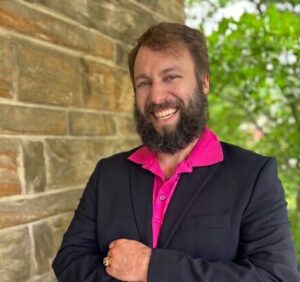
The 2026 campaign of Jacob Anders for Tennessee’s 4th Congressional District stands as a notable example of an independent effort seeking to advance policies of economic security, technological adaptation, civil liberties, and reduced foreign intervention in the face of major-party gatekeeping.
Anders, an author, historian, voice actor, digital ethics researcher, and community advocate based in the Tullahoma area (with prior experience as a local commissioner and volunteer on campaigns including those of Ron Paul, Bernie Sanders, and Andrew Yang), entered the race in February 2026. He has cited the Trump administration’s actions regarding Iran as a motivating factor, viewing them as a reckless escalation risking further unauthorized conflict—an outlook aligned with the USTP’s consistent preference for peaceful technological and scientific progress over militarism and endless wars.
In March 2026, Anders sought the Democratic nomination but was disqualified under the Tennessee Democratic Party’s “bona fide” candidate standard, primarily related to his primary voting history (with explanations involving prior residence and campaign work in other states). He was given a short appeal window and later joined Elizabeth Stephens in a lawsuit challenging the process as arbitrary and lacking due process, including allegations involving evidence standards and digital imagery. From the USTP perspective, such major-party disqualifications exemplify the barriers that restrict voter choice and hinder candidates offering alternatives to the two-party system—precisely the kind of structural issue the USTP has sought to address by supporting independent and minor-party efforts that expand options.
Anders pivoted fully to an independent campaign and secured a place on the November 3, 2026, general-election ballot alongside incumbent Scott DesJarlais (R), Victoria Broderick (D), and other independents. His “Humanity First” platform emphasized universal healthcare, a $1,000 monthly universal basic income (UBI) as a response to AI-driven automation and economic insecurity, tax reform exempting most earners (under roughly $500,000) from federal income tax, increased housing supply through reduced regulatory barriers, free or expanded access to education and skills training in high-demand fields, civil-liberties protections (including repeal of the USA PATRIOT Act and opposition to unwarranted surveillance), immigration reforms prioritizing skills and dignity, marijuana legalization and taxation, term limits, ranked-choice voting or approval voting, and an anti-war stance opposing endless conflicts and certain foreign aid expenditures. These positions showed substantial overlap with USTP Platform elements on UBI (as a tool for abundance and security amid technological change), civil liberties, voting reforms that empower broader participation, opposition to excessive surveillance and militarism, and viewing AI primarily as an opportunity rather than solely a threat—though funding mechanisms for UBI differed from the USTP’s preferred approaches such as a federal land dividend or targeted sales taxes.
In July 2026, Anders appeared on the U.S. Pirate Party’s “Talk the Plank!” program. On July 26, the Pirate National Committee (the USTP’s partner in the All Hands for a Free Future coalition) voted 4–3 to endorse him.
On August 2, 2026, the USTP hosted Anders at its Virtual Enlightenment Salon, streamed as a long-form discussion hosted by Chairman Gennady Stolyarov II. The session explicitly framed the conversation as a prelude to a potential USTP endorsement, inviting members and the public to compare Anders’s positions against the USTP Platform. Discussions covered UBI design and funding, tax simplification, housing supply, education (including AI tutors and targeted free college), civil liberties and surveillance reform, voting systems such as ranked-choice voting, AI and potential sentient rights, body-modification freedoms, and related forward-looking issues. The exchange highlighted areas of compatibility in prioritizing reason, technological adaptation, economic security for an automated era, and expanded individual liberty.
Subsequent developments with the Pirate Party included a retraction of its endorsement on or around August 9–10, 2026. The Pirate Party cited a rushed initial process and additional information that had come to light, stating that maintaining the endorsement would be inappropriate; it later established a more formal vetting committee. The USTP, having conducted its own in-depth Virtual Enlightenment Salon dialogue, proceeded with its endorsement of Anders, recognizing the substantial alignment on core concerns of technological progress, abundance, civil liberties, and moving beyond duopoly constraints. In this instance, the U.S. Transhumanist Party does not see enough evidence to justify retracting its endorsement, while maintaining appreciation for Jacob Anders’s thoughtful approach to the issues during his nearly 2.5-hour conversation at our Virtual Enlightenment Salon.
This sequence—from Anders’s early announcement and primary disqualification, through coalition engagement and the August 2 Salon, to the USTP endorsement—underscores the U.S. Transhumanist Party’s commitment to evaluating candidates on policy substance and compatibility with its member-adopted Platform rather than partisan affiliation alone. It also sets the precedent that the U.S. Transhumanist Party will follow the cross-endorsement process with its U.S. Pirate Party partners in the All Hands for a Free Future coalition; however, once given, an endorsement should not be retracted lightly, and the U.S. Transhumanist Party makes its own decisions in regard to such matters.
Through the remainder of the campaign into early November 2026, Anders continued emphasizing his independent “Humanity First” agenda while also declaring interest in the 2028 Democratic Presidential nomination. Campaign activity focused on grassroots outreach, policy white papers, and coalition-building with various progressive, reform, and single-issue groups, operating on a modest budget relative to major-party candidates. From the USTP’s perspective, the Anders campaign illustrated both the challenges of independent runs in a system dominated by high ballot-access barriers and major-party control, and the value of cross-partisan dialogue (via mechanisms such as the Virtual Enlightenment Salon) in identifying candidates who advance elements of a more rational, science-informed, and technologically enabled future. The November 3, 2026, election provides voters in Tennessee’s 4th District an additional option outside the traditional binary.
Daniel Twedt – Campaign for Conejo Recreation and Park District, Board Division 4

Daniel Twedt’s 2026 campaign for the Conejo Recreation and Park District (CRPD) Board, Division 4, continues his longer-term effort to advance U.S. Transhumanist Party ideas at the local level in the Conejo Valley / Thousand Oaks area of California.
As a long-time USTP member since 2020 and the Director of Community and Citizen Science for the U.S. Transhumanist Party, Twedt previously ran for Thousand Oaks City Council in 2018, 2020, 2022, and 2024 (receiving 570 votes in the 2024 race) and served as the USTP’s 2024 Vice-Presidential running mate alongside Tom Ross. Those efforts emphasized science, technology, health, longevity, and constructive responses to technological change; they also raised local awareness of the Transhumanist Party through newspaper coverage and public discussion. The USTP formally endorsed his 2022 City Council bid after a member vote (90.6% in favor). His background includes founding and directing the PermaTrail Project (a nonprofit focused on permaculture, trails, and “freedom-to-roam” principles), CERT training, amateur radio (callsign KK6VDR), and work related to water quality and caregiving/fitness.
Twedt’s experiences align with core USTP themes of techno-progressivism, technogaianism (technology in service of ecological health), human enhancement, and expanding individual liberty and access. Parks, recreation, open space, and trails offer practical local arenas for applying those ideas: supporting regenerative land practices, outdoor activity that contributes to healthspan and quality of life, accessible public spaces, and evidence-based management of shared resources.
The Conejo Recreation and Park District (CRPD) Board consists of five directly elected Directors. Elections for Divisions 2, 3, and 4 were consolidated with the November 3, 2026, general election. Twedt is one of four candidates on the ballot for the seat.
Nomination and filing activity for the race occurred in the summer of 2026. Twedt and other candidates qualified for the ballot in August 2026. The Board itself had earlier adopted a resolution (in May 2026) requesting consolidation of the CRPD elections with the statewide general election to share costs and avoid a separate election.
From the USTP perspective, Twedt’s decision to seek the Division 4 seat builds directly on prior local campaigns by focusing on issues that intersect with transhumanist priorities in a concrete, community-scale way. The CRPD manages more than 50 parks and facilities, thousands of classes and programs, community events, and (in partnership with the City of Thousand Oaks via the Conejo Open Space Conservation Agency) extensive open space and roughly 140 miles of trails. Twedt’s PermaTrail work on interconnected trails, permaculture principles, and access resonates with the District’s stewardship of open space and recreation. Outdoor activity, inclusive programming (including the District’s therapeutic recreation efforts for people with disabilities), and long-term planning for parks support health, functional capacity, and quality of life—themes the USTP has long elevated around longevity, human flourishing, and the use of practical means (including technology and design) to improve the human condition. Twedt’s prior advocacy for transparent, public-facing governance and constructive problem-solving fits the nonpartisan character of the race and the USTP’s preference for policy-oriented approaches over conventional partisan framing.
The U.S. Transhumanist Party’s support for Daniel Twedt’s campaign is framed through continuity with Twedt’s established record, thematic alignment, and the practical value of advancing pro-technology, pro-health, and pro-access perspectives in local recreation and open-space governance. From the USTP standpoint, the Twedt campaign represents another step in using local office-seeking to normalize forward-looking ideas—regenerative trails and open space, health-enhancing recreation, technological and design improvements that expand human capability and access, and accountable public stewardship—within everyday community institutions.
Candidates Whose Campaigns Ended Before the 2026 General Election
Hunter Rand – Campaign for Sparks City Council, Ward 2

Hunter Rand’s campaign for Sparks City Council, Ward 2, represented a pragmatic local application of principles we share with our coalition partner, the United States Pirate Party: the responsible use of technology to improve public outcomes, respect for civil liberties and privacy, greater transparency and accountability in government, and practical steps that strengthen community resilience and quality of life. While municipal races rarely feature explicit discussions of longevity science or radical technological transformation, Rand’s emphasis on evidence-based public-safety tools, infrastructure that reduces friction in daily life, emergency services that save lives, and fiscal and technological innovation aligned sufficiently with the spirit of our Platform and the All Hands for a Free Future coalition to warrant our first formal cross-endorsement under that agreement.
Rand, a long-time Sparks resident, filmmaker, former teacher, and software developer, announced his candidacy on June 2, 2025. He positioned himself as a first-time candidate focused on listening to residents, addressing cost-of-living and municipal financial stability, prioritizing infrastructure development, and improving the transparency and accessibility of City Hall.
On July 15, 2025, Hunter Rand formally launched the campaign with a community event, inviting residents to hear his vision under the “Sparks Together” banner. In early November 2025, the U.S. Pirate Party’s National Committee voted unanimously to endorse Rand. The U.S. Pirate Party noted his prior appearance as a guest speaker at its 2022 national conference and his pragmatic focus on issues, exemplified by statements such as “potholes don’t care who you vote for,” while affirming alignment with core Pirate values. This endorsement, occurring after our parties had entered the All Hands for a Free Future coalition in September 2025 (following a membership vote in which USTP members approved the coalition by a wide margin), set the stage for potential cross-endorsement. The coalition’s purpose is strategic electoral collaboration while preserving each party’s distinct identity, with a focus on candidates whose views broadly support technological progress, civil liberties, and effective governance.
On January 11, 2026, the U.S. Transhumanist Party hosted a two-hour Virtual Enlightenment Salon with Rand. The conversation examined Rand’s views on local governance, the role of technology in addressing Sparks’s challenges, public safety, emergency services, and infrastructure. Themes that resonated with our Platform included the use of technology for public safety while remaining mindful of privacy, civil liberties, and due process; strengthening emergency services—particularly fire protection—to save lives; and advocating for road infrastructure to ease traffic congestion. Rand engaged extensively with questions from participants. In the course of the discussion, the USTP extended its endorsement, making him the first candidate formally backed under the All Hands for a Free Future electoral coalition effort. We announced the endorsement publicly on January 19, 2026. Chairman Gennady Stolyarov II noted that Rand’s comments demonstrated the spirit of public service and that the decision reflected the party’s interest in candidates focused on long-term policy planning and constituent service. From our standpoint, the Salon and endorsement affirmed a candidate willing to apply technological tools thoughtfully at the local level while prioritizing accountability and individual rights.
Rand formally filed for the race on March 2, 2026—exactly nine months after his initial announcement. His platform continued to emphasize public-safety technology subject to independent effectiveness audits (to ensure tools reduce crime, protect civil liberties, and justify their cost), restoration of four-person fire-engine crews and exploration of regional fire-service models, improved coordination with EMS providers, strategic electrification of certain city fleet vehicles for long-term savings, review of executive contracts, greater transparency, and efforts to attract higher-quality industries such as technology and film production. These positions, while grounded in immediate local needs, tracked with USTP and Coalition priorities around rational technology adoption, efficiency, infrastructure that supports human flourishing, and evidence-based decision-making.
The nonpartisan primary was held on June 9, 2026. Four candidates competed: incumbent Dian VanderWell, Jamie O’Connell, Anthony J. Goulet, and Rand. Early unofficial tallies showed a tight contest among the top three, with roughly 300 ballots still outstanding in some reports. Rand remained within striking distance of advancing. Final results placed Jamie O’Connell first with 726 votes, Dian VanderWell second with 707 votes, and Hunter Rand third with 662 votes (Goulet received 217 votes). Around June 13, 2026, Rand conceded. In his statement he reflected on the honor of participating in the democratic process during the 250th anniversary of the nation’s founding, referenced his recent speech at the U.S. Pirate National Convention in Boston and time spent walking the Freedom Trail, and reaffirmed that the Pirate Party’s first platform plank—“People First”—had guided the campaign. He indicated he would return to private life as a citizen.
From the U.S. Transhumanist Party’s perspective, the campaign, though ultimately unsuccessful in advancing, demonstrated the value of the All Hands for a Free Future coalition and of engaging candidates who apply technology, transparency, and evidence-based reasoning to everyday governance challenges. The Virtual Enlightenment Salon provided a substantive window into Rand’s thinking and enabled a reasoned endorsement rather than a purely symbolic one. His concession, emphasizing people-first principles and democratic participation, was consistent with the civic-minded approach we had observed. While local races of this type do not advance every element of the USTP Platform, they offer concrete opportunities to support candidates who favor thoughtful technological tools, life-saving public services, and accountable government—steps that, in aggregate, help create conditions more favorable to longer, healthier, and freer lives.
Blase Henry – Campaign for Arizona House of Representatives Legislative District 17

The campaign of Blase Henry for one of the two seats in Arizona House of Representatives Legislative District 17 stands as a clear illustration of principled advocacy for technological freedom, privacy, governmental transparency, and alternatives to the political duopoly. Henry, Captain (Chair) of the Arizona Pirate Party and Scribe (Secretary) of the United States Pirate Party, advanced ideas that align closely with core USTP values of science, technology, individual empowerment through open systems, and the reduction of barriers that impede human progress.
The Blase Henry campaign began in earnest in mid-2025. The Arizona Pirate Party had been announced earlier that spring (around April 2025) as a new state affiliate with an early platform drawn from the national organization. Henry, already active as a rising figure in Pirate circles and elected to the national Scribe role, launched his independent candidacy for District 17. On August 14, 2025, the United States Pirate Party formally announced him as its first candidate of the 2026 cycle—the first such national Pirate endorsement for any Arizona office. He planned to petition onto the ballot as an independent, requiring at least 1,677 valid signatures.
Henry’s stated priorities resonated strongly with the USTP Platform’s emphasis on technological progress, digital rights, and open access to information. He pledged legislation including a state-level Digital Bill of Rights; a ban on internet ID and age-verification mandates that could enable surveillance or artificial segregation of users; consumer protections modeled on Europe’s “Stop Killing Games” initiative (preserving access to purchased digital content); and privacy rules requiring warrants for law-enforcement access to personal data. Broader themes included copyright reform, open source, internet freedom and privacy, governmental transparency, police reform, decentralization, individual gun rights, civil liberties – including for LGBTQ+ individuals and indigenous persons, and prioritizing people over institutional interests. In Ballotpedia and campaign materials, Blase Henry framed the run around representing constituents and core American principles rather than pure electoral calculation.
Throughout late 2025 and into early 2026, the Blase Henry campaign pursued signature collection, volunteer outreach, and public events. The Arizona Pirate Party hosted activities including a March 1, 2026, in-person rally in the Tucson area (at the Marana Aquatic and Recreation Center), where Henry spoke, and issued calls for volunteers to gather petition signatures via the state E-qual system and related channels. These efforts highlighted the practical challenges of independent and minor-party ballot access in a system dominated by the major parties—challenges the USTP has long recognized as structural obstacles to new ideas reaching voters.
A significant disruption arrived with Arizona House Bill 2022, enacted in early February 2026. That measure shifted the primary election from the first Tuesday in August to July 21, 2026, compressing timelines for candidate filings, statements of interest, and signature submission while providing limited transitional accommodations for previously prepared materials. This calendar change, among other factors, contributed to the campaign falling short of the signature threshold needed for ballot placement as an independent.
The pivotal moment of direct engagement with the USTP occurred on April 19, 2026. During its Virtual Enlightenment Salon, the USTP hosted Henry to discuss his campaigning experience for District 17, his positions on privacy, copyright reform, a Digital Bill of Rights, police reform, and governmental transparency, and related Pirate Party organizing. The public provided abundant interaction via live YouTube chat. This Salon exemplified the USTP’s commitment to open, substantive dialogue on technology-enabled liberty and policy alternatives—precisely the kind of discourse that advances the USTP’s vision of placing science, health, and technology at the forefront of politics rather than relying on entrenched partisan frameworks.
Shortly thereafter, on April 22, 2026, the USTP formally endorsed Henry (alongside Pete Karas for Wisconsin Secretary of State). This brought the USTP’s 2026 endorsed slate to five candidates—the largest in a single cycle—and reflected joint work within the All Hands for a Free Future coalition involving the U.S. Pirate Party. Chairman Gennady Stolyarov II stated that Henry “deserves our support for maintaining a principled, service-oriented approach to his candidacy rather than focusing solely on winning. The people of Arizona need his voice and his thoughtful approach to policy in order to understand that alternatives to the duopoly exist and that casting one’s vote for a candidate such as Blase Henry and engaging with his ideas in conversation are both realistic ways to improve the political discourse and the outcomes of the political process.” The endorsement process built on awareness of Henry’s work since the coalition’s launch and the recent Salon discussion, during which he accepted the support. By this stage, with petitioning incomplete due in part to the HB 2022 timeline shifts, he continued as a write-in candidate.
The campaign concluded without Henry appearing on the general-election ballot for November 3, 2026. Unfortunately, even his write-in campaign was unable to break through the thicket of arbitrary and artificial requirements put in place at the duopoly’s behest. On October 11, 2026, Blase Henry made the following announcement in a meeting of the Pirate National Committee: “This is the biggest piece of news this week and for those who haven’t seen the announcement, the write-in campaign is dead and suspended. The short of it is that I found out I made a neglectful mistake a while back that made me disqualified as a write-in candidate – meaning any write-in votes for me will not count because in Arizona you need to be fully registered and meet all the check boxes. I neglectfully missed one and will not be counted. It’s a shock and a whirlwind to handle but we must accept the reality now and move forward for next time.” The USTP considers the requirements in various states for even write-in candidates to meet increasingly onerous thresholds in order for their votes to be counted to be especially anti-democratic – more egregious than even the immensely burdensome thresholds and processes required to be followed for ballot access. To deny a voter who intentionally wrote in a particular candidate the ability to get that vote counted is pure, brazen disenfranchisement. We sympathize with Blase Henry in the aftermath of this profound injustice, which disenfranchises Arizona voters based on a contrived and arbitrary technicality.
From the USTP perspective, this outcome underscores persistent systemic barriers—high signature thresholds for independents, compressed calendars, and duopoly structural advantages—yet does not diminish the campaign’s value. Henry’s run disseminated ideas on digital rights, privacy against surveillance creep, copyright reform that better serves users and innovators, transparency, and decentralized approaches. These themes advance the broader transhumanist goal of removing arbitrary limits on human potential through technology and sound policy, even when formal electoral success is obstructed.
In sum, the USTP views Blase Henry’s campaign as a constructive contribution: it elevated discussion of techno-progressive and liberty-oriented policies in Arizona, demonstrated cross-party coalition potential through the All Hands for a Free Future framework, and reinforced that meaningful political progress often begins with persistent advocacy for better ideas rather than guaranteed electoral victories. The Virtual Enlightenment Salon and subsequent endorsement marked formal recognition of that alignment, and the effort remains a positive example of how independent and allied voices can expand the Overton window toward a more technologically empowered, transparent, and future-oriented politics.
Drew Bingaman – Campaign for Pennsylvania State House, 108th District

Drew Bingaman’s campaign represented a strong challenge to the two-party system and an opportunity to advance overlapping priorities in digital privacy, police accountability, government transparency, anti-monopoly measures, cannabis legalization, and support for small businesses and individual liberty—consistent with USTP Platform elements on technology, rights, and evidence-based reform. It occurred within the All Hands for a Free Future coalition with the U.S. Pirate Party.
Bingaman, a lifelong Sunbury resident, IT professional and small-business owner, former Chair of the Libertarian Party of Pennsylvania (2017–2019), founder of the Susquehanna Valley Libertarian Party, former Captain of the U.S. Pirate Party (2024 and first half of 2025), and current Captain of the Pennsylvania Pirate Party (also an elected constable), announced his candidacy in November 2025, seeking the Democratic nomination for the 108th District. He framed the race around defending constitutional rights, opposing centralization and overreach, improving transparency, and addressing economic and healthcare strains. The U.S. Pirate Party endorsed him for the Democratic primary during a Pirate National Committee meeting on January 11, 2026, praising him as a fighter and champion for Pirate causes. He had previously appeared as a guest (in his capacity as U.S. Pirate Captain) on the USTP’s Second Virtual Enlightenment Salon with the U.S. Pirate Party on June 29, 2025.
On February 5, 2026, Bingaman suspended the primary bid after failing to collect the required 300 valid signatures from registered Democrats by the March deadline, citing weather and volunteer constraints. The primary was set for May 19, 2026. He promptly relaunched on March 11, 2026, as an independent (unaffiliated) candidate for the general election, with renewed Pirate Party support. The USTP regarded this pivot as a practical adaptation that kept the focus on ideas rather than party machinery.
On April 6, 2026, the USTP endorsed Bingaman pursuant to the All Hands for a Free Future coalition. The endorsement highlighted alignments on requiring body cameras for law enforcement, cannabis legalization, digital privacy protections, lowering barriers to public records, opposing monopolistic practices, and challenging the political duopoly. The USTP statement affirmed that “the two-party system is the problem” and expressed pleasure in endorsing Bingaman’s challenge to it in Pennsylvania. Bingaman welcomed the endorsement. The party announced a forthcoming Salon for further discussion.
On May 10, 2026, the USTP hosted Bingaman on its Virtual Enlightenment Salon for a campaign update. He addressed progress, platform issues, and the independent path; the session reinforced the shared emphasis on rights, technology, accountability, and multi-party alternatives.
Drew Bingaman continued as an independent candidate but was thwarted by higher signature thresholds applied for unaffiliated ballot access, with a deadline on August 3. When that deadline arrived, Bingaman issued a statement, acknowledging that “our campaign did not reach the minimum number of signatures required to place my name on the November ballot as an independent candidate for State Representative. This is hard news to share, and I won’t dress it up. But it does not erase what this campaign built, and it does not change who I am or what I believe”. Bingaman proceeded to thank his supporters and reiterate his commitment to advocating “for the freedoms and welfare of the regular people of this district, this Commonwealth, and this nation” “through whatever doors remain open”. He declined to endorse any of the remaining major-party candidates, stating, “I believe both remaining candidates are party insiders whose loyalty runs first to their party, not first to the people of this district. Voters deserve better than a choice between two versions of the same broken system, and I won’t pretend otherwise by handing my name to either of them.”
From the USTP perspective, the Bingaman campaign advanced coalition cooperation, spread awareness of platform-aligned reforms in privacy, transparency, and anti-duopoly politics, and demonstrated the promise of independent, principle-driven runs by experienced activists.
Zoltan Istvan – Campaign for Governor of California

Zoltan Istvan’s 2025–2026 campaign for Governor of California represented a notable, if ultimately limited, effort to inject core transhumanist priorities—particularly Universal Basic Income (UBI) in the face of AI-driven automation, technological abundance, and life extension—into mainstream Democratic politics. Istvan, founder of the Transhumanist Party in 2014 and 2016 Presidential candidate who later served as a valued advisor, ran as a Democrat. This created both opportunities for broader visibility and points of divergence with the USTP’s Platform and tone.
On April 29, 2025, Istvan formally announced his candidacy. He framed the race around California’s practical problems (inequality, homelessness, regulation, taxes, crime) but centered the deeper rationale on AI and humanoid robots displacing jobs—projecting that half of California jobs could vanish within four years. His proposed response centered on harnessing AI for ordinary people rather than billionaires, implementing UBI, and deploying robots to ease labor and raise living standards. This directly echoed longstanding USTP Platform planks supporting unconditional UBI (regardless of employment or wealth status) as technology eventually may reduce the need for human labor, alongside emphasis on technological solutions to societal challenges.
The USTP engaged Istvan substantively on June 15, 2025, through a Virtual Enlightenment Salon. At that point the party had not yet endorsed him. Panelists and members posed pointed questions reflecting both alignment and concerns:
- How transhumanist was the campaign in practice?
- Was he willing to openly advocate indefinite life extension (a core USTP ideal)?
- Why run as a Democrat—pure pragmatism for the top-two primary system, or genuine agreement with the party?
- Why lead with fearful rhetoric about AI job loss rather than the more hopeful, opportunity-oriented framing typical of USTP messaging on technology and abundance?
- How had his UBI positions evolved since 2016?
- Did he believe victory was realistic?
- Where did his positions align with or diverge from the USTP Platform (which prioritizes significant life extension via science and technology, UBI, space development, ending the two-party duopoly, and reason/science-informed policy)?
Istvan welcomed the prospect of a USTP endorsement, reaffirmed support for the party (noting his advisory role), and discussed policy overlaps such as UBI and technological progress. The discussion highlighted genuine common ground on abundance and AI response while surfacing differences in rhetorical tone (fear-first versus optimism-first) and the strategic choice of major-party affiliation. The USTP’s expanded endorsement criteria—allowing support for candidates from other parties who advocate life extension/transhumanism or publicize USTP backing—made such a conversation feasible.
From August 18 to September 1, 2025, USTP members held an electronic vote on endorsing Istvan. On September 4, 2025, the USTP announced the results: 74.4% yes (64 votes), 18.6% no (16 votes), and 7.0% abstain (6 votes). It endorsed Istvan’s Democratic candidacy for California Governor. Istvan responded appreciatively, stating that the support would help address AI challenges facing the state and world and that collaboration was essential for a successful path forward. The endorsement reflected the membership’s view that sufficient alignment existed on technology, UBI, and future-oriented governance to warrant support, even while some members registered concerns about Istvan’s party choice and rhetorical approach.
Throughout the roughly ten-month campaign, Istvan emphasized UBI as a distinctive position among the crowded field (he was essentially alone among major or notable candidates in foregrounding it as the concrete answer to automation and affordability). He promoted ideas including a humanoid robot in every home, supercities, extreme longevity through transhumanist means, a Star Trek-like space industry, contending with superintelligent AI, and an “Automated Abundance Economy” in which most people no longer need to work. He generated media attention (including interviews on The Young Turks and Dave Asprey’s podcast, a Newsweek OpEd on supercities, debates, and street campaigning in Southern California and events in San Francisco). Traffic to his campaign site increased and he drew interest from various quarters, yet he remained at a disadvantage in the top-two primary environment dominated by better-funded establishment candidates.
On February 24, 2026, Istvan suspended his campaign. He cited the view that it was not competitive enough to win the governorship, his outlook that AI-driven job displacement had caused turmoil but had not yet produced the full-scale “job apocalypse” that some anticipated, and the observation that his more radical proposals remained outside the Overton Window. He explicitly listed those ideas—humanoid robots in every home, a Star Trek-like space industry, superintelligent AI, supercities, extreme longevity via transhumanism, and the Automated Abundance Economy—and noted that their time was coming. He planned to conserve resources and support for a possible future race, potentially including the U.S. Presidency in 2028. From the USTP’s vantage point, the suspension was premature; the gubernatorial campaign could have succeeded to a greater extent in elevating UBI, automation responses, and longevity themes in California political discourse and securing actual votes in the primary, which would have been attained if Istvan had remained in the running. In 2018, Zoltan Istvan received 14,462 votes in the primary when he ran for Governor of California as a Libertarian. It was reasonable to expect that Zoltan could have reached or exceeded that total if he had remained an option for voters in the June primary. Transhumanist politics is not primarily about winning elections; it is about advancing the visibility of transhumanist ideas through the political process – and any vote counts that candidates could show for their campaigns ultimately contribute to the longer-term project of elevating the visibility of transhumanism and its accurate perception by the public.
In sum, the USTP viewed the Istvan gubernatorial campaign as a useful bridge between its platform and Democratic-leaning voters, marred by rhetorical and strategic differences (especially AI framing and major-party affiliation) that some members found imperfect, yet valuable for the visibility it provided and the membership’s clear majority support via endorsement. The effort advanced the long-term project of normalizing technological abundance, UBI, and life extension, even as it fell short of impact at the ballot box because of a premature decision to suspend the campaign.