Skip to content
U.S. Transhumanist Party – Official Website
  • Home
  • Posts
  • Values
  • Platform
  • Leadership
  • Advisors
  • Candidates
  • Highlights
  • FAQ
  • States & Allies
  • Free Membership
  • Facebook
  • Twitter
  • Search Icon

U.S. Transhumanist Party – Official Website

U.S. Transhumanist Party – PUTTING SCIENCE, HEALTH, & TECHNOLOGY AT THE FOREFRONT OF AMERICAN POLITICS

Evolution Won’t Stop Aging Any Time Soon, but Medicine Might – Article by Sedeer el-Showk

Evolution Won’t Stop Aging Any Time Soon, but Medicine Might – Article by Sedeer el-Showk

July 26, 2021 Sedeer el-Showk Comments 0 Comment

Sedeer el-Showk


Editor’s Note: The U.S. Transhumanist Party publishes this article by Sedeer el-Showk, originally featured by our allies at Lifespan.io, in order to highlight the fallacious nature of many media outlets’ responses to a recent study about the “invariant rate of aging”. As Mr. el-Showk eloquently explains, this study does not refute or undermine the possibility of pursuing the reversal of biological aging, but simply suggests that this needs to be done through medical and technological means, and that without such means, overcoming the limitations of the current maximum human lifespan would not be feasible. Many of us in the longevity advocacy community have known this for a long time already, but it is important to spread accurate information to prevent an unjustified decline in public confidence in the feasibility of radical life extension.

~ Gennady Stolyarov II, Chairman, United States Transhumanist Party, July 25, 2021


Aging is not unstoppable, despite misinterpretations of the new study.

A new study [1] about the ‘invariant rate of ageing’ has led to reports that aging is unstoppable and that we cannot cheat death. However, this reporting is based on a misunderstanding of what the study actually says.

The misinterpretations

The study shows that “immortality and everlasting youth are the stuff of myths,” according to The Guardian. The article goes on to say that “an unprecedented study has now confirmed that we probably cannot slow the rate at which we get older because of biological constraints.” Other outlets published similar conclusions, with Futurism saying that the study shows “an ‘invariant rate of aging’ that won’t slow down”.

These reporters seem to have gotten tripped up on the idea of an ‘invariant rate’, which has the key implication that biological constraints determine the rate of human aging. This led to the conclusion that aging is fixed, inevitable, and immutable, but that’s not at all what the study shows, as the paper itself directly says.

What the study actually says

The study aimed to investigate the ‘invariant rate of ageing’ hypothesis, which proposes that the rate of aging is fixed within a species. The idea is that aging has evolved in concert with a suite of other traits, such as birth rate and metabolic rate, and this concerted evolution has led to the rate of aging being relatively fixed within a species.

In this context, ‘fixed’ is used as the opposite of ‘plastic’. It doesn’t mean ‘set in stone’. It means there’s relatively limited variation in this trait within a species because biological factors have a stronger effect on it than environmental factors. A good example might be the number of digits on a limb – environmental factors don’t really affect it, and there’s very little (but some) variation.

To test this hypothesis, the researchers created a statistical model of the age-specific risk of death in species from seven primate genera. They used data from various studies to set the parameters of their model, which is how they tested the amount of variation.

The model included parameters for infant and juvenile mortality, age-independent mortality, and senescent mortality. Variation in the biological rate of aging would be reflected in the senescent mortality parameter, since it captures what we normally think of as ‘aging’, while the infant and juvenile morality parameter reflects the misfortune of dying young.

The study’s first finding is that most of the gain in human lifespan so far has come from reducing mortality at younger ages. There’s also variation in the infant and juvenile mortality parameter, both between societies and at different times.

This also shows up in the relationship between life expectancy and lifespan equality. Media reports generally got this part of the study right, and you can look at the report on SciTechDaily to get more details about these findings.

Unlike the infant and juvenile mortality parameter, the senescent mortality parameter varied very little within each species. In fact, changing this parameter in their model shifted the mortality and demographic data of one species to look like another.

Changing the other parameters led to minor shifts in age distribution, but changing senescent mortality made it look like data from a different species. What this means is that within a given species, biological factors are the ultimate determinants of longevity.

Changing the environment to reduce mortality at younger ages (as we have in most parts of the world) affects demographics, increasing life expectancy and lifespan equality. However, accomplishing more than that will require tackling the evolved biological constraints on lifespan.

This study, therefore, doesn’t show that the rate of aging cannot be changed; it shows that there’s a limit to how much change can be realized without biological interventions, which is precisely the challenge that longevity research aims to overcome.

The paper itself closes on that note, though you wouldn’t know it from the way it’s been covered: “It remains to be seen if future advances in medicine can overcome the biological constraints that we have identified here, and achieve what evolution has not.”

Abstract

Is it possible to slow the rate of ageing, or do biological constraints limit its plasticity? We test the ‘invariant rate of ageing’ hypothesis, which posits that the rate of ageing is relatively fixed within species, with a collection of 39 human and nonhuman primate datasets across seven genera. We first recapitulate, in nonhuman primates, the highly regular relationship between life expectancy and lifespan equality seen in humans. We next demonstrate that variation in the rate of ageing within genera is orders of magnitude smaller than variation in pre-adult and age-independent mortality. Finally, we demonstrate that changes in the rate of ageing, but not other mortality parameters, produce striking, species-atypical changes in mortality patterns. Our results support the invariant rate of ageing hypothesis, implying biological constraints on how much the human rate of ageing can be slowed.

Conclusion

Ultimately, this wasn’t a study about longevity or the inevitability of aging. It was research to understand what affects the rate of aging – how much it results from evolved biological processes versus the effects of the environment. That’s important science not only for longevity research but also for evolutionary biology. It’s undoubtedly valuable, but unfortunately, its message has been misconstrued.

Far from showing that aging is inevitable, this research instead demonstrates that, ultimately, we’ll run out of environmental improvements and will have to turn to biological interventions to affect aging.

Literature

[1] Colchero, F. et al. The long lives of primates and the ‘invariant rate of ageing’ hypothesis. Nature Communications (2021), doi: 10.1038/s41467-021-23894-3
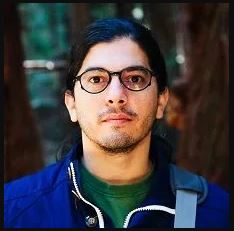
Sedeer el-Showk became a professional science writer after finishing a degree in biology. He also writes poetry and science fiction and fantasy, and somehow juggles an ever-growing list of hobbies from programming to knitting to gardening. Eternal curiosity and good fortune have taken him to many parts of the world, but he’s settled in Helsinki, Finland for the moment. He hopes he’ll never stop learning new things.


Guest Articles
aging, biology, indefinite life extension, inevitability, invariant rate, life expectancy, life extension, longevity, media, media bias, medicine, mortality, radical life extension, rate of aging, Sedeer el-Showk

Post navigation

PREVIOUS
The Unnatural Objection to Life Extension – Article by Arin Vahanian
NEXT
The Boredom Objection to Life Extension – Article by Arin Vahanian

Leave a Reply Cancel reply

Your email address will not be published. Required fields are marked *

Social Media

Constitution of the U.S. Transhumanist Party

Transhumanist Bill of Rights – Version 3.0

U.S. Transhumanist Party Facebook Feed

Free Transhumanist Symbols

Guidelines for Community Conduct

SUBMIT A POST

LEV: The Game

Subject Categories

    - Life Extension
    - Artificial Intelligence
    - Space Colonization
    - Robotics
    - Biotechnology
    - Nanotechnology
    - Autonomous Vehicles
    - 3D Printing
    - Cryptocurrencies
    - Vertical Farming
    - Universal Basic Income
    - Existential Risk
    - Rationality

Hashtags

    #USTranshumanistParty, #TranshumanistParty, #TranshumanistPolitics, #TomRoss2024, #RossTwedt2024

Recent Posts

  • USTP Commends FDA’s “Commissioner’s National Priority Voucher” (CNPV) Program
  • U.S. Transhumanist Party Statement in Opposition to the United States’ and Israel’s War with Iran and Its Needless Escalation
  • A Bitter Taste in My Mouth – Article by Zach Richardson
  • U.S. Transhumanist Party Applauds Supreme Court Decision Upholding Birthright Citizenship in Trump v. Barbara
  • U.S. Transhumanist Party Congratulates Pete Karas on Securing Ballot Access for Wisconsin Secretary of State Campaign
  • ‘Human, All Too Human’: Will We Become Hostages to Our Own Minds by Implementing Universal AI? – Article by Ariel VA Feinerman
  • Hello, World! – A Hypothetical Scenario by François Joinneau
  • U.S. Transhumanist Party Mourns the Death of Jim Rutt (1953-2026), Previous Virtual Enlightenment Salon Guest
  • Seizing Policy Opportunities for Life Extension and Overcoming Political Obstacles in 2026 – Workshop at Vitalist Bay by Gennady Stolyarov II – May 14, 2026
  • U.S. Transhumanist Party Endorsements of Pete Karas for Secretary of State in Wisconsin and Blase Henry for Legislative District 17 in Arizona
  • U.S. Transhumanist Party Vote on the Question of Endorsing Pete Karas for Secretary of State in Wisconsin
  • U.S. Transhumanist Party Endorsement of Drew Bingaman, Candidate for Pennsylvania State House, 108th District
  • U.S. Transhumanist Party Reiterates Its Condemnation of Jeffrey Epstein and His Crimes, Calls for Transparency and a Focus on Truth, and Condemns the Close Association of Anti-Transhumanist Conspiracy Theorist Steve Bannon with Epstein
  • The Next Earthling: A Call for Humanity’s Upgrade – Article by Tom Ross
  • How Myth Could Teach AI to Grow a Conscience – Article by Tom Ross
  • U.S. Transhumanist Party Condemns Killings of Renee Good and Alex Pretti and Heavy-Handed ICE and Border Patrol Enforcement Tactics, Calls for Rule of Law and Respect for Truth, and Protection of All Individuals’ Constitutional and Human Rights
  • 6 Steps to Paradise: How Do We Prepare for a Post-Scarcity Society? – Article by Tom Ross
  • From Instrumentalist to Conductor: AI as a Catalyst for Human Creative Orchestration – Article by Tom Ross
  • U.S. Transhumanist Party Endorsement of Hunter Rand, Candidate for City Council in Sparks, Nevada, Ward 2
  • Piano Sonata No.3 in G minor, “Death is Wrong” – Composed by Adriano G. Santos, Inspired by the “Death is Wrong” Book Written by Gennady Stolyarov II

Recent Comments

  • R. Nicholas Starr on U.S. Transhumanist Party General Discussion Thread for 2026
  • Gennady Stolyarov II on U.S. Transhumanist Party General Discussion Thread for 2026
  • R. Nicholas Starr on U.S. Transhumanist Party General Discussion Thread for 2026
  • R. Nicholas Starr on U.S. Transhumanist Party General Discussion Thread for 2026
  • R. Nicholas Starr on U.S. Transhumanist Party General Discussion Thread for 2026

Archives

  • August 2026 (1)
  • July 2026 (3)
  • June 2026 (4)
  • May 2026 (1)
  • April 2026 (3)
  • February 2026 (3)
  • January 2026 (6)
  • December 2025 (1)
  • November 2025 (2)
  • October 2025 (1)
  • September 2025 (1)
  • August 2025 (6)
  • June 2025 (1)
  • May 2025 (1)
  • March 2025 (3)
  • February 2025 (1)
  • January 2025 (3)
  • December 2024 (2)
  • November 2024 (6)
  • October 2024 (3)
  • September 2024 (2)
  • August 2024 (5)
  • July 2024 (4)
  • June 2024 (3)
  • May 2024 (1)
  • March 2024 (1)
  • February 2024 (1)
  • January 2024 (8)
  • October 2023 (11)
  • September 2023 (6)
  • August 2023 (1)
  • July 2023 (4)
  • May 2023 (3)
  • April 2023 (3)
  • March 2023 (2)
  • February 2023 (12)
  • January 2023 (23)
  • December 2022 (2)
  • November 2022 (2)
  • October 2022 (3)
  • August 2022 (3)
  • July 2022 (2)
  • May 2022 (6)
  • March 2022 (3)
  • February 2022 (4)
  • January 2022 (7)
  • December 2021 (11)
  • November 2021 (4)
  • October 2021 (5)
  • September 2021 (2)
  • August 2021 (2)
  • July 2021 (3)
  • June 2021 (2)
  • May 2021 (6)
  • April 2021 (7)
  • March 2021 (4)
  • February 2021 (5)
  • January 2021 (6)
  • December 2020 (10)
  • November 2020 (4)
  • October 2020 (2)
  • September 2020 (1)
  • August 2020 (4)
  • July 2020 (5)
  • June 2020 (6)
  • May 2020 (3)
  • April 2020 (3)
  • March 2020 (6)
  • February 2020 (1)
  • January 2020 (6)
  • December 2019 (3)
  • November 2019 (2)
  • October 2019 (9)
  • September 2019 (10)
  • August 2019 (12)
  • July 2019 (18)
  • June 2019 (17)
  • May 2019 (12)
  • April 2019 (8)
  • March 2019 (12)
  • February 2019 (7)
  • January 2019 (13)
  • December 2018 (9)
  • November 2018 (5)
  • October 2018 (9)
  • September 2018 (5)
  • August 2018 (10)
  • July 2018 (13)
  • June 2018 (14)
  • May 2018 (8)
  • April 2018 (8)
  • March 2018 (10)
  • February 2018 (15)
  • January 2018 (17)
  • December 2017 (8)
  • November 2017 (17)
  • October 2017 (19)
  • September 2017 (11)
  • August 2017 (11)
  • July 2017 (16)
  • June 2017 (15)
  • May 2017 (10)
  • April 2017 (7)
  • March 2017 (8)
  • February 2017 (16)
  • January 2017 (8)
  • December 2016 (6)
  • November 2016 (5)

Categories

  • Allied Projects
  • Announcements
  • Art
  • Candidates
  • Debate
  • Discussion Panels
  • Distributed Computing
  • Exposure Periods
  • Foreign Ambassadors
  • General Discussion
  • Guest Articles
  • Inclusion
  • Interviews
  • Legislative Analysis
  • Official Ballots
  • Petitions
  • Platform
  • Presentations
  • Press Releases
  • Research
  • Sample Ballots
  • Science Fiction
  • Statements
  • Tolerance
  • Virtual Enlightenment Salons
  • Vote Results
  • Working Groups

Victor Run Virtual Race – June 4-6, 2021

Historical Archive – 2020 U.S. Presidential Ticket – Charlie Kam and Liz Parrish

Historical Archive – 2024 U.S. Presidential Ticket – Tom Ross and Daniel Twedt

© 2026   Copyright - U.S. Transhumanist Party - All Rights Reserved | WordPress design: Art Ramon Paintings