6 Steps to Paradise: How Do We Prepare for a Post-Scarcity Society? – Article by Tom Ross

Tom Ross

We Were (Necessarily) Way Off
Paradism says, “What if work, money, and survival panic weren’t running the show anymore?” That sounds great, but our nervous systems were trained in the opposite direction. Our limbic system—your built-in threat detector—got rewarded for spotting danger, hoarding resources, and competing. So these steps are about retraining that system. We’re moving from “there’s not enough” to “we can make enough,” from fear to trust, from isolation to collaboration. The goal isn’t to make people naïve—it’s to help humans stay calm, creative, and ethical in a world where AI, automation, and shared resources make survival less of a struggle.
What is Paradism?
Paradism is a vision of society where technology and AI do most of the work, resources are shared fairly, and people are free to create, learn, care for others, and explore. It’s “post-scarcity” because the basic stuff—food, housing, health, energy—can be produced in abundance, so we don’t need to build society around jobs and bills. It’s not fantasy; it’s a different operating system for humans.
Six Practical Steps to Prepare for Paradism
1. Train your nervous system out of scarcity mode.
Do a daily “sufficiency check”: name three things you already have enough of today (food, shelter, allies, knowledge). This tells your limbic system, “We’re safe right now.” Add in slow breathing (4 seconds in, 6 seconds out) to physically downshift. A regulated human can cooperate; a panicked human hoards.
2. Shift your value from labor to contribution.
In a post-scarcity world, your worth isn’t “hours worked” but “value added.” Start asking: “What can I make easier, clearer, or more beautiful for others?” Practice it now—share a template, teach a skill, explain a hard topic. You’re training your brain to see usefulness beyond a paycheck.
3. Build collaboration muscles.
Paradism runs on networks, not lone wolves. Start small: join or form a skill-swap group, co-write something, co-host an event, even co-garden. The point is to get comfortable creating with others, sharing credit, and making decisions together. Scarcity says, “Mine.” Paradism says, “Ours.”
4. Normalize AI as a partner, not a rival.
We can’t get to post-scarcity without machines doing the heavy lifting. So practice delegating thinking: “AI, draft this,” “AI, summarize this,” “AI, give me three options.” This teaches your brain that help is normal. The limbic system hates replacement; the higher self loves augmentation.
5. Detox from status-through-stuff.
Scarcity culture sells identity through consumption. Paradism will prize creativity, stewardship, and kindness. Start measuring yourself by what you repair, what you share, and what you uplift—not by what you own. Do a monthly “release cycle”: donate, repurpose, or share something. This weakens the hoard reflex.
6. Practice purpose without pressure.
If survival is handled, people ask, “Then why am I here?” Start answering that now. Keep a “purpose log”: moments you felt useful, alive, or aligned. Paradism needs humans who can self-direct, not lie around bored. You’re rehearsing being a free being.
Three Practices for Parents
1. Teach abundance stories.
Tell or show examples where people shared and everyone got more (potluck, open-source software, community gardens). Make cooperation the “cool” story, not competition.
2. Let kids solve real problems together.
Give them small joint missions—plan dinner, organize a room, make a video—and praise collaboration, not “who did the most.”
3. Model calm around technology.
If you act threatened by AI or automation, they learn to fear it. If you act curious—“Let’s see what this can help us do”—they learn partnership.
That’s it. Calm the animal, wake the human, welcome the future.
Tom Ross is the U.S. Transhumanist Party’s Director of Sentient Rights Advocacy. He was also the U.S. Transhumanist Party’s 2024 candidate for President of the United States. Learn more about Tom Ross here. Read the THPedia entry about Tom Ross here.

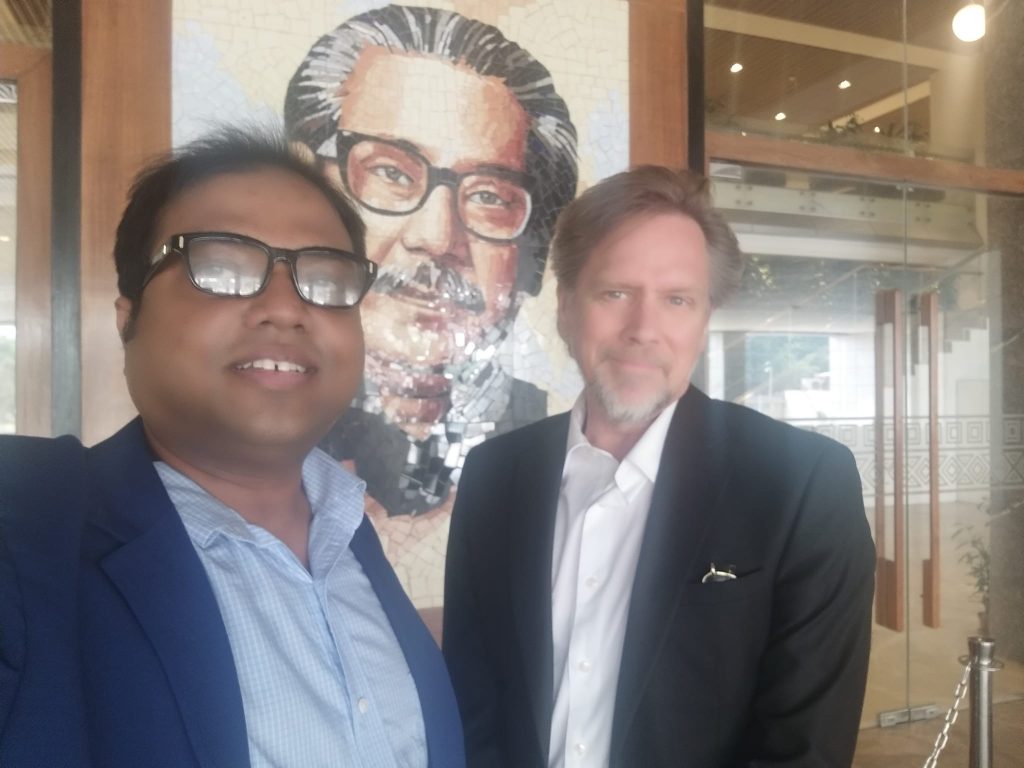
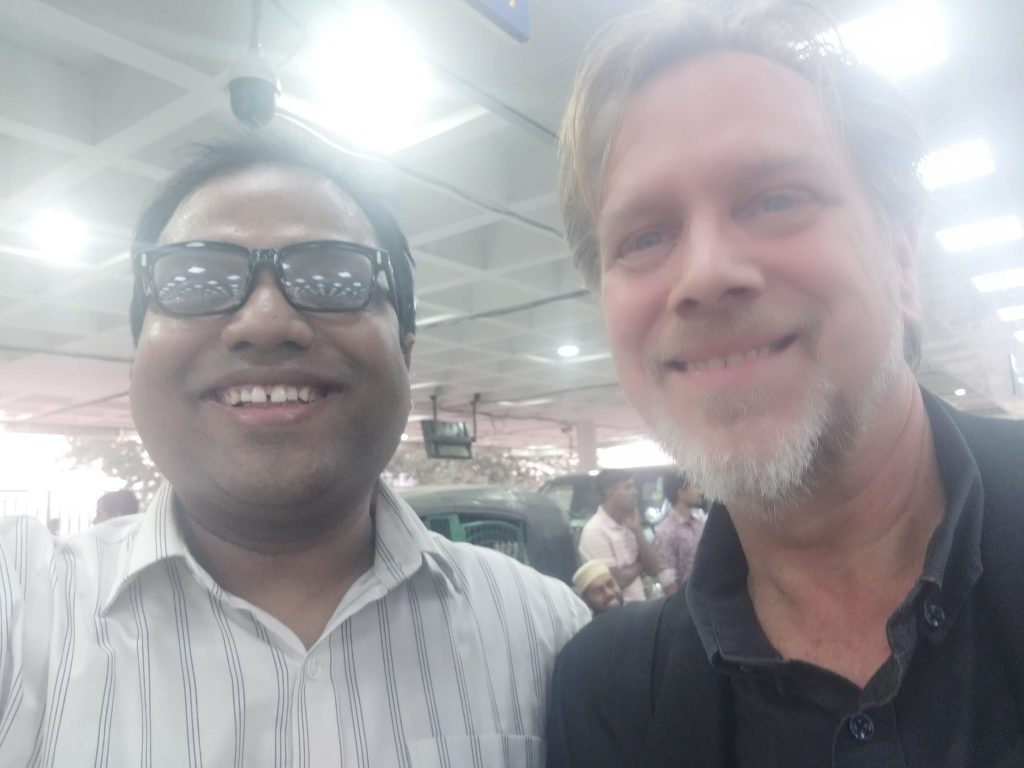 Sharif Uddin Ahmed Rana and Tom Ross in Bangladesh