Beyond The Soviets: The British Proto-Transhumanists – Article by Luis Arroyo

Luis Arroyo
Editor’s Note: This article continues the series by Luis Arroyo to discuss historical proto-transhumanist thinkers, focusing mostly on proto-transhumanists of left-leaning persuasions. Previously, Luis Arroyo discussed Russian Cosmist and Soviet proto-transhumanist thinkers, including Nikolay Fyodorov, Konstantin Tsiolkovsky, Alexander Bogdanov, and Alexander Svyatogor in his 2024 article “The Origins of Transhumanism”. The present article focuses on British proto-transhumanists J.B.S. Haldane, J.D. Bernal, and Olaf Stapleton.
The U.S. Transhumanist Party itself is neither left-wing nor right-wing, but rather up-wing; it is not a socialist party. However, in discussing the intellectual history of the transhumanist movement, we are open to featuring thinkers of socialist, libertarian, and other persuasions and exploring their views honestly and transparently. We expect that other proto-transhumanist thinkers of various persuasions, including non-socialist and anti-socialist ones, will be featured in future articles.
~ Gennady Stolyarov II, Chairman, United States Transhumanist Party, November 11, 2026
Beyond The Soviets: The British Proto-Transhumanists
Luis Arroyo
The history of Russian Cosmism, as the name implies, has its origins in Russia/USSR; therefore, when a non-Russian/Non-Soviet figure comes up in Cosmist/Proto-Transhumanist history, it is definitely worth noting! This diverse history tends to reflect the current standing of the Transhumanist Community, encompassing numerous ideologies and approaches.
J.B.S. Haldane (1892-1964)
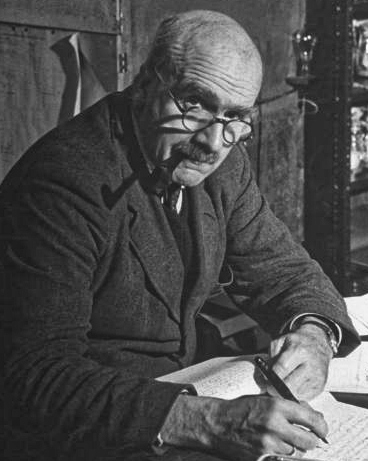
For example, the U.S. Transhumanist Party’s Transhumanism Timeline rightfully acknowledges J.B.S. Haldane’s 1923 book Daedalus; or, Science and the Future as well as his standing as a Marxist. As Santiago Javier Armesilla Conde points out in “A Marxist Transhumanism?” (2021), Haldane was not just a theorist; he was “an active militant in the Communist Party of Great Britain” and helped the International Brigades fight against the fascists during the Spanish Civil War.
Haldane contributed to evolutionary biology and population genetics, helping build the modern evolutionary synthesis with his 1932 book The Causes of Evolution. In Daedalus, he argued that the greatest revolutions of the future wouldn’t just be mechanical, but biological. He coined the term “ectogenesis”, better known as artificial wombs, which he believed would free humanity from biological limitations and shake up traditional social hierarchies, as well as coining the terms “clone” and “cloning”. As noted in the Marxists Internet Archive Glossary’s portion on J.B.S. Haldane, his ideas were so influential that he served as the basis for the biologist Shearwater in Aldous Huxley’s novel Antic Hay, and directly inspired the hatcheries in Huxley’s Brave New World.
In line with other Marxists, Haldane looked at science through a class lens. In “H-: Engaging Transhumanism: A Critical Historical Perspective” (2009), Hava Tirosh-Samuelson notes that while Haldane was critical of the reactionary eugenicists of his day who twisted science to defend the social status quo, he still believed in consciously guiding human evolution. However, he also understood that technology under capitalism is dangerous without political change. As highlighted in “A Sketch for a Socialist Transhumanism” (2025) by Sam Phoenix Clarke, “Haldane is a theorist of human flourishing through science, but is under no illusion that this will happen without the social organisation and political structures needed to steer it.” Haldane was concerned that without such social organisation and political structures, technology could be applied “towards destruction, exploitation, and the defence of hierarchy” (Clarke 2025).
Stating in Daedalus, “man armed with science is a baby armed with a box of matches”, Haldane believed that without socialist planning and public ownership, technological breakthroughs have been and will continue to be used for exploitation, war, and defending existing class hierarchies. Haldane’s thinking leaves today’s Transhumanists with theories that can be verified seemingly in real time, given the technological and political trends of American society.
John Desmond Bernal (1901-1971)
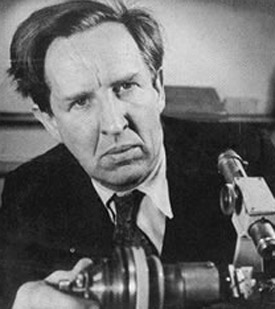
Following alongside the previous example is J.D. Bernal. Like Haldane, Bernal is also rightfully featured on the U.S. Transhumanist Party Transhumanism Timeline for his 1929 work The World, the Flesh and the Devil. Bernal was a world-class Irish scientist who helped pioneer X-ray crystallography in molecular biology, and he was an open communist activist and dedicated member of the Communist Party of Great Britain.
In The World, the Flesh and the Devil, Bernal laid out a vision for the future that predated modern transhumanist concepts by decades. He broke down the obstacles facing humanity into three enemies: the “World”, the “Flesh”, and the “Devil”. As discussed in Monthly Review (“John Desmond Bernal, Marxism, and the scientific revolution” by Helena Sheehan, April 29, 2021), Arthur C. Clarke called Bernal’s book “perhaps the most remarkable attempt to predict the future of scientific possibility ever made.” Bernal designed the concept of the “Bernal Sphere” – an orbital space habitat (not to be confused with a Dyson sphere) and predicted cybernetics, full automation, nuclear energy, body modifications, and space travel more than thirty years before Yuri Gagarin ever made it into orbit. Unlike the dark pessimism of other types of fiction like Brave New World, Bernal saw radical technology as something that could genuinely liberate human potential.
He made it clear that humanity could never reach this future under capitalism. In his 1939 book The Social Function of Science, he compared how science was organized in the West versus the Soviet Union, showing that the capitalist profit motive constantly frustrates scientific progress by funneling research into war, artificial scarcity, and short-term corporate gains. This was some 10 years before the ‘almost recruited’ physicist, Albert Einstein, stated similarly in his 1949 article titled “Why Socialism?”: ‘The economic anarchy of capitalist society as it exists today is, in my opinion, the real source of the evil’.
Olaf Stapledon (1886-1950)
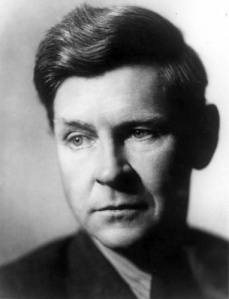
Considering the mention of the Dyson sphere, it’s only fair to give credit to the member of the Merseyside Fabian [Socialist] Society, Olaf Stapledon, an Englishman who authored the 1937 sci-fi book titled Star Maker, a book containing descriptions of how genetic research is employed on some planets to evolve superior humans who eventually take over the planet, causing some to label him as a “predecessor of transhumanism”, while causing others to be inspired, such as the physicist Freeman Dyson, through Stapleton’s idea of “megastructures orbiting stars”, which later became known as “Dyson spheres”.
Luis Arroyo is Vice-Chairman of the New York Transhumanist Party and Director of Media Production for the U.S. Transhumanist Party. Find out more about him here.