The Systemic Problems in Contemporary Academia and Research Funding – Article by Dr. Bill Andrews

Bill Andrews

Though I cannot say if I agree or disagree with Trump’s plans for science, the article in the New York Times on April 25, 2025, motivated me to express my thoughts on the ability of science in the world today to do something useful at the humanitarian level. I’m a hard-core scientist (which keeps me really too busy to keep on top of politics) whose only goal is to make the world happier and healthier. My goal isn’t to see how many research studies I can publish. My goal isn’t to see how much money I can make. My goal is to end disease, aging, and anything that makes living less loveable. The world today has a false sense of security that science today is really doing its best to make the world happier and healthier, when science really isn’t doing that at all. The world needs to be aware of this.
Many years ago I became aware that the academic research approach was never going to be a way to achieve my goals. Despite criticism from my major professor and Ph.D. committee, I chose to go into industrial research instead of pursuing an academic research career after earning my Ph.D. Why is that?
Despite the fact that teaching requirements of academic researchers interferes tremendously with focusing on science, I had also become very disillusioned by the “publish or perish” mindset in academia that doing research to get publications was more important than doing research to “do good”. This excessive need for publications was because granting organizations counted the number of publications researchers had when determining who gets grants and who doesn’t. The quality of the publications in a researcher’s CV was far less important than the number of publications.
I was also stunned by the misappropriation of funds granted by NSF, NIH, etc. by the academic researchers, as well as the misappropriation of grant funding by the granting organizations themselves.
And I was just as stunned at the number of misleading studies submitted for publication by the researchers just to increase their total number of publications, despite the fact that no one, not even the scientists themselves that published the studies, could later reproduce the studies. I saw it as a vicious catch-22 where researchers would misrepresent themselves when applying for grants, while granting organizations weren’t really qualified to determine which researchers were misrepresenting themselves. As such, it was chaos when it came to determining who deserved grant funding and who didn’t. And no one was monitoring the chaos, misappropriation, and misrepresentation. To succeed, researchers had to learn to play ball with the system. And the whole system found that to be acceptable.
When I was in graduate school, I saw my own major professor learn to play ball when being honest wasn’t working. Our lab was about to fail after every grant application was turned down. My major professor then told us all that, as a last-ditch effort, he was going to re-draft the grant application to include the word “cancer” at least two times on every page, and then re-submit the grant application to the Cancer Society. The discord with this was that we were doing research to study the process of converting light into energy in plants by way of chloroplasts. We weren’t doing cancer research by any stretch of the imagination. Nevertheless, while I was packing up my stuff, ready to find a new research lab to work in, the lab manager came running into the lab yelling that the Cancer Society just granted the lab every penny we were asking for. I felt both relief and disappointment at the same time. Despite the relief, it finalized my decision to seek a better route to achieve my goals, than academia, after getting my Ph.D.
My choice for research, in order to rid the world of debilitation, death, and unhappiness, was to find a cure for aging – not just for us, but for our pets also. Aging is the major cause of almost every health-related problem in the world. And, then, after curing aging, I planned to also pursue the curing of all the non-aging related health problems of the world too, including alcoholism, debilitating injuries, debilitating genetics, etc. But the further I got in my quests, the more I realized that the science was not the obstacle to achieving all my goals.
While still close to receiving my Ph.D. I applied for, and was offered work, at many industrial labs. But none of them were interested in curing aging. So, reluctantly, I also applied, and was offered work, in many academic labs that were supposedly focused on curing aging. But when I visited the labs to consider them as a place to pursue my goals, I found that none of them were really interested in curing aging. They just saw the field as a good field to do research to get publications. So, I accepted the offer at one of the industrial labs thinking that I would resume my quest to cure aging after I demonstrated my ability to succeed with whatever I was challenged with.
Like academia, I was disillusioned again. But this time it was because industrial labs were occupied by scientists still brainwashed into the “publish or perish” mindset, and most the lab owners and investors were only focused on financial returns on investment, and not at all on humanitarian returns on investment. I quickly learned that traditional investors invest in the dream, but not the dream coming true. No wonder cancer, heart disease, Alzheimer’s disease, and all the other diseases on the planet are still not cured yet.
Nevertheless, after becoming a key inventor of more biotech blockbusters than anyone on the planet and becoming recognized worldwide as a top scientist, I was finally able to start my own company, Sierra Sciences, 18 years later, to focus on humanitarian returns on investment; starting with curing aging.
It had become clearly obvious to me many years earlier that no matter what anyone did to cure aging, aging would never be cured unless the telomere shortening problem was also solved. And so, that was, and still is, Sierra Sciences’ main goal until it is completed.
Still the struggle to complete the goal continues because traditional investors, would rather redirect scientific efforts towards quick returns on investments, which include selling the company and all our intellectual property, as soon as demonstration of their goals was achieved. So, finding new alternative ways to fund the “do good” research was continually necessary.
Now I feel like I almost stand alone in my quest to “do good” along with a few other like-minded colleagues. But we all struggle to find ways to succeed in a world focused on profits. I welcome a change in the world towards focusing on “doing good” instead of just doing what is profitable. But because I am a hard-core scientist, I really don’t know if Trump’s plans, described in the April 25 New York Times, are really to rid the world of the misappropriation of funds and the misrepresentation of the science by researchers, in order to pursue the same ideals that I have. I can only hope for the best.
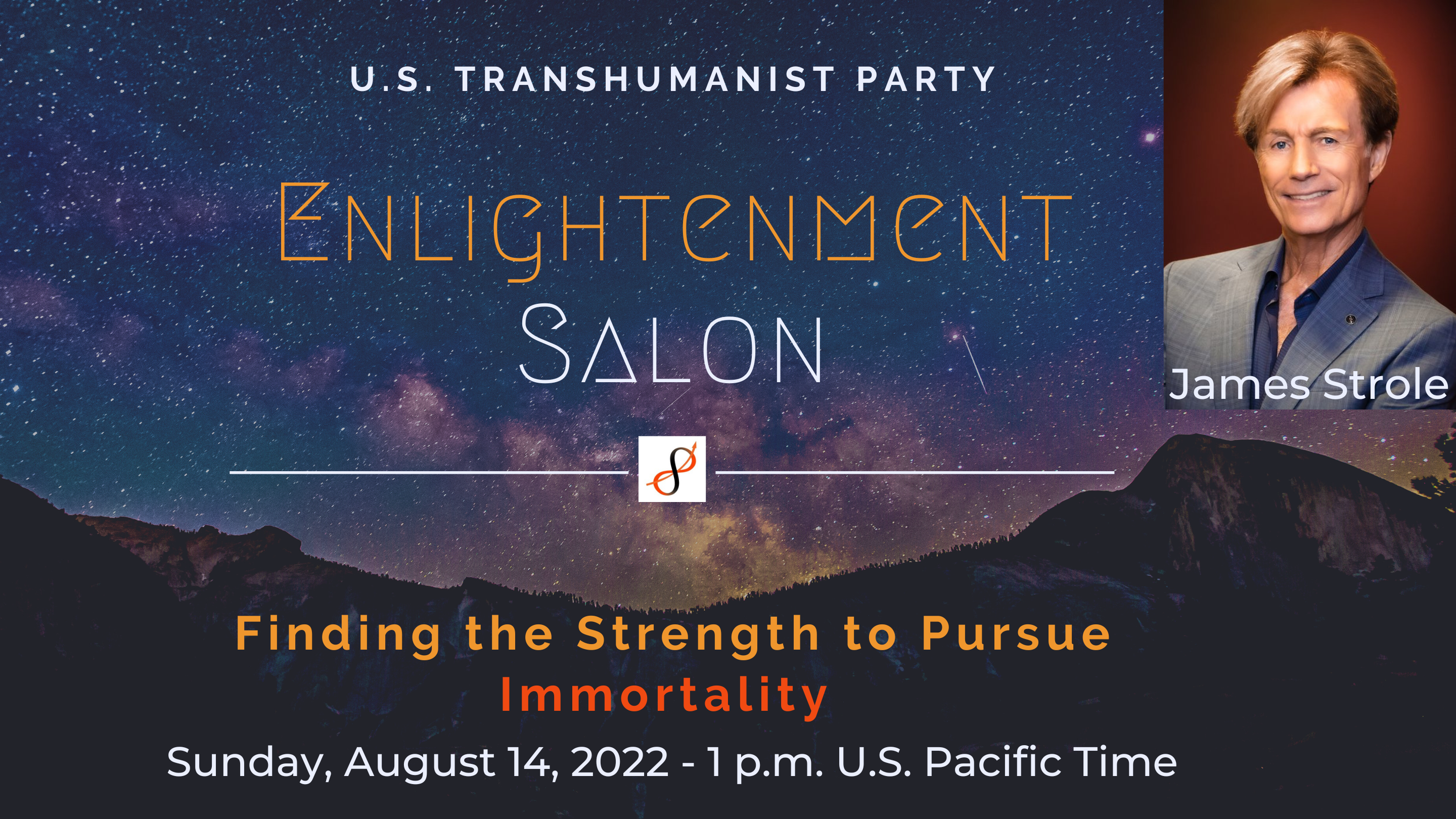
Dr. Bill Andrews (William H. Andrews) is the Biotechnology Advisor of the U.S. Transhumanist Party and the President and CEO of Sierra Sciences. As a scientist, athlete, and executive, he continually pushes the envelope and challenges convention. He has been featured in Popular Science, The Today Show and numerous documentaries on the topic of life extension. Find out more about him here.